Readers and Reading
Who's screwing who
The author of "The Lives and Loves of a She-Devil" picks five great novels about exploitation.
Lolita by Vladimir Nabokov
The best of all novels. Humbert Humbert, European academic, pursues his all-too-
The Quiet American by Graham Greene
Written in 1956 by the English writer who should have won the Nobel Prize but didn’t, this is a work of literature masquerading as a thriller, the prophetic tale of America’s first tentative venture into Vietnam and of the sought-after Third Way, which ends not in reconciliation but bombs and death.
The Three Stigmata of Palmer Eldritch by Phillip K. Dick
In the not-too-distant future, corporate psychics wage a battle for the human soul. This great prophetic writer, the William Blake of Marin County, lurks at the dangerous edge where science fiction and literature meet.
The Handmaid’s Tale by Margaret Atwood
Food for the flagging feminist. Stop socializing men and they revert at once to womb exploitation. Margaret Atwood looks forward to a future tyranny compared to which today’s Taliban is nothing.
The Roaches Have No King by Daniel Evan Weiss
This brilliantly comic novel is not for the squeamish. The cockroaches view the disgusting behavior of humans and wage war on Ira Fishplatt, legal-aid lawyer, when they feel he betrays them. Love it or hate it.
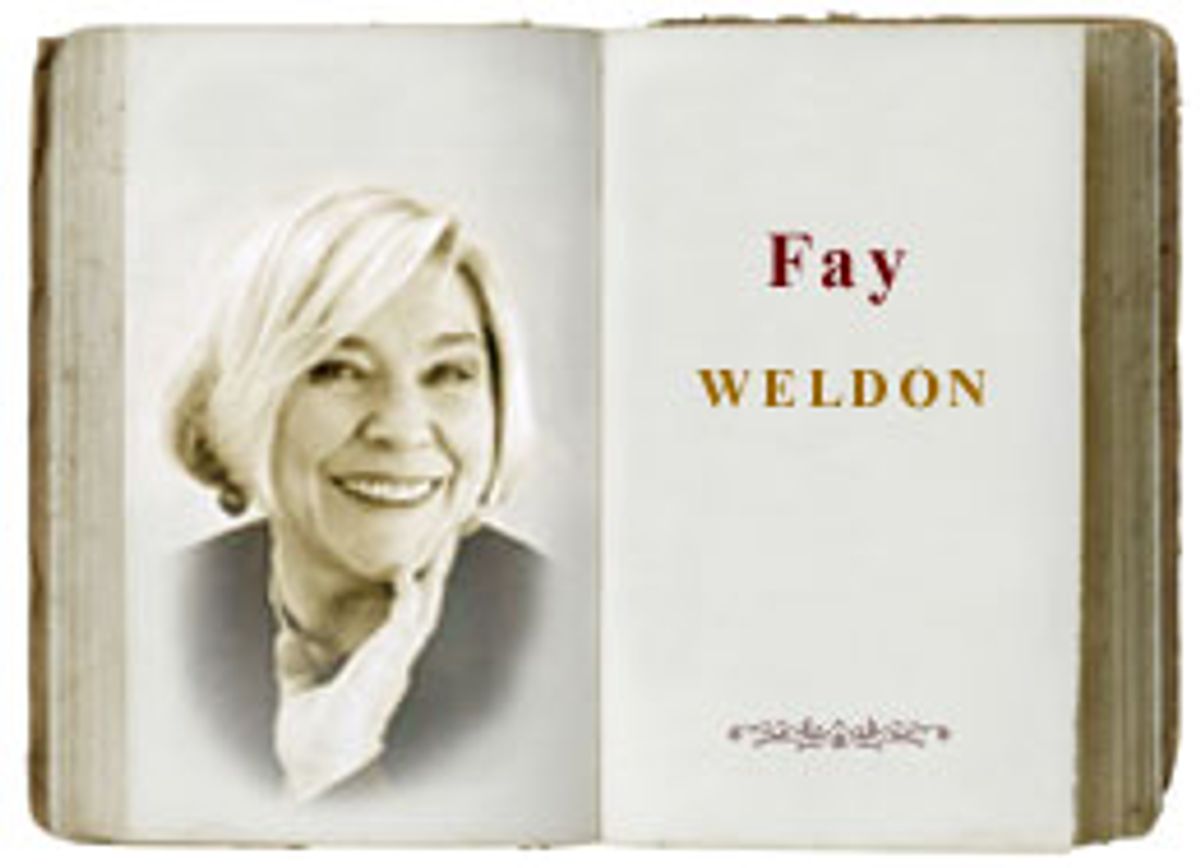
Fay Weldon is the author of many books, including, most recently, the short story collection "A Hard Time to Be a Father." More Fay Weldon.
Can you identify?
Science shows that the only way around some readers' prejudices is to trick them
(Credit: Shutterstock/Salon) The news of recent research documenting how readers identify with the main characters in stories has mostly been taken as confirmation of the value of literary role models. Lisa Libby, an assistant professor at Ohio State University and co-author of a study published in the Journal of Personality and Social Psychology, explained that subjects who read a short story in which the protagonist overcomes obstacles in order to vote were more likely to vote themselves several days later.
The suggestibility of readers isn’t news. Johann Wolfgang von Goethe’s novel of a sensitive young man destroyed by unrequited love, “The Sorrows of Young Werther,” inspired a rash of suicides by would-be Werthers in the late 1700s. Jack Kerouac has launched a thousand road trips. Still, this is part of science’s job: Running empirical tests on common knowledge — if for no other reason than because common knowledge (and common sense) is often wrong.
Continue Reading Close
Laura Miller is a senior writer for Salon. She is the author of "The Magician's Book: A Skeptic's Adventures in Narnia" and has a Web site, magiciansbook.com. More Laura Miller.
Reading, revolutionized
A poet/book artist and a programmer team up to create a book that unites the traditional and the electronic
(Credit: via Between Page and Screen)
“Between Page and Screen,” a groundbreaking collaboration between poet and book artist Amaranth Borsuk and programmer Brad Bouse, is truly a first: a book that only can be read when simultaneously using a codex book and a computer’s webcam. When placed in front of a webcam, the black shapes printed on the pages, sans words, trigger animated text on the screen, revealing a correspondence between characters P and S.
Stories don’t need morals or messages
A "stupid" test shows that the Puritan ethic lives on. Why do we insist on learning lessons from the books we read?
(Credit: iStockphoto/Yayayoyo via Shutterstock) What is the purpose of reading stories, especially made-up stories? That’s the question lurking behind a recent posting to the New York Times’ education blog, SchoolBook. Ann Stone and Jeff Nichols, the parents of twins, wrote about taking their kids’ third-grade English Language Arts test with some friends as a party game on New Year’s Eve. The group read an inane little story about tiger cubs learning to tear bark off logs, but, to their surprise, couldn’t agree on a single answer to the multiple choice question that followed: “What is this story mostly about?”
Continue Reading Close
Laura Miller is a senior writer for Salon. She is the author of "The Magician's Book: A Skeptic's Adventures in Narnia" and has a Web site, magiciansbook.com. More Laura Miller.
Reader responses: Books you want banned
On Wednesday, we asked which books you think kids should never have to read in school. Here's what you said
Earlier this week, Laura Miller and other Salon writers weighed in on books they’d like to see banned from school reading lists — from “Lord of the Flies” (“Is it pure sadism [that makes teachers assign that book]?” asked Andrew O’Hehir) to “Ivanhoe,” which went a fair way toward dulling Life editor Sarah Hepola’s enthusiasm for high school English.
Continue Reading CloseEmma Mustich is a Salon contributor. Follow her on Twitter: @emustich. More Emma Mustich.
What did you really read this summer?
As August ends, Arthur Phillips, Laura Hillenbrand, Lev Grossman and others reveal their reading records to Salon
For readers, summer often starts with grand ambition. This will be the year we really tackle Roberto Bolaño or David Foster Wallace; it will be the summer of nothing but lemonade and Alice Munro. Or perhaps we’ll educate ourselves by delving deep into accounts of the financial crisis or the war on terror. Then the days turn lazy and even the most sincere intentions wilt in the heat.
With September looming, we thought it would be a good time to check in with some of our favorite authors — and some of the writers you’re likely to be reading this fall — to see what they really read this summer. Click through the following slide show to see what they had to say.
Emma Mustich is a Salon contributor. Follow her on Twitter: @emustich. More Emma Mustich.
Page 1 of 25 in Readers and Reading


