Phaedra Hise

Do airlines ever cut corners on maintenance?

Pilots and mechanics admit privately that sometimes whether a part -- or a plane -- needs work is a matter of opinion and negotiation.

  • more
    • All Share Services

Do airlines ever cut corners on maintenance?

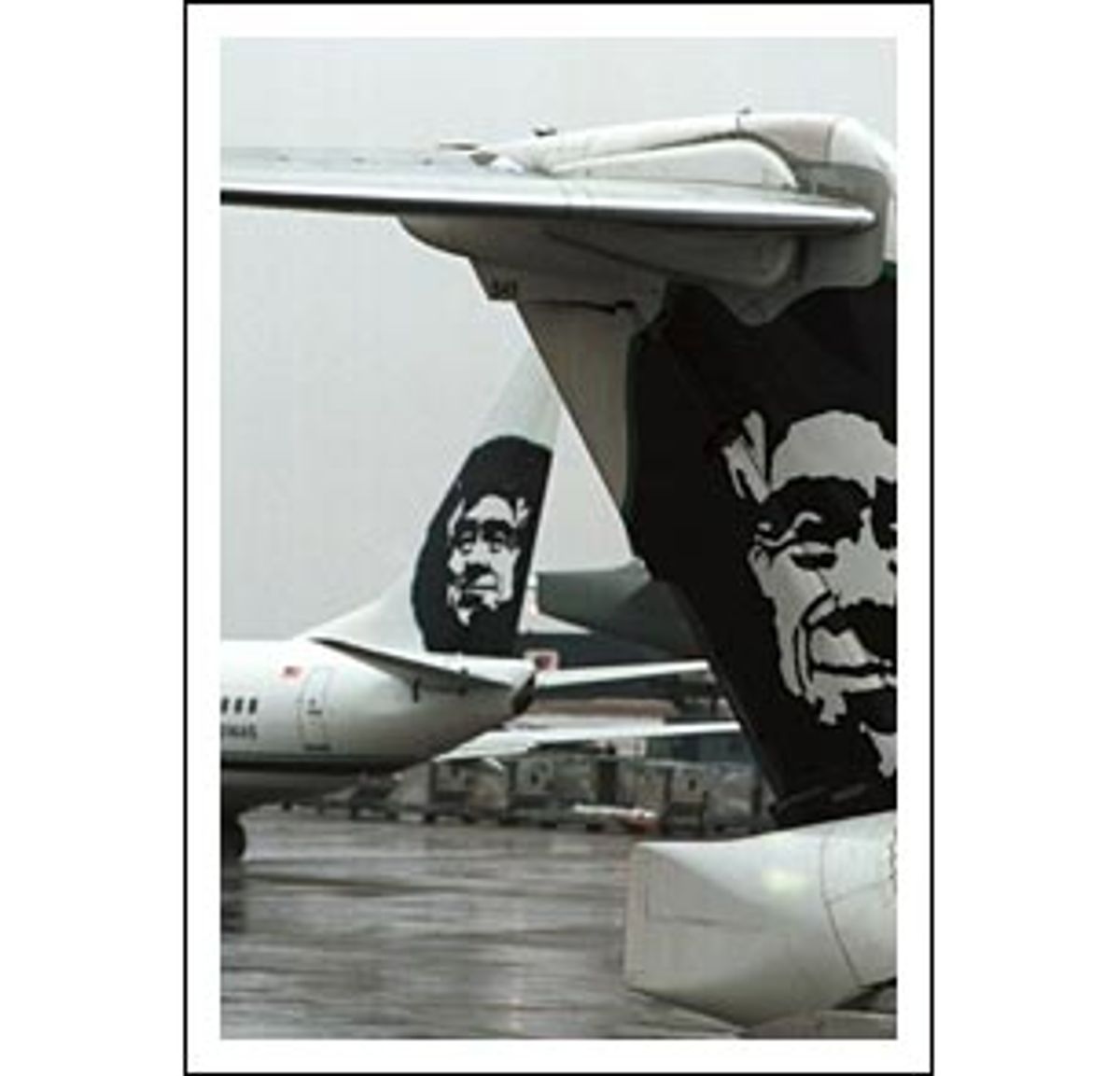
Alaska Airlines is a sharp, well-run company. A good bunch of guys,” the airline pilot says, shaking his head. A first officer with a major airline, he knows how it feels to have a crash in the company.

“Someone trusted you with their lives, and you let them down,” he says. “You just hope that they find it was something that couldn’t be helped, something beyond anyone’s control.” Statistics don’t bear out that hope. Most often, it’s the pilot’s fault. Less often, a mechanical failure.

At this early stage, it appears that mechanical trouble reported by the pilots contributed to the crash of Alaska Airlines flight 261. Industry insiders agree that the airline has always run a responsible company, not some sleazy little cut-rate upstart.

But even the top-flight airlines, the “majors,” as they’re called in the trade, don’t have perfect maintenance records. Keeping aging jets airworthy is an expensive and time-consuming job, one that glides in and out of gray areas. And given that the airlines are motivated mostly by profits, it’s always been surprising to me how much leeway they get from the Federal Aviation Administration on maintenance issues.

Commercial jets are complex machines with up to 100 different systems. Each system (fuel, controls, engine, pressurization) can have hundreds of parts. Mechanics, hired and trained by the airlines, tend to specialize in a particular system or set of systems.

A small airplane’s engine is rebuilt and replaced after a certain number of flight hours. But the airlines gave that up long ago. Now they track the health of their machines using “condition monitoring.” The engines are stuck full of probes, feeding data to other systems and the black box. That information on engine performance gets regularly uploaded into a huge database of other engines. If the engine in question still looks strong by comparison, the FAA allows the airline to let it ride. Some engines fly with only minor repairs for thousands of hours past the original recommended rebuild time.

It sounds like an efficient program — why rebuild an engine that isn’t going to fail? The engines are constantly tuned and upgraded with new parts as they need them. Airlines schedule regular “A, B, C and D” checks. The frequent “A” check is basically a one-day walk-around. The “D” (done every five or six years) is a complete tear-down and detailed inspection of all systems. The Alaska Airlines jet had a recent “C” check, one step below the in-depth “D.”

But even with such obsessive and almost-constant scheduled maintenance, there’s a problem: Cutting costs is the key to survival for struggling airlines. Half or more of an airline’s expenses are fuel and labor costs. Fuel costs are fixed, which leaves labor to cut if profits are hurting. That means hiring lower-paid staff and streamlining procedures that take valuable time. If maintenance can be put off and engine life extended, that’s a direct bottom-line boost.

“Negotiating on maintenance issues, sure,” says one mechanic who has worked with a major airline. “Airlines are always writing a letter to show some data to some FAA guy to say that some engine doesn’t need to be tested so often. Every [limit] gets changed.”

Can in-house mechanics be pressured by a penny-pinching boss? Certainly, most work hard and take pride in their jobs. But one technician, who worked for 15 years in the engine-overhaul business, says they can’t help but make judgment calls. “Not every technician will have the same opinion,” he says.

When parts come up for inspection, mechanics have to make some decisions — take them apart for a closer look? Pass them? Fail them? “One guy will pass it, another won’t. We would scrap something, the customer would ask to send it to [the engine manufacturer] and their technicians wouldn’t scrap it. These are gray areas, obviously.”

Here’s an example of where their employers’ loyalties lie. The downed Alaska Airlines MD-83 was due for an inspection of its horizontal stabilizer hinges — the stabilizer the pilots reported having trouble with just before the crash. The FAA “airworthiness directive” (AD) mandating the hinge inspection for all MD-83s included comments from airplane operators. One was a plea to perform less stringent inspections, and another asked the FAA to allow previous, less stringent inspections to count toward the AD compliance.

Fortunately, the FAA didn’t listen and issued the hinge-inspection AD anyway, at an estimated cost of over $7,000 in labor per airplane. It offered an 18-month window to comply, so that the cost wouldn’t put undue hardship on MD-83 operators. Alaska Airlines’ jet was within that 18-month time frame when it plunged into the ocean, so even if a hinge failure did contribute to the crash, the airline was operating well within the FAA’s legal guidelines.

The stabilizer-hinge inspection was ordered because rust was found on older planes. Some mechanics doubt that Alaska Airlines’ newer MD-83, built in 1992, could have developed enough corrosion to cause a catastrophic failure.

But many pilots and mechanics have stories of petitioning the FAA to change a certain maintenance procedure only to be ignored until a crash calls attention to the issue. Likewise, the FAA tends to check up on airlines only when something forces them to. A disgruntled employee reports a record-keeping discrepancy. A crash investigation reveals an improper repair procedure.

That tricky relationship between the airlines and the FAA, plus the agency’s low staffing, means that airlines are often left to their own devices when it comes to abiding by maintenance regulations. “The risk to letting agencies self-police is that there’s no real threat from FAA,” says an airline pilot who spent his early career in Alaska (not at Alaska Airlines). There, he says, he flew for “nasty little operators that cut every corner there was,” and never once saw the FAA drop in.

Clearly, the FAA is more reactive than proactive. Airlines are desperate to cut costs. Who has the incentive and the power to change the system?

You do. I do. Everyone who buys a plane ticket does. The only way to force airlines to spend money on maintenance is to pay for your trip. Pay for the pilot who spent 10 years flying in Alaska and knows how to land in a snowstorm. Pay for the flight attendant with a few evacuations under his or her belt. And pay for the mechanic who’s seen turbine blades fail and insists on searching for the nearly invisible cracks. After all, the people on the plane are those with the biggest incentive to make sure it doesn’t crash.

An old-fashioned tragedy

A nation shellshocked by terrorism braces for the worst -- but in all probability, mechanical failure caused Monday's Flight 587 catastrophe in New York.

  • more
    • All Share Services

An old-fashioned tragedy

In the wake of Sept. 11, and those horrifying images of airplanes flying into buildings, it’s not surprising that many people jumped to the worst conclusions about the crash of American Airlines Flight 587 Monday morning. Were there terrorists aboard? Did they sabotage the engine? Was it a missile attack?

It’s a strange relief to realize that this airline disaster, though tragic, was almost certainly not caused by terrorism. The crash of Flight 587, which killed at least 260 people on board and 6 on the ground, appears to have been caused by old-fashioned mechanical trouble. No suicidal pilot, no bomb, no missiles. The Airbus 300-600 mostly likely had a catastrophic engine failure from which the crew could not possibly have recovered.

The loss of an engine could easily have damaged the plane in such a way that it broke apart, creating the four separate debris fields that investigators are currently combing. As the engine fell away, it could have torn off a control surface, sending the plane into an “unusual attitude” that quickly became aerodynamically unstable. “If the aircraft was out of control and turned in such a way that it had a sideways attitude to the airstream, the structure might not be able to handle it,” points out Todd Curtis, founder of Airsafe.com and a former airline safety executive at Boeing. It’s likely the departing engine ripped open the hydraulic lines, and then the pilots wouldn’t have been able to control the airplane at all.

The Airbus 300′s engine, the General Electric CF6-80C2, in fact has a history of catastrophic failure. In September, Aviation Week magazine reported two problems that the National Transportation Safety Board was investigating. One investigation was into problems with the engine “spool.” Then came an incident last fall during a ground test at US Airways. One of the CF6 turbines mysteriously blew apart, shooting blades through the air and into the airplane body at high speeds.

In response to the NTSB report, the FAA mandated last year that all pre-1995 spools should be replaced within 15 years. Christian Flathman, a GE Aircraft spokesperson, confirmed that the engine spools had not been replaced on the American Airlines Flight 587 Airbus that crashed Monday morning.

The second danger to aircraft equipped with the engines, the NTSB concluded, was a General Electric manufacturing problem that contributed to cracks in the disk-blade slots. This past September, the NTSB recommended that the FAA demand regular checks on the disk blades. All three parts in question are part of the turbine, which is the last stage of the jet’s engine.

Although the NTSB makes suggestions, it is up to the FAA to act on and enforce them. As of Nov. 12, the FAA had not yet ruled on the recommendation.

Whatever caused the problem on Flight 587, the loss of an engine is an instant emergency on any airliner. But it is one for which pilots train. Checklists speed pilots through the procedures for shutting down the failed engine and maneuvers that compensate for “severe damage” — a category under which a missing engine would surely fall. Either way, airplanes are designed to survive the loss of an engine.

In the late 1980s, a spate of Boeing 737s lost engines on takeoff. The engines physically fell off on the runways as the pilots ran through the “engine out” checklists. The planes continued to climb safely and then returned to the runways and landed safely.

Those planes were able to fly back and land because they did not lose their hydraulic systems. The Airbus, by contrast, is particularly dependent on hydraulics. It is a modern technological marvel with a “glass cockpit” filled with digital instruments. It is a “fly-by-wire” machine in which electronic signals from the cockpit joystick activate hydraulic actuators in the wings and tail.

An exploding engine could shoot turbine blades through all three of the hydraulic and backup systems in the wing, severing the lines and rendering them completely useless. There is no checklist for the disaster of lost hydraulics on an Airbus. It is possible, however, that Flight 587′s pilot managed to complete one of the tasks on his emergency checklist. Fuel spilled out of the wing before the plane crashed. This is standard procedure for emergency landings, minimizing the chances the plane would turn into an even more deadly fireball on impact.

This accident, then, is a return to simpler times in air travel. A mechanical failure is something understandable, something to be expected from high-performance parts that spin and click at high speeds for thousands upon thousands of hours. That is part of the risk that we accept when we travel on airplanes, and we accept it because it’s extremely low.

But in today’s post-terrorist age, not everyone is willing to accept such a simple explanation of Monday’s accident. Let’s consider a few of the other possibilities for a moment.

Suicidal pilots or terrorist mechanics? It’s doubtful that even a single nonapproved pilot could get past today’s heightened airport security. Besides, eyewitnesses reported seeing one of the plane’s two engines depart the airframe — either dropping off or exploding in flight. Could terrorists have fiddled with that engine before takeoff, wrenching loose a few pertinent screws? Not likely, given Kennedy Airport’s ramp security. And the accident happened far too quickly after takeoff for it to have been the work of anyone muscling his way into the cockpit.

How about, as some dogged believers still argue happened to TWA Flight 800 in July 1996 off Long Island, N.Y., a Stinger missile?

It’s a possibility, certainly, that terrorists could somehow have snuck a missile launcher within a few miles of one of the nation’s busiest airports. They could have fired the large missile (something that no eyewitness in the densely populated area has reported seeing) and hit the engine. But that’s not likely. Not only because of heightened security in New York, but because of the questionable terrorist value of downing this particular flight, which was headed to the Dominican Republic. It’s a lousy target, particularly for people who have already demonstrated their skill in choosing effective targets. Air Force One would have been much more tempting. Or a plane full of American nationals the day before Thanksgiving.

A bird strike? Kennedy airport, a wide-open space in close proximity to the ocean and a big city, is a haven for seagulls and other birds. For small propeller airplanes, a bird strike can be fatal to the pilot, punching a hole in the plane or slicing off a wing. But airliners can handle it. Jet-engine designers gleefully toss frozen turkeys into spinning turbines to test them for “bird ingestion” limits. The engines suck them up, spit them out and keep spinning.

The best tool in understanding what happened to Flight 587 is Occam’s razor, the philosophical theory I first learned from an NTSB investigator last year: When many explanations for an event are possible, accept the simplest, because it’s by far the most likely. On Flight 587, that’s almost certainly engine trouble. Of course, statistics are small comfort to those who lost loved ones on this flight, but the nation should feel some relief that this was probably not another breakdown in our anti-terrorist security measures.

Continue Reading Close

Flying with phantoms

A pilot waves goodbye to the World Trade Center.

  • more
    • All Share Services

As the World Trade Center and Pentagon burned, then collapsed, I thought about the tens of thousands of people trapped inside. I thought about the many times I had seen those same people, had waved to them from the cockpit of my own airplane. Flying down the Hudson River past the World Trade Center was a legendary thrill that pilots have enjoyed for years, and one I’ll never have again. The memories of those flights and the images of the waving people haunted me as I watched the news.

The question, for me, about this horrible tragedy is not “How could it happen?” but “Why didn’t it happen sooner?”

When I first heard news reports, I assumed that two very small airplanes had crashed into the World Trade Center towers and the Pentagon. After all, single-engine planes like mine have been flying for years along the Hudson Corridor. It’s the preferred route to keep clear of the jumbo jets using Kennedy and La Guardia. On my trips along the East Coast, I always request the corridor, fly south from Boston to Sing Sing prison, turn right and fly over the river past Shea Stadium, Central Park and the Statue of Liberty, then head for Verrazano Bridge and continue south toward Atlantic City, N.J.

There’s another corridor between Washington and Dulles airport, which I’ve used frequently since I moved south. As long as pilots stay below 3,000 feet, they don’t even have to talk to air traffic control until they’re ready to land. When I’ve flown north toward Dulles, I’ve had great views to my right of the Mall, the Capitol and the Washington Monument. Since Washington is a city of mainly short buildings, I never saw anybody wave back from the Pentagon.

Flying through the New York corridor is a spectacular tour that all pilots look forward to making once they earn their licenses. It’s a little nerve-wracking, partly because you’re so close to the buildings, and flying lower than usual. It can get hairy because you have to keep a sharp lookout for all the other planes, helicopters and the occasional jet using the corridor. I have to admit that although I was many times within spitting distance of New York’s major landmarks, it never occurred to me that one of those other planes next to me might choose to dive into one.

I had never considered airplanes as criminal vehicles. Clearly I hadn’t read the Nelson DeMille novel “The Lions Game,” in which a bad guy travels untraceably in small airplanes, flying below radar and landing secretly to do his dirty work. Nor have I read the Tom Clancy thriller that ends with a suicidal airline pilot diving into the Capitol during a joint session of Congress. And apparently, according to Slate’s Tim Noah, the white supremacist tract “The Turner Diaries” features an anti-government lunatic flying his plane into the Pentagon.

Of course, Japan’s Kamikaze volunteers demonstrated in World War II that an airplane can become quite an effective missile if the pilot is willing to go down with the ship. And in 1997 a SilkAir pilot in Indonesia apparently committed suicide by crashing his flight full of passengers, just as it seems the EgyptAir pilot did in 1999. They just didn’t think to take any office buildings with them.

I realized when I switched on the television that this one was different. Someone had finally figured out how to scoot past airport security, grab a fuel-loaded plane and use it to bomb a building. The gaping holes in the side of the World Trade Center made clear that these planes weren’t small, like mine. They had been commercial airliners. If it had been one plane, I might have assumed it had mechanical trouble that threw it violently and tragically off course. But the two holes meant that the planes had been aiming for targets. And the only way a commercial airliner would fly right into a building, I knew, is if the crew were dead.

Pilots are trained to save the ship first. If that’s not possible, they concentrate on saving the passengers. If it’s clear that everyone on board is doomed, then their last goal is to avoid killing anybody on the ground. A good illustration of this came last February, when Alaska Airlines pilots asked air traffic control for vectors out over the ocean so they could troubleshoot control problems with the tail. The pilots knew their eventual crash was a strong possibility. They just didn’t want to take half of Los Angeles with them.

Ironically, the lower planes fly, the less attention air traffic control pays. I can glide over the Hudson or alongside Washington in my single-engine plane at 1,000 feet and never talk to a single controller — it’s legal. But airliners don’t have the same freedom, so it wouldn’t have been as easy for them to reach their targets. They’re on strict flight plans. Any deviation provokes a response from the controllers, who would have been radioing the plane and demanding to know why it changed its routing. But unfortunately that’s all they can do: talk. They can’t direct the plane. They can’t hastily erect aerial barriers around key landmarks.

The airspace around the Pentagon is highly restricted. But that just means that it is marked on the chart, and if a plane gets too close, air traffic control will warn the pilot to steer clear. But the restricted space is only about a mile in diameter. A jumbo jet steering around it can turn sharply and be in the space within seconds.

In a few days, or weeks, the smoke will clear and I’ll be able to fly my airplane again. Surely there will be drastic changes to our flight and air travel systems, new procedures to learn and new precautions to take. And the next time I fly over New York, I’ll fly over a black hole in the city and pass the phantoms of the friendly people who used to work in the World Trade Center building. They are gone now; but I’ll be thinking of them, and remembering how they used to wave back.

Continue Reading Close

JFK Jr.’s fatal mistakes

The final report on Kennedy's crash reveals a series of decisions that led him on a spiral crash course one year ago.

  • more
    • All Share Services

Ten days before the anniversary of his death, the National Transportation Safety Board released the results of its exhaustive investigation into the fatal plane crash of John F. Kennedy Jr. Not surprisingly, the NTSB concluded the fault was pilot error.

The report’s glib summary makes the crash sound like an easily preventable accident. Several factors, the NTSB concluded, pointed to the pilot’s “failure to maintain control of the airplane during a descent over water at night, which was a result of spatial disorientation.”

Having speculated about what might have led to the crash a year ago, I approached the NTSB’s exhaustively researched report with more than average curiosity. Was there anything Kennedy could have done to avoid the crash that killed not just him, but his wife and her sister?

Spatial disorientation is aviation’s top pilot-killer. With little warning, it can strike any pilot, who must then draw on tremendous confidence and training in order to survive. As a pilot without much flight time, Kennedy hadn’t yet built up either.

He made a few questionable decisions. He never called Flight Service for aviation weather information, for instance, although FAA regulations state that a pilot “should.” If he had, he would have learned simply that visibility along the route was quite good between 6 and 12 miles. Kennedy probably would have heard what briefers told another pilot flying from Teterboro, N.J., to Nantucket, Mass., at about the same time, “No adverse conditions. Have a great weekend.”

According to detailed weather information from the surrounding areas at the time of the accident, and reports handed out by Flight Service weather briefers, the haze wasn’t expected to be treacherous. That’s because it’s almost constant in the summer, and area pilots learn to compensate for the gauzy effect.

Did Kennedy attempt a solo night flight too soon? The report reveals that he had more flight hours — 310 — than some sources believed at the time of his death. But he was only halfway through his instrument training at the respected Flight Safety Institute. Instructors quoted in the report generally agreed that Kennedy’s skills were good.

But if he lost the horizon over the dark ocean between Point Judith and the Vineyard, he would have had to negotiate those few minutes of flight by following the gauges. And he may not have had the training for it.

The first third of instrument training is learning to fly on the instruments. The second third is learning to navigate. The last third is training to trust it all, confident that the gauges are right and your instincts are wrong. The last third, apparently, is what Kennedy lacked.

Confidence is an issue in this crash. How much is too much? Too little and you’re a cockpit hazard, unwilling to take control and command the machine. Too much and you take dangerous risks, stacking the accident odds steeply against yourself. Most pilots eventually figure out a good personal balance for risk-taking, but usually only after logging a few hundred hours of flight time — solo flight time. Before that, they make mistakes, swinging back and forth between the two.

For some reason, Kennedy liked to haul around a flight instructor when he went anywhere. Maybe he was logging instrument instruction hours, or maybe he wanted more training in the new Saratoga. The NTSB report estimates that Kennedy had about 310 flight hours, but only about 72 of those hours were solo, as pilot-in-command. When I had 310 hours, 253 of them were pilot-in-command. By that point I had already earned both my private and instrument ratings, and my training was hardly fast-track, interrupted by years of being broke and switching instructors.

Kennedy wasn’t used to flying alone. But he was certainly used to that route. He’d flown it 35 times, 17 of them as pilot-in-command, and five at night. In 15 years of flying, I can’t think of anywhere I’ve flown 35 times, let alone five of them at night. Kennedy had made all of those trips within the past 15 months. I think his familiarity with the route probably balanced out his lack of solo flight time and training, on a calm, fairly clear night.

So here’s the picture. Pilot confidently plans a routine hop to a familiar airport on a fairly clear day. Then he starts running a little late. No big deal, the darkness, since his recent night flights included Vineyard landings. It’s a wedding, for crying out loud, not exactly something to be late for. Trips like this are why we have airplanes in the first place, right?

Then he gets up in the dusky sky and flies out over Point Judith, out to sea. Unexpectedly, he can’t see the lights of the island. But he looks at his instruments, reassured to see that he’s still flying straight and level. He starts his descent, fiddling with the radios a little bit as he straightens his turn toward the runway. Somehow, the station for the Vineyard weather briefing isn’t working. (The report indicates he had the wrong frequency dialed in.)

Maybe he focuses on that a minute too long — what is that frequency again? He rustles the maps to check his location, then notices that the airplane has started another turn. He straightens it out again, then realizes he has forgotten his landing checklist. The airplane is starting to get ahead of him, loading him up with tasks to perform. Next landing checklist item: “Fuel selector — proper tank.” After an hour of flying, it’s time to switch tanks. He leans forward, head down, to rotate the switch. It’s when he sits up, I would imagine, that spatial disorientation hits.

“Spatial disorientation.” It doesn’t mean that Kennedy simply got a little confused about which direction the plane pointed, or didn’t notice for a second that the nose was aimed up instead of down. It’s much more powerful than that. It’s like sitting in an office chair with your eyes closed, then leaning slightly forward and spinning the chair to the left.

Imagine, while you’re leaning and spinning, that a little voice in your head is saying, “You’re actually standing upright in your office. No, really, trust me.” The aircraft’s instruments are the equivalent of that little voice, and you have to listen to them even though your senses and instincts are screaming, “For God’s sake, you idiot, stop spinning and stand up first!”

It can attack any pilot. There is no training that prevents spatial disorientation. Only the recovery can be learned, after hours of instrument training, hours that Kennedy didn’t have. Disorientation is like ice and thunderstorms — it’s serious business and it scares all pilots.

Dunning Kennedy for his inability to survive aviation’s No. 1 killer is ridiculous. I don’t know a single pilot who could cast the first stone. We’ve all pulled up after a sweaty landing, shivering and mumbling, “Damn, I’ll never do that again.” We’ve all broken at least one FAA regulation. We’ve all made the wrong go/no-go decision and ended up bumping around too close to a storm cloud, wishing instead we had turned around and driven home from the airport.

Years ago, my husband made his own flight across Rhode Island Sound after the end of a long work day in Providence. Anxious to reach friends on Nantucket, he pushed himself to cross the ocean on a cloudy day, with no horizon. He had taken a few instrument lessons, and nervously relied on his sketchy training to get him across the ocean to the distant island.

Shaken, he landed the airplane and immediately instituted a “three strikes, you’re out” rule that he still uses. If there are three questionable factors in a proposed flight — fatigue, questionable weather, low-time skills — he doesn’t go. Period. Nobody, not even 1,000-hour pilots, has enough confidence to single-handedly reverse forces of nature.

But Kennedy wasn’t facing a no-go situation. He lacked flying hours, but the only way to get them was to fly. The NTSB report should mostly put the second-guessing to rest. Although the Bessette family had made gestures that looked like they were considering a lawsuit, the word now is that they will forgo it, though they may receive some compensation from the Kennedy estate.

In the early hours of our flying careers we’re all woefully ignorant. But most of us are fortunate enough to learn from our mistakes.

Continue Reading Close

Aerial ambulance chasing

A lawsuit claims the Alaska Air pilots should have landed instead of trying to figure out what was wrong -- but the doomed men did the right thing.

  • more
    • All Share Services

Last summer in Hyannis, I took a planeload of friends up for a sightseeing tour of Cape Cod. As we leveled out in cruise, they excitedly pointed at landmarks and took pictures. But my attention was on the controls, which told me that something was very wrong.

On that hot day, the plane wallowed in the sky, slow to climb and loath to turn. I had to pitch the nose up high to keep the plane level. The airspeed dropped drastically. I quickly sized up the level of my emergency — the engine was running fine, I could easily turn and make it to the airport. What was making my sleek plane fly like a truck? I tuned out my chatty passengers and started assessing my problem.

On a much larger scale, thats pretty much what the two Alaska Air pilots did before crashing into the Pacific Ocean on Jan. 31. But a $75,000 lawsuit filed Monday on behalf of one passengers widow claims that the troubleshooting was “improper.” Rather, the suit claims, the pilots should have “immediately  land(ed) the aircraft upon first notice of difficulty in operation.”

The pilots’ failure to land at airports in Los Angeles and San Diego has been questioned by others. But the second-guessing, and the widow’s lawsuit, are wrong. The pilots did what they were supposed to: Analyze the situation, take corrective action, land as soon as practicable. Hurtling through the skies in a pressurized metal tube has its risks. Slapping the airline with a lawsuit wont make those risks magically disappear.

Dunning the pilots is simply a legal move. To dig into the deep pockets of Boeing and Alaska Airlines, the courts must first establish that the pilots didnt do everything possible to prevent a crash. Its a ridiculous idea — who could imagine that both experienced pilots (over 18,000 flight hours between them) didnt want desperately to save their own lives? They spent the end of the flight doing what any pilot would do: troubleshooting.

I think about them, remembering my flight over Cape Cod that summer afternoon. I flew along the shoreline, my passengers watching the sea and sailboats while I gingerly wiggled the controls and adjusted the throttle. Then, something caught my eye — the landing-gear circuit breaker had popped. Even though the panel lights indicated “up,” the gear was probably still down. I turned back to Hyannis and made a low pass at the tower, the controllers visually confirming that the wheels were out.

If I had mindlessly bolted for the runway without first troubleshooting, I could have compounded a simple error with panic, piling up hurried mistakes in my rush to land. Or, my gear could have been only partially extended, waiting treacherously to collapse as I blithely — safe at last! — touched down on the asphalt.

Pilots are trained to spend a little time in the safe cushion of air, hovering over the hard dirt, learning how to handle the damaged machine before taking it down. Otherwise, who knows what rebellious trick the plane might try down there within inches of the runway? Armed with specific knowledge — that the plane loses power only at a certain throttle setting, for example — a pilot can avoid that setting when close to the ground.

My gear problem wasnt an emergency. Neither is a jammed elevator — the problem that faced the Alaska pilots. The term “emergency” is reserved for problems that have no solution except to land immediately. Catastrophic problems such as losing a chunk of the cabin, a midair collision, engine failure or hijacking. A jammed elevator isnt an uncommon problem. Sometimes a circuit breaker needs to be pulled, or the controls need to be slammed around to break small bits of ice loose, then the flight continues normally.

Troubleshooting procedures are listed in fat “flight ops” books stored in the airplanes. Pilots facing trouble are supposed to open the book, flip to the pertinent section and run through the suggested solutions (pulling circuit breakers, switching to backup systems, turning switches off, then on again). If those dont fix it, then its time to consider declaring an emergency.

Admittedly, pilots dont like to declare emergencies. Theres all that annoying airline and FAA paperwork, the hassle of an investigation. Also the whiff of weakness, of faltering machismo. “Whats the matter, a little engine cough scare you?” Your buddies will joke on the ground, scaring away their own fears by jabbing at yours, “My captain landed us covered in ice last winter, you guys were afraid of a little wind shear?”

That attitude is fading, not slowly enough, as pilots toss out expressions like “A good landing is any one you walk away from,” or “There are old pilots and bold pilots, but no old, bold pilots.” The message is supposed to be: Better safe than sorry. Be careful up there.

Some news reports suggest that the Alaska Air pilots may have been too careful up there. Maybe they caused the mechanical failure themselves, stripping the nut from the jack screw or overheating the servomotors as they worked the horizontal stabilizer up, down, up, down — is it smoother now? Cant tell if its getting worse or better — up, down, up.

The Alaska Air pilots spent a mere 11 minutes troubleshooting on the way to the airport. The time probably raced by. At 4:10, when they were certainly past the Mexican border, the pilots first reported a “problem.” At 31,000 feet, the plane clearly couldnt land until it bled off some altitude. Not easy to do in the MD80, according to pilots whove flown it.

“You pull the power back and its easy to overspeed on the descent,” says a first officer for a major airline. “And with control problems, you dont want to start throwing out flaps and slats and everything to slow down. You dont know whats going to happen.”

With that much altitude, which translates into distance, it makes sense that the pilots would point the nose straight ahead to LAX. The airport has the services an airliner in trouble would need — a very long runway, experienced controllers, airport ambulances and fire trucks, nearby hospitals, foam for the runway, maintenance, connections to get passengers easily to San Francisco.

San Diegos Lindberg Field would be the next-best runway for a commercial jet. But by 4:10 p.m., Flight 261 may have already flown past it (the NTSB will not confirm the aircrafts position). Making a 180-degree turn in an emergency is never the first choice — the pilots attention would be torn between making the turn and troubleshooting. Even if San Diego were dead ahead, it would have been early enough in the troubleshooting process for the pilots to believe LAX, with better facilities, was still within reach.

And reach it they did. By 4:16 the aircraft had descended to 25,000 feet, cleared for landing at LAX. The pilot asked to descend to 10,000 feet to try extending flaps to prepare for landing. He specifically asked to do it over water. There, his 42-ton missile wasnt aimed at a populated area.

The pilots surely struggled to lower the nose while the horizontal stabilizer fought back. In a jet, 10 miles from the airport is a blip, a breath. The runway would have been well within sight as the pilots glided by, testing the controls and planning a turn toward the field. Then, a control piece fell off, and suddenly the airplane was just a rock blasting past the runway. At 4:21 the plane dropped off radar at 1,600 feet.

I believe that the accident probably would have happened even if the plane turned toward San Diego or one of the smaller fields along the coast. What pushed the plane over the edge was probably the setup-for-landing procedure and not the time in the air. The pilots were heroes, keeping their crippled plane over the ocean instead of slamming it into suburban Los Angeles. But sometimes, even heroes draw the short stick.

Continue Reading Close

Mom spam

The cyber-scourge of families everywhere.

  • more
    • All Share Services

E-mail seemed like a good idea at the time.

For years, the members of my extended family have been relentless in their attempts to stay in touch with me. Theyve tried calling, writing, passing messages to me through each other; but its a losing proposition. When my workday ends and the kids in bed, Im exhausted. What I really want to do is sit and breathe in front of my television, not string together cogent thoughts for a phone call or letter.

At the office, however, when Ive had enough coffee and the days problems are keeping me alert, I can zip off half a dozen quick e-mails while I bolt my lunch. Not only is e-mail cheaper than long-distance calls, but Im a writer, after all. Im happier talking with my fingers than with my mouth.

Clearly, its the best way to reach me, which is why I get over 300 e-mail messages a day. Adding a few more from my family wouldnt be so tough, I thought. So I patiently explained to them the mysteries of ISPs and POPs, addresses and attachments, killfiles and sig files. “Trust me,” I promised. “Its easy.”

Apparently, e-mail is too easy. When they got wired, my family members started forwarding me every single e-mail they saw, swamping my system. You know what Im talking about — an in-box overflowing with forwarded jokes, gentle paeans to motherhood, fake virus alerts, and that damned Neiman-Marcus cookie recipe. My family got online and I couldnt get rid of them. But what can you do when its your own mother spamming you?

Mom certainly is not the only offender, but shes the most prolific. She started out tentatively, sending a message every few weeks, most of them personal, actually written by herself. Then she started forwarding a few inspirational homilies, the happy little message buried beneath a long list of previous addresses and routing directions.

As the volume grew, my sister got online too, forwarding me lots of urban legends about how to keep from being kidnapped or drugged. They quickly ganged up on me, working a sophisticated spam triangulation system in which Mom would e-mail me (and a dozen other people), then five minutes later my sister would send me the same message. Several times a day.

I finally snapped when somebody in my family — Ive blocked out who — sent me the infamous kidney-harvest-gang warning. That thing has been chasing me around the Internet for years, relentlessly haunting my newsgroups and listservs. Its a great story: The lone, hungover traveler waking up aching in the hotel bathtub full of ice, tubes snaking mysteriously out of his back. But really, you dont have to be a doctor to realize just how unlikely the whole prospect is. When that arrived in my in-box, I decided that my delete key just wasnt solving my problem.

Its not enough that I already get spammed by dozens of public relations flacks and industry gurus with vanity newsletters. My favorite Web sites spam me too. In an in-box cluttered with messages from editors, co-workers and professional contacts, my mothers name naturally leaps out at me, holding the promise of something truly personal. Im drawn to it, compelled to open that message first to find out what family gossip or emergency shes got on her mind. And then what happens? Im rewarded with some generic plea to send copies of this message to 10 friends for good luck.

I ranted to my pals. They were unanimously sympathetic, sighing, “Oh yeah, Ive got one of those.” Their stories rang familiar. “When they first got an e-mail account, the notes were reasonable enough,” a woman on one of my mailing lists commiserated. “An update on family happenings, a new grandchild. But then the inspirational messages started, the ‘funny’ jokes, and the warnings for nonexistent viruses. Ugh.”

Some stories were scarier than mine. One womans mom teaches at a university and gave a lecture about using the Internet for research, pointing out the necessity of checking out urban legends before passing along inaccurate information. A few days later, she sent her daughter a well-worn warning about women being abducted in mall parking lots. Another got Bill Gates’ money chain letter from a cousin who is a financial advisor. These are grown-ups! Sophisticated professionals, people who should know better!

“Mine does mass e-mailings, so if you send her a note and ask something, she doesn’t just answer you, she answers everyone on her list,” one friend complained about her mom. “So I get these notes that say ‘Karen, I think you should just go.’ Who the hell Karen is, or where she’s going — I have no idea. I know some rather personal things about people I have never met.”

So what’s a beleaguered spamee to do? Automatically delete everything from the annoying relative? That’s what one e-mail buddy of mine says her over-spammed mom started doing to her sister, after receiving 40 messages in two days. Another woman who works at a big company disarmed her sister-in-law by telling her that the company e-mail wouldnt accept attachments because of virus security.

With my own mom, I started off tactfully, pointing her to www.snopes.com to check out the urban legends before forwarding them. When that didnt work, I tried little jokes, “Oh Mom, that Congress tax thing is so not true.” I tried explaining how to strip those maddeningly long headers from forwarded messages. The spam kept coming, and then I got pissed. What finally dammed it was this:

“Dear Mom, here’s your checklist for sending e-mail to me:

1) Did someone else write this message?
2) Am I sending it to a long list of people?
3) Is it a joke, warning, call to action, homily or chicken-soup-for-the-soul message?

If you answer YES to any of these, I beg you, don’t send it!”

At first she was insulted, explaining that spam was just an affectionate way of staying in touch. But after a little cooling-off period, my mom and I managed to link up again, exchanging some truly personal messages about vacations and her grandchild. Then, the day after my beloved Red Sox fell completely apart in Game 5 of the American League playoffs, a friend forwarded a baseball joke to me and I found that I just couldnt resist indulging in a little spam fun.

I sent it to my mom.

Continue Reading Close

Page 1 of 3 in Phaedra Hise