AIDS

The colorful dissenter of Benetton

Oliviero Toscani of Colors and Talk magazines talks about media hypocrisy, corporate responsibility and why fashion makes us stupid.

  • more
    • All Share Services

The colorful dissenter of Benetton

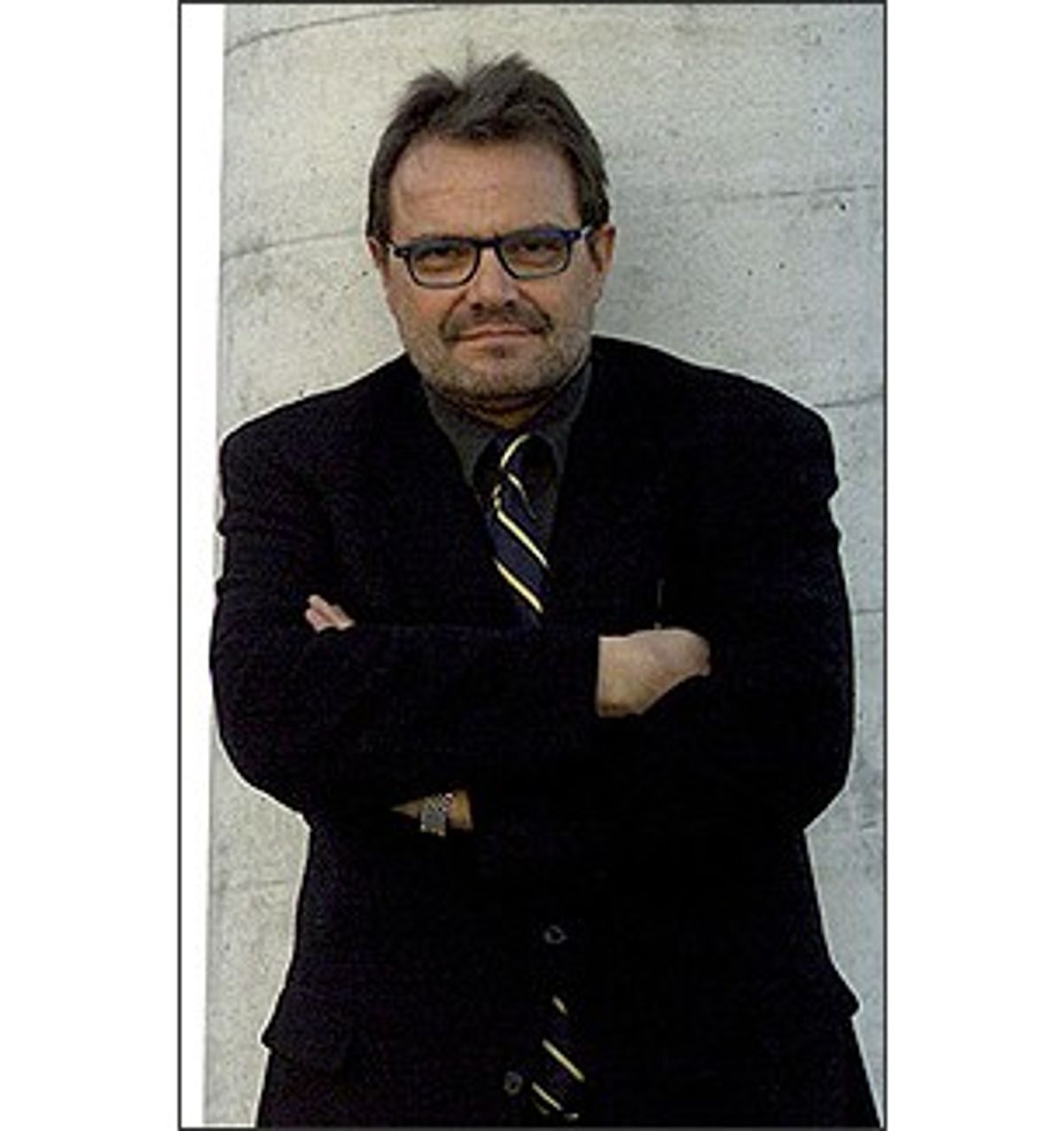
Oliviero Toscani is sitting in a rickety chair, hunched over a telephone, looking slightly weary. We’re at Studio Pin-up, a cavernous photo studio in Paris where Toscani — accompanied by his kids, a loyal band of colleagues and a coterie of hip, young models — is shooting the next Benetton catalog. Above us, an upstairs loft has been converted into a makeshift graphic design space where the entire catalog will be laid out over the course of a week. Toscani later banters with his models and hovers over his camera. At one point there is a discussion with a hairstylist about cutting his daughter’s hair in the style of a famous Italian personality to photograph in a spoof; his daughter, a wispy, refined preteen, is not so sure. There is laughter.

It is hard not to be charmed by Toscani, though it is easy to see why many people are not. Labeled by many the “bad boy of advertising,” he is opinionated, irreverent, sometimes bombastic and often contradictory. I, for one, was never particularly moved by Toscani’s work for Benetton — the multicolored condoms, the horses mating, the newborn babies — until the early ’90s, when a campaign featured dying AIDS patient David Kirby.

Kirby’s completely ravaged, emaciated body surrounded by hefty, fleshy, grieving relatives was almost medieval in its pathos, and yet it had the slightly stiff, theatrical quality of figures in a wax museum. (Which is why, at first glance, I wasn’t sure if the image was even real.) Once I noticed Benetton’s little green rectangular logo floating discreetly on the bottom of the billboard, I thought, Oh, this is advertising. Or is it? What exactly is Benetton doing here? Selling knitwear? Is Toscani waging a social crusade or has he simply found the perfect shock-value advertising strategy to bolster Benetton’s corporate brand identity? Is he exploiting the sick and the dying or is he legitimately increasing public awareness of critical social issues?

These questions have underscored all of Toscani’s subsequent campaigns, inciting fresh outrage along the way. And there is no one simple answer. For every person who detests Toscani there is another who admires his work.

“Toscani is on another planet. I think his work is sick and unhealthy,” says Dominique Anginot, a photographer and president of Lux Modernis, a French advertising company. “I understand the combat he’s leading here with these types of images, and I appreciate his iconoclasm, but what’s sick here is marrying these high-impact social images with futile consumer products, like sweaters. It’s disrespectful of the public. Joel Peter Witkin (another famous photographer) does extremely disturbing photos of images made with cadavers and body parts, but he’s not defending any moral or mercantile code. Toscani is doing both, and that’s dishonest.”

Others are not so dismissive. Many have applauded (and awarded) Toscani’s work and do not see a contradiction in mixing social activism or commentary with advertising. In an industry where selling your soul to peddle product is par for the course, Toscani has had the good fortune of being able to communicate in ways unthinkable to a traditional multinational corporation. (Could we imagine, for example, Procter & Gamble using starving African babies in its Pampers advertising?)

Thanks to Benetton’s owner, Luciano Benetton, Toscani (who is a photographer, not an advertising executive) was given carte blanche to use the company’s advertising platform as his canvas. And since Toscani is concerned that we are moving farther and perilously away from reality, it is no surprise that reality features prominently, if not exclusively, in his work. Human heart, war, the bloodstained shirt of a dead Slavic soldier — Toscani presents life with no holds barred.

His magazine, Colors, which is published in seven editions and eight languages, is essentially a compendium of hardcore, in-your-face reality with no advertising and little if any commentary — just the stark reality of a world many of us do not want to acknowledge, let alone live in.

Curiously, the more Toscani’s work has strayed from the product being sold and assaulted us with reality, the more controversy it has stirred up. Toscani is seemingly indifferent to all this, particularly when it comes to his detractors. “I don’t care about rejection,” he says. “Actually, it’s a big honor.”

If this is true, then Toscani is basking in the glory of his latest controversy, which has elicited widespread and aggressive rejection: Twenty-six-year-old death-row inmate Jeremy Sheets stares out from billboards with a look both placid and disturbing. His impending execution might have gone unnoticed were it not for Toscani, who has immortalized Sheets and several other death-row inmates in his latest Benetton campaign. Among other things, the campaign has resulted in complex legal battles and the loss of Sears as a Benetton client. “Pft,” says Toscani about the latter, waving his hand dismissively. At one moment he seems fashionably apathetic; at other times he passionately defends the issues at stake in his campaigns.

After spending time with Toscani, my impression is that he is very comfortable with the seeming contradictions in his nature; as far as provocation is concerned, it has always been part of his palette. In the late ’60s and ’70s he was hanging out with Andy Warhol. He has worked for and/or remains friends with people who have married commercial fortune with social activism, including Doug Tompkins, the co-founder of Esprit, who sold his fashion empire to create a vast self-sustaining “eco-retreat” in Chile to save the rain forests. Nearly 20 years ago his work for Jesus Jeans (notably an ad of his then girlfriend sticking her butt in the camera) prompted important Italian social critics to write prolifically about Toscani and his position on sex, advertising and the Roman Catholic Church. Given Toscani’s personal orientation and nature, one can only imagine that if he hadn’t met Mr. Benetton, he would have invented him.

But all this doesn’t explain why so many people are so concerned about Toscani’s work. His mixing of problematic social issues with advertising may be in deeply questionable taste, but does that mean that we should prefer the warm-and-fuzzy advertising of seriously scary multinationals like, say, Monsanto?

In the end, Toscani’s work may be a form of cynicism, or it may be a vehicle for stirring up debate around social issues. Or it may be both. Lillian Hellman once said: “Cynicism is an unpleasant way of saying the truth.” Toscani would most likely agree.

What prompted you to develop the death-row campaign?

I always asked myself, “How can a civilized country still have such a procedure?” I find it ridiculous. It’s not a question of being American or Italian or German. It’s just a question of being civilized.

What do you say to people who feel you’ve emphasized the humanity of death-row inmates at the expense of their victims and the victims’ families?

I say, is it bad to do that? Is that a solution — to take away humanity, to kill people? Is that human? I don’t see how people can support coldblooded execution. I don’t think that’s human.

You’ve also been criticized for using advertising as a platform for communicating a certain morality while increasing Benetton’s bottom line.

Anything you do, even if you write a song — you can write an engaged and concerned song and sell a lot of records. That happens, right? A lot of American folk singers did that. They made some incredible songs and they became millionaires. And I don’t care if they became millionaires. I like their songs. I don’t want to make the world better. I’m just trying to make good songs.

And yet Benetton is one of the few companies that take these kinds of advertising risks.

For me it’s just normal. That’s the way I think, that’s the way I live, that’s the way I function. I’m very privileged and very lucky to be able to live the way I live, and work the way I work. I’m one of the few, I know. So somehow I feel compelled to do what I do because that’s my way of being.

But aren’t you exploiting social issues to increase Benetton’s brand recognition? Isn’t there a contradiction here or at least a problematic relationship?

Listen, a doctor who works with cancer, an oncologist — does he exploit cancer? He’s a rich man because he’s a doctor. But do you think when he sees a patient he rejoices and says, “Ah, finally here’s somebody with cancer?” Or Frank Gehry the architect, when he’s doing a building for Coca-Cola — do people ask him if he’s doing this beautiful building so that Coca-Cola will sell more? Is he exploiting Coca-Cola to do architecture? I think this is a very old way of thinking. I’m exploiting, yes, and I want to exploit in the right way.

When Life magazine makes a cover about war, it makes the cover to inform, but also to sell the magazine and to sell the advertising pages inside the magazine — Chivas Regal and all the others. So Time magazine and all the others make a cover to inform and to sell. To do what I do, I do that to sell but also to inform. And as soon as you inform, people point a finger at you and say, “You are exploiting!” No. It’s the people who don’t even inform [who are exploiting]. It’s Prada bullshit, or Gap bullshit, or Chanel. They don’t even inform. They make people stupid. I don’t care about the rejection; I’m not afraid to be rejected. Actually, it’s a big honor in this world.

You once said that death is the last pornographic issue. Can you explain?

Death is not something we deal with in a relaxed way. Like sex — why is sex pornographic? Sex is not pornographic at all. We just don’t deal with sex in a relaxed way. Anything we don’t deal with in a relaxed way is pornographic. War is pornographic. War is one of the most pornographic human activities that exist.

Americans don’t give a fuck about death. Nobody talks about death. Everybody’s immortal there, especially in advertising. Everyone is beautiful, young, sexy. Everyone wants to have a one-hour orgasm. There is a way now to have a one-hour orgasm. Can you imagine? What a bore! What’s the point?

But you’ve spent a great deal of time in America.

Oh, yes, this is my country. And this is the place, because you can say anything you want in America. There is the worst, but there is also the best, in America. When Europeans talk about America it makes me laugh. They don’t know. America is anything you can say, do, be … There are the dumbest but also the most intelligent people in America. Americans are great because they get so mad, they get so passionate.

Do you like working for Tina Brown? [Toscani is creative director for Brown's Talk magazine.]

I love it. You know, they say that I’m a male chauvinist. I’m working with one of the most difficult women in the world and we get along fantastically. Great woman. Great woman.

So, what about these claims that you’re a male chauvinist?

I think that most women are dumb — not because they are dumb but because they play dumb. They should be home taking care of their children, educating society. Society is missing the mother, the education of the mother. They’d rather check their office instead of checking their children’s school bag.

It’s very important. We are missing a whole foundation of mothers in society. Women are giving up an incredible responsibility to become what? Managers? Now women become generals, they go to the army, they are policemen. Fuck! It’s too much! I mean, women in uniform? I had incredible respect for women because they didn’t go to work. Now they even go to war, they bomb, they kill. Women didn’t do that in the past. Now they do. Well, great, fantastic, my compliments. You’ve joined the group of idiots called men.

So feminism is a disappointment?

It’s totally wrong. Now women want the same bullshit as men. It’s wrong, all wrong.

I’ve worked for women’s magazines. They make me laugh. If I was a woman, I’d be embarrassed to be treated like that. Look at Vogue, and [Harper's] Bazaar, and those kinds of fashion magazines. Basically women are stupid because they think they can become more beautiful by copying those kinds of idiotic images.

But as a photographer you worked for these magazines and produced these same images.

Of course. That’s the reason why I say that. Everybody is afraid to be rejected. Because if they are what they are, they’re probably going to be rejected. If they have a nose that doesn’t conform to fashion magazines, if they’re a little fatter than the models in magazines, they’re afraid that they’re going to be rejected. It goes on like that. So stupid people see beauty only in beautiful things. It’s an old dada expression.

You’ve spoken out against what you call the “monoculture.” Isn’t Benetton part of that monoculture as well?

Yeah, sure. But I try my best to expose that monoculture by doing the opposite. My magazine called Colors shows the differences in the world, the rest of the world. Because there is always the rest of the world that people don’t want to look at. I try to speak a language that people say is against the interest of the company. There was an article in the French daily Le Monde [as well as an article by Jerry Della Femina in the Wall Street Journal] that said that if I continue doing that, Benetton is going to disappear. I don’t think so. On the contrary, people are much smarter than advertising people and consumption pushers think they are. People are not just consumers.

You’ve compared your relationship with Benetton founder Luciano Benetton to the pope and Michelangelo. Tell me about your relationship with Mr. Benetton.

He’s the pope. It’s true. There’s a relationship there — we’re friends. We’ve been working together for 18 years. We don’t have to check each other out. I know he’s a good man, a good owner. I know what he does, that he does quality. He doesn’t pollute as much as an entrepreneur in car manufacturing.

What he does is simple. It’s first-degree industrialism. Pure cotton, pure wool. He doesn’t speculate by producing in the Far East like certain American companies, because it’s cheaper than in the United States. At Benetton, everything is produced in Italy for Italy and for rich foreign countries. What is produced in Turkey or China or Brazil is produced on location for the local market. You also give local people the opportunity to work, produce and consume the goods that they produce. So I think on that level the company is the best company in the world. I’ve checked these things out. I’m very concerned about these kinds of things, and that’s the primary reason why I work. And of course the company has the kind of politics that gives me the possibility to do what I want.

Has Mr. Benetton ever responded to one of your campaign ideas by saying, “No, now you’re going too far”?

No, never. Going too far compared to what? I don’t understand that. There’s no such thing as going too far. If you are intelligent, you can go as far you can want. There is no such thing as going too far. I hope we’re going very far, even further. Going too far …

Do you think companies like Benetton are companies of the future?

Oh, yeah. They have to be, financially, economically. I think it is the only way we can have a reasonable society. Otherwise it will be the Wild West. You can’t, for example, exploit child labor because you want to buy your shoes for $10 all your life and you don’t know or care where they’re made, and at the same time give to charity — to Amnesty International or to some starving children’s foundation in the Far East. I think this way of being should be over. We should buy our shoes for $25, and instead of buying three pairs we buy one pair — better made, more consciously made. The problem is not to produce more and to consume more, but to produce better and consume better. For example, I have too many shirts! I have enough shirts for three lives!

You must have a lot of nice sweaters, too.

Yeah, enough for three lives. But why?!

Most people aren’t aware of the scope of social programs Benetton has sponsored in conjunction with your campaigns. The AIDS work with ACT UP, the clothing redistribution project, the work with anti-apartheid groups in South Africa …

Yeah, but saying that makes everybody feel so comfortable. I hate to make advertising by saying that it goes to charity. Those companies that say “we gave a million dollars to such-and-such a charity …” Bullshit! You shouldn’t even pronounce that. I’m so angry at those people who make advertising about themselves by saying that they do charity. They are some of the biggest speculators in the world. They even speculate on charity.

That obviously bothers you.

Achk! I can’t stand it. [Mocking] “Oh, we’re doing an eight-course charity dinner.” Fuck you! I hope your eight-course dinner is poisoned! You just have to do your work, and while you’re doing your work you should be concerned about the quality of your work — whether you’re a plumber or whatever.

What other things are on your mind for future work?

Religion is something. Media is something. Media is just a bunch of bullshit. Media is the real advertising. And they belong to big companies. There are some newspapers and TV companies that can’t talk about certain things because they belong to General Electric or some big gas company.

Speaking of religion, you’re apparently inspired by medieval religious paintings, paintings where blood and death are much more present and graphic.

You walk into a church, it’s like walking into a slaughterhouse. There’s blood and thorns and hearts in hands. You go to [churches in] Rome and you see incredible blood all over. There is a famous painting of a woman holding her dead child in her arms. What a subject! You can’t take a picture of that! Today there’s a whole problem about artificial insemination. Well, the Virgin Mary was artificially inseminated. From the very beginning. I mean, think about it. What an incredible idea!

Do you still call yourself a radical libertarian?

More than that. I’m a total anarchist. I’ve never been into a bank in my life. I refuse.

So how do you manage your money?

My wife! The best way to get rid of money is to get married.

Anything else you want to say about your views or your recent campaign?

I don’t know why everybody is so concerned about the business of Benetton. They lost Sears, but they got some incredible letters from people who were angry at Sears for dropping Benetton. Everybody’s so concerned about the business, that we might lose clients. I mean what the heck, who cares? I think it’s very good that we lost Sears. People are talking about loyalty to our clients. Pft!

Read this [he refers to a quote on paper], I think it’s great:

“The greatest dangers to liberty lurk in insidious encroachments by men of zeal, well-meaning but without understanding.”

That’s it. That’s what we’re talking about when we talk about my work.

Debra Ollivier, a contributor to Mothers Who Think: Tales of Real Life Parenting, is the author of "Entre Nous: A Woman's Guide to Finding Her Inner French Girl." Her work has appeared in numerous publications including Harper's, Playboy, Le Monde and Les Inrockuptibles.

AIDS: Why Africa suffers for the West’s sins

Craig Timberg talks about the colonial origins of AIDS and the legacy of distrust between Africa and the West

  • more
    • All Share Services

AIDS: Why Africa suffers for the West’s sins

As a lens to explore the complex and deeply fraught relationship between Africa and the West, the AIDS epidemic is as revealing and disturbing as it gets. Born in colonial Africa and discovered in gay America, the devastating rise of AIDS has been fueled in no small part by the clash of cultures that played out over the past 130 years or so between Africa, Europe and the U.S. — and the rivers of resentment those conflicts have sown.

“Tinderbox,” an insightful new book from a journalist and an AIDS researcher, tells the story of the epidemic from its birth in colonial Congo — where it lingered undetected for decades — to its sudden spread around the globe in the 1980s, to its status today as the object of a global public health war directed from Washington and Geneva and targeting Africa, home to some 70 percent of all AIDS cases today.

Narrating this disturbing tale are Craig Timberg, former South Africa bureau chief for the Washington Post, and Daniel Halperin, an epidemiologist, AIDS researcher and former advisor to the U.S. government’s anti-AIDS program. Timberg met Halperin in the middle of his five-year stint as the Post’s Johannesburg bureau chief and the two began exploring questions that had bothered Timberg since his arrival in South Africa.

Timberg, now back in Washington as the Post’s deputy national security editor, spoke with Salon about the book.

Perceptions about the origins and spread of AIDS have changed over time in fascinating ways. First, it was seen as a gay disease. When it was detected in Africa, people assumed it came from the West. Over time, scientists showed it originated in Africa, a notion rejected by many Africans but in keeping with Western notions about third-world diseases. You show in the book that AIDS arose as a result of sweeping changes in social structure brought to Africa by European colonialism. Describe its origins.

Scientists have known for more than a decade that the version of HIV that has caused almost all cases of AIDS is virtually identical to a virus common in central African chimpanzees. That’s not controversial. The location of the transmission was determined by a group of scientists who narrowed it down to chimpanzees living in southeastern Cameroon by collecting their feces, detecting the virus and comparing it to other strains collected elsewhere. Michael Worobey from the University of Arizona and his team mapped the genetic structure of pieces of HIV from all over the world, looking at the extent of mutations between them. They were able to make assumptions about how many years it would have taken to produce these changes. The time frame puts you close to the turn of the 20th century for the original virus, the ancestor to all modern HIV.

How was the spread of AIDS to humans linked to colonialism?

In southeastern Cameroon, at the exact moment scientists now believe HIV entered the human population, you had steamships going up rivers that never had steamships before. You have porters who are virtually human pack animals carrying ivory or gear for colonial companies through dense forests. One of those porters would have been the first human to contract HIV. It looks like HIV goes from the chimp population into a hunter who cuts himself while butchering a chimpanzee for food. It then spreads in a localized way along these porter paths and colonial trading posts and eventually comes down river on a steamship into Kinshasa, then called Leopoldville, the first major city in that part of the world.

And that leads to what you call the Big Bang – when HIV explodes and moves out of the Congo.

That’s right. A single spark emanating from southeastern Cameroon works its way to colonial Leopoldville. But HIV doesn’t spread fast on its own. It needs particular conditions to race through a population and Leopoldville had them. It was big and growing fast. It had a high concentration of men working in factories, separated from their wives and girlfriends. It had an emerging population of sex workers and transport to get people back and forth. Gonorrhea, syphilis, chlamydia spread like wildfire; HIV doesn’t but starts to spread along railroad lines, porter paths and rivers during the early and middle part of the 20th century. When scientists look at the genetic structures of different types of HIV they all seem to have come from a single piece of ancestral HIV that existed in Leopoldville at the beginning of the 20th century.

So HIV lingered in small numbers of people but doesn’t exit this area. When researchers go back to blood samples collected during the 1976 outbreak of Ebola virus, they find HIV.

Yes, so in the middle part of the 20th century about 1 percent of adults in major population centers of the Congo had HIV. Before they died, they developed symptoms of other familiar maladies—pneumonia, tuberculosis, wasting. It wasn’t obvious there was a new epidemic loose in the land until gay men in the United States started getting sick in the early 1980s. Before that, it didn’t spread far and it didn’t spread fast. The reason seems to be that in colonial Congo, the majority of adult men would have been circumcised and circumcised men are much less likely to contract HIV and pass it on. It’s only when HIV makes its way out of the Congo River basin to other places more hospitable to its spread that we get a true explosion.

Many people assume AIDS must be a disease of poverty. But you argue that wealth, modern transportation and economic development were key factors that allowed AIDS to break out.

When I first went to Africa as a correspondent in 2004, I carried this question with me: Why is HIV so severe in some places and not in others? Logic said: Africa, poverty, poor medical systems — there had to be a connection. But when I started traveling to different countries I discovered that most truly outrageous hellholes — places with warfare and incredible poverty — didn’t have much HIV. Other places with modern transport and sophisticated economies had a lot. When I met my co-author, Daniel Halperin, it began to come together. I saw that while being poor and having HIV is certainly a very bad thing because you’re more likely to die when you can’t afford medicine, some degree of economic activity actually makes you more vulnerable. When the epidemic starts spreading widely in some African societies it’s in the cities. Wealthier people — doctors, teachers, politicians, singers — get HIV in completely disastrous numbers. Some of that has to do with access to resources and multiple sexual partners.

You begin with a chapter on the city of Francistown, Botswana, an affluent place with a horrendous HIV rate. What struck you about Francistown?

I drove to Francistown for the first time in 2006 and it felt like driving into anywhere, USA. I could buy a hamburger at Wimpy’s, order a shot of espresso. There were cafes and ATMs. Yet it had this horrendous HIV rate. Among women in their 30s, two-thirds were infected. The picture of poverty before HIV didn’t add up. When you scratch the surface you begin to realize that other factors — human movement, transport, sexual behavior, circumcision or lack of it — are decisive in how the virus spread.

You describe the AIDS belt, an area in southern Africa at the very heart of the African epidemic. What are the characteristics that made it, as you call it, a tinderbox?

There’s a giant swath of the continent that starts at the southern end of Sudan, goes down through east Africa to South Africa and out to the sea where you have this combination of sexual networks and low rates of male circumcision. Together they produce the tinderbox. Two centuries ago most of Africa had polygamous societies in which the richest, most powerful men had multiple wives. In contemporary Africa, in part because of that tradition and in part because of the ravages of colonialism and migratory labor, many men and women have more than one sexual partner over the course of a week or month. But to be part of the AIDS belt, you need one more thing: low rates of male circumcision. The people who migrated down the Nile River basin from Sudan never had circumcision as part of their tradition. In the southern part of the continent, it was a tradition pretty much everywhere until about 200 years ago when some ethnic groups began to give it up. In those places you see HIV rates of 10, 15, even 25 percent.

Why is circumcision effective and why was early evidence of its power missed?

A man’s foreskin is unusually vulnerable to HIV; the skin is thinner, softer and more easily penetrated by HIV and other pathogens. When it’s removed, the remaining skin is rougher and more resistant to infection. That makes no difference if you’re a gay man who is the receptive partner in anal sex. But the African epidemic is spread predominantly through heterosexual sex, particularly vaginal sex, and circumcision is crucial. Circumcised men are at least 70 percent less likely to get HIV. This science first began to appear in the mid-1980s.

That’s three decades ago!

That’s right. That data seemed to offer this miraculous new insight. But the global public health community was deeply uncomfortable with the subject. It took another 20 years to come up with evidence so definitive they accepted it. Peter Piot, one of the central characters in the AIDS response, was part of that research team. Yet during all the years he was head of UNAIDS he was not enthusiastic about this science. To be fair, establishing correlation is not the same as establishing causality. And it’s a pretty serious thing to contemplate altering men’s penises if you’re the global health community.

One area of culture clash between global health agencies and Africa is over condoms. What happened?

People who had watched AIDS in the U.S. were mindful of the way condoms seemed to slow the spread of HIV there and especially in Thailand, where the epidemic was transmitted mainly in brothels. It was hard for those officials to understand how different the African epidemics were. In several places, Africans were saying, “Hey, our best chance for surviving is for people to have fewer sex partners at a time.” But Westerners had condoms on their minds. The U.S. government and other organizations made a huge bet on condoms and reasoned that if you could just get enough of them to people in vulnerable places you could reverse the epidemic. Instead, reported usage of condoms in some African societies went to rates far higher than anywhere else but HIV also went up. That puzzled people until it became clear that people were using condoms with prostitutes or one-night stands but not in long-term relationships with their husbands, wives, boyfriends or girlfriends. And that’s how HIV is most likely to spread.

Uganda emerged in the early days of the epidemic as a place that took effective action, changed people’s behavior and lowered HIV transmission. 

In 1986 a new government took over and confronted the facts of AIDS. They knew it was fatal, they knew it was incurable, they knew it was spread by sex, and they knew a lot of people already had it. So political, religious and cultural leaders focused on changing the sexual behavior that was at the core of HIV’s spread. The most famous terms for this was zero grazing, a metaphor that worked well in an overwhelmingly agrarian society. When leaders said zero grazing, Ugandans understood at an intuitive level that having sex with your primary partner is much safer than having sex with a primary partner and others. If a large number of people make a relatively small change in their number of sex partners it can make a massive difference in the spread of HIV. That’s what happened in Uganda and hundreds of thousands of lives were saved.

Why were the powers that be in global health so reluctant to focus on behavior change?

The global health infrastructure was uncomfortable talking about differences in sexual behavior. That’s a shame because a sexually transmitted epidemic is by definition spread by sex. To understand why it’s worse in some places than others you have to dive into some inherently uncomfortable questions about a very private matter.

Yet there was historical evidence here that changing behavior made a difference. San Francisco closed the bathhouses and it helped. In New York, behavior changes led to lower rates of anal gonorrhea in the early days of the epidemic.

Those changes were instituted within coherent communities. Gay men advocated the closing of bathhouses and made the choice to have fewer partners or use condoms. In Africa that process was hampered by the slowness to accept that AIDS was real and the fact that people are understandably resistant to being told what to do by a large and powerful outside force. Many of these societies need our financial aid, our technical assistance to do things that matter to them, including improving public health. The tension over how much to listen to outsiders while not wanting to be told what to do has troubling consequences that have infused the world’s response to AIDS in all sorts of ways.

What lessons do you draw from the way the epidemic has been addressed in Africa?

The overriding lesson is that sex matters. Those of us who care about people getting this terrible disease can’t be squeamish in discussing sexual behavior because we’re afraid of how it makes us look. The research has to be good, the messaging has to be forceful and clear. It’s not enough to tell people to use condoms all the time because the evidence after more than 30 years is that people don’t, not often enough to be truly decisive. We also have to be willing to engage in questions about how many partners people are having, we need to tell people that from the viewpoint of sexually transmitted infections, anal sex is more dangerous than vaginal or oral sex. These things are uncomfortable to talk about. At the same time, if we take seriously the moral question of trying to prevent as many infections as we can, we can’t be frightened of these subjects.

Continue Reading Close

Rob Waters writes about health, mental health and science from his home in Berkeley, California. His investigative feature in Mother Jones, “Medicating Aliah,” examined pharmaceutical industry influence over prescribing guidelines and won the Casey Award in 2006. His articles have appeared in Bloomberg Businessweek, Mother Jones, Health, Reader’s Digest and other publications.

The new AIDS crisis: Funding

Scientists believe they can finally stem the epidemic, but money is a major obstacle

  • more
    • All Share Services

The new AIDS crisis: Funding (Credit: Reuters/Yiorgos Karahalis)
This article originally appeared on GlobalPost.

KISUMU, Kenya – Thirty years after the discovery of AIDS, scientists believe for the first time that they now have the tools to beat back the deadly virus.

Global Post

The evidence is found in HIV prevention research conducted here on the shores of Lake Victoria and in several other parts of sub-Saharan Africa, long the epicenter of AIDS. The most notable research discovery stems from the HIV Prevention Trials Network 052 clinical trial, a U.S.-funded, nine-country study that found early treatment reduced the risk of HIV transmission to an uninfected partner by 96 percent.

The 052 results – announced to a standing ovation in Rome at the International AIDS Society conference in July – was one in a line of recent breakthroughs, including the benefits of male circumcision to prevent infection, and smaller conceptual advances in an HIV vaccine candidate as well as with microbicides, or gels used by women to stop transmission.

But the gloomy global economic situation, and recent scale-backs in HIV funding around the world, have cast great doubt as to whether policymakers will take advantage of the combination of new prevention tools to fight AIDS.

This collision of scientific advances vs. economic realities also comes at a heightened political moment of the U.S.’s own making: Secretary of State Hillary Rodham Clinton earlier this month called for an “AIDS-free generation,” and the United States’ actions on AIDS will be in the spotlight during next July’s International AIDS Society conference in Washington, D.C., which is being held in the U.S. for the first time in 22 years due to the Obama administration’s decision last year to end U.S. entry restrictions on people who have HIV. The conference is expected to attract more than 25,000 people from around the world.

President Obama is expected on Thursday — World AIDS Day — to talk about his administration’s next steps on AIDS, following Clinton’s speech. This would be his first major speech on AIDS as president; he has remained largely silent on all global health issues. Even when Obama announced a bold new Global Health Initiative, the White House put out only an eight-paragraph statement.

“The terrific science in the last year is coming up against the fiscal constraints,” said Chris Collins, vice president and director of public policy amfAR, the Foundation for AIDS Research. “It is going to take choices. That is the big challenge for policymakers in the next couple of years: How to get above the day-to-day politics here and use the resources as strictly as possible. We now need to hear our president articulate his policy action plan for an AIDS-free generation.”

Several sources within the Obama administration said in interviews that Clinton’s speech at the National Institutes of Health was at least partially spurred by the realization that next year’s AIDS conference will shine a spotlight on the U.S. commitment to fighting the virus, both globally and domestically. The idea was that the United States will be able to report back to the conference on its plan of action globally, while also speak about ongoing research in several U.S. cities about the most effective ways of finding those who are infected and then putting them on treatment.

In the meantime, Obama’s top scientists are urging that the research discoveries to prevent HIV transmission are put to use. The one in the forefront is the best known of all: Dr. Anthony Fauci, director of the National Institute of Allergy and Infectious Diseases, who has advised U.S. presidents since Ronald Reagan on how best to address AIDS.

“All of a sudden we have a convergence of prevention approaches, which includes treatment as prevention, and that really validates the concept of combination prevention,” Fauci told GlobalPost in an interview earlier this month. “There is now an enthusiasm and an excitement if we can implement some of these scientific advances, we can have a major impact in turning around the trajectory of the epidemic.”

Fauci said that future modeling of the AIDS epidemic shows that if prevention tools are effective and if fewer people are infecting others, a precipitous fall in HIV infections could follow. Then, he said, the whole arc of the epidemic could crumble.

“When we can get the incidence of HIV down enough to turn the trajectory of the pandemic, it will assume a momentum of its own in diminishing HIV,” he said.

“That’s because the fewer people who are transmitting infection and the more people who are trying to protect themselves from infection – those are the two arms of the problem – that diminishes the pool of people capable of infecting the other people.”

A UNAIDS report released last week concluded that the global expansion of AIDS treatment has made a significant difference in terms of saving lives and almost surely in preventing infections. It estimated that new HIV infections were reduced by 21 percent since 1997, and deaths from AIDS-related illnesses decreased by 21 percent since 2005. It also found that 6.6 million people were on life-extending antiretroviral treatment in 2010, an increase of 1.35 million from the previous year.

Given the findings of the 052 study, scientists and researchers said that the more people who are put on treatment, the more infections will be averted. The experts said that funding isn’t the only issue. Another key one is making sure the prevention strategy matches the specific epidemic in a country.

“Funding is not enough today and probably will never be adequate,” said Robert Hecht, a principal and managing director at Results for Development who has done extensive modeling on what will happen in various scenarios with AIDS funding.

He continued: “What will be important is getting some of these countries to recognize that if they don’t have all the money they need, they need to target programs for the high-risk groups. If you had to choose, say, between a few more dollars for sex education in the schools, or spending it more to reach gay men, or injecting drug users, the countries would be better to use it in the latter programs.”

In Kisumu, the principal city of western Kenya, with a population of roughly 500,000, the 052 trial was stopped in May because it was working so well that researchers felt it was no longer ethically defensible to keep a control group on placebos. Dr. Lisa Mills, the principal investigator for the western Kenya part of the study, and chief of the HIV Research Branch at KEMRI-CDC (a long-time collaboration between Kenya and U.S. researchers), said the Kenyan government already had started people earlier on treatment, but she and others hoped that more funding would allow for another expansion.

“The modeling shows that the amount of funds used for treatment would be much lower by 2015 if you started earlier,” Mills said. “And 2020, there would be a huge savings. There is an increase in start-up costs, but with the costs of the drugs gradually dropping, more efficiencies in treatment, and a reduction in new infections, including pediatric infections, all those add up to fewer people on treatment” in a few years.

Mills said that in fighting AIDS, like other epidemics, “the real issue is when you turn off the tap,” referring to stopping the numbers of new infections. “When you have fewer and fewer new people getting infected every year, turning off the tap starts to happen,” she said.

Kayla Laserson, the director of KEMRI/CDC Research and Public Health Collaboration, said the AIDS research is part of a multi-pronged global health research agenda aimed at finding new drugs, vaccines, and diagnostic tools for a host of diseases. “We have the 052 trial here, but we also have the malaria vaccine trail, and the site for a TB vaccine trial, and many others,” she said. “We see how we make an enormous impact because the results from the community we serve are all around us.”

In the nearby village of Ematsayi, Peter Owiti Omotsi, 39, a father of five, is one of thousands of people in the region now on antiretroviral drugs to fight AIDS. He started treatment in 2008. His wife was HIV negative at the time of his diagnosis, and she has remained negative, he said. Omotsi said the drugs, plus changes to improve the nutrition in his diet, have made him much healthier.

“These drugs work,” he said. “I believe before I die, I will see my grandchildren. Without these drugs, that probably wouldn’t happen. But I have some years to live now. I can at least be proud of my grandchildren.”

In the months and years ahead, the U.S. government will need to make decisions on whether to expand AIDS treatment in the United States as well as around the world to people who are infected but are not acutely ill from the disease. No one is making any promises yet. But no one doubts either that the range of prevention approaches now available, taken together, create a new, powerful weapon to halt AIDS.

“In the last year or so, we have enough scientific advances so that we can start to see some significant turnarounds in the trajectory of the pandemic,” said Fauci, the longtime U.S. AIDS researcher. “But it’s not going to happen alone. We’re going to need a lot more host-country involvement, we’re going to need other donors, we’re going to need to be more efficient in what we do with the resources that we have. Now is a critical time in the history of the AIDS pandemic.”

Continue Reading Close

John Donnelly is a reporter for Defense Week.

The worst state in America to have HIV

Backward laws and ignorant legislators make Mississippi an especially deadly place to be sick

  • more
    • All Share Services

The worst state in America to have HIV (Credit: jocic via Shutterstock)

Recently, an elderly woman in Mississippi was left alone on the curb outside a hospital emergency room. The woman didn’t have a medical emergency. She’d been dumped by the nursing room employees who had learned that she had HIV, according to a lawyer at the Mississippi Center for Justice to whom she was eventually referred.

Mississippi’s neighbors have been known to thank God for Mississippi — when your state ranks 48th or 49th in just about every sad statistic about health or poverty in America, it’s nice to know you’ll always look better than someone. The state’s indicators for HIV and AIDS are about as horrific, although the 9,546 people in the state reported to have the virus probably aren’t particularly grateful about it.

The state has the highest new infection rate and greatest percentage of people living with HIV in the country, and by many measures, the least interest in helping them. Elsewhere, HIV/AIDS has become manageable with anti-retroviral therapy, but a Mississippian with HIV/AIDS is almost twice as likely to die than the average American with the virus; HIV-positive African-Americans in Mississippi are ten times as likely to die from it than their white neighbors. African-Americans are only 37.5 percent of the population, but represent 78 percent of new HIV infections. Meanwhile, an abstinence-education statute forbids even programs offering information about condoms to demonstrate how to use them, but does include a requirement to mention the anti-sodomy laws still on the books.

Combine racism and political indifference to poverty with homophobia — there’s been a rapid rise in infections among young men having sex with men in the state — and you’ve got a public health disaster that state politicians mostly ignore, or worse. ”I’ve been called a nigger and a faggot by state legislators right in the Capitol,” Alonzo Dukes, executive director of the Southern AIDS Commission in Greenville, Miss., told Human Rights Watch for a recent report. One of the few advocates for people living with HIV, state Rep. John Hines, says in the same report, “Legislators in Mississippi don’t see it as a public health crisis; they see it as a punishment for an unhealthy lifestyle.” The state contributes only $750,000 towards HIV/AIDS programs, out of a budget of $4.9 billion.

In other words, there’s very little to prevent employers and housing providers from discriminating against people with HIV, especially because the state doesn’t have any anti-discrimination laws and Mississippi also ranks 49th in funding civil legal services for the poor, according to the state’s Access to Justice Commission.

Even those who can afford a lawyer might have trouble. “I’ve heard stories of even lawyers turning clients away when they have AIDS,” says Marni von Wilpert, a fellow with the Mississippi Center for Justice. “People think they can get it from handshakes or hugs.”

Human Rights Watch also indicted the state for “punitive, stigmatizing, and discriminatory policies that undermine efforts to reach the population’s most vulnerable to HIV … leav[ing] people with HIV/AIDS without treatment at rates comparable to those in Botswana, Ethiopia, and Rwanda.” Advocates report hearing stories of public health officials showing up at workplaces and homes without any regard for confidentiality — terrifying in small rural communities where the stigma of HIV is brutalizing.

Robin Webb, executive director of A Brave New Day, which provides support services to people with HIV/AIDS, says this fans long-standing mistrust of government medical services in the African-American community going back to the Tuskegee syphilis studies. “The government actually plays out that whole Tuskegee scenario when it becomes a punitive force. The way they handle public health is all about authoritative punishment.” They are also terrified of what will happen to their lives if their infection is discovered. ”The No. 1 punishment is to kick people out of the church,” says Webb. “These are the people who talk about Jesus and the lepers.”

One MCJ client, admitted to the hospital for seizures, woke up to discover the doctor had informed a relative, in violation of medical privacy laws, that the patient had AIDS.  ”People are not going to seek care if they think everyone in their family is going to find out,” says Von Wilpert. Meanwhile, Von Wilpert says, the state has chosen only to distribute free AIDS drugs at limited Department of Health locations. “People are traveling two or three counties over to even get the drugs,” she says — or not traveling at all.

The good news is that advocates believe they have an ally in the state’s new STD/HIV director, Nicholas Mosca. Von Wilpert and her colleagues are launching a new medical-legal partnership program, as well as an office in the hard-hit Delta region. Webb, who grew up in the Delta but lived in New York during the AIDS crisis and subsequent activism, says he’s trying to import that language of empowerment and self-management to his home state, and try to undo the shame and stigmatization. “I think most of us realize that diseases, especially lethal diseases, love secrets,” he said.


Continue Reading Close
Irin Carmon

Irin Carmon is a staff writer for Salon. Follow her on Twitter at @irincarmon or email her at icarmon@salon.com.

The art of the AIDS poster

A new collection shows 30 years of fascinating, frustrating, beautiful attempts to educate the world about safe sex SLIDE SHOW

  • more
    • All Share Services

The art of the AIDS poster

View the slide show

Each of the more than 6,000 images in Dr. Edward Atwater’s peerless collection of AIDS-related posters — now owned by the University of Rochester’s Rare Books and Special Collections Library — freezes its viewer at a particular social, cultural, political and geographical point in the 30-year history of the disease.

Some of the posters are provocative, explicit or overtly sexual; others are straightforward, tame — even prudish. Some rely on shock-and-awe tactics to make a general point; others offer detailed advice for HIV protection. Some, created in the 1980s or ’90s, are already very clearly dated; others are triumphs of evergreen design. All offer glimpses of past understandings of the disease, its dangers and its prevalence.

The posters themselves hail from more than a hundred different countries — translating fears, concerns, misconceptions and public service announcements into languages as familiar as English and Spanish or as exotic as Latvian, Slovakian, Hebrew and Icelandic. What connects them is the wide-ranging interest (and prodigious curiosity) of Atwater himself — a former professor at the university’s medical center — who donated his collection to the institution several years ago in the hope that its contents would continue to educate viewers about the disease and its history.

Almost 1,500 of Atwater’s posters have so far been made available on the university’s browsable online database, and more are being added continually. See some of the highlights of the collection in the slide show that follows — and then head over to the database itself for further browsing.

View the slide show

Continue Reading Close

Emma Mustich is a Salon contributor. Follow her on Twitter: @emustich.

The terror of a bogus HIV test

After a false-positive shut down the porn industry, an actress opens up about her testing scare

  • more
    • All Share Services

The terror of a bogus HIV test

The details of how a bogus test result reportedly shut down the billion-dollar adult industry for a week are still shrouded in secrecy — but porn actress Dylan Ryan says she understands what the performer, known as “Patient Alpha,” must be feeling. That’s because she experienced firsthand the terror, and unparalleled relief, of a false-positive HIV test.

It happened before she entered the business, so she has unique insight on both the adult industry and what it’s like to experience an HIV scare as a non-performer. Eight years ago, she went to a reputable testing site in San Francisco — she was starting a new monogamous relationship and wanted to play it safe. They gave her an FDA-approved rapid fingerstick test that can turn around results in a mere 20 minutes — but 40 minutes later she was called into an office by a man “who had a worried look on his face,” she said in an email. He told her she had a positive result — but, as she started to cry, he added that a confirmation test, which would take a couple of days to process, was still needed. “It felt terrifying but also like it couldn’t possibly be,” she said. “I ran through all the possibilities over and over.”

She debated whether to tell anyone and ultimately decided against it: “It felt too shameful, too scary and if there was a chance I wasn’t positive, I wanted to hold on to that for as long as possible. I dreaded having to call partners and possibly tell and then lose my new person.” When the test results came in, she was called into the office and “sat in the waiting room, feeling like I was going to vomit at any moment,” she said. “I could have sworn that everyone was staring at me.” The same counselor from before called her into the same room where she had received the bad news just days before, but this time, as soon as he shut the door, he said, “I have good news.” Ryan started to cry, “even harder than the last time I was in the room,” she says.

False positives can arise because of certain medical conditions (like lupus, Lyme disease and syphilis), sample contamination, or clinicians’ failing to follow proper follow-up protocol. It’s estimated that the enzyme-linked immunosorbent assay (ELISA) test, which is currently the standard screening approach for the general population, has a false-positive rate of one to five per 100,000 tests. ELISA is sensitive enough that if someone gets a negative result, a follow-up test generally isn’t needed — but a positive result always calls for a confirmation test, most often by the more targeted Western blot test. That brings the rate of false positives to roughly 1 in 250,000 cases, according to the AIDS charity AVERT. The adult industry has relied on a different test with a smaller “window period” between exposure and possible detection: The pricey and specialized PCR/DNA technique can yield results as early as two weeks after exposure by detecting HIV itself rather than the antibodies caused by the virus.

The Free Speech Coalition, the organization currently working to create a new testing system following the bankruptcy of Adult Industry Medical (AIM), hasn’t revealed any specifics about how the performer in question received a false positive. Most have chalked that up to respect for patient confidentiality or the chaos of a business in transition, although one conspiracy-minded pornographer has suggested it’s a coverup. One thing is certain: Uncertainty and paranoia isn’t unusual following a false positive.

“I wouldn’t wish that on my worst enemy,” Ryan said of her experience with a false positive. “I know that testing has improved exponentially since [then] and I am glad that fewer people will experience that kind of momentary life upheaval.”

Continue Reading Close
Tracy Clark-Flory

Tracy Clark-Flory is a staff writer at Salon. Follow @tracyclarkflory on Twitter.

Page 1 of 33 in AIDS