
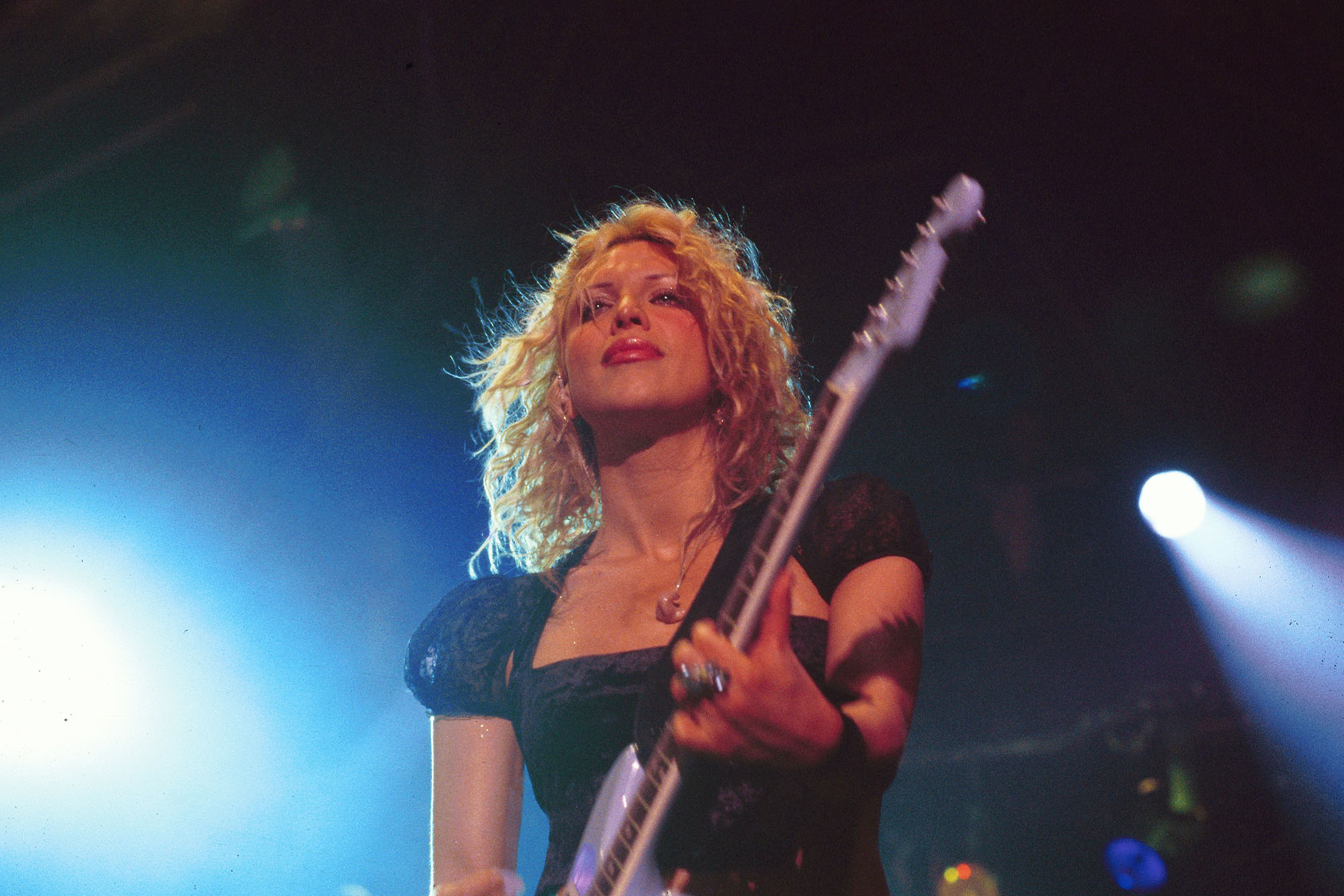

Today I want to talk about piracy and music. What is piracy? Piracy is the act of stealing an artist's work without any intention of paying for it. I'm not talking about Napster-type software.
I'm talking about major label recording contracts.
I want to start with a story about rock bands and record companies, and do some recording-contract math:
This story is about a bidding-war band that gets a huge deal with a 20 percent royalty rate and a million-dollar advance. (No bidding-war band ever got a 20 percent royalty, but whatever.) This is my "funny" math based on some reality and I just want to qualify it by saying I'm positive it's better math than what Edgar Bronfman Jr. [the president and CEO of Seagram, which owns Polygram] would provide.
What happens to that million dollars?
They spend half a million to record their album. That leaves the band with $500,000. They pay $100,000 to their manager for 20 percent commission. They pay $25,000 each to their lawyer and business manager.
That leaves $350,000 for the four band members to split. After $170,000 in taxes, there's $180,000 left. That comes out to $45,000 per person.
That's $45,000 to live on for a year until the record gets released.
The record is a big hit and sells a million copies. (How a bidding-war band sells a million copies of its debut record is another rant entirely, but it's based on any basic civics-class knowledge that any of us have about cartels. Put simply, the antitrust laws in this country are basically a joke, protecting us just enough to not have to re-name our park service the Phillip Morris National Park Service.)
So, this band releases two singles and makes two videos. The two videos cost a million dollars to make and 50 percent of the video production costs are recouped out of the band's royalties.
The band gets $200,000 in tour support, which is 100 percent recoupable.
The record company spends $300,000 on independent radio promotion. You have to pay independent promotion to get your song on the radio; independent promotion is a system where the record companies use middlemen so they can pretend not to know that radio stations — the unified broadcast system — are getting paid to play their records.
All of those independent promotion costs are charged to the band.
Since the original million-dollar advance is also recoupable, the band owes $2 million to the record company.
If all of the million records are sold at full price with no discounts or record clubs, the band earns $2 million in royalties, since their 20 percent royalty works out to $2 a record.
Two million dollars in royalties minus $2 million in recoupable expenses equals … zero!
How much does the record company make?
They grossed $11 million.
It costs $500,000 to manufacture the CDs and they advanced the band $1 million. Plus there were $1 million in video costs, $300,000 in radio promotion and $200,000 in tour support.
The company also paid $750,000 in music publishing royalties.
They spent $2.2 million on marketing. That's mostly retail advertising, but marketing also pays for those huge posters of Marilyn Manson in Times Square and the street scouts who drive around in vans handing out black Korn T-shirts and backwards baseball caps. Not to mention trips to Scores and cash for tips for all and sundry.
Add it up and the record company has spent about $4.4 million.
So their profit is $6.6 million; the band may as well be working at a 7-Eleven.
Of course, they had fun. Hearing yourself on the radio, selling records, getting new fans and being on TV is great, but now the band doesn't have enough money to pay the rent and nobody has any credit.
Worst of all, after all this, the band owns none of its work … they can pay the mortgage forever but they'll never own the house. Like I said: Sharecropping. Our media says, "Boo hoo, poor pop stars, they had a nice ride. Fuck them for speaking up"; but I say this dialogue is imperative. And cynical media people, who are more fascinated with celebrity than most celebrities, need to reacquaint themselves with their value systems.
When you look at the legal line on a CD, it says copyright 1976 Atlantic Records or copyright 1996 RCA Records. When you look at a book, though, it'll say something like copyright 1999 Susan Faludi, or David Foster Wallace. Authors own their books and license them to publishers. When the contract runs out, writers gets their books back. But record companies own our copyrights forever.
The system's set up so almost nobody gets paid.
Recording Industry Association of America (RIAA)
Last November, a Congressional aide named Mitch Glazier, with the support of the RIAA, added a "technical amendment" to a bill that defined recorded music as "works for hire" under the 1978 Copyright Act.
He did this after all the hearings on the bill were over. By the time artists found out about the change, it was too late. The bill was on its way to the White House for the president's signature.
That subtle change in copyright law will add billions of dollars to record company bank accounts over the next few years — billions of dollars that rightfully should have been paid to artists. A "work for hire" is now owned in perpetuity by the record company.
Under the 1978 Copyright Act, artists could reclaim the copyrights on their work after 35 years. If you wrote and recorded "Everybody Hurts," you at least got it back to as a family legacy after 35 years. But now, because of this corrupt little pisher, "Everybody Hurts" never gets returned to your family, and can now be sold to the highest bidder.
Over the years record companies have tried to put "work for hire" provisions in their contracts, and Mr. Glazier claims that the "work for hire" only "codified" a standard industry practice. But copyright laws didn't identify sound recordings as being eligible to be called "works for hire," so those contracts didn't mean anything. Until now.
Writing and recording "Hey Jude" is now the same thing as writing an English textbook, writing standardized tests, translating a novel from one language to another or making a map. These are the types of things addressed in the "work for hire" act. And writing a standardized test is a work for hire. Not making a record.
So an assistant substantially altered a major law when he only had the authority to make spelling corrections. That's not what I learned about how government works in my high school civics class.
Three months later, the RIAA hired Mr. Glazier to become its top lobbyist at a salary that was obviously much greater than the one he had as the spelling corrector guy.
The RIAA tries to argue that this change was necessary because of a provision in the bill that musicians supported. That provision prevents anyone from registering a famous person's name as a Web address without that person's permission. That's great. I own my name, and should be able to do what I want with my name.
But the bill also created an exception that allows a company to take a person's name for a Web address if they create a work for hire. Which means a record company would be allowed to own your Web site when you record your "work for hire" album. Like I said: Sharecropping.
Although I've never met any one at a record company who "believed in the Internet," they've all been trying to cover their asses by securing everyone's digital rights. Not that they know what to do with them. Go to a major label-owned band site. Give me a dollar for every time you see an annoying "under construction" sign. I used to pester Geffen (when it was a label) to do a better job. I was totally ignored for two years, until I got my band name back. The Goo Goo Dolls are struggling to gain control of their domain name from Warner Bros., who claim they own the name because they set up a shitty promotional Web site for the band.
Orrin Hatch, songwriter and Republican senator from Utah, seems to be the only person in Washington with a progressive view of copyright law. One lobbyist says that there's no one in the House with a similar view and that "this would have never happened if Sonny Bono was still alive."
By the way, which bill do you think the recording industry used for this amendment?
The Record Company Redefinition Act? No. The Music Copyright Act? No. The Work for Hire Authorship Act? No.
How about the Satellite Home Viewing Act of 1999?
Stealing our copyright reversions in the dead of night while no one was looking, and with no hearings held, is piracy.
It's piracy when the RIAA lobbies to change the bankruptcy law to make it more difficult for musicians to declare bankruptcy. Some musicians have declared bankruptcy to free themselves from truly evil contracts. TLC declared bankruptcy after they received less than 2 percent of the $175 million earned by their CD sales. That was about 40 times less than the profit that was divided among their management, production and record companies.
Toni Braxton also declared bankruptcy in 1998. She sold $188 million worth of CDs, but she was broke because of a terrible recording contract that paid her less than 35 cents per album. Bankruptcy can be an artist's only defense against a truly horrible deal and the RIAA wants to take it away.
Artists want to believe that we can make lots of money if we're successful. But there are hundreds of stories about artists in their 60s and 70s who are broke because they never made a dime from their hit records. And real success is still a long shot for a new artist today. Of the 32,000 new releases each year, only 250 sell more than 10,000 copies. And less than 30 go platinum.
The four major record corporations fund the RIAA. These companies are rich and obviously well-represented. Recording artists and musicians don't really have the money to compete. The 273,000 working musicians in America make about $30,000 a year. Only 15 percent of American Federation of Musicians members work steadily in music.
But the music industry is a $40 billion-a-year business. One-third of that revenue comes from the United States. The annual sales of cassettes, CDs and video are larger than the gross national product of 80 countries. Americans have more CD players, radios and VCRs than we have bathtubs.
Story after story gets told about artists — some of them in their 60s and 70s, some of them authors of huge successful songs that we all enjoy, use and sing — living in total poverty, never having been paid anything. Not even having access to a union or to basic health care. Artists who have generated billions of dollars for an industry die broke and un-cared for.
And they're not actors or participators. They're the rightful owners, originators and performers of original compositions.
This is piracy.
Technology is not piracy
This opinion is one I really haven't formed yet, so as I speak about Napster now, please understand that I'm not totally informed. I will be the first in line to file a class action suit to protect my copyrights if Napster or even the far more advanced Gnutella doesn't work with us to protect us. I'm on [Metallica drummer] Lars Ulrich's side, in other words, and I feel really badly for him that he doesn't know how to condense his case down to a sound-bite that sounds more reasonable than the one I saw today.
I also think Metallica is being given too much grief. It's anti-artist, for one thing. An artist speaks up and the artist gets squashed: Sharecropping. Don't get above your station, kid. It's not piracy when kids swap music over the Internet using Napster or Gnutella or Freenet or iMesh or beaming their CDs into a My.MP3.com or MyPlay.com music locker. It's piracy when those guys that run those companies make side deals with the cartel lawyers and label heads so that they can be "the labels' friend," and not the artists'.
Recording artists have essentially been giving their music away for free under the old system, so new technology that exposes our music to a larger audience can only be a good thing. Why aren't these companies working with us to create some peace?
There were a billion music downloads last year, but music sales are up. Where's the evidence that downloads hurt business? Downloads are creating more demand.
Why aren't record companies embracing this great opportunity? Why aren't they trying to talk to the kids passing compilations around to learn what they like? Why is the RIAA suing the companies that are stimulating this new demand? What's the point of going after people swapping cruddy-sounding MP3s? Cash! Cash they have no intention of passing onto us, the writers of their profits.
At this point the "record collector" geniuses who use Napster don't have the coolest most arcane selection anyway, unless you're into techno. Hardly any pre-1982 REM fans, no '60s punk, even the Alan Parsons Project was underrepresented when I tried to find some Napster buddies. For the most part, it was college boy rawk without a lot of imagination. Maybe that's the demographic that cares — and in that case, My Bloody Valentine and Bert Jansch aren't going to get screwed just yet. There's still time to negotiate.
Destroying traditional access
Somewhere along the way, record companies figured out that it's a lot more profitable to control the distribution system than it is to nurture artists. And since the companies didn't have any real competition, artists had no other place to go. Record companies controlled the promotion and marketing; only they had the ability to get lots of radio play, and get records into all the big chain store. That power put them above both the artists and the audience. They own the plantation.
Being the gatekeeper was the most profitable place to be, but now we're in a world half without gates. The Internet allows artists to communicate directly with their audiences; we don't have to depend solely on an inefficient system where the record company promotes our records to radio, press or retail and then sits back and hopes fans find out about our music.
Record companies don't understand the intimacy between artists and their fans. They put records on the radio and buy some advertising and hope for the best. Digital distribution gives everyone worldwide, instant access to music.
And filters are replacing gatekeepers. In a world where we can get anything we want, whenever we want it, how does a company create value? By filtering. In a world without friction, the only friction people value is editing. A filter is valuable when it understands the needs of both artists and the public. New companies should be conduits between musicians and their fans.
Right now the only way you can get music is by shelling out $17. In a world where music costs a nickel, an artist can "sell" 100 million copies instead of just a million.
The present system keeps artists from finding an audience because it has too many artificial scarcities: limited radio promotion, limited bin space in stores and a limited number of spots on the record company roster.
The digital world has no scarcities. There are countless ways to reach an audience. Radio is no longer the only place to hear a new song. And tiny mall record stores aren't the only place to buy a new CD.
I'm leaving
Now artists have options. We don't have to work with major labels anymore, because the digital economy is creating new ways to distribute and market music. And the free ones amongst us aren't going to. That means the slave class, which I represent, has to find ways to get out of our deals. This didn't really matter before, and that's why we all stayed.
I want my seven-year contract law California labor code case to mean something to other artists. (Universal Records sues me because I leave because my employment is up, but they say a recording contract is not a personal contract; because the recording industry — who, we have established, are excellent lobbyists, getting, as they did, a clerk to disallow Don Henley or Tom Petty the right to give their copyrights to their families — in California, in 1987, lobbied to pass an amendment that nullified recording contracts as personal contracts, sort of. Maybe. Kind of. A little bit. And again, in the dead of night, succeeded.)
That's why I'm willing to do it with a sword in my teeth. I expect I'll be ignored or ostracized following this lawsuit. I expect that the treatment you're seeing Lars Ulrich get now will quadruple for me. Cool. At least I'll serve a purpose. I'm an artist and a good artist, I think, but I'm not that artist that has to play all the time, and thus has to get fucked. Maybe my laziness and self-destructive streak will finally pay off and serve a community desperately in need of it. They can't torture me like they could Lucinda Williams.
You funny dot-communists. Get your shit together, you annoying sucka VCs
I want to work with people who believe in music and art and passion. And I'm just the tip of the iceberg. I'm leaving the major label system and there are hundreds of artists who are going to follow me. There's an unbelievable opportunity for new companies that dare to get it right.
How can anyone defend the current system when it fails to deliver music to so many potential fans? That only expects of itself a "5 percent success rate" a year? The status quo gives us a boring culture. In a society of over 300 million people, only 30 new artists a year sell a million records. By any measure, that's a huge failure.
Maybe each fan will spend less money, but maybe each artist will have a better chance of making a living. Maybe our culture will get more interesting than the one currently owned by Time Warner. I'm not crazy. Ask yourself, are any of you somehow connected to Time Warner media? I think there are a lot of yeses to that and I'd have to say that in that case president McKinley truly failed to bust any trusts. Maybe we can remedy that now.
Artists will make that compromise if it means we can connect with hundreds of millions of fans instead of the hundreds of thousands that we have now. Especially if we lose all the crap that goes with success under the current system. I'm willing, right now, to leave half of these trappings — fuck it, all these trappings — at the door to have a pure artist experience. They cosset us with trappings to shut us up. That way when we say "sharecropper!" you can point to my free suit and say "Shut up pop star."
Here, take my Prada pants. Fuck it. Let us do our real jobs. And those of us addicted to celebrity because we have nothing else to give will fade away. And those of us addicted to celebrity because it was there will find a better, purer way to live.
Since I've basically been giving my music away for free under the old system, I'm not afraid of wireless, MP3 files or any of the other threats to my copyrights. Anything that makes my music more available to more people is great. MP3 files sound cruddy, but a well-made album sounds great. And I don't care what anyone says about digital recordings. At this point they are good for dance music, but try listening to a warm guitar tone on them. They suck for what I do.
Record companies are terrified of anything that challenges their control of distribution. This is the business that insisted that CDs be sold in incredibly wasteful 6-by-12 inch long boxes just because no one thought you could change the bins in a record store.
Let's not call the major labels "labels." Let's call them by their real names: They are the distributors. They're the only distributors and they exist because of scarcity. Artists pay 95 percent of whatever we make to gatekeepers because we used to need gatekeepers to get our music heard. Because they have a system, and when they decide to spend enough money — all of it recoupable, all of it owed by me — they can occasionally shove things through this system, depending on a lot of arbitrary factors.
The corporate filtering system, which is the system that brought you (in my humble opinion) a piece of crap like "Mambo No. 5" and didn't let you hear the brilliant Cat Power record or the amazing new Sleater Kinney record, obviously doesn't have good taste anyway. But we've never paid major label/distributors for their good taste. They've never been like Yahoo and provided a filter service.
There were a lot of factors that made a distributor decide to push a recording through the system:
How powerful is management?
Who owes whom a favor?
What independent promoter's cousin is the drummer?
What part of the fiscal year is the company putting out the record?
Is the royalty rate for the artist so obscenely bad that it's almost 100 percent profit instead of just 95 percent so that if the record sells, it's literally a steal?
How much bin space is left over this year?
Was the record already a hit in Europe so that there's corporate pressure to make it work?
Will the band screw up its live career to play free shows for radio stations?
Does the artist's song sound enough like someone else that radio stations will play it because it fits the sound of the month?
Did the artist get the song on a film soundtrack so that the movie studio will pay for the video?
These factors affect the decisions that go into the system. Not public taste. All these things are becoming eradicated now. They are gone or on their way out. We don't need the gatekeepers any more. We just don't need them.
And if they aren't going to do for me what I can do for myself with my 19-year-old Webmistress on my own Web site, then they need to get the hell out of my way. [I will] allow millions of people to get my music for nothing if they want and hopefully they'll be kind enough to leave a tip if they like it.
I still need the old stuff. I still need a producer in the creation of a recording, I still need to get on the radio (which costs a lot of money), I still need bin space for hardware CDs, I still need to provide an opportunity for people without computers to buy the hardware that I make. I still need a lot of this stuff, but I can get these things from a joint venture with a company that serves as a conduit and knows its place. Serving the artist and serving the public: That's its place.
Equity for artists
A new company that gives artists true equity in their work can take over the world, kick ass and make a lot of money. We're inspired by how people get paid in the new economy. Many visual artists and software and hardware designers have real ownership of their work.
I have a 14-year-old niece. She used to want to be a rock star. Before that she wanted to be an actress. As of six months ago, what do you think she wants to be when she grows up? What's the glamorous, emancipating career of choice? Of course, she wants to be a Web designer. It's such a glamorous business!
When you people do business with artists, you have to take a different view of things. We want to be treated with the respect that now goes to Web designers. We're not Dockers-wearing Intel workers from Portland who know how to "manage our stress." We don't understand or want to understand corporate culture.
I feel this obscene gold rush greedgreedgreed vibe that bothers me a lot when I talk to dot-com people about all this. You guys can't hustle artists that well. At least slick A&R guys know the buzzwords. Don't try to compete with them. I just laugh at you when you do! Maybe you could a year ago when anything dot-com sounded smarter than the rest of us, but the scam has been uncovered.
The celebrity-for-sale business is about to crash, I hope, and the idea of a sucker VC gifting some company with four floors just because they can "do" "chats" with "Christina" once or twice is ridiculous. I did a chat today, twice. Big damn deal. 200 bucks for the software and some elbow grease and a good back-end coder. Wow. That's not worth 150 million bucks.
… I mean, yeah, sure it is if you'd like to give it to me.
Tipping/music as service
I know my place. I'm a waiter. I'm in the service industry.
I live on tips. Occasionally, I'm going to get stiffed, but that's OK. If I work hard and I'm doing good work, I believe that the people who enjoy it are going to want to come directly to me and get my music because it sounds better, since it's mastered and packaged by me personally. I'm providing an honest, real experience. Period.
When people buy the bootleg T-shirt in the concert parking lot and not the more expensive T-shirt inside the venue, it isn't to save money. The T-shirt in the parking lot is cheap and badly made, but it's easier to buy. The bootleggers have a better distribution system. There's no waiting in line and it only takes two minutes to buy one.
I know that if I can provide my own T-shirt that I designed, that I made, and provide it as quickly or quicker than the bootleggers, people who've enjoyed the experience I've provided will be happy to shell out a little more money to cover my costs. Especially if they understand this context, and aren't being shoveled a load of shit about "uppity" artists.
It's exactly the same with recorded music. The real thing to fear from Napster is its simple and excellent distribution system. No one really prefers a cruddy-sounding Napster MP3 file to the real thing. But it's really easy to get an MP3 file; and in the middle of Kansas you may never see my record because major distribution is really bad if your record's not in the charts this week, and even then it takes a couple of weeks to restock the one copy they usually keep on hand.
I also know how many times I have heard a song on the radio that I loved only to buy the record and have the album be a piece of crap. If you're afraid of your own filler then I bet you're afraid of Napster. I'm afraid of Napster because I think the major label cartel will get to them before I do.
I've made three records. I like them all. I haven't made filler and they're all committed pieces of work. I'm not scared of you previewing my record. If you like it enough to have it be a part of your life, I know you'll come to me to get it, as long as I show you how to get to me, and as long as you know that it's out.
Most people don't go into restaurants and stiff waiters, but record labels represent the restaurant that forces the waiters to live on, and sometimes pool, their tips. And they even fight for a bit of their tips.
Music is a service to its consumers, not a product. I live on tips. Giving music away for free is what artists have been doing naturally all their lives.
New models
Record companies stand between artists and their fans. We signed terrible deals with them because they controlled our access to the public.
But in a world of total connectivity, record companies lose that control. With unlimited bin space and intelligent search engines, fans will have no trouble finding the music they know they want. They have to know they want it, and that needs to be a marketing business that takes a fee.
If a record company has a reason to exist, it has to bring an artist's music to more fans and it has to deliver more and better music to the audience. You bring me a bigger audience or a better relationship with my audience or get the fuck out of my way. Next time I release a record, I'll be able to go directly to my fans and let them hear it before anyone else.
We'll still have to use radio and traditional CD distribution. Record stores aren't going away any time soon and radio is still the most important part of record promotion.
Major labels are freaking out because they have no control in this new world. Artists can sell CDs directly to fans. We can make direct deals with thousands of other Web sites and promote our music to millions of people that old record companies never touch.
We're about to have lots of new ways to sell our music: downloads, hardware bundles, memory sticks, live Webcasts, and lots of other things that aren't even invented yet.
Content providers
But there's something you guys have to figure out.
Here's my open letter to Steve Case:
Avatars don't talk back!!! But what are you going to do with real live artists?
Artists aren't like you. We go through a creative process that's demented and crazy. There's a lot of soul-searching and turning ourselves inside-out and all kinds of gross stuff that ends up on "Behind the Music."
A lot of people who haven't been around artists very much get really weird when they sit down to lunch with us. So I want to give you some advice: Learn to speak our language. Talk about songs and melody and hooks and art and beauty and soul. Not sleazy record-guy crap, where you're in a cashmere sweater murmuring that the perfect deal really is perfect, Courtney. Yuck. Honestly hire honestly committed people. We're in a "new economy," right? You can afford to do that.
But don't talk to me about "content."
I get really freaked out when I meet someone and they start telling me that I should record 34 songs in the next six months so that we have enough content for my site. Defining artistic expression as content is anathema to me.
What the hell is content? Nobody buys content. Real people pay money for music because it means something to them. A great song is not just something to take up space on a Web site next to stock market quotes and baseball scores.
DEN tried to build a site with artist-free content and I'm not sorry to see it fail. The DEN shows look like art if you're not paying attention, but they forgot to hire anyone to be creative. So they ended up with a lot of content nobody wants to see because they thought they could avoid dealing with defiant and moody personalities. Because they were arrogant. And because they were conformists. Artists have to deal with business people and business people have to deal with artists. We hate each other. Let's create companies of mediators.
Every single artist who makes records believes and hopes that they give you something that will transform your life. If you're really just interested in data mining or selling banner ads, stick with those "artists" willing to call themselves content providers.
I don't know if an artist can last by meeting the current public taste, the taste from the last quarterly report. I don't think you can last by following demographics and carefully meeting expectations. I don't know many lasting works of art that are condescending or deliberately stupid or were created as content.
Don't tell me I'm a brand. I'm famous and people recognize me, but I can't look in the mirror and see my brand identity.
Keep talking about brands and you know what you'll get? Bad clothes. Bad hair. Bad books. Bad movies. And bad records. And bankrupt businesses. Rides that were fun for a year with no employee loyalty but everyone got rich fucking you. Who wants that? The answer is purity. We can afford it. Let's go find it again while we can.
I also feel filthy trying to call my music a product. It's not a thing that I test market like toothpaste or a new car. Music is personal and mysterious.
Being a "content provider" is prostitution work that devalues our art and doesn't satisfy our spirits. Artistic expression has to be provocative. The problem with artists and the Internet: Once their art is reduced to content, they may never have the opportunity to retrieve their souls.
When you form your business for creative people, with creative people, come at us with some thought. Everybody's process is different. And remember that it's art. We're not craftspeople.
Sponsorships
I don't know what a good sponsorship would be for me or for other artists I respect. People bring up sponsorships a lot as a way for artists to get our music paid for upfront and for us to earn a fee. I've dealt with large corporations for long enough to know that any alliance where I'm an owned service is going to be doomed.
When I agreed to allow a large cola company to promote a live show, I couldn't have been more miserable. They screwed up every single thing imaginable. The venue was empty but sold out. There were thousands of people outside who wanted to be there, trying to get tickets. And there were the empty seats the company had purchased for a lump sum and failed to market because they were clueless about music.
It was really dumb. You had to buy the cola. You had to dial a number. You had to press a bunch of buttons. You had to do all this crap that nobody wanted to do. Why not just bring a can to the door?
On top of all this, I felt embarrassed to be an advertising agent for a product that I'd never let my daughter use. Plus they were a condescending bunch of little guys. They treated me like I was an ungrateful little bitch who should be groveling for the experience to play for their damn soda.
I ended up playing without my shirt on and ordering a six-pack of the rival cola onstage. Also lots of unwholesome cursing and nudity occurred. This way I knew that no matter how tempting the cash was, they'd never do business with me again.
If you want some little obedient slave content provider, then fine. But I think most musicians don't want to be responsible for your clean-cut, wholesome, all-American, sugar corrosive cancer-causing, all white people, no women allowed sodapop images.
Nor, on the converse, do we want to be responsible for your vice-inducing, liver-rotting, child-labor-law-violating, all white people, no-women-allowed booze images.
So as a defiant moody artist worth my salt, I've got to think of something else. Tampax, maybe.
Money
As a user, I love Napster. It carries some risk. I hear idealistic business people talk about how people that are musicians would be musicians no matter what and that we're already doing it for free, so what about copyright?
Please. It's incredibly easy not to be a musician. It's always a struggle and a dangerous career choice. We are motivated by passion and by money.
That's not a dirty little secret. It's a fact. Take away the incentive for major or minor financial reward and you dilute the pool of musicians. I am not saying that only pure artists will survive. Like a few of the more utopian people who discuss this, I don't want just pure artists to survive.
Where would we all be without the trash? We need the trash to cover up our national depression. The utopians also say that because in their minds "pure" artists are all Ani DiFranco and don't demand a lot of money. Why are the utopians all entertainment lawyers and major label workers anyway? I demand a lot of money if I do a big huge worthwhile job and millions of people like it, don't kid yourself. In economic terms, you've got an industry that's loathsome and outmoded, but when it works it creates some incentive and some efficiency even though absolutely no one gets paid.
We suffer as a society and a culture when we don't pay the true value of goods and services delivered. We create a lack of production. Less good music is recorded if we remove the incentive to create it.
Music is intellectual property with full cash and opportunity costs required to create, polish and record a finished product. If I invest money and time into my business, I should be reasonably protected from the theft of my goods and services. When the judgment came against MP3.com, the RIAA sought damages of $150,000 for each major-label-"owned" musical track in MP3's database. Multiply by 80,000 CDs, and MP3.com could owe the gatekeepers $120 billion.
But what about the Plimsouls? Why can't MP3.com pay each artist a fixed amount based on the number of their downloads? Why on earth should MP3.com pay $120 billion to four distribution companies, who in most cases won't have to pay a nickel to the artists whose copyrights they've stolen through their system of organized theft?
It's a ridiculous judgment. I believe if evidence had been entered that ultimately it's just shuffling big cash around two or three corporations, I can only pray that the judge in the MP3.com case would have seen the RIAA's case for the joke that it was.
I'd rather work out a deal with MP3.com myself, and force them to be artist-friendly, instead of being laughed at and having my money hidden by a major label as they sell my records out the back door, behind everyone's back.
How dare they behave in such a horrified manner in regards to copyright law when their entire industry is based on piracy? When Mister Label Head Guy, whom my lawyer yelled at me not to name, got caught last year selling millions of "cleans" out the back door. "Cleans" being the records that aren't for marketing but are to be sold. Who the fuck is this guy? He wants to save a little cash so he fucks the artist and goes home? Do they fire him? Does Chuck Phillips of the LA Times say anything? No way! This guy's a source! He throws awesome dinner parties! Why fuck with the status quo? Let's pick on Lars Ulrich instead because he brought up an interesting point!
Conclusion
I'm looking for people to help connect me to more fans, because I believe fans will leave a tip based on the enjoyment and service I provide. I'm not scared of them getting a preview. It really is going to be a global village where a billion people have access to one artist and a billion people can leave a tip if they want to.
It's a radical democratization. Every artist has access to every fan and every fan has access to every artist, and the people who direct fans to those artists. People that give advice and technical value are the people we need. People crowding the distribution pipe and trying to ignore fans and artists have no value. This is a perfect system.
If you're going to start a company that deals with musicians, please do it because you like music. Offer some control and equity to the artists and try to give us some creative guidance. If music and art and passion are important to you, there are hundreds of artists who are ready to rewrite the rules.
In the last few years, business pulled our culture away from the idea that music is important and emotional and sacred. But new technology has brought a real opportunity for change; we can break down the old system and give musicians real freedom and choice.
A great writer named Neal Stephenson said that America does four things better than any other country in the world: rock music, movies, software and high-speed pizza delivery. All of these are sacred American art forms. Let's return to our purity and our idealism while we have this shot.
Warren Beatty once said: "The greatest gift God gives us is to enjoy the sound of our own voice. And the second greatest gift is to get somebody to listen to it."
And for that, I humbly thank you.
