On the inside of "Riding With the King" there's a black-and-white picture of Eric Clapton and B.B. King sitting on a pair of amps, picking away. The shot looks like it's from the late 1960s or early 1970s: King is natty in a pair of black-leather zipper boots, a sharply creased suit and carefully oiled hair; Clapton is wearing decorated sneakers, jeans and the whitest Afro ever.
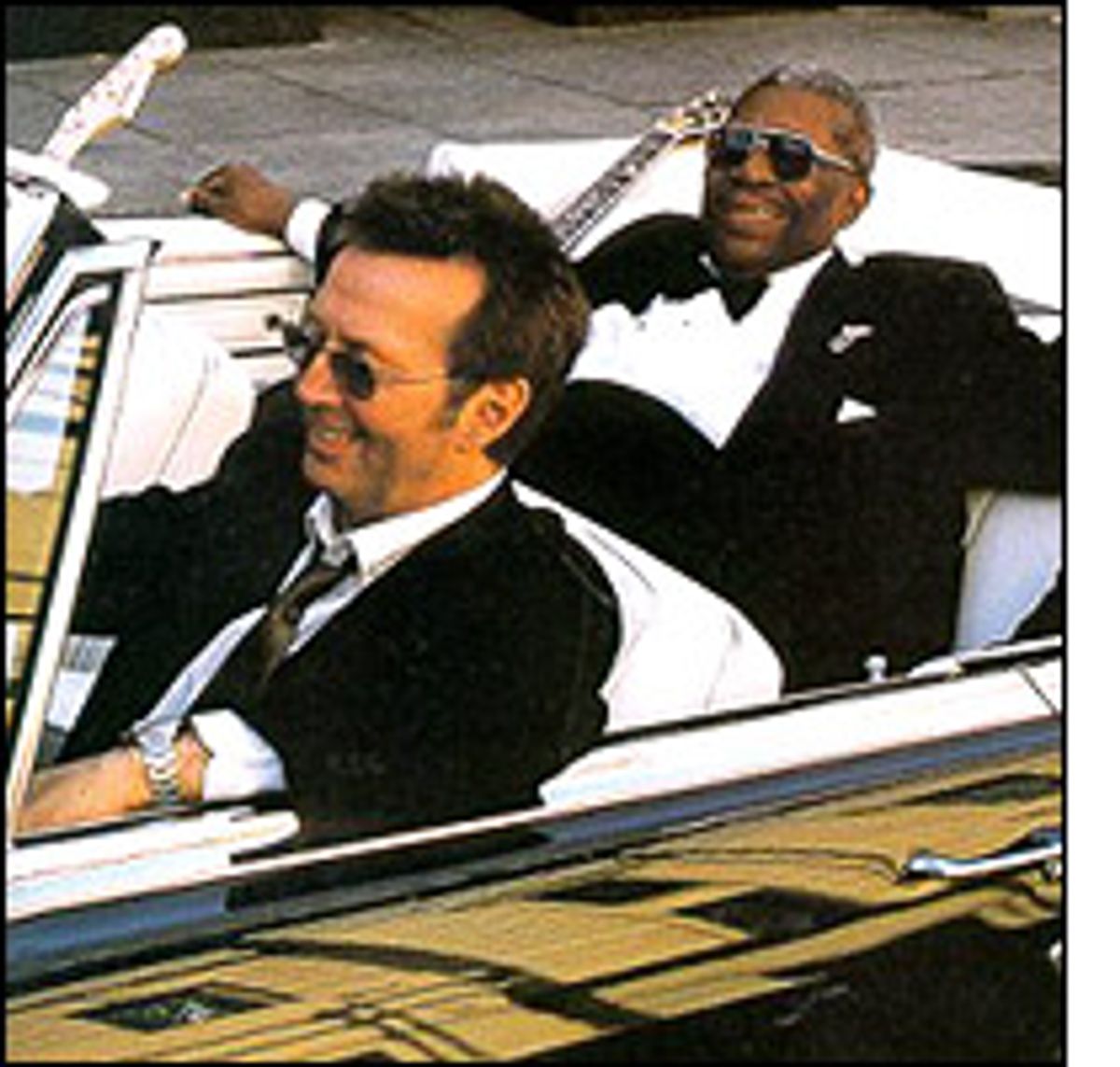
Cut to the front cover of "Riding." Clapton, in a tailored black suit and clunky Rolex, is chauffeuring King around town in a vintage Cadillac convertible; King is wearing a tuxedo with an ornate guitar pin on his lapel. Message: You've come a long way, babies.
So far, in fact, that on the new record by the duo it's often hard to remember just how the two got to where they are now. When, on "Marry You," King sings, "I wanna marry you/Isn't that what you want, too?" it's unclear how the listener is supposed to react. When did the blues evolve to the point that singers moan about hesitation. For that matter, since when did male blues singers care what their women wanted?
"Marry You," one of two songs on the album by Doyle Bramhall II, raises even more questions about "Riding With the King." For starters, with a century's worth of great blues standards, what are King and Clapton doing letting someone named Doyle Bramhall II write songs for them? And, on an album featuring two of the most distinctive blues guitarists ever to play the instrument, what are Bramhall and, um, Andy Fairweather Low doing playing guitar, anyway? And if they had to be there, couldn't they have renamed themselves Blind Lemon Bramhall and Big Andy Low for the occasion?
The answers, sadly, are that it is probably just these ingredients -- nondescript backup musicians and "modern adult contemporary" songwriting -- that catapulted "Riding With the King" to the top of the blues charts and to No. 3 on the Billboard 200 chart. No wonder: The album is for the most part a bloodless, surprisingly wan affair; even once-churning classics like the Isaac Hayes "Hold On, I'm Coming" end up working like a mild soporific. King and Clapton, together one more time, bring you the world's finest background music!
There are some worthwhile moments. The two greats trade acoustic licks on "Worried Life Blues" and "Key to the Highway," and the songs allow King to use his moaning vibrato in a new setting. (They also serve as the starkest examples of the inherent shallowness of Clapton's voice when compared to King's.) But those are small delights on what is mostly a wasted effort. "Riding With the King" is billed as a seminal meeting of two of the most influential guitarists of the last half-century; instead, it's a testament to how great talents can churn out mediocre slop.
Shares