
Stephen Lemons

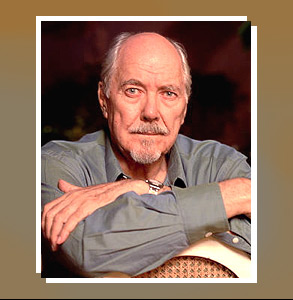
Robert Altman

Hollywood's ultimate outsider is at long last the Big Daddy of American cinema.

  • more
    • All Share Services

Robert Altman

Kate Mantilini’s is an overpriced, smug little diner on Wilshire Boulevard in Beverly Hills known chiefly for selling heaping plates of frog’s legs to the Armani and Prada set. Were it not in Beverly Hills, it’s unlikely it would get away with serving anemic burgers and tasteless fries with patronizing sniffs from its wait staff. But it does get bragging rights for famous faces. Like on the night of June 22 when it seemed the entire cast of Robert Altman’s “Nashville,” along with Altman himself, had retired from their 25th anniversary party at the Academy of Motion Pictures Arts and Sciences to the only nearby spot open past 11 p.m.

As luck would have it, I was on hand trying to find the meat in my bun when the first onslaught of “Nashville”-ites arrived, buzzing about the place, waiting for their leader. There was Henry Gibson, accompanied by his wife; Ronee Blakley, with her daughter; Michael Murphy, looking as handsome and buttoned-down as, well, Michael Murphy; and the aptly named Karen Black stalking about with the intensity of a mental ward escapee on the hunt for the sharpest piece of cutlery in the joint.

Altman finally arrived in a group. Dressed in rumpled white pants, a black jacket and a white shirt open at the collar, the 75-year-old director was one part Foghorn Leghorn, one part Big Daddy from “The Long Hot Summer” and one part Nutty Professor (pre-Eddie Murphy), the last bit emphasized by his white sneakers and a pair of black- and blue-striped socks.

The waitresses pushed two tables together, and Altman and his entourage were seated. There were constant migrations to Altman’s table, where he sat nibbling on some bread in his long, delicate hands, wearing a grin he might’ve stolen from some old print of a Pasha in his harem.

In a way, Altman was in his harem — his harem of actors and actresses. It was an incestuous, chaotic scene that could have been lifted from one of his films — “A Wedding,” “Nashville” or “MASH” — with each character, such as Murphy or Blakley, jostling the other to come closer to their adopted father. And just like all of those grand, layered ensemble masterpieces for which Altman is renowned, it was Altman himself who was at the center holding it all together, basking in the love of his wayward children.

Now before screaming “muddled metaphor” — crossing a harem with an extended, flaky family — consider the high praise actors award him, such as these remarks, culled from the post-”Nashville” screening discussion that took place just before the soiree at Kate Mantilini’s.

From Robert DoQui, who plays Wade, the black dishwasher pining for Gwen Welles’ Sueleen Gay: “One of the most remarkable experiences is to work with a director who allows trust on the set and among the actors. A lot of the improvisation and a lot of the work comes from that trust … In order to find new creative moments, you have to have the freedom to explore and fall on your face. Robert Altman allows it, and I love him for it …”

From Blakley, whose mental meltdown as the snow-pure Barbara Jean is at the crux of “Nashville,” describing how Altman allowed her to write the monologue of her psychic collapse before a country music audience: “I remember having this black, covered journal I had scribbled away in. I was in makeup that morning, and I asked if I could speak with Bob. He came down to speak with me, and I showed him what I had written. He asked, ‘Do you know it?’ and I said, ‘Yes.’ And then he said, ‘Let’s shoot it.’ But as I had written one speech, Bob is the one, of course, who said, ‘Let’s break it up a couple of times.’ That’s why Barbara Jean stopped and started again twice. It was very exciting. An extreme high, creatively.”

From Henry Gibson, who played corn-pone country music legend Haven Hamilton and got the big laugh of the evening with this: “I remember one lovely line that Bert Remsen (one of Nashville’s bit players) said to me in the middle of all this great madness. He said, ‘You know, Henry, being in a Robert Altman film is like sex. When it’s good, it’s very good. And when it’s not so good — it’s still good.”

And finally, from Altman stalwart Murphy, who plays politico John Triplette in “Nashville” and who has brought to life key roles in “Kansas City,” “MASH,” “McCabe and Mrs. Miller,” “Tanner ’88″ and numerous other Altman projects: “Thanks for my life, Bob!”

The feeling Altman’s actors have for him is a mix of what one might feel for a father and a lover. Granted, this feeling sometimes tends to develop more in hindsight. (Folks forget there was a bit of rebellion on the set of “Nashville” when Barbara Harris demanded some back pay due to all.) Altman has butted heads with many of his stronger-willed actors, like Elliott Gould and Donald Sutherland on the set of “MASH” or Warren Beatty on the set of “McCabe.” Like any great American father figure, from FDR to Billy Graham, Altman is a dictator, albeit one with a gentle hand. It’s his way or the highway.

Altman as the paterfamilias of a dysfunctional family that he has assembled is often alluded to, indirectly by Altman in interviews, and more directly by those who take the irresistible bait and write about him. When he explained to a group of radio journalists in 1999 how he selects a cast, the process sounded like someone putting together a temporary family. “It’s getting these actors who are in harmony with each other,” said Altman. “I never cast a picture the way the studios do. They’ll take two people who just hate each other, and pay them enough money to get them in. They show up to work and never know the other actors. I don’t have that kind of money. So the ones I work with, they all want to do it. That’s why they became actors in the first place — to create. And I make ‘em. I say, ‘Create. Show me what you can do.’”

Like kids trying to please their papa, the actors and everyone else involved in an Altman film, it seems, scramble to prove themselves. Surely this is why Altman has masterminded so many textbook examples of fine ensemble acting.

For Altman’s only biographer, Patrick McGilligan, it’s one of the primary themes of the director’s life and work, which he hammers home in his monumental 652-page book “Robert Altman, Jumping off the Cliff.” In the book, McGilligan meticulously documents the “family atmosphere” on Altman’s sets — the “nightly movies,” the “requisite dailies” the whole cast would watch and critique, the “communal popcorn, drinking and dope smoking” and the “parties and entertainments.” It’s all part of an elaborate “courtship ritual” designed by Altman to seduce his charges.

If one’s to judge by comments from actors, collaborators, Altman himself and the countless others who’ve written articles about the man, McGilligan is right on the money. And though his Altman wears no halos in the book (the author variously describes the director as a womanizer, a boozer and an impatient, prickly egoist), it’s McGilligan’s intention to enshrine Altman as one of the greatest directors of our time — perhaps the greatest living American director, with the exception of Woody Allen. In McGilligan’s account of Altman’s risk-filled life, the filmmaker comes off like a latter-day Zeus, with all the foibles of the original Olympian and a few of the powers — such as the ability to fling thunderbolts.

“That’s such shit,” Altman said of McGilligan’s book when I spoke with him in the summer of ’99. “Oh, that is so apocryphal, I can’t even tell you. That guy [McGilligan], I just think he got drunk and did it. He ended up talking to a bunch of aunts of mine.”

Then, he leaned back in his chair and unleashed full spleen on McGilligan, whose unauthorized biography had led me to admire Altman even more than I had previously. Why did he dislike the biography so?

“He’s got me in Paris, at one time walking down the street — following Orson Welles who was my ‘hero,’” he explained. “Not even close. I’m not even a big fan of Orson Welles. I think he’s got his place. ‘Citizen Kane’ was OK, but I wouldn’t put it down as one of the great films of all time. And here’s this whole thing that’s just wrong. I wouldn’t be ashamed of it if it were true. It’s just wrong.”

The episode Altman alluded to is a very small piece of the whole — it takes up about a paragraph, even though there are longer spiels where McGilligan quotes friends of the director who vouch for his early hero worship of Welles. It seems such a small point, but evidently it was enough to royally piss off Altman. In fact, he spewed a bit more about McGilligan before I got up the nerve to suggest that a memoir from him might set the record straight.

“I don’t know,” he sighed. “If I can’t work for some reason and my brain’s still alive, I might do something like that. But I don’t know how interesting it would be. It’s been a pretty even existence for me. Besides, I’m not sure my version would be the correct version either.”

- – - – - – - – - – - -

Robert Altman was born in Kansas City, Mo., on Feb. 20, 1925, a Pisces near the tail end of Aquarius — a party sign if there ever was one. Conditions were right to back up the verdict of the stars. Altman’s father, B.C., an ace insurance salesman for Kansas City Life, could sell a policy to a corpse, and may have once or twice. By turns an inveterate gambler, family man, regular Catholic, whiskey-drinker and skirt-chaser, B.C. sounds something like his son — except for that regular Catholic business.

Altman’s mother, Helen, was devoted to her son and his two younger sisters, Joan and Barbara. A convert to Catholicism, she was more refined and arty than her husband, and she had a passion for social functions. As B.C. was usually off selling insurance or playing poker, Altman grew up in a house full of women — sisters, aunts, his mother and her friends.

The Altmans were decidedly upper-middle class. Of German-American stock, they were one of the leading families of Kansas City. Altman grew up privileged and a little spoiled. After all, he was the only boy and the eldest child.

When he spoke to me about “Cookie’s Fortune” last year, he was full of fondness for that middle-American lifestyle he knows so well. “I was very comfortable in that town,” he said, referring to Holly Springs, Miss., where “Cookie’s Fortune” was filmed. “I had a lot of dij` vu shooting and living there. Those houses — those craftsman houses they built in the ’20s. I lived in one that was really very familiar — similar to the kinds of houses that were in Kansas City when I grew up. We’d sit on the front porch in swings, the kids would run up and down the street and catch fireflies and put them in bottles. It was very neighborhoody.” Hence the recurring Altman motifs: the large extended family, the generally prosperous Americana, the roguish behavior of the males and so on.

As an adolescent Altman was a cutup and hell-raiser — to the degree that his parents shipped him off to Wentworth Military Academy in Lexington, Mo., during his junior year of high school. In 1945, he left the academy for the Army Air Force and what remained of World War II.

After training at a base camp in Southern California, Altman shipped out for the island of Morotai in the Dutch East Indies. There he spent the waning days of the war copiloting a B-24 and dropping payloads on Japanese positions. When he wasn’t doing that, he was playing poker with his fellow officers or bird-dogging nurses. Also, according to Altman, it’s when he began to consider a career in the movies: “The first time I ever thought about film was when I was overseas in the Second World War,” he told me. “I started writing radio plays. I was very interested in that. And then I started to write screenplays — not screenplays so much as stories to make movies from. Since then, it’s just been down the same road.”

After the war, he headed to Los Angeles and dove into a number of schemes. He tried being an actor briefly, and he even appeared as an extra in the 1947 Danny Kaye classic “The Secret Life of Walter Mitty.” You can see him grinning past Kaye in a bar scene if you don’t blink. But acting didn’t work out, and he then got involved in a bizarre business venture — a national identification system for dogs in which license information would be tattooed inside the canine’s right front leg. Altman and his partners even went to the White House and tattooed President Harry Truman’s dog before the business went bust. Soon enough, Altman was back in Kansas City, broke and hungry for action.

In those days, there were no film schools, but at the age of 22, Altman hit on the next best thing. He joined Kansas City’s Calvin Company, which was then one of the leading makers of industrial short films in America. Altman went on to make 60 films for the company on every subject imaginable — from football to car crashes. But he kept grasping for more challenging projects. In 1955, he wrote and directed a low-budget teen exploitation movie titled “The Delinquents.” That year, he left Kansas City for the last time, ostensibly to edit “The Delinquents” in Los Angeles.

Released in 1957, “The Delinquents” was hardly a runaway success, but it did catch the eye of Alfred Hitchcock who tapped Altman to direct a few episodes of “Alfred Hitchcock Presents.” Though Altman fell out with Hitchcock pretty quickly, he was on his way as a successful TV director, and went on to work on series such as “Bonanza,” “The Millionaire,” “Bus Stop,” “Route 66,” “The Troubleshooters” and “The Whirlybirds,” on the set of which he met his third wife, Kathryn Reed; they’ve been married since April Fools’ Day 1959. (Altman has six grown children: Michael, Stephen and Christine from his previous marriages; Matthew [adopted]; Robert, his son with Reed; and Konni, Reed’s daughter. He has 11 grandchildren and four great-grandchildren.)

Perhaps his most important TV work was in the early 1960s for the show “Combat” with Vic Morrow, the late father of Jennifer Jason Leigh. The gritty war drama followed a U.S. Army platoon in France after the invasion of Normandy, and it’s still considered an influential series by critics and filmmakers. Unlike the hack work he did for the Calvin Company, Altman doesn’t disown “Combat,” but seems to regard it with pride.

“The Museum of Television and Radio [in Beverly Hills] has most of it,” he told me in an interview just before the “Nashville” screening at AMPAS. “I was in Austin [Texas] last September and October for the Austin film festival. They showed ‘Nashville.’ They also showed two or three [episodes of] ‘Combat’ I had written and directed. I hadn’t seen those for 40 years, and I thought they held up pretty good … My god, I’ve done hundreds of hours of television, and I’ve done about 38 films. I don’t think anyone thinks about that at all. They don’t add up all those points until you’re dead. Then you can’t fool ‘em and make any more.”

After leaving TV and with a few years of fumbling, Altman scored a job directing his first big studio feature — 1968′s forgettable space-race flick “Countdown” starring James Caan and Robert Duvall as rival astronauts. It was a flop, but a step in the right direction. His next project was the far more accomplished psychological thriller “That Cold Day in the Park” (1969), starring Sandy Dennis as a sexually stifled spinster on the verge of a homicidal nervous breakdown. Shot in Vancouver, B.C., it’s a gelid, brilliant piece of moviemaking akin to Roman Polanski’s early films “Repulsion” and “Knife in the Water.”

But Altman was to make his name, if not a lot of money, with his next project — the phenomenally successful Korean War romp “MASH” (1970). The Ring Lardner Jr. screenplay had been making the rounds for some time, and 15 directors — including Stanley Kubrick and Sidney Lumet — had passed on the adaptation of the novel by ‘Richard Hooker’ (a pseudonym for authors H. Richard Hornberger and William Heinz) by the time Altman got his hands on it and saw his chance. For a flat fee of $75,000 with no percentage of the gross, he signed on to the 20th Century Fox project.

“MASH” introduced audiences, in the most accessible way possible, to the Altman style — ensemble acting, episodic storytelling, zoom lenses and overlapping dialogue. It also fed them all of the major characteristics of an Altman film: rabid anti-authoritarianism, anti-militarism, black humor (the blackest), sacrilege, delight in decadence, adolescent sexual escapades, hypocrisy revealed and casual drug use.

The movie made stars out of its two leads, Elliott Gould and Donald Sutherland; started a running story line the TV series “M*A*S*H” would milk for years; and put a giant bulge in Fox’s corporate wallet. “MASH” cost a measly $3.5 million to make, but according to Peter Biskind’s account of the late ’60s and ’70s in Hollywood, “Easy Riders, Raging Bulls: How the Sex-Drugs-and-Rock ‘n’ Roll Generation Saved Hollywood,” the film “pulled in $36.7 million … putting it third for 1970 behind ‘Love Story’ and ‘Airport.’” And that’s not counting the loads of cash made from the TV series.

Altman, of course, didn’t see any of that money. And he would often complain that his son Michael, who at the age of 14 wrote the film’s popular theme song, “Suicide is Painless,” made more than he did off of “MASH.” But Altman got what he really hungered for: acclaim as an artist. The film struck a chord both with the youth culture and the burgeoning anti-Vietnam War sentiment in the United States and abroad. At Cannes, “MASH” was awarded the Palm d’Or for best film. And it received five Academy Award nominations, including best picture and best director, though it won only one: best screenplay — for which Lardner got the Oscar.

It’s hard to overstate the importance of “MASH” to Altman’s career. At 45, he was older than the Young Turks then kicking new life into old Hollywood. But overnight he became leader of the pack, universally hailed as a genius, an auteur, a demon filmmaker and an iconoclast. He took the brass ring and ran with it — sometimes making bizarre but fascinating failures like “Brewster McCloud” (1970), “California Split” (1974) or “Buffalo Bill and the Indians” (1976), and with other projects crafting literature on-screen in films such as “McCabe and Mrs. Miller” (1971), “The Long Goodbye” (1973), “Nashville” (1975) and “Three Women” (1977). Even his over-the-top 1978 farce “A Wedding” and 1979′s often reviled sci-fi thriller “Quintet,” though flawed in their own ways, reveal the idiosyncratic brilliance of their creator.

The ’70s were very good for Altman, as they were for film in general. Biskind quotes the director as saying of the era: “Suddenly there was a moment when it seemed as if the pictures you wanted to make, they wanted to make.” But if art and commerce held hands like hippie lovers during the ’70s, the ’80s would see them part, with commerce going back to its old whorish ways.

That was when Altman, in the oddest move of his career, directed “Popeye” (1980) with Robin Williams. The result was a creative nadir. The film was a failure at the box office, though it eventually ended up making big bucks in rentals. And whatever its merits for the kiddies, it signaled the end of a victorious, decade-long run for Altman — put Williams as Popeye beside Beatty as McCabe: It illustrates a sort of spiritual regression, a de-evolution worthy of Mark Mothersbaugh.

He followed the “Popeye” defeat with a series of less-ambitious but still aesthetically satisfying film adaptations of stage plays, “Come Back to the Five and Dime, Jimmy Dean, Jimmy Dean” (1982) and “Secret Honor” (1984) being the best of these. During the ’80s, there was also the raucous “Les Boreades” segment from the opera anthology film “Aria” (1987). But his “Vincent and Theo” (1990), shot originally as a four-hour epic for European TV, was Altman’s first true masterpiece in over a decade. A long, mordant commentary on the fate of an artist in society, “Vincent and Theo” proved that Altman, seemingly at will, could invest celluloid with the grandeur and depth of high art.

But Americans want entertainment, and Altman made clear with 1992′s “The Player” and “Short Cuts” (1993) that he can deliver it, though not without a satirical price. When Tim Robbins’ movie mogul in “The Player” gets away with murder, the audience ends up cheering him. And if “Short Cuts” is filled with crude vignettes, like Huey Lewis peeing on a floating female corpse, we still laugh at it, albeit with a little embarrassment. It’s almost as if in both films, Altman is saying in no uncertain terms, “I know what you folks are really like, so let me hold up a mirror and you can tell me if you enjoy what you see.” It works. We guffaw at ourselves. And if there’s a tinge of self-revelation as we gaze inside Altman’s funhouse mirror, we can always shake it off afterward. It’s only a movie, right?

“Ready-to-Wear” (1994) didn’t click with audiences in that “Short Cuts” way. And “Kansas City” (1996) was more like the old Altman — a dark, cynical jazz-inspired portrait of his hometown in the 1930s. Yet it’s a breathtaking film, with fantastic performances from Jennifer Jason Leigh, Miranda Richardson and Harry Belafonte.

Since then there’s been 1998′s “The Gingerbread Man,” based on a John Grisham short story, which, for the most part, has been consigned to oblivion. But if Altman couldn’t make gold out of Grisham’s dross, who can blame him? Most recently, in 1999, there was “Cookie’s Fortune,” a gentle farce of a Southern mystery that almost everyone seemed to love — even though it disappoints Altman that most people waited to see it on videotape.

“People can’t get out,” he said in 1999. “They say, ‘Oh, we’ve got to get babysitters.’ They can’t do it the week the film is open, and that’s about how long they last. There are so many of them vying for people’s attention. Most folks end up seeing it on the tube.” Altman knows times have changed. It isn’t the ’70s anymore, where adults make an effort to go to the movies once a week. And that’s the reality you have to deal with. “The exhibitors, they don’t give a shit whether it’s ‘Stormtrooper’s Delight,’” he said. “If it sells tickets and popcorn, that’s what they’re after. So we just have to throw it out there and hope it finds an audience before it gets out of the theaters.”

Movies are a popular medium, and elitism can only get you so far. Altman does better than most at fusing his own peculiar vision with the dictates of the American marketplace. After all, he was able to snag Richard Gere to play the lead in the upcoming “Dr. T. and the Women,” a thought that may make some folks cringe but is certain to make many more laugh. Following up on the success of “Cookie’s Fortune,” Altman’s all but rubbing his hands as he readies for the release date, putting finishing touches on the film. “Richard Gere is just so good in this picture,” he said to me recently. “There’s not a false move in it. ‘Dr. T’ is as good as I can do. If someone doesn’t like ‘Dr. T,’ all I can say is that I can’t do any better. Everything came together on this picture. It just all worked.”

Altman could easily pass for 10 years younger than his 75 years, and he’s so sharp mentally he could verbally tear to shreds anyone he so desired torn. Good Lord, the man may have another 20 or so years of films left in him if we’re lucky.

His stature is such that at this point, we might as well declare him a national treasure and get it over with. Young filmmakers, notably “Magnolia” and “Boogie Nights” director Paul Thomas Anderson, worship him. And the 25th anniversary of “Nashville” left writers tying themselves into knots, lauding him. Whether or not his next film is a critical or commercial success, the ultimate outsider is at long last the Big Daddy of American cinema. Is there any other active director, since the death of John Huston, who could lay claim to that title? (And please, don’t mention Steven Spielberg. I’m not talking about sausage makers.)

Altman himself is modest when asked about the aesthetic level he’s achieved compared to, say, his TV days. “I don’t think your art changes,” he told me. “You get a little more facile. You learn more technically and become a little more efficient. You learn all that stuff. But your art doesn’t get any better. You just get a little more clever. A little more commercial, really.”

He may be more commercial, in some ways, than in his heyday in the ’70s. But I’ll be damned if, barring Martin Scorsese or Sidney Lumet, there’s another director who even comes close to approximating his artistic output — flops and all.

Peter Bogdanovich

The director of "The Cat's Meow" discusses the truth about "Citizen Kane," the philanderings of Charlie Chaplin and the lies Hollywood tells us about death and dying.

  • more
    • All Share Services

Peter Bogdanovich

Sneering at Peter Bogdanovich’s name has been an art form in some circles for so long that when you meet the man, you expect the insufferable popinjay whom writers still have a field day skewering. This is the man who, according to the Los Angeles Times, sported $323 blue leather clogs in court just prior to filing bankruptcy in 1997. The man who married (and later divorced) his lover Dorothy Stratten’s half-sister Louise several years after Stratten was brutally murdered by her jealous husband. The man who stole Truffaut’s shtick by going from film scribe to filmmaker, and so on.

Even if some critics hailed early flicks like “The Last Picture Show” and “Paper Moon,” by the early ’80s most seemed to agree with John Simon’s acerbic assessment that Bogdanovich’s “entire filmmaking prowess is not much more than a mnemonic feat.” Whatever; in person, the 62-year-old is thoroughly charming, and lacks the pretense so often ascribed to him by caricaturists. Can a guy who schleps his own water around with him in a tote bag be all bad?

Moreover, his latest picture, “The Cat’s Meow,” is an elegant, entertaining little film detailing the famously puzzling 1924 cruise aboard William Randolph Hearst’s yacht, the Oneida; just a few days after, one of the passengers died mysteriously. Among those who were onboard: Hearst (Edward Herrmann); his paramour Marion Davies (Kirsten Dunst); her aspiring paramour Charlie Chaplin (Eddie Izzard); and the fly in the ointment, conniving producer Thomas Ince (Cary Elwes). Gossip maven Louella Parsons (Jennifer Tilly) and novelist Elinor Glyn (Joanna Lumley) round out the ship’s manifest. And Bogdanovich plays them all like a sly maestro. “Citizen Kane” it ain’t, but it’s fun to watch. Give the devil his due.

Do you think your old friend Orson Welles would have liked the film?

I hope so. I certainly felt his spirit around when we made it, watching. I don’t know about guiding me, but I think he was on our side. He was the one who told me the story in the first place. He told it to me over 30 years ago as an example of how different Hearst was from Charles Foster Kane. The general misunderstanding about “Citizen Kane” is that it was supposed to be about Hearst, but it wasn’t.

Charles Foster Kane was a composite character based on three or four press lords including a famous one in Chicago named McCormick, who built the Chicago Opera House for his girlfriend, who was a singer. That whole aspect of Kane had nothing to do with Hearst. And Orson didn’t play it like Hearst. Hearst was a kind of pear-shaped fellow who had a high voice and whose hair fell down over his forehead. He looked a lot like Edward Herrmann, but not as handsome.

How did Mr. Welles come to tell you the story?

I was interviewing him for the book we did, “This Is Orson Welles,” but we didn’t use it in the book because at the time, it seemed a bit incendiary. Interestingly enough, he heard the story from a member of Hearst’s inner circle — Marion Davies’ nephew Charles Lederer, the screenwriter. I talked to Charlie Lederer a few years later and he confirmed it. Charlie had known it since he was 12. That’s about how old he was when it happened. He confirmed this as fact, that there was this “accident” during the cruise.

How ironic that after Welles told you that story so long ago, you wound up directing this picture.

Yes, it was ironic. The script arrived on my desk 30 years later and neither the writer nor the producer had any idea that I knew anything about it … I don’t know if I would have read it with as much interest if Orson hadn’t told me. I often don’t read scripts that are sent to me, I have someone read them for me. This one I read on my own. I saw these characters in it and I thought, “My God, it’s that story.” So I owe it to Orson. If it hadn’t been for him, I might not have done it.

Your Hearst seems rather likable in some ways.

Actually, he’s pretty ruthless. But he’s human. It’s the humanity, I think, that makes you understand him. When you understand someone, it’s hard to hate them. If you get to know anybody, I suppose, you discover that people are good and bad and all the shades in between. Nobody’s all one thing.

Do you think people have changed much since that era, or do you think we’re all pretty much still the same?

Human nature stays the same, but maybe certain aspects of it get exacerbated. I think we’re in a more cynical era than ever before, and I think that the audience for movies, for example, has been somewhat debased and brutalized by the enormous amount of violence and slaughter on the screen. You sort of say, “Well, 30 people just got killed, so what’s next?” Having been, I’m afraid, part of a murder, when Dorothy Stratten was murdered, I can tell you that one murder reverberates for the rest of the life of the people who were close to that person. That’s one of the things about this picture, it’s about a murder that changes everything. One murder. Not three, not 10 — one.

So we’ve been “desensitized,” as they say.

Yes, a little. On the other hand, you take any individual out of that audience and have them exposed to the murder of someone they care about, they won’t be desensitized. We’re only desensitized to the spectacle of it.

Did Ms. Stratten’s death change the way you look at violence?

Yes, it did. I never particularly liked violence in movies, but I didn’t have the same reaction to it that I do now. I think it’s all handled by people who don’t know what it’s really like. It’s just people making movies, and saying, “OK, well, this guy gets killed, and then we go over here and this guy gets killed,” and I’m thinking, each death counts.

Is there any solution to that problem, or is it something we just have to accept?

I think it’s everybody’s personal responsibility. Filmmakers have a responsibility to the audience and to the work, and I wish they felt that responsibility more, especially to what’s true in life. The tragic events of September brought knowledge of premeditated murder to an awful lot of people who didn’t know about it.

I watched those people on TV afterwards, and it broke my heart. I knew where they were coming from. And I knew they were in for a life of it. They talk about closure and getting past it — Christ, it doesn’t ever happen that way. These poor people on television a week later talking about it, thinking that they’re dealing with it. You know, it’s a truism for people who’ve been through this that the fifth year is the worst. It happened to me. For some reason after five years, it’s like it’s just happened again. It’s also something you don’t recover from, you learn to live with. You don’t get past it, you learn to move on with it as part of your life.

You have to think of it in this context; the murder in “The Cat’s Meow” affects everyone there for all their lives. I don’t know that Marion would have stayed with Hearst had it not been for the murder. I think she felt guilty that she was kind of the cause of it.

Then it’s established that Chaplin and Davies actually were fooling around?

Well, nobody was under the bed. But that gossip item that’s referred to in the film linking Chaplin and Davies actually appeared in the Daily News that weekend. I have a copy of it. Chaplin was a notorious philanderer. And Marion evidently had some affairs with other people. We presume it happened.

Of all the characters in the film, who do you identify with?

That’s an interesting question. Really, I can identify with all the men. I’ve been down and out like Ince. I’ve been obsessed with a woman like Hearst. I’ve been lookin’ to get laid like Chaplin. So, I understand where they’re coming from. And I understand, as I said, what a murder does. My sympathy, if you want to ask that, is with Marion, which you can see in the picture to a degree.

It’s her tragedy, I think. It’s a woman’s story — she’s trapped between powerful men. In 1924, women had only been able to vote for the second time. I made a reference to that in the film, because it’s fairly shocking to remember that. It was November of 1924 and the election had just happened. Nineteen-twenty was the first year women were allowed to vote. It’s about a woman who seems to have everything, but doesn’t quite. “I have me,” she says. But she’s not really right.

If you could go back in time, which decade would you want to go back to?

If I had a time machine? I’d pick the ’30s. I’d want to be a filmmaker under contract at Paramount as Lubitsch was head of the studio.

So you might’ve been one of Mr. Welles’ colleagues?

I would’ve met him, yeah. I looked it up one time and I told Orson, “You know the day you started shooting ‘Citizen Kane’ I was 1 year old?” And he said, “Aw, shut up!”

You think about him often, don’t you?

He was a very dear friend for most of our association, and yes, his spirit ranges over everything. He was quite extraordinary.

You speak of Mr. Welles’ spirit. I’m curious, what do you think happens to us after we die?

Kind of a personal question. I don’t think the spirit dies. I think the spirit is imperishable, that it remains, and is around or not, depending on different things. I don’t know about murderers, though. I don’t know where they go. I keep feeling that the murderers who blew up the World Trade Center are doomed to haunt that area for the rest of their lives.

Continue Reading Close

Through clowning

You can laugh, but the mummified clown at the California Institute of Abnormalarts appears to be serious business.

  • more
    • All Share Services

Through clowning

If Federico Fellini and Salvador Dalí had ever collaborated on a funeral service, it might have resembled what the California Institute of Abnormalarts in the North Hollywood section of Los Angeles did a few weeks back. There on a chilly February evening, about 60 mourners, curiosity seekers and full-fledged freaks had gathered for coffee, cake and a clown corpse hermetically sealed in a glass box and displayed onstage in a moldy coffin. According to the Byzantine prayer cards handed out at the entrance, these were the earthly remains of one Achile Chatouilleu, an American circus performer who died in 1912, asking that his body be forever on display in the clown attire and makeup he wore in life.

Attendees of this memorial service for Chatouilleu (whose last name reportedly translates as “French tickler”) gained entrance with a donation of five dollars and a gift for the dearly departed. Canned hams, skeleton dolls, bottles of booze and packages of condoms were but some of the presents proffered by clubgoers, most of whom had learned of the event by word-of-mouth. Often the mouth in question belonged to none other than the C.I.A.’s ingenious impresario Carl Crew, a former actor in his late 30s whose credits include the starring role in the low-budget 1993 flick “Jeffrey Dahmer: The Secret Life,” wherein he quite literally makes meatloaf out of sedated victims.

“Yeah, I guess that’s my calling card now,” Crew told me on one of my trips to the C.I.A. “There were other films I was involved in I liked better, but that’s the one people always mention.”

Crew’s been a friend of mine since I began going to the indie rock/performance art venue five years ago, when it was underground and served liquor without a license. The police eventually raided the C.I.A., closing the dimly lit nightspot for a few years. When Crew and co-owner Robert Ferguson reopened it in 2001 — all operations above board — the once-black interior was painted in garish reds and yellows and decorated with a circus sideshow motif. Crew, a freak show fanatic, put his vast collection of sideshow exhibits and paraphernalia on display. Vintage banners advertising Sweet Marie, a 643-pound femme fatale, share space with the severed arm of a French nobleman, a dead fairy, the skull of the world’s smallest Freemason and the hirsute, severed head of Sasquatch.

Most of these are classic sideshow “gaffs,” or fakes, like the two-headed baby nailed above the bar or the “merman” enshrined in glass nearby. But the clown, according to Crew, is quite real.

“This attorney friend of mine called me up one day on a speakerphone with all his lawyer pals around and goes, ‘Carl, how would you like to lease a dead clown?’ I said, ‘Are you kidding? Of course!’ All the other attorneys just roared with laughter. It took like four months to get the paperwork done, but now I have him for six months. I won’t tell you how much it cost me, but it wasn’t cheap,” Crew said.

I was skeptical he would ever get this clown; once he got it, my incredulity was slow to fade. Sure, lying there under glass in red vestments, a Shriner’s cap and long-faded greasepaint, the brownish body did look like a well-preserved cadaver. The fingernails showed sign of decay, and there was bushy, black hair in the nose — details that would be difficult to fabricate, but not impossible. We were in Hollywood, after all.

I could find nothing online about Achile Chatouilleu, so I pushed Crew for some corroboration. It came in dribs and drabs. Nothing incontrovertible, of course, but enough to make me think that Crew had perhaps produced the genuine article. There were photos, said to be of Chatouilleu while he was still alive, and a ragged, blue turn-of-the-century poster for “The Great London Circus” at Madison Square Garden with Chatouilleu’s name on the bill. Finally, Crew came through with the photocopy of a death certificate stating that Achile Chatouilleu, a “retired clown” born Feb. 3, 1866, died of “chronic nephritis” on Jan. 13, 1912.

Crew asked me not to reveal where Chatouilleu died or the names of his parents, listed as immigrants from Scotland on the death certificate. Chatouilleu was not the clown’s birth name, and supposedly his descendants, who live on a ranch near Yosemite, wish to remain anonymous. But the death certificate and the rest of it could be forgeries. I remained unconvinced.

“You still think it’s a hoax?” asked Crew. “What do you want me to do, slice it open like a pumpkin for you?”

Actually, yes, but since Crew says the body was embalmed in mercury, arsenic or a combination (something mortuaries did long ago, one medical examiner told me), the pumpkin slice would likely prove lethal. I contacted Christine Quigley, author of several tomes on death, including “Modern Mummies: The Preservation of the Human Body in the Twentieth Century” (McFarland & Company). What she had to say might make old Chatouilleu sit up and throw confetti.

“More likely than not it’s a preserved body,” says Quigley. “Because it would be harder to fake something like that than it would be for it to be real. What’s most unlikely are the stories in these kinds of cases. Now, I’ve never heard of this particular mummy, but generally I’ve found that the stories tend to be fabrications because they’re in the carnival circuit. Sometimes carnies bought these mummies from the local funeral home director, who kept them for years hoping the family will claim them. It doesn’t happen anymore, but they used to over-embalm these bodies. That’s why they’ve lasted so long.”

Quigley says that often the bodies became local attractions which people would visit on Halloween, for instance. A carnival operator would come through town, hear of the body and make the funeral director an offer. The corpse then became part of the traveling road show, with an outlandish legend concocted to draw in a paying crowd.

“Sometimes the mortuaries held on to them. There’s one case of a funeral home out in the Midwest which still has the body of this guy George Stein, who died in the ’20s. In fact, they moved recently and took the body with them instead of interring him,” says Quigley.

Indeed, Quigley explains that though the retail sale of corpses no longer occurs legally, there’s nothing necessarily illegal about having one in your possession. Though funeral homes have guidelines to follow, the law regarding what you can and can’t do with human remains can be a gray area, according to the author.

Quigley cited several cases where human remains were used as sideshow attractions. In 1976, during the filming of an episode of “The Six Million Dollar Man” in Long Beach, Calif., the TV crew discovered the mummified body of Old West outlaw Elmer McCurdy in a decrepit fun house where he had been used as part of an attraction. There’s also Marie O’Day, whose body was supposedly preserved naturally in Utah’s Great Salt Lake. A murderess named Hazel Farris is on display in Alabama, and somewhere out there is a corpse with one gold tooth — “Gold Tooth Jimmy.” For Quigley, Crew’s dead clown was one in a long line that includes Mao Tse-tung and Lenin.

But the clincher was my conversation with veteran sideshow operator Jeff Murray, who along with his wife, Sue, has operated sideshows for the past 20 years throughout the United States. His company, Harmur Shows, is based in Ahwahnee, Calif. — also in the Yosemite area, not too far from the circus family that owns Chatouilleu’s body. Murray claims that while on the sideshow circuit he ran across a member of this family who tried to interest him in an odd exhibit.

“They’re basically a gypsy family,” Murray says of the clown’s caretakers. “I don’t even know their last name, but they’ve been around for years. I used to see their son Danny down at Leg Lake when I opened for the spring. His wife was a midcamp, which is the carny term for a palm reader. She always had a booth there. I found out they live not too far from here. He mentioned this stiff they had, but I wasn’t that interested. See, we used to have a show of two-headed babies. Real ones, preserved in formaldehyde. But a lot of showmen started to get busted for transporting them across state lines, so we sold them all to collectors. So when he started talking about this dead body, I had no interest at all because I’d just gotten rid of the ones we had.”

Murray’s never seen the body, but he’d encountered “stiffs” during his travels and had no reason to doubt him. Back in the day, he saw Gold Tooth Jimmy, shrunken heads and pickled babies. He knows the whole history of Marie O’Day and can relate in minute detail other cases of sideshow mummies.

“I thought it was a little strange that they had a dead body, but they said it was a family member, and of course you never know with gypsies. It could be one of those situations where they ended up with this body somehow and made up a story to go along with it,” Murray says.

Taking into account what Murray and Quigley have to say, as well as the condition of the body itself — the way it’s dressed and the documents Crew has for it — I lean toward accepting the artifact as authentic clown carrion, even if part of the clown tale turns out to be myth. Fortunately, Crew says, forensic science may be the final judge. He’s been approached by producers for National Geographic TV’s popular “Mummy Road Show,” who want to X-ray the corpse. Right now it’s up to the family to decide. As for Crew, he’s already on to his next acquisition.

“It’s the body of Alligator Boy, and in mint condition,” he squeals. “Now don’t tell me you want a death certificate for this, too!”

Continue Reading Close

Hitler’s clairvoyant

A new biography tells the bizarre tale of the Jewish psychic who met with the future F

  • more
    • All Share Services

Hitler's clairvoyant

In the weeks leading up to Adolf Hitler’s appointment as Reichschancellor on Jan. 30, 1933, there was nothing inevitable about the Austrian corporal’s ascension to power. Results of the 1932 November Reichstag elections were disappointing for his National Socialist Party, with the Nazis suffering losses in the German parliament while retaining about a third of the seats there.

Nazi coffers had been drained dry by the campaign. Hitler had endured significant defections from his movement and threatened suicide. Some Nazis began to wonder if he had the right stuff to be their Führer.

It was at this point that Hitler, falling back on his belief in the occult, called the most renowned clairvoyant in the land to his headquarters at the Hotel Kaiserhof in Berlin for a private session. The man Hitler met with that day is the subject of a recent biography (the first in the English language), “Erik Jan Hanussen: Hitler’s Jewish Clairvoyant,” by Mel Gordon.

Hanussen, 43 at the time of the Hotel Kaiserhof session, was a man whose name was synonymous with psychic phenomena in Central Europe. The Vienna-born con man/celebrity seer was known for predicting the future, casting prescient horoscopes and astounding audiences with his feats of hypnotism and mind reading. In Berlin, Hanussen was a rock star before there were rock stars, with a vast business enterprise trading on the voracious German hunger for all things paranormal.

Hitler became a Hanussenite when in March of 1932 the psychic’s own weekly newspaper, Erik Jan Hanussen’s Berliner Wochenschau, printed the startling prophecy that within one year’s time the future Führer would become Reichschancellor. Most Berliners scoffed. For many, Hitler was a megalomaniacal clown.

But if the average Berliner thought Hanussen’s prognostication absurd, Hitler certainly didn’t. When Hanussen came to him that cold day in January, the Nazi leader was filled with dread anticipation, and kept the meeting secret should the results be negative. Hanussen placed Hitler on a seat in the middle of the room, examined his hands, counted the bumps on his head and sank into a mystical trance. The words he spoke filled the Führer with elation, says Gordon.

“I see victory for you,” Hanussen said. “It cannot be stopped.”

By the end of the month, Hitler had cut a deal with his enemies and become titular head of a coalition government. Hanussen’s vision had given him hope in his hour of uncertainty. One can only wonder the intensity of his rage, if the raving anti-Semite had known at the time that the man he had adopted as his personal soothsayer, the chap nicknamed “the Prophet of the Third Reich,” the decadent mystic who had just run his hands through his Aryan locks, was in fact … a Jew. According to Gordon, a professor of theater arts at the University of California at Berkeley and author of such colorful tomes as “The Grand Guignol: The Theater of Horror and Terror,” and “Voluptuous Panic: the Erotic World of Weimar Berlin,” Hanussen started life as Hermann Steinschneider, with a birth certificate that read “Hebrew male.” An unlikely beginning for one destined to become Hitler’s favorite fortuneteller.

Gordon’s complicated, fascinating tale is one familiar to many Germans, but completely unknown to Americans, save for some devotees of magic who regard Hanussen’s name, acquired while his career was in its infancy, with a reverence second only to that of Harry Houdini’s. Despite the 1988 film “Hanussen” by Hungarian director Istvan Szabo (starring Klaus Maria Brandauer in the strangely Aryanized title role), and a number of articles written in English by German imigris in the 1930s and ’40s, Americans have had almost no exposure to this bizarre tale of a Jew who played the part of psychic advisor to Hitler. No wonder the uninitiated roll their eyes when Gordon starts to talk about it.

“It’s like saying, ‘Hitler’s favorite rabbi,’ people are waiting for the punch line,” confesses Gordon. “But it’s not a joke. Hitler and Hanussen did meet about a dozen times between 1932 and 1933. Of course, if Hitler had known that Hanussen was Jewish, he would have disposed of him as fast as he could have. But it’s not so much later that he was disposed of. After the Reichstag fire, everything changed.”

The burning of the Reichstag on Feb. 27, 1933, for which German communists took the fall, paved the way for the consolidation of power in Hitler’s hands and the suspension of all civil liberties. Eerily, the day before, Hanussen had predicted the event through a medium during the opening soiree of his newly minted pagan temple, the Palace of the Occult, a marble and gold-decked Taj Mahal of the black arts in Berlin decorated with astrological signs and religious statues. There, in the presence of Nazi officials and assorted VIPs, the seer claimed to see a “great house” in flames during a siance in his sanctum sanctorum, the Room of Glass. Hours later, the Reichstag was engulfed in a mysterious conflagration. “The Reichstag fire is such a big story — the first mystery of WWII. It’s still not resolved to this day,” says Gordon, “sort of like a European Kennedy assassination question. Did Goebbels somehow have a communist patsy, Marinus van der Lubbe, ignite the Reichstag? Did the communists do it, or is there some other story? Something that started leaking out from the Nazi side from the very beginning was that Hanussen was responsible for it or had something to do with it.”

Despite his Semitic origins, Hanussen had extremely close ties to the Nazi party, especially since his fateful augury that Hitler would somehow become Reichschancellor. He had lent hundreds of thousands of marks to high-ranking leaders of the Nazis, like Hermann Goering, and held IOUs from them. He had befriended Count Wolf Heinrich von Helldorf, the sadistic, depraved commander of Berlin’s SA, and referred to Hitler as “my pal Adolf.” Certainly, Hanussen could have had inside information of a Reichstag plot. Or perhaps he was even more directly involved.

Gordon relates that some conspiracy theorists believe Hanussen may have hypnotized the fall guy van der Lubbe to do his bidding, either with or without the help of Nazi conspirators. As far-fetched as the possibility sounds, one suddenly sees how the presence of Hanussen in this story becomes an uncomfortable dilemma for historians. To dwell too much on Hanussen’s involvement smacks of indirectly tainting the primary victims of the Holocaust with assisting in Hitler’s takeover of Germany and, subsequently, their own destruction.

Perhaps this was the reason Istvan Szabo’s cinematic treatment of the Hanussen tale conveniently omits Hanussen’s Jewishness. And it could account for the dearth of information on Hanussen in English-language texts. However, Gordon, who is himself Jewish, asserts his belief that Hanussen somehow participated in a plot to set fire to the Reichstag.

“My personal feeling is that all the evidence points to the fact that at the very least Hanussen was involved or he couldn’t have known about it. Unless you believe in clairvoyance, which I don’t. The other story is why he was killed. That is, he had to be eliminated because he knew too much,” says Gordon.

There were other reasons why the Nazis wanted Hanussen dead. Goebbels and Goering both saw him as an interloper and a potential rival for the Führer’s attentions, and there was the little matter of all those IOUs Hanussen had collected. Hanussen also, supposedly, had film footage of SA members involved in homosexual orgies. But perhaps more than anything, it was his Jewishness that made him a liability. The communist press had long published reports that Hanussen was Jewish, but it wasn’t until the Reichstag fire bequeathed totalitarian powers to the Nazis and allowed them to eliminate the communists as a threat that they had the time to focus on Hanussen’s bloodline.

Hanussen’s time was up, and he knew it. In a missive written in invisible ink, he informed a colleague, “I always thought that business about the Jews was just an election trick of theirs. It wasn’t.” On the morning of March 25, 1933, Hanussen was arrested by the SA and summarily executed. His lifeless body was left in a field on the outskirts of Berlin.

So ended Europe’s greatest oracle since Nostradamus. But questions endure. For instance, why would any Jew, even an assimilated Jew, collaborate with a pack of power-mad racists filled with hatred for his people? Moreover, is there some possibility that Hanussen possessed a sixth sense that allowed him to correctly predict Hitler’s rise and the Reichstag blaze while blinding him to the inevitable consequences of his own dalliance with the fascists?

“One fellow Jewish clairvoyant Fred Marion asked Hanussen if he was afraid that if the Nazis came to power they would kill him if they found out he was a Jew,” says Gordon. “Hanussen told him it was a problem, but that he wanted to convince Hitler that there are good Jews like us who aren’t communists or capitalists. A vain thought, but he believed Hitler just needed his friendship to learn that there were good people everywhere.”

As for Hanussen’s purported extrasensory perception, Gordon ascribes Hanussen’s psychic home runs to an amazing perspicacity on the part of “the Prophet of the Third Reich,” which evidently failed him when it came to foreseeing his own demise. For Gordon, Hanussen also represents the mania for the occult that swept Germany at this time, as well as the dilemma of assimilated Jews when faced with the virulent anti-Semitism of Nazism.

“It’s such a bizarre story that people wonder why they haven’t heard of it before. They think it’s either a Hitler diaries forgery or some great exaggeration of some tiny little thing of no consequence,” says Gordon. “That’s why I include so many pictures and inserts from Hanussen publications in the book. In Germany certainly, it’s not a lost story, there’s all kinds of stuff all the time on it. But in America, the typical person who watches the History Channel is unaware of it. That’s why I wrote the book.”

Continue Reading Close

Love motel

Chas Ray Krider's photos unlock the noir sexuality of the quintessential American motor inn.

  • more
    • All Share Services

Love motel

At the Bambi Motel in Columbus, Ohio, an alluring, nearly naked redhead lies sprawled on the floor of one of the lodging’s dimly lit, slightly raffish rooms. She’s on her back, dressed only in diaphanous white panties and black Mary Janes, and her eyes appear closed. She could be dead, sleeping or simply posing for an erotic photograph. The viewer alone determines if this is a crime scene torn from the pages of a Jim Thompson novella or something a tad less sinister.

There are other rooms, other assignations and situations. On a wine-colored couch, circa 1960, a topless brunet in mules and sheer dark knickers is involved in various spiderlike contortions. Who is she doing this for and why, one wonders? More puzzling are the chambers where a touch of the surreal is introduced: like the backside of a woman decked out in vintage garters and high heels, severed from its upper half by the folds of a dull gold curtain falling over a vermilion rug. Perhaps the head and arms of this inviting posterior are hidden by the hanging fabric. Or maybe the rest of her has vanished into some parallel Lynchean universe.

The Bambi is not the only repository of such neo-noir visual poetics. Nearby, there’s the Brookside, Motel One, the Homestead and others. It’s a realm of half-full ashtrays, shot glasses brimming with bourbon and dames in horn-rims and bullet bras.

This sexually charged alternate universe is the purview of Ohio photographer Chas Ray Krider, who refers to his adult fantasyland simply as “motel fetish.” For the past five years, he’s explored this lamplit twilight zone in spreads for erotic magazines like Taboo, Libido and Leg World as well as for book compilations such as “Love, Lust, Desire,” “Femmes” and “The Mammoth Book of Illustrated Erotica.”

Krider’s creations, which he also produces for the amusement of himself and his collectors, sweat lounge-era exotica from every pore, transforming the otherwise mundane atmospherics of dusty motor inns into scenes echoing the work of Edward Hopper or Alfred Hitchcock. Imbued with warm, rich reds, greens and yellows and accented with décor from a bygone era, Krider’s vignettes reflect an imagination molded by a town such as Columbus — a town that, similar to other parts of Middle America, retains an odd “Peyton Place” feel to it.

Like Krider’s enticing, blank-faced models, these Columbus motel rooms seem trapped in amber and only lightly touched, if at all, by more recent conveniences and fashions.

“I’m drawing on my precognizant view of life — that kind of ’60s square life,” explains Krider, who declines to give his age. “In high school, I worked in a record store, and I was interested in the Beatles and the Rolling Stones. But we sold tons of this easy-listening stuff. It was crap, I thought. I’d hear it all day long. I’d be so bored, I’d be flipping through the album bins, looking at these easy-listening album covers that have the most fantastic photographs on them. Very sexy, very seductive imagery. Today I find all of that precognizant input much more interesting and worth exploring. So when I go to a motel, I have in my mind a place where you could have a sexual encounter that’s neither pornographic nor that Sports Illustrated swimsuit mentality that we have today.”

Though Krider finds most of his motel room settings in Columbus, where the near-retro interior comes complete with the low daily rate, he does occasionally have to create or tweak the atmosphere to get the look he requires. If there’s a model in another city he wants, or if he’s doing commissioned work in Los Angeles, he travels knowing that the ingredients for his particular aesthetic recipe will be readily available.

“One day in L.A., we scouted 30 motel locations, and they all sucked. So I picked one, and I went to the thrift stores and bought some cheap carpet and some bad furniture and built a set. I can put in the kind of color, ambiance and the right forms I need. On location, it’s hard to find motels that haven’t been redecorated in the ’80s when you end up with something like a Southwestern, mauve theme,” he says.

Krider says he’s not trying to re-create any particular period, but rather a timeless quality based on memories of his youth. Sometimes he’ll even throw in an anachronism like a CD walkman to disrupt the idea that he’s manufacturing a sort of diorama of Kennedy-era leisure culture. His models often mirror this odd mixture of decades, sometimes wearing a girdle or see-through panties that Krider has salvaged from vintage clothes outlets, and matching them with their own shoes from the present and perhaps a recent bra from Victoria’s Secret.

The result is a time-warp that, in light of the ongoing interest in retro-lounge culture by young adults, creates certain visual conundrums. Take one photo of a woman’s legs and hips: She wears white undies, a black pump on one foot and the other bare save for beige nylons. Her velvet-gloved arm rests provocatively on her groin, and two cocktails sit on the floor before her. The image could double as cover art for novels by Raymond Chandler and Haruki Murakami.

Another of a woman standing next to a dated table lamp set on the floor, her hands tied by what looks like a black electrical cord might be a still from “Blue Velvet,” or an interpretation of some classic Irving Klaw bondage pic.

“Most of the things in my motels are really ’70s and early ’80s furniture and props,” Krider says. “But my whole sense of color really throws it back. People will always say it’s the 1950s. That’s maybe because it has what I call the warmth of the past. Also, my use of light and shadow is very film noir.”

Krider’s work contradicts the concept that everything interesting and original comes out of New York or L.A. Though Krider has 20 years of experience with fine art photography, much of it invested with the phycho-sexual tension of his “Motel Fetish” compositions, he is largely self-taught, having graduated from Ohio State with no specific major. He’s lived most of his life in Columbus, leaving only for a bit of hitchhiking after college.

And with the exception of some models like the inimitable Dita von Tease, who lives elsewhere and has her own following, most of Krider’s ladies are homegrown nonprofessionals with far from perfect bodies (as judged by Hollywood standards). These women, attractive yet somewhat ordinary, lend Krider’s compositions authenticity, and help sustain that suspension of disbelief provoked by the narrative aspect of the photos.

“I became an artist because I was interested in art as a vehicle through time and space,” he says. “Everyone’s actions should take them to a state of higher consciousness. The motel work for me is a kind of tantric yoga exercise. I’m taking these low sexual energies, and slowly, methodically moving them up to a higher plane. Basically, I’m building a still life, and the model is one part of that. Eventually she gets to her lowest emotional level, her true self. They just sink into this nothingness they’re in.”

What becomes frozen in time is “that moment when you have the anticipation you’re going to have this sexual fling,” says Krider. There’s also the potential for violence, perhaps even what the Germans call lustmord, or lust murder. And if Krider occasionally shows us what might be the pause after the storm, it might also be the stillness following homicide, with the killer outside the frame.

Krider is paused before a storm of sorts, having recently signed an agreement with Taschen for a motel fetish book due in October of this year. Though he dreams of having a film based on his art and directed by, of course, David Lynch, Krider probably won’t leave Columbus anytime soon. He seems a very precise individual, one who wants to be in total control of his environment and destiny. Columbus is the perfect setting for that.

“I’m living this strange motel-gothic existence,” he says. “You couldn’t do this thing in L.A. without getting into the industry and being part of the business. Here, it’s a completely fabricated kind of existence, because life here is that uninteresting. So you’ve got to go down deep inside to make a more rich environment.”

Continue Reading Close

A serial killer analyzes serial killing

The 1960s "Moors Murderer," Ian Brady, still haunts the British psyche. His recently published book shows why.

  • more
    • All Share Services

A serial killer analyzes serial killing

Ian Brady’s darkly handsome visage is forever floating to the surface of Great Britain’s collective psyche, a sleek, brooding specter of malevolence and sadism that the tabloids and the broadsheets simply cannot leave alone. The most iconic image in Brady’s portfolio of infamy was snapped in 1966 as he was being tried for three of his five murders of Manchester children and teens during a two-year killing spree. Sitting in the back of a police car on his way to court, the stylish, Scottish-born sociopath exudes an imperious nihilism as foreboding as it is seductive.

In one particularly sinister, oft-used head shot, a defiant Brady looks like he could give suspected terrorist mastermind Mohammad Atta lessons in ghoulishness. On February 29, 2000, the Sun took up the whole front page with this picture and the bold legend “Brady: Let Me Leave This Cesspit in a Coffin.” The story told of the murderer’s campaign to starve himself at Ashworth Mental Hospital, near Liverpool, where he’s a permanent resident. So far British justice has been unwilling to intervene, and his keepers have been force-feeding him.

The most chilling photo is from 1987. In it an older Brady, in sunglasses and surrounded by policemen, returns to the Saddleworth Moor, near Manchester, to help find the grave of his very first victim, the lovely, 16-year-old Pauline Reade, whom Brady had consigned to the earth some 20 years before. When they uncovered the corpse, it was apparent that her throat had been cut and that she had been sexually assaulted. To this day, the body of one other victim, 12-year-old Keith Bennett, has never been located on the moors where Brady says he buried him.

Given the recurring simulacra of horror, it’s understandable that all hell broke loose in Albion once American publisher Adam Parfrey of Feral House revealed that he would be releasing a manuscript the child killer had produced under the tutelage of acclaimed crime and occult writer Colin Wilson. Titled “The Gates of Janus: Serial Killing and Its Analysis,” the book is a mixture of sociology, psychology and philosophy wherein Brady theorizes that serial murderers rise above the “bovine conformism” of the human herd. He then goes on to dissect the work of his peers: Ted Bundy, John Wayne Gacy and Peter Sutcliffe (aka the “Yorkshire Ripper”), among others.

Here in the States, where few but the most ardent crime buffs know about the homicides Brady and his paramour Myra Hindley perpetrated in the early ’60s, the book has been selling online since September. The book’s journey to the shores of Brady’s homeland has been far more tortuous. Ashworth Mental Hospital initially objected on the grounds that their privacy rules had been violated, but they eventually relented. Relatives of the victims called the book obscene on principle, and pundits raised Cain because Parfrey paid a $5000 advance.

“Ian Brady doesn’t see a cent,” asserted the L.A.-based Parfrey when asked about the deal. “The proceeds go to Benedict Birnberg, Brady’s solicitor, who has reconfirmed to me that the money goes to Ian’s 90-year-old mother. [Brady] has no way to spend the money; no commissary accounts, nothing. After all, he is trying to kill himself.”

A British court cleared the way for the book to be released in Britain, where it became available in stores on Dec. 4, but that only provided more fodder for Fleet Street’s insatiable minions. British journalists leap at any opportunity to write more about their caged pet demon, now 64 and decrepit. In the ’60s, when both Brady and accomplice Hindley escaped the hangman’s noose by a few months because of the abolition of the death penalty in Britain, reporters clamored for blood. More recently, when Brady’s appeal for the right to stop eating failed, one cheeky tabloid started a “Post a Pie to Brady” effort to “keep the evil bastard alive.” Even the far more sophisticated Guardian ran a commentary by columnist Hugo Young on March 2, 2000, in which the author demanded that both Brady and Hindley rot in their cells.

“The Moors Murderers have no parallel in the culture, no equal in the almanac of foul, remembered crimes,” wrote Young. “A vast publication industry has been built on their continued existence unhanged, after butchery which 10 years earlier would have sent them to the gallows.”

This national obsession strikes me as a sort of fetish, like the mania for Nazism that an endless march of films, books and documentaries will never slake. But why Brady and not some other notorious psychopath? Certainly there have been more successful killers in Britain and in the States, murderers far more monstrous in their modus operandi. For example, Charles Manson, though iconic, doesn’t get nearly the amount of spilled ink in America that Brady gets in England.

Part of this intense hatred has to do with the nature of the crime itself and the climate in which it took place. The early ’60s was a more innocent time, in some ways, or at least better about keeping its hypocrisies hidden. Both Brady and Hindley were young and good looking, and on the surface they seemed like any other working-class couple of the era. With Brady, then 27, dressed in collar and jacket, and Hindley, then 23, in her bleached-blond bouffant and go-go attire, the two of them together could have been up to nothing more fiendish than a hot time at the local disco.

They met while working for a small chemical corporation near Manchester. Brady was a stock clerk with a criminal past, having done some time for petty thievery. He planned to execute future criminal enterprises, and maintained connections to Britain’s underworld. More significantly, Brady was an intellectual with unusual predilections. Hitler, Dostoevski and De Sade were a few of his favorite authors; “Crime and Punishment” and “The Possessed” were his favorite books. Already he had declared himself an enemy of society, and he was but one step away from the Dostoevskian hypothesis that if God is dead, all things are permitted.

Myra Hindley, however, was nothing close to an intellectual. By all accounts, she was a completely average young Catholic girl with an affection for animals and children, perhaps a bit more naive and easily led than most. Not long after she went to work at the same firm as Brady, she fell in love with him. He spurned her for some time before coming around, but once he did, Hindley became slavishly devoted. Brady introduced her to S/M and amateur pornography, and filled her credulous noggin with his peculiar blend of moral relativism and the Marquis de Sade. She became his willing apprentice, his faithful servant. When his talk of criminal enterprises turned to talk of murder for pleasure, she procured his young victims for him, offering them rides or otherwise luring them in for the kill.

Together Brady and Hindley used the young boys and girls they abducted for sexual gratification, on occasion forcing them to pose for pornographic shots before raping and killing them. They buried the bodies on the moors, and sometimes even enjoyed picnics and tea parties on the graves. The snapshots they took of themselves in these gay vignettes later led investigators to the graves of 10-year-old Leslie Ann Downey and 12-year-old John Kilbride.

What gave the pair away was their attempt to recruit Hindley’s brother-in-law David Smith. Smith walked in on Brady as he was finishing off 17-year-old Edward Evans with an ax in the council house Brady and Hindley shared with her grandmother. But instead of joining their homicidal cabal, Smith went to the cops, and that was the end of the duo’s bloodstained adventures. On May 6, 1966, they both received life in prison for their crimes.

For many years, Hindley insisted that Brady alone killed their victims and that she was an unwilling accomplice. She later changed her tune and expressed sorrow for her deeds, all in the hopes of winning parole. But whenever the parole idea has been floated in the press, it’s immediately been shot down. Brady for his part has demonstrated very little remorse and a longing to die unless his situation in the mental hospital improves. At one time hospital administrators allowed him access to a word processor and let him transcribe books into Braille for the blind, but no longer.

In his introduction to the book, Colin Wilson quotes from one of Brady’s letter to him, part of an ongoing, 10-year correspondence between the two:

My life is over, so I can afford honesty of expression those with a future cannot. If I had my time over again, I’d get a government job and live off the state … a pillar of society. As it is, I’m eager to die. I chose the wrong path and am finished.

Brady comes off as far more bellicose in “The Gates of Janus.” Janus is the two-faced Roman god of doorways and beginnings, the entity from which January derives its name. The choice of this title implies several layers of meaning: Brady looking backward at his own actions; Brady as a duplicitous man with two sides to his personality; and so on. Janus’ temple in the Roman Forum was a double-gated structure with high symbolic value to the Roman state. When the gates of Janus were closed, the Roman Empire was at peace. When they were open, it indicated that Rome was at war. In Brady’s book, at least, those metaphorical gates are open, and it is with civilization that he does battle. Hence Brady’s quote from Shakespeare’s “King Richard III” at the beginning of the first chapter: “Let us to it pell-mell; if not to Heaven, then hand in hand to Hell.”

Like a modern-day incarnation of Milton’s Satan, Brady delivers a discourse that is twisted, self-serving and strangely persuasive. Quoting liberally from the likes of Dylan Thomas, Byron, Nietzsche, Sun Tzu and Buddha, Brady mocks what he regards as the rank mendacity of the status quo. Society’s laws and morality derive from the ruling classes and their need to maintain their collective position at the pinnacle of the food chain, according to Brady. In his eyes, these assorted generals, politicians, lawyers and so on are just as rapacious and cruel as any serial killer. He asks:

How many centuries would you suppose it would take for freelance “criminals” and “madmen” to equal the numerical carnage the “law-abiding” and “sane” can achieve in such a comparatively short span of time? One should cultivate discrimination in accepting or respecting one’s moral “superiors.” So often they certainly are not.

Brady may be technically correct here, but with a few more Osama bin Ladens in the world, freelance psychopaths might one day even the score. This skewering of modern mores takes up the first half of the book, with the second half given over to a far more intriguing section wherein Brady examines the crimes of his fellow serial killers. Like a literary critic analyzing his favorite novels, Brady takes on the mantle of a murderous eminence grise — a professorial Hannibal Lecter holding forth on the practitioners of his métier.

Speaking of Richard Ramirez, known as the “Night Stalker,” Brady in fact compares serial killers to writers, as they both pursue “the quest for immortality” with serial killers using “a knife rather than a pen, skin rather than paper.” He further states that “anything less a medium than human material” is no substitute for the “actual experience of writing on living and breathing pages.” Considering Ramirez’s delight in raping and humiliating his victims before consigning them to oblivion, this commentary is especially chilling.

Brady is quite clear that he regards a certain class of serial killers to be superior beings, gods by their own choice. For him, John Wayne Gacy was “the perfect psychopath.” And Ted Bundy takes on the mantle of some bloody demiurge:

Life was too short to be restricted and deformed by the selfish designs of the already privileged. [Bundy] would thoroughly enjoy giving them a lesson in idiosyncratic “justice,” and lead them on a dance worthy of Zarathustra, “lover of leaps and tangents,” monster of divine laughter! A Dionysiac demon was rising from the abyss of his subconscious, eager to take flight, sink talons and teeth into living flesh, savor the blood, rip out the soul.

Brady wanted his book to be published under the pseudonym “Francois Villon,” the renowned 15th century criminal/poet of France, but his publisher persuaded him to use his own name. Brady barely touches on his own crimes, and Feral House’s Parfrey says Brady’s solicitor has an autobiography under lock and key. One wonders if Brady is toying with us from his living grave at Ashworth, trying to whet the public’s appetite for his life story, to be published on his death.

Certainly, Brady commands an audience. Something about the mournful poetry of the moors and the folie à deux between Brady and Hindley has snared the imaginations of many in Britain and out. Manchester-bred rock star Morrissey wrote a controversial Smiths song, “Suffer the Little Children,” wherein Brady’s victims call out from the grave, “Oh, find me … find me, nothing more/We are on a sullen misty moor.”

American novelist Peter Sotos makes incessant references to the case in his work, and on the cover of his book “Tick,” there’s a picture of Pat Hodges, a little girl Brady and Hindley enlisted to read newspaper accounts of the children they had “disappeared” into a tape recorder. Painter Marcus Harvey incurred the wrath of visitors to the much-maligned 1997 “Sensation” show in London with a portrait of Hindley that viewers pelted with eggs.

Brady’s writings, as macabre and vengeful as they are, cannot be easily dismissed, even for those who find them repulsive and repugnant. They offer a unique moral lesson, a glimpse into the abyss of a damned soul as well as an illustration of the reductio ad absurdum of the moral relativism Brady espouses. In the end, that moral relativism is the slipperiest of ethical slopes, leading those who embrace it without hesitation to the sort of self-made hell in which Brady evidently now dwells.

Continue Reading Close

Page 1 of 11 in Stephen Lemons