Music

He still gets around

Former Beach Boys genius Brian Wilson now lets us use the word "genius." It's all part of growing up.

  • more
    • All Share Services

Topics:

He still gets around

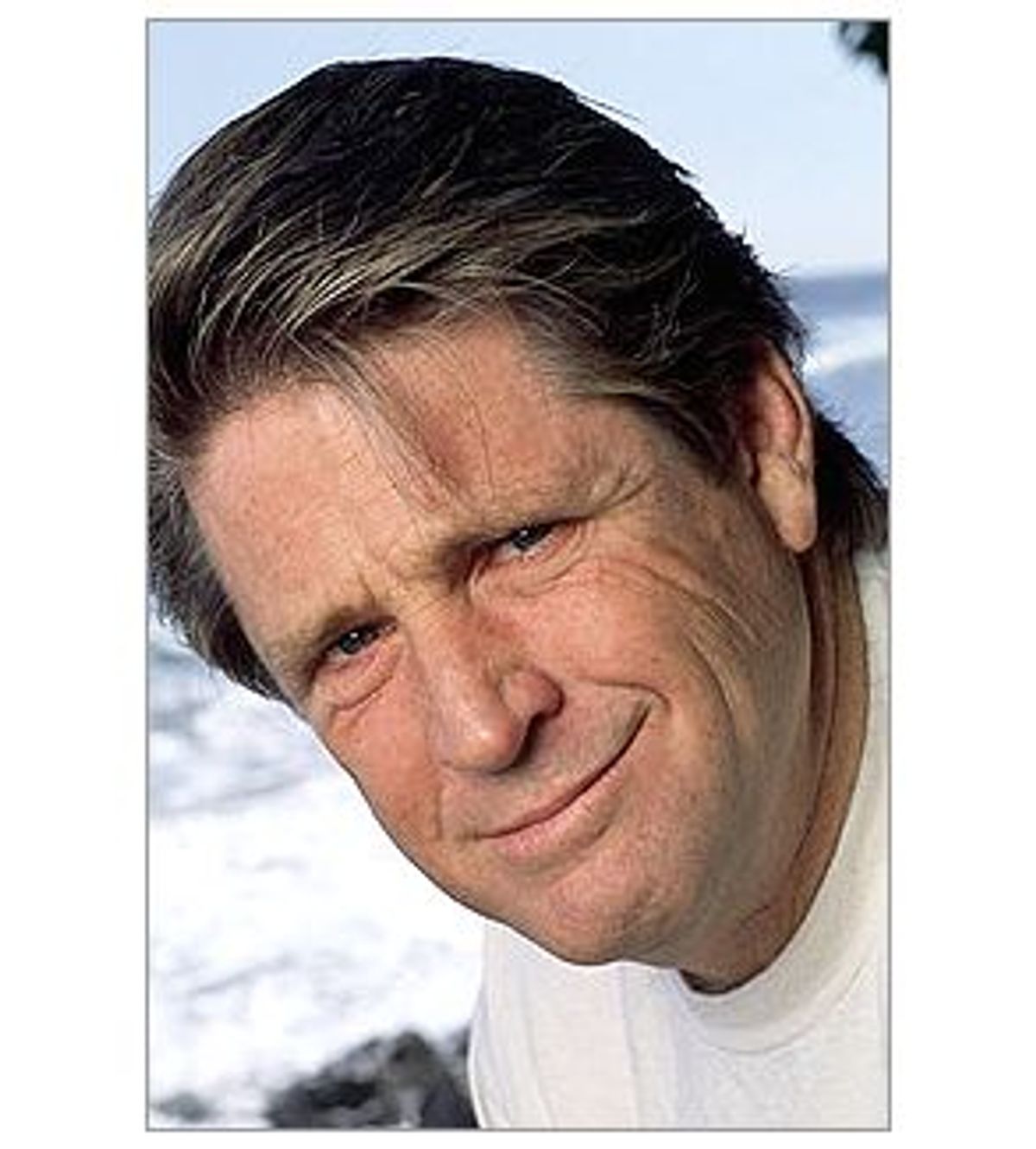
Tall and lean, with a cockeyed smile and hair more gray than brown these days, Brian Wilson is unassuming, authentic and full of the kind of purity of spirit that you can mistake for naiveti. As enthusiastic about mousse as he is about music, Wilson’s personality is often compared to a child’s — something that must be reconciled with his years of severe drug addiction and schizophrenia, both of which he has under control now.

He has had the same favorite song for 40 years — Phil Spector’s “Be My Baby.” (“I learn something new every time I listen to it.”) When asked to recount acts of kindness, he offers people instead. (“My wife and my [four] daughters.”) When asked about songwriting, he alternates between promises of having his best work forthcoming and claiming he can’t top his history. (“I’ll never be better than ‘Pet Sounds,’” he said dismally. Then later, “I’m writing the best rock ‘n’ roll song you ever heard.”)

With more than 35 albums to date, Wilson is one of the most successful and prolific pop songwriters of the past four decades — the creative force behind Beach Boys’ hits such as “California Girls,” “Fun, Fun, Fun,” “Little Deuce Coupe,” “I Get Around,” “Help Me, Rhonda,” “Good Vibrations” and “Surfin Safari.” Created in 1961 by Wilson; his two brothers, Dennis and Carl; his cousin, Mike Love; and his high school friend, Al Jardine, the Beach Boys defined California surf culture and brought it worldwide. Built on unique four- and five-part harmonies, their sound was fresh, original and in demand almost overnight. With record-breaking album sales, they were hailed more than once as the world’s most popular band.

By the late ’70s, however, Wilson’s personal life was in shambles. He weighed more than 340 pounds. He rarely left his bedroom. He heard voices. He avoided the piano, and his songwriting attempts were shells of what they’d once been. Wilson underwent years of therapy, focusing on his weight, his stage fright, his father’s physical and emotional abuse and his long-buried musical talent.

The bad years have been well publicized and these days Wilson tends toward the positives. Spreading love, he says, is his mission. He seems to have lost the ego of his youth and sees his success in the context of his 58 years — making gold records, for example, is nowhere near as difficult as salvaging one’s life.

I spent an afternoon recently with Wilson in his practice room, where an enormous piano in one corner and a large glass guitar sculpture (“I don’t remember who gave it to me,” he sheepishly claimed) were the sole testaments to a lifetime of musical accomplishment. He is ecstatic about his current tour, which, given his propensity for stage fright, is as rich a testimony to how far he has come as anything.

Toward the end of the interview, in recounting the places where he finds pleasure, Wilson confessed that his favorite food is chocolate. In fact, he said, since he mentioned it, he wanted to get some immediately. I was in the driveway obligingly fumbling for my car keys when Wilson shot past me into his Corvette with an energy like what he must have had in 1960, jamming in his parents’ living room. Off he went in search of chocolate, leaving me grinning in his wake.

You talked in your autobiography about rock ‘n’ roll having the ability to liberate the soul. Is that still the mission of music for you?

Yeah. I’m living for my solo career right now. I don’t have any intention of going back to the Beach Boys. I like where I’m at; I like the concert the way it is.

You’ve been using a whole orchestra, which must be incredibly complicated to deal with, especially since you’re notorious for not liking the stage much.

I don’t have to deal with it. I love it. The conductor tells them what to do and it’s just a bigger sound, more sweet and lush. We have a theremin player onstage and he’s fantastic. Wooweee [imitates the sound], it’s a weird sound. It’s really a thrill.

Are you writing right now?

I’m trying.

Are you collaborating with anyone?

I’m writing alone now. It’s more appropriate for the time. I’m in my own space.

Could you talk about some of the ways you approach songwriting today vs. when you first started?

The biggest difference is that then I was writing to get No. 1 records. I was writing to get hit songs. I had a No. 1 record complex in my head and I’d go to the piano with a little bit of a competitive feeling in my chest, and I would lean down into the piano and put everything I had into it. That’s the way I used to write. Now I write on a much less energetic scale; I don’t have as much total energy as I used to, so I take it slower and it takes longer to write a song. I think even if it could be a No. 1 song, it probably wouldn’t be anyway because everything is so different now.

You mention in the book a sense of your own mortality, of reckoning with getting older. How do you feel now when you see 18- and 20-year-olds onstage?

I feel jealous.

Why?

Because I’m in my 50s. I don’t know — I just am. These young people have so much energy and I’m just jealous.

But don’t you sacrifice youth for experience and wisdom?

I’ve never had anyone tell me that! I always looked at the downside of being older; I never saw the upside.

I always believed that when people go through all the shit that someone like you has, it opens up their capacity for the good stuff, too. Do you believe that?

It takes a lot of courage. When you’re on your ass and you’re looking up like that, it’s hard to manage to get back up there. It takes a lot of willpower and a lot of courage and inner strength to get yourself back into it.

Do you feel like you have a larger capacity for joy since that’s happened?

Actually, yes. What’s really given me some joy is my tour. It was raining in Birmingham, Ala., totally raining, when we did the concert. The rain just stopped right before we did the concert. We thought we were going to get rained out. And then when we got to Atlanta, Ga., it was foggy, pouring down rain the whole time. People had umbrellas and the people that didn’t have umbrellas got just soaked. It was almost funny. And they were just there, all wet, shivering, and they stayed for the concert.

Do you think that you’re going out there with a different sense of mission than you were 30 years ago?

Oh, much more! Yes. I consider myself to be a crusader of love. I try to spread love around the world as best I can because I know I have a handle on love. I’m trying to spread my love around a little bit. A lot of people need love.

What sort of reviews have you gotten from your friends or family or peers about the show? Not the reviewers, but those close to you?

Every night after the show they come and say, “Brian, the concerts get better every fucking night, how do you do it?” I say, “I’m scared. I have to do it.”

Scared of what?

Rejection and all that kind of stuff. I’ve had some of that in my life.

Rejection of you or your music?

Well, both. Mostly me.

I know you’re uncomfortable with people calling you a genius.

Not now.

Oh, now we can call you a genius?

Yeah, go ahead. I think I’m a vocal genius, not a musical genius. I like background vocals. I consider myself a voice, not a singer. A voice is a sound and singing is what you do with that sound. Have you heard that before?

No, I haven’t. So you’re part of a community of sound?

Right. [Smiles]

What’s important to you when you sit down at the piano to write? When do you know you’re on?

When I say, “Let’s go to the piano,” on a moment’s hunch. That’s when I know I’m OK. But if I say, “I wonder if I should go up and play the damn piano today,” there’s a difference. One’s a little more inspired than the other.

But you must still play when you’re not feeling inspired?

Right. I just play to play. I like the piano — I’m always about 15 feet away from a piano.

When you wrote “Pet Sounds,” you said it was the most personal album you’d ever done. Is your music today still at that level of intimacy?

Yeah, yeah. I think it makes it better. I’ll never surpass “Pet Sounds.”

Why?

Because the … well, wait a minute. That’s not true, actually, because I wrote a song called “How Can We Still Be Dancing?” It’s a really good rock ‘n’ roll song and it’s better than “Pet Sounds.” It hasn’t been recorded yet. I’ve written a handful of songs over the last five years, but lately, the last couple of years, I haven’t been able to click at songwriting.

And will “How Can We Still Be Dancing?” be on the album you start in November?

The rock ‘n’ roll album? I didn’t even think of that! Yeah, it’ll be on that album. I love that song. I love that song a lot.

I can’t hear any of it, can I?

I’ll play a little of it for you. [Wilson goes to his piano and begins playing and singing an upbeat, rocking tune.]

How could we still be dancing, after all these years? How could we still be laughing, after all these tears?

[Stops midway through] It’s just a good rock ‘n’ roll song.

Fabulous. I love it!

Thank you.

What is your hope for this album? Do the reviews matter? Do sales matter?

I don’t read the reviews. I avoid them because I don’t want to be depressed if they don’t like it. My wife reads them. If they’re bad, she’ll tell me I need to sharpen up. She’ll tell me I went flat on “California Girls,” that sort of thing.

What can people expect of this new album?

Hard rock. Some good rock ‘n’ roll.

Though you said you hadn’t been writing for some time.

Yeah, a couple of years. I have this month off, then I start the tour again. I should write this month, shouldn’t I?

Beyond music, where do you find pleasure in the world today?

You want to know my real pleasure? Food. I love chocolate. I can’t get enough chocolate. I can’t help it. But my biggest pleasure of all is exercise. I really get off on exercise. I go to a park that I’ve claimed and run about three miles every day. I love it. Also, the tour. And believe it or not, going to sleep at night is a pleasure of mine. Really.

Continue Reading Close

Rachel Louise Snyder is a Chicago writer whose work has appeared in Ms., Mademoiselle and the Chicago Tribune and will appear in the forthcoming anthology "Traveler's Tales: A Woman's World."

“Duets”: “Idol” via “Project Runway”

ABC's new "Duets" is super nice, has no clear rules -- and insists on calling Robin Thicke a superstar

  • more
    • All Share Services

Topics: , ,

“Duets,” ABC’s tardy attempt to fashion a musical competition show of its very own, debuted last week. Perhaps hoping no one would notice just how late it had arrived to the “American Idol” knock-off party if it behaved like it had always been there, it premiered with no explanation of its own rules. (“Oh, you must know all about me already! I have been standing by this punch bowl all night. Really!”) In the not highly rated debut, Kelly Clarkson, Robin Thicke, John Legend and Sugarland’s Jennifer Nettles — a quartet referred to at every possible opportunity as “superstars”—  each selected two amateur singers with whom to perform a duet. The amateurs then received feedback from the other superstars on their performances. At the end of the night the eight contestants were ranked on a “chart.” How were the rankings on the chart determined? What were they a measure of? Would the contestants at the bottom be kicked off the show? Would the contestant at the top win something? Would the contestants in the middle have to perform a cappella while doing an interpretative dance about the word “superstar” and hanging from a trapeze? Who could say? No one who watched the show.

Tonight’s episode of “Duets” then, in which the rules are largely, if not entirely explained, effectively works as a do-over. Each week, the performances are graded — anonymously — by the superstars, and it is their feedback that determines the amateurs’ chart standings. (There is a moment in tonight’s episode when the first performer of the night is told her place on the chart. Anti-climactically, it’s the top one, because she is the only person yet to have sung. “Duets” is still working out its showmanship kinks.) Starting next week, the two contestants at the bottom of the chart will have to face-off in an a cappella duel (no trapeze sadly), and the loser will be kicked off the show. In six weeks’ time, “Duets” will go live and the audience will begin to vote on the outcome of each episode. (As to how the victor of the duel will be determined or what the ultimate winner will win, see the “not entirely explained” clause above.)

When written out, these rules may sound boring enough to seem like the sort of yawn-inducing information a TV show could reasonably hope to spare its audience. But they matter. On all the other major singing competitions, after the winnowing down of the audition rounds — those dark weeks when it becomes clear that America lacks for neither competent singers capable of melisma or the disturbed and delusional — it’s the audience that decides who stays and who goes. On “Duets,” for the next six weeks four relatively articulate performing professionals will be the deciders. “Duets” is temporarily putting off the rowdy, democratic voting process, and its tendency to favor sleepy-eyed white boys, to practice the more aristocratic style of expert judgment found on Bravo’s competition shows. “Duets” may be ABC’s answer to “Idol” and “X Factor,” but in rare moments, it’s also the singing version of “Project Runway.”

Though the four judges are too nice (they start and finish each comment with something like, “I love you,” or “you’re great”) they are also informed. They give feedback — the singing is pitchy, too perfect, too scared, the mic is too close, the dancing is bad. “Duets” does not embrace the sort of serious crit sessions seen on “Runway,” “Top Chef” or “Work of Art,” and it would be much better if it did. The judges seem up to it — not only does Kelly Clarkson effortlessly remain more likeable than anyone who has ever appeared on reality TV, I suspect that there is a Nina Garcia lurking inside of John Legend, whose high standards and perfectionism are belied only by the goofy, childish, wide-eyed expression he gets whenever he is watching a performance he enjoys. Real criticism would also rescue the show from its current in-between state, in which it drags on like any bloated musical performance show, but without the energy or stakes of one since, thus far, “Duets” is pre-taped.

The judges’ participation adds a nice new wrinkle to the format. Though it may mean that we will never get to know the amateur contestants well (this show could be called “Singing with the Stars,” despite the reversal of expertise), it should fuel some future sharp exchanges. Kelly Clarkson may not want to lay in to a reality TV contestant, but she can feel no such compunction about digging in to the over-confident Robin Thicke.

That the judges are performers delivers the same message –albeit at a much softer, less-compelling volume — as those Bravo shows: Talent is great, but greatness is hard, hard work. Robin Thicke may seem most concerned with making himself appear sexy, and Jennifer Nettles may not be able to contain her inner cheeseball, but they, like Legend and Clarkson, are professionals in the most complimentary sense of the word: reliable, knowledgeable, focused, dedicated. What they demand of their duet partners is surely nothing compared to what they demand of themselves. Clarkson, especially, is the embodiment of this. Exactly a decade ago she won the first season of “American Idol,” and she is now back on reality TV mentoring the two least polished, most insecure contestants on “Duets.” She chose them, she says, because they both reminded her of herself. She may be right, but they have lots and lots of work to do before before I see it.

Continue Reading Close
Willa Paskin

Willa Paskin is Salon's staff TV writer.

Riot porn from Kanye and Jay-Z

The music video for "No Church in the Wild" depicts a graphic riot scene and shows the resonance of dissent

  • more
    • All Share Services

Topics: , , , ,

Riot porn from Kanye and Jay-Z

There is a name for videos capturing particularly dramatic riot scenes — the sort with fire, tear gas, charging police horses, careening masked crowds and, often, a hardcore backing track. We call it riot porn. I’ve always thought it’s a bad name. Not because the street scenes — shot from Egypt to Oakland to Greece — aren’t titillating spectacles (and pornographic in that sense), but because all porn — good or bad, exploitative or sex-positive — is staged for the filming. Riots very much are not.

In this sense, the new music video for Kanye West and Jay-Z’s track “No Church in the Wild” is the best actual riot porn I’ve ever seen. The video, directed by Romain Gavras, is five minutes of a graphic, fiery and entirely staged riot. It opens with a young man lighting a Molotov cocktail and lobbing it at a line of riot cops as masked comrades behind him raise their arms in support. Filmed in Prague, but presented as a non-specific yet decidedly European urban battleground, riot cops on horses violently beat the masked crowd, who fight back with fire and fists while Greco-Roman statues look on. Were it not for the surprising appearance of a chained elephant amidst the fray in the video’s final frames, the footage looks (almost) like something straight out of Athen’s Syntagma Square. Jay-Z and Kanye don’t feature in the video at all, which makes artistic sense: I’d be more surprised to see Hove in a riot than a two-tonne elephant.

So what to make of riot porn brought to you by those hip-hop moguls and emblems of excess Jay-Z and Kanye? As I noted last year when purveyors of eau-de-date-rape Axe came out with a scent called “Anarchy”, the depiction of anarchism and riotousness in commercial ventures are at least “a nod to the popularity of dissent.” Gavras, who directed the “No Church in the Wild” video, has long riffed on the idea of social upheaval and fierce state repression in his work. His short film for rapper M.I.A’s “Born Free” told the story of U.S. military forces brutally rounding up and executing ginger-haired civilians. The message was lost on no one, and the video was banned from YouTube. Gavras offers a stylized, gritty and startling depiction of social rupture; that his brutal vision of a street riot is deemed popular and consumable enough to accompany some the most mainstream of music is worth consideration. It’s not just anarchists getting off on riot porn anymore.

This isn’t entirely new: There was the Levi’s jeans commercial last year that featured a young man in Levi’s squaring up to riot cops under the tagline, “Now is our time.” The ad was pulled from British television in light of the summer riots in London. The video for Kanye and Jay-Z’s anthem with Rihanna, “Run This Town,” also featured gangs in black bandanas — but it was a far cry in terms of realism and police-on-protester brutality from the riot scenes in “No Church in the Wild.”

My friends at the New Inquiry magazine, Malcolm Harris and Max Fox, have argued that riot imagery and revolutionary calls in products can serve as genuine threats to capitalism, even though they may be expensive ad campaigns or music videos. In a published dialogue between the two (which is well worth reading in its entirety) Fox and Harris agree that subway ads and select lyrics from pop songs are ample materials for would-be rioters. So, while some might see the depiction and glorification of rioters in a hip-hop video as exemplifying capitalist recuperation (even Molotov cocktails can help sell records now!), Harris and Fox suggest that these images can be reappropriated by anti-capitalists — after all, the accessibility of a music video featuring a riot suggests, at the very least, that this sort of dissent resonates. Indeed, Harris quipped on Twitter today, linking to the Jay-Z and Kanye video, “Oh hey, capital, are you sure that’s such a good idea?” and continued to joke about whether the hip-hop artists endorsed black bloc anarchism. We don’t need to make new anti-capitalist propaganda; Kanye and Jay-Z can have Romain Gavras do it while they accidentally offer up revolutionary slogans in their otherwise problematic lyrics. The bridge for “No Church in the Wild”, sung by Frank Ocean, is an insurrectionist two-liner: “I live by you, desire; I stand by you, walk through the fire.”

Of course, none of this is to say Kanye or Jay-Z should be praised as agents for revolutionary change. Jay-Z, aside from celebrating a life of unadulterated excess, is a key voice behind developer Bruce Ratner’s controversial Atlantic Yards project in Brooklyn, which has been widely criticized for pushing people out of their homes and failing to provide affordable housing and jobs. Meanwhile, Kanye is a famous jerk; he walked by Zuccotti Park once to check out Occupy Wall Street last year, but, again, he is mainly a jerk.

And, it’s worth noting, that the way in which the rioters are glorified in the music video is problematic. I question Gavras’s decision to only feature male rioters. It’s a common criticism of black bloc tactics that they alienate women and perpetuate a masculinist expression of anarchist street actions. Problems of patriarchy in radical scenes certainly abound — indeed it’s an issue too huge to really address here. Suffice to say, however, women across the world who have fought riot police in the streets might take issue with Gavras’s ubiquitously male scene.

But what strikes me the most, and what might make a lot of anarchists and other proponents of street confrontation feel pretty smug, is that Kanye and Jay-Z have the resources to produce pretty much any kind of spectacular music video imaginable. And they opted for riot porn.

Watch the “No Church in the Wild” video below:

Continue Reading Close

Natasha Lennard covers the Occupy movement for Salon. A British-born, Brooklyn-based journalist, she has been covering Occupy Wall Street since before the first sleeping bag was unrolled in Zuccotti Park. One of the first journalists arrested at an Occupy action, she has managed to enrage Andrew Breitbart, Rush Limbaugh and Glenn Beck. You can follow her on Twitter (@natashalennard), and email her any Occupy updates/videos/ideas to natasha.lennard@gmail.com

Quick Hits: Anoushka Shankar performs ISHQ

Legendary sitarist and daughter of Ravi Shankar performs live at New York's City Winery

  • more
    • All Share Services

Topics: , , , , ,

There was a time when Anoushka Shankar’s music fell under her father’s shadow — how could it not, when you play the sitar and your father, Ravi Shankar, just happens to be the most famous sitar master in the world?  But Anoushka has established herself as an extraordinary musician in her own right, with her own distinct voice. In London she recently won the Songlines Music Award for Best Artist of 2012. Her new album, “Traveller,” finds her exploring the common roots of Indian classical music and Spanish flamenco.  She says the technical challenges were formidable, but the music explodes with an intensity that makes it all sound natural — and beautiful.

And as she explains to SOUND TRACKS reporter Arun Rath, she managed to get it all done through the pregnancy and birth of her first child, who now travels with her on tour.


Trust me on this: The Beatles’ “Let It Be”

The acclaimed author hopes his daughter finds her own musical path but still felt proud when she loved the Beatles

  • more
    • All Share Services

Topics: , ,

Trust me on this: The Beatles' (Credit: Johnathan M. Thomas via Shutterstock/Salon/Benjamin Wheelock)

How many more of these stories about dads playing music for their children? Every Father’s Day this story comes around! The kid agreeably listens to the beginning of the Goldberg Variations, and then repairs to his bedroom to play with blocks. The kid, no matter how we spin it, ex post facto, is not the center of the story. The dad is. Did I ever pay attention when I was the kid myself? My dad foisted Beethoven on me when I was in grade school, 9th Symphony. He also had a liking for show tunes. Neither rubbed off on me, not Beethoven, not show tunes.

What I remember is when my parents bought that brand-new album “Abbey Roadand played this LP on their brand-new faux-antique console hi-fi, right about when they were separating. That had some impact. I can remember feeling like “Golden Slumbers,” McCartney’s brief, melancholy lullaby from that Beatles album, was a lullaby for me in a time when I could have used one.

Well, now I am a dad myself, and I don’t want to make my daughter have to listen to stuff she doesn’t want to listen to (though, in fact, I have tried to sneak Sun Ra onto the stereo in her presence). I don’t want her to feel that music is an intergenerational chore. I would do almost anything to make sure that music, for her, is something to love.

And yet: Nothing makes me happier than when my daughter does take to a particular piece of music on her own. Recently, e.g., she became obsessed with a very excellent tune by the Pogues. It was “If I Should Fall From Grace With God,” which my daughter refers to as the loud-and-fast song. As in: Papa, play the loud-and-fast song. No delight is more delightful than dancing to the loud-and-fast song with a 3-year-old specialist in the pogo.

And yet, sometimes, it must be observed, the sadder songs are the more genuine songs, or: there are times when the sadder songs come into focus, or: perhaps affirmation in a song is a thing of which one should always be suspect. And so there was a day recently that I was spending the day with my daughter, just me and her, and after all the usual pastimes had been exhausted I said, at last, falling into the trap of so many dads, We still have a few hours here, how about we listen to some music?

I put on “Let It Be.” By the Beatles. In fact, I put on the song “Let It Be.” And I’m talking about the version from “Let It Be,” the Phil Spector production, not the George Martin-produced single that you can find easily, not the “Let It BeNaked” version, which I actually love, too, because I like hearing how guitarist George Harrison thought about what he did on the various recordings. I played my daughter the “Let It Be” I knew best, and which had bludgeoned me much as “Golden Slumbers” had, back in the day, when things at home were coming unglued.

I played the song for her while I was making her a sandwich. It’s really unusual for a 3-year-old to stop moving, unless she’s asleep, and my daughter was not asleep. But she was pretty still. She was transported by the song. Look, you have heard this song 10,000 times, I have heard this song 10,000 times, we are somewhat impervious to the charms of this song, even though it’s a very beautiful song, but when you play it for someone else, in this case someone else who has never heard the song at all, you get back something lost, the original emotional freight of the thing. And with “Let It Be,” which is apparently about a dream Paul had about his dead mother, and, self-evidently, also about the Beatles breaking up, it is hard not to feel that the title, the refrain, is sung with real insight, a real understanding about what it feels like to need the sentiment expressed therein. There really is a lot of misunderstanding and disagreement and dispute in the world, all of it essentially pointless, our time here is so brief, and it would be better if we could all just …

Now, when you’re 3, a sentiment of this kind has maximum impact when repeated, but it’s repeated a lot here, in the song, over and over, and my daughter picked it up quick, the theme, but not so quick that she didn’t want to hear the song again, and so I played the song again, and finished making the sandwich, and then she wanted to hear it again, and I played it again, and then again, and on the third or fourth repetition, that plaintive, moving quality had begun to empty out again, and I was just hearing the song I had heard 10,000 times, and then my daughter asked for it a few more times. We played it six times. That first day. And we have played it more times since. Papa, play that “Let It Be” song.

What’s it like to have resounding success in the dad-playing-music-for-the-kid sweepstakes? I am not sure I want my daughter feeling like she has to like something just because I played it for her. I would like to provide an opportunity, make the music available, then step out of the process, so that she’s absolutely liberated, so that she has self-determination in the matter of her musical interests. That way she can die for Uncle Rock or Dan Zanes if that is what she wants. But I can’t deny, and especially not here, the sense of pride that I feel when she likes something that I too liked, once upon a time in the suburbs. I hope she can do the same when she’s a parent. Maybe one day she’ll share with me things she likes with the same enthusiasm. And maybe one day I can sell her on Sun Ra.

Continue Reading Close

Rick Moody is the author of five books, including "Demonology."

Concord Music Presents: Joe Walsh – “Wrecking Ball”

Joe Walsh performs "Wrecking Ball" live at the Troubadour in West Hollywood, CA

  • more
    • All Share Services

Topics: , , , ,


"Wrecking Ball" is off Joe Walsh's new album, Analog Man, available June 5th. Pre-order now on CD and vinyl, plus exclusive T-Shirt bundles.

Page 1 of 285 in Music