

Arguing among themselves about the meanings of objects like pottery shards, animal bones and the foundations of long-ruined buildings is something archaeologists usually do in the privacy of their own profession. But when the argument is about who wrote the Bible, why it was written and what, if any, of the historical events described in the Old Testament are true — and when the archaeologist’s excavations are conducted on some of the most contested land in the world, the Middle East — the tempest is almost guaranteed to boil over the rim of the teapot. No one knows this better than Israel Finkelstein, chairman of the Archaeology Department at Tel Aviv University, who, with archaeology historian and journalist Neil Asher Silberman, has just published a book called “The Bible Unearthed: Archaeology’s New Vision of Ancient Israel and the Origin of Its Sacred Text.”
“The Bible Unearthed” is the latest salvo fired in a pitched battle between those who consider the Old Testament to contain plenty of reliable historical facts, and those who, at the opposite extreme, say it’s pure mythology. The debate reached the general population of Israel, sending what one journalist called a “shiver” down the nation’s “collective spine,” in late 1999, when another archaeologist from Tel Aviv University, Ze’ev Herzog, wrote a cover story for the weekend magazine of the national daily newspaper, Ha’aretz. In the essay, Herzog laid out many of the theories Finkelstein and Silberman present in their book: “the Israelites were never in Egypt, did not wander in the desert, did not conquer the land [of Canaan] in a military campaign and did not pass it on to the twelve tribes of Israel. Perhaps even harder to swallow is the fact that the united kingdom of David and Solomon, described in the Bible as a regional power, was at most a small tribal kingdom.” The new theories envision this modest chiefdom as based in a Jerusalem that was essentially a cow town, not the glorious capital of an empire.
Although, as Herzog notes, some of these findings have been accepted by the majority of biblical scholars and archaeologists for years and even decades, they are just now making a dent in the awareness of the Israeli public — a very painful dent. They challenge many of the Old Testament stories central to Israeli beliefs about their own national character and destiny, stories that have influenced much of Western culture as well. The tales of the patriarchs — Abraham, Isaac and Joseph among others — were the first to go when biblical scholars found those passages rife with anachronisms and other inconsistencies. The story of Exodus, one of the most powerful epics of enslavement, courage and liberation in human history, also slipped from history to legend when archaeologists could no longer ignore the lack of corroborating contemporary Egyptian accounts and the absence of evidence of large encampments in the Sinai Peninsula (“the wilderness” where Moses brought the Israelites after leading them through the parted Red Sea).
Herzog’s article led to a nationwide bout of soul-searching. After it appeared, universities organized conferences where distressed citizens could quiz experts on the details and meanings of this new and not-so-new research; Israeli newspaper journalists wrote stories casting the theories as blows against the cultural identity and even the political legitimacy of Israel; and scholars who quarrel with the ideas of archaeologists like Finkelstein wrote fiery letters and editorials denouncing them as “biblical minimalists.”
Them’s fightin’ words. In this field, it seems, there are few worse epithets to throw at a colleague than “minimalist.” The moniker is usually applied to a controversial group of European biblical scholars, sometimes called the Copenhagen School, who have insisted that since there is, to their minds, so little corroborative evidence supporting the stories in the Old Testament, the scriptures should be regarded as a collection of legends, and figures like David and Solomon considered “no more historical than King Arthur.” The inflammatory implication behind the name “minimalist” (which Finkelstein and Silberman dismiss as a canard invented by the group’s “detractors”) is that an emotional, religious or political agenda, rather than a judicious weighing of the facts, drives their research. Their most vehement critics accuse the minimalists of being anti-Bible and anti-Israeli, for to some any attack on the historical legitimacy of the Bible, with its grand national myth of a people chosen by God to rule in the Promised Land, is a blow struck at the legitimacy of the current state of Israel.
Into this incendiary territory steps Finkelstein, a prominent and well-respected Israeli archaeologist. Although his staunchest critics, including William Dever, professor of Near East archaeology and anthropology at the University of Arizona, and Hershel Shanks, editor of the Biblical Archaeology Review, have called him a “minimalist,” his defenders scoff at the label. “The Bible Unearthed” does observe that “from a purely literary and archaeological standpoint, the minimalists have some points in their favor,” but it concludes that “archaeology has shown that there were simply too many material correspondences between the finds in Israel and the world described in the Bible to suggest that the Bible was fanciful priestly literature, written with no historical basis at all.”
Nevertheless, Finkelstein is an iconoclast. He established his reputation in part by developing a theory about the settlement patterns of the nomadic shepherd tribes who would eventually become the Israelites, bolstering the growing consensus that they were originally indistinguishable from the rest of their neighbors, the Canaanites. This overturns a key element in the Bible: The Old Testament depicts the Israelites as superior outsiders — descended from Abraham, a Mesopotamian immigrant — entitled by divine order to invade Canaan and exterminate its unworthy, idolatrous inhabitants. The famous battle of Jericho, with which the Israelites supposedly launched this campaign of conquest after wandering for decades in the desert, has been likewise debunked: The city of Jericho didn’t exist at that time and had no walls to come tumbling down. These assertions are all pretty much accepted by mainstream archaeologists.
Finkelstein’s latest and most controversial claim, however, concerns the dating of certain ruins, including those at a site where he co-heads an ongoing excavation: Megiddo. Megiddo is thought to be the location of the final, future battle of Armageddon, but it is also named in the Bible as one of the major provincial capitals in the united kingdom of Israel under the reigns of David and Solomon. When archaeologists discovered the remains of monumental structures at Megiddo in the 1920s and 1930s, they promptly attributed them to Solomon’s time. In “The Bible Unearthed,” Finkelstein and Silberman present Finkelstein’s argument for redating these structures, including the massive “Solomon’s Gates” found in several similar cities, to a period about 100 years later, and they give credit for building them to King Ahab, husband of the notorious heathen Jezebel and a ruler much reviled for his apostasy in the Old Testament.
Some of his colleagues find this theory unacceptable. Dever declares that Finkelstein is “the only archaeologist in the world” who advocates the redating. Lawrence Stager, a professor of the archaeology of Israel at Harvard and director of the Harvard Semitic Museum, says “Ninety-five percent of the specialists in the field would disagree with him” and dismisses Phyllis Tribble, a professor of biblical studies who enthusiastically reviewed “The Bible Unearthed” in the New York Times Book Review, as someone who “doesn’t know much about the Old Testament and archaeology.”
And while Baruch Halpern, a historian who was a co-director of the Megiddo excavation with Finkelstein, describes the book as “excellent” and “challenging,” he remains unconvinced by Finkelstein’s redating of the Solomonic ruins because the theory relies overmuch on pottery seriation, a technique for dating sites using ceramic remains, which he distrusts. Nevertheless, Halpern expresses surprise at the extent of the ire Finkelstein’s theory has evoked. “This touched an incredibly vital nerve … They can’t abide the thought that the consensus might be mistaken. If one of the only absolute anchors between archaeology and the text is removed, they are thoroughly at sea.”
Ordinarily, the precise dating of buildings erected 3,000 years ago in a kingdom that long ago passed away into ancient history would preoccupy only a small group of specialists. Once the Bible’s involved, though, all bets are off; its influence on contemporary Israeli identity is still tremendous. “It’s used as a deed, as an outline of what people are going to do, as a way of proving your genealogy,” says Amy Dockser Marcus, former Middle East correspondent for the Wall Street Journal and author of “The View From Nebo: How Archaeology Is Rewriting the Bible and Reshaping the Middle East.”
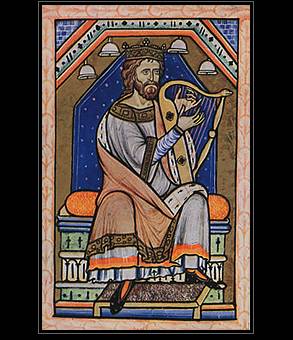
And it’s not just Israel where the scriptures have provided a blueprint for political and cultural as well as religious projects. Take the story of the conquest of Canaan, for example: a legend about a “righteous” nation seizing a great country from a people who did not deserve it. It has implications for the establishment of the current state of Israel, but the Europeans who colonized America deliberately invoked that conquest myth, as well, in their campaigns against Native Americans. The Bible’s story of David, who with his great army captured Jerusalem and united a vast empire in Palestine, and his son Solomon, who built the First Temple in Jerusalem and many magnificent gates, palaces and stables throughout the land, depicts the united kingdom as ancient Israel’s Golden Age. The founders of the modern state of Israel invoked that kingdom and heralded its “restoration.” And even Jews who consider themselves secular can experience the revelation of David and Solomon’s relative insignificance as deflating.
Others see the downgrading of David and Solomon’s reigns as positively ominous. In a response to Herzog’s article in Ha’aretz, Hershel Shanks of the Biblical Archaeology Review lumped both Herzog and Finkelstein with the biblical minimalists and accused them of having “a political agenda.” “[A]t the extreme,” Shanks wrote, “they can even be viewed as anti-Semitic.” According to Marcus, “People say that Finkelstein means well but what he’s doing is giving amunition to people who are anti-Israel, and you do see some of this stuff turning up on pro-Palestinian web sites, for example.” Finkelstein himself has no patience for such charges, maintaining that he has no political agenda and is just a scholar doing his job. “Nonsense,” he replied by e-mail when the “ammunition” issue was raised. “Research is research, and strong societies can easily endure discoveries like this.”
By comparison with today’s skeptical turmoil, the early years of the modern Israeli state were a honeymoon period for archaeology and the Bible, in which the science seemed to validate the historical passages of the Old Testament left and right. As Finkelstein and Silberman relate, midcentury archaeologists usually “took the historical narratives of the Bible at face value”; Israel’s first archaeologists were often said to approach a dig with a spade in one hand and the Bible in the other. The Old Testament frequently served as the standard against which all other data were measured: If someone found majestic ruins, they dated them to Solomon’s time; signs of a battle were quickly attributed to the conquest of Canaan.
That confidence was not entirely misplaced; in particular, the Old Testament contains very detailed genealogies and gets high marks in geography. Eventually, though, as archaeological methods improved and biblical scholars analyzed the text itself for inconsistencies and anachronisms, the amount of the Bible regarded as historically verifiable eroded. The honeymoon was over.
According to Jack M. Sasson, professor of Judaic and biblical studies at Vanderbilt University, “There is a kind of curtain drawn across the Bible. After it you can find history, before it not. Most responsible scholars in the ’20s began with Abraham. As time progressed, the curtain moved further down, and people were debating whether Exodus really happened, then the conquest. Now the big debate has slipped even further [into the present]. It has gotten down to being about the monarchy.”
Marcus says that Finkelstein is “difficult to dismiss because he’s so much an insider in terms of his credentials and background. He’s an archaeologist, not a theologian, and he is an Israeli. It’s hard to say that someone who was born in Israel and intends to live the rest of his life there is anti-Israeli.” In her mind, Finkelstein’s work parallels a broader change in Israeli society led by those who, like Finkelstein, were born after the task of state building had been accomplished. “They’re not as wedded to the mythology of Israel,” she says “Their identities are not as caught up in toeing to the traditional narratives. This group of historians has gone into the archives and done a lot of research and come up with new interpretations of Israel’s recent past. Israel Finkelstein is part of that, but he’s looking at Israel’s ancient past.” Marcus calls this group of scholars “new historians”; others have dubbed the trend “post-Zionism.”
Here, also, there are striking similarities between contemporary politics and the way ancient history gets studied. Many of the new dating methods used by Finkelstein and others to undermine the historicity of certain Bible stories involve seeing the first Israelites as part of the fabric of Middle Eastern life rather than as a remarkable exception. “The Bible Unearthed” notes that in the 1970s, archaeologists began to use long-term anthropological models, which were built by scholars who compared many cultures to see how civilizations tend to develop along predictable lines. Certain artifacts — monumental buildings, administrative correspondence, royal chronicles and national scripture like the Bible — are almost always “a sign of state formation, in which power is centralized in national institutions like an official cult or monarchy.”
That kind of state didn’t exist in Jerusalem during David and Solomon’s time, so Finkelstein and Silberman argue that the Old Testament must have been written (though perhaps “compiled” is a more accurate term) later. They peg a king descended from David, Josiah, who ruled over a much more developed Jerusalem more than 300 years after David, as the one who ordered its transcription. Josiah, according to “Unearthing the Bible,” needed a national scripture to cement a strictly monotheistic religious orthodoxy and to promote the idea that only a king of Davidic lineage could reunite the lost empire. It should come as no surprise, then, that the Old Testament is still used to forge a national identity for today’s Israel, since according to Finkelstein and Silberman, it was created to do just that in the ancient world.
The Old Testament is also a story about how special Israel is, singled out from its neighbors by God’s orders. Archaeology used to mimic that separatism. “For a long time the archaeology of Israel was studied in isolation,” says Marcus. “Israel Finkelstein sees modern and ancient Israel as part of the broader Middle East I consider him part of an emerging common ground. He’s an archaeologist starting to look at the past in a different way.” Finkelstein, when asked about the comparison to the new historians, replied, “The general atmosphere in this country, and in my generation, is very different now from that of, say, 20 or 50 years ago. There is a strong cultural activity going on here, and part of it is a fresh thinking about the past — distant and more recent.” Techniques like the long-term anthropological models Finkelstein prizes pull ancient Israel and, metaphorically, modern Israel, back into the texture of Middle Eastern life, so it’s no wonder they’re associated with a new, more pro-peace process current in Israeli culture.
How those views will weather the current faltering of the process and the probable election of hard-liner Ariel Sharon is uncertain. The election of Sharon, who many believe ignited the current intifada when he provocatively visited the Temple Mount, a site sacred to both Jews and Muslims (and who is quoted in the pages of the Jan. 29 issue of the New Yorker saying “the Koran doesn’t mention Jerusalem once In the Bible it is mentioned 676 times”), may reflect a more general retrenchment on the subject of Israel’s symbolic underpinnings. Finkelstein remains unfazed by his critics: “I am sure that no educated Israeli or American Jew for that matter, would want me to silence the results of my research. We are an open, democratic society, and we need to face these things — both on the distant past and on the more recent one. In fact, this makes us a stronger society! And I really don’t think — let me know if I am wrong — that there is a committee sitting somewhere in, say, Switzerland, and deciding the fate of nations according to historical or biblical research.”
