Terrorism
One last conspiracy
The FBI's bizarre foul-up on the McVeigh case gives leaders of the dying militia movement a reason to revisit their glory days.
John Trochmann, one of the earliest and best-known leaders of the militia movement that exploded in the mid-1990s, found himself enjoying media attention he hasn’t seen in quite a while Friday morning. “We got a call from MSNBC saying they were looking for someone to say ‘I told you so,’” says Trochmann, head of the Militia of Montana. “And that’s exactly what I’m saying.”
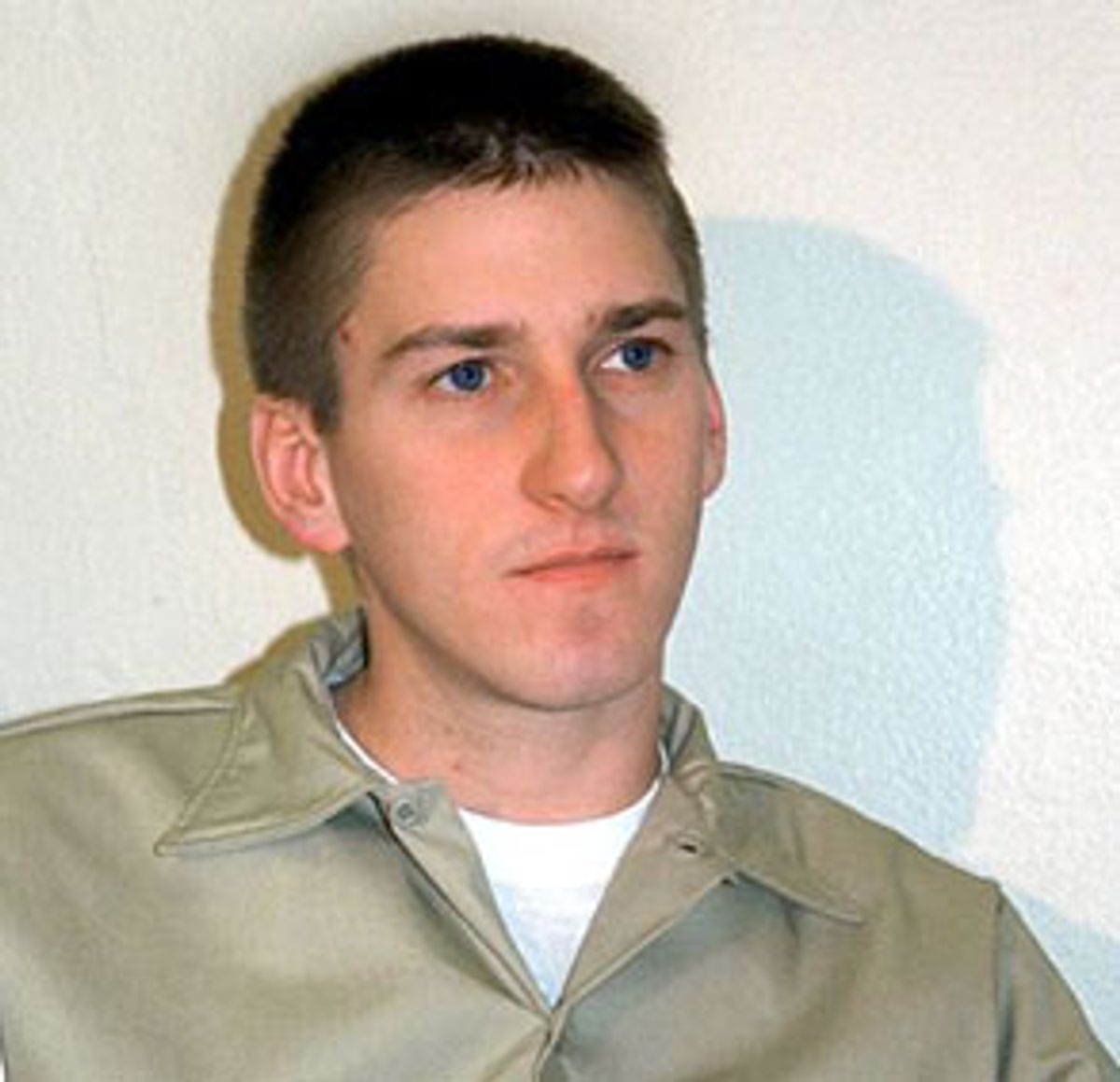
The announcement came late Thursday that the FBI had discovered 3,100 pages of documents — reports, including interview notes, along with copies of “photographs, written correspondence and tapes” — that had never been turned over to defense attorneys for Timothy McVeigh and others implicated in the April 19, 1995, Oklahoma City bombing. And, as broader conspiracies were trundled out Friday on talk radio and TV shows, it felt like a flashback to the type of wild anti-government paranoia that launched the militia movement and, according to McVeigh himself, inspired him to plot the fatal blast that killed 168 people, including 19 children.
Now, by most measures, that movement has dwindled to a shadow of its former self. According to a new report by the Southern Poverty Law Center, which tracks the growth of the anti-government “patriot movement,” the number of groups has dropped to 194, down about 9 percent from last year; it’s the fourth straight annual decline since a peak of 858 groups in 1996.
That peak, of course, came after fatal federal law enforcement confrontations that inflamed anti-government militants on the right and even on the left. When in April 1992 federal marshals and an FBI sniper killed the wife and son of white separatist Randy Weaver at Ruby Ridge, Idaho, the militia movement got a serious jump-start. Then in February 1993, a lengthy standoff between the Branch Davidians and federal authorities in Waco, Texas, left more than 80 members of the group dead, along with four federal agents. That electrified the movement even more. Curiously, the Oklahoma bombing inflamed it too for a while.
“The idea spread that McVeigh was either a patsy or was innocent and being framed,” says Mark Potok, spokesman for the Southern Poverty Law Center, “and it made them stronger.” Only after McVeigh publicly took responsibility for the bombings and said he was acting alone did those conspiracies begin to fade, Potok says.
A variety of other factors in recent years played a part in the slow decline of militias. Many of their leaders, who had promulgated and practiced “common law,” eventually were arrested and imprisoned for, among other things, not paying taxes. The predicted Y2K crisis, which caused militia groups to stock their shelves with rations and firearms, had many in the movement prepared for battle.
“We’re itching for a standoff someplace,” Norman Olson, the leader of the Michigan Militia, told the Washington Post. “Any movement needs a good and noble rallying point, an Alamo or a ‘Remember the Maine.’” But Y2K, of course, was a bust.
Last week Olson folded up his militia’s tent, announcing that there were fewer than 100 members and they were not the most motivated lot. His Michigan Militia, he had once bragged, numbered in the thousands.
But Friday, he sounded a little giddy at the prospect of returning to some of his favorite lines. “This kind of miraculous discovery is the sort that might give rise to an increased public sentiment that the government is not concerned with justice. That our government is dangerous.”
It’s nothing that could revive a movement, he says, guessing that the “trigger mechanism” to truly rebuild the militias would require “another standoff, this time with 20 or 30 dead on both sides.”
“We emerged spontaneously, a movement whose time was right. People were frightened for their freedom, and they gathered together to protect themselves against the threat of the government,” he says. “I think we did what we set out to do, which was to prevent another Waco.”
The militia faithful still cling to the idea that McVeigh didn’t act alone, though there are several different versions of what the real story might be. Olson once posited that the Japanese government had bombed the Murrah Federal Building out of retaliation for the terrorist sarin-gas attack in a Tokyo subway a month earlier. Trochmann believes the federal government itself played a role. “When they execute McVeigh,” he says, “they will be destroying more evidence of the federal government’s involvement.”
Their logic, even in the face of this most embarrassing of FBI screw-ups, now seems somewhat quaint in the way it updates moldy conspiracy theories. But one thing Trochmann says can’t possibly be argued with: “There wouldn’t be a militia movement if the government were honest about these things.”
Kerry Lauerman is Salon's Editor in Chief. Follow him on Twitter: @kerrylauerman. More Kerry Lauerman.
Senate Democrats heroically fund TSA
Democrats score the dumbest political victory of 2012
(Credit: Reuters/Frank Polich) On Tuesday, a Senate Appropriations Committee vote effectively highlighted everything that is stupid about politics.
The Transportation Security Administration, a universally loathed government agency, is facing a shortfall, despite its more than $8 billion budget. Instead of having a debate over what effective airport security might actually look like and how much should reasonably be spent on the honestly rare threat of commercial-air-travel-based terrorism, there was a debate over how best to come up with the money needed for all the radioactive naked picture machines and bomb-sniffing dogs. The Democrats suggested passing on the cost of ineffective, cumbersome and intrusive security theater to citizens, via higher fees on airfares. The Republicans, even more predictably, suggested cutting spending that directly helps poor people to ensure there is enough to spend on stopping imaginary future 9/11s.
Continue Reading Close
Alex Pareene writes about politics for Salon and is the author of "The Rude Guide to Mitt." Email him at apareene@salon.com and follow him on Twitter @pareene More Alex Pareene.
Police arrest artist setting up ‘I Love NY’ work
The installation included a plastic bag with a battery inside of it, hanging from a tree
(Credit: http://tmiyakawadesign.com/) NEW YORK (AP) — An artist who was setting up an “I Love New York”-themed public art display in Brooklyn was arrested after the wired contraption was mistaken for an explosive device.
Takeshi Miyakawa, a visual artist and furniture designer, was arrested Saturday after placing the installation in two separate areas of the same New York City neighborhood. His lawyer and employer both called the arrest a misunderstanding.
The first apparatus was found Friday morning after a caller reported a suspicious package to police. It consisted of a plastic bag that contained a battery and was suspended from a metal rod attached to a tree. The bag, which had the classic “I Love New York” logo printed on it, was connected by a wire to a plastic box that contained more wires.
Continue Reading CloseBehind the underwear bomb
The latest airplane terror plot wouldn't have been foiled without airport security -- but not the kind we all know
Travelers line up at a TSA checkpoint at Los Angeles International Airport.
(Credit: Reuters/Danny Moloshok) In my mind, the key to keeping airplanes safe is, and always has been, stopping acts of sabotage while they are still in the planning stages. Here in the age of the TSA checkpoint, with its toothpaste confiscations and obsession with pointy objects, we tend not to think this way, preoccupied instead with a kind of airport Kabuki — the tedious, fanatical screening of passengers and their carry-ons. Real airport security takes place offstage, as it were. It is the job of the folks at the CIA and the FBI, working together with foreign authorities. And while TSA has an important role here too, we can do without the spectacle of airport guards rifling through innocent people’s bags in a pathological hunt for what are effectively harmless items.
Continue Reading ClosePatrick Smith is an airline pilot. More Patrick Smith.
Hiding 9/11′s last secrets
The military tribunal for Khalid Sheikh Mohammed means the American people will never know what drove him to terror
(Credit: Reuters//Brennan Linsley) After a Navy SEAL team killed Osama bin Laden at his Pakistan hideout a year ago this week, it flew his body to the Arabian Sea, weighted it down, and slid it silently off an aircraft carrier into the watery depths.
For many Americans, the secret raid provided a measure of revenge and catharsis for the strikes of Sept. 11, 2001. But it didn’t provide the kind of justice and official reckoning that the country needs to gain real closure. Now the government has a chance to achieve that through a full, fair and open trial of Khalid Sheikh Mohammed and four co-defendants, so the world can finally see the evidence against him as the true architect of the attacks on New York and Washington. The trial kickoff — an arraignment for the men — is scheduled for this Saturday at the U.S.-run detention facility in Guantanamo Bay, Cuba.
Continue Reading CloseJosh Meyer is the author, with Terry McDermott, of the new book, "The Hunt for KSM: Inside the Pursuit and Takedown of the Real 9/11 Mastermind, Khalid Sheikh Mohammed.’’ More Josh Meyer.
FBI heroically locks up ridiculous anarchists on May Day
Feds stop inept radicals from carrying out a plot feds helped them conceive and carry out
U.S. Attorney Steven Dettelbach, left, and FBI special agent in charge Stephen Anthony walk past a map showing the location of a bridge on Ohio Rt. 82. Five men, pictured on the wall behind the map, have been arrested for conspiring to blow up the bridge. (Credit: AP/Mark Duncan) Happy May Day, fellow travelers! If you’re not currently disrupting capitalism and/or having your wrists zip-tied for exercising your right to freely assemble, you probably read about the Federal Bureau of Investigation’s latest, not-at-all suspiciously timed terror sting. The Bureau, in an inspired bit of early-20th century nostalgia, has railroaded a bunch of dangerous anarchists. (Or “dangerous” “anarchists.”) America will not waver in the face of the Galleanist threat!
Continue Reading Close
Alex Pareene writes about politics for Salon and is the author of "The Rude Guide to Mitt." Email him at apareene@salon.com and follow him on Twitter @pareene More Alex Pareene.
Page 1 of 159 in Terrorism