Daniel Forbes

The quiet death of prime-time propaganda

With no fanfare, the White House drug office pulls the plug on its controversial program to pay TV networks for putting anti-drug messages in popular shows.

The White House program to financially reward television networks for anti-drug messages embedded in sitcoms and dramas was born in secrecy, achieved stunning midlife notoriety and now has been quietly terminated.

The acting director of the Office of National Drug Control Policy, Edward Jurith, signed a directive May 31 killing the program, first revealed by Salon in January 2000.

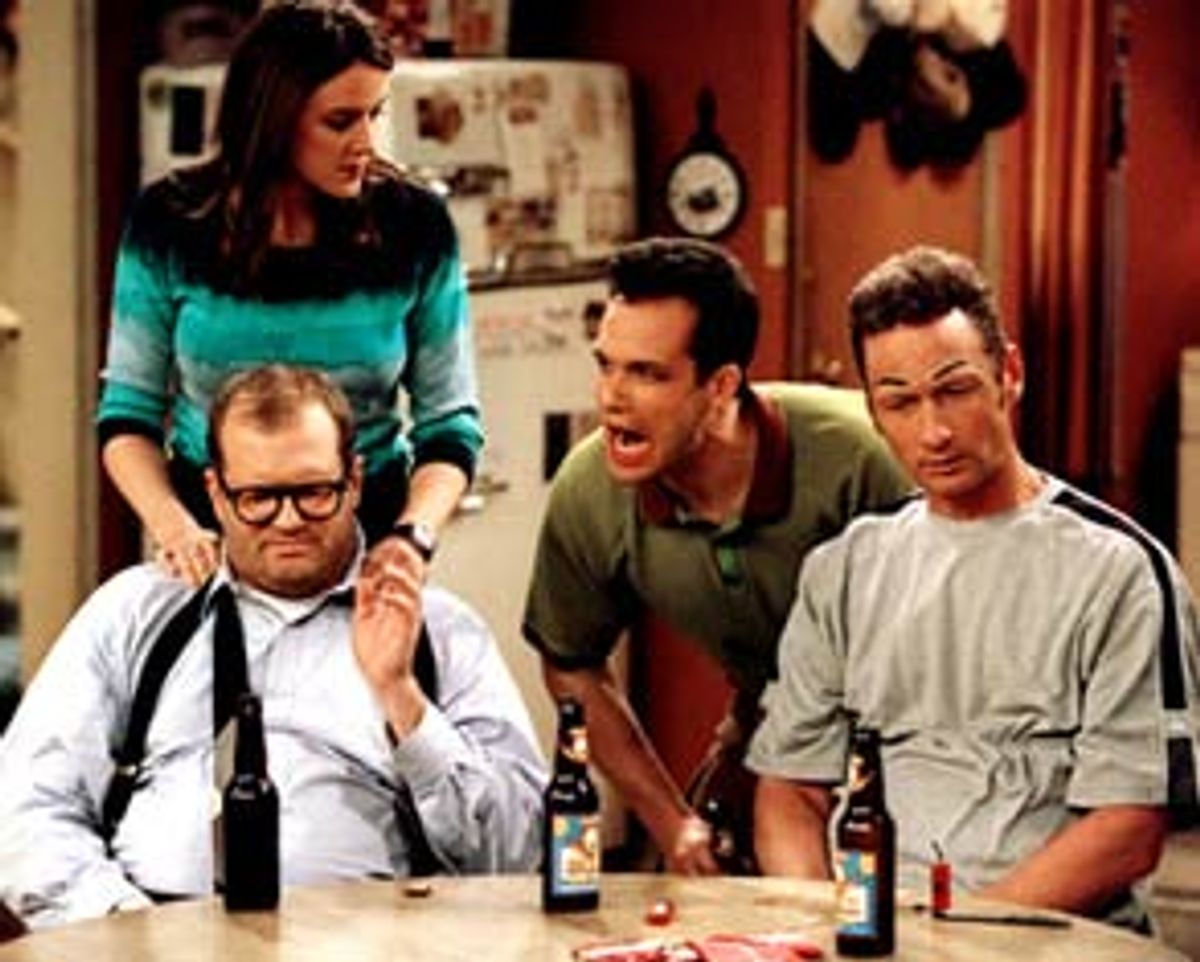
Jurith’s decision closes a controversial chapter in the government’s efforts to combat drug abuse with a pricey advertising campaign. In 1997, Congress appropriated more than $1 billion for an anti-drug advertising effort; it included a “pro bono match” component in which networks agreed to sell their advertising for half-price. Soon, with ad rates going up thanks to the booming economy, networks were looking for creative ways to meet their government obligations, and they agreed to insert anti-drug messages in prime-time shows — from “ER” to “Drew Carey” to “Smart Guy” — in exchange for freeing up ad time they could then sell to higher-paying private clients.

The networks earned an estimated $25 million for placing anti-drug and anti-alcohol messages in prime-time programming. Salon’s disclosure of the program and its extent sparked angry congressional hearings and negative coverage and editorials in newspapers nationwide.

ONDCP spokeswoman Jennifer DeVallance told Salon that the media campaign staff “just decided we would no longer review programs for content, and we would discontinue the pro bono match.”

DeVallance said the recommendation was made to acting director Jurith “after analysis of data collected over two years.” She declined to describe the data, as did other ONDCP officials. The media campaign’s director, Alan Levitt, refused to talk to Salon.

It is unclear whether the two Republican House subcommittee chairmen with direct funding oversight of the media campaign were aware of the ONDCP’s decision. Spokespersons for both Rep. Mark Souder, R-Ind., who chairs the Subcommittee on Criminal Justice, Drug Policy and Human Resources, which authorized funding for the media campaign, and Rep. Ernest Istook Jr., R-Okla., who chairs the Subcommittee on Treasury, Postal Service and General Government, which determined funding levels, declined repeated requests for comment on whether either representative knew the program had been terminated.

Rep. Elijah Cummings, D-Md., ranking Democrat on the drug policy subcommittee, said he felt blind-sided by the decision. Cummings said neither he nor his two top staffers were informed about it. “As the ranking member, for me not to know shows utter disregard for the Democratic Party and myself and my colleagues,” he said. Despite the controversy surrounding the program, Cummings said he felt “pretty comfortable” with it. And he believes anti-drug messages in programming are more effective than those in ads. “That’s why the change is so upsetting to me — because I thought it was a creative way to send a clear message,” he said. Cummings plans to call for a hearing to investigate why the program was canceled.

Rep. Jan Schakowsky, D-Ill., a member of the drug policy subcommittee who follows drug issues closely, was not informed of the ONDCP’s decision by either the White House or the chairman of her subcommittee, according to spokesperson Nadeam Elshami, who said the silence was unusual.

The timing of such a move by acting director Jurith accomplishes several ends for the Bush administration. It is unusual, considering the widely publicized expectation that John Walters would soon be nominated as drug czar, for an acting director to take such a step, though Jurith is a respected career civil servant. But it allows Walters to avoid a potentially messy inaugural decision. The covert propaganda campaign had its champions on Capitol Hill, and Jurith’s action saves Walters from having to make enemies early.

But Jurith probably would not have dared to act without Walters’ tacit approval. “It’s highly unlikely Jurith would have made such a decision without clearing it with the incoming director, ” says Keith Stroup of the National Organization for the Reform of Marijuana Laws. “It’s possible that Walters asked Jurith to fall on his sword.” Longtime drug policy observers say the program’s cancellation is more likely the result of frank political calculation than of Bush administration scruples about keeping the media free of government propaganda.

There were questions about how well the program was working and whether it was being fairly administered. In fact, just last week, the Government Accounting Office issued a report on allegations that Ogilvy & Mather, the advertising agency that administered the campaign for the ONDCP, falsified billing records for the program after the contract failed to meet the agency’s revenue projections in 1999. The GAO concluded that Ogilvy altered timesheets on 3,100 hours of questionable work billed to the government and also overcharged for contract employees, and that ONDCP failed to rectify obvious billing problems and contract irregularities.

ONDCP spokeswoman DeVallance acknowledged that terminating the program serves to “eliminate misunderstandings.” Prior to Jurith’s decision a month ago, she said, “some” TV shows received financial credit for government-approved content this television season. She refused to specify which.

Although the ONDCP is within the executive office of the president and reports to Bush, White House spokesman Jimmy Orr referred all questions about the decision to the drug policy office. Democrat Cummings, however, said it was unlikely the decision was made independently of top Bush administration officials. “I don’t see how he could make such a significant change without some kind of authority from the White House,” he said.

The inspiration to spend tax dollars on anti-drug propaganda came from Clinton drug czar Barry McCaffrey, shortly after the passage of ballot initiatives on medical marijuana in California and Arizona in 1996. McCaffrey considered the medical marijuana initiatives a stalking horse for drug legalization, and he concluded that the government needed its own ad campaign to combat pro-drug messages.

NORML filed a formal complaint with the Federal Communications Commission in February 2000 after the dollars-for-content scheme was disclosed. In December 2000, the FCC issued a ruling chiding the government and directing it to follow the FCC’s “concurrent notice” requirements. That is, under the Federal Communications Act, television programs that receive direct or indirect financial incentives have to indicate that fact at the time of broadcast. No fines were imposed, but the FCC did state that “listeners and viewers are entitled to know by whom they are being persuaded.”

In the end, the controversy over the scheme hobbled McCaffrey and reduced his effectiveness. “Given the totally negative press and editorializing across the country, McCaffrey was out there alone, and this really weakened him,” said Kevin Zeese, president of Common Sense for Drug Policy.

Still, there’s little doubt that messages embedded in programming are more effective than overt advertising. Clearly, they stand a somewhat better chance of causing some kid to reject a joint headed his way at a party. That’s because viewers enthralled by an emotionally compelling program tend to lower the “defensive screen” that filters out advertising messages, says professor Philip Plamgreen of the University of Kentucky, who helped design and evaluate the ONDCP’s media campaign. A message “embedded in a good story line reduces counterarguing because viewers are so wrapped up in the story,” Plamgreen told Salon in 1999. “One program segment might have the effectiveness of millions of dollars of paid advertising. [It] doesn’t raise defenses in most cases. It’s not perceived as someone overtly trying to change your mind.”

While paid programming messages are gone for now, the government hasn’t entirely given up its efforts to enlist Hollywood in anti-drug efforts. According to New York journalist Preston Peet, the ONDCP currently has an $800,000 deal to run banner ads on ‘N Sync’s Web site and to feature a filmed ad at each of the 45 shows on the group’s current tour. In the filmed ad, group members speak of activities such as mind reading, attending scary movies and even playing tiddlywinks as their own “anti-drugs.”

What’s more, the federal Centers for Disease Control and Prevention is getting into the act with an annual $300,000 grant available to nonprofit or government agencies to “foster Hollywood leadership support for national public health priorities which include … promoting accurate depictions of healthy living at all stages of life.” Renewable over five years, the aim of CDC program No. 61470 is “coordinating strategic placement of public health storylines and messages in entertainment programming including daytime and prime time television dramas.”

What were they smoking?

A Texas Clear Channel radio station agreed to host a show on marijuana decriminalization. It's never made it on the air.

Rick D. Day, the executive director of Texas NORML, the marijuana rights group, swears he had no intention of lighting up a joint on his new radio show at KTRA-AM in Dallas/Ft. Worth. So it presumably wasn’t concern over any on-site combustibles that caused the Clear Channel Communications station to walk away from the contract it signed with him.

But what puzzles Day about the imbroglio, now in its third week, is that it was Clear Channel’s idea in the first place. A KTRA salesman, David Becker, approached him with the idea. It’s not a good time for advertising in any medium, and Becker was apparently eager in a slow economy to develop new sources of paid programming. Never mind that any show with Day behind the microphone would push a pro-pot agenda.

Newly promoted to the Dallas office, Becker hit upon the idea of approaching Texas NORML. (The acronym stands for National Organization for the Reform of Marijuana Laws.) Various other political organizations air their views on radio stations nationwide, so why not, he figured. Says Becker, who confirms the signed contract with Day, “Yes, I did approach him first.” It was his understanding that Day would discuss responsible marijuana use by adults, Becker says, adding, “It’s not tits and ass, it’s not strippers.”

But the KTRA programming department now fears that Day might concentrate on how to obtain pot or achieve a quality high, says Becker, and that’s what caused the holdup. His boss, Clear Channel local sales manager Mike Scott, has assured Becker the show will run, once it gets over these “speed bumps,” he says, but right now programming and sales are “wrestling” over it.

Day and Clear Channel signed a contract in mid-October, and the hourlong show, dubbed “Club Cannabis,” was set to debut the first Sunday in November at 7 p.m. Day agreed to pony up $15,600 to buy a year of Sunday-night slots. Clear Channel would get four minutes for its own advertising for each show, and Day, provided he agreed “to conform to basic FCC rules regarding advertising and broadcast content,” could pretty much do what he wanted with the rest.

As he informed KTRA, Day planned segments on such topics as: “Libertine Lifestyles,” “Drug Czar Bizarre” and even “Mister Greenbud’s Groovy Garden.” In the interest of journalistic balance, a “Spotlight on Stoner Stupidity” was also planned.

Before such ruminations could be foisted on the good citizens of Dallas/Ft. Worth, Day ran into what he calls “obfuscation and delay.” The Nov. 4 debut date came and went, as did the following Sunday night. On the morning of the third Sunday, Nov. 18, Day says he received an e-mail from Scott that canceled that debut as well. “Anyway, politics have appeared,” the note said. “I have been asked to ‘hold off’ on your show for a couple of weeks. It’s my understanding that someone high up in the Programming area of the company has expressed concern over the content of your show. I need to get an overview of your topics, etc. to the powers that be next week before we can proceed.”

Judging at least from the e-mails Day says Scott has sent him, Scott genuinely seems to want to get the show on the air. After apologizing about the “delays and roadblocks,” Scott wrote: “Obviously, we won’t be doing a show tonite, but if you are willing to jump through some hoops, I will make sure we fight the good fight.”

For his part, Day says, “Mike Scott has been going to bat for me like I’m his No. 1 client. I can’t fault anything Scott or Becker have done — they could have blown me off a long time ago.”

Neither Scott nor Clear Channel would comment. Said company spokeswoman Pam Taylor, “We don’t talk to Salon.” (Salon has run an award-winning series of investigative reports on the company.)

Day still hopes to air his views on what he terms “adults’ responsible use of marijuana.” He says, “I’ve been trying to have a meeting for two months to go over the shows content, but all I get are these e-mails.”

There’s also a fair bit of money involved for Day. He says he had the Dallas-area emporium “Puffers Paradise” lined up as one sponsor, and was on the verge of inking a deal with a second, a “pee-clean” outfit. He says he’s shelled out some $4,000 worth of time and materials, and says Clear Channel has already billed his credit card for the first show.

A pro-pot radio show is actually not unprecedented. In a similar paid programming format, Allen St. Pierre, executive director of the NORML Foundation, paid $100 per half-hour to piggy-back onto a block of paid time at WTAN-AM in Clearwater, Fla. St. Pierre discussed drug policy with Libertarian-leaning host Glenn Klein on two Wednesdays in October. He says they opened with a Peter Tosh reggae song, “Legalize It,” and discussed legalization in general and decriminalization efforts in Florida and Michigan, among other topics.

WTAN co-owner David Wagenvoord has no problem with St. Pierre gracing his airwaves. “We like to think we’re a balanced talk station — we like both sides of an issue, and decriminalizing or legalizing drugs are one side of the issue.” Wagenvoord adds, “I think a lot more people are in favor of decriminalization than you might think. They just can’t speak out about it in church.” Klein is having problems finding a sponsor, so the show is temporarily off the air, Wagenvoord says. Of Day, St. Pierre says if he doesn’t get his show on, “He should sue for breach of contract and get compensation. But it does point out that those who own the press control the news.”

Indeed, while radio stations are required by law to air pubic-interest programming, they can’t be made to air any programming they don’t want to. Mark Berlin, an attorney in the Federal Communications Commission’s political programming unit, says, “There are no rules regarding any issues. Whether a station puts something on or not is within their own discretion.”

Day says he’ll persevere. “It’s all just one more hill to climb in a long race for the truth,” he says. “I’m determined to do everything I can to ensure this show goes on.”

His determination stems from the fact that Day is a chronic hepatitis C sufferer, who, at age 46, figures he has “only five to seven quality years of life left. So one week is like a month to me, and I don’t have time to fool around.” Day says he caught the disease working as a hospital orderly in 1979. He suffered a needle stick and immediately came down with jaundice. He says that two common symptoms of his disease are nausea and weight loss, both of which he controls with marijuana. “And that’s why I’m on a jihad regarding cannabis.”

Continue Reading Close

Reading, writing and propaganda

American school kids are being subjected to "news" programs that contain covert government-sponsored anti-drug messages.

Channel One, the company that beams TV news programs and commercials into thousands of schools in the United States, has broadcast dozens of news segments that contained anti-drug messages in the past three years — and received millions of dollars’ worth of ad credits from the White House Office of National Drug Control Policy for doing so, Salon has learned.

The arrangement, in which taxpayers’ money was used to underwrite a covert anti-drug message shown to millions of schoolchildren in the guise of a supposedly objective news program, appeared to violate the ONDCP’s publicly stated policy that news and editorial pieces would not be eligible for the ad credit program.

Documents obtained by Salon explaining why some news segments were accepted and others rejected last year shed light on the process by which a media company and a law enforcement branch of the U.S. government came to a mutually satisfactory understanding over the monetary value of news programs.

According to Cornelia Pechmann, a marketing expert who was hired by the ONDCP to evaluate whether stories or segments were sufficiently “on message” to receive ad credits, of 10 news segments Channel One submitted for approval from August 2000 to January 2001, only one was approved. However, during the second half of the school year, from February to May 2001, Pechmann approved seven of the 11 stories Channel One submitted. Salon has obtained an evaluation sheet rejecting nine of 10 segments for the year’s first half, as well as tapes of several of the later submissions that were approved. The rejected segments were turned down because they were too general, too equivocal in their stance and/or did not contain sufficiently explicit anti-drug messages. The accepted segments were much more narrowly focused and contained unequivocal anti-drug messages.

Channel One refused comment despite numerous calls to its president, Jim Ritts, and to Tom Rogers, the chairman of its parent company, Primedia. The ONDCP and the White House also declined to comment.

But critics of the ONDCP’s controversial advertising program (which gained national notoriety when Salon revealed that TV networks had turned scripts of prime-time shows with anti-drug messages over to the ONDCP for vetting, in hopes of gaining cash credit) were quick to condemn the arrangement.

Kevin Zeese, president of the advocacy group Common Sense for Drug Policy, saw the dramatic increase in the number of segments that Channel One got approved for matching credit as evidence that “they know what tune to play to get the government’s money. I suspect it was a conscious decision to warp their reporting to satisfy the government’s requirements.”

“ONDCP is treading dangerous waters,” said Kathryn Montgomery, president of the Center for Media Education, criticizing Channel One for lacking journalistic integrity. “The government shouldn’t be let off the hook either, for its participation in undermining the integrity of the news,” Montgomery said. “Maybe we should haul Channel One before the Federal Trade Commission for deceptive marketing practices in calling itself news. They bill themselves as news and clearly everything is for sale.”

In addition to Channel One, Pechmann told Salon, she assessed TV shows from NBC, Fox (including two television movies), CBS, the Family Channel, the WB, Arts & Entertainment, Lifetime and the E! Network, and articles from Teen Newsweek, Girls Life and Scouting. She said she also evaluated “documentaries and biographies,” but didn’t specify what network they appeared on.

Pechmann said she also received more than one submission for evaluation from the New York Times, including a news article published last November reporting on a town meeting about youth drug use. Catherine Mathis, vice president of corporate communications for the Times, acknowledged that a Times salesperson working on the ONDCP account had submitted the articles, but stated that the employee, who she said was acting on his or her own initiative, had done so in error and had been instructed not to do so again. She declined to name the employee. In an e-mail, Mathis wrote that “it was the Times’s practice to only submit advertising” to the ONDCP, not news articles or features, and that the salesperson, “unaware of our practice, erroneously submitted articles.” Mathis confirmed that more than one article was submitted, but declined to say how many.

Pechmann said that she had approved the New York Times article for ad credit because it met the ONDCP’s criteria, and passed it to her superiors. Mathis wrote that “because the ONDCP’s media campaign contractor [the advertising agency Ogilvy & Mather] was aware of the Times’ practice, senior managers flagged the article that had been reviewed by lower level managers, and no value was placed nor credit offered.”

Pechmann gave details of the articles submitted by Teen Newsweek, a joint venture between the Weekly Reader Corp. and Newsweek. The magazine submitted three articles this spring for possible ad credits, according to Pechmann: a feature on the travails of actor Robert Downey Jr.; one on the “war on addiction”; and one on ONDCP’s own effort, “What’s Your Anti-Drug?”

(Last year, Salon reported that at least six major U.S. magazines had submitted anti-drug articles to the ONDCP in an attempt to qualify for ad-credit dollars. The magazines were U.S. News & World Report, the Sporting News, Family Circle, Seventeen, Parade and USA Weekend.)

Informed that articles had been submitted for White House approval, Teen Newsweek publisher and editor in chief Roseanna Hansen said, “It’s news to me … It’s possible.” Hansen, who was on medical leave from January to March, said she was aware that ONDCP advertised in “several publications” published by Weekly Reader Corp. “Our articles are selected for their news value, not for any other reason,” Hansen said in a subsequent voice message, adding “I’m not aware of anything along the lines you’re describing, of articles submitted for financial credit.”

Debbie Nevins, Teen Newsweek’s managing editor, said that two articles adapted from Newsweek, “War on Addiction” and “Robert Downey Jr. Takes It One Day at a Time,” ran in her Feb. 19, 2001, edition, and that one short, internally generated piece, “What’s Your Anti-Drug?” on ONDCP’s effort of the same name, ran on Feb. 26.

Terry Bromberg, president of Lifetime Learning Systems, a Weekly Reader Corp. (WRC) sibling to Teen Newsweek, is in charge of selling advertising for several WRC magazines. He told Salon that while Teen Newsweek itself ran no ONDCP ads, five publications in his stable did. They were Read and Current Science, which are published every two weeks; and Career World, Writing and Current Health 2, which are monthlies. He admitted that numerous WRC articles, possibly including the three from Teen Newsweek, were submitted for evaluation. But he said they were submitted not out of a desire to maximize profits but simply because his magazines ran out of issues to run free ads it owed the ONDCP. (Media companies from whom the ONDCP makes ad buys owe the White House matching ad time, but can redeem the time owed by submitting content for ONDCP evaluation. The process is explained in greater detail below.)

According to Bromberg, last October the ONDCP bought three ads in the five magazines listed above; it was therefore owed three free ads. Bromberg said the company wanted to run the three free ads, but simply ran out of time — so it had to submit the articles. “The only reason it occurred is that the advertising campaign started later in the fall than we anticipated — we ran out of issues,” he said. “If the school year had run longer, we would have gladly run the third free ad. And so there would have been no need to submit the articles. In fact, we would not have submitted the articles.”

In any case, Bromberg said, “The WRC 100 percent complies with our relationship with Ogilvy, which we are pleased to continue by carrying ONDCP advertising next year.”

Newsweek itself would neither confirm nor deny that its licensee had submitted articles to ONDCP. Director of media relations Ken Weine said, “To our knowledge, no such effort was made as you describe. We would not believe any effort to obtain financial credit for any editorial content published under the Newsweek logo is appropriate. To our knowledge, no Newsweek salesperson was involved with this if it did happen.”

The ONDCP’s controversial ad-credit program arose as part of a five-year, nearly $1 billion, federally financed anti-drug media campaign approved by Congress in 1997, with the stipulation that ONDCP could only buy advertising if the media company it was buying from would agree to sell additional ad time or space at half-price. The two-for-one deal boosted the total value of the campaign to nearly $2 billion.

But rather than forcing media companies to meet this requirement entirely with a second ad for no further compensation — a financially onerous arrangement, especially during boom times when ad buys are costly — the White House allowed them to use content it approved for up to 49 percent of the value of time or space owed the government from the original two-for-one deal. The ONDCP refers to such deals as “pro bono” matches, but the phrase is inaccurate: If the content meets ONDCP’s strict anti-drug-message criteria, the media company that submitted it saves money that can total millions of dollars. (Magazines and newspapers can either sell the ad space to another client or save money by not running the ad; television invariably earns more by selling to other clients.)

As recently disclosed in Salon, on May 31 the ONDCP quietly terminated the most controversial portion of its program, in which it approved the anti-drug messages in TV sitcoms and dramas for advertising credit. But the other ad credit arrangements continue.

The ONDCP deals with Channel One and Teen Newsweek — and even more egregiously, the abortive New York Times one — would seem to violate ONDCP’s stated policy that news and editorial content would not be eligible for match consideration. According to a July 2000 ONDCP “Statement of Pro Bono Match Program and Guidelines,” “Feature stories or public materials in print” are eligible, but “anything involving news or editorials or [that] could be perceived as news or editorials (as determined by the Strategic Message Specialist)” is not.

The distinction between “news” and “features” is a blurry one. But the Channel One segments submitted to the ONDCP would seem to qualify as news: Channel One characterizes itself as a news organization, and indeed is the only “news” encountered by many of its claimed 8 million viewers in 12,000 schools in grades six to 12 across the nation. (These numbers are disputed by some Channel One critics.) Teen Newsweek’s articles also arguably could be defined as news stories.

As for the one known article erroneously submitted by the New York Times, it was clearly a news article. Written by Joan Swirsky and titled “Hewlett Schools Head Sees Drug ‘Epidemic,’” it appeared in the Times’ Long Island section on Sunday, Nov. 26, 2000. Its opening read: “Drug and alcohol abuse ‘by our own children’ has reached an ‘almost epidemic state,’ Dr. Charles W. Fowler, the superintendent of Hewlett-Woodmere public schools, said in a letter to parents announcing a town meeting to discuss what could be done about the problem.”

The article then described a meeting packed with concerned parents listening to several experts. One expert who attended the meeting is quoted as saying, “Baby-boomer parents are confused about their own values about drugs. Many of them think that it’s a phase that their children will outgrow, but many kids don’t.” He added, “There is an increase in the use and range of drugs.”

The Times writer noted, “Concrete solutions like setting limits and age-appropriate boundaries, seeking professional advice and chaperoning parties were suggested at the meeting.”

Pechmann, who approved the Times article for credit, explained that to qualify for financial credits, media content must incorporate one or more ONDCP-promulgated “message platforms”: the message to parents that your children are at risk; the perception of the harm drugs inflict; and parenting skills. The Times article qualified, she said, because “it talked about them all.”

The fact that the Times article was clearly a news article rather than a feature did not affect Pechmann’s decision to approve it — nor, apparently, did it trouble her superiors, who apparently rejected it only because they were aware of the Times’ policy against this type of editorial submission.

A document called “Evaluation of TV Episodes for Match Credit,” dated March 1, 2001, sheds fascinating light on the process by which the government evaluates whether stories qualify for ad credits. The document was co-written by Pechmann, who is an associate professor of marketing at the University of California at Irvine, and Ph.D. candidate Maria Kniazeva, also of UC-Irvine.

Pechmann said that the media companies participating in the program received feedback from the ONDCP’s media campaign contractor, Ogilvy & Mather, on how to qualify for credit. “O&M relays the information I provide,” she said. Pechmann, who began working for the ONDCP last summer, is one of seven expert members of the Behavioral Change Expert Panel, which is funded by the ONDCP. She is paid about $400 a day for her work.

Asked what the general criteria for matching approval are, Pechmann said, “The general concept is an ad slot then gets released … The material has to be the same message as an ad because it’s a substitute for the ad and replaces the ad. That’s the general concept.”

In their evaluations, Pechmann and Kniazeva (who was working under Pechmann’s supervision) explain why they rejected nine of the 10 segments that Channel One submitted to ONDCP for potential credit from the first half of this past school year. Pechmann said she evaluates content for potential “match credit” depending on whether it corresponds to five strategic “message platforms,” which she listed as “negative consequences of marijuana; negative consequences of inhalants; normative education; refusal skills; and the negative consequences of other drugs, say, ecstasy or alcohol.” (The “normative education” platform refers to the fact that kids may have an inflated view of the actual percentage of their peers who use drugs.)

In a column labeled “Platform,” each segment Pechmann rejected received a “N/A,” or nonapplicable. The only segment accepted bears the entry “neg. cons,” which denotes the “negative consequences” of drug use.

That Pechmann placed marijuana at the top of her list is probably not coincidental. A July 31, 2001, staff memo to the Democrats on the House drug policy subcommittee refers to the media campaign’s goals as “educating and enabling youth to reject illegal drugs and preventing youth from initiating use of drugs, with emphasis on marijuana and inhalants.” In fact, as reported in Salon, to a large degree the entire ONDCP media campaign came about in response to the passage of medical marijuana initiatives in California and Arizona in 1996 — which former ONDCP head Gen. Barry McCaffrey saw as a stalking horse for the legalization of marijuana.

The 10 segments Pechmann and Kniazeva judged included five on the drug war in Colombia; one on the concept of “graduated” driver’s licenses (teenagers earning full driving privileges in a series of steps); two on drugs in the Olympics; and two on the death penalty.

Rejecting two stories that ran in August on the drug war in Colombia, the document states, “No relevant message platform … Suggests that the involvement of U.S. military may be too extensive and may eventually result in the deployment of American troops as in Vietnam.”

Of these segments, Pechmann told Salon that deaths in Colombia don’t have enough resonance for kids in the United States. “The negative consequences have to be for the youth actually using drugs,” she said. (Comparing Colombia to Vietnam would also not seem to be the wisest way to obtain anti-drug monies.)

In turning down a Channel One story on Colombia aired in January of this year, the evaluation states, “[The news story] suggests that demand for drugs in U.S. is high, and that it is very hard to stop drug smugglers. Could convey wrong message about drug norms.” (Of course, other branches of the government, such as Customs, acknowledge these very facts.)

In rejecting a story on steroid abuse in the Olympics that ran July 19, 2000, the evaluation states: “Though the health risks of steroids are briefly mentioned, the program never explains who might experience such risks.” In other words, it’s not enough to portray a problem with world-class athletes — it has to hit home to American teenagers. The evaluation continues: “Youths might therefore conclude that limited steroid use is widespread, which sends the wrong message about steroid-use norms.” The comment rejecting an “Olympic Doping” segment that ran on Sept. 27, 2000, reads: “Suggests that the drug testing of Olympic athletes may be overly harsh, overly stringent and thus unfair.”

Pechmann and Kniazeva’s rejection of a segment on the death penalty that also ran on Sept. 27 makes it clear that only stories with crystal-clear, narrowly focused negative messages about drugs are likely to be approved. More troubling, it also contains some language that suggests that opinions on subjects that have nothing to do with drug use per se — such as the death penalty — could affect their evaluation.

Their evaluation states: “Contains a tangential and mixed message. Focuses on the problems with the death penalty, and states that sentencing is unjust and often based on race and economic status … The person on death row who is interviewed did commit a murder as a teenager to obtain drug money, but there is no indication that his murderous act was caused by a drug induced state. The link to drugs is, in fact, very weak. The main message is that the death penalty may be overly harsh.”

And rejecting a second death penalty story that aired that same day, the document states: “No relevant message platform. No discussion of drugs. Discusses the possible innocence of death row inmates.”

It may simply be that Pechmann and Kniazeva rejected the segment because its focus was too much on the death penalty and not enough on drugs, not because it questioned whether all death row inmates were guilty. Still, their comments raise questions about subjective elements in the evaluation process.

A viewing of the news segments Channel One showed during this school year’s second half, when seven of 11 submissions were approved, is equally instructive. Rather than addressing broader social issues, such as the Olympics and the death penalty, the later submissions are much more narrowly focused and specifically address the ONDCP message platforms — especially the one on negative consequences. Whether this remarkable shift in editorial priorities came about because Channel One received feedback from Ogilvy & Mather about how to get a “match,” or simply figured that out on its own, is unclear.

The Feb. 2, 2001, offering shows a lot of cool-looking anti-drug agents dangling on ropes from helicopters as they bust a big marijuana grow in the wilds of California. One agent makes a face and comments that the growers had (improbably) relieved themselves inside their shelter. A DEA agent speaks of the “bigger business” marijuana has become under the control of large international criminal organizations and says that if a new drug appeared tomorrow — call it “purple” — they’d make money off it. The segment notes that pot smokers now suffer from increased levels of THC, which is said to have malign effects on the brain, blood, reproductive and respiratory systems. The next day, the agents all go off to bust another 10,000-plant operation, in the “never-ending battle” against dangerous drugs.

In a story on heroin addiction that ran on the same date, an attractive young female ex-addict says she became addicted to heroin the first time she tried it. Then she amends that to say she was addicted the first couple of times, or within a week. She got beaten up and robbed while buying street heroin.

In a Feb. 22 report on Los Angeles narcotics police, an informant facing incarceration herself is shown being dropped off by police to make numerous, incriminating heroin buys from dealers, who are subsequently shown to be arrested. (What happens to the informant subsequently is not shown.) The effort is described as an “endless battle. It’s not against people, but against heroin. And it won’t go away until the demand does.”

A segment that ran a couple of days later concerns a pathetic teenager with shaved head and eyebrows who ended up having two heart attacks from abusing cough syrup.

Despite the obvious good intentions of the anti-drug media campaign, some of the content it pays for may actually do more harm than good. On March 20, 2001, Channel One aired a wildly irresponsible report on inhalants, one that gave viewers — some of whom are as young as 11 — far too much information about how to abuse household products. There were several shots of the type of products involved, and then one or two shots of someone spraying the product on a towel, preparing to inhale it. (Hearing of this, Zeese of Common Sense for Drug Policy said it sounded like the glue-sniffing scare of the 1970s, when “the media attention actually created a self-fulfilling prophecy.”)

There were also two segments on the dangers of ecstasy and its simulacra– featuring warnings that the drug cooks your organs “from the inside out” — and one on a student at a rehab school who, after two years of sobriety, might finally be ready to leave.

These approved news segments make up only part of the numerous — and highly remunerative — Channel One features that have been approved by the drug czar’s office over the last three years. According to a report by ONDCP/Zenith Media (one of the drug czar’s ad agencies at the time), during the 1998-99 school year Channel One received credits totaling $3,264,000 for what were described as “16 Substance Abuse Program Features (1.5 – 4 min)” that the company aired that school year. (It’s unknown how many segments were rejected by Pechmann’s counterpart at the time.) In addition, the report lists “6 – 20 min. Feature Videos” valued at $425,000. These videos were submitted to free up in excess of two 30-second spots to be sold to some other client. ONDCP/Zenith list the final valuation figure, however, at five-sixths of $425,000, or $354,167. (Apparently only five of these videos were completed.) The final “Proposed Match” item is “1 Town Hall Meeting,” scheduled for February 1999, and also valued at $425,000, or about the worth of two 30-second ads. Like the 16 news segments, this item is listed as completed, delivering its full $425,000 value. The total matching value of the features and the town hall meeting was $4,043,167.

The town hall meeting appears to have been basically a press release for the ONDCP — but a very lucrative one for Channel One to televise. The fall 1999 ONDCP media campaign newsletter gushes about the “enthusiastic, energy-charged group of youngsters” who met with Gen. McCaffrey on March 17, 1999, in Channel One’s Los Angeles studio, an event “produced by Channel One as part of its pro bono commitment to the Campaign.” The newsletter continues: “The following day, Channel One’s 12-minute newscast [presumably actually 10, with two minutes of ads] was devoted exclusively to the town hall event, benefiting students across the nation.”

Students nationwide, says the ONDCP newsletter, benefited from McCaffrey’s insight into “the responsibility of sports and entertainment celebrities to serve as role models, drug use depictions in movies and television, marijuana and other ‘gateway’ drugs.” (Not incidentally, prior to this newsletter’s release, a March 1999 report commissioned by McCaffrey himself by the federally funded Institute of Medicine declared marijuana is not a “gateway” drug.)

Whether taxpayers got their $425,000 worth by underwriting a lengthy program showing Gen. McCaffrey communing with a handpicked group of enthusiastic youngsters is uncertain, but that isn’t really the point. The point is that it was overwhelmingly in Channel One’s financial interest to make these deals. To see why, one need only look at the huge ad buy the ONDCP made — and the financial obligation under which that deal placed Channel One.

According to the ONDCP/Zenith report, ONDCP’s total Channel One ad buy for the 1998-99 school year was $8.2 million. Because of Congress’ 50-cents-on-the-dollar requirement, Channel One therefore owed the government $8.2 million in additional ad time. Channel One provided the government 25 30-second ad slots (valued at $5.1 million), but that still left $3.1 million that Channel One owed the White House by some means other than ad slots. It made up the shortfall by submitting the features and town hall meeting for approval — thus freeing up millions of dollars of ad time to sell to other clients. (The reason for the discrepancy between the $3.1 million Channel One owed the ONDCP and the $4.04 million valuation placed on its various submissions is that since submitting content is speculative, “overmatching,” or having more content approved than ad space owed, frequently results. This appears to have been the case here. Companies are not reimbursed for overmatching.)

That $3.1 million is a considerable chunk of change for a company that, according to published reports, had 1999 profits of $30 million and faces steep replacement costs for its decade-old hardware infrastructure.

Channel One is a natural target for (and partner of) the ONDCP because of its unparalleled access to the media campaign’s targeted age group of 11 to 18. (As a nonbroadcast medium, Channel One is also not subject to Federal Communications Commission enforcement of the federal law that broadcasters must indicate with “concurrent notice” any financial considerations, direct or indirect, paid to a program.) Pepsi-Cola vice president C.J. Fraleigh told the New York Times that Channel One “reaches teenagers as efficiently as the Super Bowl reaches men.” He added, “There is no other vehicle to get those sorts of numbers of teens on a daily basis.” Phyllis Schlafly, president of the Eagle Forum (and a stern Channel One critic), quotes one of its ads as stating that it is “viewed by more teens than any other program on television. Channel One’s audience exceeds the combined number of teens watching anything on television during prime-time.”

The company’s daily program consists of 10 minutes of news stories and two minutes of ads. Typically, it runs four ads per day, with each 30-second spot costing about $200,000. Because of the ONDCP’s heavy ad buy, its ads are often in heavy rotation. According to Obligation, a group dedicated to removing Channel One from the nation’s schools, in one week in April this year ONDCP ran ads on Monday, Wednesday, Thursday and Friday, and also ran them the next week on Monday and Tuesday.

Those who believe that constantly exposing school-age kids to news shows and town hall meetings featuring heavy-handed anti-drug messages is an effective way to help prevent teenage drug abuse, and who are unworried about any compromises on press freedom or integrity this may represent, might salute Channel One for its efforts. But Channel One is not above taking money from corporations that take a less gloomy view of recreational drugs. It also ran commercials for the stoner movie “Dude, Where’s My Car?” — outraging Obligation president Jim Metrock, who fumed, “Channel One has a lot of audacity hiding behind anti-drug ads while promoting a movie that glamorizes drug use to young people.”

Perhaps surprisingly, considering that fighting drug use among youths, even using dubious methods, is a holy, mom-and-apple-pie subject, conservatives and liberals alike blast the government’s cash-for-propaganda program. The notion of sub rosa government boodle rewarding covert anti-drug messages exercises ideologues of all stripes: Drug reformer Zeese said his conservative friends castigate him for all of his drug policy views except one — his opposition to government-paid media content.

No less a conservative icon than Schlafly said the practice “strikes me as dishonest. I don’t think the government or anyone else should buy time where the source of the money is not identified.” She added, “It strikes me as trying to deceive the public.”

Even Robert Maginnis, a committed drug warrior who is vice president for policy of conservative think tank Family Research Council and serves on the Parents Advisory Council on Drug Abuse, an ONDCP group, expressed his doubts about the practice. While acknowledging that ONDCP-rewarded content might have the salutary effect of turning kids away from drugs, he said he “wouldn’t want ONDCP dictating programs upfront.” Then, reversing field, he said, “If it’s tastefully done, if ONDCP is paying for it, then I accept it” — but he admitted he would prefer if it was paid for by private rather than public money to reward programming. “I probably don’t have any real problem with it, but none of it is totally clean — that’s my concern.” Finally, Maginnis, who was touted this spring as a candidate for drug czar, admitted, “I am conflicted.”

On the opposite side of the political spectrum, Graham Boyd, director of the American Civil Liberties Union drug policy litigation project, declared, “As Americans realize the failings of the drug war, the drug czar has turned to the classic tactics of a dictatorship: paying the reputable press to become a mouthpiece for government propaganda.”

Other critics saved their harshest criticism for Channel One. Gary Ruskin, executive director of the anti-commercial group Commercial Alert, said, “The most important point is that Channel One has put a for-sale sign on their so-called news operation. It underscores that they’re not legitimate and don’t belong in the public schools. If they’re selling their so-called news to ONDCP, who else do they sell to?”

Arnold Fege, president of Public Advocacy for Kids, said, “It’s a continued validation of the fact that [Channel One's] news programming is a marketing strategy.”

Obligation Inc. president Metrock said, “I don’t want the federal government affecting any news content — that’s not their business. That happens in totalitarian states, but at least there the people know it. Here, we don’t even know it — it’s behind the scenes, even though some of the anti-drug messages might be good.”

The ACLU’s Boyd said that the most troubling thing about Channel One’s willingness to cut deals with the government over news programs was the fact that the programs are viewed by children. He noted that kids are a more vulnerable audience, particularly since the program is the only source of news for many: “It’s presented as truthful to a captive audience, and they lack the filtering mechanisms of adults.”

Continue Reading Close

Closing in

At the crack house where I expect to find the abused toddler, I manage to get a foot in the door, but she's nowhere to be seen. Second of two parts.

On the dark first floor, I chose the door not below Frazier’s apartment. Much banging later, a woman opened the door and warily confirmed the upstairs neighbor’s veracity that Frazier’s was the right-hand, not the rear, apartment. She was deaf and blind, however, to any crack parties. Vaguely parading Rochelle’s vulnerability, I beseeched her for information and leaned forward trying to connect. She flourished a nearly foot-long carving knife from behind her back. Backpedaling, I declared she’d been more than helpful.

Passing my confidante’s apartment, I mentally apologized for doubting her. If she wanted to talk on the street, she was entitled to her idiosyncrasies. I pounded on Frazier’s door, leaning over from the side as usual to avoid a shot coming through, calling, “Hello, Miss Frazier? I just want to talk to you a minute” in a pleasant voice unrelated to the door-shaking ruckus. After a few moments I was rewarded with a tentative “Who?”

The unseen woman and I scrabbled awkwardly around the ring for a couple of rounds. I asked for Frazier and heard Frazier was out. Dripping affability, I said: “Well, that may be, but I’m a social worker, and I really need you to just open the door a minute.” (I lack a social worker’s master’s degree, but “caseworker” is too nebulous a word to force open a locked door.)

She said she was just watching the apartment and couldn’t possibly let me in — a frequent and particularly galling assertion.

“Come on,” I whined. “I really don’t like talking through closed doors, letting your neighbors in on your personal business.”

Amazingly, this last whine produced the lovely sound of a turning lock. The woman opened the door a good 3 inches, and for the third time that afternoon a woman peered out from behind a door braced against further intrusion. A rough guess put her in her early 30s.

I commenced an “incremental creep.” Oozing doofy, mild concern, I self-effacingly crowded the door as we spoke, just enough for her to give way inch by inch. But she was steadfast that as the mere caretaker of Frazier’s apartment she couldn’t possibly admit me. Why didn’t I come back later that night or, better yet, tomorrow, when she was sure Frazier would be home?

Attempting a magician’s misdirection — leaning, looming, not quite touching it — I sneaked the door back the couple of inches needed to insert one foot. No telling what this dangerous stunt might trigger on the other side, and this was the first of a handful of cases, all onerous, in which I pulled it. I glanced down pointedly to indicate that the door was anchored open and then reverted to puppy-dog ingratiation. She looked over her shoulder into the apartment.

“No, tonight won’t cut it,” I told the visible wedge of face. “See, we hear that Rochelle is sick, so I gotta come in to just check whether she’s here so I can give her and Miss Frazier a ride to the hospital. Come on — I’m not looking to bother any of you. I got my car right downstairs, and I came all the way out here on a Sunday just to give Rochelle a ride to the hospital to make sure she gets the medicine she needs.” I wagged my tail hopefully.

“Look mister, there ain’t no kids in this apartment. You got my word on that.”

“Yeah, I know. I believe you. You seem like a nice lady. But hell, I get in trouble with my boss if I don’t look for myself. And the way things are these days, my landlord sure appreciates it if I keep this job.”

She was hard to read. Foisting as much blame as possible on the distant abstractions of boss and landlord, powerless to exercise any personal discretion, I repeated myself and then gazed at my foot. She admired it too. We were stuck, me with a foot in, she wedded to the other side of the door. She looked over her shoulder a third time, then swiveled back, bringing her hand up to brace the door. We were both afraid.

“Look, I told you: The mom ain’t here and neither is the baby. Now, this isn’t my apartment and I can’t just be letting you in.”

I had to get in or give up. You can push people only so far, then they clutch blindly, often physically, for relief. She kept anxiously checking with someone inside — Frazier, or somebody packing who knew what. I made the conceptual leap to forget my needs and concentrate on hers.

“OK — look. I’m not a cop, I swear. You’re over 18, and you say there are no kids here. I don’t care what any adults are doing. Whatever, it’s fine with me. So just let me make sure the baby’s not here, and I’ll be outta here.”

Either that did it or, more likely, the folks inside were now presentable, because she grudgingly swung the door wide. I gulped air and then peeked around the other side of the door. My eyes darted to a prosperous-looking, imposing man in his mid-40s and a gray bag of bones as easily in her 20s as her 40s. I was half-expecting a gun. Having apparently just dressed, the man patted himself down for wallet and keys (pipe? rock?) and stormed out swearing, his wraith in tow.

I took the doorkeeper at her word that she wasn’t Frazier. Rochelle wasn’t in any of the kindling-furnished rooms and, scared as I was then early in my career, I didn’t search the bathroom and closets and look under the bed as I would have a month or two later. The woman didn’t know Rochelle’s whereabouts, but now that we were alone, her plea echoed the neighbor’s: “I hope you do find her, ’cause some bad things are happening to that child.”

So a neighbor who suspected sexual abuse and a crackhead who knew of it did nothing. Then one brave soul brought Rochelle to Brookdale, only to reconsider and flee. Try as I might, I couldn’t get the doorkeeper to elaborate on the “bad things,” and didn’t linger once she made her reticence clear. I hit the street in time to see the man and his wraith driving off in an incongruous, gleaming boat of a Buick, the party over, or at least relocated.

With no other leads or options, I headed to Brookdale for an update before returning defeated to my office in lower Manhattan. I could have called the hospital, but that wasn’t necessarily quicker than driving the 15 blocks there and one always learns more in person. Actually, I could have called Brookdale before hitting Frazier’s block. But with a sexually abused toddler who’d been spirited away in the middle of the night, I never considered it.

Safely back in my car, I reveled in the frontier blast of it all. Alone on weekends, I picked my route by interest or whim, cruising mythic neighborhoods I’d otherwise shun. The city provided the wheels, gas and context to encounter various sorrows and wonders and maybe sweet-talk my way into a crack house. Only when I decided to call in or head back did I answer to a deskbound boss.

Stifling fear is exhausting, but an adrenal buzz lingered as I parked in a loading zone at the hospital and got a final surprise: Frazier, Rochelle and a relative had been there for an hour. I had the sense not to ask whether it was the same relative who’d inaugurated the case the night before.

Frazier proved a gruff, 200-pound woman pushing 40. Not particularly upset at her daughter’s plight, she said Rochelle was her only child under 18. Whether directly for rock or by turning a willful, amazingly blind eye — a distinction of no consequence to Rochelle — Frazier had allowed some cracked devil to mess with a very young girl.

Guilty or not, other mothers confronted with irrefutable medical evidence of sex abuse usually bellow in response and vow vengeance on some fall guy down the block who somehow mysteriously gained access to their child. Frazier felt no need for such theatrics.

Nor did I feel the need to spout indignation. I lectured clients regularly but icily, with an eye toward communicating the agency’s seriousness. There was little to be had but self-indulgence, though, in yelling at Frazier. Addled by crack or made desperate by its absence, she still knew her sins. My job wasn’t to express society’s horror but to lead miscreants to self-incrimination. I fed out rope to whoever would take it, prepared to hoist the person high with my potential testimony.

Brookdale thought gonorrhea had caused the 2-year-old’s foul-smelling discharge. Having lost control of her once, it had admitted her on a social hold, pending lab results and follow-up by the child welfare agency’s 9-to-5-ers. A de facto removal in place, I basically recoiled from Frazier, not needing to browbeat or trick her into making an admission. Let my nonemergency colleagues attempt that in private. And let a judge express society’s disdain by rescinding her rights to her child.

But for some reason, Frazier felt the need to reveal that her brother had pimped from her apartment until she’d thrown him out the day before despite his threats with a golf club. Was it a coincidence that he was tossed more or less as the case hit the fan?

Lying poorly, but trying to pin the blame elsewhere, Frazier said her brother was the only male with access to Rochelle. His freest, most frequent access branded him a prime suspect. But having told me her brother ran whores in her home, Frazier ignored all the people drawn by crack and sex, three of whom I’d just met. Her brother’s banishment was too little, far too late.

She showed me a prescription she’d obtained for Rochelle’s discharge a week before from a local clinic. The doctor who issued it for a toddler without reporting her to Albany should’ve been prosecuted, not that lax “mandated reporters” (professionals such as doctors and teachers) ever were.

Frazier’s relative then privately revealed her disgust with the rampant crack use and prostitution at Frazier’s apartment and offered reluctantly to take Rochelle. Able to cite this nonanonymous statement in my report, I wearied of the exercise and left after looking in on a bored, sallow little girl lying on a gurney with an I.V. in her arm. Enough people had fussed over her already, with more to come. With the rare luxury of physical evidence, there was no need for an emergency worker to bother her.

With Rochelle already at the hospital and no other kids in the crack brothel, all my timorous thumb sucking over “right” vs. “rear,” banging on doors and scary “incremental creep” had been moot. But it brought me closer to my eventual mastery of fear — at least to the extent that, like a stage actor right before his cue, I learned how to use it.

Continue Reading Close

Searching for Rochelle

I was the caseworker assigned to hunt for a sexually abused 2-year-old in the wilds of New York. First of two parts.

While large tracts of East New York are remarkably revived, there are also great swaths of wind-swept desolation. Far from Manhattan, out where Brooklyn fades into Queens north and west of Kennedy Airport, it was alien territory to me, if not to the thousands of folks, decent and otherwise, who live there. I found the area exhilarating and alarming, and sometimes felt a bit giddy cruising its sparsely trafficked streets. There were vacant lots with chest-high weeds, housing projects, industrial parks and spiffy new church- and government-subsidized developments. A couple of elevated subway lines bisected it all. And somewhere, someone was harboring Rochelle Frazier, a 2-year-old girl with venereal disease. (All names and some identifying details have been altered in this story.)

Rochelle was brought to Brookdale Hospital Medical Center, a large private hospital abutting the area, around 2 a.m. one Sunday in August by a woman described variously as a relative or family friend. She said Rochelle’s crackhead mom, Vonetta Frazier, had left the girl with her several days before, and that the child had been oozing pus ever since. The “family friend” told Rochelle’s mother that she was going to take the child in; I don’t know whether the mom consented. Perhaps the middle of the night was the caretaker’s only window of opportunity, or maybe her conscience pricked her just then because Rochelle’s suffering became too acute.

A cursory exam revealed manifest sexual abuse. Brookdale didn’t obtain any name or address for the good Samaritan who’d brought Rochelle in, though it did get the mother’s particulars, including her address. More crucially, the hospital didn’t keep Rochelle, didn’t slap a hospital cop on her, despite symptoms of what they thought was gonorrhea. They did let slip that they would call the state office in Albany that generates all reports of child abuse and neglect statewide.

In effect, the hospital told the caretaker: “We’re calling child welfare. So you just sit tight on those plastic chairs over there while child welfare creaks into gear and comes after you.”

It’s one thing to bring someone else’s kid in for treatment, but quite another to lose her to “the system.” Whoever the good Samaritan was, hearing of the call to Albany, she fled with Rochelle.

Albany faxed a report of the incident to Emergency Children’s Services, an off-hours unit of New York City’s Child Welfare Administration. ECS covers the city on nights, weekends and holidays. As an ECS caseworker for three years in the ’90s, I worked a crazy split shift three evenings a week and during the day on Saturdays, Sundays and holidays.

My overnight colleague declined to grab a car and embark on a pre-dawn raid of a crack den to search for Rochelle. But with a report this serious from an official source (the hospital), he had to pass the buck to someone, which at that hour meant the cops. My colleague’s standard call seeking further information from Brookdale soon deteriorated into him bludgeoning the hospital to call the local NYPD precinct, the Seven-Five, to get it to track down Rochelle.

The police finally hit Frazier’s apartment around 7 a.m. on Sunday. But rather than track down and secure Rochelle, they merely instructed Frazier to return her to Brookdale. I don’t know if the child was home or still with the good Samaritan, or whether the cops even entered Frazier’s apartment to search for her. Maybe Brookdale couched its request in such weak terms as to afford the cops some wiggle room. Or maybe the cops didn’t want to risk languishing for a couple of hours in some emergency room.

I caught the case Sunday morning and called the precinct for an update. But NYPD’s shift had changed along with ours, and the new desk sergeant knew nothing of any radio car run to Frazier’s.

I did a couple of other Brooklyn field visits and then headed to East New York for my second trip there alone, just a month or two into my weekend fieldwork. (Caseworkers ventured out alone on weekend days and with a partner on weekday nights.) Some colleagues shied away from the Red Hook projects by the decaying docks overlooking the Statue of Liberty at the other end of Brooklyn. Others’ bête noire was any of several neighborhoods in the South Bronx or maybe East New York’s neighbor, Brownsville. But for a bunch of us, including me, East New York was downright scary. It led the city in murders year after year, crack was everywhere and City Hall’s grasp there was mighty tenuous. The cops and child welfare caseworkers embodied that weak hold.

I drove along a broad, deserted street lined with lifeless one-story industrial buildings. It was blistering hot. I half-expected some Wild West tumbleweed to come barreling along as a cinematic grace note. A few prostitutes were in the streets trying to mask an addict’s desperation with caricatured enticement. Their initial surprise at seeing a cruising, curious white guy turned into skanky invitation. Any second thoughts stemming from the city emblem on my car seemed to fade at the prospect of $15 from a clueless outsider.

I hit Frazier’s block — raw and desolate, bereft of warehouse, factory or whore. I gazed up at her three-story tenement, survivor of its neighbors’ rubbled fate, and pondered the extent to which I’d put my butt on the line for some little girl. Would I do the mandated minimum: Go knock briefly on the presumed correct door and then slip a note under and turn tail should, hopefully, no one answer? It was better than a faked “no one home, no contact” from a worker who never got within miles of the case address.

(Given the stakes usually involved, fake “no contacts” were a caseworker’s great sin. And though I knew they happened — and, indeed, knew some caseworkers who perpetrated them — they certainly weren’t trumpeted around the office, and I can’t estimate their prevalence. Sure, I fell off the straight and narrow, too, using the city car for shopping or visiting a friend during the mandated lunch hour. But a lot of caseworkers, myself included, drew the line at fake “no contacts.”)

So I’d show up. But would I actually do my job?

Driving to find Rochelle, I’d decided against taking cops, since locating her might require some weaseling and wheedling, maybe some lying: “I just need to make sure she gets the medical attention she needs.” If, on the other hand, the child was home but Frazier refused to go to the hospital, it’d be pretty tense, dangerous and probably futile trying to detain her while I waited for the cops.

That said, addicts typically have more to say around a caseworker than around a blue uniform, so going alone was my best shot. Weighing the best route to securing a raped little girl is what Emergency Children’s Services is all about, provided the caseworker hasn’t been scared into rote procedure or surrendered to ennui. So I opted for “Sally social worker” ingratiation — and no cops.

Drinking in the block’s lonely decrepitude, I started craving a little company. I’d already had a few rough moments alone in the field. (On my first solo visit, it was a tossup who shook worse — I or the 130-pound broken-down drunk with the D.T.s I had confronted for regularly slapping her pubescent daughter.) Here, I clawed my way through a rare unease engendered by crack’s riot and misrule (so rampant as to inflict V.D. on an infant), by being a rookie and by East New York itself.

Over the weeks and months, I eventually achieved a (sometimes sham) mastery of fear. Once my nagging and constant companion, the terror finally shrank until I could stuff it in a briefcase. I later ground fear down in my pocket with a fist so I could approach an apartment door unencumbered. Months later, recoiling from the whole uncomfortable issue or maybe just weary of it, I was at times oblivious — the real danger — and might not have paused on Frazier’s sidewalk to take stock of the surroundings.

My contemplation of the listing shell before me was interrupted by a youngish grandmother and a boy of perhaps 12. As they walked out, she began screaming at him for complaining about his bruises to that “fucking transit cop.” As the kid dodged away, she fumed, “And you think you got problems now. Just wait till after BCW comes. Got me involved with this BCW shit again.”

(Seeking to shed its problems by shedding its name, the agency had metamorphosed over the previous few years from Bureau of Child Welfare to Special Services for Children to the Child Welfare Administration — its name throughout my tenure — to the Administration for Children’s Services, presumably not its last incarnation. The various names were ignored on the street, as well as by most cops, doctors and the like. Certainly in my rough-and-ready days at the emergency unit, I was invariably a “BCW.”)

The boy kept his distance from Grandma, not saying much. He was a lot older than Rochelle, and getting smacked around by an old lady paled before her abuse. Besides, maybe transit would call in a report.

I slouched past their stares and through the front door. My eyes adjusting slowly to the murk, I saw the stairway leaning one way, the building another. Feet lost in the darkness, hoping not to step on something squishy, I pondered the quotidian dilemma: Did the “R” on the report from Albany stand for the rear or the right-hand apartment? With the stairs on the left and only two apartments per floor, the two were adjacent. I peered at the report to no avail, called it the rear and banged with intent.

The door opened an inch. I leaned in close to catch a young woman’s furtive replies as she peeped out. She said I wanted the right-hand apartment, but she was glad to see me, since Frazier was messing up big time. Fear shriveled her voice when I asked how. I asked her to let me in so we could talk. No dice. I goosed my plea, whispering that it’d take but a minute, and then I’d never see her again.

The woman stifled unease, then edged out her door, preventing a look inside. Her absurd suggestion was to go talk by my car, herself plainly visible chatting with some coplike white lug with a city car. Since I was leaving shortly, hopefully never to return, I decided it was her funeral. With more months under my belt, I would’ve scotched this nonsense for her own protection. We crept down the stairs to lean ridiculously exposed above the roof of my little car, but on the street side, to promote the fantasy no one saw us.

My new friend said Frazier was a heavy smoke hound, her home a crack house that operated 24/7. People indulged every which way for hours or days, steering Frazier a taste for the privilege. A lot of hysterics and hilarity seeped through the wall, she said, and there were plenty of women who were none too particular how they achieved an evanescent, ever-attenuated euphoria.

The neighbor didn’t know Rochelle’s whereabouts, but she’d heard people in the apartment that afternoon. At the end of our five-minute street display, she lifted her face to mine: “You gotta get that little girl out of there, mister. God only knows what’s happening to her up there, all those people getting high.”

She then dashed, her words shimmering in the haze. This collateral source’s evident concern buttressed my resolve. But if she was fearful whispering in her doorway, why the charade of our exposed conversation on the street? True, it was at a slight remove, but I’d rapped loudly on her door calling Frazier’s name, and we were clearly visible from Frazier’s windows.

Then again, a crack den’s neighbor is entitled to any inchoate expression of fear induced by tension and lack of sleep. Knowing what Frazier’s neighbor confronted daily and how twisted living with crackheads can get you, I still wondered at her foolishness in coming out to the street.

Suddenly it dawned: She was Frazier — or one of her smoke-hound buddies. And her misdirection would have me now go hammer on the wrong door, maybe to no response. Then she’d bolt with Rochelle, never to be seen again. Duped, I’d have blown the city’s best chance at saving the girl.

Was this fear’s pixilation? Did the damn “R” mean right or rear? I decided I needed a second opinion. Heading inside, I fished out my car keys and clutched them, business end protruding from my hand, along with my white flag of a clipboard. It was the first time I’d seized on my only weapon. (One colleague went armed with a knife in her purse before switching to scissors; she’d claim to be a seamstress if their use ever became an issue.) Plus, I didn’t want to grope for keys if I had to flee to my car. Some workers left the car unlocked, but that felt somehow unseemly.

Part 2: “I hope you find her, ’cause some bad things are happening to that child.”

Continue Reading Close

Let them eat chemo

Will the Supreme Court's ostrich-like ruling shut down the medical marijuana movement?

Monday’s Supreme Court decision against medical marijuana made one thing crystal clear. At every level — executive, legislative and judicial — the U.S. government remains steadfast in its opposition to the demon weed.

Even if it’s being smoked by bald old ladies in wheelchairs.

Law enforcement officials, advocates and analysts disagree about the possible impact of the court’s 8-0 decision that a federal law classifying marijuana as an illegal drug makes no exception for ill patients. And even some of those opposed to the ruling call it a legally justified, if narrow, ruling on the interpretion of federal drug law. But coming on top of the Clinton administration’s unyielding opposition to medical marijuana, the refusal of Congress to consider removing marijuana from the list of Schedule I substances (the most serious classification) and President Bush’s appointment of anti-marijuana hard-liner John Walters as drug czar, the court’s ruling confirms that in the government’s eyes, marijuana is still the front line of attack in the drug war. As the most widely used illegal drug, it remains central to the government’s anti-drug strategy: Drug warriors clearly fear that any wide-scale medical use would point to its relative harmlessness and undercut decades of official pronouncements that it is a dangerous and addictive “gateway” drug.

At the same time, the ruling was sufficiently narrow that it’s possible it will have little actual effect. Experts agree that the most visible “buyers’ clubs” — collectives organized to provide marijuana to help patients suffering from cancer, AIDS, glaucoma, M.S. and other diseases — may be forced to shut down, and new ones discouraged. But the majority of patients who use marijuana, say many experts, will remain unaffected — making the ruling symbolic but relatively toothless. Considering the tricky public relations issues raised by medical marijuana — it’s one thing to demonize some ghetto kid, it’s another to turn a cold shoulder to vomiting cancer patients — and the public’s expressed support for it (in a CNN poll, 79 percent of Americans supported legalizing medicinal marijuana), this may be exactly the outcome the court desired.

Any thoughts that the justices were going to deviate from official dogma on marijuana were dispelled when they chose to rely on the 30-year-old Controlled Substances Act for guidance on pot’s medical utility. Disregarding the ever-growing evidence of pot’s medicinal value, including a government-sponsored 1999 report by the Institute of Medicine and the pro-medical-marijuana position of the California Medical Association, the court held that Congress’ well-weathered act was the last word.

The majority opinion, written by Justice Clarence Thomas, was relatively narrow. The court did not indicate a willingness to strike down state laws such as California’s Prop. 215, which legalized medical marijuana. It also left it unclear whether all medical marijuana use, including personal cultivation and use, is illegal, or only large-scale distribution efforts like buyers’ clubs. A split on the court appeared over this issue, with three of the court’s more liberal justices expressing concerns that their more conservative brethren had not left room for legitimate medical marijuana use. In a separate concurring opinion, which was joined by Justices Ruth Bader Ginsburg and David Souter, Justice John Paul Stevens wrote, “Most notably, whether the defense might be available to a seriously ill patient for whom there is no alternative means of avoiding starvation or extraordinary suffering is a difficult issue that is not presented here.”

Some advocates share the liberal justices’ fears that the conservative majority, if given the opportunity, would rule against an individual medical marijuana user. Kevin Zeese, president of Common Sense for Drug Policy, said, “If a personal case of a medical necessity defense was before them, I think this court would get five votes against it.”

Beyond that hypothetical outcome, observers agree that the main effect of the ruling will be to shut down buyers’ clubs. Where they disagree is on how much impact that will have. Dave Fratello, who as campaign manager for the medical marijuana advocacy group Americans for Medical Rights has helped push through eight state ballot initiatives, acknowledged that “you won’t see new clubs above ground,” but downplayed the effect of that: “It’s hard to say there’ll be any concrete effect on anyone’s activities. There’s word of mouth and an extensive underground. The only thing missing is a storefront signifying an above-ground operation. And that’s symbolic.”

Daniel Abrahamson, director of legal affairs for the George Soros-backed Lindesmith-Drug Policy Foundation, a liberal advocacy group, also downplayed the ruling, saying, “I think the decision will have fairly little practical import. Most patients don’t use buyers’ clubs. Most grow their own or get it elsewhere.” Pointing to the fact that use by individual patients was not considered by the court, Keith Stroup, executive director of the National Organization for the Reform of Marijuana Laws, agreed, saying, “The legal use of medical marijuana by seriously ill patients in states that have legalized its use is neither threatened nor challenged by this decision.”

But San Francisco district attorney Terrence Hallinan, who is a firm supporter of Prop. 215, believes the ruling will have a significant impact. “I’m surprised at the breadth of the decision,” he said. “The court seemed to go out of its way to knock out any medical necessity defense.” As a result of the ruling, Hallinan expects above-ground buyers’ clubs to close down or be closed. “I’m disappointed,” he said. “The people of San Franciso, Calif., and the nation feel medical marijuana should be available. It’s a backward move.” Few marijuana prosecutions are handled at the federal level, but on the infrequent occasions when the government does step in, he expects it to continue its politically safe policy of seeking only civil injunctions against buyers’ clubs. However, he thinks the ruling could also result in criminal prosecutions — and believes that if it comes to that, the feds will find juries to convict.

As these comments indicate, what the court’s ruling immediately affects — perhaps the only thing it affects — is distribution. Afraid of going after sick people directly, the court concentrated on manufacturing and distribution — the pushers, if you will. But if the court is also telling individual patients that medical marijuana is acceptable for them, as at least the concurring opinion seems to, then the ruling is not only vague, it’s self-contradictory and ultimately morally untenable. What’s the point of telling sick people it’s OK to smoke pot to relieve the symptoms of AIDS or the agony of chemo, but denying them a legal means of acquiring it? The buyers’ clubs came into existence to address this very problem — but it’s the buyers’ clubs that will be driven out of business or underground by this ruling.

In the end, the impact may be largely symbolic. In California, ground zero in the medical marijuana fight, there is only one high-profile buyers’ club still operating (in Los Angeles), and it has only 860 active members. Activists interviewed were not aware of any other club with, in effect, a shingle hanging over its door anywhere else in the country. Even the Oakland Cannabis Buyers Cooperative, whose successful distribution led to the case finally before the Supreme Court, only had between 6,000 and 7,000 “certified” members.

But symbolic or not, not surprisingly, many people close to the issue in the state were bitterly disappointed with the ruling. Beverly Hills attorney Alan Isaacman, who has defended medical marijuana defendants, said, “Patients are being treated like criminals doing something outside the law. The government ought not put sick people in that position.” Scott Imler, head of perhaps the highest-profile club in the country still distributing pot, said, “We’re tired of the hiding, tired of the shame — we wanted to move past that. We’re not prepared to go back to hiding or to buying on the streets.”

Jeff Jones, co-founder and executive director of the Oakland Cannabis Buyers Cooperative named in the case, said, “As the facts stand, we’re banned.” But he believes today’s ruling opens new avenues of litigation involving the right of patients to remain free from harm.

The ruling’s effects on states that have passed medical marijuana initiatives remain unclear. In a statement yesterday, California Attorney General Bill Lockyer expressed regret at the decision, saying it was “unfortunate that the court was unable to respect California’s historic role as a … leader in the effort to help sick and dying residents who have no hope for other relief than through medical marijuana.” Lockyer promised to review the ruling “before any conclusions are reached or recommendations are made about California law.”

Eight other states that have passed medical marijuana laws — Arizona, Alaska, Colorado, Maine, Nevada, Oregon, Washington and Hawaii — could be affected as well, should the feds decide to act against them. In Oregon, Leland Berger, legal counsel to the political action committee Voter Power, says that his state’s legislation was written so narrowly, with definite limits as to weight and the number of plants, that the ruling will have essentially “no effect on the Oregon medical marijuana act.” Berger adds that the federal acting solicitor general arguing the government’s case before the high court admitted that any ruling will not impact state statutes: “States can pass laws independent of the federal government and independent of the federal Controlled Substance Act,” in Berger’s words.

As to the specific legal fallout from the ruling, few expect the federal prisons to suddenly swell with buyers’ club operators serving hard time. (Patients are even less likely to be prosecuted: As Dave Fratello says, the federal government is “terrified of the horrible P.R.” of a criminal prosecution of patients.) The federal government finds itself boxed in: If it opts to criminally prosecute the clubs, it can’t expect many victories — Hallinan’s claims notwithstanding, it seems unlikely that many juries are prepared to send people to jail for distributing medical marijuana. And a civil injunction, once it moves to the contempt stage, involves a jury as well. Still, should some unlucky patient or buyers’ club employee fall under federal jurisdiction, given federal mandatory minimums, the penalties are far harsher.

In the end, responsibility to break out of the current situation rests with Congress — whose ancient classification of marijuana as a dangerous drug on a par with heroin allowed the court to maintain the dysfunctional status quo. Rep. Barney Frank, D-Mass., has introduced a bill in Congress that would reclassify marijuana as a Schedule II drug, meaning doctors could prescribe it, with restrictions. But action on the part of Congress, now or in the foreseeable future, is unlikely. Unwilling to appear “soft on drugs,” afraid to allow scientific studies or even hearings, Congress has simply buried its head in the sand. Medical marijuana advocate Fratello said, “There’s been no electoral consequences for Congress’ cruelty for supporting the ban on medical marijuana. They just refuse to take on the issue. They won’t even hold hearings, because they don’t want to be confronted by patients.” Public pressure on Congress hasn’t materialized. While three-quarters of the public supports medical use, said Fratello, it isn’t a pocketbook issue. Only when a family member has cancer or AIDS does the issue hit home — and then people of all political stripes, from the most liberal to the most conservative, support medical use, he says.

With no action expected on the part of Congress, the arena moves to the states. It will be interesting to see if state legislatures move to legalize medical use in the face of Monday’s ruling. Fratello notes that two states that have legalized medical pot, Maine and Nevada, now have bills active in their legislatures to provide for some form of state-authorized distribution — which might be legal under the court’s narrow ruling. Fratello feels the two bills have an “excellent chance” of passage.

There is also considerable wiggle room for ingenious distributors to get around the court’s ruling. Advocate Zeese notes that advocates have been selling marijuana clones aggressively, and that it would also be hard to forestall cooperatives sending out “consulting gardners.” Moreover, it’s possible for marijuana-growing establishments to rent out space (and expertise) to individuals to grow a single plant or three, which might thwart a ruling based on distribution.

But all grow-it-yourself alternatives have a serious problem. As buyers’ club operator Scott Imler points out, “Starting chemotherapy, you only get a few days’ notice. You can’t wait the five months it takes to harvest a plant.”

As for how patients will react to the ruling, most will probably keep their heads down and continue trying to obtain their medicine as best they can. San Francisco district attorney Hallinan does not anticipate civil disobedience or people seeking arrest. Lindesmith lawyer Abrahamson said, “There’ll be a few demonstrations. But most patients want to get on with their lives discreetly. They don’t want to wave a flag to the feds. If you have too high a profile, that invites federal prosecution.”

But advocate Fratello thinks a more confrontational road may lie ahead. “This case came out of open defiance of federal courts, and you may see more,” he said. One activist, who asked not to be identified, noted there are already plans circulating on the Internet calling for “rash disobedience.” Some activists may descend on the federal growing operation at the University of Mississippi to highlight the hypocrisy of the federal government’s growing pot but forbidding others to do so.

The court’s ruling, it’s clear, is far from the last salvo in this struggle.

Continue Reading Close

Page 1 of 3 in Daniel Forbes