Sex
Risky business
We can only hope that if Hollywood makes the film "Indecent Exposure," it shoots the most indecent scene in the script.
Reading scripts isn’t easy: You can’t tell how the casting will work out, let alone whether the director will get the point. So many fine scripts turn out bad. But I read one recently that gave me that old thrill where you know, after 20 pages, that you want to see this movie now. And there’s a scene in the script that is especially relevant to this column.
The script in question is Michael Thomas’ adaptation of the 1982 David McClintick book, “Indecent Exposure,” which recounted the David Begelman scandal. For years Begelman had been a show-business agent, a wheeler-dealer, a charmer, a liar, a gambler, a womanizer, an entertainer, a man who gave big dinners and picked up the tab, and good at all of it. He was widely liked, if not overly trusted. He dressed well, he had terrific insight into people and he could talk a foulmouthed blue streak that was close to poetry.
His reputation grew so much that in the early ’70s he was invited to take over Columbia Pictures. He then rescued that company from bad days. It made smart pictures (like “Shampoo,” “Taxi Driver” and “Close Encounters of the Third Kind”). The stock went up. Everything was coming up roses.
Until it turned out that Begelman was forging checks. Not large ones: $10,000 here, $5,000 there — not much more than tipping money by Begelman’s standards. But Begelman had always been a lavish tipper and one who lived by the code of flashy spending. He was a gambler, too — in all he did, and there are hours of the day when most chronic gamblers simply need a few thousand in cash, now.
Well, a pattern of check forgery emerged, and Columbia had to decide whether this was criminal behavior or boys being boys. It had to decide whether to fire Begelman. This was a very serious moment — indeed, as it turned out, his career and even his life depended on the decision. And it happened that there was a board retreat, with Begelman included, to try to thrash out the matter. It was all the big guys with their wives or mistresses.
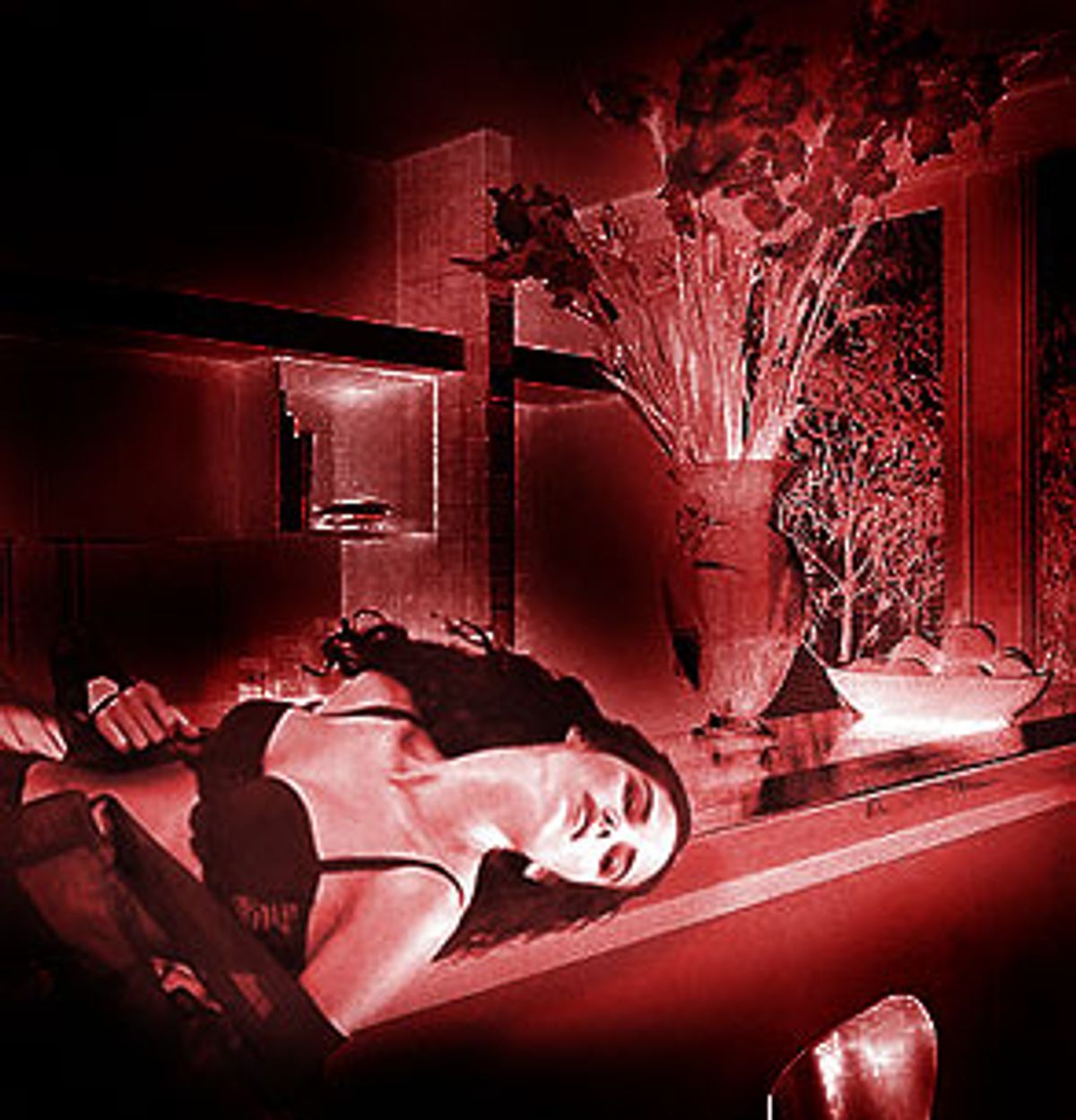
That’s where the scene falls. Begelman can’t sleep. It turns out that the girlfriend of one of the bosses — a great but rather empty beauty — has the same problem. She goes down to the kitchen of the house where they’re all staying to binge on ice cream. She’s wearing just a flimsy nightdress and she’s silhouetted in the light from the refrigerator. That’s how Begelman sees her, sitting in the dark at the other end of the kitchen. She offers him some ice cream, but no, he fucks her instead. With her placid, squealing consent, there on the kitchen table. The boss’s girlfriend. With the sword of Damocles hanging over his head, still the guy has to go with his prick.
In the script, Begelman tells his shrink — the very man who is trying to sketch out a defense for the forgeries — saying that they came out of low self-esteem and a personality disorder. The shrink says, “Was that smart?” And Begelman answers, “Probably not. But it was worth it. Every once in a while, don’t we all want to know we can still hit the ball out of the park?”
Now, I don’t know whether such a nocturnal interlude occurred. (I don’t recall it from the book.) And I don’t know whether Thomas knows. So it’s possible that the scene won’t make it to the screen (because there are people who could be offended). And no one knows yet for sure whether the movie will even get made. Hollywood has always been nervous with pictures about itself. But I have to tell you that it is a scene I believe in, and one typical of the most acute portrait of the gambling self-destruction in Hollywood I have ever read. I want to see it now. Write to your senator.
David Thomson is the author of "A Biographical Dictionary of Film" (new edition just published), "Rosebud: The Story of Orson Welles" and "In Nevada." More David Thomson.
Massage therapists rubbed wrong by sex talk
A Jennifer Love Hewitt show and the Travolta allegations have masseuses tired of being confused for sex workers
(Credit: iStockphoto/sybanto) Joe, a licensed massage therapist, knows what it’s like having a famous client who expects something extra. He had an Academy Award-winning actor begin gyrating on his massage table before raising his hips in the air to show off his erection. “He was hoping that I would play with him in some shape or form,” he says.
Needless to say, Joe isn’t surprised by allegations by two masseurs that John Travolta got handsy during massages. (Travolta’s attorney has denied all the allegations, and called them “ridiculous.”) “It happens all the time,” he says, and not just with celebrity clients. He frequently encounters men who try to fondle him, usually while he’s working on their glutes or lower back and their hand happens to be level with his crotch. “They think they’re so original, but they’re all so much the same,” Joe says, his voice rising. “They all use the same tactics, the same body movements, the same gyrations and grinding my table, the [heavy] breathing.”
Continue Reading Close
Tracy Clark-Flory is a staff writer at Salon. Follow @tracyclarkflory on Twitter. More Tracy Clark-Flory.
A night at the vibrator museum
Early vibrators were hand-cranked, two-person jobs -- and prescribed by doctors. How far we've come since then
(Credit: Antique Vibrator Museum) I can now say that I’ve used a turn-of-the-century vibrator — on my hand, but still.
The silver, hand-cranked contraption is usually kept behind glass at Good Vibrations’ Antique Vibrator Museum in San Francisco — but staff sexologist Carol Queen made a rare exception. “This is very special,” she whispered, unlocking the case and carefully pulling out Dr. Johansen’s Auto Vibrator, a relic from 1904. The “auto” part is not so much: It was a two-person job, with her having to crank the device’s handle to get it thrumming. Pressing my finger tips to its inch-wide circular platform of pleasure, I was pleasantly surprised by its power.
Continue Reading Close
Tracy Clark-Flory is a staff writer at Salon. Follow @tracyclarkflory on Twitter. More Tracy Clark-Flory.
Maggie Gyllenhaal on sexual liberation
The beloved indie star tells Salon about her "vibrator movie" and why she loves playing transgressive women
Maggie Gyllenhaal (Credit: Reuters/Mark Blinch) When I met Maggie Gyllenhaal about six weeks ago, she was enormously and gloriously pregnant, stretching out on a sofa with her shoes off and feet up in a Manhattan office building. (Since that time, Gyllenhaal and husband Peter Sarsgaard have welcomed their second daughter, Gloria Ray, to the world.) We were there to talk about “Hysteria,” the charming, lightweight feminist farce from director Tanya Wexler that explores a key event in the history of female sexuality: the invention of the vibrator by Mortimer Granville, a Victorian doctor who was seeking to cure the mysterious “female malady” that lends the movie its title.
Continue Reading CloseMother-daughter sexperts
Susie Bright and her daughter, Aretha, make parental talks about sex look easy -- and fun
Most parents loathe talking to their kids about the birds and the bees, let alone pubic hair grooming, faked orgasms and “water sports” — but most parents are not legendary “sexpert” Susie Bright.
Better than talking about these things, she penned an advice column in 2009 with her daughter, Aretha, then 19, for the ladyblog Jezebel. Their answers to questions about everything from porn to Paxil were unflinching but playful, and at times controversial. Now the pair have collected those columns into a new e-book, “Mother/Daughter Sex Advice.” Together, they read as an irreverent version of “Our Bodies, Ourselves” for the Internet age. The mother-daughter team also reflect on what the experience of writing the column was like, and it turns out it wasn’t as weird as many would think: For the most part, it was just a continuation of conversations they had been having throughout Aretha’s life.
Continue Reading Close
Tracy Clark-Flory is a staff writer at Salon. Follow @tracyclarkflory on Twitter. More Tracy Clark-Flory.
On the rack: A cultural history of breasts
Did breasts evolve for lactation or to enhance sex appeal? A new book explores why they matter
(Credit: iStockphoto/NadyaPhoto) It’s hard to be boobs. Sure, breasts are cherished as givers of milk and the pinnacle of sex appeal, but the modern world hasn’t been good to mammaries.
As Florence Williams writes in “Breasts: A Natural and Unnatural History,” they’re the most tumor-prone organ in the human body. They “soak up pollution like a pair of soft sponges,” and transmit environmental toxins to babies through breast milk. “Breasts are bellwethers for the changing health of people,” she says. While we’ve “genetically modified our crops to be able to protect them from the ill effects of pesticides,” Williams writes, “we haven’t yet figured out how to modify our breasts.” Aside from using saline and silicone, of course.
Continue Reading Close
Tracy Clark-Flory is a staff writer at Salon. Follow @tracyclarkflory on Twitter. More Tracy Clark-Flory.
Page 1 of 403 in Sex