
Horror
“Brotherhood of the Wolf”
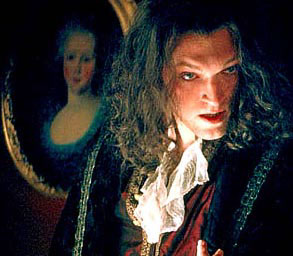
"Dangerous Liaisons" meets "The Texas Chain Saw Massacre" in this profoundly insane French horror movie. Plus: Native American kung fu!
Remember when we used to be able to make fun of the French for their lame pop music? I guess it was never fair, considering how cool Serge Gainsbourg has become in hindsight, but it sure was amusing. With some of the hottest sounds in hip-hop and electronica emanating from le pays des escargots, however, such ridicule is no longer appropriate. Now we have to make fun of French pop culture for other reasons. I went to “Brotherhood of the Wolf” — an enormous hit in France — assuming that it would prove, once and for all, that the land of Voltaire, Sartre and Jerry Lewis is no place to make horror movies.
Except that now I have to report, rather sheepishly, that “Brotherhood of the Wolf” is an extraordinary film, although not necessarily a good one. I’ve never seen anything like it before and I’m pretty sure I never will again. On one hand, we’ve got a lush erotic drama of pre-Revolutionary France, complete with simpering, perverted aristocrats, hotheaded exotic women with heaving bosoms, rococo interiors and unwashed peasants carrying torches and shouting, “Burn the witch!” Then there’s the monster, which looks more like the University of Arkansas’ cartoon razorback hog, or maybe the giant hedgehog Spiny Norman from “Monty Python’s Flying Circus,” than a wolf. Then there’s the monosyllabic Native American in touch with nature. Oh, and then there’s all the kung fu.
Some wag on the Internet Movie Database has described “Brotherhood of the Wolf” as a Merchant Ivory film with kickboxing, which isn’t bad. I was trying out things like that in my notebook during the slower patches of this film, which for all its slo-mo/fast-mo fight scenes, supersaturated colors, grotesque makeup and drugged-out sound design feels painfully long at 142 minutes. Did John Woo and Luc Besson collaborate on a remake of Ingmar Bergman’s “Hour of the Wolf?” Is it “Wolfen” meets “Jean de Florette”? “Dangerous Liaisons” meets “The Texas Chain Saw Massacre”? Whatever it is, it’s simultaneously on speed and Quaaludes; I don’t know if any movie this profoundly insane has been seen in general release since Antonia Bird’s Gold Rush cannibal comedy “Ravenous.”
Reportedly “Brotherhood of the Wolf” is based on historical legends about a giant killer wolf that terrorized the southwestern French interior in the 1760s, but like most outsiders I know nothing about that. The Chevalier Grégoire de Fronsac (Samuel Le Bihan), a suave nobleman with a taste for natural history, female companionship and rampant ass-kicking, arrives in the remote region of Gévaudan with his stoical sidekick Mani (Mark Dacascos), an Iroquois from Quebec. They’re there to hunt the Beast, an unknown predator that has been devouring locals — mainly the aforementioned tight-bodiced females — and is variously understood as a diabolical infestation or an attack on the authority of the king.
If all the church vs. state plot intrigue here is pretty murky (and what would an 18th century costume drama be without a mysterious papal emissary armed with various slow-acting poisons?), the point of “Brotherhood of the Wolf,” at least for director Christophe Gans, seems to be the excruciating beauty of its moments. Almost a total unknown on this side of the Atlantic (he co-directed the 1994 horror cheapie “Necronomicon”), Gans on a big budget turns out to be an exquisite visionary, if not much of a storyteller. No number of shots in a scene, it seems, is too many; with his crawling camera and compulsive editing and his thundering sound design, he can invest a scene of a hooker playing solitaire with tremendous eroticism and significance. (None of which amounts to anything in the end, but never mind.)
In between his visits to the whorehouse, where a luscious Italian (Monica Bellucci) seems to have designs on him, Fronsac courts the local aristocratic siren, Marianne (Emilie Dequenne), a kittenish flirt with a perfect Cupid’s bow for a mouth. Every so often Mani has to demonstrate his awesome Iroquois kung-fu skills on some snarling peasants in fur-lined outfits straight out of “Mad Max: Beyond Thunderdome.” They obviously know more about the Beast than they should. Meanwhile, Fronsac is busy being a Parisian rake in the hinterlands, pursuing Marianne and squaring off against her depraved, one-armed brother, Jean-François (Vincent Cassel, one of my favorite French actors).
I haven’t even mentioned that “Brotherhood of the Wolf” is narrated by Thomas (Jérémie Rénier), a young writer who watches all this from the sidelines and then calls it to memory years later, apparently while awaiting execution at the hands of a Revolutionary mob. His only role in the story is to ride into scenes and look worried, and later to take peyote with Mani and commune with the wolf-spirits of the forest. (I’m not kidding.)
This film’s spiritual-ecological consciousness isn’t profound or highly original, but in some sense I respect it. Gans’ vision of the 18th century, although bizarre and fantastic, is fueled by a sense of social history; this is a costume drama aware of the extermination of Native Americans and the concomitant destruction of European wilderness and wildlife. Only one thing confuses me: If the aristocrats of the ancien régime were capable of such awesome displays of Shaolin kung fu, how did the peasants ever get them in the guillotine?
Global horror takes a new “Road”
Sexy teenagers take on slow-moving ghost cars in a gruesome, sentimental breakthrough for Filipino cinema
A still from "The Road" Is there any country on earth — at least any country with its own cinema tradition — that doesn’t produce its own homegrown horror films, spiced up with a little local gruesomeness? Every time I write about horror, I get at least a couple of letters from people who see the cruelty, bloodlust, misogyny and so forth found in many such movies as a symptom of contemporary culture’s descent into depravity and brutality. On one hand, I always want to leave room for divergent tastes and opinions, but on the other — that’s just not true. The appetite for gore and terror that finds its modern expression in horror movies is nothing new: Check out the uproarious Brothers Grimm tale “How Some Children Played at Slaughtering,” in which an entire family is destroyed in a pointless orgy of violence. You can certainly argue that you find horror movies repellent, or that they reflect deeply unpleasant aspects of human nature — but you don’t get to blame any of that on Ronald Reagan or George W. Bush. (Seriously, I’ve heard that argument.)
Continue Reading CloseThe science of rubbernecking
Humans aren't the only creatures who like staring at morbid disaster. What draws us to it?
(Credit: visuelldesign via Shutterstock) “Don’t look.”
That’s what she asked, more than once. I heard her distinctly each time, and told myself I should oblige, and even once partially turned my head in her direction, but I just couldn’t take my eyes off the screen. I engrossed myself again, and again submitted to the anger, the sorrow, the fear, as well as guilt’s perverse pleasure: I felt that I shouldn’t be doing this, but I was doing it anyway, and got a peevish thrill from my transgression.
It was evening, dinnertime, and this had been going on since morning, right before I left for work. I had just finished breakfast. I had my satchel over my shoulder. It contained my books for that day’s class (on Keats’s “To Autumn”) and also my lunch (a peanut butter sandwich). I had my hand on the doorknob, ready to leave, when Sandi, my wife, ran up to me, phone in hand, and said, “Turn on the TV.”
Continue Reading CloseEric G. Wilson is the Thomas H. Pritchard Professor of English at Wake Forest University in Winston-Salem, North Carolina. He is the author of "Against Happiness: In Praise of Melancholy," "The Mercy of Eternity: A Memoir of Depression and Grace," and five books on the relationship between literature and psychology. More Eric G. Wilson.
A clever British horror-thriller nods to Tarantino
Pick of the week: Ben Wheatley's "Kill List" is part recession-era drama, part violent insanity
Ben Wheatley certainly isn’t the only filmmaker who built his reputation making wannabe-viral video clips for the Internet, but he might be the most talented one, and the one who’s made the most impressive transition to the big screen. A 39-year-old from suburban London, Wheatley will perhaps never attain the heights of popular success he hit in 2005 with a 10-second video titled “Cunning Stunt” (it’s a spoonerism — get it?), which I should not spoil in case you haven’t seen it. Go ahead, the rest of us will wait. Honestly, the combination of good cheer, cleverness and outright cruelty achieved in “Cunning Stunt” pretty much tells you what you need to know about Wheatley. You’ll either conclude, hell yeah, I want to watch whatever that dude makes next, or you’ll say get me the Sam Hill out of here. In either case, I understand.
Continue Reading CloseThe controlled madness of “American Horror Story”
Between Jessica Lange's southern Gothic hamminess and the ever-growing roster of ghosts, this is one loopy show
Dylan McDermott wrestles with "The Rubber Man" on "American Horror Story" “Ladies and gentlemen … the ham.”
This may be the line that Jessica Lange was born to say, in the role she was born to play, on a TV show perfectly suited to her fluttery intensity. Her character Constance delivered it over a tight shot of a ham festooned with moist pineapple slices being thrust into the camera’s lens, as if the show were being broadcast in 3-D. It was a perfect kick-off to “Smoldering Children,” the 10th episode of the first season of “American Horror Story.”
Continue Reading Close“Breaking Dawn Part 1″: Bella Swan, demon mama or Christ figure?
In a gory, porny penultimate chapter, all the sexual perversity of "Twilight" comes bubbling through the cracks
Robert Pattinson and Kristen Stewart in "Breaking Dawn" “How badly are you hurt?” murmurs studly but ethereal vampire Edward Cullen (Robert Pattinson) to his human bride, née Bella Swan (Kristen Stewart), on the morning after their wedding night. No no no no — it’s not what you’re thinking. Edward’s superhuman and indeed inhuman strength has left Bella’s arms and torso covered with bruises (and, infamously, has shattered the headboard above their bed). Devotee of the union of Eros and Thanatos that she is, Bella digs it, and wants more. Being a man, albeit an undead one, Edward has second thoughts about the whole thing now that he’s gotten what he came for, and spends the rest of their honeymoon on a Brazilian tropical island shying away from Bella, or playing chess with her. Which is a metaphor for, you know, sex or war or something. Or maybe not a metaphor at all but just chess, played by two people who self-evidently don’t know how to play, with a strangely large and silly set of chessmen.
Continue Reading ClosePage 1 of 17 in Horror