Chris Colin

Loving animals to death

Animal hoarders think they're helping their furry friends, but mostly they're just feeding their own twisted psyches.

  • more
    • All Share Services

Loving animals to death

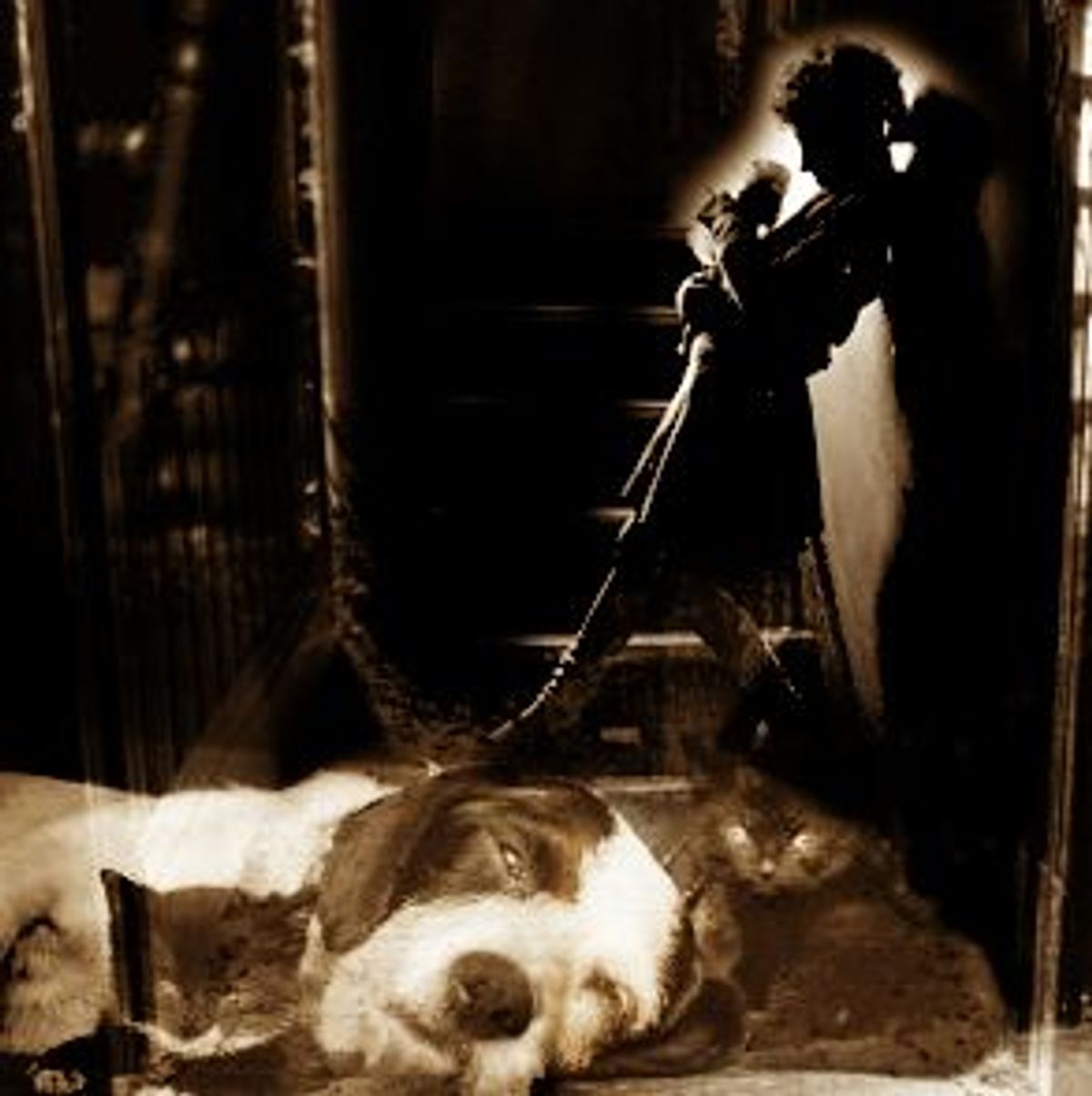
In December, police in Cooper City, Fla., found 67 dead kittens and cats in Audrey Weed’s refrigerator, according to the Fort Lauderdale Sun-Sentinel. More cats and a dog were running loose; litter boxes overflowed. Weed, a 50-year-old retired police officer, was charged with 92 misdemeanor counts of animal abandonment. Before the arrest, neighbors said, she would go around the neighborhood feeding all the animals she could find.

A month later, not far away in North Miami-Dade County, police acting on neighbors’ tips swept four homes and confiscated 201 cats and dogs. In one house, 52 beagles were found without proper food and surrounded by feces. Near another home, 72 dogs and cats, plus chickens, waded in an open sewer line. The Miami Herald reported that healthier animals found in the raids — around 90 — could go up for adoption. The rest, presumably, would be destroyed.

We’re at an interesting place with animal hoarders. We’ve seen photos of their squalor — the local paper inevitably goes in and takes pictures of soiled carpets and piled garbage — and we can guess what happens, ultimately, to most of those ailing cats, dogs, birds and reptiles. But for all the neglect and mistreatment we are exposed to, we also seem to find the hoarders’ variety of dysfunction quirky, and in some cases funny. Rarely do we consider their condition as serious as, say, schizophrenia. We believe these people to be ill but also just plain eccentric; for every Audrey Weed, there’s an entertaining Joan Byron-Marasek, the tiger collector of Susan Orlean’s recent New Yorker profile. In 2002, sitcoms still make cat lady jokes.

A few people want to change that. Gary Patronek, director of the Center for Animals and Public Policy at Tufts University, argues that animal hoarding represents a vastly misunderstood problem, one that goes far deeper than a few animal cruelty charges invite us to imagine. Despite the attention they now get from the mainstream media, animal hoarders are the focus of very little psychological research.

“For years it’s been perceived as an animal welfare issue, and left for the shelters to handle by themselves,” Patronek says. “The human [side of the problem] has been largely ignored.”

Patronek and his group, the Hoarding of Animals Research Consortium (HARC), coined the phrase “animal hoarding” in 1997. It was a watershed moment: There had always been cat ladies, and newspaper stories about them began to appear routinely a decade ago, but they were referred to, rather benignly, as collectors.

“That connoted nothing,” says Patronek, who, as a veterinarian, has walked into homes putrid with rotting carcasses and urine-soaked floors. He says the behavior “is much more like the pathological hoarding of objects.”

But there is no clinical diagnosis right now, says Patronek, despite a correlation with known pathologies such as obsessive-compulsive disorder. “We’d like to study it more,” he says. “Is it a syndrome in and of itself? Probably not. But [one day] we might like it to be included as a warning sign [in psychological evaluation].”

“Perhaps the most prominent psychological feature of these individuals is that pets (and other possessions) become central to the hoarder’s core identity,” Patronek writes in Municipal Lawyer magazine. “The hoarder develops a strong need for control, and just the thought of losing an animal can produce an intense grief-like reaction. Preliminary HARC interviews also suggest that hoarders grew up in chaotic households, with inconsistent parenting, in which animals may have been the only stable feature.”

Formal hoarding research generally confirms what we’ve long suspected: Nearly three-quarters of all hoarders live alone, according to a Health and Human Services report Patronek wrote; and three-quarters are also women. Almost half are 60 or older, and cats barely edge out dogs as the animal of choice. In 80 percent of the cases studied, authorities found either dead or severely ill animals in hoarders’ homes. It’s not uncommon for cruelty-related arrests to be followed by court-ordered psychiatric treatment, but by many accounts, the counseling is overly general, and does little for the high levels of recidivism among those convicted.

As shut-ins go, animal hoarders enjoy spectacular branding. By rough estimates, these people are scarce: Fewer than 10 in a million people, according to several studies. Nonetheless, the average American could probably describe the life of an animal hoarder better than that of, say, a state senator. It’s a matter of who captures our imaginations, and state senators do not sleep in urine, swell up with infection or trip over cannibalized cat carcasses. State senators do sometimes go to jail, but it’s usually a paperwork issue — nothing so compelling as a surfeit of mismanaged doggy love.

The animal hoarder archetype is a vivid one, somewhere on the grid between wearied saint and avid philatelic. They also keep a light foot in the serial killer camp: Like serial killers, they’re pathetic but obsessively thorough. They’re fascinating and they make for great stories. They’re quiet loners in the messy old house down the street, motivated by a perversion of something that could maybe almost make sense.

Unlike with serial killers, however, the neighbors of animal hoarders are never shocked when the authorities eventually come around. In fact, it’s often the neighbors who spent two months on the phone with the county — about the smell, the barking, the trash and the germs.

On their way to the squad car, hoarders often explain that they simply love animals, or that these particular critters would’ve died without their intervention, or that in a mere two cats lies loneliness. The would-be animal rescuers often say they hear a calling. The problem is that they don’t always answer properly. The great irony regarding hoarders, of course, is that their loving benevolence commonly leaves a trail of horribly sick and neglected animals.

How do we predict whether obsessive animal love will evolve into something unhealthy? There was the case of the poor, ailing blind man who loved animals so much he figured he’d teach them about Jesus. Reports say he surrounded himself with all manner of critter; he rescued bunnies from snares and removed worms from busy roads. “Beware, my little sisters, of the sin of ingratitude, and study always to give praise to God,” he’s said to have once told a flock of birds who clustered around him until formally dismissed. This was St. Francis of Assisi, and his boundless animal love earned him not jail time but sanctity before God.

Recalls one woman who didn’t become a saint, but is instead currently facing charges for mistreating over 150 pets and barnyard animals, “Since I was a kid, I was scooping ants out of puddles.”

As she tells it, her collection represented a lifetime of devotion to animals — she ran something of a refuge, and did everything she could to give her adoptees good lives. Authorities, however, painted a picture of broken limbs, infections, dental abominations and helpless creatures who ultimately had to be put down in some cases.

“I got crucified … I just hope every animal went to a good home. That’s how I console myself,” the woman says. “Afterwards, I had death threats. I’ve been told to come back [to town] in a disguise.”

The psychological dynamics at play in a hoarder’s home simply didn’t make it into research journals until very recently. Related studies have proven instrumental for Patronek and his group in drawing attention to the subject: In recent years, psychologists established a clear link between the abuse of animals and domestic abuse among humans. While it might have been common sense that someone who hits the dog is a good candidate for hitting his wife, defining the relationship psychologically required years of data.

“In the last 10 years the idea gained legitimacy,” Patronek says. “You can now have a serious discussion about it.”

The general connection between animal and domestic abuse is helping pave the way for further research into specific hoarding pathologies.

“[Hoarding] might not even have to do with animals. It might reflect human needs,” he says. “We’re now looking into the idea that animal neglect could be a sentinel for human neglect. A significant minority do have a dependent family member present.”

The pet industry appears to be more or less disengaged from the issue of animal hoarding, despite occasional public objections to limits on animal breeding. (The Cat Fanciers Association wants cat fanciers free to make all the kittens they need, and the group has hissed at the plea by PETA for prospective cat owners to adopt exclusively from the SPCA.)

Michael Maddox, counsel for the Pet Industry Joint Advisory Council, says animal hoarding has little to do with the pet industry, since few hoarders get their collections in pet stores. But does the industry feel compelled to step in?

“We would want to play a role in resolving the overall issue,” Maddox said, though he knew of no official policy on the horizon.

The largely uncharted world of animal hoarding is crossed right and left with shades of gray. Was Fund for Animals founder Cleveland Amory an animal hoarder? His Black Beauty Ranch boasted a wonderful collection of rescued creatures, and surely the occasional burro developed an infection or broke a leg there. Is it simply better funding that allowed Amory’s project to distinguish itself from the thousands of squalid backyard sanctuaries that repulse us each year?

Is it reasonable to apply the collateral damage model to the realm of animal munificence? In war, generals aren’t hauled off to court if some of their troops get wounded; it’s considered a consequence of battle’s noble gesture. Warped though it might be, it’s a noble impulse that guides many of these hoarders. Can it be argued that every malnourished kitten is simply a little friendly fire in the cat lady’s larger battle against homeless cats?

Not if you’ve seen a hoarder’s house, Patronek argues.

“You can’t imagine what these places are like,” he says. “Eyeballs everywhere, ammonia so thick you need a mask to breath … it doesn’t resonate that these people are just trying to help and it just ‘got out of hand.’”

Walnut Creek, Calif., resident Bob Teachout knows about the gray areas of large-scale devotion to animals. Just recently, the city’s planning commission allowed him to keep his 400 thoroughbred homing pigeons, despite complaints from neighbors — not of abuse, but of strong smells, flies, dust, rats and mice. The birds were supposedly lowering property values, Teachout says.

“With racing pigeons, they’re athletes,” he explains, laughing off the idea of mistreating his flock. “You have to have them in top physical and mental health. They have to want to race home.”

Indeed, Teachout’s interest in the pigeons is more hobby than addiction — as president of the Martinez Racing Pigeon Club, he helps arrange races as long as 560 miles — and his passion for the birds is impressive, not spooky.

“I got my first pigeons 40 years ago, when I was 15,” he recalls. “It turned my life around. Animals are one of the best ways to teach kids about life, death and responsibility.”

As for hoarders, Teachout has no patience.

“I think most of them believe they are loving those animals … but animal cruelty is just as bad as cruelty to children.”

In the pigeon breeding and racing circles, a kind of self-policing mechanism exists, where racers keep an eye on other racers to make sure the birds are treated well. It’s so effective, he says, that in nearby Concord, the city contacts the pigeon club in the event of a complaint. The club then helps step in to resolve the problem.

At AnimalPeople.com, a personals service for animal lovers, the motto reads: “Pets bring people closer.” Well, yes and no. The singles involved with AnimalPeople.com seem sane enough (even endearing, posing with their beagles and their tabbies), and in general animal lovers seem to be the good ones among us, the friendly types who don’t honk in traffic. But at certain quantities and under certain circumstances, pets do anything but bring people closer. Hoarding behavior, like other compulsions, facilitates a suspension of social interaction, which often then leads to the acquisition of even more animals. As a society we may have etched out rough boundaries for acceptable animal treatment, but those who’ve dropped out remain free to draw their own lines.

Just Tuesday, police in Marshall, N.C., charged a couple with two counts of misdemeanor cruelty after finding more than 100 potbellied pigs, about 20 dogs, two dozen cats and several chickens and ducks in their house, according to the Associated Press. The floor of the home was “matted with mud and animal droppings.”

Hugh and Karen Koontz say their home started as a refuge — Karen was running something called the Peaceable Kingdom Animal Sanctuary, but got sick and could no longer care for the creatures.

“Things just get away from you,” her husband said.

A teepee grows in Oakland

As camps are raided and evicted elsewhere, the city's movement builds a symbol -- and searches for purpose

  • more
    • All Share Services

A teepee grows in Oakland A teepee grows in Oakland (Credit: Chris Colin)

OAKLAND — As evicted Occupy groups around the country suffer further dispossession (L.A. and Philadelphia camps were raided by police last night) the press release from Occupy Oakland read like a signal flare. At noon Tuesday, it announced, activists would retake Frank Ogawa Plaza and “create a model for a new wave of ‘Occupation’ protest throughout the United States.”

What actually happened was a little more ambiguous, to say nothing of strange. Also, it revolved around a teepee.

To invest in the high-volume, low-boil soap opera that seized a tiny corner of downtown Oakland today, one must trace Occupy’s strange evolution in recent weeks, and then one must throw all that out because Oakland’s its own weird thing. Militant, politically shrewd, economically screwed, energized, immature, determined, obsessive, scarred or none of the above, the Bay Area city has a proud history of inspiring passionate ambivalence. Occupy Oakland, for its part, is either a can of Jolt for a flagging international movement, or an embarrassment to a steadier one. Depends whom you ask is often as true about Oakland as it is about Occupy.

Frank Ogawa Plaza, aka Oscar Grant Plaza, has mostly been a calm acre of mud and patchy grass lately. The craziness that made the news has given way, via forcible eviction, to quiet clusters of discussion and coordination. On the eve of the planned re-occupation, I attended a chilly 6 p.m. general assembly meeting, plus another meeting about the Dec. 12 port blockade being planned. If Tuesday was to be the big day, I wanted to look in on a little one first.

The Occupy Oakland activists are a wily crew, and via supernatural anarchist powers they intuited my approach. Away went the bongos and weed and guns and bricks and frivolous liberal arts degrees. Out came a different terror, the agony of patient, sensible, rational, mind-numbing democracy.

“Point of process,” an older gentleman in a baseball hat was saying to a semicircle of 60 or so people, and I can no more transcribe what followed than I could the terms and conditions of my iTunes agreement. In the most tediously civil and cogent manner possible, the assembled 20-through-60-somethings spent an hour discussing the logistics of the port blockade. Should it start at 6 a.m.? Could someone get in touch with the truckers tomorrow? Point of information. Point of clarification. Straw poll? Very good, thanks, everyone.

It was lovely, and inspiring, and utterly incompatible with daily journalism, which prefers the kind of fireworks sure to come the next day. No bargain with the city had been struck. “If the 1 percent won’t share voluntarily … we will force change!” the press release had promised. It was anybody’s guess how police would respond, and the guessing had been tending toward pessimism.

When I returned in the morning, I did so with obligatory vinegar-soaked dishrag in my bag, but mostly it seemed inconceivable the city would pepper spray its way onto the front pages again. Many of the Occupiers I met seemed to feel the same, but with asterisks.

“Every time we say the police aren’t going to do something dumb, they surprise us,” Becca Von Behren told me in the hours before the vigil.

Von Behren, 30, is an attorney with a San Francisco veterans rights group and part of Occupy Oakland’s volunteer legal committee. There’s no clearer picture of a 99 percenter than a veteran my age, she told me. Over the last few days Von Behren was instrumental in helping to devise the legally savvy underpinning of the day’s planned vigil. The idea rested on precedent from a 1984 case called  Clark v. Community for Creative Nonviolence. As she and another attorney from the committee explained it to me, that case established that elements of a protest designed for expression were protected by the First Amendment — even tents and teepees, if they’re used as symbols rather than for sleeping.

“Sleeping is not protected — they can ban that,” Von Behren said. “We’ll have a permanent and meaningful structure in the plaza, but nobody will be sleeping in it.”

I asked her what the meaning was. Specifically, I asked her how I should explain it to my mom, a proxy in my mind for everyone with growing sympathy for the movement and growing doubts about its tactics.

“Here’s what I said to my mom,” Von Behren said. “Regardless of whether measurable changes occur — and I’m not even sure what the metric would be — there are people out here involved in direct, deliberative democracy, discussing things usually not discussed among strangers. That kind of awakening is enough.”

Ten minutes later Zachary RunningWolf was standing before a small crowd in front of City Hall. RunningWolf is an elder from the Black Feet tribe and something of a celebrity in tree-sitting circles. A growing collection of police officers stood behind him, either smirking or being moved, it was hard to say. The crowd was being moved. The teepees would remind the public of the struggles of the Sioux, and of homeless workers during the Depression, and Resurrection City after Martin Luther King Jr.’s assassination, and other occupations. Eight long teepee dowels came out, and the crowd cheered, and everyone moved to the building site, and then the police said any structure would be torn down and everyone responsible would be arrested.

The slow-motion confrontation that followed lasted nearly two hours. A handful of cops stood impassively as a knot of Occupiers shouted at them. Could they name the ordinance they were enforcing? No? Then how could they enforce it? Couldn’t they think for themselves? Why were they working for the 1 percent? They were idiots. No, they were part of the system, the system’s what’s idiotic. Thank you, sister. No, they idiots. Seven people shot last night and they need two dozen cops to guard a fucking teepee?

Meanwhile Von Behren and another volunteer attorney, Kirk Boyd, had gotten into City Hall. They arranged a meeting with a young, bearded fellow named Arturo Sanchez, assistant to the city administrator. Sanchez listened and conceded perhaps there’d been a misunderstanding regarding the intent of the teepee. He said he’d return in five minutes with an answer.

Five minutes became an hour so I spoke with an Oaklander outside in a pink sweat shirt, aged old enough to be your mother. She’s a paralegal who came down to see what the day would bring. She wouldn’t give her name because she feared retribution from the occupiers, with whom she’s furious.

“Look, I support regulating the shit out of Wall Street. I’m progressive and so’s the rest of Oakland — if Bernie Sanders was 20 years younger I’d stalk the man. But this? This is a nightmare. Oakland is sick of this,” she said.

“What if this is the next Woolworth’s?” I asked, thinking of that 1960 sit-in at a segregated lunch counter that ignited the civil rights movement. “How would you know?”

“They had a specific goal,” she replied. “Occupy Oakland has no focus, just rage. No sense of Glass-Steagall, for example. I try to get involved but they shoot me down.”

One of the officers getting yelled at was Lt. Freddy Hamilton.

“I’m sympathetic to a lot of what they say, but I also got a job to do,” he told me.

A young couple also on the scene spoke of their investment in Occupy Oakland.

“I was going to school in Alaska, studying natural science,” said Lucas Wilcox, 29. “But I stopped. Why go further into debt in an inherently dysfunctional system? This here, this is a hub. I don’t think democracy of this sort has ever happened in this country.”

By and by Sanchez came out and delivered what struck many as an arbitrary compromise: The teepee could be erected in a different spot, would have to be taken down between the hours of 10 p.m. and 6 a.m. and this “encroachment permit” would only last three days.

“It’s not a victory till it becomes 24 hours,” Phil Horne, another attorney volunteering with Occupy Oakland, told me. “Occupation means occupation; we don’t turn it off at night. So we’re going to challenge this. No permit is required to exercise a right. That’s a slippery slope.”

The occupiers — who now numbered about 70 — debated the city’s position and there was more anger at the cops and at last a decision was made. Everyone surrounded RunningWolf, who climbed up on a metal chair under the boughs of two trees. He lashed eight modestly sized wooden dowels together with rope and then, in about four minutes, it was done.

The crowd clapped and made signs to hang on it then gradually trickled away. The police trickled away, too, at least until the evening’s vigil. The night before, when everything was quiet and calm, I’d asked a former Black Panther named Gerald Smith what, in the grand scheme of things, could come of today’s event. He made a face that said please understand the significance of what I’m about to say, and then said, “We’ll see, won’t we?”

The teepee stood about 12 feet tall and was tucked over at the edge of the plaza.

Continue Reading Close

The chimp who thought he was a boy

Raised like a son by a New York City family as part of a language experiment, Nim Chimpsky was shipped away when funds ran out. A new biography tells Nim's story.

  • more
    • All Share Services

The chimp who thought he was a boy

Sometimes we’re animals.

How else to account for a man who approaches a female chimp nursing its wide-eyed newborn, takes aim amid howling protests from nearby apes and blasts the mother with a tranquilizer dart — then snatches the sobbing infant and delivers it to an otherwise thoughtful, loving woman, who whisks the creature off to her New York brownstone?

It was science, this was the ’70s, and the gauntlet had been thrown down by none other than Noam Chomsky. While nonhumans may communicate with one another, the MIT linguist said, they are fundamentally incapable of language. Columbia University professor Herbert Terrace set out to disprove the assertion with an ambitious and groundbreaking study. The experiment that followed involved a cleverly named chimpanzee and some less-than-clever human choices. The fascinating, ultimately heartbreaking account has finally been told in journalist Elizabeth Hess’ primate biography, “Nim Chimpsky: The Chimp Who Would Be Human.”

Fancy Upper West Side address, nice clothes, summer in the Hamptons, fawning media attention, parents mellow enough to pass him their joint now and then — for a year and a half, Nim had a life many humans would envy. But that was the problem: He himself wasn’t human, merely raised to think he was. He bonded intensely with his adoptive family, and indeed learned around 125 words in American Sign Language, but in the end his fate wasn’t that of a true son. Funding for the project ran out, Nim proved more difficult to handle as he got older, and eventually he was unceremoniously sent away.

Terrace would make a dramatic concession to Chomsky on the language question, sending waves throughout the field. But the charismatic subject at the center of the study more or less vanished. Nim bounced through some of the assorted grim facilities that house chimps, all the while making it clear he longed for his human family. For a creature who would demand hugs after being disciplined, and bring tissues to his adoptive mother when she cried, relocating to a world of cages and strange, hairy beings was incomprehensible.

Ultimately Project Nim illuminated as much about humans as about chimps. There was never any exit strategy. The implications of humanizing a wild, and intelligent, creature seem to have eluded the people responsible. At the time New York magazine referred to the study as a “scientific revolution with religious consequences that occurs once every few hundred years.” One hopes it’s no more often than that.

Hess spoke to Salon from her home in upstate New York.

How did people respond when they’d find out you were writing a book about chimpanzees?

I got a lot of banana jokes. And people were surprised to see that these animals are so complicated, and so emotional, and that they form such deep and serious attachments to human beings. That’s why I wanted to write this. It’s a novel experience to read a biography of a wild animal.

I was surprised myself. When I discovered Nim’s story, it was like I was struck by lightning. No one really knew that story. He’d had these moments of incredible celebrity that were well documented, but ultimately what happened to him was a bit of a mystery.

The fact that Nim had been raised in a human family [by Stephanie and W.E.R. LaFarge], and learned how to operate around people, made him a very interesting subject. His life also allowed me to write about a variety of landscapes where chimps end up. The book takes you behind the scenes of a major behavioral language science experiment, and inside a primate breeding colony, and briefly inside a biomedical research lab, and ultimately to a sanctuary. Which in the end is about as good as it gets for any captive-born animal.

Can you describe the happy period when Nim first got to the house in New York?

Nim was with the LaFarges for 18 months, and most of that was a pretty happy time. I think it was incredibly exciting to have this baby chimp around. He loved to be held, he drank from a bottle. By the time he was 2 months, he could cling to walls and get up and down the banister. There was a giant waterbed in the living room that Nim loved to bounce up and down upon.

He was very beguiling. They dressed him in OshKosh and little T-shirts, and taught him how to sit at the table and use utensils. I think he really enjoyed being part of the family.

After funding ran out and Terrace declared the project a failure, Nim was taken from his loving home in New York, and bounced around various grim research facilities before he wound up at Cleveland Amory’s sanctuary, in Texas. Tell me about what it was like for Nim to be put back in a cage with other chimps after he’d only ever known humans.

It was terrifying. One graduate student described the response that all the [research] chimps had [upon being reintroduced to other chimps] as a nervous breakdown. Nim’s brother [and the subject of another study] Ally was so terrified and upset that he suffered a kind of paralysis for a while. They often pull out all their hair; they refuse to eat; some get beaten up by other chimps because they don’t know how to respond to them.

The former graduate students in New York believe that Nim had no idea he was a chimpanzee. One of them suggested to me that Nim might have thought he was going to grow up, lose all his facial and body hair and eventually look like the people who were around him. That would be a reasonable supposition. Throughout his life, Nim preferred to be with humans.

Toward the end of his life, he was paired with an ex-circus chimp named Sally Jones. That, I think, was the first deep relationship he had with his own species. They were inseparable. Sally was a lot older, a lot milder. Nim had a reputation for breaking out of his cage in Texas. When Sally came, he would break out of his cage, but then he’d remember her, and he’d go back and get her. He’d lead her out of the cage and they’d go on a little romp together. Cleveland Amory was always afraid that Nim was going to run off into the woods. But he had no desire to run away. Nim would go to the nearest house and bring Sally with him, and they would raid the refrigerator, go through the closets and try on any shoes that were lying around, and sometimes they’d get into bed and turn on the TV.

He was also dangerous. Chris Byrne, the manager at [Amory's] Black Beauty Ranch that Nim was closest to, learned that when Nim broke out, the best thing to do was to just be completely calm. He’d see Nim at the door and he’d say, “Nim, welcome,” as if Nim had been invited over for cocktails. He’d let him sit down for a while. Then he’d slowly lead Sally back to the cage, and Nim would eventually follow.

Can you describe the first time you met a chimp?

Oh yes. I went out to the Black Beauty Ranch to see the three adult chimps who were Nim’s companions when he died in 2000. I went out just to hang out with them, and learn what it’s like to look in their eyes. I certainly remember the first time I held hands with one of them. It’s quite a joyful-slash-terrifying experience.

Partly it’s so profound because they’re so humanlike. But another part is that they’re in a cage and you’re on the outside. There’s a built-in injustice to the relationship — there seems to be a clear consciousness about that in them. Nim used to sign “out” all the time. Anybody who passed by his cage in Texas, he’d start signing to them, to see if they knew any sign language. If they didn’t, he’d get disappointed and go to the back of his cage. He enjoyed signing and taught the other chimps some signs.

When they like you, they’re extremely gregarious. They want to show you things. They love books and magazines. There was a children’s book all about Nim while he was in New York, basically a photo book, and Nim kept his one copy of this book safe, even though chimps tend to wreck everything. He would bring it down and show the other chimps, then bring it back to his bunk and keep it under his sleeping area so that no one could destroy it. He would just look at pictures of his New York City family, and himself, over and over again.

What kind of response have you gotten from people who’d been involved with Nim?

Everybody felt so bad that they’d worked so hard to convince him he was human, and then he was just shipped off at the end of the experiment. There was no exit plan. No one ever asked, “What’s going to happen to the chimp?” In the ’70s, this is the way research was done. At the end of the experiment, the animals were either euthanized or sent to the next experiment down the line. Nobody asked questions about it. There was a tremendous amount of sadness and guilt wrapped around the whole project.

When Project Nim ended and Terrace finally published the results, years later, in Science magazine, he not only argued that Nim did not learn American Sign Language — that he was merely mimicking his teachers — he argued that all apes [in language programs] were mimicking their teachers. He basically tried to put a knife into the heart of all language research with animals. He sided with Chomsky. There were a lot of [other] projects under way at that time, and he had a huge effect on funding. It was a small, fragile movement to begin with. It took about five years for the field to recover.

Why do the language capabilities of a chimp matter?

I think they matter to different people for different reasons. The value of Project Nim is still hotly debated. The fact that chimps are really good at a gestural-based language is not surprising. Whether or not their use of ASL has anything to do with the way humans use ASL is still debated. What I can say is that those people who were around Nim had no problem understanding him.

Yet in Project Nim they made many mistakes. They brought Nim into a classroom, they made him hang his coat up on a hook, they sat him down at a little desk, and they drilled him in sign language. This is not a great way to teach a little human person, and it’s certainly not a great way to teach a chimp. Nevertheless they documented a vocabulary of more than 100 words and 20,000 different combinations. But the question of what Nim learned — everyone has a different point of view about it.

Now, we’re looking much more closely at the animal mind, not the way in which the animal might use a human language. And what we’re discovering is how little we know about how the animals communicate, and how little we know about their intellectual potential. Most of these captive animals have been born in captivity and locked in small cages their entire lives. If you did that to a human, it certainly wouldn’t stimulate their intellect. Now that we know these animals have consciousness and desires and emotions, we think of them as sentient beings. We wonder not only what they have to say but whether we’re doing the right thing by them, or to them.

It sometimes seems there’s a disconnect in our thinking about chimps. On the one hand, we know very well that they’re capable of seeming human — in movies and commercials they look and act very much like us. But on the other hand, people sometimes seem shocked when they find out how complex or intelligent they actually are.

I think that’s the lesson learned at Project Nim. This very adorable, humanlike baby turned into a wilder and wilder creature. People don’t realize that chimps aren’t forever these little people that are cute and funny. And they don’t realize that they’re actually an endangered species. They’re kind of an invisible species here, too — there are very few in zoos. Most are in research, and we don’t get to see those. The ones we see on TV and in ads are babies.

How many chimps are there in captivity in the U.S.?

I think around 2,000. Five hundred are owned by the government and are in research labs. Another 600 are in privately owned research labs. Then there’s a number of them in the entertainment industry and a number that are privately owned in exotic collections.

And there’s a huge, mostly hidden number in garages and attics, right? People take them in thinking they’ll always be cute and little, but they get big and unwieldy, and go on to live a very long time.

Yes. In the ’70s, the period I was writing about, it was a kind of fad to raise a chimp as a pet in your home, and treat it very much as a child. None of these did very well. They not only tear through the families, but they tear through the house. They eat everything and wreck everything in sight. They’re not easy to control. Marriages broke up, children were badly bitten, and people realized that while it was a really fun idea, the reality was far more harrowing than they’d imagined.

How does a chimp break up a marriage?

Chimps bond very tightly to their mothers. The fathers have very little to do with raising the babies. A lot of these women who had been raising orphan chimps [in the '70s] were suddenly engaged to be married, and their chimp babies would not accept their husbands.

What needs to change to improve the lot of apes and monkeys in this country?

We need to get the chimps, which have been in these small cages their whole lives, into sanctuaries where they can step on grass for the first time, and think about whether they want to climb a tree. We need to ask what we owe them, especially because many of these animals have given their lives to research. And once we start asking these questions, I think the answers are going to be so obvious. In many countries it’s illegal to use chimpanzees for any biomedical research, or any invasive research at all, and I think that really needs to happen here. I predict it will.

Just to anticipate some of the responses you’ll get for that, I want to be clear that the chimps being studied are not all saving human lives.

Oh no, not at all. But I think the whole attitude toward chimpanzees is finally starting to change. We’re going to be the last country to protect chimpanzees legally. It wasn’t so long ago that we were using them in car crash studies. We’ve used them for all kinds of useless toxicity studies. The AIDS studies were a disaster.

There’s a lot of research now that looks at how successful research on chimps has been — [and it's] relatively unsuccessful. I think we’re getting to a point where we have to ask, are they really necessary? Or are they being used because it’s a good way of getting grant money, or because they’re simply there?

Continue Reading Close

Just rewards

Last week Wesley Autrey threw himself in front of a subway to save a man. Does tossing a $10,000 reward and a trip to Disney World at a hero diminish his otherworldly deeds?

  • more
    • All Share Services

Just rewards

I know the Wesley Autrey story is a week old, but if you’re not still processing it, and your eyes don’t still well up at the thought, then your heart is a pebble and you should be out pinching the elderly instead of online reading magazines.

Here’s the problem, looking back: I don’t know what to do with the world’s Wesley Autreys.

My heart isn’t a pebble but it is a corrupted little capitalist sponge; almost immediately after the New York construction worker’s stunning subway rescue, I found myself hoping some kindly billionaire would discreetly deliver him a whopping check for his incomprehensible good deed. (For those living under rocks, the 50-year-old jumped onto a subway track before an oncoming train to protect a teenager who’d suffered a seizure; Autrey laid his body on top of the young man’s, positioned himself between the rails, and let the train pass over them.) Later, when Donald Trump announced he’d be coughing up a $10,000 award, I snorted at his stinginess.

But maybe Trump gave $10,000 too much. Maybe an act so extraordinary as Autrey’s gets debased by a financial reward. To dive on a stranger before an oncoming train — I’m pretty sure that’s sublime. Money? Handy but not sublime. In such truly exceptional circumstances, shouldn’t our better selves strive to preserve the delicate miraculousness of such an act — not flatten it into a pecuniary equation?

Of course there’s always a reasonable argument for the pecuniary — that’s the brilliant insistence of capitalism. A whopping check could, in turn, facilitate other exceptional things. College tuition for his two little girls, for instance. And maybe it’s absurd to ask Autrey to perform the double heroism of refusing piles of money and gifts. Certainly it’s embarrassingly paternalistic to be debating whether a man far greater than myself should push future checks back across future tables — and don’t get me wrong, I only want this saint to get whatever he wants or needs. But I do think the sheer singularity of what he did compels us to ask how we can best match it. It’s the purity of Autrey’s altruism that moved us, so it stands to reason we should poke around for some purity, too.

This is abstract and sort of pointy-headed stuff, I know. But people like Autrey don’t come along every day, and just as their actions burrow down to our marrow for a short while, so too do they float upward toward bigger questions. Can we, as a society, really think of no other way to express our admiration and appreciation than with money? And if not, shouldn’t we be worried by that?

In the news frenzy that followed Autrey’s leap, one AP story dug up Daniel Santos, another New York hero, who in 1996 jumped 130 feet off a bridge into the Hudson River to save a woman trying to kill herself. It seems the tidal wave of appreciation didn’t have the effect the hero’s admirers might have wanted. “My life unraveled,” recalls Santos, who started drinking heavily afterward. “The publicity changed my life … It took me four or five years to get my life back.”

I’ve never jumped off a bridge or before a subway car to save a fellow human. I’ve never even jumped in front of a fellow human’s snowball. Like everyone, however, I have occasionally stumbled into pretty good Samaritanism. At 10, I left my father at the Safeway checkout line and chased the previous customer down the block with the $10 in change he’d forgotten. It was a long enough run that I had time to think — specifically, I thought about the different types of candy I’d be buying with my reward money. Were there a god of Teaching Little Boys Profound Lessons, the customer would have surprised me with a mere thank you. But, of course, even at 10 I knew the score. I went home with M&Ms, plus a Snickers for later. What might have been a faintly ennobling experience was instead tainted and transactional.

We live in an era of remarkable and varied peril, as cable news dutifully reminds us every few seconds; by extension, we encounter some heroes. Two days after Autrey’s subway rescue, two other New Yorkers rushed to catch a toddler as he fell four stories off a fire escape. Sept. 11 gave the country more courageous selflessness than we knew what to do with. In fact, we still don’t. That we still fight, here and there, over how to memorialize and honor the various souls who died trying to save others — well, maybe this reveals something beyond just the inevitable divisiveness of 9/11.

Perhaps what’s revealed is a kind of cultural anxiety over how to comprehend the humanity of those acts. We know they’re good, we know good things get rewarded — but our understanding stops there. In other cultures it’s often said that Americans lack the ability to process death; maybe the same is true about real goodness. These unselfish moments of compassion and bravery, maybe they’re the human equivalent of quantum physics for us. So we throw money: a prostration at the feet of incomprehension.

But there are practical limits to this hero-love — the cozy feeling unravels when we look to franchise it. On the verge of sending more poor troops to a dumb war to do Autrey-esque things daily, well, we’ll barely reward them with body armor, much less Disney vacations. And if we did compensate them all on the level they deserve, what about the brave Iraqi civilians, or the brave Red Cross volunteers, or the brave protesters back home, or… Once you start looking beyond subway tracks, the world’s suddenly lousy with fine, selfless humans. Should Trump pay them all? Actually, yes — of course he should. But in so doing, he might trample something delicate (and that’s even before we had to watch him name a building after his generosity).

It would be lovely if good deeds could be their own reward. Even lovelier if we’d never heard of rewards in the first place. Some terrifically ineffable thing took hold of Autrey last week, and the best I can wish him is that something equally ineffable will attend the rest of his days. In my fantasy, the Bronze Medallion from Mayor Bloomberg and the trip to Disney World give his daughters a hell of a January, but that later, when the fuss has died down, the Autrey family is visited by a goodness as deep and mysterious as that jump down into the subway tracks. And yes, if the guy’s goodness is such that it’s undiminished by a briefcase full of cash, I suppose I’m hero enough to accept it.

Continue Reading Close

Have you heard my rape joke?

A Colorado University sophomore keeps the ACLU in business.

  • more
    • All Share Services

The University of Colorado at Boulder has announced it will take no disciplinary action against sophomore Max Karson, whose self-published newsletter caused uproar among women’s groups with prose such as:

“Women generally prefer that you jam your penis into their vaginas as quickly as possible during sex, ideally before it is wet at all, so they can really feel it. They will express their appreciation for this by saying, ‘ow.’”

Karson, naturally, claimed the whole thing was a joke — a joke and a lesson, in fact. He publishes “The Yeti” to shine a light on the very issues “people should be talking about but aren’t talking about.”

“I wanted to bring it out to light,” he said, “to show how ridiculous it was that women are treated this way.”

Funnily enough, this turns out to be familiar territory for Karson, who’s either a Borat-like genius or, well, not. In 2002 the then-high school senior was suspended several times for his previous publication, “The Crux.” In what English professors might call a leitmotif, “The Crux” also explored Karson’s thoughts about sex — principally masturbation. “Racist and deeply disturbing,” is how one parent described it at the time. The ACLU stepped in and the suspensions were overturned.

The university never quite threatened action for this latest obscenity. Still, vice chancellor for student affairs Ron Stump told the Boulder Daily Camera the school had been considering whether Karson was in violation of any code of conduct. Before long, the ACLU intervened again.

“The ACLU is aware of no lawful limits that a public university may place upon the content of a self-published student newsletter such as Mr. Karson’s,” Judd Golden, chairman of the group’s Boulder County chapter, wrote in a letter to the university. The university’s response, he said, should be to “encourage more speech, not threaten legal action.”

The literary community appears to be awaiting Karson’s next project with quiet enthusiasm.

Continue Reading Close

Pelosi’s family values

She campaigned as a mother. Will she fight for American families?

  • more
    • All Share Services

Soon, with luck, Rep. Nancy Pelosi’s gender will cease to be a news item. But while we are still celebrating the fact of a female speaker of the House, it seems like a good time for the feminist left, as well as the paranoid right, to ask what kind of leader she’ll actually be for America. In the New York Times today, Judith Warner hits several nails on their heads all at once.

Having worked to establish herself as a non-threatening chocolate lover and toiler “on behalf of America’s children,” Warner writes, Pelosi must now put her gavel where her mouth is. “American families,” she says, “are cracking at the seams.” The self-described mother and grandmother must get serious about the mending as she’s promised.

We know Pelosi can be seen edging away from the left now and then. But she has endorsed raising the minimum wage, cutting interest rates on student loans and making some college tuition tax deductible. As Warner points out, though, these aren’t nearly enough. The American family needs quality after-school programs, national standards for childcare, voucher programs and tax subsidies to help pay for that care, universal, voluntary public preschool, paid family leave and incentives for businesses to make part-time and flex-time work financially viable.

The assaults on the American family have been legion over the last two decades, and Warner runs down the list: Working moms are forced out of jobs due to workplace inflexibility, putting their children in all-night childcare, and couples “increasingly enduring split-shift work schedules — putting their health and marriages at risk — to avoid the costs and anxieties of day care.”

As she points out, these conditions don’t describe the reality of Pelosi’s upper-middle-class sphere. Indeed, the speaker’s reputation as a woman — her code for both family-friendly and human — hangs on her ability to reach beyond her own privileged orbit. California Green Party Senate candidate Todd Chretien, interviewed in today’s Socialist Worker, puts it more bluntly: “She represents San Francisco, but not the working class, Latino and Asian immigrant communities that make up its majority. Instead, she represents the yuppies who flooded the city during the 1990s tech boom.”

(Three-time Green candidate for California governorship Peter Camejo, in the same interview, runs through an imperfect record: Pelosi “voted for every Pentagon budget Bush has requested since 2001″ and “opposes granting legalization to undocumented workers.” Camejo detects a lurking class prejudice in Pelosi’s recent reference to Venezuelan President Hugo Chavez as “a common thug.”)

Warner, for her part, employs a more family-values-friendly approach, arguing simply that Pelosi’s “glorious life” be made “possible for everyone else.”

“This isn’t a radical leftist agenda,” Warner writes, presumably with the hand that’s not holding her nose. And of course it’s not. It’s the radical right agenda that has dominated American politics for years. Whether Pelosi is the mother and grandmother to remind the country of this remains to be seen.

Continue Reading Close

Page 1 of 18 in Chris Colin