It was all about sex. Or was it?
After midnight one evening in the early 1970s, I was standing in the Pagoda Palace Theater on Washington Square in San Francisco. At the time, the theater ran Chinese movies during the day and then, at midnight, the Chinese audience streamed out and in came a multicolored, unruly herd of glitter- and feather-bedecked hippies reeking of pot and patchouli oil. (It's a cliché now, but those were indeed the pervasive aromas.) Onstage, penises and breasts bounced around wantonly. There was dancing, there was singing, everybody was loaded on some sort of mind-altering substance, and unbridled sexual outrageousness spilled out into an audience that could be described as enthusiastic only if you're into extreme understatement.
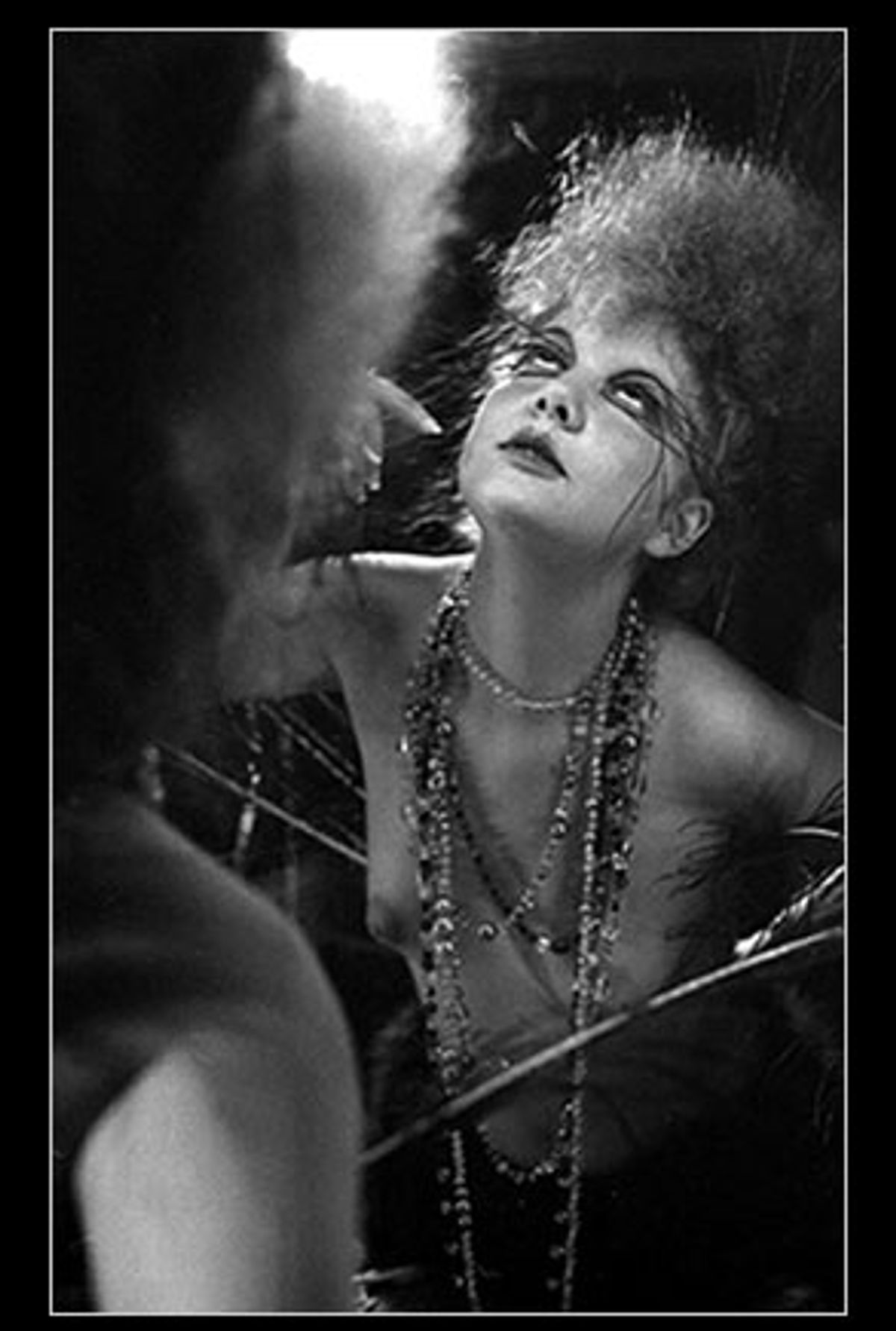
The glorious Cockettes, the florid and fluorescent LSD-fueled drag review that briefly lit up San Francisco, and excited the media as far away as Paris, 30 some years ago were onstage performing one of their live shows. It might have been "Journey to the Center of Uranus" or "Tinsel Tarts in a Hot Coma" or any number of other wacky, apolitical extravaganzas -- Rodgers & Hammerstein gone terribly, terribly wrong. Whatever it was, it looked like Kabuki collaboratively produced by Busby Berkeley, Dr. Seuss and Federico Fellini, generously seasoned with Carmen Miranda. As John Waters has described the scene, "It was complete sexual anarchy, which is always a wonderful thing."
I had a beat-up Nikon F hanging around my neck when poet Allen Ginsberg, obviously stoned out of his gourd, walked up, pointed at the camera and said, "Delicious! Take many, many, many pictures." I did, too, but I'll be damned if I know what happened to them. I've always regretted losing those photos, but my regret has been mollified by the recent release of "The Cockettes," a new feature documentary. It airs Friday, June 21, on the Sundance channel and has opened, or soon will, in theaters across the country. It's also showing at film festivals around the world.
"The Cockettes" is a curious celluloid time capsule that succeeds in a way that few films have at accurately capturing the spirit and riotous acting-out -- sexual and otherwise -- that typified the most frequently disparaged and caricatured decade of the 20th century: the '60s. But then the Cockettes would be nearly impossible to caricature -- they aspired to cartoonishness and, to their own surprise, reached that sparkling mountaintop, and even stayed there awhile.
The film's directors, David Weissman and Bill Weber, who spent four years putting the documentary together, describe the Cockettes as "the last hurrah of the Haight-Ashbury at its best." It's an interesting distinction because, contrary to so much of what's been written or filmed about those times, there was indeed a "best," though most of the lightheartedness, exhilaration and artistic experimentation had been replaced by hard drugs, hard times and bad vibes before the Cockettes first shimmered into existence in 1969.
That may be one of the reasons they shone so brightly: The Haight and the impossibly naive dream of hippiedom were crumbling, but the Cockettes still exuded the optimism, playfulness, sexiness and theatricality of a subculture that slipped away almost as soon as it was born. It was a time, too, when the dark specter of AIDS was still more than a decade in the future and sexual abandon seemed to be consequence-free.
The Cockettes were certainly into sex, drugs, excess and self-indulgence, as creative communities often are, but Weissman and Weber's film goes behind the glitter and eye shadow and finds that there was something more substantial to the group as well. In addition to being intoxicatingly funny, they succeeded at forming a community of sexual renegades that was focused on new ideas at least as much as it was on sex, maybe more so.
As Weissman put it when we first spoke nearly two years ago while the film was still in production, "This was not about female impersonation. This was what came to be known as 'gender-fuck.' There had never been bearded hippie drag queens before." Underneath the hedonism and circus sideshow frivolity the Cockettes shared an interest in pushing the parameters of sexuality, social acceptance and theater about as far as they could be pushed -- they were aggressively messing with cultural presumptions and having a hell of a good time doing it.
Fayette Hauser, one of the original Cockettes, who appears frequently in the film, said of those times, "We were living in a parallel universe of myth, fantasy, self-exploration and high drag. What mattered was enlightenment. A new idea was the valued currency. We treated each other like gods and so we became gods. This acid-induced, profoundly honed persona was what we saw in each other ... In our minds, we lived more fully, loved more deeply and dressed more beautifully than anyone else in the world. We were divas of the highest order and everyone wanted to be a Cockette."
It would have been easy to make "The Cockettes" little more than an exercise in nostalgia, but instead it's a highly entertaining act of counterculture archaeology; what Weissman and Weber went through to dig up performance footage, still photos and former Cockettes is worthy of another documentary. Some Cockettes just couldn't be found. "There was one in particular that we were dying to find," Weissman says, "who I looked for literally for three and a half years, who we never were able to find, then she miraculously reappeared just a few weeks ago -- that was Harlow. Harlow was a '60s fixture in San Francisco not just as a Cockette, but also as a member of the Plaster Casters. There were so many people who were dying to find out what happened to Harlow, Peter Coyote had contacted us to say, 'Do you know where Harlow is?' And Chet Helms from the Family Dog asked, 'Where's Harlow?' Turns out she's been living out in the country, in Southern California, for a long time."
"How far have the Cockettes drifted?" I ask Weissman. "Who among them has the least Cockettish life today?"
"Most of them live fairly quiet lives," he says. "Most are fairly marginal financially, nobody's really become a yuppie in any way. In their hearts, they're all still Cockettes." And several, including the troupe's founder, Hibiscus, died of AIDs.
In conjunction with the San Francisco screening, Weissman and Weber have curated an exhibition of original show posters and documentary photographs at the city's Yerba Buena Center for the Arts. I happened to be walking through the exhibit when Weissman, Harlow, another Cockette named Rumi and San Francisco photographer Robert Altman showed up to see the photos, many of which Altman took.
Altman was chief photographer at Rolling Stone from 1969 to 1971 and continues to work as a photographer and Web designer in San Francisco. When the Cockettes were at their peak, he was assigned by Rags, an alternative fashion magazine of the time, to do photos to accompany an article about the troupe by Mary Peacock. "I spent about four days living with the Cockettes," Altman told me, "over at their commune. I wouldn't call it bedlam, but it was certainly nonstop activity ... Hibiscus had come along and drew all these people to him ... he had a sense of fun about being gay: 'Not only is it OK to be gay and be out of the closet, but we can sing and dance about it and put on a show about it.'"
Weissman and Weber were determined that their film not be simply a glorified home movie, a cinematic scrapbook of hippie memories. "Bill and I struggled all through making the film," Weissman says. "We wanted to make a movie that was not a nostalgia piece about something that happened once, but was about possibilities that are timeless -- a movie that could serve as a reminder of how important it is when you're young to be a rebel, to ask questions and to have fun. To seek community and not be totally driven by career and money."
Nor were Weissman and Weber hoping to bring about some kind of resurrection. "I think that individual eras can't and shouldn't be re-created," Weissman says. "Each era has potential for its own appropriate style of art and rebellion. Things have to come out of their own moments and yet they can also be informed by history. Certainly the Cockettes were very informed by the 1920s and the '30s aesthetically -- but they were also completely a reflection of their time much the way Burning Man is a reflection of the era it came out of."
In recent years, the success of films like "Priscilla Queen of the Desert," "Hedwig and the Angry Inch" and "Paris Is Burning" have brought gender-bending cinema to a mainstream audience. Whether "The Cockettes" can also reach that audience, as Weissman hopes, remains to be seen. He's pushing for it to be viewed as a movie that will have appeal beyond gay filmgoers. "I think a lot of people have assumed that this movie is just another drag queen movie," he says, "but it's had huge appeal for people who are interested in both the counterculture of the era and countercultures generally. I never saw it particularly in terms of gay things. None of these people came out of the gay movement per se, they came out of acid, they came out of Haight-Ashbury. There are a bunch of straight guys in dresses in a lot of our pictures, a bunch of them." As Hauser puts it in the film, "People were allowed to live at the end of their imaginations."
The Cockettes' trajectory was a relatively short one. They came together in 1969 and it was all over by 1972, their collapse helped along by money disputes and a disastrous New York debut; their act just didn't work out of context. The East and West countercultures may have had a desire for sexual theatrics in common, but they didn't speak each other's language. The New York catastrophe is seen in "The Cockettes" along with its polar opposite: footage of some of their rollickingly good San Francisco performances, as well as clips from their film, an orgiastic send-up of Richard Nixon's daughter's marriage called "Tricia's Wedding," and the San Francisco arrival of the divine Divine for several guest appearances with the group.
Not surprisingly, Weissman and Weber's film has engendered plenty of strong reaction. "We've had a lot of powerful, personal testimony," Weissman says. "A woman came up to us at Sundance who said that she had always hung out with the Diggers in the Haight. And she said to me, 'It's just become so hard to talk about that time period, because people just think, Oh, hippies, big fuckin' deal. This is the first thing I've ever seen that really captures the complexity and exuberance of what that period felt like.'"
Seeing "The Cockettes" today is an odd bit of time travel to an era when sex, how we saw it, how we talked about it and what it meant to us seems eons away from the present. Despite the hippie revolution that was centered in San Francisco, there was still a great deal of societal naiveté about sex, and gay liberation was still very much in its infancy, which is perhaps why there continues to be something very refreshing about the Cockettes, their spirit and sense of humor.
After the show that night, as I walked out of the Pagoda Palace, the pocket of my Army field jacket stuffed with film canisters headed for oblivion, I spotted Ginsberg talking with a small group of people near the curb. Two things about him were different from when I'd seen him earlier: His pen had leaked all over the pocket of his white shirt and he was wearing lipstick.
Shares