Music
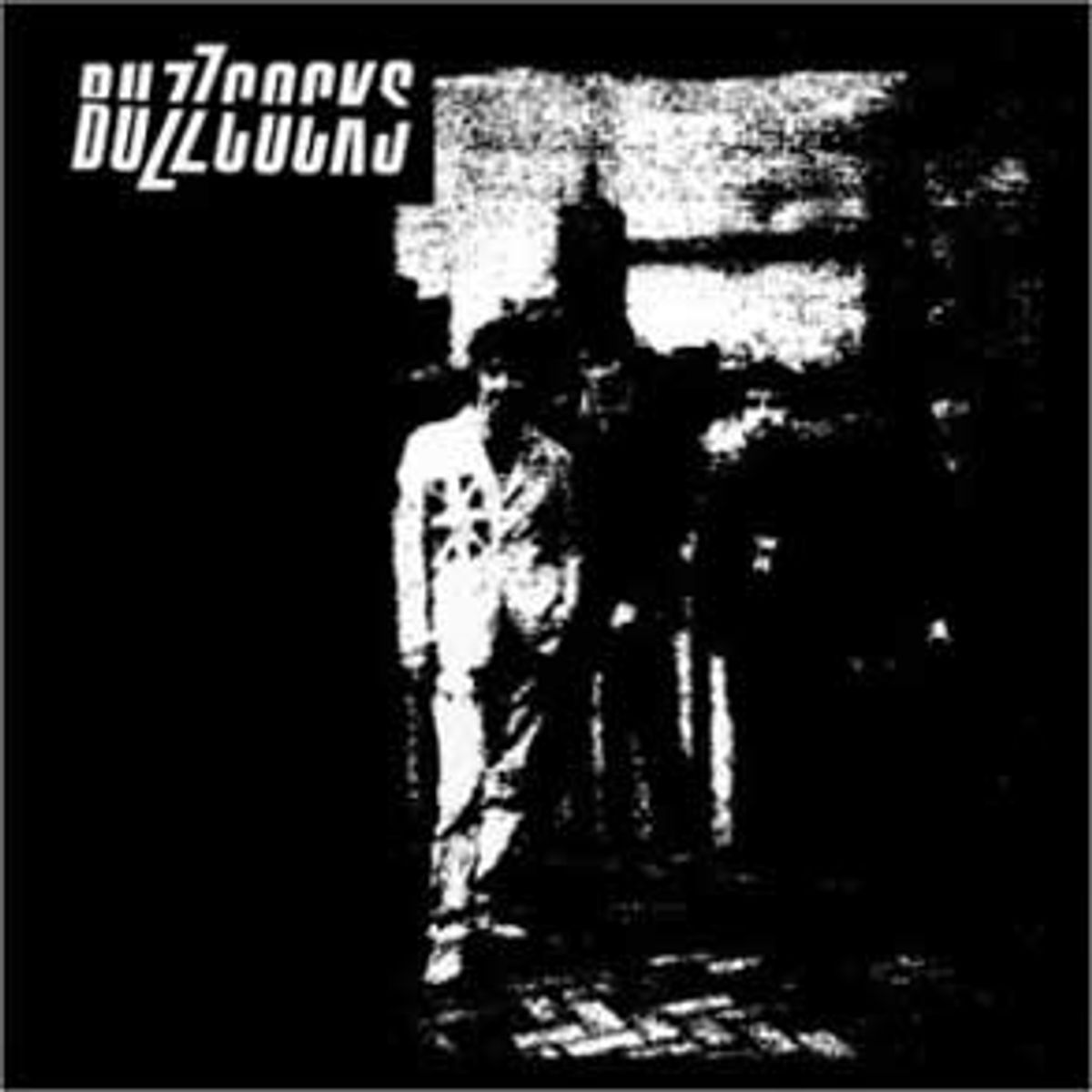
The Buzzcocks (untitled)
The Buzzcocks new album shows that Pete Shelley and Steve Diggle can still write immensely memorable punk rock tunes.
If the Buzzcocks’ new CD sounds instantly familiar, that’s because legions of loud, fast, snotty bands have co-opted the band’s signature punk rock style since the late 1970s. But now, 24 years after the band’s best-known U.S. release, “Singles Going Steady,” the Buzzcocks remain ahead of the competition.
Vintage Buzzcocks songs were different from their English punk peers. They were more personal and more pop, offering heartfelt (but never humorless) lyrics about love and bad choices combined with indelible melodies. On this new disk, original members Pete Shelley and Steve Diggle show that they can still write immensely memorable tunes. Standouts include Shelley’s “Jerk,” a self-excoriating number with buzz-saw guitar and a catchy chorus pleading for forgiveness, and Diggle’s lovely and mournful “Sick City Sometimes,” proof that alienation is not the exclusive provenance of youth.
Ripping through 12 tunes in under 35 minutes, the Buzzcocks are still indisputably fast and loud — and even, occasionally, snotty. They may not be young anymore, but they’re a long way from old.
Links:
The Buzzcock’s untitled new album is out now on Merge Records.
Audio:
Donna Summer: Disco diva and rocker
If you only knew the singing sensation by her 1970s smashes, you barely knew her at all
There is so much about Donna Summer that we didn’t know… and not just the cancer that took her life. Let’s start with her relationship to rock. Summer is quite understandably known as a disco singer, and quite rightly so. It was disco that made her, and she, as perhaps disco’s highest profile performer, who helped to shape the genre. But like a number of other disco artists — Nile Rodgers and Bernard Edwards of Chic, the vocal trio Labelle and Chaka Khan all come to mind — Donna Summer was also a rocker. Yes, she grew up singing gospel, but she began her professional career as a ’60s rocker. She would describe this as her Janis Joplin phase, and she did indeed sing in a group that performed at the Psychedelic Supermarket — Boston’s version of Bill Graham’s Fillmore. She then went on to play a hippie in the Munich production of the rock musical “Hair,” and sported an enormous Afro inspired in large part by her hero, the black radical activist, Angela Davis. Although the disco music that she made with producers Giorgio Moroder and Pete Bellotte, and engineer Harold Faltermeyer provoked a fierce backlash from some aficionados of rock, this was a foursome that, as critic Dave Mash pointed out, functioned as a rock band, one in which Summer played a pivotal role as singer and songwriter. And then there is her singing. Listen to her hit “Hot Stuff,” and tell me that Summer could not sing rock.
Continue Reading CloseAlice Echols, a professor of English, and the Barbra Streisand Chair of Contemporary Gender Studies at the University of Southern California, is the author of four books, including "“Hot Stuff: Disco and the Remaking of American Culture." More Alice Echols.
Donna Summer, Queen of Disco, dies at 63
The "Last Dance" singer passed away after a battle with cancer
NEW YORK (AP) — Disco queen Donna Summer, whose pulsing anthems such as “Last Dance,” ”Love to Love You Baby” and “Bad Girls” became the soundtrack for a glittery age of sex, drugs, dance and flashy clothes, has died. She was 63.
Her family released a statement Thursday saying Summer died and that they “are at peace celebrating her extraordinary life and her continue legacy.”
Summer gained prominence during the disco era of the 1970s, and released a number of albums that have reach gold or platinum status, including the multiplatinum “Bad Girls” and “On the Radio, Volume I & II.” Her No. 1 Billboard Hot 100 hits include “Hot Stuff” and “MacArthur Park.”
Her sound was a mix of genres, and helped her earn Grammy Awards in the dance, rock, R&B and inspirational categories.
She released her last album, “Crayons,” in 2008. She also performed on “American Idol” that year with its top female contestants.
The perfect Beatles double bill
Martin Scorsese's George Harrison documentary may be expansive, but 2009's "Nowhere Boy" is more insightful
Stills from "Nowhere Boy" and "George Harrison: Living in the Material World" If I were the Texas School Board in search of the one text that could justify teaching “intelligent design,” I would use the Creation Myth of the Beatles as my sole curriculum. It is a story oft retold with wonder, as it defines the word “supernatural.” Two musical prodigies of staggering gifts, with complementary personalities, just happen to meet in the same fairground, and just as casually decide to change the world. They soon meet a third musical force of nature, and, just before they march from their secret fortress, they add the final element to what is now an impregnable weapon of mass musical distraction.
Continue Reading ClosePunk’s cultural revolution
Pussy Riot's masked women have become icons of Russia's anti-Putin movement -- and turned the genre on its head
Seven members of the band Pussy Riot (Credit: Wikipedia) Russia Today, the politsiya and Western punks alike all want to know: Who is Pussy Riot, when is their next gig, and where can I get their album? Despite having no releases or merchandise for sale, no tour dates, no Myspace or even recorded music, the band of masked women who perform only aggressive guerrilla shows has achieved a level of punk legitimacy not reached since the era when the combination of bleached hair and three chords was on its own automatically scandalous.
The days of the Fraternal Order of Police suing the Crucifucks, Tipper Gore taking on the Dead Kennedys, and black metal goblins burning churches are long past. Punk is now no more a social threat than some leftist fringe group selling poorly designed newspapers. And yet, with three of its alleged members now imprisoned and facing seven-year jail sentences, the pastel-balaclava-wearing, sloppy-guitar-playing riot grrrls have become an icon of a brewing cultural revolution in Russia.
A.M. Gittlitz is a fiction writer, essayist and bike delivery boy living in Brooklyn, New York. He formerly wrote for Arthur Magazine blog, and a contributer to Death Panel Press and Modulo Magazine. More A.M. Gittlitz.
Long live the boy band!
One Direction is the latest group to create carefully manufactured hysteria among young girls
One Direction Like James Bond movies, fad diets and literary feuds, they are an ever-renewing part of the fabric of our pop culture lives. The hairstyles may change and the pant legs widen or retract, but the boy band — just dreamy enough to send preteens shrieking through their orthodontia, but bland enough to make their just slightly older siblings groan about how much they suck — will never die.
Yet not since the halcyon days of smooth harmonies and awkwardly choreographed moves known as the ’90s has the boy band enjoyed quite a moment like this. There’s U.K. import the Wanted. There are Nickelodeon stars Big Time Rush. There’s even the classic do-they-or-do-they-not-qualify-as-a-boy-band boy band Hot Chelle Rae. And smiling nonthreateningly near the top of both the Billboard album and single charts, there is the inescapable, planet-dominating One Direction (who, it was announced this week, will soon be getting their own Hasbro dolls).
Continue Reading Close
Mary Elizabeth Williams is a staff writer for Salon and the author of "Gimme Shelter: My Three Years Searching for the American Dream." Follow her on Twitter: @embeedub. More Mary Elizabeth Williams.
Page 1 of 283 in Music