Books
The outsider
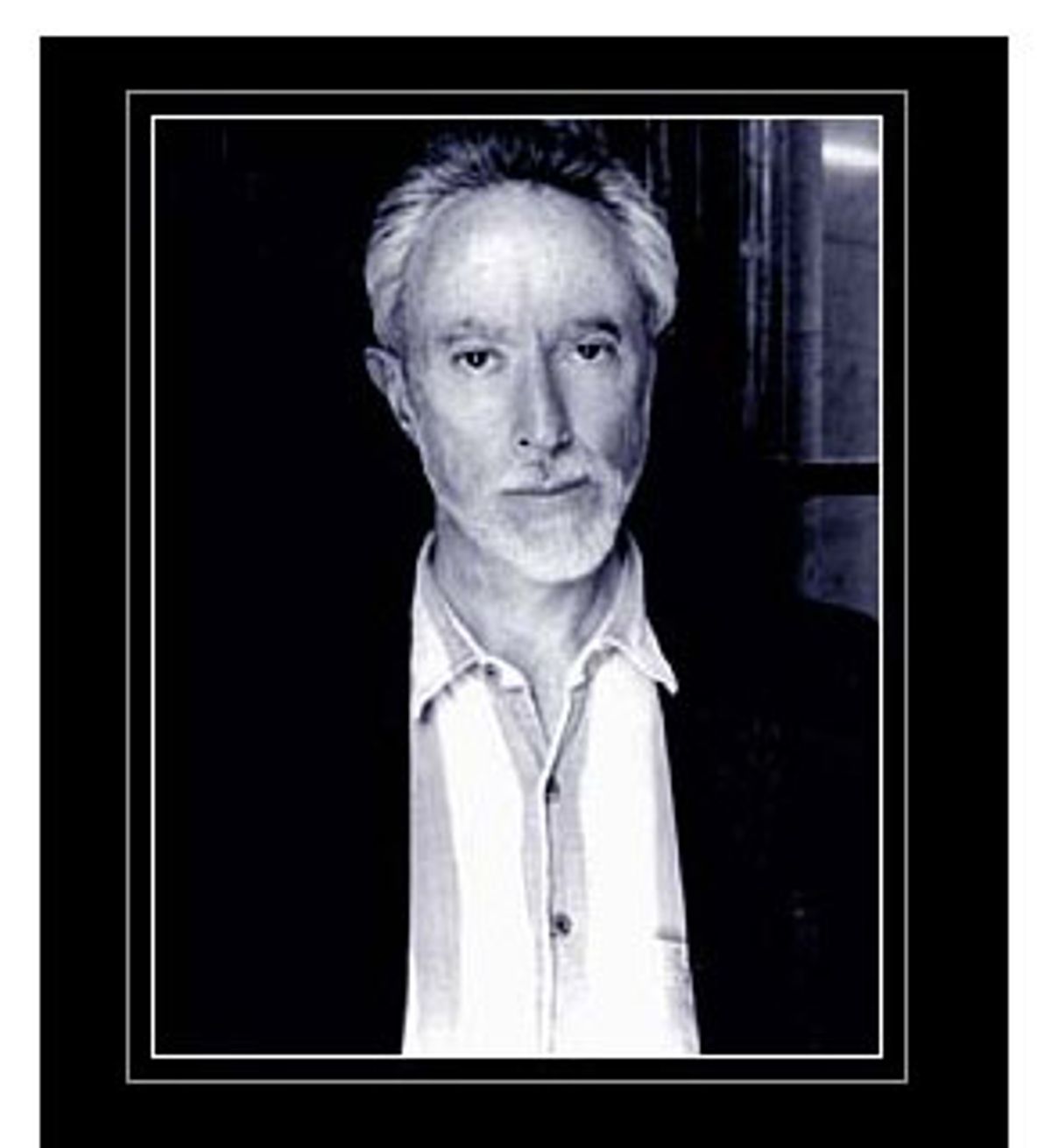
J.M. Coetzee is a teller of mysterious and universal tales in the tradition of Kafka.
Perhaps any great writer is an amalgam of unlikely elements, but John Michael Coetzee is more unlikely than most. An English speaker of mostly Afrikaner ancestry, Coetzee has from birth been something of an outsider within the isolated and paranoid world of white South Africa, a society he has compared to a prison. His writing often features compelling and intimate descriptions of his country’s harsh, spectacular landscapes, to which he feels a passionate, almost visceral attachment. Yet his books also have a more mysterious and universal dimension, a quality of modernist fable and even of absurdist existential exploration. More clearly than any other major living author, Coetzee is heir to the traditions of Franz Kafka and Samuel Beckett. Forces of politics and history are never far away in his fiction, but they tend to descend like cruel, impersonal weather systems, crushing some individuals and sparing others with a capricious lack of clarity or intention.
Only one of Coetzee’s books, “Age of Iron,” is explicitly concerned with race and apartheid in contemporary South Africa. Despite its compelling descriptions of township violence, even that novel is strongly allegorical, reflecting the author’s enduring preoccupation with the ambiguous nature of dialogue between master and slave. The tense, awkward relationship in “Age of Iron” between a dying white liberal and the homeless man she takes in continually repeats itself in Coetzee’s fiction, from the spinster narrator’s bewildered coupling with a servant in “In the Heart of the Country” to Fyodor Dostoevsky’s charity toward a troublesome beggar who may be a police spy in “The Master of Petersburg.” Despite the comfortless character of Coetzee’s moral vision, which offers little hope that the trauma and guilt of human history can ever be ameliorated, he clearly believes that the human struggle to communicate is honorable (although often futile) and that human life, even at its most ignoble, is inexpressibly precious.
“Dusklands” and “In the Heart of the Country” offer intriguing glimpses of Coetzee’s descriptive powers, but both now have the dusty odor of 1970s experimental fiction. With “Waiting for the Barbarians,” a harrowing account of the downfall of a well-meaning administrator in a remote village on the fringes of a decaying empire, Coetzee’s writing makes a quantum leap. Like all his books, “Barbarians” can be read in a single evening, but its pungent evocation of a menacing yet beautiful country that both is and is not South Africa, its exploration of what it means to be human in the face of monstrous cruelty, stays with you for a lifetime. “Life & Times of Michael K” is even better. The deeply affecting story of a simple and sheltered Cape Town gardener who becomes a war refugee, this is a brilliantly executed view of history from the bottom. Although understanding almost nothing of the events swirling around him, Michael has a will to live and a genuine love of the country that enables him to outlast the soldiers and bureaucrats who persecute him. The end of the apartheid era has sent Coetzee further afield for material. “Foe,” a parodic reflection of Daniel Defoe’s “Robinson Crusoe,” is a bit dry, but “The Master of Petersburg,” a mystical mystery novel whose hero is Dostoevsky, is a cold, witty and richly imagined meditation on art and love. With “Disgrace,” Coetzee won his second Booker Prize and, in relating the fate of a scholar of Romantic poetry cast out of his job after a misbegotten affair with a student, tells us something we all suspect and fear — that political change can do almost nothing to eliminate human misery.
Bibliography
(A note on bibliographies in “The Salon.com Reader’s Guide to Contemporary Authors”: Bibliographies are complete lists of book-length fiction publications and selected lists of nonfiction. Titles recommended by our critic appear in boldface type. The one book to read by this author, if you only plan to read one book, is indicated with an asterisk: *)
Fiction:
Dusklands (two novellas, 1974)
In the Heart of the Country (1977)
Waiting for the Barbarians (1980)
*Life & Times of Michael K (1983)
Foe (1986)
Age of Iron (1990)
The Master of Petersburg (1994)
Disgrace (1999) Elizabeth Costello (2003)
Nonfiction:
White Writing: On the Culture of Letters in South Africa (1988)
Doubling the Point: Essays and Interviews (1992)
Giving Offense: Essays on Censorship (1996)
Boyhood: Scenes From Provincial Life (1997)
“People Who Eat Darkness”: The disappearing blonde
A true crime story set in Tokyo illuminates the complicated truths behind media cliches
Joji Obara and Lucie Blackman (Credit: Estate of Lucie Jane Blackman) Lucie Blackman, 21, went out for the afternoon in 2000, phoning her roommate and best friend Louise to arrange a meeting later that night. Lucie never showed up, and within a few days she’d become one of those vanished blondes whose fates fuel headlines and hours of speculative media coverage. She was British, a former flight attendant, and she and Louise were living in Tokyo. They were also bar hostesses, a profession with a very specific meaning in Japan, difficult to explain to foreigners and not entirely clear to the Japanese themselves. Lucie both did and didn’t match the classic Missing Blonde profile, and for a while the mystery of what happened to her threatened to lapse into permanent obscurity.
Continue Reading Close
Laura Miller is a senior writer for Salon. She is the author of "The Magician's Book: A Skeptic's Adventures in Narnia" and has a Web site, magiciansbook.com. More Laura Miller.
Corporate criminals gone wild
The maker of the documentary film "Inside Job" has a new book excoriating Wall Street -- and President Obama
A detail from the cover of "Predator Nation" “Inside Job,” Charles Ferguson’s Oscar-winning documentary film on how government, Wall Street and academia colluded to deliver us the worst financial crisis since the Great Depression, made a powerful case that something was very very rotten at the heart of the American political/economic nexus. His follow-up book, “Predator Nation: Corporate Criminals, Political Corruption, and the Hijacking of America,” can be considered the legal brief that dots every “i” and crosses every “t” in his argument. A tightly argued, profusely footnoted and deeply enraged castigation of everyone involved, “Predator Nation” isn’t just a factually unchallengeable account of how Wall Street blew up the global economy. It’s a denunciation, a call for justice and a warning: After getting away with the crime of the century, Wall Street still isn’t satisfied.
Continue Reading Close
Andrew Leonard is a staff writer at Salon. On Twitter, @koxinga21. More Andrew Leonard.
Can you identify?
Science shows that the only way around some readers' prejudices is to trick them
(Credit: Shutterstock/Salon) The news of recent research documenting how readers identify with the main characters in stories has mostly been taken as confirmation of the value of literary role models. Lisa Libby, an assistant professor at Ohio State University and co-author of a study published in the Journal of Personality and Social Psychology, explained that subjects who read a short story in which the protagonist overcomes obstacles in order to vote were more likely to vote themselves several days later.
The suggestibility of readers isn’t news. Johann Wolfgang von Goethe’s novel of a sensitive young man destroyed by unrequited love, “The Sorrows of Young Werther,” inspired a rash of suicides by would-be Werthers in the late 1700s. Jack Kerouac has launched a thousand road trips. Still, this is part of science’s job: Running empirical tests on common knowledge — if for no other reason than because common knowledge (and common sense) is often wrong.
Continue Reading Close
Laura Miller is a senior writer for Salon. She is the author of "The Magician's Book: A Skeptic's Adventures in Narnia" and has a Web site, magiciansbook.com. More Laura Miller.
“The Aleppo Codex”: The bizarre history of a precious book
A reporter traces the shadowy fate of the definitive version of the Hebrew Bible
Matti Friedman An ancient and priceless book, a murky history of evasions and coverups, an underground of sinister and possibly violent dealers, a former spy who drops tantalizing hints and a wily 84-year-old millionaire who says stuff like, “The problem with this story is that it could damage your health”: Are these the ingredients for a cheesy, improbable historical thriller? Yet “The Aleppo Codex,” Matti Friedman’s account of his attempts to learn the history of one of the world’s most precious books, sports all of these assets, and it’s nonfiction. If reporting this story damaged Friedman’s health, it probably happened when he realized what he’d stumbled into and his reporter’s heart started beating in doubletime.
Continue Reading Close
Laura Miller is a senior writer for Salon. She is the author of "The Magician's Book: A Skeptic's Adventures in Narnia" and has a Web site, magiciansbook.com. More Laura Miller.
Augusten Burroughs: Conquer trauma by letting it go
Salon exclusive: The best-selling memoirist says past horrors haunt us because we think about them too much. Stop
Augusten Burroughs Many people continue to feel influenced and even controlled by the things that happened to them a long time ago. Sometimes, people harbor dark, traumatic memories from childhood. Or fragments of memories — incomplete scenes, uncomfortable feelings, perhaps even a sense of certainty that something specific and terrible happened to them, but little more than this.
Others experienced something traumatic in adulthood that continues to affect them day to day many years later. Maybe an assault has left a person afraid to leave their home or enter a particular neighborhood.
Continue Reading CloseAugusten Burroughs' many books include "Runnning With Scissors," "Dry," "Sellevision," "Magical Thinking" and "Possible Side Effects." His latest book is "This Is How." More Augusten Burroughs.
Page 1 of 984 in Books