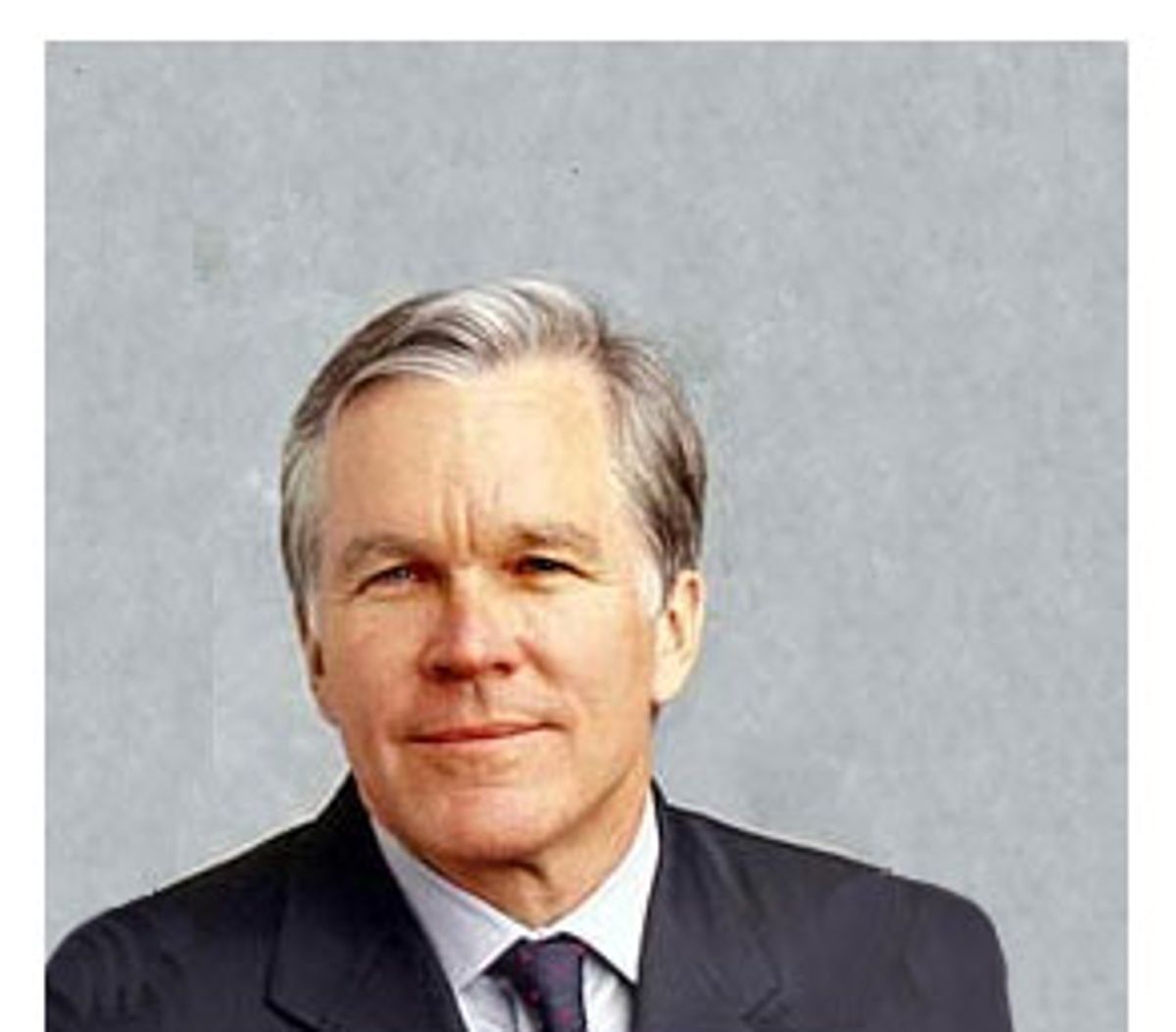
Bill Keller, the recently appointed executive editor at the New York Times, must have known he'd be embroiled in controversy sooner or later -- a new round of plagiarism accusations, a fight with the White House or the State Department, an arcane scandal involving the financial markets. In high-end journalism, these things happen. He probably wasn't expecting his first public dust-up to be over the fate of the Sunday book review section.
In a Jan. 21 interview with Book Babes, a column written by Margo Hammond and Ellen Heltzel on the Poynter Institute Web site, Keller discussed his ideas for sweeping changes to the New York Times Book Review in the wake of editor Charles "Chip" McGrath's impending departure. In fairness, many observers of the publishing world believe the Book Review has lost much of its oomph in recent years. But it's safe to say that almost as many of those publishing insiders -- and lots of general readers -- were horrified by Keller's ideas. He said he wanted to cut back on the coverage of first novels, and cover more topical nonfiction and mass-market fiction. The section might review more "potboilers," he suggested, to help travelers decide what books to buy in airports.
Steven Erlanger, the Times' culture editor, didn't help matters any by implying that most of the books praised in the section weren't really worth reviewing. "To be honest, there's so much shit," Erlanger told the Book Babes. "Most of the things we praise aren't very good."
The response from the literary world was immediate -- and immediately hostile. Replies to the article on the Poynter site were dominated by appalled readers, some of whom descended into hyperbole: "Great, I hope they include tractor pulls too," one wrote. To some, it seemed as if Tom Buchanan, the glib, ham-fisted businessman mocked by F. Scott Fitzgerald in "The Great Gatsby," had come to life to lord over a frightened and defenseless literary kingdom.
"Never before has someone been so foolish enough to basically say, 'We're dumbing it down,'" one prominent New York book editor notes angrily. "And it showed they don't know anything about the publishing world. Saying something like that is waving a red cape in front of a bull."
Keller and Erlanger have spent much of the last two weeks doing damage control, complaining that their words were taken out of context and insisting that "dumbing down" the Book Review is the last thing on their mind. (For their part, Hammond and Heltzel insist the interview quotes are rock solid.) But the fact remains that these renowned journalists -- Keller won a Pulitzer as a foreign correspondent -- are not literary men. A clearer picture of what they perhaps meant to say has emerged in later interviews, and while the Times leadership does not plan to eliminate the coverage of literary fiction, it does want the Book Review to emphasize titles with topical importance, such as political and foreign policy titles. (Which are probably what Keller and Erlanger grab as reading material, considering their backgrounds.) Author interviews, reporting on the publishing biz, and other format changes are also being considered.
"We're not handing it over with a formula," Keller says about the editorial transition, adding that the Book Review will actually be expanded after he chooses the new editor later this month. "We're going to choose a person because of their high standards, imagination and ideas, and they'll have considerable license in shaping the review." (As recently reported by the New York Observer, the final candidates are believed to include former Book Review columnist Judith Shulevitz, former Newsweek editor Sarah Crichton, Slate columnist Ann Hulbert and Atlantic literary editor Benjamin Schwarz.)
Whatever Keller and Erlanger say now, the Book Babes article conveyed a dismissive indifference to literary books that was almost like a parody of many publishers' and readers' worst suspicions about the Book Review. Except for perfunctory nods, some say, literary coverage has not only been downsized and simplified over the past decade but also undermined from the very top -- and not only at the Times but in other mainstream venues as well. Keller claims that the idea that he wants to demote literary fiction was "badly misread," but some of his Book Babes quotes resist reinterpretation, such as his call for fewer and shorter first-novel reviews and this zinger about the future of fiction coverage:
"Of course, some fiction needs to be done," he said. "We'll do the new Updike, the new [Philip] Roth, the new Jonathan Franzen or Zadie Smith. But there are not a lot of them, it seems to me."
This concept of the pinnacle of world literature -- three American males (two of them over 70) and a young (hot) Englishwoman -- might be reasonable coming from a middle-aged guy with a news background, but it isn't very heartening. Franzen and Roth certainly produce noteworthy books, but for all his incomparable achievement, the idea that Updike is still a vibrant American writer suggests an ossified conception of literary culture. Mentioning no female American writers, when the majority of American fiction readers are women, seems especially unfortunate. And where would Zadie Smith be if publications like the New York Times had passed over her first novel, the international bestseller "White Teeth"?
"When I first read the piece, it sounded like they were being too informal without realizing the importance or reach of what they were saying," says Michael Cader, founder of the online industry newsletter Publishers Lunch. "It gives a pause, if not a chill, to an industry being referred to in that fashion, with such a deeply unsophisticated position. It's just a bad sign of the rigor of the thinking going on at the Times."
The calibration of literary and commercial coverage is a volatile subject among book people, especially when it concerns the biggest review section in the country. Although the Times' position as the central arbiter of literary culture has diminished over the years, it's the most recognized and widely read book review section in the country. Being the biggest always invites envy and criticism, though the crude tone in the Book Babes article seemed to herald a new era.
The book editor quoted earlier suggests that Keller and Erlanger's sense of what was wrong with the Book Review stemmed from the rarefied atmosphere of life at the Times: "It's probably people they know that complain that way about the book section. It's the New York parochial view; they think these opinions are universal because everyone they know holds them, but they're wrong. They just don't get out of their limited sphere often enough."
One of the two Book Babes, Margo Hammond of the St. Petersburg (Fla.) Times, was surprised at the way the article was interpreted. A friend of Keller's since both were Washington journalists, Hammond insists she never intended to sandbag the two editors or paint an alarmist picture of the Times leadership. In fact, she says she supports many of Keller and Erlanger's intentions, and believes they are clearly interested in improving the section rather than gelding it.
"It's definitely important to use books as a springboard for political and cultural discussion," she says. "And providing the service to people who are saying 'What should I pick up at the airport?' is a perfectly valid activity for a newspaper."
Not everyone agrees. Author and critic John Leonard, a former Times Book Review chief whose reign from 1971 to 1975 is often remembered as a high-water mark, found Keller's comments especially troubling. "To seriously propose not paying attention to first novels is ludicrous," he says. "It amounts to rampant stupidity. Criticism is discovery, not a book report or news. It means someone is doing something with language that will change the way we think and see." He continues: "Brilliance comes from the peripheral or from the margins. You have to listen for it and call it to the attention of the readers."
Erlanger, who has been the Times' culture editor for just over a year, explains in an interview that his "shit" comment was taken from a longer conversation discussing his literary taste. The quotes in the Book Babes piece, he insists, "were selected to fit a thesis, a thesis I didn't create. It wasn't in the spirit of what I was talking about. There are bad movies, bad books, a lot of disposable media. An avalanche of bad books comes out every year. Even publishers recognize that."
As for the question of whether Times critics have lavished praise on undeserving books, Erlanger still thinks the paper should "discern better and be a little more stinting with our praise." He says he hopes to bring more urgency to book coverage as well as good political and cultural commentary. Review coverage won't shrink, he insists; the daily paper has resurrected its Saturday review, which tends to be more focused on ideas. And as to any heavy-handed decrees from above, he says that the Times' two main daily book critics, Michiko Kakutani and Janet Maslin, have never been micromanaged: "I just leave them alone to do their jobs."
The Poynter piece, Erlanger goes on, "made us sound like all we wanted to do is review political pamphlets, which is not true at all. Our intention is to revamp and expand. Why would we want to make it worse? It's too important to the publishing industry and too important to serious readers."
One book review editor who asked to remain anonymous opines that the editors' comments, even taken in the most sympathetic light, suggest that they don't understand their own core readership, a base of literary readers whose support "is to the Book Review as the Christian right is to the conservatives."
"They don't know what they're doing," this editor says. "They don't know the kind of people who buy books. They are mostly women, not Bill Keller and Steve Erlanger. They don't read 'The Perfect Storm' or thrillers."
To many observers, the idea that the book section will be skewed in favor of nonfiction titles and increased attention to popular mass-market books didn't seem like news. "Really, that's the way it already is," says Dennis Loy Johnson, publisher of Melville House Books and editor of the literary blog MobyLives. "That kind of makes it official now, institutionalized. It's not a revelation, but it's depressing that fiction and poetry mean less and less in our leading publication."
The idea of changing the Book Review, at least in the abstract, is widely appreciated; many observers suggest that except for individual instances of brilliant reviewing, the section as a whole has lost most of the vibrancy it once had. "It's changed into something that doesn't matter anymore; it's just dull and formulaic," says Cader. "You don't hear people talking about reviews there. You don't hear of booksellers selling out after a book was on their front page."
"The Times has lost ground in terms of setting a national reading agenda," says Charlotte Abbott, the book news editor at Publishers Weekly. "The cases where it has made national bestsellers are far fewer than 10 years ago. It's not necessarily the editorial fault of the Times, but the industry has changed."
A representative example might be the changes that the Times' bestseller list has faced. Through the 1980s it was the only consumer list of any importance, an instant badge of credibility for any book that was stamped with a "New York Times Bestseller" label. Yet during the '90s technological advances enabled other papers -- from USA Today to the Wall Street Journal -- to create their own bestseller lists, which used different methods to crunch the data. Big chain stores like Barnes & Noble and Borders have their own bestseller lists and use them as the basis for discounted sales. While the Times' bestseller list ranks the previous week's sales, Amazon's lists calculate up-to-the-hour sales information. The advent of BookScan, with its point-of-sale technology that records sales at 80 percent of retail bookselling outlets, can provide daily sales data from specific locations or stores around the country.
Whether or not the Book Review will regain its lost prominence -- and whether or not the proposed changes will help it do so -- its efforts are impeded by the existence of so many media outlets; it's hard even for the Times to be heard above the clamor. Also, books are sold differently now -- largely online or in big-box chain stores -- and a newspaper cannot reach as specific a demographic as some online resources. One small publisher recently commented that although one of his past books received a full-page rave in the Times, that didn't have as great an impact on sales as a targeted online advertising campaign.
The decision to focus on nonfiction is clearly predicated on the post-9/11 idea that politics and world events are a matter of life and death now, while literary and artistic concerns have dimmed in importance. It's also true that political nonfiction has been a leading category for the past several years -- though planning a book review section around sales figures might leave you pondering Harry Potter, the apocalyptic "Left Behind" series, and the latest twist on low-carb or low-fat dieting.
When it comes to political nonfiction, the Times already does a decent job of covering the major cerebral books on foreign policy, or the latest political work by the likes of Eric Alterman, Joe Conason and Paul Krugman. Beyond that, channeling the contemporary political conversation might lead one into the pugnacious stratum of entertainment tomes. Does anybody think Michael Moore and Al Franken's books need more press than they already get? Will the Times begin covering bestselling screeds by Ann Coulter, or the latest offering from Regnery, a leading purveyor of right-wing conspiracy-think?
One of the remaining categories in which the Times still has paramount influence is, ironically enough, the one that many people believed Keller and Erlanger were dismissing. "For different books, different media are better," says Abbott. "For certain kinds of fiction, the Times can have an impact that other media does not have. If craft and construction and aesthetic and intellectual achievement of a book is central, the Times is the vehicle to introduce that title to a wider audience."
Keller may believe that the Book Review should cut back the space given to first novelists, but Cader notes that first-time novelists aren't exactly overexposed right now. He calculates that during the last six months of 2003, debut fiction accounted for roughly 12 percent of the Sunday section's full-length fiction and poetry reviews. (And that included first novels from established figures such as Jimmy Carter.)
No one disputes that the Times has long practiced a sort of affirmative action when it comes to literary fiction. "There's no question the Times reviews more fiction than is statistically justifiable," says Leonard. "And you can't run it as a high-minded quarterly. But it has to have principles."
For him, the increasing commodification of culture and the consolidation of the publishing industry have affected book coverage, at the Times and elsewhere. The mentality of the industry focuses on blockbuster sales, which propels a few famous or infamous authors into the spotlight but leaves behind many mid-list writers and in no way assures any sort of quality.
"It's appalling to look at once-respectable book publishers and see some of the shit they're putting out now," Leonard says. "Not only that, what gets attention is what's already being talked about. Every magazine has the same damn movie on the cover and they're all relieved. The discovery is left out and it's the same crap all the way down the line."
Leonard's Times section strove to find a mix of reviewers and styles to spark debate and define a variety of provocative approaches to books and ideas. While such a system might have produced more creative or lively reviewing, it's not likely to fit into today's financial constraints. "There was a lot of over-assigning," Leonard admits. "We killed a lot of reviews. In today's more cost-conscious era, they don't want to take any chances and they don't want to make any mistakes."
Despite the latest tempest on 43rd Street, many people in the book business have great expectations of the new editor. "It's a pivotal moment because the industry is suffering," says literary agent Ira Silverberg, who has shepherded many first-time authors into publication. "I'm really, really hoping they bring in someone dynamic." He thinks the Book Babes article and the ensuing dialogue might have created helpful discussion about the section, although, he adds, "The bottom line is, there's always going to be someone who's unhappy with the coverage of books."
One positive sign is that the purported list of finalists for the editor's slot consists of writers and editors with stellar literary credentials -- it's not as though Keller were proposing handing the section to Rupert Murdoch. Keller says that a dozen or so finalists were asked to write a diagnostic essay explaining how they would change the section, and he reports a consensus of general themes consistent with his own feelings. Perhaps the envisioned changes will in fact produce a more relevant Book Review and engage more readers -- assuming that the readers he has in mind are even interested in book reviews. On every side, people agree that it's imperative for the section to improve, not least because what happens at the Times is likely to influence book coverage in other places. Whoever Keller chooses will have one of the most prestigious -- and most thankless -- jobs in literary journalism.
As for Keller, he may be more careful about talking to reporters -- or at least waxing philosophical about the Book Review. "That's a hazard every time you open your mouth," he writes in an e-mail. "I suppose I could stay behind a curtain of 'no comments,' but I'm pretty proud of what we do, and even the laziest or most ill-intentioned of the hacks who write about us generally get at least a little bit right."
Shares