
Do the people at Starbucks think we’re all morons?
Judging from their latest initiative, a 22-page booklet called “Make It Your Drink: A Guide to Starbucks’ Beverages,” they’ve decided that Americans are meek, anxiety-wracked naifs who need shitloads of coaching when it comes to ordering coffee. The booklet’s mission: to help us “build confidence in beverage ordering.”
Huh?
This wallet-sized volume, which recently debuted in all 5,690 U.S. outlets as part of a huge promotion called “Customize Your Cup,” seemingly has two goals: 1) to teach ever more panicky Americans how to bark out precise commands like “grande, quad, ristretto, nonfat dry cappuccino” with perfect Starbucksian diction; 2) to encourage us to spend more on pricey flourishes. Extra shots. Noxious flavored syrups. Luxurious ice.
“If you’re nervous about ordering,” the booklet murmurs with no detectable irony, “don’t be.”
Who knew beverages were so terrifying? Who knew we were so dense? Simultaneously patronizing and intimidating, the booklet begins by reviewing the “lingo,” 38 key ordering terms from the exotic (“misto,” Italian for “mixed”) to the folksy (diner-slang descendants such as “with legs” for “to go”). It moves on to tackle espresso dilemmas and syntax challenges (should you specify cup size before or after syrup selection?). A special milk section reminds you that “the moo is where you can be most expressive.”
Dotted with fey, wobbly illustrations to offset its preachiness, it is a curious document: “We’ve noticed,” it reads, “that triple, grande, decaf latte people aren’t the same as tall, iced caramel macchiato people.” What Starbucks’ research has failed to reveal is that neither of these people has anything in common with annoyed, adjectival-string-eschewing people who just want a cup of coffee.
“We think of it this way,” says Brad Stevens, director of marketing for Starbucks North America, shortly after the company announced a dramatic 41 percent rise in first-quarter profits for the fiscal year ending September 2004: “Espresso consumption is still growing in the U.S. There are still a lot of people to whom we can introduce the joys of espresso. And a booklet like this will help our new customers understand and uncover the fun of being a fan of espresso.” He pauses and adds, “It’s really about fun.”
That may be, but even the baristas at my local Starbucks seem confounded by the program. When I showed up, armed with my booklet, well-rehearsed, and robotically ordered a “Decaf, Grande, caramel, no-fat, dry, latte with legs,” the girl looked quite stunned by my prowess. As she concocted my drink (“So … by caramel, you mean the syrup?”), I saw that the old menu board had been replaced by a new one that distills the lessons of the booklet and its five zillion easy steps. I asked another staffer if customers were responding to the opportunity to customize their cups and become cocky complex-beverage requesters. “Not so much,” she admitted. “Most people are too scared.”
How did Americans, for whom a “cuppa joe” was the essence of simplicity for most of the 20th century, fall into the Starbucks trap? Despite Starbucks’ much-vaunted attention to quality and its reliably yuppie ambience — mournful Billie Holiday piped in, mournful homeless people marched out — it’s hard not to wonder if we’re not worse off for having allowed ourselves to be bullied into its baloney. Tall, grande, venti? “All it means,” says Mark Pendergrast, author of “Uncommon Grounds: The History of Coffee and How it Transformed Our World,” “is small, too much, or way too much. I refuse to speak Italian to order a size.” He’s not surprised, though, that so many of us do respond (25 million each week, generating $268 million in profits in 2003). “If you feel a bit humbled,” he says, “when you approach the great Wizard of Oz Coffee Maker — ‘I’m so scared, can I get through this ordering process correctly?’ — that can be appealing. It’s very clever marketing.”
Adds Steven C. Topik, a coffee historian at the University of California at Irvine: “Coffee prices are at an all-time low, but Starbucks prices are still extremely high. They’re selling mostly ritual and snob appeal. And foam.”
Ordering coffee was not always a test of courage. For decades, any American who wanted a cup could walk into a cafe, catch the eye of the waitress slinging her pot, and … nod. A word or two may have been required, but it’s unlikely either of them was “Valencia.” It was possible to do this without consulting a 22-page booklet, or spending surreal sums. The all-American “5-cent” cup of coffee was so much an article of faith, reports Pendergrast, that in 1947, when many restaurants raised the price to 7 cents, angry customers smashed their mugs and dumped cream and sugar on the counters in outrage.
Of course, much of this coffee was terrible: percolated, burnt, watered-down, ground from poorly roasted blends heavy with cheap African Robusta beans, the bitter alternative to the rich Arabica beans from Colombia or Costa Rica. (Even so, this was a vast improvement over American coffee in the 1800s which was polluted with additives such as chicory, barley, pumpkin seeds, brick dust, dog biscuits, sand, dirt, and more.) There were exceptions — coffeehouses and restaurants whose java was roasted locally and served fresh. This coffee wasn’t elaborate or nuanced, but if you drank enough, it did the basics: woke you up, got you talking, warmed your hands.
It still does, at the sort of small-town cafes that have so far escaped the threat of Starbucks, which notoriously opens outlets adjacent to local coffee shops and drives them out of business. In Sheridan, Wyo. (pop. 16,000), a rancher’s town guarded by the Bighorn Mountains, the Silver Spur Cafe has been serving breakfast on North Main Street, a still-Hopperesque stretch, for 70 years. It’s a tiny place with room for 15 at the counter, where ever-vigilant waitresses top off your cup every 30 seconds, and regulars, who stay up to three hours, have slowly melded with the stools.
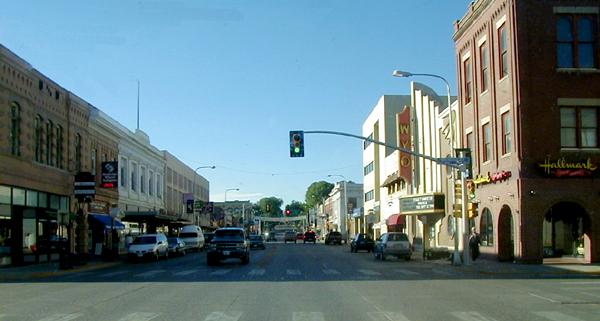
“Coffee? I’ve heard of it,” deadpans current owner Barbara Ross, 57. “We make it all friggin’ day. And they drink it all friggin’ day.” She serves two types, regular and decaf, for 75 cents in a 12-ounce white mug. Contractually, she’s supposed to brew Farmer’s Blend, a quality 100-percent Arabica brand that’s a major player in the restaurant-supply field, but the customers groused. “They told me it’s too strong. So we just run out to the grocery store and buy Folgers and mix it in. These old farts don’t know the difference.”
When I ask if the farts might benefit from a program that would help them build confidence in ordering beverages, she snorts: “These guys don’t need help asking for coffee.” (Not that they are entirely self-sufficient. “I told the waitresses it was their jobs to get the customers up and massage their butts,” she says, “so the customers could walk out of here.”) Ross is considering asking the ceramics store next door to make up mugs, personalized with the regulars’ names that she could hang on a pegboard, a popular tradition at many small-town cafes. (A tradition Starbucks may be trying to echo with their new $9.95 Customization Tumblers you can personalize with cute stickers — “Grande,” “Soy,” “Peppermint” — specifying the umpteen variables that hours of study time with the fun booklet have helped you narrow down.)
So far, the Silver Spur has gone unchallenged by the Seattle Behemoth, though a Starbucks did open recently in the Holiday Inn at the other end of town. “I didn’t know what a Starbucks was,” says Ross, suddenly sounding a bit like a pod person, “but my granddaughter told me it was just expensive coffee. Not worth it, everybody said.” Her clientele remain loyal, especially those who still, believe it or not, refer to coffee as joe or even a cup of mud. What would happen if someone walked into the Silver Spur and asked for an iced, decaf, triple, grande, cinnamon, nonfat, no-whip mocha? She laughs. “The girls would probably just tell them you’d have to go next door to the mini-mart. They have cappuccino, comes out of a vending machine.”
The beginning of truly mass coffee consciousness-raising in America predates Starbucks, and can be traced to the arrival of the fictional Juan Valdez, a proud romantic savage invented by the National Federation of Coffee Growers of Colombia in 1960. In a full-scale advertising assault, Valdez trudged into the hearts of Americans, as if to say, “Though my coffee is exhausting to produce — regard my poor demoralized mule! — it tastes so much better.” It worked: Five years later, over 40 all-Colombian brands were being sold in America, including General Foods’ Yuban. Soon, regional “specialty coffee” outlets such as Peet’s in Berkeley, Calif., followed, converting isolated pockets of Americans to coffee elitism, but it wasn’t until Starbucks (founded in 1971) hit its stride in the mid-’90s that “coffee education” became the absurd crusade it is today. Originally, the goal was to draw parallels between coffee and wine, a very adult pursuit, but judging from this new booklet’s kindergarten tone — “This is when you tell us what milk you want. And if you want something else, like ‘extra hot’ or ‘extra foamy’” — you might wonder if Starbucks has decided to broaden its educational efforts to include children, in a sort of caffeinated take on “No Child Left Behind.”
The analogy between Starbucks and a brainwashing cult is well-worn. Online wits call the company the “Church of Righteous Oneness with Coffee and Knowledge, or C.R.O.C.K.,” and gossip that a certain intersection in Brentwood, Calif., boasts a Starbucks store on all four corners. (“I believe that is an urban myth,” a Starbucks spokesperson clarifies.) The company satirized its own reputation for control-freakiness by allowing the producers of Austin Powers to locate Dr. Evil’s headquarters atop a Starbucks skyscraper. But with this massive new “Customization” promotion, chairman Howard Schultz and crew seem to have lost perspective and blundered well past cultiness. Did the devotees of Jim Jones need a 22-page booklet to order poisoned Kool-Aid?
There may be relief in sight but not from Starbucks. One competing brand, at least, has apparently decided to market itself as a sort of anti-Starbucks. That is to say, anti-pretension. Anti-gibberish. Anti-faux European. And most distinctly pro-American.
Chock full o’Nuts, a classic American brand that was born in 1926 as a series of Manhattan nut shops before expanding into coffee in the ’30s, is launching a major regional campaign designed to remind New Yorkers that it was their brew of choice in the old un-Venti-lated days. At its peak in the ’50s and ’60s, Chock full o’Nuts was the Starbucks of its time, with over 100 coffeehouses in New York, serving its signature nutted cheese and whole wheat raisin bread sandwiches, pies, soups, and a “heavenly” brew that founder William Black refused to compromise even as his competitors snuck more and more Robusta into their blends. “Better coffee Rockefeller’s money can’t buy,” he bragged, until Nelson Rockefeller sued. “Chock full o’Nuts coffee was very good,” says Pendergrast. “You could always count on it.”
A $2 million to $3 million wave of advertising has plastered buses, water towers, construction sites and other “quintessentially New York” surfaces with images of real people shot by legendary Life magazine photojournalist Eugene Richards: weary but stubborn waitresses, thuggish but charming butchers and average Joes screaming their way through a ride on Coney Island’s Cyclone roller coaster. “Chock full o’Attitude,” snarls one ad. “Chock full o’Strength,” claims another. The ads are refreshingly raw. And they successfully trigger nostalgia for a pre-Starbucks world.
“We’re drawing on 70 years of history that’s authentic,” says brand manager Jennifer Stein at Sara Lee, which bought Chock full o’Nuts in 1999. “We didn’t make it up.” And while that history also includes the brand’s wretched decline in the ’70s after Black’s death, when the once-spotless cafes became filthy holes cluttered by surly staffs, there are still lots of good memories to exploit. Stein was happy to connect me with two loyal patrons in Queens who are still sufficiently alive to recall the brand’s glory days, and sufficiently babbly to veer off into footwear tangents. “The coffee was delicious,” says Willie Catherine Graves, 60, who visited the Chock full o’Nuts cafe at 34th Street and 8th Avenue when she was an office girl in the late ’50s. “I’d tippy-toe in there in my high heels — and I could wear them as high as they’d come, because I was young! They didn’t allow no dungarees then. Everyone was dressed up.” For her, the main attractions were the possibility of meeting a man, and a solid deal. “I had to go where my little pennies could take me,” says Graves, “where I could get the best lunch,” which meant a raisin bread sandwich, Heavenly Coffee, and coconut pie for less than a dollar. She’d sit at one of the sunny horseshoe-shaped counters with her girlfriend in the midday rush, tended to by a mile-a-minute waitress. Not a lot of dialogue was required to order: “I don’t think the waitresses talked to us at all. They couldn’t lean over and hold no conversation. They had to move!”
Graves’ gentle mother, Bernetta Graves, 83, while not so loquacious, was also a fan of the 34th Street location. “They don’t make coffee like that now,” she says wistfully.
They’re certainly trying to. Stein says that not only has the blend been improved, but that Sara Lee is committed to bringing Chock full o’Nuts back to New York as a full-fledged chain of cafes. The plan: to combine old Chock favorites like the whole-wheat doughnut and the cheese-nut sandwiches with new millennial design. For now, they’re starting small with two kiosks in the Herald Square area, but are actively looking for storefront locations in Manhattan. The company, which famously handed out free Chock coffee to shell-shocked New Yorkers on Sept. 11, feels the time is right for a return to a classic American brew. “It’s a lot easier to tug at people’s heartstrings right now after the Iraq War and the World Trade Center,” says brand publicist C. Zawadi Morris, a little too transparently. “There’s just been a coming together of New Yorkers. When you feel threatened, there’s a tendency to wrap your arms around what’s yours.” Instead of, say, pseudo-Italian mystifications?
Conscious of the risks of having my heartstrings tugged, I decided to visit one of Chock’s new kiosks and wrap my arms around a large “Soho blend.” It would seem there are still a few kinks to work out. Without consulting me, the reckless staffer began dumping three teaspoons of sugar into my cup with no sign of slowing down. Ay-yi-yi-stopppp! After her tut-tutting colleague dumped out the sugar and delivered my Heavenly Coffee, I tested it with considerably less optimism than the young Willie Graves in her sky-high heels. It tasted more like Purgatory Coffee, no better or worse than any Greek diner brew. As my nostalgia rush faded and a mild stomachache, surely psychosomatic, set in, I’ll admit I began to yearn for the Stepford competence of Starbucks.
There are, after all, many good things to say about Howard Schultz and his empire, which may soon be facing much stiffer competition than Chock full o’Nuts if that much bigger monster Wal-Mart — which tops the Fortune 500, overshadowing Starbucks at 465th — sees positive results from a cafe concept it’s currently testing inside a Plano, Texas, store. “Yes, Starbucks is pretentious, and yes, they’re making a fortune,” says Pendergrast, “but it’s also true that they’re selling fair-trade coffee, which is a very good thing, and they’re giving money back, and trying to develop a real relationship with growers.” It should also be noted that Starbucks pays well over minimum wage and grants even part-time employees full medical benefits. And then there are Schultz’s plans for more stores with drive-thru windows, the closest he’s come yet to openly admitting that Starbucks is really just a glorified version of McDonald’s.
“I have a hard time calling Starbucks evil compared to most of the corporations in the United States,” Pendergrast adds. “They’re certainly doing a better job with their suppliers than Procter & Gamble or Philip Morris. If you can get past the pretension, I think Starbucks has been wonderful for this country.”
Maybe it is better to just endure a little baloney in exchange for dependably good coffee. What’s a freaky, obsessive Customization program next to winning foam? Perhaps if we all buy $9.95 Customization Cups, we can just mutely shove them in front of the Starbucks cashier, and let him yell out the damn lingo? Maybe we should just accept that “there are certain mornings when you need to indulge in a handcrafted beverage prepared by your very own barista (Customologist),” even if “you feel somewhat uncomfortable ordering your beverage.”
On second thought — Customologist? — maybe not.
“Babies know so little about what’s going on, sweetie,” says posh infant-togs designer Lucy Sykes of the new compulsion among urbanites to pamper their indifferent newborns in luxury. “It’s really for the parents.” A former fashion editor and socialite sister to “Bergdorf Blondes” author Plum, she has a point: To date, no infant has actually requested a $45 bottle of Burberry Baby Touch Eau de Toilette Spray. Or signaled his approval of the $1,240 Louis Vuitton Diaper bag. Or wept because Citibabes, the new private club for New York City parents with a $2,000 annual fee, declined to let him crawl into its prestigious walls. Still, as Sykes, who describes her fall/winter line as perfect for “a nice baby tea at the Carlyle Hotel,” confesses, “A lot of my Manhattan friends are spending so much on their babies they can’t afford to go out for dinner anymore!”
While wealthy parents like these are forced to forgo necessities like peekie toe crab appetizers, the kids upscale product industry has been raking in an estimated $45 billion annually. Why the boom? As more U.S. moms wait until their relatively affluent 30s to give birth and race to give their offspring every possible competitive advantage, 30,000-square-foot “baby superstores” (such as the delicately named Buy Buy Baby), Euro-tot boutiques, and “educational” software companies are proliferating to suck up that affluence as efficiently as the $200 Whisper Wear Hands-Free Double Breast Pump extracts milk.
The lengths to which the baby industrial complex will go to exploit these avid parental consumers is surreal. Foreign language institutes in the well-heeled suburbs of Westchester County, near Manhattan, eagerly teach infants as young as 6 months old 11 different languages. Parents can skip the Mandarin class, of course, if they’ve managed to outbid the competition for a rare Chinese-speaking nanny — crucial in case their babies show an early interest in controlling the new global economy. (Sadly, according to the San Francisco Chronicle, Bay Area parents increasingly have to make do with an Ethiopian or Eritrean caregiver, or even a passi Laotian.)
Anxious to inculcate your baby with a taste for minimalist European appliances? Fifty bucks can get you a 10-inch-tall replica of a Miele stove or washing machine. Why not a baby cot designed by Phillipe Starck? A $650 modernist doll house with its own garden and pool house? You may even be tempted to spring for a crib that vibrates soothingly — a must for rattled infants who’ve been forced to take their first obesity-preventing swimming lesson, as the Daily Telegraph (London) reports, when only1 day old. If baby rejects such robotic lulling, a $100 “Why Cry” gadget, the world’s first patented baby cry analyzer, will announce in just 20 seconds whether her wails indicate that she’s “annoyed, bored, hungry, sleepy … showing signs of stress/colic” — or simply appalled by her parents’ gullibility.
Perhaps most ludicrous of all: The people behind the Posh Tots catalog — one of dozens targeted at spendthrift parents — have seen fit to combine the uniquely incompatible words “child” and “chandelier,” hawking 91 variations of this nursery must-have, from the folksy “Cow Over the Moon Chandelier” ($630) to the Classic Crystal Chandelier ($1,230), a miniature masterpiece of pretension.
Even the normally imaginative designer Marc Jacobs, who recently unleashed $400 cashmere baby hoodies on the planet, has said: “I can’t imagine any of my friends not wanting to spoil their kids rotten.” Try harder, Marc.
Yet signs of a growing baby-luxury backlash are appearing. A New York Times piece about $900 sidewalk-hogging Bugaboo strollers here. Exasperated posts on mothering blogs there. Pointedly irreverent books, such as “The Three-Martini Playdate: A Practical Guide to Happy Parenting,” are openly mocking moms and dads who over-coddle. When Jeff Howe and Alysia Abbott, an expectant Brooklyn couple, were searching for baby names last summer, Howe dismissed several of Abbott’s suggestions — Spencer, Sebastian, the admittedly indefensible Willem — with a weary: “Too Bugaboo.” Which is to say, “too ubiquitously yuppie.” One senses they’re not alone.
One senses, too, that they’d be equally troubled by Cookie, the new shopping/lifestyle magazine for upscale parents, a distractingly beautiful title that favors $115 toddler haircuts and unapologetically JonBenet-ish photos of preschoolers fiercely clutching “mom’s” $2,300 purse. With its debut issue, editor in chief Pilar Guzman, a frank, incisive woman who says things like “booze becomes a big friend in the early years of parenting,” made a valiant effort to walk the line between “aspirational” and “galling,” with several nods toward affordability. But as she puts it, “My readers want to curate a certain lifestyle for themselves that isn’t necessarily the norm.” So true: The magazine suggests you buy your kids single stock shares, conveniently framed, to hang in their rooms.
The New York Observer called Cookie “horrifying.” Fortune implicated it in what’s being called “the prince and princess syndrome.” A reviewer on bloggingbaby.com, the popular blog for moms, seemed to agree: “Cookie had me gagging on my tongue and shrieking … my husband calmed me down by reminding me that, “We’re middle class. We’re just middle class, it’s okay. This isn’t targeted at you.” Another scornful mom posted: “[The magazine] seems to reflect a one-upmanship that’s been going on in the parenting world.” The sole pro-Cookie comment — “Do you know how nice it feels to dress your child in $200 boots, a $300 outfit, and a $400 coat? You feel honestly proud” — was slammed by a queasy poster: “You should feel honestly ashamed.”
Sighs Guzman: “People get very self-righteous when it comes to parenting.” For her, the real value of the baby-product explosion isn’t the proliferation of “status” items, but an influx of good design, the sort she says sophisticated parents demand. And it’s true: Never before have aesthetics so informed a parent’s arsenal; even mundane potties and pacifiers have been subjected to Italian design exercises. “I don’t know anyone in New York or Chicago who’s having a baby before 32,” Guzman says. This older mother, she says, is “often someone who’s traveled, who’s evolved. She doesn’t want her house covered in Barney and plastic.” Not that Guzman believes in total design ruthlessness, especially where her own child’s yearnings are involved. “We have the SuperSaucer,” she admits with a mixture of pain and tenderness, “which is the ugliest thing in the world.”
Unfortunately, says Elise Mac Adam, a screenwriter and mother in her 30s who pens the blog Indiemom, which critiques ludicrous parenting, so many of these hiply designed objects become obsolete the second your baby outgrows them. So you honored your exacting design standards and bought the $500 neo-Eamesian Ooba Nest bassinet in walnut? “What do you do with it afterwards?” she asks. (Unlike, she points out, the legendary David Netto Design changing table, conceived to evolve into grown-up furniture.)
Mac Adam reserves special disdain for parents she sees in New York’s Upper East Side pushing the pauncey Silver Cross pram (which, as a piece of traditional design, rivals a Bugatti). This pram, she says, only works for a month or two, since most kids want to ride sitting up fairly quickly. “It seems like those parents don’t even need to think about practicality,” she says. “They don’t live in the same world as I do. They live in a fantasy.”
There’s no time for outrage at another popular blog, Baby Chic 101, updated by Patty Shaw, 25, a childless teacher who’s nonetheless nuts about baby stuff. Not when product-deprived moms are awaiting posts like “Britney’s Car Seat-Correction!” and “Opinion: Why there should be more Buy Bye Babys.” In the latter, Shaw confronts some hard realities: “Sadly,” she states, “there are only eight [Buy Buy Baby stores] total on our lovely planet. Eight!?” But, after urging her readers to pilgrimage to these outlets and agitate for a national expansion program, she rousingly concludes: “Together we can change the baby world. One top-notch store at a time.”
“This is a phenomenon called displacement consumption,” says James Twitchell, Ph.D., author of “Lead Us Into Temptation: The Triumph of American Materialism.” “It always comes out of anxiety and what’s more anxiety-provoking than, My god, I have a baby?” He points out that consumerist parents too conflicted to conspicuously indulge themselves (selfish!) sidestep guilt by buying their newborn a status stroller (doting!). “You’re spending on your baby, though,” says Twitchell, “so the assumption is: No one’s going to criticize me.”
Another driving force behind such extravagance, Twitchell argues, is the universal need for community. “Americans used to be defined by how we went to church, or by our schools. But now it’s really about consumption communities. The question becomes: ‘Can you assemble, by buying things, a coherent presentation of the self as part of a community?’” (Bugaboo parents, unite!)
“Have you seen this new magazine, Noodle?” he asks.
Cookie, perhaps?
“Yes, Cookie. I have never seen a clearer acknowledgement that children have been reduced to accessories.”
Dr. Margaret Wehrenberg, a clinical psychologist who practices in an affluent Chicago suburb and lectures on “The Overindulged Child,” has seen the unsightly consequences of that attitude. “The risk is making your baby an object, someone who eventually learns that her primary value to you is the way she looks. And out of that can grow a child who’s consumed with appearance. Anorexia. Compulsive exercise.”
Not to mention one who’s lazy and unmotivated. “As we all know,” says Wehrenberg, “desiring something and knowing you have the potential to get it causes you to work hard and feel very satisfied when you get it. But kids from wealthy families are getting everything they want. They literally have nothing to work for.”
Competitive parents who lavish their babies with Ooba bassinets and Russian language classes at 6 months, she says, often develop a mind-set that they can buy their children everything they need. “But what growing children’s minds really need,” she says, “is time for free play. Time to just stare into space and allow the brain to rest, to form new connections, new ideas, and learn how to soothe itself.”
It’s all very dire. One can only hope that, just as prosperous Americans tired of the novelty of overindulging their dogs, and moved onto babies, their focus might soon shift to something less likely to lapse into indolence. Plants, maybe. Plants would be a lot more impressive with individual Marc Jacobs cashmere leaf-covers.
Indiemom’s Mac Adam, who knows a compulsive stroller-collector (“she has six for two kids”), gave up trying to wow other parents with infant paraphernalia long ago. The emotional cost was too high. “My first visit to Buy Buy Baby made me feel like a loser,” she says. “The sheer volume of stuff, and the sheer number of choices that had to be made.” Not to mention all the hyper-focused, salivating moms. She says she lost it “somewhere near the cribs and co-sleepers.” She didn’t quite make it out intact. “I started weeping on the stairs.”
Continue Reading
Close
I first joined Jenny Craig to become a better writer. At least that’s what I told myself in the spring of 2003 when, in an effort to reach a new spiritual state of pennilessness, I was drafting a novel. My heroine was a suburban mom, her hands full with an array of psychic, gay children. Though increasingly pudgy due to a harrowing string-cheese addiction, she worked as a diet counselor at the fictitious “Right-for-Me Weight Loss Center.” How neatly mortifying, I thought: a chubby diet expert. She might as well have been a vegetarian werewolf, compelled to ravage endive.
My attempts to render the supportive yet bitchy atmosphere of my imagined diet center, however, were ringing false. (“Have you been completely honest with us, Myrna? It says here you’ve been limiting yourself to six popcorn kernels, popped, for your daily snack.”) I grew blocked, writing less each day, too easily diverted by pizza and life’s rich pageant of dust. To get off my impasse’d ass, I decided I better check out a real diet center, maybe even go undercover as a client, assuming I could pass as fat.
At 6 feet, I’d never been more than fattish. I had my own weight-management system based on sound principles of nutrition and terror: If the scale edged toward 190, my fear of becoming obese — which, to my neurotic mind, meant slothful and repulsive in a Jabba the Hutt way — would kick in. I’d panic and buy celery-flavored rice cakes and rice-cake-flavored celery, and, as somber as Sean Penn, inscribe the words “Workout Log” in a notebook and systematically shrivel my pillowy self into a leaner, meaner 175-pound throw cushion.
I’d been too preoccupied with dust that spring to hop on a scale, but I was pretty sure I was at least semi-pillowy.
First I considered Weight Watchers, but then I remembered my mother’s lurid experiences at Weight Watcher group meetings circa 1973, where she was forced to fondle a pound of pig fat to visualize her weekly goal. I recalled her weighing fish fillets, squinting at a tiny wobbly scale; measuring apples with a measuring tape to ensure they were “small”; collecting recipe cards for pukey delicacies like Fluffy Mackerel Pudding; chewing every bite about 1,000 times as I stared at her suddenly cowlike jaw. Though I suspected Weight Watchers had evolved, this all seemed too exacting — and the Duchess of York’s desperate attempts to make the algebraic “points system” sound like jolly fun in her TV commercials didn’t help.
So when I passed a poster inviting me to “Lose 16 pounds for $16 — with personal counseling” in the window of my local Jenny Craig in New York City, that sounded promising. Back then, before Kirstie “Fat Actress” Alley’s Rabelaisian endorsements made Jenny Craig hard to ignore, I knew nothing about the company, except that it had reportedly offered Monica Lewinsky $10,000 for every pound she lost. That suggested poor judgment, but, on the plus side, I doubted anyone perkily named Jenny would try to scare me straight with pig fat.
That first day is a blur. I recall pastel chairs. Gigantic daffodil posters. A phallic object that stood about 3 feet high, printed with the words “You Can Do It!” Forms that required me to “honestly” check off my reasons for joining. I wavered between “a desire to be attractive” and “a desire to regain control.” (A desire to stop receiving online personals responses from overweight people who sell themselves as “famine-resistant” and consider you a match was not an option.)
The woman who took me through my free consultation had a used-car-salesman aggression and seemed eager to sign me up for life. “For you,” she said, “I’d recommend the Platinum Membership, which offers unlimited support during the maintenance phase.” I needed unlimited support? Hadn’t she noticed that I was merely pillowy, not fat?
“I only want the $16 thing,” I gasped assertively and escaped her clutches.
I arrived early for my first weekly appointment with my personal diet counselor, Melinda, whom I’d yet to glimpse. I was meditating on a before-and-after poster — a photo of a glum blob clutching a birthday cake, while her thinner Jennified self leaped in joy (“Results not typical”) — when a voice called my name.
“Hello, I’m Melinda,” said a smiling Latina woman, her hair pulled back into a severe ponytail. She led me to the weigh-in room, a stark, daffodil-less closet dominated by a digital doctor’s scale, and hinted that I’d want to empty my pockets and remove my shoes.
“Belt, too?” I begged.
“OK, but that’s it,” she said with a brisk efficiency, undercut, I thought, by a certain sadness. Or was it cynicism?
The news was disturbing — 192 pounds — but Melinda seemed unscandalized. Clearly, I could pass for fat. She propped me up beside the “I Can Do It!” totem pole, and snapped my “before” Polaroid (I look desperate to please), then ushered me into her office, and laid down the law. I was eligible for 1,700 calories a day: Three meals, three snacks. My weight-loss goal: 1-2 pounds a week. As a neophyte, I would begin with the prepared menus. She unfolded one, tantalizing me with my debut breakfast: Jenny’s French Toast. The bulk of this menu would consist of Jenny’s other delicious frozen entrees, cereals, soups, and so on. “That part’ll cost you about $90 a week,” Melinda said (or far less than I spent on takeout.). The rest, a bounty of fresh fruits and vegetables, I would market myself, and variously steam, chop and disguise. I was urged to exercise more, possibly strutting to Jenny’s CD, “Walk Your Way to a New You.” I said I’d stick to the gym.
It seemed totally doable. As she updated my file, I should have been taking mental notes like a good undercover writer, but it must be mentioned that I was in a state of mild shock throughout this interview. Melinda, you see, was more of a “before” than an “after,” herself. Much more.
My Jenny Craig diet counselor was, not to put too fine a point on it, obese.
For research purposes, this should have thrilled me. My fictional diet counselor was chubby. The real one was extra-extra-chubby. But at first, I just found it unnerving. The truth is, I wasn’t merely afraid of getting obese and lazy myself, I was afraid of anyone obese. The corpulent triggered scorn and even queasiness in me, which only made me feel like an asshole.
I’d always assumed my knee-jerk sizism had a lot to do with my obese older brother who, as an obstreperous teen, had smothered me under the guise of “wrestling.” Had trodden on my ukulele. Guzzled entire cartons of milk in one tip (disgusting!). Sloppily rode his bicycle into walls (“I was distracted by the pedals!”). And just generally offended my discipline-nerd sensibilities. I was the sort of obsessive grind who would swing on a swing set before every exam, chanting, “100 percent!” to psych myself up. No wonder he wanted to suffocate me.
I’d avoided the overweight at school and, later, at work (awfully easy during the years I worked among the competitively scrawny magazine editors at Condé Nast). The obese, I felt — with the exception of Buddha and Aretha Franklin — simply weren’t giving 100 percent. Losers, you know.
Though Jenny Craig (located, incidentally, right next to a McDonald’s) was an incredibly friendly place and no one stepped on my ukulele, it pushed all my sizeist buttons. Melinda, I soon discovered, wasn’t the only overweight employee there was always a lot of untamed flesh in view. I began to wonder if my novel’s plump diet expert was the rule, not the exception. Still, determined to see this through and authenticate my book, I buckled down to waste away the Jenny way.
I made it through week 1, growing addicted to the moment each morning when I previewed that day’s lovably dictatorial menu. I suffered through Jenny’s unnaturally orange Cheese Curls and her clammy Swedish Meatballs, only to be rewarded by the surprisingly ungruesome Jenny’s Turkey Dinner. I drank the equivalent of Lake Erie in water, forgot about salt, rediscovered the slightly soapy deliciousness of fresh spinach. I worked out regularly, eager to impress Melinda with my progress (I’d always been a suck-up). Seven days later, I emerged five pounds lighter.
“Men always take it off faster,” shrugged Melinda. (Had she just winked at me?) “So how was your week? Any parties? Business lunches? Drink things?”
“Uh … no.” I’d been prepared to confront my 192-ness, but not my recent social and professional isolation. Besides, I’d been too busy indoctrinating myself into the Jenny ethos to rave on. “How about you?” I shot back.
“Oh, my boyfriend and I had some crazy times this weekend,” she said, updating my file with curiosity-arousing jottings. “You know.”
Actually, I didn’t. Melinda had a boyfriend, with whom she had crazy times. Which one of us was the loser?
At first, I told none of my friends about this adventure. They were all either zealous runners, hip-hop aerobicists, suspected anorexics, or diet elitists who had black bags from The Zone delivered to their front door every morning. When, one by one, I sprang my news on them, I enjoyed their shock that a seemingly trim me was apparently just just well-camouflaged and trying to lose weight. And, moreover, that I’d chosen such an uncool method. Oh, it’s just research, I assured them, and quickly lightened the mood with stories of my “obese diet counselor, Melinda.”
“Really?” they’d say. “Like Chris Farley obese?”
“Well, not quite.”
“And they let her keep her job?”
“Oh, they’re all kinda overweight at Jenny.”
It made a decent anecdote.
But as I bonded with Melinda, discovering her sly humor and the comfort of her professional indifference to my fat, I felt guilty about anecdotalizing her. The fact is, I liked her more than some of my so-called friends. Her office had become a refuge from the “Logan’s Run”-ish pressures of the New York media. I was allowed to sag there. Fuck up. Like the week I forgot to drink Lake Erie and accidentally ate an entire Southern barbecue buffet. She was realistic about losing weight, spared me the New Age baloney (“I think we’ll skip the affirmations, OK with you?”) and subtly revealed that she knew the Swedish Meatballs sucked and prodded me toward the Meatloaf (on which we agreed to disagree). She was, not to put too fine a point on it, cool.
Once I reached my halfway point, Melinda eased me into cooking for myself a few times a week. The combination of Jenny’s zealotry and Melinda’s anti-zealotry worked. I was down to 174 pounds after nine weeks, and free to go.
I’d been taking notes for my novel all along. “Melinda withdrawn today; unfocused, yet ponytail still tight,” says one. I detailed the food storage room, with its vaguely socialist shelves of one-brand-only packages; scribbled down one old woman’s demands to be weighed naked or not at all. But instead of making me more confident that I could write a good novel, the experience exposed a bigger problem. It wasn’t just my account of the Right-for-You Diet Center that was hollow and cartoonish, but the entire book. I’d never got past stereotypes.
Flash-forward to 2005: I’d abandoned fiction but finished another book, though not without battles with sloth and pizza. Pillowiness impending again, I decided to return to Melinda, this time without the elaborate rationalizations. I just wanted to lose about 14 pounds.
The daffodil posters had been replaced with giant blow-ups of new spokesperson Kirstie Alley, and her Top 10 Ways to Lose Weight. (Number 6, “Get a few friends and do Jenny together,” sounded very gang-bang to me.) Melinda welcomed me back in her warm yet knowing way. She’d clearly lost about 40 pounds, but thankfully was still the same mildly cynical, winky person.
Three years later, I’d overcome some of my stereotypes. Become more aware that I’ve spent decades blaming all overweight people for the frustrations I endured growing up with my ukelele-stomping brother. (Hardly their fault.) I saw fat less emotionally, too. Grasped that it’s not, in itself, proof of sloth, but for me, more mundanely, just what happens when I eat more than I move — which all sounds very tidy, when life is not. That’s the tricky part.
As I returned to the front desk to collect my week’s food, a rather distraught, pear-shaped older woman came in from the street. She told the Jenny Craig women, who obviously knew her, that her husband had died. Colon cancer. There was a lot of hushed commiseration. “I just want the individual chocolate cake,” she said and proceeded to sit and gnaw away at the little cocoa clump, smearing icing down her chin.
It was a bit gross, but I understood.
Continue Reading
Close