
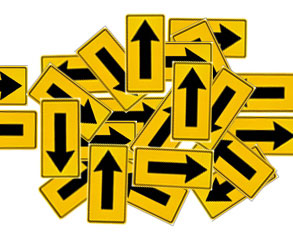

It’s rush hour, and I am standing at the corner of Zhuhui and Renmin Road, a four-lane intersection in Suzhou, China. Ignoring the red light, a couple of taxis and a dozen bicycles are headed straight for a huge mass of cyclists, cars, pedicabs and mopeds that are turning left in front of me. Cringing, I anticipate a collision. Like a flock of migrating birds, however, the mass changes formation. A space opens up, the taxis and bicycles move in, and hundreds of commuters continue down the street, unperturbed and fatality free.
In Suzhou, the traffic rules are simple. “There are no rules,” as one local told me. A city of 2.2 million people, Suzhou has 500,000 cars and 900,000 bicycles, not to mention hundreds of pedicabs, mopeds and assorted, quainter forms of transportation. Drivers of all modes pay little attention to the few traffic signals and weave wildly from one side of the street to another. Defying survival instincts, pedestrians have to barge between oncoming cars to cross the roads.
But here’s the catch: During the 10 days I spent in Suzhou last fall, I didn’t see a single accident. Really, not a single one. Nor was there any of the road rage one might expect given the anarchy that passes for traffic policy. And despite the obvious advantages that accrue to cars because of their size, no single transportation mode dominates the streets. On the contrary, the urban arterials are a communal mix of automobiles, cyclists, pedestrians, and small businesses such as inner-tube repairmen that set up shop directly in the right-of-way.
As the mother of two young children and an alternative-transportation advocate, I’ve spent the past decade supporting the installation of ever more traffic controls: crosswalks, traffic signals, speed bumps, and speed limit signs in school zones. But I’d only been in Suzhou a few days before I started thinking that maybe there’s a method to the city’s traffic madness — a logic that has nothing to do with the system of prohibition and segregation that governs transportation policy in the United States.
As it turns out, I’m far from the first person to think along these lines. In fact, the chaos associated with traffic in developing countries is becoming all the rage among a new wave of traffic engineers in mainland Europe and, more recently, in the United Kingdom. It’s called “second generation” traffic calming, a combination of traffic engineering and urban design that also draws heavily on the fields of behavioral psychology and — of all subjects — evolutionary biology. Rejecting the idea of separating people from vehicular traffic, it’s a concept that privileges multiplicity over homogeneity, disorder over order, and intrigue over certainty. In practice, it’s about dismantling barriers: between the road and the sidewalk, between cars, pedestrians and cyclists and, most controversially, between moving vehicles and children at play.
For the past 50 years, the American approach to traffic safety has been dominated by the “triple E” paradigm: engineering, enforcement and education. And yet, the idea of the street as a flexible community space is a provocative one in the United States, precisely because other “traditional” modes of transportation — light rail, streetcars and bicycles — are making a comeback in cities across the country. The shared-street concept is also intriguing for the way it challenges one of the fundamental tenets of American urban planning: that to create safe communities, you have to control them.
“One of the characteristics of a shared environment is that it appears chaotic, it appears very complex, and it demands a strong level of having your wits about you,” says U.K. traffic and urban design consultant Ben Hamilton-Baillie, speaking from his home in Bristol. “The history of traffic engineering is the effort to rationalize what appeared to be chaos,” he says. “Today, we have a better understanding that chaos can be productive.”
A few years ago, Hamilton-Baillie spent several months researching traffic and street design in northwest Europe, followed by a stint as a Loeb fellow at Harvard. A former researcher at Sustrans, a sustainable-transportation nonprofit agency, he has become a leading proponent of the shared-spaces and second-generation approach, which he says meets the needs of automobiles while returning streets to their historic function as civic gathering places.
But the implications, especially in the United States, are nothing less than radical. Reversing decades of conventional wisdom on traffic engineering, Hamilton-Baillie argues that the key to improving both safety and vehicular capacity is to remove traffic lights and other controls, such as stop signs and the white and yellow lines dividing streets into lanes. Without any clear right-of-way, he says, motorists are forced to slow down to safer speeds, make eye contact with pedestrians, cyclists and other drivers, and decide among themselves when it is safe to proceed.
“The more you post the evidence of legislative control, such as traffic signs, the less the driver is trying to use his or her own senses,” says Hamilton-Baillie, noting he has a habit of walking randomly across roads — much to his wife’s consternation. “So the less you can advertise the presence of the state in terms of authority, the more effective this approach can be.” This, of course, is the exact opposite of the “Triple E” traffic-calming approach, which seeks to control the driver through the use of speed bumps, photo radar, crosswalks and other engineering and enforcement mechanisms.
The “self-reading street” has its roots in the Dutch “woonerf” design principles that emerged in the 1970s. Blurring the boundary between street and sidewalk, woonerfs combine innovative paving, landscaping and other urban designs to allow for the integration of multiple functions in a single street, so that pedestrians, cyclists and children playing share the road with slow-moving cars. The pilot projects were so successful in fostering better urban environments that the ideas spread rapidly to Belgium, France, Denmark and Germany. In 1998, the British government adopted a “Home Zones” initiative — the woonerf equivalent — as part of its national transportation policy.
“What the early woonerf principles realized,” says Hamilton-Baillie, “was that there was a two-way interaction between people and traffic. It was a vicious or, rather, a virtuous circle: The busier the streets are, the safer they become. So once you drive people off the street, they become less safe.”
Contrast this approach with that of the United Kingdom and the United States, where education campaigns from the 1960s onward were based on maintaining a clear separation between the highway and the rest of the public realm. Children were trained to modify their behavior and, under pain of death, to stay out of the street. “But as soon as you emphasize separation of functions, you have a more dangerous environment,” says Hamilton-Baillie. “Because then the driver sees that he or she has priority. And the child who forgets for a moment and chases a ball across the street is a child in the wrong place.”
When it comes to reconfiguring streets as community spaces, ground zero is once again Holland and Denmark, where planners are removing traffic lights in some towns and cities, as well as white divider lines, sidewalks and speed limits. Research has shown that fatality rates at busy intersections, where two or three people were being killed every year, dropped to zero when controls and boundaries were taken away. (This is food for thought among alternative-transportation advocates in the United States, who extol northern Europe as a model precisely because so much space in these countries is dedicated to segregated pedestrian spaces and bike lanes.)
A photo of a reconstructed intersection, “the Brink,” in the Dutch province of Friesland, provides more design details. Until 1998, the Brink was a standard asphalt intersection with traffic controls and segregated spaces. Today, the entire area has been repaved with red bricks bordered by sections of green railing. A raised piazza juts into the middle of the intersection, but there are no sidewalks, road markings, or right-of-way signs. Every day, 4,500 cars share the space with cyclists and pedestrians who wander about “the road” at will.
Hamilton-Baillie recalls visiting “the Brink” with Hans Mondermann of the Friesland Regional Organization for Traffic Safety, a planner who has redesigned several intersections with second-generation ideas in mind. “I was amazed to hear him say, ‘Have you ever seen so many traffic violations?'” said Hamilton-Baillie. “‘No rules, no rules,’ he told me. ‘You have to think.'”
Subvert, don’t attack, the dominant paradigm. Or, as David Engwicht, a shared-spaces proponent in Brisbane, Australia, has written: “Implicit in the whole notion of second-generation traffic calming is the idea that significant social change only happens when we amplify the paradoxical ‘submerged voice’ as opposed to tearing down the ‘dominant voice.’ Engwicht, a plenary speaker at the Walk 21 Cities for People Conference in Copenhagen this June, argues that controlling a driver’s natural propensity for speed is futile. A more effective approach is to engage the driver by emphasizing “uncertainty and intrigue” in the street environment — for example, planting a tree in the middle of the street instead of putting up a stop sign.
“Standardized signage and use of standardized road markings should be reduced to a minimum,” Engwicht writes. “As they create predictability and contain no intrigue. They also reinforce that a street belongs exclusively to the motorists.”
There’s another step in the second-generation logic process. Safety analysts have known for several decades that the maximum vehicle speed at which pedestrians can escape severe injury upon impact is just under 20 miles per hour. Research also suggests that an individual’s ability to interact and retain eye contact with other human beings diminishes rapidly at speeds greater than 20 miles per hour. One theory behind this magic bullet, says Hamilton-Baillie, is that 20 mph is the “maximum theoretical running speed” for human beings. (Evolutionary biologist E.O. Wilson has drawn similar conclusions.) “This is of interest,” he says, “because it suggests that our physiology and psychology has evolved based around the potential maximum impact on the speed of human beings.”
The ramifications go beyond safety, says Hamilton-Baillie, to bear directly on the interplay between speed, traffic controls and vehicle capacity. Evidence from countries and cities that have introduced a design speed of 30 kilometers per hour (about 18.5 mph) — as many of the European Union nations are doing — shows that slower speeds improve traffic flow and reduce congestion.
“This surprises many people, although mathematically it’s not surprising,” Hamilton-Baillie says. “The reason for this is that your speed of journey, the ability of traffic to move smoothly through the built environment, depends on performance of your intersections, not on your speed of flow between intersections.” And intersections, he says, work much more efficiently at lower speeds. “At 30 miles per hour, you frequently need control systems like traffic signals, which themselves mean that the intersection is not in use for significant periods of time. Whereas at slower speeds vehicles can move much more closely together and drivers can use eye contact to engage and make decisions. So you get much higher capacity.”
Combining slower speeds with a reduction in traffic controls, in other words, may have more than public safety and shared-space benefits. It also appears to profit the driver. (This is the logic behind the modern roundabout, a redesigned version of the classic traffic circle that is replacing signalized intersections in the United Kingdom and is gaining acceptance among transportation officials in the United States).
“You can see this is the way to break out of the pro-car, anti-car debate,” Hamilton-Baillie says. “Because the shared approach very much accepts the car as a vital useful component in cities that will remain with us for some generations to come.”
Let’s return to China for a minute. If traffic in the world’s most populous country provides a useful comparison and contrast, it’s because second-generation traffic calming isn’t about anarchy; it’s about studied anarchy. In essence, Hamilton-Baillie is advocating for a new field: one that blends traffic engineering with urban design. Or, as he titled an upcoming paper: “Urban Design: Why Don’t We Do It in the Road?” There’s a place for highways and roads dedicated solely to the movement of automobiles, he says. Just not in the city, where streets constitute 70 percent of all public space.
“You have to have a completely different approach to the design of streets in the broad urban realm,” he says. “You have to make an absolutely clear transition between those roads that are necessary, the state-controlled and legislative world of the traffic environment, to the human-controlled, culturally controlled world of the city, where you pick up your rules not from what you’re allowed to do, but from a much more subtle and complex series of codes that are implicit through design and environment.”
“If I walk into your living room, I do not need a sign that says, Do Not Spit on the Floor,” he explains. “Indeed, if there were such a sign, it would probably be counterproductive.”
Over the last few years, the shared-street concept has emigrated out of mainland Europe to the United Kingdom. In addition to home zones, which are cropping up in isolated residential developments, the city of Manchester is currently reconfiguring a major section of its central core according to shared-space principles. Hamilton-Baillie himself is working a project that he says is the first in the country to bring together all the elements of second-generation traffic calming: removing the road markings from a road that runs past a primary school in the city of Bath. It’s a project, he says, that capitalizes on the area’s “rich urban morphology” — St. James Square, the school and a historic church — to “create a series of places rather than a single highway.”
In the United States, as one might expect, policymakers haven’t exactly embraced the virtues of ambiguity and uncertainty embodied in second-generation principles. “Woonerfs are certainly being planned on private property,” says James Daisa, a project manager at Kimley-Horn Associates and a national expert on pedestrian-friendly development. “But the concept has yet to come to bear on public streets.” City codes are part of the problem, he says. The reluctance of traffic engineers is another.
Consider the case of Brookline, Mass., which installed a woonerf in front of a Marriott Hotel last January. A patchwork of brick pavings, the shared-space lacks big curbs, and the sidewalk and street are all at the same level. But as reporter Anthony Flint noted in the Boston Globe, the public works department botched the entire concept by painting white lines and big right-turn arrows on the street, and placing yellow-and-black-striped rectangles on the landscaped “bump-outs.”
“It’s clear that advocates and private developers aren’t sufficient to bring about a true woonerf,” wrote Flint. “The traffic engineers need to be in the room, and they need to understand the concept. A fact-finding trip to the Netherlands may be in order.”
For their part, many American traffic engineers say one critical ingredient is missing for a system built around shared spaces to work in the United States: a communal sensibility. “We live in a culture that gives so much value to the individual and the expression of that is how we act in a car,” says Robert Burchfield, a city traffic engineer in my home town of Portland, Ore., which is nationally recognized for its preservation of public space and its dedicated network of cycling lanes and pedestrian pathways. “I’m not comfortable with less order when I can’t get people to go below 50 or 60 miles per hour.”
But this, of course, is precisely the point; redesign the street environment as an active community space, and you equalize the power relationship between cars and human beings “The real gain in urban quality does not come from clawing back areas of the city from cars, as important as that is,” said Hamilton-Baillie, who gave a talk at the Portland Department of Transportation last fall. “But the next step is how you apply a broader approach to those areas where you need cars and trucks, bicycles and shops, and pedestrians and children’s play, all those different functions to take place in precious urban space.”
Even if we’re not ready to send our children merrily into the street, many of us, intuitively, have already embraced the concepts behind second-generation traffic calming. Like most other parents, I’ve drilled into my kids the fact that traffic lights and signs work for cars, but don’t necessarily serve pedestrians who want to make it across the street in one piece. “Look left, look right, look left again,” I preach ad nauseum — even when the walk signal is green. And who can resist the symbolism associated with recapturing the street for the (teeming) masses? It’s not quite the fall of the Berlin Wall, but the shared-space approach overturns the landmarks of sedentary isolation — everything from gated communities to skyrocketing childhood obesity rates — to celebrate the complexity and contradictions of city life.
The absence of traffic controls means that people are out for themselves; the trick is, they have to look out for everyone else as well. Second-generation traffic design is a curious mix of selfishness and altruism, of order amid chaos. And, after a fashion, it just might work.
