Iraq war
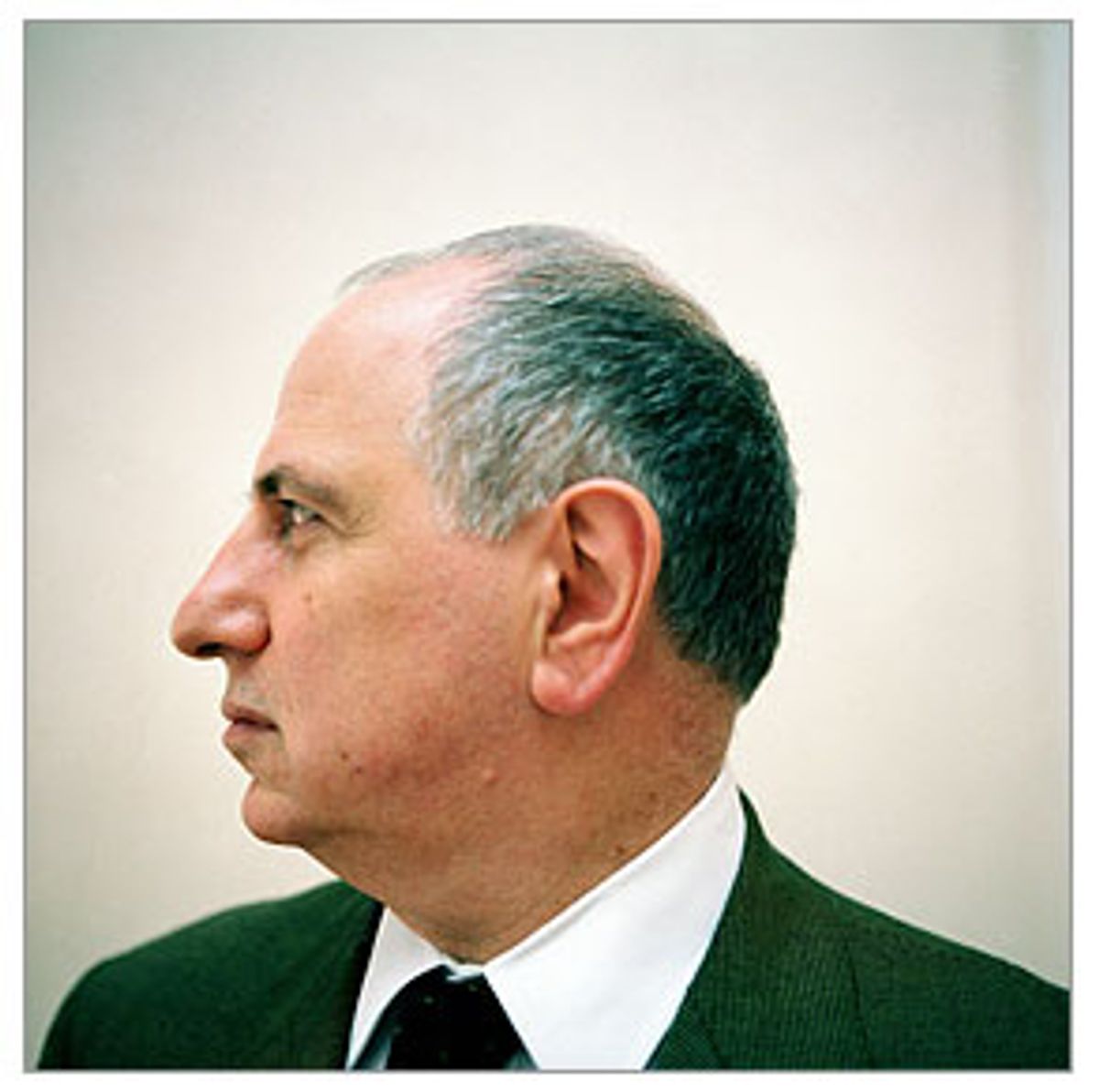
Washington’s Chalabi nightmare
One more headache for the besieged Bush administration: The FBI is now interrogating the neocon cronies of Ahmed Chalabi.
At a well-appointed conservative think tank in downtown Washington and across the Potomac River at the Pentagon, FBI agents have begun paying quiet calls on prominent neoconservatives, who are being interviewed in an investigation of potential espionage, according to intelligence sources. Who gave Ahmed Chalabi classified information about the plans of the U.S. government and military?
The Iraqi neocon favorite, tipped to lead his liberated country post-invasion, has been identified by the CIA and Defense Intelligence Agency as an Iranian double agent, passing secrets to that citadel of the “axis of evil” for decades. All the while the neocons cosseted, promoted and arranged for more than $30 million in Pentagon payments to the George Washington manqué of Iraq. In return, he fed them a steady diet of disinformation, and in the run-up to the war he sent various exiles to nine nations’ intelligence agencies to spread falsehoods about weapons of mass destruction. If the administration had wanted other material to provide a rationale for invasion, no doubt that would have been fabricated. Either Chalabi perpetrated the greatest con since the Trojan horse or he was the agent of influence for the most successful intelligence operation conducted by Iran, or both.
The CIA and other U.S. agencies had long ago decided that Chalabi was a charlatan, so their dismissive and correct analysis of his lies prompted their suppression by the Bush White House. In place of the normal channels of intelligence vetting, a jury-rigged system was hastily constructed, running from the office of the vice president to the newly created Office of Special Plans inside the Pentagon, staffed by fervent neocons. CIA Director George Tenet, possessed with the survival instinct of the inveterate staffer, ceased protecting the sanctity of his agency and cast in his lot with Cheney et al. Secretary of State Colin Powell, resistant internally but eventually overcome, decided to become the most ardent champion, unveiling a series of neatly manufactured lies before the United Nations. Last week Powell declared, “It turned out that the sourcing was inaccurate and wrong and, in some cases, deliberately misleading. And for that I’m disappointed, and I regret it.” But who had “deliberately” misled him? He did not say. Now the FBI is investigating espionage, fraud and by implication treason.
A former staff member of the Office of Special Plans and a currently serving defense official, two of those said to be questioned by the FBI, are considered witnesses, at least for now. Higher figures are under suspicion. Were they witting or unwitting? If those who are being questioned turn out to be misleading, they can be charged ultimately with perjury and obstruction of justice. For them, the Watergate principle applies: It’s not the crime, it’s the coverup.
The espionage investigation into the neocons’ relationship with Chalabi is only one of the proliferating inquiries engulfing the Bush administration. In his speech to the Army War College on May 24, President Bush blamed the Abu Ghraib torture scandal on “a few American troops.” In other words, there was no chain of command. But Secretary of Defense Donald Rumsfeld approved a secretive policy calling for the use of harsh interrogation techniques in Iraq that had previously been used by the U.S. military on al-Qaida suspects in Afghanistan. The U.S. commander in Iraq, Lt. Gen. Ricardo Sanchez, reportedly briefed on the torture, has been summarily relieved without another posting. (There goes the Hispanic vote.)
The trials and investigations surrounding Abu Ghraib raise the question of whether it was an extension of the far-flung gulag, built after Sept. 11, that has been operating outside the Geneva Conventions. Documents have surfaced showing that the office of legal counsel in the Justice Department created the rationale for breaking out of the Geneva Conventions. Those memos were reflected in a memo to the president from the White House legal counsel, Alberto Gonzales, calling the conventions “quaint.” Such memos are not spontaneously generated, autonomous pieces of paper, but produced as part of an elaborate process that almost certainly involves in the end a presidential finding: that is, a signed directive authorizing special operations or secret action. Will the Senate Armed Services Committee, which is investigating, now demand to see that finding, establishing the president as having approved the policy?
The fallout from the Chalabi affair has also implicated the nation’s newspaper of record, the New York Times, which published on Wednesday an apology for running numerous stories containing disinformation that emanated from Chalabi and those in the Bush administration funneling his fabrications. The Washington Post, which published editorials and several columnists trumpeting Chalabi’s talking points, has yet to acknowledge the extent to which it was deceived.
Washington, which was just weeks ago in the grip of neoconservative orthodoxy and absolute belief in Bush’s inevitability and righteousness, is now in the throes of agonizing events and being ripped apart by investigations. Things fall apart; all that was hidden is revealed; all sacred exposed as profane: the military, loyal and lumbering, betrayed and embittered; the general in the field, Lt. Gen. Sanchez, disgraced and cashiered; and the most respected retired generals training their artillery on those who have ill-used the troops, still dying in the field; the intelligence agencies, a nautilus of chambers, abused and angry, its retired operatives plying their craft with the press corps, seeping dangerous truths; the press, hesitatingly and wobbly, investigating its own falsehoods; the neocons, publicly redoubling their passionate intensity, defending their hero and deceiver Chalabi, privately squabbling, anxiously awaiting the footsteps of FBI agents; Colin Powell, once the most acclaimed man in America, embarked on an endless quest to restore his reputation, damaged above all by his failure of nerve; everyone in the line of fire motioning toward the chain of command, spiraling upward and sideways, until the finger pointing in a phalanx is directed at the hollow crown.
Sidney Blumenthal, a former assistant and senior advisor to President Clinton, writes a column for Salon and the Guardian of London. His new book is titled "How Bush Rules: Chronicles of a Radical Regime." He is a senior fellow at the New York University Center on Law and Security. More Sidney Blumenthal.
America’s real Hunger Games
Young people are already being sacrificed at the whims of the 1%. Just look at Iraq and Afghanistan
U.S. Army soldiers respond after a suicide attack on the US..-led provincial reconstruction team (PRT) compound in the Behsood district of Jalalabad, east of Kabul Afghanistan, on Sunday, April 15, 15 2012. (Credit: AP Phot/Rahmat Gul) When I was growing up, I ate books for breakfast, lunch and dinner, and since I was constantly running out of reading material, I read everyone else’s — which for a girl with older brothers meant science fiction. The books were supposed to be about the future, but they always turned out to be very much about this very moment.
Some of them — Robert Heinlein’s “Stranger in a Strange Land” — were comically of their time: that novel’s vision of the good life seemed to owe an awful lot to the Playboy Mansion in its prime, only with telepathy and being nice added in. Frank Herbert’s “Dune” had similarly sixties social mores, but its vision of an intergalactic world of disciplined desert jihadis and a great game for the substance that made all long-distance transit possible is even more relevant now. Think: drug cartels meet the oil industry in the deep desert.
Continue Reading CloseRebecca Solnit grew up in California public libraries and is thrilled to be revisiting them all over the state as part of the Cal Humanities California Reads project, which is now featuring five books, including her A Paradise Built in Hell: The Extraordinary Communities That Arise in Disaster. More Rebecca Solnit.
Neocons’ new lie
You thought they were gone, but now they're popping up to claim that Iraq inspired the Arab Spring
Dick Cheney, left, and Elliott Abrams (Credit: AP/Pablo Martinez Monsivais) The rulebook for conservative punditry is straightforward. Push for a policy. When it turns into a disaster, defend it. When the defense becomes untenable, ignore it. Finally, when something unrelated but positive occurs, take credit for it.
The newest conservative myth is that the upheavals in the Middle East — called the Arab Spring but occurring too in non-Arab countries like Iran — are a result of the Iraq War. The “freedom” that George W. Bush brought to Iraq had a domino effect on other countries in the region, the argument goes. Neocon Robert Kagan told Salon recently that “there were repeated free elections in Iraq and that undoubtedly had some effect on how neighboring people views their government.” Said Kagan: “I think Egyptians said. ‘If the Iraqis can have elections, why can’t we have elections?’”
Continue Reading CloseJordan Michael Smith writes about U.S. foreign policy for Salon. He has written for the New York Times, Boston Globe and Washington Post. More Jordan Michael Smith.
“War crime” delusions
A WikiLeaks video of an Iraq war massacre raises questions about international laws governing armed conflict
Still of Namir Noor-Eldeen, a 22-year-old war photographer, from WikiLeaks' Collateral Murder video Anyone who would like to witness a vivid example of modern warfare that adheres to the laws of war — that corpus of regulations developed painstakingly over centuries by jurists, humanitarians, and soldiers, a body of rules that is now an essential, institutionalized part of the U.S. armed forces and indeed all modern militaries — should simply click here and watch the video.
Wait a minute: that’s the WikiLeaks “Collateral Murder” video! The gunsight view of an Apache helicopter opening fire from half a mile high on a crowd of Iraqis — a few armed men, but mostly unarmed civilians, including a couple of Reuters employees — as they unsuspectingly walked the streets of a Baghdad suburb one July day in 2007.
Continue Reading CloseChase Madar, is a lawyer in New York, a contributor to the London Review of Books and Le Monde diplomatique and the author of a new book, The Passion of Bradley Manning (OR Books). More Chase Madar.
Our real Iraq losses
We left their nation in turmoil and our own country entangled in an endless "national security" nightmare
A man, left, inspects his destroyed vehicle at the scene of a car bomb attack in Ramadi, 70 miles (115 kilometers) west of Baghdad, Iraq, Tuesday, March 20, 2012. Officials say attacks across Iraq have killed and wounded scores of people in a spate of violence that was dreaded in the days before Baghdad hosts the Arab world's top leaders. (AP Photo) (Credit: AP) People ask the question in various ways, sometimes hesitantly, often via a long digression, but my answer is always the same: no regrets.
In some 24 years of government service, I experienced my share of dissonance when it came to what was said in public and what the government did behind the public’s back. In most cases, the gap was filled with scared little men and women, and what was left unsaid just hid the mistakes and flaws of those anonymous functionaries.
What I saw while serving the State Department at a forward operating base in Iraq was, however, different. There, the space between what we were doing (the eye-watering waste and mismanagement), and what we were saying (the endless claims of success and progress), was filled with numb soldiers and devastated Iraqis, not scaredy-cat bureaucrats.
Continue Reading ClosePeter Van Buren spent a year in Iraq as a State Department Foreign Service Officer serving as Team Leader for two Provincial Reconstruction Teams (PRTs). Now in Washington, he writes about Iraq and the Middle East at his blog, We Meant Well. His book, We Meant Well: How I Helped Lose the Battle for the Hearts and Minds of the Iraqi People (The American Empire Project, Metropolitan Books), will be published this September. More Peter Van Buren.
He was our eyes
The tragic death of Anthony Shadid has made the world a little darker
The late Anthony Shadid I was stunned and saddened to learn of the death of Anthony Shadid, the great New York Times reporter who covered the Middle East. Shadid was quite simply the best mainstream reporter working the most important foreign beat in the world. From his superb coverage of Iraq to his groundbreaking reporting on the Arab Spring, he set the journalistic standard. Shadid’s profound knowledge of the Arab world, his even-handedness, his historical sophistication, and above all his empathy for the ordinary people he wrote about, made him indispensable.
Continue Reading CloseGary Kamiya is a Salon contributing writer. More Gary Kamiya.
Page 1 of 299 in Iraq war