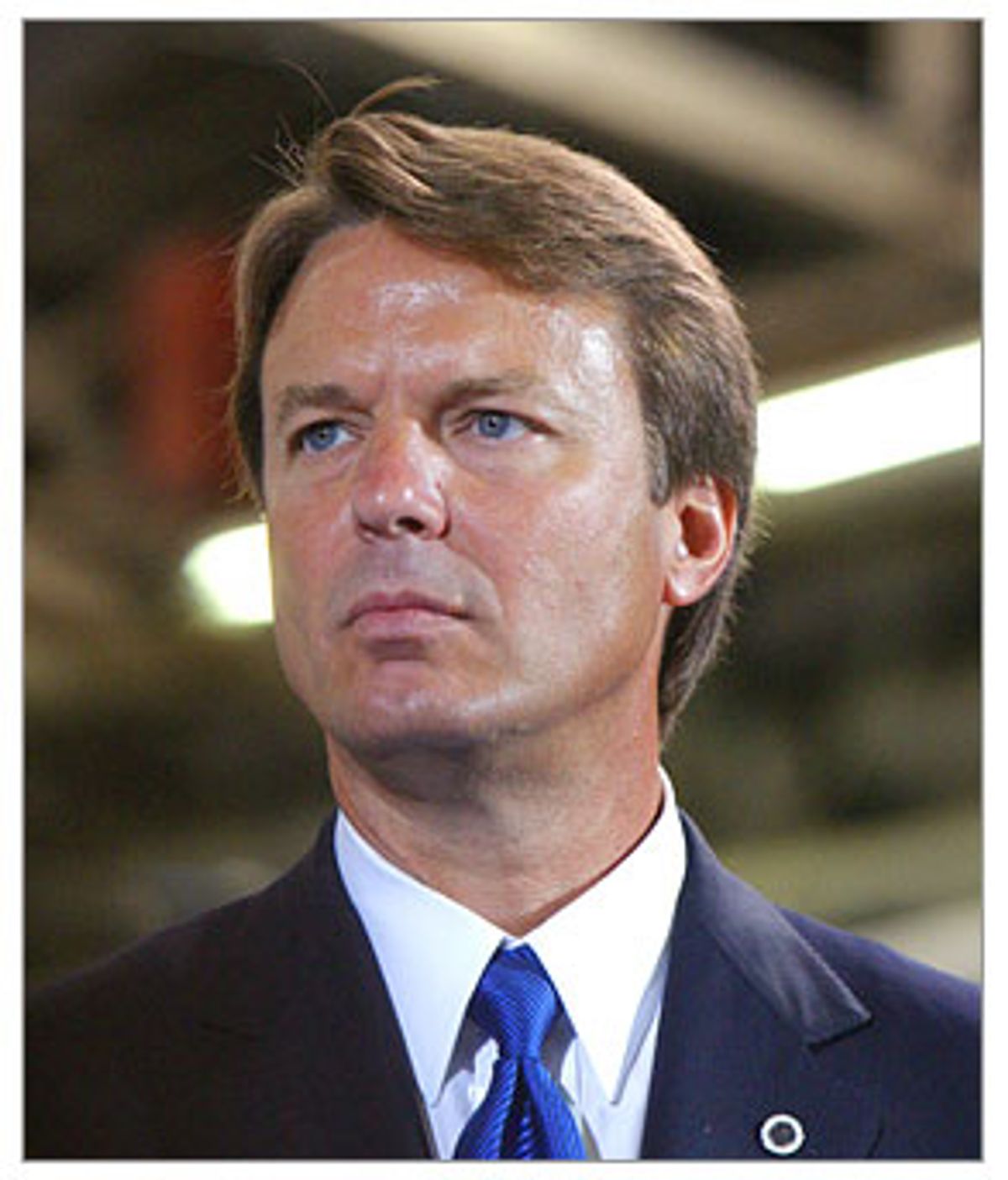
On a summer evening in 1993, David Lakey took his little girl swimming at a recreation center in Raleigh, N.C. Valerie Lakey was 5 years old, a good swimmer, and she and her friends liked to splash around in the children's wading pool that stayed open a little later than the big pool where they usually swam.
That's what Valerie was doing when a nearby mom heard her call out for help. Valerie was sitting on the bottom of the shallow pool, and the suction from the drain was holding her down. David Lakey raced to free his daughter but couldn't. Other parents jumped in the water to help, but they couldn't get Valerie loose. Valerie was scared, and she began to say that her stomach hurt.
Time passed, and somebody figured out how to turn off the pool's pump. The suction broke, and Valerie was released from its grip. But as David Lakey pulled his daughter from the water, blood and tissue filled the pool. Valerie's intestines had been sucked out.
David Lakey slumped to the ground on the side of the pool. He held his daughter on his chest, praying as they waited for an ambulance. Over and over, he told Valerie, "Daddy loves you. Daddy loves you. Daddy loves you."
This account of what happened to Valerie Lakey comes from "Four Trials," the book John Edwards wrote last year as he prepared to run for the presidency. Edwards represented Valerie in a lawsuit against the company that made the drain cover in that swimming pool. A jury awarded her $25 million, compensation for a life of intravenous feedings and colostomy bags.
Tucker Carlson has heard about Valerie's case. It's the one, apparently, that causes him to dismiss John Edwards as a "personal-injury lawyer specializing in Jacuzzi cases."
For six years now, Republicans have tried to minimize and demonize John Edwards as the worst kind of societal parasite: a personal-injury lawyer. North Carolina Sen. Lauch Faircloth ran anti-lawyer TV spots when Edwards ran against him in 1998. When Edwards began pondering a presidential campaign, then-White House spokesman Ari Fleischer was quoted as saying, "Bring on the ambulance chaser."
And now that Edwards is officially on the Democratic ticket -- or will be, when the Democrats get to Boston later this month -- the anti-attorney attack has exploded with a new intensity. Minutes after John Kerry announced that Edwards would be his running mate, the Republican National Committee launched an opposition research site that catalogs Edwards' many sins. Chief among them: He is a "personal injury trial lawyer" and a "friend to personal injury trial lawyers" with little experience in government because "politics took a back seat to [his] legal career."
It's an odd argument coming from the Republicans -- remember 2000, when they ran George W. Bush as the businessman's alternative to that "career politician" Al Gore? -- but they see some advantage in it. Bush himself jumped on the bandwagon late last week. "You cannot be pro-small business and pro-trial lawyer at the same time," he said at a campaign stop in York, Pa. "You have to choose. My opponent has made his choice, and he put him on the ticket."
By portraying John Edwards as an ambulance-chasing, playground-closing personal-injury lawyer, the Bush-Cheney team hopes to turn off swing voters who might otherwise be attracted to Edwards' populist image while simultaneously shoring up Bush's support from big business. As a spokesman for the National Association of Manufacturers told the New York Times last week, "Trial lawyers are the pariahs of the business community, which is more frightened by them than terrorists, China or higher energy prices."
But there's a problem for the Republicans: Lawyers like John Edwards, and clients like Valerie Lakey. The GOP and its allies in business and the media can articulate broad economic policy reasons for tort reform, for cracking down on lawyers who file frivolous lawsuits, for reining in the forum shopping and other abuses that sometimes accompany big class-action lawsuits. But it's tough to pin any of those problems on Edwards -- no one has charged that he filed frivolous lawsuits -- and it's hard to trump stories like Valerie Lakey's with statistics about what Republicans call the "tort tax."
Edwards practiced law in North Carolina for nearly two decades. He spent the first two years of his legal career as a junior associate in a law firm that represented corporate defendants, then moved on to the plaintiff's work for which he became famous. He represented children who developed cerebral palsy in lawsuits against their mothers' doctors and hospitals; a woman who underwent a double mastectomy based on a false diagnosis of cancer; he represented a child whose parents were killed when their car was smashed by a big rig; he represented Valerie Lakey.
"The Republicans want to put Edwards out there as a 'trial lawyer,' but I don't think it cuts deeply as an issue because he's not your stereotypical, caricaturable ambulance chaser," says Ferrel Guillory, director of the University of North Carolina's Program on Southern Politics, Media and Public Life. "The kind of clients that Edwards represented are everyday folks, folks like you and me, people who feel aggrieved by powerful forces out there, whether it's an HMO or a hospital or something else."
Mike Dayton, who watched Edwards' career while working as the editor of the North Carolina Lawyers Weekly, said that Edwards' clients "were almost to a person these catastrophically injured or killed plaintiffs. They're certainly sympathetic in their own right, and it's hard not to feel the pain of those people and want to do right by them."
Not surprisingly, the Republicans have generally steered clear of discussion about the clients Edwards represented. It's easy to make hay over million-dollar recoveries for spilled coffee at McDonald's -- especially if you ignore the fact that the woman who spilled the coffee was seriously injured, that McDonald's refused an offer to settle the case for $20,000, and that a judge later reduced the jury's award of $2.7 million in punitive damages to just $480,000. It's harder to say much -- at least, not without sounding as crass as Tucker Carlson -- about the sort of cases Edwards handled.
Former House Majority Leader Dick Armey, who now heads a conservative anti-tax group called Citizens for a Sound Economy, issued a statement last week in which he said Edwards represents a "well-connected swarm of trial lawyers who twist our legal system to pillage the productive sector for personal gain." But when asked whether CSE had evidence that Edwards had actually engaged in wrongdoing as a lawyer -- whether he had brought frivolous lawsuits, engaged in inappropriate forum shopping or committed any of the other abuses of which some lawyers stand accused -- CSE spokesman Chris Kinnan said no. "I haven't fully looked into that," he said. "Our focus has been on policy, and we wouldn't get involved in his personal history."
Walter Olson, a senior fellow at the Manhattan Institute who wrote "The Rule of Lawyers" and blogs at Overlawyered.com, said he has questions about the scientific underpinnings for some of Edwards' victories, particularly those in the cerebral palsy cases. Stuart Taylor raised some of those questions in a National Journal commentary on "Four Trials" in February, and Olson hopes that the media will take a "closer look" at them now.
Unless that happens -- unless, that is, someone comes up with evidence that Edwards went beyond the realm of zealous advocacy in representing his clients -- the Republican attacks on Edwards as trial lawyer will manifest themselves in two ways: Edwards got rich from representing his clients and therefore can't really be a populist, and Edwards has received millions of dollars in campaign contributions from other trial lawyers and therefore can't be trusted to carry out anything but their own economy-killing agenda.
It's true that Edwards got rich, and fellow trial lawyers have been generous; what can be made of these facts is a different question.
According to a Washington Post analysis based on data from Dayton's paper, Edwards obtained for his clients $175 million in settlements and verdicts over the course of just 15 years. While Edwards, like most attorneys, won't discuss his fee arrangements with his clients, plaintiffs' lawyers generally take cases on a contingency-fee basis. If the client loses, the lawyer charges nothing and covers the costs associated with the case. But if the client recovers money, either through a verdict or a settlement, the lawyer typically keeps approximately one-third, plus reimbursement for the costs he has fronted.
The Bush-Cheney team, with the help of a compliant media, has already made much of Kerry's wealth, and Edwards' fortune -- while less than Cheney's and probably on par with Bush's -- adds fuel to that fire. And while the GOP apparently has no issue with the fact that Cheney made millions in his revolving-door stint at Halliburton and that Bush made much of his money through a sweetheart deal involving his share of baseball's Texas Rangers, Republicans seem to see something unseemly about Edwards making money as a lawyer.
In its list of Edwards' shortcomings, the Republican National Committee notes that "Edwards garnered more than $175 million" for his clients and became rich as a result.
And there's Tucker Carlson again, this time on a "Crossfire" episode last week: "My question is a very, very simple one. And I just want your honest answer. If [Edwards] is out to protect the weak, say, a little girl who was injured, terribly injured, in this Jacuzzi accident, why is it compassionate for him to take tens of millions of dollars of her settlement? Why doesn't he give that money back if he cares for the little girl?"
Of course, Edwards didn't take "tens of millions of dollars" of Valerie Lakey's settlement. After Edwards showed that the pool-drain company knew that people had been injured before by its product, that the product could have been made safe by the use of two inexpensive screws, and that the company had thought about including a written warning with the product but didn't do so -- and after the company's insurers rejected an offer to settle for $4.1 million -- a jury ordered the company to pay Valerie Lakey $25 million, and the parties settled on that amount. Edwards' law firm received about a third -- or roughly $8 million -- plus a million or so more as its share of settlements with other defendants in the case. A total of $10 million, maybe, but certainly not "tens of millions" as Carlson alleged.
Moreover, while Edwards' firm may not have "given back" its one-third to Lakey, Edwards and his former firm have contributed generously -- and continue to do so -- to causes that help children, among them the foundation Edwards and his wife, Elizabeth, formed after their 16-year-old son, Wade, was killed in a car accident.
And then there's Carlson's larger point, that Edwards would give the money back if he really cared about the little girl. Bush could have given his buyout back to the Texas Rangers if he really cared about the team. Cheney could have given his pension back to Halliburton if he really cared about the company. The Rangers might have been able to hold onto Alex Rodriguez, and Halliburton might have been able to charge the military less for gasoline in Iraq. No one suggests that businessmen like Cheney or Bush should work for free. But to undercut Edwards' populist image, the Republicans suggest that Edwards should have done just that.
Guillory, the University of North Carolina professor, explains the focus on Edwards' trial-lawyer millions: "Republicans, in the South particularly, campaign on the basis of a cultural affinity with the voters, particularly the white male voters, while the Democratic appeal to these people is on economic issues. By depicting Kerry and Edwards as rich guys, the Republicans are just being analytical about it. They want to say, 'While Edwards may be culturally connected to you, he's not genuine in his economic connection to you.' It's a way to diminish or crack the Democratic economic appeal."
Arguments about Edwards' campaign contributions from trial lawyers are aimed at a different audience: big business, insurers and those who work in the medical field.
According to the Center for Responsive Politics, Edwards raised $9.3 million from lawyers and other law firm employees during his run for the presidency. Lawyers and law firm employees have given an almost identical amount --- $9.2 million -- to Bush in his bid for reelection. But there are differences. The $9.3 million Edwards received from lawyers and law firm employees represents approximately one-third of his total; the $9.2 million Bush received represents a much smaller percentage of his overall take. Lawyers and law firm employees were the biggest contributors to the Edwards campaign, giving over 10 times more than the next closest identifiable "sector." Lawyer and law firm employees were the second biggest contributors to the Bush campaign -- retirees are the biggest -- followed by the real estate and investment industries, which gave Bush similar amounts.
The other difference, of course, is in the type of lawyer who gives. Edwards' biggest legal contributors work at law firms mostly or represent plaintiffs exclusively. Bush's biggest legal contributors are affiliated with Blank Rome, a Philadelphia-based firm that boasts of handling "significant matters and transactions for a large number of Fortune 500 companies," and Vinson & Elkins, the Houston-based firm whose biggest client used to be Enron.
"The Bush-Cheney folks love lawyers," says Carlton Carl, spokesman for the American Trial Lawyers Association. "They love lawyers who represent Enron and Firestone and the tobacco industry. The lawyers they don't like are the lawyers who represent people who are injured through no fault of their own."
That's not entirely true; the White House is backing former Housing and Urban Development Secretary Mel Martinez in the Republican primary for a U.S. Senate seat in Florida; Martinez, like Edwards, is a millionaire trial lawyer. Martinez's rival for the Republican Senate nomination, former Florida Rep. Bill McCollum, is already warning that his party can't have it both ways: He told the St. Petersburg Times that supporting Martinez while running against Edwards amounts to "sending blatantly mixed signals" that "would be bad politics and potentially damaging to the president."
The Martinez factor may limit the mileage Bush can get out of the "trial lawyer" tag in the critical swing state of Florida. And nationwide, it's not at all clear that the tactic will be useful with average voters. In an NBC News poll released last week, 69 percent of registered voters said that Edwards' trial-lawyer past wouldn't influence their vote one way or another, and another 14 percent said it would actually make them more likely to vote for him.
Bush plainly understands that his anti-trial-lawyer posture plays a lot better with his big business supporters than it does with voters. The tension has caused him to flip-flop. He opposed a patients' bill of rights in Texas, vetoed it when it was passed, then -- faced with a veto-proof majority in the Texas Legislature -- let it become law without his signature. He then took credit for the patients' bill of rights while running for president, only to have his Justice Department challenge it in the U.S. Supreme Court.
"It's a triple flip-flop," Carl says. Carl says Bush is trapped: Voters want the right to sue their HMOs, they want to be able to hold corporations accountable for their misdeeds, and they don't see tort reform as a priority on par with the war in Iraq, terrorism, healthcare costs or the economy. Putting caps on damage awards, cracking down on forum shopping -- "these things aren't on most people's minds," Carl says.
But these things are very much on the minds of Bush's biggest corporate supporters. The U.S. Chamber of Commerce, which has ostensibly remained neutral in presidential campaigns, may endorse Bush in order to fight off Edwards. Meanwhile, the American Tort Reform Association, a trade group funded in large part by insurance companies, is doing what it can to keep Edwards away from the White House. During the Democratic primaries, the association launched an Edwards watch site that characterizes the candidate as a "wealthy personal injury lawyer whose agenda is controlled by a handful of 'Learjet Lawyers' whose litigation-driven agenda is bad for America's consumers, taxpayers, and patients."
Olson, of the Manhattan Institute, says that the business community is hearing the call. "The business involvement [in the campaign] is being announced in a remarkably combative way," he said. "The phrase I keep hearing about Edwards is, 'This means war.'"
The war has already begun on Capitol Hill, where the parties have fought bitterly over class-action reform this session. The class-action legislation stalled in the Senate, meaning the issue is alive only as campaign fodder this year. Meanwhile, House Majority Leader Tom DeLay is already planning a "lawsuit abuse week" that will underscore Edwards' trial lawyer past.
How it all plays will depend on the image of Edwards that ultimately prevails. If the Republicans can paint Edwards as an ambulance chaser -- just as they have marked Kerry as a "flip-flopper" -- then the Democrats' hurdles grow a little higher. But if voters looking at Edwards can see in him the face of Valerie Lakey, then George Bush may need a team of lawyers all over again if he hopes to stay in the White House.
Shares