FISA
Lawsuit against Bush?
The attorney for the only known target of NSA eavesdropping says his client would be happy to sue the president.
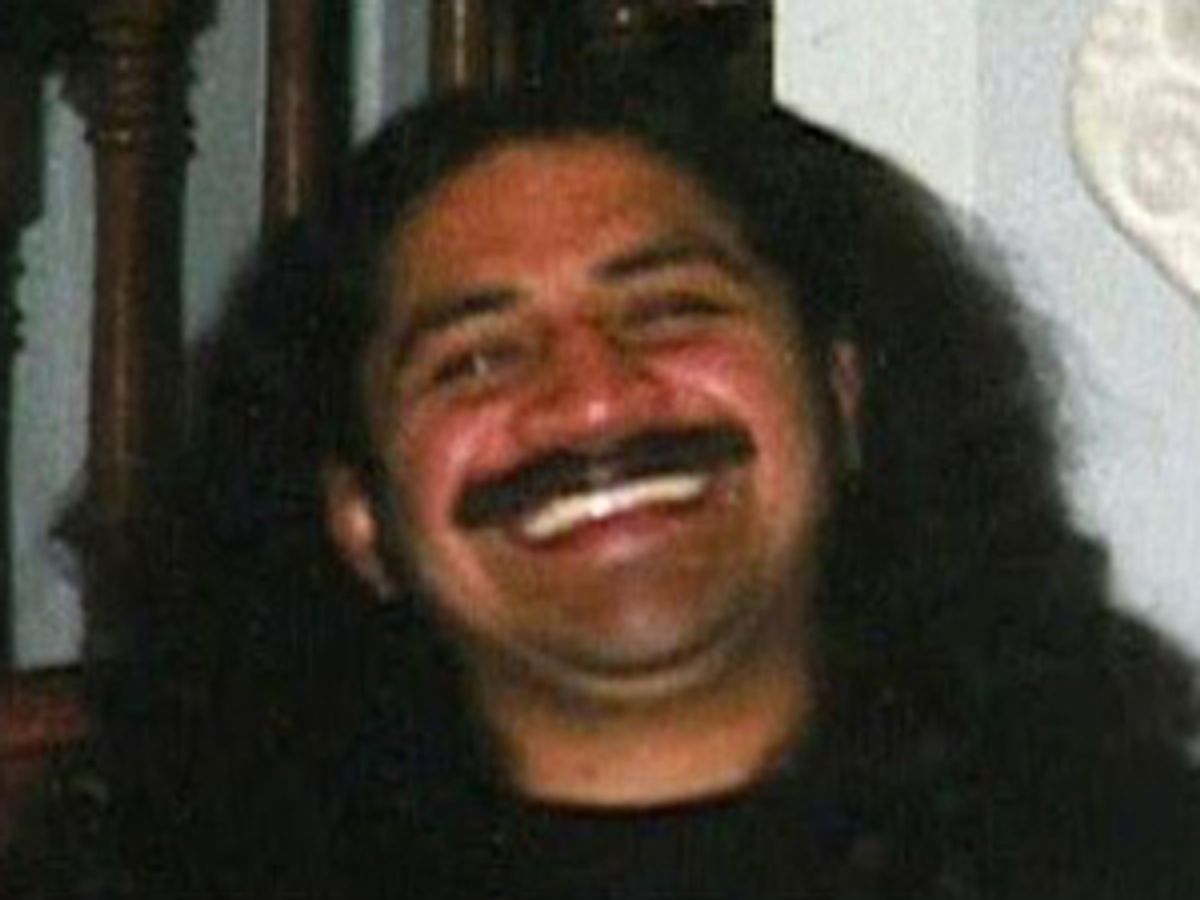
Iyman Faris, the only named American target of the National Security Agency’s secret warrantless wiretap program, will consider a lawsuit against the president of the United States, according to his criminal defense attorney, David Smith.
“I am sure he would be delighted to sue President Bush,” said Smith, of the law firm English & Smith in Alexandria, Va., who is representing Faris in his criminal appeals. “He may be the only person in the country who can.”
To accomplish this goal, Smith has issued an all points bulletin for civil liberties attorneys and constitutional scholars interested in taking up his client’s case. “If some lawyer would like to sue on behalf of Faris, I would be happy to introduce them,” Smith told Salon Thursday evening. “I’ve got the man here.”
The offer comes at a time of concern among civil liberties attorneys, who worry that the courts may never get a chance to adjudicate the legality of President Bush’s secret wiretap program. “Courts don’t like to hear hypothetical matters,” said Barry Steinhardt, director of the ACLU’s Technology and Liberty program, who has been preparing for a court battle. “There has to be a real plaintiff with a real injury.”
Last week, the New York Times quoted several officials who claimed that Faris was caught with the help of warrantless wiretaps, making him one of only a few routes to challenging the legality of President Bush’s program. The president could also face criminal charges from a special prosecutor, an unlikely scenario in the current political climate. Under the 1978 Foreign Intelligence Surveillance Act, warrants from a secret court are required to wiretap an American citizen in a matter of national security. President Bush has argued that his constitutional powers to defend the country trump the law’s requirements.
Faris pleaded guilty in October 2003 to working with al-Qaida on a plot to bring down the Brooklyn Bridge with blowtorches. Prosecutors alleged that the trucker from Ohio had traveled to Pakistan and Afghanistan to meet with Osama bin Laden and his deputy, Khalid Shaikh Mohammed. He is serving a 20-year sentence at a supermax federal prison in Colorado.
Shortly before sentencing, Faris attempted to withdraw his guilty plea, saying he had admitted to the plot in an effort to secure a book deal. He has since been appealing the conviction, and the case is now waiting for a ruling by the 4th Circuit Court of Appeals. Smith still plans to file a motion claiming that Faris’ original attorney, J. Frederick Sinclair, provided ineffective counsel by, among other things, not examining the legality of the wiretaps used against Faris.
Legal scholars said that there could be several legal options open to Faris. “The defendant can argue that the search was unlawful so all of the evidence to follow was fruit of the poisonous tree,” said Jamin Raskin, a law professor at American University. Faris may also be able to sue for civil penalties under Title III, the federal wiretap statute, which bars illegal monitoring of electronic conversations. He could also bring a constitutional tort alleging violation of his Fourth Amendment rights, said Raskin. Faris may not be able to sue under FISA, which denies standing to those who work with foreign terrorist organizations.
In many ways, Faris is not an ideal plaintiff for attorneys who hope to focus their case on whether the president abused his authority by spying on innocent Americans. Faris’ guilt is widely acknowledged, despite his recent claims of innocence. Among the evidence against him, prosecutors alleged that he sent a message to al-Qaida leadership in 2003 claiming that “the weather is too hot,” a signal that he could not follow through with his Brooklyn Bridge plan.
But if civil libertarians wait for the perfect case, they may have to forgo a legal challenge altogether. The targets of the secret NSA program are classified, and barring additional leaks, it is unclear how innocent American citizens would discover that they have been monitored. “The reality is that the people in Fourth Amendment cases are rarely the people you would invite over to dinner,” said Chris Hoofnagle, senior counsel to the Electronic Privacy Information Center.
The ACLU’s Steinhardt said he welcomed a phone call from Smith. “A likely route to this challenge is in the context of a criminal case,” he said.
Michael Scherer is Salon's Washington correspondent. Read his other articles here. More Michael Scherer.
Court allows constitutional challenge to new FISA law
The ACLU has a major victory over the Bush/Obama tactic for shielding presidential lawbreaking from judicial review
President Barack Obama speaks at Kenmore Middle School in Arlington, Va., in this photo taken Monday, March 14, 2011. Barack Obama once said it was a scandal that then-President George W. Bush didn't force a renewal of the assault weapons ban. Now it's Obama himself who's steering clear of that and other politically sensitive gun safety measures, even while calling for "a new discussion on how we can keep America safe for all of our people." (AP Photo)(Credit: AP) In October, 2007, candidate Barack Obama — in response to the Bush administration’s demand for a new FISA law — emphatically vowed that he would filibuster any such bill that contained retroactive amnesty for telecoms which participated in Bush’s illegal spying program. At the time, that vow was politically beneficial to Obama because he was seeking the Democratic nomination and wanted to show how resolute he was about standing up against Bush’s expansions of surveillance powers and in defense of the rule of law. But in a move that shocked many people at the time — though which turned out to be completely consistent with his character — Obama, once he had the nomination secured in July, 2008, turned around and did exactly that which he swore he would not do: he not only voted against the filibuster of the bill containing telecom amnesty, but also voted in favor of enactment of the underlying bill. That bill, known as the FISA Amendments Act of 2008, was then signed into law by George W. Bush at a giddy bipartisan signing ceremony in the Rose Garden, which — by immunizing telecoms and legalizing most of the Bush program — put a harmless, harmonious end to what had been the NSA scandal.
Continue Reading Close
Follow Glenn Greenwald on Twitter: @ggreenwald. More Glenn Greenwald.
Confessions of a terrorist sympathizer
A volunteer attorney for Guantanamo detainees comes clean: You got me, I'm shilling for al-Qaida
David Frakt What you might have seen: Last Thursday night, Rachel Maddow exposed a group of al-Qaida sympathizers who had served as lawyers on behalf of Guantánamo detainees, revealing that these pro-terrorist attorneys have not only taken over the Department of Jihad (previously known as the Department of Justice) but have even infiltrated our armed forces. One of the military lawyers identified on the broadcast was Air Force Reserve Lt. Col. David Frakt, who served as a defense lawyer for Guantánamo detainees in 2008 and 2009.
Continue Reading CloseDavid J. R. Frakt is an Associate Professor at Western State University College of Law in Fullerton, California and a Major in the U.S. Air Force Judge Advocate General's Corps Reserve. He has served as defense counsel for Guantanamo detainees since April 2008, including juvenile Mohammed Jawad, ordered released by a federal judge in July. More David Frakt.
The NSA is still listening to you
Bush went away, but domestic surveillance overreach didn't. It's now the law, and the ACLU is fighting back
The National Security Agency/Central Security Service (NSA/CSS) building in Fort Meade, Md., Wednesday, Sept. 19, 2007, during a visit by then President Bush. This summer, on a remote stretch of desert in central Utah, the National Security Agency will begin work on a massive, 1 million-square-foot data warehouse. Costing more than $1.5 billion, the highly secret facility is designed to house upward of trillions of intercepted phone calls, e-mail messages, Internet searches and other communications intercepted by the agency as part of its expansive eavesdropping operations. The NSA is also completing work on another data warehouse, this one in San Antonio, Texas, which will be nearly the size of the Alamodome.
Continue Reading Close[James Bamford is the author of three books on the National Security Agency, including his latest, "The Shadow Factory: The Ultra-Secret NSA From 9/11 to the Eavesdropping on America," which has just been released in paperback. More James Bamford.
Report: Bush’s surveillance program larger than previously thought
The previous administration's surveillance was even more extensive than we'd known, and DOJ didn't like it
When Congress passed its amendments to our surveillance laws a year ago, part of the compromise — much-criticized among liberals — required the inspectors general of a number of federal agencies to review the warrantless wiretapping programs. Now, a year later, the report is complete, and has been partially declassified.
Though we can’t get anything like a complete picture because so much is still classified, the report says that the program exceeded the warrantless wiretapping we already knew about. The IGs use the term “President’s Surveillance Program” to encompass the full monitoring effort.
Continue Reading CloseGabriel Winant is a graduate student in American history at Yale. More Gabriel Winant.
Another brutal year for liberty
The good news is that it's clear what the Obama administration must do to end the decade-long war on the Constitution.
Befitting an administration that has spent eight years obliterating America’s core political values, its final year in power — 2008 — was yet another grim one for civil liberties and constitutional protections. Unlike the early years of the administration, when liberty-abridging policies were conceived of in secret and unilaterally implemented by the executive branch, many of the erosions of 2008 were the dirty work of the U.S. Congress, fueled by the passive fear or active complicity of the Democratic Party that controlled it. The one silver lining is that the last 12 months have been brightly clarifying: It is clearer than ever what the Obama administration can and must do in order to arrest and reverse the decade-long war on the Constitution waged by our own government.
Continue Reading Close
Follow Glenn Greenwald on Twitter: @ggreenwald. More Glenn Greenwald.
Page 1 of 12 in FISA
