AIDS
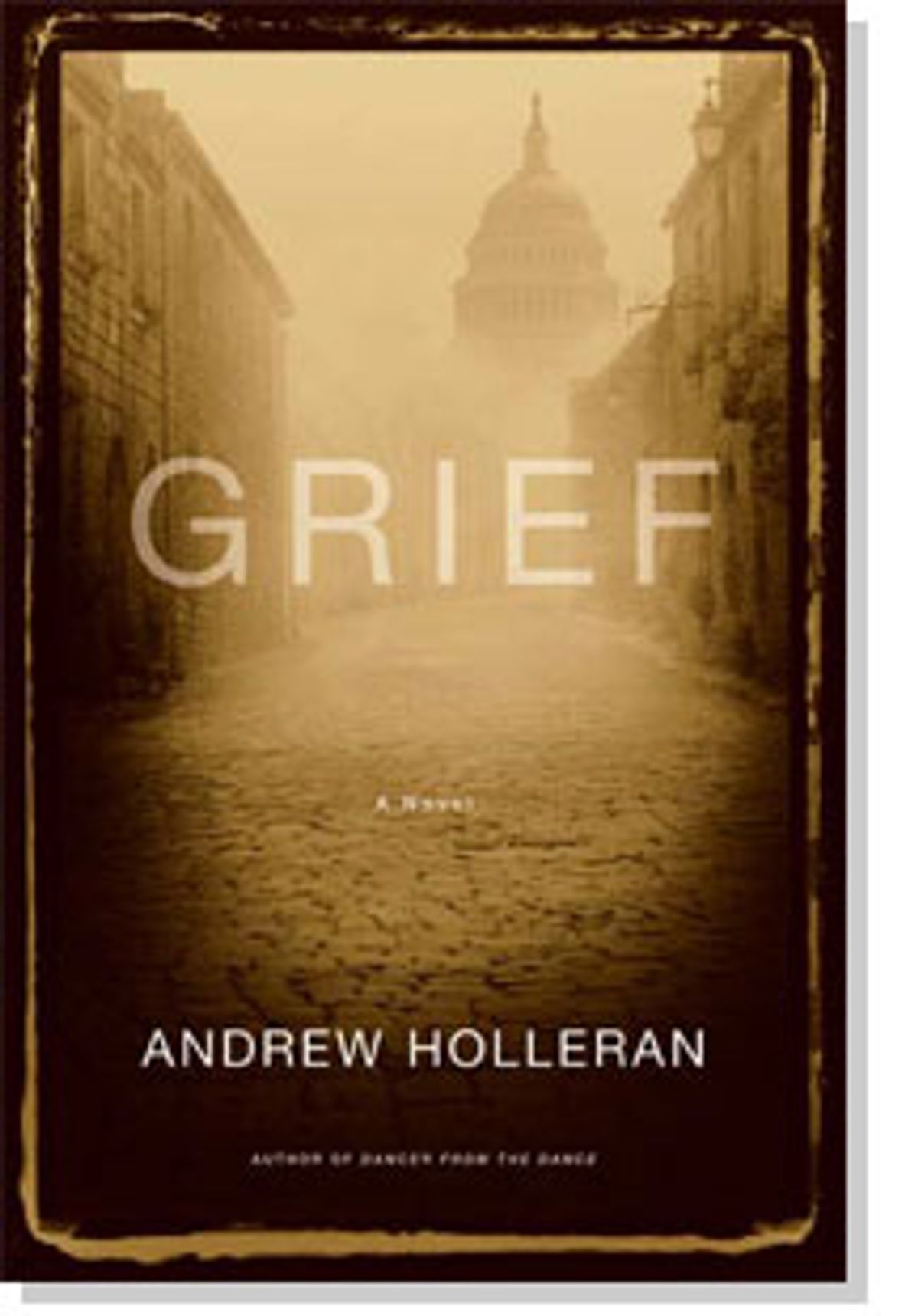
Andrew Holleran’s “Grief”
Almost 30 years since publishing the groundbreaking novel "Dancer From the Dance," one of America's treasured gay writers offers a beautiful new work on love and loss.
Recently, in interviews about his new novel, “Everyman,” Philip Roth has been observing that, beyond a few classics like “The Magic Mountain,” there’s been little great fiction about disease and the shock of seeing one’s friends die. That’s a remarkably clueless statement coming from a writer so often (if so inexplicably) lionized for his grasp of the American scene, and now, as if it were a planned reproach, comes that rare and precious thing, a new novel by Andrew Holleran. As one of the characters in Holleran’s book, “Grief,” puts it, “I used to think that the eighties were like a very nice dinner party with friends, except some of them were taken out and shot while the rest of us were expected to go on eating.”
Holleran, of course, belongs to a generation of gay writers who learned a great deal about disease and the death of friends and have often written powerfully about both. The narrator of “Grief” (unnamed, like the narrator of “Everyman”) isn’t grieving for a victim of AIDS, though, or at least not directly. He has taken a temporary job teaching literature at Georgetown University in Washington as a way to get out of the small Southern town where, after 12 years of caring for her, he has just buried his mother.
“Grief” is a strange, slim, beautiful book. Strange because it depicts an interlude in a man’s life, not a period of great drama or activity. Reading it feels like sitting in a chair in a darkened room while someone in the chair next to you begins to tell you his story. The voice is calm and precise — it doesn’t hector or lean toward you in a pleading whisper — and yet instantly and completely arresting. He’s telling you about moving into a rented room at the top of an elegant row house, about walking through the city’s empty streets at night, about attending free concerts in museums and about idly picking up a volume of Mary Todd Lincoln’s letters and becoming obsessed with them. You never doubt for a moment that all of this is somehow significant; this voice would never tell you anything that wasn’t.
Holleran’s novel is a kind of extended meditation on the value of grief. Is mourning, as the narrator insists to his old friend Frank, “what you have left after someone you love dies. It’s the only thing left of that person. Your love for, your missing, them. And as long as you have that, you’re not alone — you have them … Your grief is their presence on earth.” Frank will have none of this. He’s the novel’s great (and funny and charming) spokesman for what’s commonly called “getting on with your life.” When the narrator gets too melancholy, Frank, who also nursed an invalid mother, is not above murmuring, in a “strangely altered” voice, “Could you just fluff my pillow first? And get the cold cream? I find cold cream so soothing on a day like this one!”
“Grief” is also a D.C. novel, not the gritty urban storytelling associated with the D.C. of George Pelecanos, but a novel of the Mall. The vast green lawns, the marmoreal Greco-Roman architecture, the preponderance of monuments — central Washington, D.C., resembles nothing so much as a gigantic cemetery, and that makes it the perfect place for the narrator’s nighttime strolls. As he walks, he keeps an eye peeled for landmarks in the secret history of bereavement. There’s the house that Henry Adams built for his young wife, who killed herself before they could move in; her husband forbade anyone to mention her name afterward, but nevertheless considered his own life to be over. Here, where the National Gallery now stands, was the train station where President Garfield was assassinated. What the narrator finds notable about this is that Abraham Lincoln’s son, Robert, then secretary of war, found himself sitting at a second president’s deathbed.
The mourner who dominates his ruminations, though, is Mary Todd Lincoln, who wore black and waited for death every day of her life after her husband was shot. Was she admirable, tragic, understandable — or ridiculous? The narrator’s landlord (also never named) declares she was both. “Have you ever read such an insane mixture of self-pity, melodrama, camp and real grief?” he asks of one of Mrs. Lincoln’s final letters. “She rings all the chimes!”
With this man, a somewhat older, apparently celibate and self-sufficient government lawyer, the narrator forms a curious relationship. Because they live together, the narrator would like to believe they share a domestic camaraderie. He’d like to believe that “we were a family now: he and I and the dog.” The attachment — neither erotic nor truly intimate — is a perverse thing, but as Frank tartly observes, “your heart is like a little ship, looking for a safe harbor,” and the landlord and the dog have more in common with the narrator’s dead mother than he’d care to admit.
So, while the few months this lonely, drifting man spends in Washington may seem uneventful, they are really momentous. He is deciding whether or not to be alive, whether it’s worth it, whether he has it in him. You can’t tell which path he’ll choose until the very end, but when it comes, his choice seems inevitable. “Grief” is a short novel, but like a single note struck on a perfect silver bell, it carries far.
Laura Miller is a senior writer for Salon. She is the author of "The Magician's Book: A Skeptic's Adventures in Narnia" and has a Web site, magiciansbook.com. More Laura Miller.
AIDS: Why Africa suffers for the West’s sins
Craig Timberg talks about the colonial origins of AIDS and the legacy of distrust between Africa and the West
As a lens to explore the complex and deeply fraught relationship between Africa and the West, the AIDS epidemic is as revealing and disturbing as it gets. Born in colonial Africa and discovered in gay America, the devastating rise of AIDS has been fueled in no small part by the clash of cultures that played out over the past 130 years or so between Africa, Europe and the U.S. — and the rivers of resentment those conflicts have sown.
“Tinderbox,” an insightful new book from a journalist and an AIDS researcher, tells the story of the epidemic from its birth in colonial Congo — where it lingered undetected for decades — to its sudden spread around the globe in the 1980s, to its status today as the object of a global public health war directed from Washington and Geneva and targeting Africa, home to some 70 percent of all AIDS cases today.
Continue Reading CloseRob Waters writes about health, mental health and science from his home in Berkeley, California. His investigative feature in Mother Jones, “Medicating Aliah,” examined pharmaceutical industry influence over prescribing guidelines and won the Casey Award in 2006. His articles have appeared in Bloomberg Businessweek, Mother Jones, Health, Reader’s Digest and other publications. More Rob Waters.
The new AIDS crisis: Funding
Scientists believe they can finally stem the epidemic, but money is a major obstacle
(Credit: Reuters/Yiorgos Karahalis) KISUMU, Kenya – Thirty years after the discovery of AIDS, scientists believe for the first time that they now have the tools to beat back the deadly virus.
The evidence is found in HIV prevention research conducted here on the shores of Lake Victoria and in several other parts of sub-Saharan Africa, long the epicenter of AIDS. The most notable research discovery stems from the HIV Prevention Trials Network 052 clinical trial, a U.S.-funded, nine-country study that found early treatment reduced the risk of HIV transmission to an uninfected partner by 96 percent.
Continue Reading CloseJohn Donnelly is a reporter for Defense Week. More John Donnelly.
The worst state in America to have HIV
Backward laws and ignorant legislators make Mississippi an especially deadly place to be sick
(Credit: jocic via Shutterstock) Recently, an elderly woman in Mississippi was left alone on the curb outside a hospital emergency room. The woman didn’t have a medical emergency. She’d been dumped by the nursing room employees who had learned that she had HIV, according to a lawyer at the Mississippi Center for Justice to whom she was eventually referred.
Mississippi’s neighbors have been known to thank God for Mississippi — when your state ranks 48th or 49th in just about every sad statistic about health or poverty in America, it’s nice to know you’ll always look better than someone. The state’s indicators for HIV and AIDS are about as horrific, although the 9,546 people in the state reported to have the virus probably aren’t particularly grateful about it.
Continue Reading Close
Irin Carmon is a staff writer for Salon. Follow her on Twitter at @irincarmon or email her at icarmon@salon.com. More Irin Carmon.
The art of the AIDS poster
A new collection shows 30 years of fascinating, frustrating, beautiful attempts to educate the world about safe sex SLIDE SHOW
Each of the more than 6,000 images in Dr. Edward Atwater’s peerless collection of AIDS-related posters — now owned by the University of Rochester’s Rare Books and Special Collections Library — freezes its viewer at a particular social, cultural, political and geographical point in the 30-year history of the disease.
Some of the posters are provocative, explicit or overtly sexual; others are straightforward, tame — even prudish. Some rely on shock-and-awe tactics to make a general point; others offer detailed advice for HIV protection. Some, created in the 1980s or ’90s, are already very clearly dated; others are triumphs of evergreen design. All offer glimpses of past understandings of the disease, its dangers and its prevalence.
Continue Reading CloseEmma Mustich is a Salon contributor. Follow her on Twitter: @emustich. More Emma Mustich.
The terror of a bogus HIV test
After a false-positive shut down the porn industry, an actress opens up about her testing scare
The details of how a bogus test result reportedly shut down the billion-dollar adult industry for a week are still shrouded in secrecy — but porn actress Dylan Ryan says she understands what the performer, known as “Patient Alpha,” must be feeling. That’s because she experienced firsthand the terror, and unparalleled relief, of a false-positive HIV test.
Continue Reading Close
Tracy Clark-Flory is a staff writer at Salon. Follow @tracyclarkflory on Twitter. More Tracy Clark-Flory.
Page 1 of 33 in AIDS
