Over and over again in Daniel Mendelsohn’s book “The Lost: A Search for Six of Six Million,” the author finds himself in the house of some elderly Jewish couple, or widow, of his mother’s generation if not older, in various places in the world: Tel Aviv; Stockholm; Copenhagen; Sydney, Australia. There is a ritual aspect to these visits, and not only because Mendelsohn has been invited into these people’s houses, cautiously or eagerly as the case may be, in order to remember the dead.
He always comes officially expecting nothing, or almost nothing — coffee and a sandwich, at most — and generally leaves hours later, having eaten a gigantic meal of traditional Eastern European Jewish cooking: potato pancakes, stuffed cabbage, blintzes, other things that to a goyish reader such as myself are totally unfamiliar. Someone at the gathering will observe that soon no one will be left alive who knows how to cook this food, not the way they did it back there.
So when I showed up at Mendelsohn’s apartment on the Upper West Side of Manhattan on a recent morning, I made some feeble joke about expecting an enormous repast like the ones in his book, chafing dishes full of kasha fried with onions, pierogi, golaki (pronounced “gawumpkee,” as you learn in “The Lost”). He smiled politely, but we both knew it wasn’t funny. Mendelsohn’s book is tightly focused on the stories of six of his relatives who perished in the Holocaust — he favors that word, “perished” — but getting to know those six people, as best we can after all these years, forces us to consider the millions of other dead we will never know, and also the astonishing fact that Jewish Eastern European culture, which had endured for centuries across good times and bad, was almost totally wiped out in four terrible years.
Mendelsohn had no pierogi. He had a fresh pot of coffee and doughnuts from the grocery store, which is pretty damn good by interview-subject standards, and we sat down in his elegantly furnished apartment to talk about “The Lost.” It is an extraordinary book, entirely unlike anything else ever written about the Holocaust, and although it is the kind of book that will change people’s perspectives, and perhaps inspire imitation, I cannot imagine we will see anything like it again. It is a work of avid scholarship — Mendelsohn is after all a classics professor at Bard College — and a true-life detective story. It is a study of how history is written and a test case of how much the history of six ordinary people can be rescued from oblivion, long after their deaths. It is a work both personal and literary, combining the passion of the memoirist, the compassion of the novelist and the dispassion of the historian.
Mendelsohn, who is 46, grew up on suburban Long Island, N.Y., during the 1960s and ’70s. He is of course not a Holocaust survivor, nor is he the child of Holocaust survivors. Most of his extended family had emigrated from their home village in Poland to America or Palestine by the time of Hitler’s rise to power. But one of his great-uncles, a man named Shmiel or Samuel Jäger (like many Eastern European Jews, Shmiel had two names and spoke several languages), hadn’t liked New York and had gone back home to Bolechow, a polyglot town of 15,000 Poles, Ukrainians and Jews in Galicia, a province of eastern Poland that bordered first the Russian Empire and then the Soviet Union. He had become an important Bolechower, a kosher butcher and perhaps the most prosperous merchant in town, owner of a fleet of trucks, liked and respected by Jews and gentiles alike. In 1939 the war started, and in 1941 the Germans came. By 1944, the Jäger family, along with virtually all the other Jews of Bolechow, were gone.
The first thing we learn in Mendelsohn’s book is that his presence, as a small child, in certain people’s houses in Miami Beach in the 1960s made those people cry. He understood from an early age that this was because he reminded older family members of Uncle Shmiel, and that Uncle Shmiel, Aunt Ester and their four daughters had been killed by the Nazis. But killed how and by whom exactly? Where and when had it happened? Had anything been done to help them? Could anything have been done? He began to formulate some of these questions in his head at an early age, he reports, but no answers were forthcoming.
Mendelsohn’s adult quest for answers to these questions, no matter how partial, takes him to Ukraine twice (Bolechow, today called Bolekhiv, is now a town in the western Ukraine, where no Jews at all live), Israel twice, Australia, Denmark, Sweden and all over central Europe. He meets essentially every living Jew who was in Bolechow when the Nazis came; it is not a large number, and half of them have died since he interviewed them. Beginning with almost nothing, some fragmentary family anecdotes, a few letters and a handful of photographs, he discovers and reconstructs an amazing amount of information about the lives and deaths of Shmiel and his family, restoring at least a little of the individuality that was taken from them.
He does come up forcefully, sometimes, against what he calls “the dead brick wall of the unknown and unknowable.” Almost nothing can now be known about his great-aunt, born Ester Schneelicht in 1896, or about his cousin Bronia, the youngest Jäger daughter, who was no more than 13 when she was taken away in 1942, probably to the gas chamber at Belzec. But along with this tragic blankness comes powerful illumination. Shmiel Jäger and his beautiful, infamously flirtatious second daughter, Frydka, hid for a time in the house of a Polish neighbor. Thanks to a remarkable sequence of accidental encounters in present-day Bolekhiv — like every good historian or journalist, Mendelsohn has a way of creating his own fortuitous accidents — he actually sees the basement where Shmiel and Frydka lived for some weeks or months, and learns exactly what befell them when they were betrayed and discovered.
He learns about a local Polish Catholic boy named Ciszko Szymanski, who was Frydka’s lover and who died heroically, trying to save her. He comes to believe that Frydka’s older sister Lorka escaped into the forest near Bolechow to fight with a band of Polish partisans (a band that was open both to Jews and to women), although what happened to her after that can only be conjectured. These redemptive details about the friendly neighbor, the stout-hearted lover and the ecumenical band of rebels are almost life-saving talismans for the reader. That’s because the story of what actually happened to the Jägers and all the other ordinary Jewish civilians of Bolechow — the various ways in which they were persecuted, tortured and killed, by their neighbors and fellow townspeople as well as by German invaders — is a story of dumbfounding cruelty and unimaginable moral darkness, the kind of story that raises questions about human nature that can never be answered.
Not that Mendelsohn doesn’t try. Or at least he tries to pose the questions in a useful way. His journey around the world is also partly a journey of personal discovery and an account of his own reconciliation with his semi-estranged brother Matt (whose photographs are found throughout “The Lost”), as well as a sort of scholarly reconciliation with his Jewish heritage. He interrupts his narrative with interpolated comments on the passages from the Book of Genesis, known in Hebrew as “parachot,” that observant Jews read in order throughout the calendar year. (There are a lot of languages in “The Lost.” Mendelsohn speaks excellent German and pretty good Yiddish, and while he claims not to know Polish or Hebrew or Ukrainian, we get bits of those languages too.)
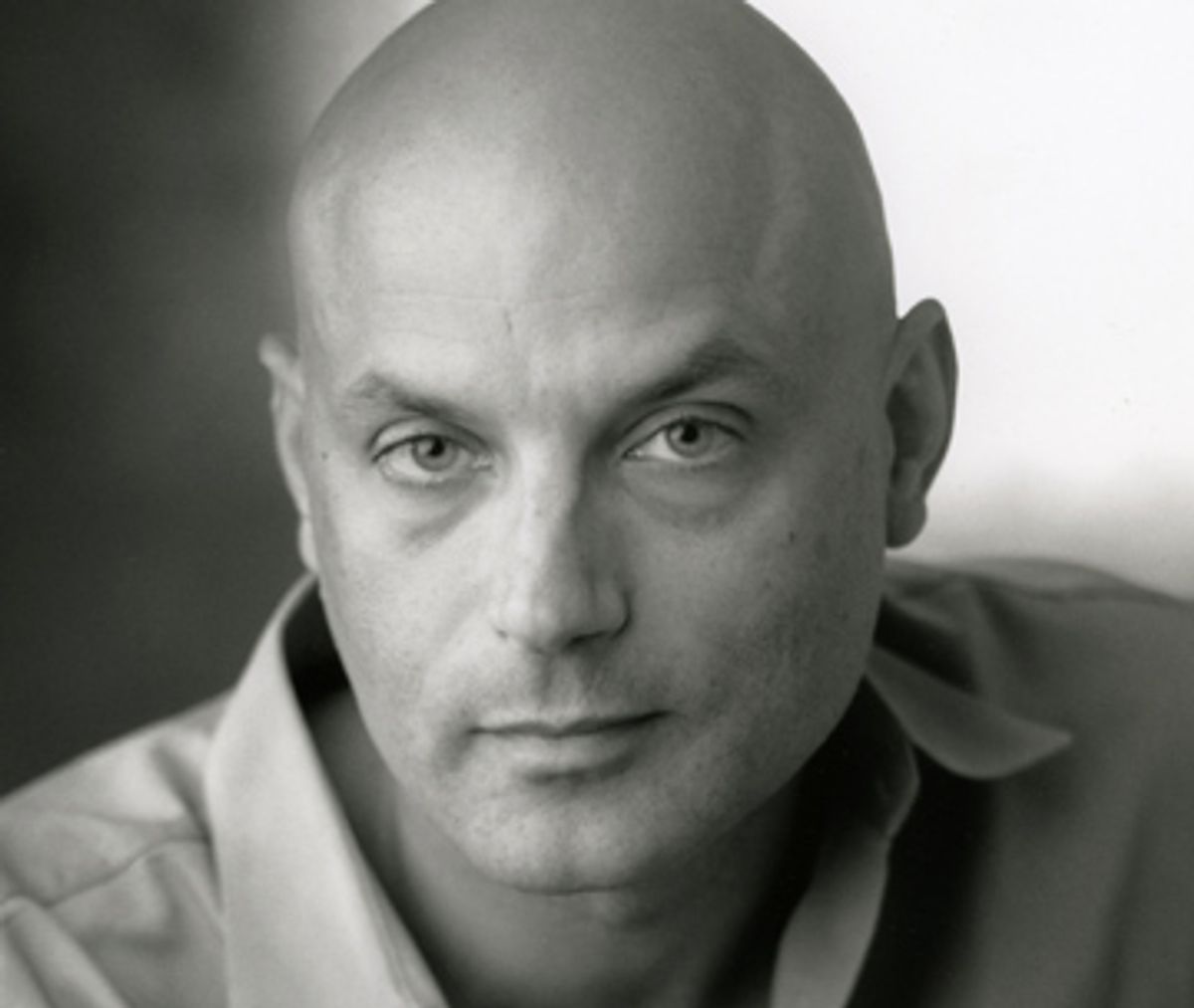
“I don’t think this is a memoir,” Mendelsohn says over coffee and doughnuts. He is a lean, bald, handsome man of middle height, with piercing eyes, a mellifluous voice and a scholar’s analytical demeanor. “This is a book about how to use everything in my life — what I know as a scholar, as a classicist, as a recent and not very good student of the Torah; my family history and my own relationship with my parents and siblings — how to use all of that to find out about Shmiel and his family and what happened to them.
When I told my mother, who is a writer, that I was reading your book, she asked me what it was like. I said the first thing that came into my head, which was that it’s a profoundly literary work with a tremendous debt to Proust.
Yes.
And then, five seconds later, I was like, isn’t that a profoundly offensive thing to say? I mean, this is a true story. It’s a personal investigation into the fate of your family members who were killed by the Nazis.
I don’t think there’s anything shameful about it. The book is very self-conscious about its debt, I would say to Proust and to Sebald as well. [That's the German-born novelist W.G. Sebald, whose books include "The Emigrants," "The Rings of Saturn," "Vertigo" and "Austerlitz."] Clearly, the book is in some large sense about the possibility of recovering the past, so it’s automatically a Proustian book.
Of course, in Proust, the past is recuperable. That’s the final punch line of Proust. This worked to my advantage because of coincidence: In Proust it’s because of accidental triggers that one recaptures the past, and my book is filled with strange coincidences and accidents. That was a sub-category of Proustian reference that I had nothing to do with. But on the one hand you have Proust, who believes that memory and accident can work to recover the past whole. On the other hand you have Sebald, who fills his books with terribly poignant wisps and fragments of the past, often in the form of photographs and images. One doesn’t know where they fit in, or even what they depict. One always senses that there’s some way of getting at the past, but Sebald’s vision is deeply tragic: All there are are these fragments, and sometimes it works and sometimes not.
So the book oscillates between a fantasy of the recovery of the past, which is the motive behind the book, and the frustration of being faced with these fragments. Structurally, I thought that was interesting. It was something I would be interested in reading. As I keep telling people, the book keeps telling you how you should read it. It talks about Proust and Sebald, it talks about Greek history, it talks about ring composition, it talks about my grandfather’s way of storytelling, starting out with lots and lots of apparently random information and then zooming in at the end where everything comes together — which is the structure of the book. Look, I’m a critic, I’m interested in these issues.
I would also say there are maybe six moments in the whole book, the most emotionally fraught moments — such as the scene where Shmiel goes into the gas chamber [an imaginative reconstruction of what might have happened to Shmiel, which turns out to be incorrect] — where there are these long, Proustian sentences. Those I did not write to be “Proustian.” I always write long sentences. Ideally, I would write every piece that I write as one sentence, because everything is connected.
Obviously the great problem with the Holocaust, at least as a literary subject, is representation. How do you represent this? There are times where you should feel that language is being stretched to the absolute limit, because one is faced with the problem of representing the unknowable, the unimaginable. When I was writing those sections, I felt strung out, I felt like, how far can you go? I realized after the fact that they were obviously Proustian. When I was writing them, I felt the exhaustion of the ability of any given sentence to talk about this experience. I’m telling you these things now, but at the time I was writing I was not so analytical about it, of course.
You do learn a tremendous amount about what happened to your family, more, I suspect, than you thought you would. But of course you can’t answer every question or solve every mystery. On one hand, this is a very surprising and fulfilling experience for the reader. But on the other hand, we have to face that there are aspects of the past we can never recover.
At every reading I do, somebody says, “Don’t we know what happened to Lorka?” And I always have to say no, because nobody survived from the Babij partisans. And they say, “Well, it’s so frustrating,” and I say, “Well, why should you be satisfied?” There’s so much in the book that does get revealed, by accident more often than not. I think one should feel, as I felt, that sometimes you just come up against the dead brick wall of the unknown and unknowable. There is a frustration: Seven decades have passed, many millions of people died. So, you know, there should be frustration.
I now see that I was trying to structure the book so that the reader would have the same experience that I had when I was on this search: the frustrations, the sudden recognitions. The greatest technical challenge of writing this book was to load things at the front that would later, much later — and this is very Proustian — come to fruition. Sometimes in an offhand sentence: Oh, that’s what that was! He’ll see someone at a party, across the room, and you’ll realize it’s a character from two volumes ago. It’s my favorite thing about Proust.
There are a lot of those moments in your book. My favorite might be when you interview some impossibly old Bolechower, early in the book, who appears to be senile and non-functional, and he tells you two things about your Uncle Shmiel: that he was tall and that he was deaf. You don’t believe either of those things, you think he’s totally detached from reality. But they turn out to be true.
Both things I dismiss. No one in my family is tall, and I had never heard anything about Shmiel being deaf, and was sure I would have. Later on, in a living room in Tel Aviv, the first thing I hear a lady say is, “Well, you know, he was deaf!”
When I had those moments, they were devastating, because so much of the book is about tragically belated knowledge. You realize, years or decades too late, that someone had crucial information that, just because of who you are in time, you didn’t appreciate or want to know when you had the opportunity. If I had Herman the Barber for five minutes now — five minutes! — I could accumulate 800 times more information than I accumulated in five years of traveling.
Herman the Barber is a key presence, or rather a key absence, in your book. Explain who he was.
Well, when I was growing up there was this character who came to family events named Herman, Herman the Barber. He was old and decrepit, and I would avoid him. You go to family gatherings and you’re told that people are cousins or relatives and you take it on faith, you never care how they’re related to you. He was always interested in me, always fussing over me, and he was old and I didn’t like it. It was 35 years later that I found out that he was the figure standing next to Shmiel in a photograph that was very important, and I was later told he was Shmiel’s best friend. That’s why he was in the photograph. That was heartbreaking.
You’re so hard on yourself about not noticing things, not paying attention, and in that way I think you are also challenging the reader. I was forcefully and tearfully reminded that there were certain things I never talked to my great-aunt about — the last survivor of my own immigrant grandmother’s generation — and now it’s too late. I suspect every reader is going to have moments like that.
I published this New York Times Magazine article in 2002, which in some sense was the germ of this book, before I knew it was going to be a book. I had made my first trip to Ukraine and had these encounters. People reacted very intensely, and I was getting hundreds of e-mails. People were leaving messages on my voice mail, literally in tears, saying, “My grandfather died two years ago, and now I realize I could have gotten so much from him. I don’t even know what country my family is from,” and so on.
That is the deepest appeal of this book, and I think it’s not a Jewish thing. First and foremost, this is about one’s relation to one’s family and the past of one’s family. That recurrent sense of poignant, belated recognition of who people were and why you should have paid attention to them. The fact that you cannot get anything from a dead person. When I finally did begin to pay attention, I was so desperate to get to these people, having had the Herman the Barber experience, having lost people. I then understood that you had to talk to people and get them to tell you everything they know. Because they might die, before you get to them or soon after, and that goes on forever. That’s why people get very involved in this, of course; they think about their own family. So many people have told me that. And that’s great, that’s what I wanted.
There’s a powerful scene in your book when you visit Auschwitz and you reflect that it represents all the things you don’t want to write about the Holocaust.
The project of this book is to rescue particularity from generality. That’s not the only way to write history, but my project is a personal and family project. I’m interested in the specific. Auschwitz is devastating; it’s not like I didn’t have a reaction. But it reminded me that what I wanted to do was not to write a history about what happened to millions of people. The problem with the Holocaust as a subject is, at this point, a kind of overfamiliarity. My book is about six people, not 6 million people. My book is about trying to find out exactly, specifically, what happened to those people. Not that “they went to the gas chambers.” People say that, and they have no idea what that process consisted of. At one point in my book, I try to tell you exactly what that was like, as far as I could glean.
I’m not denigrating Auschwitz. I’m saying, this book is not like these other kinds of books, which describe the kinds of things that happened to large numbers of people. Auschwitz has become the symbol of the Holocaust, and, fine, who am I to say what the symbols should be? But a million and a half people perished in Eastern Europe before the death camps really got going, in the first year of the German occupation, 1941 to ’42. My people were killed in that period, and people don’t know about that. They think that everyone went to the gas chambers, and they didn’t.
So your focus is on six people, one family, in one small town, which was in eastern Poland at the time, and today is part of Ukraine. You write that there were 6,000 Jews living there when the Germans arrived in 1941, out of maybe 15,000 people total. And when the Russians liberated the town in 1944, there were 48 Jews left alive, hiding in basements and attics and barns, out of 6,000. Somehow that intimate statistical reality — what happened in that one town — was harder for me to face than the total enormity of the Holocaust. It finally seemed real to me, which I suppose is just human stupidity.
It’s not stupidity, it’s the limits of the mind. Six million is an unimaginable number. Look, my friend Froma Zeitlin, who is a real scholar of the Holocaust, always says that what the deniers have going for them, rhetorically, is the event itself. Because it is unbelievable. It is unimaginable. So when they say, “Oh, how could you kill 6 million people in that amount of time?” it does sound incredible. You cannot believe it, and there’s nothing wrong with that. It should be incredible.
Whenever I say that statistic — there were 5,500 to 6,000 Jews in Bolechow, and 48 came crawling out of their holes in 1944 — everyone gasps. But that was a very typical statistic for Poland. Poland had 3 million Jews, and there were about 2,000 still living at the end of the war. Ninety-nine percent of them were killed. As a statistic, you say, “Oh, that’s so terrible,” but you don’t grasp it. The mind needs contours that it can imagine. That’s the whole point of the book. It’s not that you don’t think about the other 5,999,994. It’s that you can think about six people. There’s nothing wrong in finding a small thing to think about, as a symbol of the big thing.
In trying to rescue the particular from the general and focus on the small things, you succeed wildly when it comes to your cousin Frydka. She must have been a strong personality, because people remember her so well and she comes into focus so sharply. She’s pretty, she’s vain, she’s flirtatious, she’s self-absorbed. She stops being part of the grand horrific narrative, stops being a saint or a martyr, and becomes a real person, one we might like or not, find attractive or exasperating. It’s a kind of miracle.
Well, for me the literary necessity and ethical necessity was to give these people back what was taken away from them. To the people who ended up controlling their lives, there was only one salient fact about them, which was that they were Jewish. They didn’t ask if they were religious, if they went to shul on Saturday, if they were agnostic or atheist, they didn’t care. They were Jewish, that was all. Any success in giving them back themselves as normal people — flawed, everyday, boring, nice, not nice, whatever — seemed to me to be the great imperative of the book. Here was a girl of 19, and, look, who at the age of 19 is not vain, self-absorbed, self-important and self-dramatizing, as this girl clearly was? I always describe her as the girl from high school that everyone remembers: She’s flirty, she blows everyone off because she thinks she deserves better. That made her come alive for me, certainly.
Then there’s the other example, your great-aunt Ester, who lived a full and active family life, it seems, but about whom you can learn almost nothing.
Basically I was traveling around the world and talking to people, saying, “Oh, this person that you knew 70 years ago — what can you tell me about their mom?” Which is loony on the face of it. I think I say this in the book, but if you asked me today what I remembered about my friend from second grade, I would say, “Oh, he was a nice guy.” Let alone his mother! We grew up, we knew our friends’ mothers as nice ladies who gave us milk and cookies. And here I want to know everything about her. “What was she like?” It’s crazy.
With Ester, the poignant moment comes when this one lady remembered that she had nice legs. That always brings a tear to my eye. Here is this woman, my age when she died. She was 46. I’m 46. Just a lady with four kids, and nothing is known about her in the world. I scoured the face of the earth and I found that she had nice legs. At least that was preserved. What was done to these people was done to erase them from memory. So anything is important. Even nice legs.
Another aspect of your tendency to self-judgment is your extreme reluctance to judge others. You don’t judge the Jews who joined the “Jewish police” and followed the Nazis’ orders. You avoid judging the Ukrainian and Polish neighbors who looked the other way, or turned people in, or did things worse than that, even though you very well might.
You cannot come up against this material without being forced to wonder about how one would behave oneself. I don’t think it matters whether you’re Jewish or gentile, actually. People say, “Oh, well, you know, if I were the gentile neighbor, I’m sure I would have hidden the Jews.” I give graphic descriptions of what was done to people who tried to help, and it was terrible. Little babies, 6 months old, hanged in the town square. I can say, well, yes, if somebody came to my house and said, “Where are you hiding the Jews? Give them up or we’ll shoot you,” maybe I would do the right thing. Maybe I would think it was worth it. But if somebody came to my house — which is a more accurate scenario — and held a gun to my children’s heads and said, “Where are you hiding the Jews?” well, that’s the kind of moral complexity you have to envision. And then you have to really think what you would do. That was the point of the totalitarian terror imposed on these people. It wasn’t a nice choice: I’ll die to do a good thing. It was: Your family is going to die for you to do a good thing.
My book ends with a story about a remarkably good person who tried to save members of my family, and clearly a bad person who betrayed them to the Gestapo. My friend Louis Begley said to me, “Well, there it is in one sentence. The extremes of human good and the extremes of human evil.” This may be an ethical failing on my part, but I don’t want to judge that 19-year-old boy who joined the Jewish police in 1943. He thought he was going to be a hotshot, or he thought he might save his mom. What history keeps giving you is unbearably complicated moral problems. Because the event is receding in time, because the people who were faced with those choices are vanishing off the face of the earth and can’t tell you what it was like, we all want to think we would have done good. As my interviews with survivors make clear, they are still haunted by the decisions they and their relatives made 60 years ago.
Those Americans who are familiar with the name Claude Lanzmann most likely know him as the director of “Shoah,” his monumental 1985 documentary about the extermination of the European Jews in the Nazi gas chambers. As it turns out, though, the story of Lanzmann’s eventful life would have been well worth telling even if he had never come to direct “Shoah.” In addition to film director, Lanzmann’s roles have included those of journalist, editor, public intellectual, member of the French Resistance, long-term lover of Simone de Beauvoir and close friend of Jean-Paul Sartre, world traveler, political activist, ghostwriter for Jacques Cousteau — I could go on, but it’s a good deal more entertaining to hear Lanzmann himself go on, and thanks to the publication in English of his memoir, “The Patagonian Hare,” we now have the opportunity to do so.
The book begins with a disturbing and at times grotesque meditation on executions, on the tendency of human beings to kill each other in the name of the law or some other abstraction. This dark reverie consumes the entire first chapter, providing an important early glimpse into the memoirist’s attitudes and preoccupations. (Capital punishment in general, and the guillotine in particular, have been “the abiding obsession of my life,” he announces in the book’s first sentence.) In what will prove to be a repeating pattern in Lanzmann’s life, the political concern becomes, or perhaps reveals itself always to have been, deeply personal. Reflecting on the executed murderer Eugene Wiedmann, he writes, “Wiedmann, Lanzmann — the identical endings of his name and mine seemed to portend for me some terrible fate. Indeed, as I write these words, even at my supposedly advanced age, there is no guarantee that it will not still be so.” He then recounts how, in conversation with Jean Genet, he once gave voice to his fear that he would die by the guillotine, to which Genet replied, “There’s still time.”
A certain dark humor is clearly intended here, but it would be a mistake to read this exchange as merely funny: the awareness that the death penalty is still practiced in much of the world seems to be a genuinely haunting fact for Lanzmann, and it is worth keeping in mind that as a teenager during World War II he took part in the French Resistance, an activity that carried a very real threat of being caught and put to death. (His father, too, was secretly involved in Resistance activities, and the scene in which they confess their involvement to each other is memorable and touching.)
Indeed, throughout this memoir, Lanzmann records his propensity both for engaging in dangerous behaviors — visiting political hot spots and war zones, flying in fighter jets, mountain climbing with de Beauvoir with inadequate equipment and preparation — and for barely escaping multiple varieties of accidental death even when he does not appear to be taking inordinate risks. He is nearly shot while attempting to interview a suspected murderer (the bullet “ripped through the shoulder pack in my anorak”). He is catapulted from a car and badly injured during a high-speed accident. Attempting to talk a policeman out of giving him a parking ticket, he walks through a plate glass window; a falling shard pierces an artery, putting him in the hospital for several weeks. In Israel in 1977, taking a break from his attempts to find funding that would allow him to continue shooting “Shoah,” he goes for a swim in the Mediterranean, is caught by its powerful currents, and very nearly drowns. (“Striking out rather than following the shoreline has always been my practice,” he remarks — an understatement, to be sure.)
It seems a bit of a miracle, indeed, that Lanzmann lived to write this book. Perhaps these near-encounters with death help explain the deep attachment he feels to life. “You must understand that I love life madly, love it all the more now that I am close to leaving it — so much so that I do not even believe what I have just said, which is a statistical proposition, a piece of pure rhetoric that finds no response in my flesh, in my bones.” Or perhaps it is this intense attachment that somehow explains why he has not died, despite his so often having stuck his neck out (to revert to the language of the guillotine).
After the war, as a student living in Paris, his involvement with the French Resistance finished, he found himself able to take less hazardous, more amusing risks. When his mother withdrew her financial support, he rented a priest’s garb and went door to door, collecting money allegedly for the Church — an endeavor that ended up costing him more for the costume rental than he managed to take in. He also tried his hand at stealing books, not to make money — he only stole philosophy books, and they were to read, not to sell — but to experiment, it seems, with the thrill of transgression. When, as was inevitable, he was apprehended — for stealing a copy of Jean Hyppolite’s “Genesis and Structure of the Phenomenology of Spirit” — his stepfather explained to their lawyer that the crime was to be attributed to Lanzmann’s “unwholesome passion for philosophy.” (For his part, the author of the stolen book was flattered rather than disturbed by the crime — “for a khâgne student to steal Genesis and Structure was the ultimate accolade, the equivalent of being a bestseller” — so much so that he wrote a letter asking the court to go easy on Lanzmann.)
The book’s depictions of leading European intellectuals of the postwar period are striking and incisive. Lanzmann describes how Sartre’s “Cornelian determination to be dependent on no one led him to extremes: I would watch him suffer for days with a vicious toothache, resulting in abscesses and gumboils, and still he carried on writing, claiming he could master the pain, since it was unthinkable that he should ask anyone — even a dentist — for help.” But Lanzmann also admired Sartre greatly and to some degree was in awe of him. One memorable incident finds him watching Sartre deploy his logical abilities and “metallic, authoritative voice” in order to seduce Lanzmann’s sister, the actress Évelyne Rey:
Sartre had everything it took to seduce Évelyne, complimenting her, his reasons articulate, cogent and neatly strung together. Watching this formidable thinking machine at work, the well-oiled gears and pistons revving until it was at full throttle, left you stunned with admiration, all the more so if the goal of his implacable, passionate logic was to flatter you. Sartre’s enemies mocked him for his ugliness, his squint, caricatured him as a toad, a gnome, some sordid, baleful creature. I found him handsome in a way, powerfully charming, I liked the extraordinary energy of his approach, his physical courage and, above all, that voice of tempered steel, the quintessence of irrefutable intelligence.
As for Lanzmann’s own romantic life, love at first sight seems to be its guiding principle. On meeting Judith Magre, who would later become his first wife, he was “immediately taken with this nervous, sylphlike girl of twenty, by her firm, slender body, her deep voice rich with every possible inflection … In the lift on the way down from my mother’s apartment to the ground floor, we fell into each other’s arms, never for a moment breaking our wordless, passionate embrace.” In North Korea, as part of the first Western delegation to that country, Lanzmann fell in love with the nurse who was assigned to give him daily injections, a love that would remain unconsummated and, perhaps in part for that very reason, would haunt him for many decades. In Israel in the early 1970s he met Angelika Schrobsdorff, a novelist and actress who would become his second wife: “in my rough and ready way, I swept her off her feet by the intensity and sincerity of the passion I felt for her from the moment I first set eyes on her. It was mutual love at first sight….”
And then, of course, there is Simone de Beauvoir. “Castor,” as her friends referred to her, was Lanzmann’s lover for five years and remained his close friend afterward. Along with Sartre she is one of the central figures in his life, but in this book, at least, she is more of an enigma than Sartre, more distant, more elusive. This may be due in part to the fact that Lanzmann says almost nothing about her intellectual work. We learn about their travels together, about her love for skiing, hiking, and outdoor activities, and a bit about her political activism and unconventional love life, but such singular works as “The Second Sex,” “The Ethics of Ambiguity” and “The Mandarins” go mostly unmentioned. What comes across most vividly is the combination of deep seriousness and powerful passions that formed the basis of her personality, allowing her to serve as a beacon of integrity and a source of emotional support for Lanzmann until her death in 1986:
During the twelve difficult years when I was making “Shoah,” I went to see her whenever I could, I needed to talk to her, to tell her of my uncertainties, my fears, my disappointments. I always came away from these evenings together if not serene, at least strengthened in my resolve. It was not so much what she knew and what she shared — how could she have known about the horrors I was discovering? It was I who told her about them — but the unique and intensely moving way she had of listening, serious, solemn, open, utterly trusting. She was transfigured by this act of listening, her face became pure humanity, as though her ability to focus on other people’s problems relieved her of her own fears, of the weariness of living that never truly left her after the death of Sartre.
“The Patagonian Hare” concludes with an account of the making of “Shoah,” about which film de Beauvoir would write, “I have never read nor seen anything that has so movingly and so grippingly conveyed the horror of the ‘final solution’; nor anything that has brought to light so much evidence of the hellish mechanics of it.” This nine-and-a-half-hour documentary about the grimmest of possible subjects was, unsurprisingly, difficult to find funding for, and difficult in other ways as well. Some subjects were reluctant to speak with him, some refused entirely, and some — particularly former Nazis who had worked in the extermination camps — had to be approached under false pretenses and filmed using the Paluche, a small camera that could be hidden in a handbag. Such equipment is routine these days, but at the time the Paluche was a real innovation, and an imperfect one. Lanzmann describes how, in an early attempt at using it, they made the mistake of hiding it under a pile of books and newspapers, causing it to overheat and begin to emit smoke during the interview, from which he and his assistant were forced to flee.
Readers who approach this book out of an interest in “Shoah” may be tempted to skip the first three-quarters and begin with the chapters that concern its filming, but “The Patagonian Hare” should be read in its entirety: it is the account of an entirely fascinating life, related with great skill. Lanzmann’s decision not to adhere to a strictly chronological presentation but to follow his memory where it leads him, lends the book a refreshing informality, and his sense of humor and memory for anecdote prove consistently engaging. What comes through most clearly is the tremendous passion for life that underlies and informs everything: Lanzmann’s risk taking, his activism, his love affairs, his remarkable gifts as a storyteller. But then again, how could one fail to be passionately, even madly attached to life, when the life to which one is attached is as colorful, as vibrant, as rich as this?
Continue Reading
Close
Two years ago, Bill Clegg’s first memoir dropped like a bombshell on the New York media world. “Portrait of an Addict as a Young Man” chronicled the handsome and hugely successful book agent’s descent into a harrowing crack addiction that cost him his career, his boyfriend and his savings — and left him broke and in rehab. In one harrowing part of the book (excerpted in New York magazine) Clegg decides to blow off a first-class flight to Berlin after a week without sleep for a crack binge and sex with the cabbie driving him to his airport hotel. Staring at his pile of drugs, he wrote, “I wonder if somewhere in that pile is the crumb that will bring on a heart attack or stroke or seizure. The cardiac event that will deliver all this to an abrupt and welcome halt.”
In the years since the events of the first book, Clegg has rebuilt his career as an agent and become one of the best-known faces of addiction recovery. (He is also the rumored muse for “Left-handed,” a recent book of poetry by Jonathan Galassi, and the supposed inspiration for one of the lead characters in “Keep the Lights On,” Ira Sachs’ well-reviewed new film about a troubled gay relationship).
Now Clegg has written a follow-up, “Ninety Days,” a tumultuous chronicle of his early sobriety. The book begins with Clegg’s release from rehab and follows him as he struggles to keep clean for 90 days, a milestone for those in recovery. Over the following weeks, he tries to rebuild his shattered life — befriending other recovering addicts, searching for a new apartment and shuttling from meeting to meeting — but before long, he is once again drinking, smoking crack and having anonymous drug-fueled sex. Thus begins a dramatic series of relapses.
The book, which is written in straightforward, readable prose, is an often-vivid testament to the difficulties of overcoming addiction and the value of companionship. Despite occasional moments of cattiness (Clegg can be ungenerous in his description of other meeting attendees), Clegg comes across as a deeply troubled but a perceptive and sympathetic man, learning lessons about addiction in some very difficult ways.
Salon spoke to Clegg over the phone from Manhattan about the fallout from his first book, the unique appeal of recovery memoirs and why he won’t be writing another book.
It’s been a long time since the events of this book happened, and now you’re doing interviews and publicity about them. Does it feel strange to be rehashing all this stuff?
I wouldn’t say it’s strange, because one of the ways I’ve stayed sober is to stay very close to the things that happened, both when I was using and also in early recovery. I can’t talk enough about those early days of getting sober, because it’s the things I did and the lessons I learned — and the things suggested to me in those early days — that keep me sober today. The more comfortable I get and the more I forget it, the more vulnerable I am to relapse. And it’s pretty simple. Those experiences in those first 90 days are ones I never want to get away from and never want to forget.
Your first book was about your descent into drug addiction and alcoholism. This book is about your recovery. Why did you write it?
It came from a sense of not being finished when I completed the writing of “Portrait of an Addict.” During the three years it took to write that, I felt tethered to this live thing that needed my care and attention. I had this expectation that when I was done I would feel severed from that and I didn’t. So I just kind of didn’t stop writing. But I don’t feel connected to it, or any writing, at this point. I feel completely done.
In what sense?
Finishing this book, the process definitely stopped. I was reading the audio book a couple weeks ago and I hadn’t seen the text in a while. Reading from beginning to end, I almost couldn’t identify with the person who wrote the book. I identified with the person who lived the experiences, but I couldn’t really identify with somebody who would sit for six hours at a time and see that [book] to completion. I just don’t have it in me right now; it’s beyond my imagination that I’d be able to write anything longer than an email. Which is a relief, let me tell you. These books just sort of bullied their way into existence. I have a pretty busy day job as an agent, so I’m kind of amazed that they exist, these things.
What do you think is the overall message of this book?
I thought that once I got out of rehab that if I just stayed away from drugs and alcohol and followed a few simple suggestions there would be a clean narrative of getting sober, that there’d be a before and after that would be clearly defined. And that process for me was a lot messier than that. So if there’s a message in there, it’s that the only way that, in my experience, I’ve gotten sober and seen other people get sober is by asking for help and getting involved deeply in a community of addicts and alcoholics in recovery.
The first book was such a huge success. How did you deal with the sudden fame that came with it? The book included some pretty shocking scenes.
I guess I dealt with that in the same way I dealt with every difficult or wonderful thing, which is one day at a time. If I step back and regard any aspect of my life, whether that be my relationship with my family, or my job, or that publication, or this one, I will probably get overwhelmed and driven to my knees in exhaustion and despair. I was busy at that time doing my job so I just did everything that I always do but maybe with a little bit more desperation. I didn’t stop and look around and try and make meaning of any of it. I just kind of showed up to what I needed to show up to — whether it was an interview or working on the copy-edited manuscripts or whatever — and then moved on to the things that crowd my life.
Do you think your disclosures from “Portrait of an Addict” have changed the way people interact with you?
Because my collapse and the revelations of my alcoholism and drug addiction were so known to people in the book publishing world, it sort of mediated or affected every interaction I had professionally when I came back to work, whether that was with prospective new clients or colleagues. I think because that history was informing so many of my interactions and relationships, I got used to it as a kind of third person in the room. In terms of people outside the sphere of book publishing, it was challenging. I’m a self-conscious person by nature, and there were certainly uncomfortable moments.
Is there one big moment is “Ninety Days” that stands out to you as being particularly meaningful?
When I look back and try and locate some moment where a great shift occurred, it was the feeling [at one point during the recovery period covered in the book] when I was walking toward a place where I did drugs all the time. I was walking towards the door and thought of Polly (this woman I got sober with who is still very close to me) who was not sober at the time. She was, at that point in her recovery, pretty dire — like life or death. I felt like if I went in and got high and went down that rabbit hole, she might show up to a meeting and find out that I had relapsed and that that would keep her out of there.
My involvement in her recovery and connection to her was the thing that stopped me from walking through that door. Somehow the pull of my feeling of usefulness and responsibility to Polly was greater than my desire to use. That was the first time anything stood between me and a drink or a drug. And I turned around and walked away. Very soon after that, the obsession to use and to drink lifted, which was something that hadn’t happened in all of the time that I had tried to get sober.
To me that reminds me how important it is to stay connected to other people in recovery. To me recovery is sort of moving from the first-person singular to the first-person plural. For me as an addict, I can get very consumed with my own anxieties and worries and struggles and ambitions. And if I get too wrapped up in those thing and lift away from my usefulness to other addicts, I’m most vulnerable to relapsing.
In the book, you enter a lot of spaces in which people are meant to be anonymous. There must have been tension between describing the people and wanting to preserve their privacy.
I felt very comfortable talking about my experience getting sober without naming the program of recovery that I’m involved in. And in the instances where there are people in the program that I got sober with and who are still in my life, I spoke to them about the fact that I was going to describe our experience and went to lengths to protect their anonymity and their privacy and followed their lead in terms of what they were comfortable with and what they weren’t. The main point is to transcribe my struggle to get a toehold in sobriety and maintain it. I didn’t feel that the focus of the book is on anyone else’s recovery necessarily, outside a handful of relationships that I had and still have.
One person in the book about whom this question arises is the character of Asa, whom you describe extensively as he helps you during your early sobriety. I’m assuming you weren’t able to get his permission to write about him.
I didn’t think so. He was, he made it clear at a certain point that he didn’t want to have any contact with me because he was no longer sober. But I’m very happy to report that he’s come back into recovery and is sober. He knows that he is in the book, and that he is well masked. I went to great lengths to protect his privacy.
You’ve been the rumored “muse” of a few projects that have gotten coverage in the media in the last few months. How does it feel to be the subject of that kind of attention?
I don’t really have anything to say about that.
One of those projects, the film “Keep the Lights On,” recently got a distribution deal. Did you have any participation in that?
I guess I can’t really speak to any books or films that any other people wrote that I may or may not be connected to by speculation in magazines and elsewhere. It’s not my place.
Fair enough. Going back to your book, the most famous recovery memoir in recent years is the controversial “A Million Little Pieces,” by James Frey, which you allude to in the book. Did other recovery memoirs affect your way of thinking about this book?
You know I haven’t read, probably very consciously, other books of addicts and recovery — but particularly in the last seven years, when I’ve been involved in working on these two books. People I got sober with would use this phrase, “compare and despair.” I probably internalized that while getting sober and set out not to read other books about addiction and recovery when I was writing these. I would probably think they were better writers than me, or be affected by it so I just felt like in the writing of these books, I just had to follow my own instincts.
What do you think is the appeal of the addiction and recovery memoir for readers?
I think there are a lot of alcoholics and addicts in this world. And they touch a lot of people. It’s a disease that cuts through all class and age and race, and affects many, many people. I certainly myself felt very lost when I was first trying to get sober, and other people in my life felt incredibly lost. Both experiences are very isolating, so when reading an account of somebody getting sober — or in the case of David Sheff’s book “Beautiful Boy,” reading an account of a parent whose kid is an addict — I think identification is a powerful thing. It makes the struggle feel less singular, and it shows at least one particular path which one may choose to take or not take in any of those circumstances, whether you’re an addict yourself, or the father of an addict, or the daughter or son. I think people look to books to find answers, separate from addiction and alcoholism, they look to stories to illuminate their lives more clearly, to more clearly find their way.
I think there’s also the appeal of witnessing someone’s downfall and redemption.
Perhaps. People tend to make mistakes, and the reading of how someone may prevail against those mistakes may be encouraging to some people. If it is, that’s one use of those books.
Continue Reading
Close
In 1985, 25-year-old Jeanette Winterson published “Oranges Are Not the Only Fruit,” a semi-autobiographical novel about a girl named Jeanette, adopted and raised in northern industrial England by Pentecostals, whose plans to become a missionary are derailed when she falls in love with girls (prompting her parents to hold an exorcism) and goes off to Oxford and becomes a writer instead.
Although the rough outlines of Winterson’s biography follow more or less the same as those sketched above, she has always resisted the idea that “Oranges” should be taken as a literal account of her childhood. “I was trying to get away from the received idea that women always write about ‘experience’ — the compass of what they know — while men write wide and bold, the big canvas, the experiment with form,” she writes in her new book, “Why Be Happy When You Could Be Normal?,” released last year in England and published in the United States last week.
Over the past two decades, Winterson’s novels have been loaded with play, pose and experiment, roaming through and remixing ideas about history, genre, and gender. Her characters include a Venetian gambler with webbed feet in a romance with Napoleon’s cook (“The Passion”); a giant mother named Dogwoman (“Sexing the Cherry”; a lover with no identified name or gender (“Written on the Body”); and a scientist on a planet inhabited by dinosaurs (“The Stone Gods”).
Her new book, begun almost exactly 25 years after she began writing “Oranges,” revisits the same territory as her first — Winterson World, as she calls it. As in the first time around, the story is dominated by her adopted mother, a “flamboyant depressive: woman who kept a revolver in the drawer, and the bullets in a tin of Pledge. A woman who stayed up all night to avoid sleeping in the same bed as my father. A woman with…two sets of false teeth — matt for everyday, and a pearlised set for ‘best.’ ” This time, however, there is a parallel narrative in which adult Jeanette searches for her biological parents.
The book makes a forceful argument for the necessity of art and in all lives, not just for those — like Winterson — who will grow up to be working artists but also for those like her adoptive father, a factory worker who reads the Bible and Shakespeare, and her biological family, who live in public housing and discuss “The Tibetan Book of the Dead.”
I met Jeanette Winterson in late January at her hotel in Soho. She showed up in sneakers and workout clothes under a beautifully tailored wool coat — she had called to see if she might meet an hour later to fit in exercise — and we went to a local organic restaurant, where she ordered a lentil and sweet potato salad. An edited transcript of our exchange is followed by some “Outtakes”: pieces of the conversation that address a wider range of topics.
The Barnes & Noble Review: You are essentially revisiting the same material of your first book, published when you were 25, almost exactly 25 years later yet seen through a different lens, along with contrasting your adoptive family, the Wintersons, with your biological family, whom you meet late in life. Why did you have the impulse to do that?
Jeanette Winterson: I didn’t. I was dealing with the search for the biological mother and that necessarily prompted in me all sorts of questions and reconsiderations of life with Mrs. Winterson; life in Winterson World. The past is a negotiation; it’s not fixed. I was forced into another negotiation with the past. I thought, “Well, let me start writing through this again and see what comes out.” I was doing it for my own sake, and not for anyone else. The trouble is that after two weeks, I had written 15,000 words. When that happens, you realize there is this enormous pressure building up to do something. So I thought, “OK, I’m just going to carry on with this.”
BNR: So those two lines bring you up to basically sixteen, when you leave home to go to Oxford, then a quick jump to 25, letting us know you wrote “Oranges,” and another narrative starts when you search for your adoptive mother and begin this new book. Yet there is still a 25-year gap that both parallel narratives skip over.
JW: Yeah, I get myself to Oxford, and then I write “Oranges,” and then we arrive in 2008 and I’m going to kill myself and it’s all gone wrong. Each half was written at the same time; they were two parallel lines that eventually converged. I didn’t start at the beginning and end at the end. When do I ever do that? That’s the story I wanted to tell. The rest was irrelevant. I’m also interested in what you can do with form and shape. And I thought, “Why should I write this in a linear way? I never do. So why start now?” I thought, “If I want to miss out on twenty-five years, I can. ” Although it would have been an inefficient thing to do in a memoir, anyway.
BNR: Even the use of the word memoir is fairly loaded. You were very emphatic that “Oranges” was not a memoir but an autobiographical novel, with points of fact and points of fiction. Are you comfortable saying that this is the memoir?
JW: I don’t even call it that. I just say it’s a cover version.
BNR: I like that phrase. That’s pretty wonderful.
JW: I really think, well… Let’s not call this “sexism.” Let’s call it an “asymmetrical judgment” between men and women. If Henry Miller writes “Tropic of Cancer” and calls the hero “Henry Miller,” he’s still allowed to say these are novels, and none of the guys question it. Because a man is allowed to be bigger. A woman isn’t. She can only possibly talk about herself.
BNR: Meanwhile, Anaïs Nin is just writing “journals.”
JW: Journals, right, journals! If I want to use myself as a fictional character, why can’t I? Over the years, it’s been one of the most frustrating things. If you call yourself “Jeanette” in the novel, then it’s all about you. And I’m thinking, No. This is a person I’ve invented. Why shouldn’t I? That’s what I mean by an asymmetrical judgment because Paul Auster, Henry Miller, Milan Kundera, any of those writers who quote themselves directly, Philip Roth, for God’s sake! We all say, “That’s so great! That’s so interesting!” But if you do that as a woman, it becomes confessional and autobiographical.
BNR: In the book you make the distinction between “experience,” which is what women writers are seen to have, versus “experiment,” which male writers do.
JW: It’s all just a way to make it small. If you are a woman, you’ve got to be a little one; you’ve got to be small. And if you’re not small, you’re a ball-breaker.
BNR: Was it at all problematic for you to decide to call this book a “memoir,” then? Doesn’t it seem to imply this is the real, factual truth?
JW: Well, I didn’t decide that. My publisher did. They have to stick some bloody label on it. It’s not my word and it never will be.
BNR: One of the most striking differences between the two books — “Oranges” and “Why Be Normal?” — is that the character “my mother” becomes “Mrs. Winterson.” Meanwhile, your adoptive father stays “my father.”
JW: I think I needed to operate at a distance, so it does shift from “my mother” to “Mrs. Winterson.” But she never called any of her friends by their first name. She didn’t let them call her by her first name. She very much was the lady of the house. She liked that formality and that dignity.
BNR: I assume that in your adult life, other people have called you “Ms. Winterson” from time to time.
JW: Yes [laughs].
BNR: So although referring to this same woman as “Mrs. Winterson” sounds more alienating than calling her “my mother,” it also seems like a way to subtly state the connection between the two of you. Sons often talk about the experience about growing into being Mr. So and So, like their fathers, though with patrilineal descent, that is rarer for women. It almost seemed to underline the closeness between the two of you as adult women.
JW: Yes, she’s an archetypal figure. The main model, the only one. She was a mother, and she’s also a character in her own drama. But it’s a sleight-of-hand. I think she comes off very well in this book. I think there’s compassion for her and warmth and the reader will end up feeling rather drawn to her. Even though she’s a monster.
BNR: She does come off as a monster in some ways. But she also comes off as being so important. There’s a way in which the two of you seem twinned in a way that in the end you never even seem to have with your bio-mom. She just looms so large over your life in a way that no one else seems to come close.
JW: She is. The person you grow up with is really important. This biology business, it doesn’t do it for me. And yes, she was the big-screen character in the small screen of our lives.
BNR: In the book, you connect her to the Dogwoman character, the gigantic, all-encompassing mother in your novel “Sexing the Cherry.” But in a way, she was the one who shrunk all of your lives down to the small-screen, too, right? She was very educated for her class. She seemed to be incredibly intelligent. There are so many ways in which the two of you seem like parallel characters. And yet, she seemed to limit herself: she married “down”; became a housewife; became a member of a very strict religion. It seems to go along with the stereotype you mention about the “Battleaxe” northern woman. These women are so huge, and yet their bigness is used to make them small.
JW: They have to know their place. And those women, those pre-feminist women, they did know their place. It might have made them depressed and miserable — it did — but they accepted it like a natural phenomenon, like gravity or something. It couldn’t change. It was as pointless to them to wish that things were different as it was to wish that you could walk three feet off the ground. Because you couldn’t. It was a law of nature that men were superior and that women had to know their place.
BNR: You talk about adoption as self-invention, and the idea that each adoption story introduces the possibility of a parallel life. There is a fabulous moment in the book when you find yourself sitting in the bar in your hometown, well dressed and inexplicably wearing a spray tan. One crucial question that you never did answer: Why in God’s name did you have a spray tan?
JW: I’m not telling you! As I said in the novel, “for reasons that remain unsaid!” I shall never confess!
BNR: So unfair! But you do have this striking moment when suddenly you have this image of what your life might have been like if you hadn’t grown up in Winterson World, left town, gone to Oxford, become a writer.
JW: It felt like a shadow passed across me, and I was like, “No!” It wasn’t like a game I was playing in my head, like “What if?” or “Let’s pretend.” It did feel like I was looking through this door, this other possibility, this whole world within the universe. Having met my bio-mom and my family, I know it would have gone wrong. It would have gone wrong because I would not have been educated. I’m sure of that. But I’m clever. And I wasn’t going to sit at home and do nothing, so I would have made something of myself. But there would have been more brutality than poetry in it. And that’s kind of scary.
BNR: So you think part of the poetry, then, comes from being born into an evangelical household? You talk a lot about the poetry of the Bible and the deep search for philosophical meaning that it brings into working-class lives, like the one you were born into.
JW: I think it gives you a language for poetry. My nature is intense, and I think loss pushes you towards a search for meaning and a search for language. Poetry is very good at dealing with all of that. I was looking for a way to deal with loss even though I didn’t call it loss. That’s why I talk about in the book about “lost loss.” When you can’t even get at it; you don’t even know it’s there. I think that yearning, that search for meaning came out of that. My intense and solitary nature pushed me towards a poetics because I was looking for complexity. I didn’t want the easy narrative. I really wanted to understand. And yes, my nature, fortunately met a situation that was going to nourish it, which sounds very odd, given what that situation was. I’m not going to go up and down and say it’s good to lock your kid in the coal hole, or out on the front step or to give them Bible readings morning, noon, and night. But it seems to have worked for me. It did give me something that I would not have gotten.
BNR: It seems you wouldn’t have had to struggle in such an epic, archetypal way. You wouldn’t have had to struggle against such strict religious rules, they wouldn’t have exorcised you for being gay, or likely even cared much, you wouldn’t have been labeled a sinner…
JW: And it seems the spiritual damage made a difference. In either family, I would have been poor; there was no material benefit either way. In my birth family, I think my focus would have been on, “I have to get out of here and make a better life.” There wouldn’t have been the spiritual overlay. At least being brought up in the church, it’s irrelevant, the money question. Nobody had any money and nobody cared about having any money, because our rewards were in heaven. And our riches were not of this earth. So that was not a suitable place to put your ambition. And so I didn’t. But I think that’s very interesting: the idea that it’s much more important to pursue meaning, to pursue the inner life. So what began as a connection with God became a connection with life itself, to which art, poetry are central, but money never being a consideration.
Going to Oxford, all of my friends went off and got really good jobs. I could have done that too. This was the eighties for God’s sake, and I had an Oxford degree. I could have gone anywhere. But I didn’t. Because money continued to be of no importance. I think that was very much the spiritual teaching I grew up with: This is not a worthy endeavor. Which was directly at odds with the zeitgeist of the eighties, which was all about money.
BNR: So what we are saying here is that in many ways, Mrs. Winterson did give you the roots of your story and a reason to create.
JW: She did. I’m really a big believer in just working with what’s there, with who you are and what you’ve got. And not putting happiness or success or achievement impossibly out of reach, which people do all the time. It’s good to have ambition. But you have to work with what you’ve got and be in that place. I’m a realist as well as an optimist.
BNR: As you point out, in both of your families, the search for meaning and art and discussion and answering the question “Why are we here?” was very important, even though both were very poor. Many politicians right now are telling us that books and poetry and education are “elitist” pursuits. But you point out there is still a deep need for self-reflection and inner life and art, no matter what your day job is.
JW: I think that’s right. I don’t want to see that go. Young people now — this was supposed to be the post-ideological generation. When the money was there, no one was going to care. And that might have worked. So the fact that the money has run out, now, and the whole thing has been laid bare in all its goriness and its corruption and unsustainability, I think that’s really good. This is going to radicalize another generation of young people. It’s not just going to be Islamic jihad or radical Christian fundamentalism, these are going to be kids who want to get political because they can change things that way, who will want to find a new system. I always have hope for the human race like that. They will respond to our times, and then alter them. I can’t believe that we won’t.
OUTTAKES
The following parts of our conversation wandered somewhat from our discussion of ”Why Be Happy When You Can Be Normal?”
BNR: What is your writing schedule? Do you have an intense daily schedule? Or do you write in short bursts?
JW: No. I’m in my study every day. I think that’s important. I just go to work. You have to get up and go to work. I show up. It doesn’t mean I do anything useful all the time. Very often I don’t. But I divide my day. I try to keep the dreaming day in the morning. I get up straightaway. I pretend that I have to cycle to work. I don’t, because my studio is in my garden. But I get on my bike and I do a circuit and come back. So I have cycled to work. If I don’t cycle to work, it’s so fixed in my head, I can’t go to work.
BNR: You talk so much about poetry, both in your work, and even on your website, where you often post poems of the day. I can also see a poetic influence in the way your sentences scan: there is an intention to the rhythm; it is very spare; there are even many sentences that read almost as epigrams. Do you ever write poetry?
JW: No. But I read it all the time.
BNR: Do you think that the fact that you don’t actually write poetry helps you to keep it in a space that is purely inspirational in a way that prose isn’t?
JW: I was always clear that I wanted to have that intensity and that spareness for my prose. I didn’t want to strip it out completely to an artful, i.e, artless, conversational style. I wasn’t trying to do a Hemingway or Henry Miller or any of that stuff. I wanted to have something which used language in a way which had a certain artificiality to it, in that we don’t speak that way. We’re not that precise; we’re not that complex. But I wanted to feel as natural as possible. And I thought I could do that, using the prose. That’s always been what has interested me. To try to keep the complexity of language — the imagery, the symbolism, just the way the words work together, instead of trying to pull them apart, thinking how few can I get in there? That’s not it for me. I need to know that they can make a different kind of landscape. That’s what poetry does. So I thought, “Why can’t you have that in your prose? Why shouldn’t I work towards that?”
BNR: And you’ve never had the urge to start arranging any of your prose into verse or stanzas?
JW: No. It is rhythmic; it works well being read out loud. In that sense, I’ve achieved what I wanted. What it doesn’t do is a casualty of speed reading. You can’t read Jeanette Winterson just for the content. There’s no point. No point. You can’t read down the middle. I’ve built it. They aren’t very long books anyway. They are as short as they can be. You can’t make them shorter by reading them faster. That can be a problem, because we do surf. For me, the pleasure is actually in the language and in what develops through the language. That, to me, is what literature is. If we don’t want it to be language, then let’s go and do something else. But if we’re only looking for the story, we can get that in many different media now. There’s nothing wrong with that. But language has its own particular, specific idiosyncratic pleasures and challenges. It is language. So much as I’m using language, I really don’t want to be told by anyone that it’s elitist if you use it in a particular way, or that it gets in the way of just telling a story. Why can’t we just go from A to B in a straight line? That’s not interesting to me. I’ve been a critic of the realist novel for a long time. I think very often in fact TV and film can do that better. Docu-drama is also very good. We do have other mediums to take that burden away.
BNR: We are in a golden era as far as television is concerned. When I was growing up, it would never have occurred to me to think about writing for television, but right now it seems that’s where some of the very best writing is taking place.
JW: I agree with you. I just think that we need to let a book be what it is and not criticize it for being what it isn’t. It’s there to tell a story, yes, but it’s there to do many other things as well. That’s what literature is. There has to be a place for the craziest imagination or fantasy or the strange circularity of fiction. It doesn’t have to go in a straight line. My fights with the realist novel have always been, “Are you sure you want this to be a novel? Or could it really be something else? And are we losing language along the way if we are only reading for the story?”
BNR: You actually did adapt your first novel as a TV drama for the BBC. Did that give you a clear idea of the difference between drama and literature even when telling the same story?
JW: I like working for TV. You can do the dialogue and be very precise, and I like all of that. But it’s no good at interior dialogue or monologue. Interiority just does not work onscreen. It’s very hard to have those conversations with yourself and others that prose can do simultaneously, at the same time it’s allowing you to locate within yourself and the landscape. But that’s because it is essentially an introverted art form. And we’re in a very extroverted world at the moment, perhaps the most extroverted the world has ever been. Everything happens on the outside and its all about display. That puts the novel and poetry in a very curious position. It’s fighting for the inner life, the inner world, at a time when everything is pushing towards what’s outside.
BNR: You say that you are an introvert, but one of the things that is very striking about you is that you are very extroverted on the Internet, much more so than many literary writers. You write journalism regularly, you have a blog and a website. Do you have a theory as to why it works so well for you?
JW: The Internet is curious in a way in that it is the ultimate introvert activity because you sit alone, at your screen. It’s making people into sociopaths. They feel like they’ve got a million friends and they are all alone in their bedroom. How screwed up is that? I never use the Internet when I am working, because it is way too distracting. But I like the website. The world is as it is. We can work to change it. But we have to be in it. There’s no point in lamenting that we’d like it to be otherwise. We have to be both politically and personally active to change the things we dislike, but also to work energetically with what is there. I have a Twitter account. That’s fine. I’m here. But nobody will know if I’m just stomping up and down the pavement, being angry at the way the world is.
BNR: You have been a big supporter of the Occupy movement. In recent years, you have fashioned yourself as a public intellectual of sorts, writing and commenting on the news and world events. What do you think the role of writers and artists should be in politics?
JW: To do two things simultaneously: Everybody, regardless, has a duty to be active in our civic life, and to protest the things we don’t want, and to actively support the things that we do want. Writers can be at the forefront of that, saying: “This isn’t correct. We can challenge this intellectually.”
But I think a writer has a second job, which is to support and protect the inner world that we talked about earlier, the inner life, the imaginative life; to support what it means to be a human being, not just the kind of work you do, or which political party you support but who you are, and how we develop who we are. How we develop ourselves, how we become more, so we can have a satisfying life. That has social ramifications, whether we are a good friend, a good parent, a good member of the community, but it’s also about ourselves. Are we interested in ourselves? Do we have the tools for self-reflection? Do you have some Archimedean point where you can stand outside yourself and look in, and where you can stand outside and look at the world? That doesn’t come naturally. We need to learn tools for self-reflection. That happens through education, through reading, and writers have a real duty, I think, to promote all of that, to say life has an inside as well as an outside, so let’s put some energy there.
Continue Reading
Close