Fiction
L’Engle’s last wrinkle
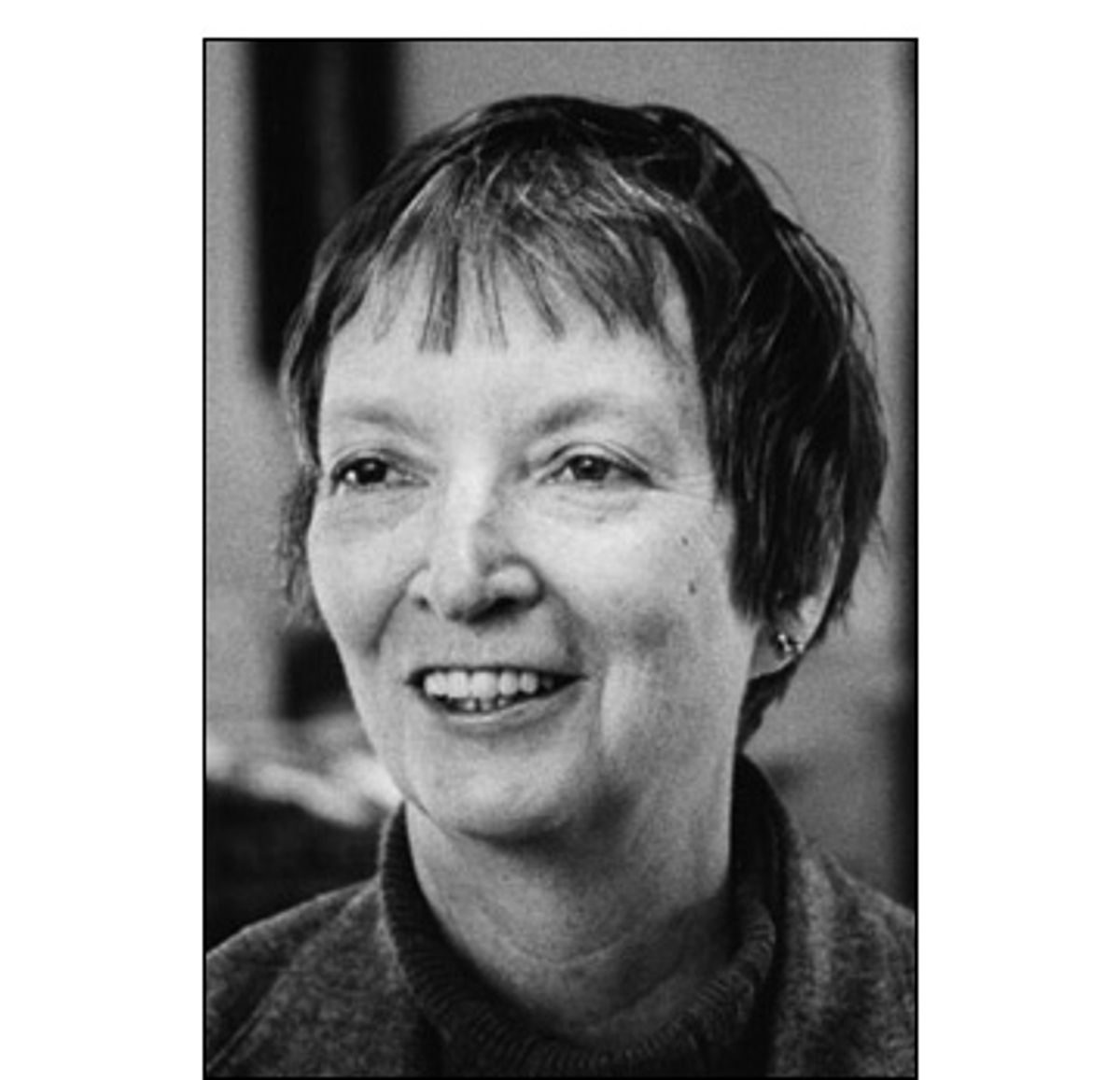
Madeleine L'Engle wrote children's books that were too complicated for grown-ups. I'll miss her.
I got the news Friday morning, hunched over my laptop in a coffee shop, and it forced me out of myself, tossed me sharply back in my seat. I took a little breath. I said, “Oh!” a little too loudly. I disturbed the young man in an Atlanta Falcons T-shirt sitting quietly beside me.
Madeleine L’Engle was dead.
Perhaps this sounds grandiose, but I’m serious — I felt the loss deeply, personally. I was bewildered at the death of a woman I’d never met. Because, to me, Madeleine L’Engle was more than a writer. She was what a sixth grader in an English class — taking hold of her masterpiece, “A Wrinkle in Time” — might call a theme. For those of us who write for children, she was a gold standard, a symbol. She was an example of what one could accomplish without succumbing to the easy tropes and obvious forms of fantasy or young adult or science fiction.
Of course, L’Engle wrote all of those things — fantasy, Y.A., science fiction. But in doing so she reinvented the wheel, she made a bigger, better wheel. Fairies and witches weren’t enough for her. Nor were spacemen, time travel or high school romances — though all of these things, boiled together, created the landscape of her stories.
Nothing was enough for L’Engle. As an author, she danced with demanding philosophical questions and toyed with quantum physics. She wrote about faith with devotion, dabbled in ethics, psychology, myth, art, politics and nature. And she blended everything into stories that describe the crushing complexity of a child’s life in this century. Her books are timeless, but at the same time contemporary. She made art for children, real art.
Of course, she also wrote for grown-ups: more than 60 books — poetry and essays, novels and meditations, memoir. Her adult works contained the same complex ideas, ideas she never exhausted — treatments of magic and faith and science and government — challenging and digesting all the rules of the universe. L’Engle was the name I threw around in defense of children’s literature, the evidence I could toss at my friends who wrote “serious” books of literary fiction or poetry, and say, “Children’s literature isn’t just easy genre writing — see!” I lumped her with J.R.R. Tolkien, Lewis Carroll and C.S. Lewis, as a brilliant writer who just happened to speak to children.
But unlike those other guys, L’Engle was alive! Literally: living in my own era. She knew what the mediocre halls of my middle school were like. In addition to understanding magic, she understood the world I lived in.
L’Engle once said, “You have to write the book that wants to be written. And if the book will be too difficult for grown-ups, then you write it for children.” And this line of hers, which has been taped above my desk ever since I decided to try to write for kids, still rings true. It shows such deep respect for children, and for the complicated means through which they approach the world. The difficult language children speak.
She wrote for everyone, but L’Engle’s books for children were of a different order. They harnessed the full power of her invention, and created a world we could not have imagined independently. She possessed something beyond ordinary human vision; L’Engle had epiphanies. Her creatures and imaginary worlds were both more imagined and more real than most, in part because of the deft way she blended science and religion into fantasy. She managed to define magic in terms that seemed honest, and in doing so made magic more true. To compare L’Engle’s universe to the stuff cluttering the post-Harry Potter marketplace is to compare a unicorn to a goat with one horn sawed off: real enchantment standing beside something that approximates felt hat and white rabbit magic. That kind of creation is not a gift many authors possess. We may imagine what an angel might say, as we recognize a cartoon angel in flowing robes and a Hallmark halo. But it’s much harder to imagine a new kind of angel and give it a new kind of voice. Or a tear in the space-time continuum, for that matter.
Here’s the thing of it: L’Engle wrote with the complexity of the best adult authors and poets, only she did so in a way that a sixth grader could understand. A sixth grader could follow her logic, embrace her characters, sense the themes of good and evil, man and nature, science and faith, and, without feeling overwhelmed by the book, simply enjoy a good read. But when that sixth grader turned into a seventh, or eighth, or ninth grader, or — God forbid — an adult, she or he might find even more.
Remember the cherubim from “A Wind in the Door”? How he insisted on being called a cherubim (instead of a cherub) because he was “nearly plural”? Remember all his many eyes and wings? That was L’Engle — all eyes and wings, constantly moving. Different things to different people, at different stages of understanding. A million surfaces, all of them true.
This — all of this — is what L’Engle has been to me. This is why I said, “Oh!” a little too loudly when I read the news of her death, and this is why I sat back in my chair. This is why I’m still reeling.
What soothes me is that when I saw the awful news, reacted so strongly, disturbed the boy in the Atlanta Falcons shirt, he looked up and asked what was wrong. And when I told him the news, he looked at me with a shocked expression, sat back in his chair, and said, a little too loudly, “Oh!”
Madeleine L’Engle — if she wasn’t all things to all people — was many things to many people. Which is more than most of us can ask for.
Laurel Snyder is the author of the forthcoming novel (for kids), "Up and Down the Scratchy Mountains" or "The Search for a Suitable Princess" as well as a book of poems (for grownups), "The Myth of the Simple Machines." She blogs regularly about children's books at kidliterary.blogspot.com. More Laurel Snyder.
50 shades of Shutterstock
Slide show: Everyone's favorite light-bondage bestseller illustrated by inexplicable stock photography SLIDE SHOW
This week, for roughly the millionth time, E.L. James’ romance-bondage trilogy “50 Shades” nabs the No. 1, 2 and 3 spots on the New York Times bestseller lists. We don’t get it either. Every page of that book, which famously began as “Twilight” fan fiction, elicits a sigh of confusion and weird secondary embarrassment. The question is: Who would read this? (The answer is: Apparently everyone.) It’s the same baffled, helpless feeling we get when we sort through stock photos on a daily basis. Stock photos – which have been the subject of recent outstanding Internet satire – are used by this site, and many others, to illustrate our flood of content. Many are plain and simple, but a good portion are flat-out mind-blowing. Why did anyone think that photo was a good idea? It only made sense to join these forces. And so, we present to you passages from the most head-scratching bestseller of our time, illustrated with the assistance of inexplicable stock photography.
Megaphone by Natalie Bakopoulos
Miracles happen, even in an Athens crippled by a garbage strike, to a young mother unsure of her ability to love
(Credit: iStockphoto/caracterdesign) It’s the third week of the garbage strike and Athens has begun to smell. Bright-colored trash bags fill the curbs and alleyways, and we have learned to step over the rubbish and avoid the blocks that had become unnavigable. We know which stretches are particularly foul — a stretch along Mavili Square, or the entire top end of Monastiraki. Odos Athinas is a sea of trash, and Omonia is ghastly but we don’t go there anyway. May has gone from unseasonably cool to raging hot, and the garbage seems to be melting. In front of the museum it’s like yet another installation project. When I arrive each morning I want to wretch.
Continue Reading CloseNatalie Bakopoulos's first novel, "The Green Shore," will be published by Simon & Schuster in June 2012. Her work has appeared in Tin House, Ninth Letter, Granta Online, and The O. Henry Prize Stories 2010, and she is a contributing editor for the online journal Fiction Writers Review. More Natalie Bakopoulos.
Almost by Chris Pavone
She never thought of herself as ambitious, until motherhood and career collided in one horrifying hospital ride
(Credit: iStockphoto/caracterdesign) It’s just before dawn when Isabel puts the final page down on the fat stack of paper that sits on the rumpled bedspread, next to an overflowing crystal ashtray and a crumpled soft-pack of cigarettes. She’d tried Wellbutrin and Xanax; she’d used patches and gum. In the end, the only thing that made her quit smoking was being pregnant.
But then, after everything, she couldn’t help but start up again. At first it was just a single cigarette per day, or two. Then it became a few, and within months she was back to full-throttle. Over the past couple of years, she’s tried to quit a few times, but not seriously. She anticipates — she accepts — failure. Because she doesn’t want to quit, not really. She wants instead to try, and fail.
Continue Reading CloseMemorial Day fiction: Are we there yet?
Salon exclusive: At the start of the summer fiction season, new stories from Chris Pavone and Natalie Bakopoulos
(Credit: iStockphoto/caracterdesign) “Are we there yet?”
It’s a dreaded sentence. When it’s spoken by an anxious child from the back seat, it’s enough to make stressed-out parents wish they’d never taken a family vacation in the first place. And even if it’s delivered as a sing-songy punch line, from an impatient partner or spouse on a long road trip, it’s an irritating eye-roller of a joke.
So this Memorial Day weekend — the unofficial start of the summer vacation season, and therefore the summer fiction season — we asked two novelists to reclaim the sentence in a new and adult context. For our latest fiction project, there was only one simple rule: Each story had to include the line “Are we there yet?” in a fresh and surprising way.
Continue Reading CloseDavid Daley is the senior culture editor of Salon. More David Daley.
“Frankenstein” remixed
This masterful new adaptation of Mary Shelley's classic novel may be the best interactive fiction yet
Whatever interactive fiction is (and we’re still figuring that out) it suffers from all the problems of traditional fiction and then some. The vast majority of novels and short stories aren’t much good, but when a branching fiction — along the lines of the old “Choose Your Own Adventure” children’s books — fails to engage, the first impulse is to blame the form rather than the content. Let “Frankenstein,” just released by Inkle Studios and Profile Books, serve as a reproach to that reflex. The app is a creative, subtle and sensitive adaptation of Mary Shelley’s classic novella, and it has singlehandedly renewed this critic’s hopes for interactive fiction.
Laura Miller is a senior writer for Salon. She is the author of "The Magician's Book: A Skeptic's Adventures in Narnia" and has a Web site, magiciansbook.com. More Laura Miller.
Page 1 of 130 in Fiction


