Music
Prince wants to sue his fans, undo the Internet
The Artist threatens to take legal action against sites that celebrate him.

In September, Prince announced that he would sue YouTube, eBay and the BitTorrent sharing site the Pirate Bay because people had posted his copyrighted material there. The lawsuits were never filed (perhaps because they were legally questionable: YouTube is arguably protected by provisions in copyright law that render it immune from liability for what people post to the site, as long as it takes down infringing material promptly).
Now the Artists formerly known as Rational* has issued another broad legal threat: He wants to sue his biggest fans. Three devoted Prince fan sites — www.housequake.com, www.princefams.com and www.prince.org — recently received letters from Prince’s lawyers asking them to take down lyrics, pictures, album cover art and anything else “linked to Prince’s likeness.”
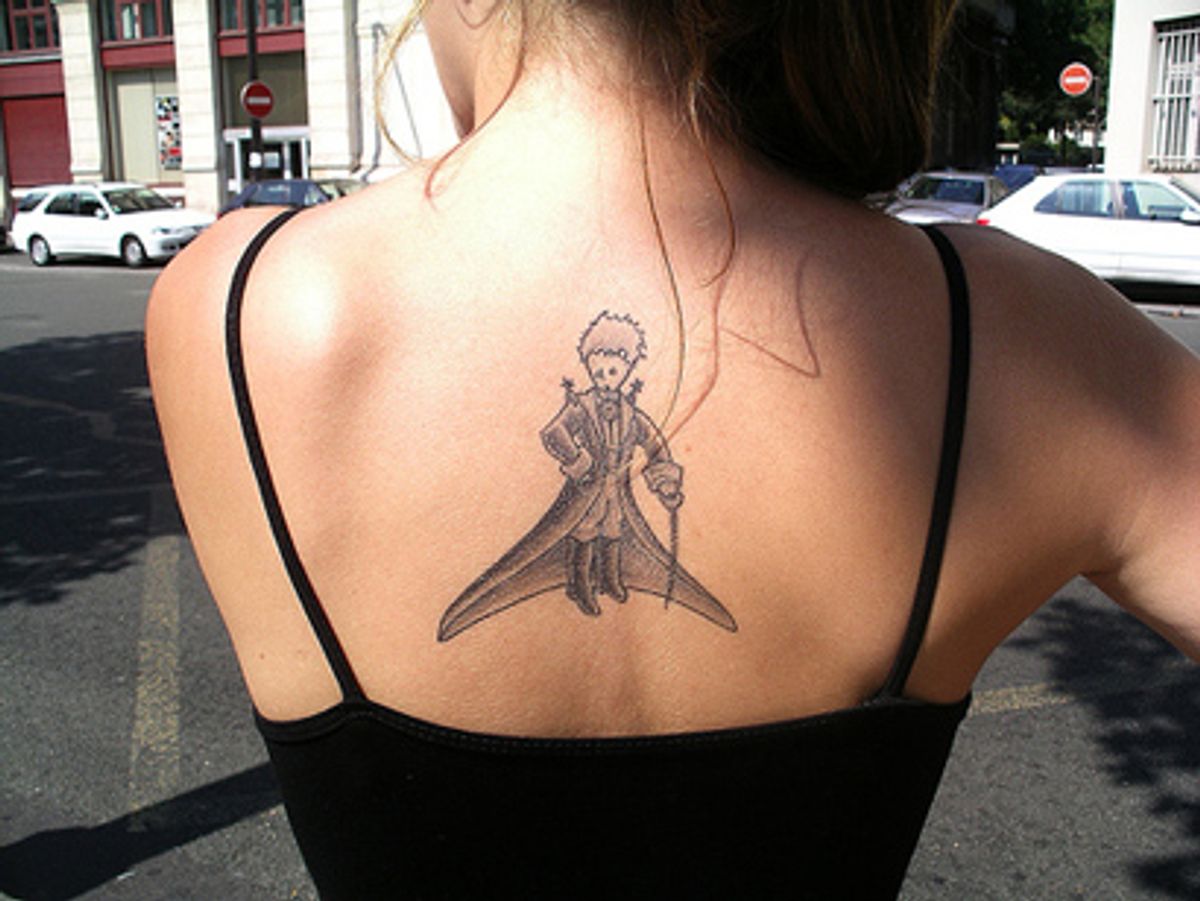
Representatives of the fan sites, who have banded together at Prince Fans United, say they’ll fight Prince’s request. They argue that Prince doesn’t own the copyrights to much of the material he’s asking be taken down — for instance, the fans’ own photographs of the Artist, and their pictures of “their Prince-inspired tattoos and their vehicles displaying Prince-inspired license plates.”
The fans also argue that they have a First Amendment right to display material to which Prince does own the copyrights. “The law clearly provides for displaying of images of a celebrity’s likeness for newsworthy events or matters which are considered to be public interest,” the fans write (they add that the material on their sites “clearly fall within the public interest category.”)
Prince’s fans say they’re prepared to fight him in court. You’d suppose that Prince would back down before the suit ever gets near a courtroom, given the negative publicity that’s sure to attend so boneheaded a move as suing your biggest supporters.
But if it does go down, it’s not at all clear that the fans would win this thing. Do they have a public interest or fair-use right to display Prince’s lyrics? Lyrics-hosting sites have gotten into copyright trouble before, so that would seem a dubious claim. Same goes for cover art and images that Prince owns.
My point is not that the fans are wrong. It’s that the law is. Prince has said that his copyright-lawyering ways are meant to “reclaim the Internet,” but what he really seems to want to do is undo the Internet. The whole business of people being free to say things about him online, beyond his control — out in public for chrissakes! — that seems to rankle Prince, as it does, of course, a lot of others who oppose this whole Web fad.
However this is resolved, that there is even a question about the legality of creating a fan site — that music-biz lawyers feel they can freely threaten people with such broad claims — is itself an illustration of the fundamental incompatibility between Internet culture and the prevailing legal ideas surrounding intellectual property.
Prince won’t manage to undo the Internet, of course, but that he thinks he can is — in addition to a sign that he’s not quite sane — just another signal of the overbroad ideas some in the entertainment business have regarding their hold on the culture. Prince actually believes that he can control a fan’s photograph of her tattoo of her “love symbol”? Doves cry.
*OK, Prince was never known to be “rational.” I was trying to be clever. Maybe you have some ideas? Help me fill in the blank: The Artist Formerly Known As ________.
[Flickr photo of "The Little Prince" tattoo by loran.]
Farhad Manjoo is a Salon staff writer and the author of True Enough: Learning to Live in a Post-Fact Society. More Farhad Manjoo.
Trust me on this: David Bowie’s “Hunky Dory”
The Old 97's singer credits Bowie's brilliant "Hunky Dory" for rescuing his adolescence and inspiring his career
(Credit: Benjamin Wheelock) Dear Kiddos,
Hey, you turkeys. Listen up. I need you to listen for five minutes. I’m going to impart a little wisdom. You can take it or leave it. For what it’s worth, I’d rather you took it.
The advice is this: David Bowie’s “Hunky Dory” is a perfect album, and, since perfect albums are a rare commodity, it is worthy of deep and repeated listenings.
I’m listening to “Hunky Dory” as I write this. How many times have I listened to this, my favorite record? Like a million? And it never gets old.
Continue Reading CloseRhett Miller is the lead singer of the Old 97s. His latest solo album, "The Dreamer," will be released on June 5. More Rhett Miller.
Illustrating the ’60s music revolution
How one book captured the spirit and art of the cultural transformation -- as it was happening
“When did music become so important?” That’s Don Draper from last week’s “Mad Men,” set in 1966. Later in the episode he turns off “Tomorrow Never Knows,” from the Beatles album “Revolver,” and walks out of the room.
Protest music’s odd conservative turn
A 100-track, four-CD Occupy collection assembles generations of icons. So why does it sound shapeless and safe?
“In this hour of the ever-changing season, may our tears not douse the fire in our hearts.”
That’s a guy named Michael Pless singing “Something’s Got to Give.” Even without hearing the song, you can surely imagine the essential elements: Plaintive acoustic strumming, an earnest vocal, and an air of polite outrage to match the stilted syntax and hoary platitudes. Welcome to “Occupy This Album,” the collection of protest-minded songs released by Occupy Wall Street. Sprawling across four CDs and a slew of bonus digital tracks, this behemoth set includes 100 (why not 99?) new and previously released tracks from artists representing a range of generations, genres, backgrounds, settings, and styles. Folkies join hands with rappers; ominous post-rock marches alongside peppy radio pop. There’s spoken-word poetry, tribal percussion, earnest singer-songwriter fare. Even a bit of jazz.
Continue Reading CloseDonna Summer: Disco diva and rocker
If you only knew the singing sensation by her 1970s smashes, you barely knew her at all
There is so much about Donna Summer that we didn’t know… and not just the cancer that took her life. Let’s start with her relationship to rock. Summer is quite understandably known as a disco singer, and quite rightly so. It was disco that made her, and she, as perhaps disco’s highest profile performer, who helped to shape the genre. But like a number of other disco artists — Nile Rodgers and Bernard Edwards of Chic, the vocal trio Labelle and Chaka Khan all come to mind — Donna Summer was also a rocker. Yes, she grew up singing gospel, but she began her professional career as a ’60s rocker. She would describe this as her Janis Joplin phase, and she did indeed sing in a group that performed at the Psychedelic Supermarket — Boston’s version of Bill Graham’s Fillmore. She then went on to play a hippie in the Munich production of the rock musical “Hair,” and sported an enormous Afro inspired in large part by her hero, the black radical activist, Angela Davis. Although the disco music that she made with producers Giorgio Moroder and Pete Bellotte, and engineer Harold Faltermeyer provoked a fierce backlash from some aficionados of rock, this was a foursome that, as critic Dave Mash pointed out, functioned as a rock band, one in which Summer played a pivotal role as singer and songwriter. And then there is her singing. Listen to her hit “Hot Stuff,” and tell me that Summer could not sing rock.
Continue Reading CloseAlice Echols, a professor of English, and the Barbra Streisand Chair of Contemporary Gender Studies at the University of Southern California, is the author of four books, including "“Hot Stuff: Disco and the Remaking of American Culture." More Alice Echols.
Donna Summer, Queen of Disco, dies at 63
The "Last Dance" singer passed away after a battle with cancer
NEW YORK (AP) — Disco queen Donna Summer, whose pulsing anthems such as “Last Dance,” ”Love to Love You Baby” and “Bad Girls” became the soundtrack for a glittery age of sex, drugs, dance and flashy clothes, has died. She was 63.
Her family released a statement Thursday saying Summer died and that they “are at peace celebrating her extraordinary life and her continue legacy.”
Summer gained prominence during the disco era of the 1970s, and released a number of albums that have reach gold or platinum status, including the multiplatinum “Bad Girls” and “On the Radio, Volume I & II.” Her No. 1 Billboard Hot 100 hits include “Hot Stuff” and “MacArthur Park.”
Her sound was a mix of genres, and helped her earn Grammy Awards in the dance, rock, R&B and inspirational categories.
She released her last album, “Crayons,” in 2008. She also performed on “American Idol” that year with its top female contestants.
Page 1 of 284 in Music


