
2008 Elections

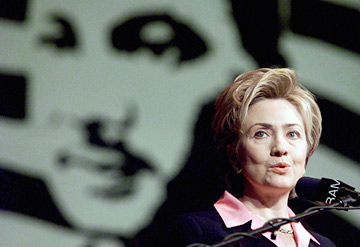
How 1968 changed Hillary

The former Goldwater Girl became a member of the Democratic Party's new vanguard. But that's not how many liberals see her today.

  • more
    • All Share Services

How 1968 changed Hillary

Forty years and four days ago, Hillary Rodham stormed into a friend’s dorm room at Wellesley College and slammed her book bag against a wall.

“I can’t stand it anymore!” she screamed, in tears. “I can’t take it!”

It was April 4, 1968, and Hillary had just heard the news of Martin Luther King‘s assassination. The entire nation was grieving that day, but Hillary’s anguish was especially palpable, because King himself had started her on her path to political awareness, when she’d shaken his hand after a sermon in Chicago.

The next day, Hillary marched in Boston’s Post Office Square, returning to campus wearing a black armband. At a student body meeting at Houghton Memorial Chapel, she boldly spoke in favor of a two-day strike, nearly shouting down a professor who suggested that students give up their weekends instead.

“I’ll give up my date Saturday night, Mr. Goldman, but I don’t think that’s the point,” she said. “Individual consciences are fine, but individual consciences have to be made manifest.”

Just four years earlier, Hillary had been a suburban Goldwater Girl, wearing a 10-gallon hat adorned with the candidate’s catchphrase — AuH2O — and devouring “The Conscience of a Conservative,” the Arizona senator’s campaign biography, the way some young people take to the me-first bromides of Ayn Rand. The story of her conversion from high school Republican to Seven Sisters campus liberal is the story of how the Democratic Party was gentrified in the 1960s, its lunch-bucket rank and file making way for college-educated professionals consumed with issues of civil rights and unjust wars. And its ironic coda is that Hillary Clinton, once one of the activist newcomers, now depends for her electoral survival on reviving the party’s old blue-collar base.

Hillary’s Republicanism was a family heirloom. Her father lost a race for alderman in Chicago before fleeing to the suburb of Park Ridge, and had hated the city’s Democratic machine ever since. In 1960, Hugh Rodham supported Richard M. Nixon for president. His 13-year-old daughter went along enthusiastically. The day after John F. Kennedy won the election, Hillary’s social studies teacher came to class bearing bruises, inflicted, he claimed, by Democratic goons who didn’t like the way he was questioning poll watchers in his Chicago precinct.

Outraged, Hillary and her best friend, Betsy Johnson, sneaked downtown to join a group of Republicans investigating the stolen election. The two girls were dropped off on the South Side, where they canvassed apartment houses and taverns, looking for evidence of ghost voters, which they never found.

“We had clipboards. and we had to register whether people lived there,” said Johnson, now Betsy Ebeling, in an interview. “[What we did] was kind of jaw-dropping.”

By the time she reached high school, Hillary was being exposed to the influences that would shape her later liberalism. Among them was Don Jones, the youth pastor at First Methodist Church. Fresh out of seminary, Jones was a pretty hip guy for early ’60s suburbia: He drove a red Chevy Impala and turned his pupils on to Bob Dylan, French cinema and civil rights. In 1962, he took a group of young people to downtown Chicago, where they listened to Martin Luther King Jr. deliver a sermon accusing people who ignore social change of “sleeping through a revolution.”

Jones found the topic “poignant and apt” for the teenagers, he said recently. Civil rights was “the biggest social revolution we’ve had in this country,” but it was almost never discussed in Park Ridge. After the sermon, Jones took his students backstage and introduced them to King. Eventually, the young pastor was nudged out of First Methodist for his progressivism. But he and Hillary began a correspondence, and more than 20 years later, when Jones was teaching at Rice University in Houston, Hillary invited him to the Arkansas governor’s mansion in Little Rock.

“Hillary began to reminisce,” Jones said. “One of the very first things she said was, ‘I’ll never forget you arranging all of us to go backstage to personally meet Martin Luther King. At the time, I didn’t realize how important that event would become for me.’”

When Hillary went off to Wellesley College, she took Park Ridge’s politics with her. As a freshman, she was elected president of the school’s Young Republicans chapter. But Hillary was also a proponent of King’s civil rights movement, recalled her political science professor, Alan Schechter. And as an ambitious young woman hoping for a legal career, she was strongly in favor of Title VII of the Civil Rights Act, which prohibits discrimination based on gender. Signed by President Lyndon Johnson, it “was seen by the students as the Democratic Party pushing for women’s rights, and that was an issue that resonated with them,” Schechter said.

“I guess you can say I am becoming more liberal,” she wrote to Don Jones, “but what does ‘more’ mean when you start from nothing?”

Kevin O’Keefe, now a Chicago lawyer, met Hillary in 1966, on a double date with a University of Illinois frat brother. Hillary still thought of herself as a Republican, and when the conversation turned to her favorite subject — politics — “she made some kind of remark about Daley and Democrats in Chicago, and I bet it was a suburban Republican comment,” O’Keefe said in an interview.

Her Republican identity couldn’t withstand the era’s events, especially the Vietnam War. In the winter of 1968, Hillary spent weekends in New Hampshire working on the presidential campaign of Minnesota’s dovish Sen. Eugene McCarthy.

When King was assassinated, Hillary was student body president at Wellesley. Despite her anger, and her harsh speech at the chapel, she turned out to be a moderating influence on campus. Hillary and O’Keefe talked often of the possibility of revolution that year, but both agreed they would never take part. In a democracy, you had to work within the system. The week of King’s death, Hillary was true to that philosophy. There was talk of a hunger strike, but Hillary helped work out a more practical solution: pressuring the administration to recruit black faculty and students.

After Sen. Robert F. Kennedy was shot to death, in June, Hillary spent hours on the phone with O’Keefe, sharing her grief.

“I think that by certainly ’68, she was thinking more like a Democrat than a Republican,” O’Keefe averred. “She started to see a world beyond Park Ridge. It was a management town. There was no poverty. They didn’t see strikes or lockouts.”

Nonetheless, when Hillary applied for the Wellesley Internship Program in Washington, Schechter assigned her to the House Republican Conference, thinking she would fit well with Wisconsin Rep. Melvin Laird, its middle-of-the road leader. Hillary, who had resigned from the Young Republicans, “objected to no avail,” she wrote in her memoir, “Living History.”

As an intern, she wrote Laird’s “Fight Now, Pay Later” speech, criticizing Defense Secretary Robert McNamara for hiding the cost of the Vietnam War.

“She was very much opposed to the war,” Laird said in an interview. “She thought it was a mistake that we were there.”

Hillary was also assertive enough to debate Laird — who became Richard Nixon’s first secretary of defense the following year — on Vietnam. So he wasn’t surprised when she became a Democrat.

“Most of those young kids in college, you find them in between,” Laird said. “I had quite a few interns. I always found that a lot of them were feeling their way. I had some others that went that way, too.”

That summer, Hillary accompanied House Republicans to the party convention in Miami Beach, where she staffed a Rockefeller for President suite. She was appalled by the nomination of her teenage political crush Richard Nixon, who was hustling the votes of Southern conservatives.

“Nixon cemented the ascendance of a conservative over a moderate ideology within the Republican Party,” she wrote in “Living History.” “I sometimes think that I didn’t leave the Republican Party as much as it left me.”

Later that month, back home in Park Ridge, Hillary saw news of the riots at the Democratic National Convention. Telling their parents they were going to a movie, she and Betsy Ebeling drove down to Grant Park and walked through clouds of tear gas, past battles between cops and antiwar demonstrators. At one point, they ran into a high school classmate who was providing first aid to the protestors.

The Vietnam War, Ebeling said, “was a huge dividing point for all of us. I think we were all really questioning it. All of that, McCarthy and all of that stuff, had come to a point where we decided we couldn’t support an organization that was for the war.”

When Hillary returned to Wellesley, she told Schechter she wanted to write her senior thesis on Saul Alinsky, the radical Chicago community organizer she had met during a previous summer break. That’s when the professor knew she’d passed a watershed — much as the rest of the country did that year.

“What that meant was that she was vitally interested in the problems of poor people,” he said. “And Republicans are traditionally not interested in the problems of poor people. By that September, she had made up her mind.”

In the late ’60s, Hillary made the same ideological journey as so many well-educated suburban children who would become the Democratic Party’s brain trust: civil rights lawyers, consumer advocates, college professors, political consultants, nonprofit executives and newspaper editors. After 1968, they wrested the party from Southern courthouse gangs and big-city Northern machines. By 1972, Mayor Daley — a man Hillary was raised to despise — couldn’t even get a seat at the Democratic Convention.

Nearly 40 years later, the roles are reversed. It’s Clinton who’s seen by many activists and college kids as a hawkish, racially insensitive backroom pol. She trails a candidate who, rather than writing about Saul Alinsky, put Alinsky’s ideals into practice as a community organizer. She has managed to alienate liberals and African-Americans by contending that Lyndon Johnson, not Martin Luther King, made civil rights a reality — slighting her youthful idol for the old-school Democrat who escalated the Vietnam War. Having reinvented herself once as a ’60s liberal, her hopes for the nomination now hinge on selling herself as a blue-collar heroine. Let Obama win the eggheads; she wants to win the Roseanne vote that was key to Democratic victories of old. But her best chance at winning the nomination may lie in shaking loose some extra delegates — working the levers of the party machinery behind closed doors, just the way Mayor Daley might have done it long ago.

Nicolle Wallace’s Palin lesson: Make better stunt Veep picks

A running mate should be prepared, and maybe not about to be indicted (according to rumors)

  • more
    • All Share Services

Nicolle Wallace's Palin lesson: Make better stunt Veep picksNicolle Wallace (Credit: ABC)

“Game Change” is a movie about how longtime Republican Party communications hack Nicolle Wallace and longtime Republican Party campaign hack Steve Schmidt actually have souls, and brains, and hence feel quite bad for accidentally being responsible for the creation of Sarah Palin, national monster. (Neither felt any qualms about working to get the most irresponsible warmonger currently serving in the Senate elected president, but Sarah Palin was nuts!)

So Wallace, following a 92nd Street Y panel last night, said this:

“There will be pressure to elevate a woman but there will be an equal amount of pressure to pick someone who is prepared,” Wallace said.

And then she said this:

Wallace flagged one female official in particular who she thinks would be a good choice this year.

“Nikki Haley — she’s great,” she said. “She’s the most effective surrogate Romney has.”

If the Sarah Palin problem was a problem of preparation and vetting, Haley … might present some issues? Specifically an odd and mostly unsubstantiated sex scandal and also these rumors that she might at any moment be indicted on tax charges. The tax thing might be bullshit and the affair story was the product of a self-promoting creep but they’re “out there,” as they say.

More important, Haley has been governor of South Carolina since January of 2011. As in very slightly longer than one year. And slightly less time being a governor than Sarah Palin had in 2008. It’s almost as if Wallace is making a pick not based on the principle of Who Would Be Best For the Nation but on demographics and optics?

Wallace also apparently suggested Carly Fiorina, which, lol. Romney/Ex-CEO who famously received a giant golden parachute when she was forced out of her company 2012, everyone! Just the ticket for the new economy.

Continue Reading Close
Alex Pareene

Alex Pareene writes about politics for Salon and is the author of "The Rude Guide to Mitt." Email him at apareene@salon.com and follow him on Twitter @pareene

Sarah Palin’s Hollywood ending

HBO's "Game Change" presents Palin as simply a bumbling Tina Fey -- and misses the real story of the 2008 campaign

  • more
    • All Share Services

Sarah Palin's Hollywood endingJulianne Moore as Sarah Palin in HBO's "Game Change" (Credit: HBO Films)

HBO’s “Game Change,” airing this Saturday, is not actually an adaption of the book “Game Change,” by Mark Halperin and John Heilemann. It is “Sarah Palin Goes Rogue,” the movie, with a couple of anecdotes borrowed from the notoriously gossipy account of the 2008 election as a whole. (Or, arguably, it’s an adaptation of Scott Conroy and Shushannah Walshe’s “Sarah From Alaska.”)

That is sort of a shame. The Palin thing is the most heavily over-covered story line of the entire 2008 campaign, so focusing on it might be totally logical from a marketing perspective, but it’s unfortunate from an artistic one. The film re-creates various moments of YouTube campaign ephemera very well — remember when that old white lady called Obama an Arab and McCain looked uncomfortable? When it takes us behind closed doors, it’s to witness scenes any moderately close observer of the election and its aftermath could’ve dreamed up him- or herself. It might have been fun to see a TV movie about the Democratic primary fight; the personality clashes of the disastrous Clinton campaign would have made for entertaining television, and Mark Penn is surely a creature crying out for a grotesque Emmy-winning portrayal by, say, Paul Giamatti.

Instead, McCain has won the nomination three-and-a-half minutes into the film. Soon we’re watching Julianne Moore watch Tina Fey on TV. You remember the “SNL” sketches making fun of Palin, right? In case you don’t, “Game Change” airs lengthy chunks from most of them. It also has tons of actual footage from CNN and MSNBC and Fox News, and it re-creates debates and speeches and the Couric interview and the Charlie Gibson interview and a bunch of other things you saw either live or on YouTube when they happened.

Moore’s performance is not just fair but maybe even flattering. (For one thing, she doesn’t hit those flat upper Midwest vowels as gratingly as the real Palin.) Woody Harrelson plays strategist Steve Schmidt — the film’s protagonist — as a grizzled, “too old for this shit” campaign veteran called back to the trail against his better judgment. Jamey Sheridan is given barely anything to do as Mark Salter, McCain’s “conscience.” Salter, the primary author of his “Maverick” mythos, is limited, after the Palin selection, to making a hilariously over-telegraphed face of concern as everyone else in the war room applauds her first speech.

But the film is about Schmidt and Nicolle Wallace because they were pretty clearly Halperin and Heilemann’s primary sources, and we watch them become horrified by the depths of Sarah Palin’s ignorance at exactly the same time as everyone else in America became horrified by her ignorance.

Because it’s Hollywood, there’s very little politics in the film’s depiction of politics. Policies are simply things for Sarah Palin to write on note cards and not memorize. Operatives confidently declare, in faux Sorkin-ese patter, that if this or that meaningless decision is made, it means “we’ll lose by five.”

There is a sheen of faux cynicism (McCain swears like a sailor!) but it masks complete naiveté: Everyone is basically honorable and decent. Nicolle Wallace — a member of the Bush administration communications team — is sincerely alarmed at the prospect of someone as dangerously ignorant as Sarah Palin in the White House. On election night, she breaks down in tears as she admits to Schmidt that … she didn’t vote. They embrace.

The film subscribes to the simplest theory of Sarah Palin: That she is childlike, vain and incredibly ignorant but also an essentially decent person and wonderful mother. The moments that come closest to “unfair” — Sarah Palin doesn’t know that the head of Great Britain’s government is the prime minister, not the queen — are basically plausible. This isn’t Andrew Sullivan’s conniving, dangerous pathological liar. It’s an overwhelmed working mother whose most unhinged moments are explained by a crash diet. Her convention speech is largely stripped of its snarling attack lines, imagining a world in which it appealed to “the base” because of Palin’s heartfelt commitment to special-needs children and not because she was very good at saying mean things about Obama. (The film actually repeats the bullshit story that her teleprompter broke midway through, and she kept going.) Even when the film has her take a major heel turn — “if I am single-handedly carrying this campaign, I am gonna do what I want!” — after “winning” her debate with Joe Biden (played by video footage of Joe Biden), she is still basically an innocent seduced by the adoration of riled-up crowds and national attention. (Todd Palin barely does anything.)

The constant use of actual news footage adds a bit of verisimilitude but also constantly raises the question of why this lightly fictionalized version of the election actually needs to exist. “Game Change” is not really for serious political junkies, who remember all the stuff that did happen and will scoff at the stuff that didn’t. (At one point, John McCain answers his ringing iPhone in the middle of the night. He used a BlackBerry, HBO.) But if casually politically involved people want to see their assumptions about Sarah Palin reinforced, well, there are still those “SNL” sketches.

In the end, the Republican operatives who foisted Sarah Palin on an unprepared nation are rightly horrified that they created a monster, but at no point does anyone act concerned that their actual candidate was himself an angry, warmongering old crank with extremely fungible principles. Sure, Sarah Palin didn’t know what the Fed did. Do we have any proof John McCain knew what it should’ve done? Maybe everyone actually was totally unfair to poor Sarah Palin.

Continue Reading Close
Alex Pareene

Alex Pareene writes about politics for Salon and is the author of "The Rude Guide to Mitt." Email him at apareene@salon.com and follow him on Twitter @pareene

Baseless Condi Rice speculation making a comeback

Updated: To celebrate its return, a brief history of this variety of pundit fantasy writing

  • more
    • All Share Services

Baseless Condi Rice speculation making a comebackCondoleezza Rice (Credit: Reuters)

[UPDATED BELOW] Joseph Curl, former White House correspondent for the Washington Times, is bringing me back to the good old days of 2006 in his latest opinion column for the conservative paper. It’s a breathless report that Condoleezza Rice will seek the vice presidency, and it’s a classic of the genre.

Any amateur can speculate that Chris Christie will enter the presidential race, or posit a Mike Bloomberg third-party run, or imagine Hillary Clinton launching a primary challenge against Barack Obama. After all, those three have actually won elections and expressed political ambitions. It takes a real pro to decide to build buzz around someone who not only hasn’t ever run for anything, but who’s never expressed a desire to run for anything.

Rice, the national security advisor in George W. Bush’s first presidential term and secretary of state in his second, is currently a professor at Stanford with the requisite right-wing think tank fellowship. She has not said or done anything “political” in years. But Curl has been hearing things!

America’s first black female secretary of state is quietly positioning herself to be the top choice of the eventual Republican presidential nominee, ready to deliver bona fide foreign-policy credentials lacking among the candidates. The 56-year-old has recently raised her profile, releasing her memoir in November and embarking on a monthlong book tour.

After 2 1/2 years as a professor at Stanford, Miss Rice is reportedly getting “antsy” to get back into the political game. “She’s ready to go,” said one top source.

Oh, a month-long tour in support of her book about her time in the Bush administration! She must be running for vice president, along with Donald Rumsfeld and Dick Cheney and Scott McClellan and George W. Bush.

There’s more. (And not just the part where Curl calls Rice “a spicy Rice dish” and waxes fetishistic about “her guns” being “a match for those of our first lady Michelle Obama.”)

Plus, her selection would be a giant chess move to counter the expected replacement of Vice President Joseph R. Biden with Secretary of State Hillary Rodham Clinton. Sure, the White House denies and denies, but that should really make any political watcher more suspicious. One White House insider even told me that the position swap was the only reason Mrs. Clinton joined the administration in the first place.

Curl has so many inside scoops packed into this column! I had no idea that our first presidential running mate swap since Ford’s 1976 campaign was basically a foregone conclusion and not just a weird Beltway journalist fantasy! But yes, I can see why the still  un-chosen GOP candidate would definitely be looking pretty closely at Rice — who’s been strongly making the case for her selection by not explicitly denying interest in the position — in case Obama replaces Biden with Clinton, which he will surely do.

The column gets worse (“Funny thing is, she is, unlike Barack Obama, an ‘American black’”) but that’s not really important. What’s important is exploring how someone like Condoleezza Rice ends up a perennial name on the fantasy ticket list.

Rice has been a subject of these columns since 2005, when she became Bush’s second secretary of state, and the White House tasked communications operative Jim Wilkinson — previously known best for inventing the false story of Jessica Lynch* — with getting Rice (and her boss) some much-needed positive press. Wilkinson did his job beautifully (remember when Rice’s knee-high boots were a topic of actual serious news coverage for weeks?) and Rice began receiving the “rock star” treatment.

In the Washington Post, Glenn Kessler, author of the 2007 Rice bio “The Confidante,” summarized the exact moment of the birth of the presidential speculation:

In March 2005, before Rice sat for an interview with the Washington Times, Wilkinson slipped a note to the editorial page editor, Tony Blankley, suggesting that she be asked whether she would consider running for president. It was an audacious proposal — she had been secretary for only six weeks — but such speculation would bolster Rice’s image as a leader. (Wilkinson and Blankley said they do not recall the incident, but others present said they saw Wilkinson’s note.)

Oh, the Washington Times.

Shortly thereafter, Dick Morris wrote a book claiming — nay, insisting — that 2008 would be “Condi vs. Hillary.”

As Iraq descended into a violent civil war in 2006, Rice-for-president buzz bizarrely grew. There was enough of a false grass-roots movement for a paint-by-numbers AP trend piece with a silly nickname and everything. Tim Russert asked her point blank. As always, she said no in no uncertain terms.

Then, of course, everyone began to speculate that she’d be McCain’s running mate. Robert Novak claimed as much on Fox. Dan Senor said she was pushing for the pick on some Sunday show. Hendrik Hertzberg wrote a Talk of the Town piece on the subject! McCain and Rice both finally denied “reports” that she was angling for the spot on the ticket.

Now, I guess, it’s time to start up the rumor mill anew.

But before you put pen to paper on that column about how a Gingrich-Rice ticket would surely win moderate women in Ohio, consider this: In addition to the fact that she’s always denied wanting the job, and in addition to the fact that she was an unmitigated failure in the Bush administration, downplaying terrorism as a priority prior to 9/11 and selling the public on the Iraq invasion with untruths, Condi Rice is pro-choice.

*Update: Jon Krakauer recently rescinded his claim that Wilkinson, then a communications aide to General Tommy Franks, was responsible for the initial false Washington Post report on Lynch’s apparent heroics before her capture. Though Wilkinson was obviously involved in the PR campaign surrounding Lynch’s rescue and return to the U.S., he apparently isn’t responsible for falsifying her actions or leaking that false story to the press.

Continue Reading Close
Alex Pareene

Alex Pareene writes about politics for Salon and is the author of "The Rude Guide to Mitt." Email him at apareene@salon.com and follow him on Twitter @pareene

Breitbart shock: Obama was in same place at same time as New Black Panthers

Right-wingers once again try to connect the president to a fringe group of laughable conservative boogeymen

  • more
    • All Share Services

Breitbart shock: Obama was in same place at same time as New Black PanthersMembers of the New Black Panther Party, including, Divine Allah, left, arrive for funeral services for 13-year-old shooting victim, Tamrah Leonard, at the Friendship Baptist Church in Trenton, N.J., Saturday, June 13, 2009. (Credit: AP/Mike Derer)

Andrew Breitbart’s loud, dumb BigGovernment site has a loud, dumb story about how Barack Obama “appeared and marched with the New Black Panther Party in 2007.” The occasion was the 42nd anniversary of the march from Selma, Alabama, and in addition to Barack Obama, Hillary Clinton and Al Sharpton were also there, along with dozens of civil rights era luminaries and thousands of other people because it was a massive annual celebration and not actually an Obama campaign event.

The New Black Panther Party is a cartoonish fringe group of a couple guys who play “’60s radical” dress-up and say mean things about whitey for Fox cameras in order to scare old white people. They have been explicitly rejected by the old Black Panther Party. For some reason, various conservatives have dedicated themselves to proving that this weird, marginal group of Nation of Islam cast-offs is somehow supported by or deeply connected to the Democratic Party and the Obama administration in particular, because, you know, Eric Holder and Barack Obama, those are two guys who very obviously share the values of extremist anti-white proponents of racial separation.

So Breitbart “proves” something or other about the essential anti-white racistness of the Obama campaign by noting that members of the inane New Black Panther Party were spotted by cameras near Obama, at various times, and also NBPP head Malik Zulu Shabazz spoke at the event.

(Brietbart goes on to publish two pictures of the event despite the photographer withholding permission, because “The First Amendment allows photographs of such enormous public importance to see the light of day.” Good luck with that argument in court?)

Andrew C. McCarthy gleefully endorses Breitbart’s story in a breathless post at the National Review’s The Corner:

This is a shocking story, and a breathtaking indictment of the mainstream media which went out of its way to avoid vetting Obama as a candidate — and to make sure anyone who tried to do due diligence got no sunshine. A candidate who chose to appeared in the company of, say, the KKK, would have provoked relentlessly hostile media coverage and, in short order, have been marginalized as disqualified to hold responsible elective office.

If only the media had reported that some fringe weirdos also participated in this event that both Democratic candidates and thousands of other people participated in, and then the fringe weirdos sort of followed Obama around for a while. That would’ve opened America’s eyes! (I mean the media besides NPR, which did report that the NBPP was there.)

Here’s the bit of this sad, desperate reach that is the saddest and most desperate: “Andrew further reminds us that, in March 2008, the Obama campaign website posted an endorsement of Obama by the New Black Panther Party.” Whoa, did they really? Shocking if true! It is, of course, not true. It was a user-generated blog post on the Obama campaign site that the campaign removed as soon as they became aware of its existence. Because websites do not “post” things to themselves, generally, McCarthy’s statement can’t even be charitably described as technically accurate. It’s just a lie.

A random stupid incorrect Breitbart smear is worth paying attention to only to the extent that the smear threatens to bubble up to the more reputable conservative press, or Fox, or Republican elected officials. The McCarthy endorsement means keep an eye on this one!

Continue Reading Close
Alex Pareene

Alex Pareene writes about politics for Salon and is the author of "The Rude Guide to Mitt." Email him at apareene@salon.com and follow him on Twitter @pareene

Palins give free publicity to book bashing Palins

Joe McGinniss' "The Rogue" gets a big marketing boost from its subject's classic (and predictable) overreaction

  • more
    • All Share Services

Palins give free publicity to book bashing PalinsSarah Palin

Here, according to the National Enquirer, are the shocking revelations in Joe McGinniss’ new book about Sarah Palin, “The Rogue”:

  • She has done drugs.
  • She had sex with a basketball player before she married Todd.
  • She is mean and petty.
  • She is a bad mother.
  • She had an affair after she married Todd.

There is also, obviously, some stuff about Trig’s birth, but I have not yet read the book, so I couldn’t tell you how far down the rabbit hole that goes.

Here’s my reaction to those revelations: Sarah Palin is a person! She’s done drugs and pissed people off and slept with people, like 90 percent of American humans. If Sarah Palin was smart she’d dismiss the book with a chuckle, say nobody’s perfect, laugh off the “gossip,” and move on.

Sarah Palin might not be smart.

The Palins always prefer grand self-pitying martyrdom to quiet dignity, of course, which is why picking on them can be so profitable: They will always respond, and always help you drum up more publicity for your Palin-attacking venture. Instead of depriving the book of oxygen, they launched a multimedia attack on Joe McGinniss before he’d finished the first draft, and what they accomplished was … giving him more material and ensuring that even more breathless anticipation awaited the book’s release.

Now that the book’s rollout is underway, the Palins might as well get paid for their marketing efforts. Todd Palin angrily denounced it, again accusing McGinniss of having a “creepy obsession” with Sarah Palin. Oooh, it’s so creeeepy to write an unauthorized biography of a prominent public figure, right?

How bad did the Palins allowed themselves to be trolled? Sarah Palin’s people released a statement on behalf of Brad Hanson, Todd Palin’s former business partner, with whom Sarah Palin is alleged to have carried on an extramarital affair, some years back. The statement is a blanket denial, but what does having the supposed beau directly address the press accomplish, exactly? It just drives more interest in the book’s salacious, shocking revelations about the secret life of Sarah Palin. This guy, of all guys, should be kept out of it.

I am sure that Todd and everyone else is very personally pissed off that McGinniss went to Wasilla, talked to a bunch of people who hate them, and published a book full of stories about how bad and awful they are, but blowing up publicly just sends the message that there’s stuff in the book worth getting worked up about.

Continue Reading Close
Alex Pareene

Alex Pareene writes about politics for Salon and is the author of "The Rude Guide to Mitt." Email him at apareene@salon.com and follow him on Twitter @pareene

Page 1 of 602 in 2008 Elections