Teenagers

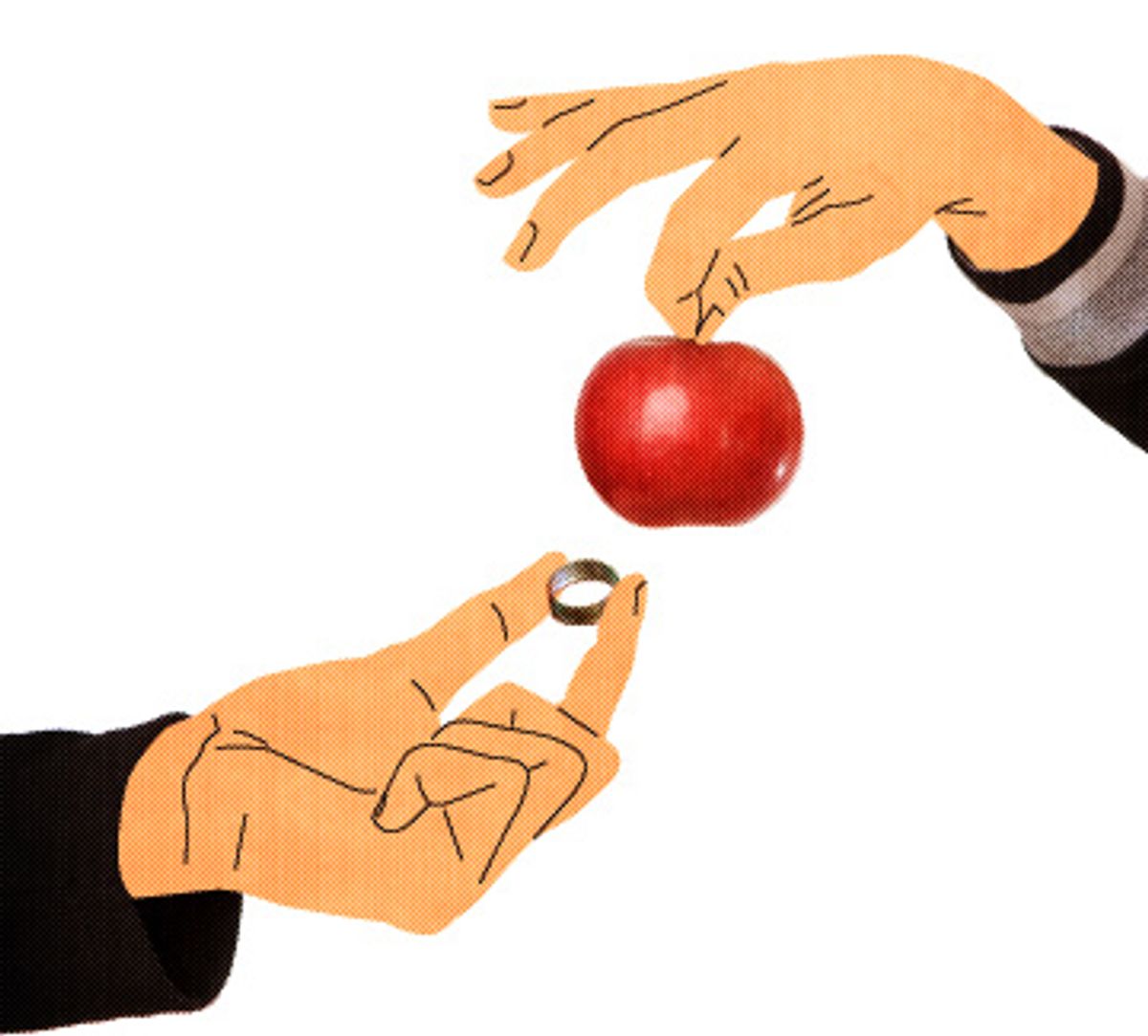
Jesus loves you — and your orgasm

The religious right is celebrating sex to stroke its conservative message. Liberals better rise to a secular defense soon.

  • more
    • All Share Services

Jesus loves you -- and your orgasm

“My worst one was right on the money.”

The subject is orgasms. The speaker is pretty clearly a man. (Woody Allen, to be exact.) And the time is just as clearly the late 1970s — that cresting point of sexual liberation when orgasms were an unqualified good, no matter who was having them.

Those really were the days. In our modern times, suggests historian Dagmar Herzog in her new book, “Sex in Crisis,” the twin titans of Viagra and Internet porn have made the orgasm so large an imperative that we can no longer consider ourselves complete without one — which has naturally resulted in making us less likely to achieve one. Today’s man must, at every available moment, be rocking his partner’s world. Today’s woman must demand nothing less than to be rocked.

Small wonder, then, that we have become an anxious nation — forever wondering if we’re having enough sex — or good enough sex. What if our orgasms really aren’t right on the money? “Never have so many Americans,” writes Herzog, “worried so much about whether they really even want sex at all.”

Being a man, I tend to think sex will shrug off this particular slump and come roaring back for next year’s pennant race. But I wonder exactly how many Americans are, as the author claims, on the verge of swearing off coitus. (Is one of them my partner?) Herzog never offers much in the way of hard answers. Which makes the starting thesis of “Sex in Crisis” — that we are in the midst of a “sexual revolution,” or more properly a devolution — look pretty damned soft, even by the loose standards of sociological treatise. The good news: Herzog has a more interesting agenda up her sleeve than critiquing our ejaculations. She wants to anatomize the subtle and unsubtle ways in which the Religious Right (a rubric that, in her cosmos, must always be capitalized) has warped our sexual politics and forced even the most hardened secular humanists to sing from the Christian hymnal.

“For liberals, sex has become the problem that has no name; one simply does not hear liberals articulate a defense of sexual rights. Instead, what we have witnessed is a coalescing of conservative evangelical and mainstream secular perspectives on sex. The conversation on sex in America — when sex is discussed in a serious and earnest way at all — tends largely to adopt the parameters set by the Religious Right.”

Assuming this to be the case, how exactly did it happen? Herzog’s intriguing and deeply researched thesis is that evangelicals, over the last couple of decades, have beaten liberals at their own game by adapting liberal rhetoric for conservative ends.

As recently as 2003, for example, a certain public figure was arguing that voluntary prostitution was “despicable” because it “demeans the value of women” and promotes “the severe degradation and exploitation of women, the literal rape of countless women around the globe.” Was it Andrea Dworkin? Catharine MacKinnon? The correct answer: pro-life Rep. Smith, R-N.J., whose distinctly illiberal purpose was to limit AIDS outreach efforts to prostitutes and sex workers in developing nations.

Or consider these descriptions of the female orgasm: “waves of pleasure flow[ing] over me … like sliding down a mountain waterfall … like having a million tiny pleasure balloons explode inside of me all at once.” Erica Jong and Xaviera Hollander? Try evangelical sexologists Linda Dillow and Lorraine Pintus. (Even their names are suggestive.) Far from scorning the pleasures of the flesh, evangelical and marriage experts — recognizing, in Herzog’s wry phrase, that “repression alone is not sufficiently appealing” — have made their careers by hymning the joys of strictly marital sex.

“We think the G-spot should be seen as one more way God gave us to share in the pleasure of sex,” announced the Revs. Paul and Lori Byerly, hosts of the online site the Marriage Bed. Evangelicals Melissa and Louis McBurney have endorsed oral sex, mutual masturbation and rear-entry vaginal penetration — between spouses. The Rev. Charles Shedd has declared that he and his wife, Martha, like anal sex just fine. As Herzog notes, these sex-positive Christians have absorbed from the women’s movement of the 1970s and 1980s “an interest in intensifying women’s sexual pleasure,” as well as “the frustration at male fascination with pornography and emotional nonpresence during sex.” The result is a kind of “Christian porn,” as sexperts guide their married readers toward the holy land of “soulgasm,” where spirit and flesh come ecstatically together. If you follow the rules, Herzog writes, “magnificent sex will be yours forever.”

Ah, yes, the rules. A Christian wife, if she wants to keep her husband’s mind off porn and his hand off his own penis (onanism is still a big no-no), will have to be a 24/7 tootsie. She is advised to wear sexy lingerie and to keep her legs shaved and her nether region douched at all times. (“Wives,” as Jack Jones once crooned, “should always be lovers, too.”) And she has to give it up whenever her man comes calling. The example of a woman named “Ellen” is approvingly cited. “[My husband's] purity is extremely important to me, so I try to meet his needs so that he goes out each day with his cup full. During the earlier years, with much energy going into childcare and with my monthly cycle, it was a lot more difficult for me to do that. There weren’t too many ‘ideal times’ when everything was just right. But that’s life, and I did it anyway.”

In a dismayingly familiar pattern, the needs of wives give way more often than not to the needs of husbands. Writers like John Eldredge, Stephen Arterburn and Fred Stoeker, borrowing from the archetypes of the New Age men’s movement, have exhorted Christian men to embrace their Y chromosome, to turn off the Internet and tap into their own “mustang minds,” to become “dangerous,” “wild at heart.” And to somehow remain, in the midst of this testosterone sea, anchored to their wives.

Under these terms, it seems, Christians really can “have it all.” But only if others can’t have any. As Herzog writes, this model of Christ-sanctioned bliss depends on “the construction of homosexuality as the disgusting opposite of heterosexuality.”

And here, too, the religious right found a way to couch its arguments in secular, even quasi-psychological terms. Homosexuality was no longer simply a sin but a disease, eminently curable. “You are heterosexual in Christ,” announced a speaker with the ex-gay ministry Exodus International. “No matter how deep your homosexual feelings are, deeper still lies your heterosexuality, buried under a thousand fears.” Preying on those fears, Exodus has mushroomed to more than 100 chapters across the United States, and zealots like Dr. Joseph Nicolosi have undertaken “conversion therapy” on boys as young as 3.

Of course, to guarantee truly awesome sex, you have to be more than simply heterosexual. You also have to be chaste, at least until you’re lawfully wedded. “Sex is progressive in nature,” warns Focus on the Family founder James Dobson. “Kissing and fondling will lead inevitably to greater familiarity … Tell [boys] not to start the engine if they don’t intend to let it run.”

That purring engine has become the prime mover behind “abstinence only” sexual education — perhaps the religious right’s most lasting contribution to mainstream society. Where traditional sex ed programs attempted to give teenagers the knowledge to protect themselves in sexual encounters, Herzog writes, “new abstinence advocates use the fear of disease to frighten kids away from sex entirely.”

Consider this classroom exercise: “Boys and girls are invited to chew cheese-flavored snacks and then sip some water, after which they are to spit the resulting ‘bodily fluids’ into a cup. After a game in which the fluids are combined with those of other students, ultimately all cups are poured into a pitcher labeled ‘multiple partners’ sitting adjacent to a pitcher of fresh water labeled ‘pure fluids.’ In the final segment, each boy and girl is asked to fill a cup labeled either ‘future husband’ or ‘future wife’ with the contents from one of the pitchers.”

The Georgia-based program behind all this expectoration received more than half a million dollars in taxpayer dollars, and it is by no means the only such program to benefit. At every turn, the abstinence-only movement has been abetted and advanced by the Bush administration. As recently as 2006, the Department of Health and Human Services was offering grants for programs that teach “the potential psychological side effects (e.g., depression and suicide) associated with adolescent sexual activity” and that instruct students that “non-marital sex in teen years may reduce the probability of a stable, happy marriage as an adult.”

“May reduce”? According to whom? Pro-abstinence forces have never been too rigorous in their scholarship; the categorical assertion is their preferred vehicle. (According to the Abstinence Clearinghouse, virgins “invariably do better in their professional and personal lives than nonvirgins.”) And when they fail to persuade with fear, they dangle the carrot of future sex. As Herzog summarizes it: “Only those women who have been premaritally abstinent will be truly, deeply, and consistently desired by their husbands in the long years after marriage … Have no sex before marriage and you will have outstanding sex after marriage.”

Once again, a religious argument is being advanced on strictly secular grounds (in this case, the language of women’s mags). Fortunately, it can also be refuted on secular grounds. According to a recent Yale-Columbia study, some 88 percent of adolescent virginity pledgers fail to keep their pledge. And while they tend to have sex later than their peers, they are one-third less likely to protect themselves when they do.

But then protection has never been part of the grand scheme. In the abstinence worldview, faltering virgins can still find God. (“It’s never too late to be a virgin. No matter what you’ve done, you can have a secondary virginity, it’s there for you to reclaim.”) But they cut themselves off from salvation the moment they take the pill or slip on a rubber. As one activist puts it: “There is no condom that can protect you from a broken heart and a shattered dream.” Susan Orr, formerly of the Family Research Council and, for a short unblessed time, the deputy assistant secretary overseeing family planning and reproductive health, once declared that contraceptives are part of “the culture of death.”

In fact, they are part of something even more troubling to the evangelical mind: a culture of non-procreative sex that has done as much as anything to destabilize the institution of marriage. In their efforts to get this genie back in its bottle, pro-abstinence forces routinely overstate both the success rate of abstinence and the failure rate of condoms.

As Herzog demonstrates, that policy of calculated denial has had particularly ruinous effects in the developing world. Under the guidelines of President Bush’s Emergency Plan for AIDS Relief, African countries risk losing funding altogether unless they can show they have earmarked two-thirds of their prevention monies solely for abstinence and fidelity messaging. According to a GAO report, abstinence mandates have significantly reduced outreach to sex workers and sexually active youth, as well as programs to inhibit mother-to-child transmission of the virus — at a time when HIV has already infected some 33.2 million people around the world.

“What should have been a comprehensive war on HIV,” writes Herzog, “instead turned into a war on condoms.” Which is only a natural outcome, she argues, of an often overlooked truth: The religious right is “not simply a religious movement or a political movement; it has also, and above all, been a sexual movement.”

That it should have used sex as a springboard to power is particularly infuriating to a libertarian like Herzog, who has spent many months delving through the archives of the enemy and has the anger to prove it. Words like “incoherent,” “cruel,” “mendacious” are flung with increasing frequency as the book progresses, and any pretense of trying to understand or engage the evangelical mind is abandoned in favor of tracking its carnage.

But even as I applaud Herzog for her passion, I wonder: How great is the carnage? Has the religious right really changed our national conversation about sex? Or has it been speaking to itself all along?

Teens, after all, are still having sex. (America has the highest teen pregnancy rate in the developed world.) Gay sex, as Herzog admits, has “lost its power to repulse,” and our most populous state has now opened the doors to gay marriage. “Abstinence-only” has been a regression, it’s true, but liberal sex educators have pulled off a co-opting trick of their own, creating “abstinence-plus” programs that make abstinence simply one component in a comprehensive array of informed choices.

Even that is too great a concession for Herzog. She hates the fact that “many self-defined sexual liberals now rush to concede that a delay in sexual debut is desirable and that keeping the number of sexual partners in a lifetime to a minimum is an important sign of psychological health and self-valuing … What’s missing is the basic idea that sexual rights are human rights — for adolescents, for sexual minorities, and for individuals both within and outside the institution of marriage.”

For sexual minorities and consenting adults, yes. But what does it mean to say that an adolescent has a “human right” to sex? How can any adolescent in our eroticized culture be said to exercise “sexual self-determination”?

At the risk of sounding like the kind of liberal Herzog dislikes, I don’t think it’s unreasonable for parents to want to complicate their children’s sexual choices, even if that means delaying them. When my 8-year-old son asks me why Jamie Lynn Spears, the star of one of his favorite shows, is having a baby at 16, I’m genuinely torn in how to respond — not wanting to condemn and not wanting to endorse, either. It’s the same discomfort many parents felt at seeing the topless pictures of Miley Cyrus in Vanity Fair. How do we accommodate our children’s sexuality? And how far?

The religious right was able to shape this dialogue only because the dialogue was already happening — and is still going on today, even in the most progressive quarters. It says something about the ideologues on both sides that we can no longer have that conversation without being called ideologues ourselves.

Louis Bayard is a novelist and reviewer. His books include "Mr. Timothy" and "The Black Tower."

My bully, my best friend

At first, I thought it was a joke when John called me "gay." By the time the school intervened, no one was laughing

  • more
    • All Share Services

My bully, my best friend (Credit: Tad Denson via Shutterstock/Salon/Benjamin Wheelock)

The first time someone called me a “faggot” I didn’t hear it at all. That’s because my head was being slammed against a locker, the syllables crashing together like cymbals in my ear.

When I arrived at this new private school in seventh grade, after my mom got a job teaching, I hoped Fred and I might be friends. We were both faculty brats, and the school catered to elite students from wealthy families.

But our similarities ended there. Fred was tall for an eighth grader, and he was clear-skinned and golden, with hair so light it seemed more than blond. I was short, stocky and pale. He wore clothing emblazoned with Hilfiger and Klein. I was perpetually clothed in hand-me-downs. People whispered that he smoked pot and felt up girls after school. I had changed schools so often I’d forgotten how to make friends.

Something about my incompetence made Fred furious. In the locker room after lacrosse, he would snap at my ankles with his stick until they turned bright red. One day during practice, he dropped any pretense of chasing after the grounded ball and simply rammed into me with all his force. My helmet disappeared; my sweaty gloves flopped on the ground.

“Are you OK?” asked the assistant coach, a tall, heavy-set man who was also the head of the upper school we would both be joining next year.

I nodded, trying to breathe and pretending I wasn’t about to cry. But I lived the next months in fear. That August, before the start of high school, I walked into my brother’s room and asked him, with the most serious face I could muster, if he could teach me how to punch somebody.

But I didn’t have to learn. Fred left our school. I heard his dad was seen screaming in the office about what a screw-up his son was, a detail I relished with a grim smile. Mostly, I was relieved Fred was gone, and I could stop jumping every time I heard a locker slam.

Life was good. It got even better when I met John during soccer practice. He was quirky; he wore the same pair of purple sweatpants to school every day, and he joked about how much he masturbated.

“One time I did it 10 times in one day,” he said at practice, both of us standing at the end of the field waiting for the coach’s call.

“How does that even work?” I asked.

“I guess it was more just to prove that I can.” He shrugged. “By the end nothing was coming out.”

We became best friends.

I was happy to have someone to sit with at lunch, but eventually John started to do something I didn’t understand — he would constantly tell me I was gay. He wrote it on my textbook in biology, where we sat together, and he would whisper it while pointing at me. At that point, I had only had the most fleeting of interactions with girls. I was 14 and barely knew what sex was beyond the definitions I’d gleaned from health class and pornography. But I knew that “gay” meant more than having sex with men. “Gay” was a word that boys tossed around like hot potato, everyone hurling the insult in the vain hope it wouldn’t stick to them. It was a word to be feared, but still buoyant enough not to always be taken seriously. I figured John was using it playfully, among friends, the way he would also call me “Jew.”

A few weeks later, John invited me to join an online conference using our school’s in-house email system for a movie he wanted to make. The film was about one of our heavier friends, Drew, escaping from fat camp. (Fat. Gay. Jew. The words were piling up, but I didn’t care. I had finally wedged my foot in the door.) We went over to John’s house to mess around with a camera one Saturday, but all we ended up filming was Drew chasing a line of bagels rolling down the street while chanting “donut, donut, donut!” Instead, the conference became a place to jab at each other while sitting on school computers. Eventually, John started making more of his gay jokes.

At first I was flattered. This was still a form of attention. And, frankly, I craved attention. But things got weird around spring break. John wrote stories about me taking little boys and animals into the woods to have sex with them. Stories about me being molested by priests and loving it.

Finally, I asked him to stop. The insults meant nothing, I told him in an email, but I agreed to bow out of the group. Still, I would stay up late at night at the family computer, reading and re-reading more elaborately crafted insults and waiting for the page to refresh.

“Since Yannick isn’t reading any more,” he posted, “I can now say: Yannick is GAY GAY GAY GAY GAY GAY GAY GAY . . . ”

It went on like that for a while. The other boys just laughed.

Then one morning, I checked my email in the school library and saw a note from our IT adviser. He had discovered the online conference. The news spread quietly through the administration, which did its best to stop any further damage. A faculty member reminded kids during Monday announcements to be mindful of the correspondence we keep on the school’s email. John was identified as the ringleader and quietly whisked away for probation. Drew was called out for a note saying he was going to kill me (something I again took in jest).

I was rushed in to meet with the head of the upper school, my old lacrosse coach. Again he asked me that bland, unanswerable question: Are you OK?

I thought back to that sunny day on the lacrosse field when he looked down at me with concern while the other boys milled around idly, waiting for the drill to restart. It was all too familiar. Again he towered over me with concern, again the rest of the students milled around idly, having no idea what just happened right next to them. Only this time, the tears were in his eyes as he apologized for what the school had let happen to me.

There’s a weird tension once authorities become involved in teenage arguments. The “can you take it?” approach to maleness sees running to grown-ups as an act of cowardice, which is the very reason I never told anybody outside the email circle what was happening in the first place. In that way, it was a relief that someone finally made it stop. But it was equally bizarre to hear our conversations reinterpreted by adults who were trying to determine the arbitrary moment when a cruel jest slid into unacceptable hatred.

I sat with my mother and the school counselor as they flipped through pages of our correspondence. Read aloud, they sounded different than the jokes I’d convinced myself they were.

The night the news broke at school, John’s mother called me. She was livid with him, she said, and didn’t understand why someone would do something like this. She couldn’t say she was sorry enough. I stammered out the same response I would learn to tell everybody.

“It’s OK, I’m fine.”

Then she put John on the phone. It was the first time we’d spoken since an army of adults swarmed around us. It was the last time we would really speak for almost three years.

“Yannick?” John’s voice was frail, as if he was barely finished crying. I thought about his parents standing above him as he sat on the couch in his living room, face buried in his palms, trying to explain things he couldn’t and didn’t want to. It was the same position I was in earlier that day, the same position I would be in many times in the coming weeks. “I’m really sorry.”

“It’s OK,” I said. “I’m fine.”

“I really don’t know why I did that. I don’t know what I was thinking — I wasn’t really thinking, was I?” he asked to his mother. “Still friends?” he asked me.

“Still friends.”

We both knew the words were hollow. I switched seats in biology. One day, John and I got trapped walking down the same hallway. We joked weakly until my mother rounded the corner. An hour later, she yanked me into her office with my brother. This man is a monster, she said, and now you’re walking down the hall laughing with him? My brother fumed about how the school needed to expel him, to call the police. I sat with my face in my hands, telling them that everyone wanted me to be angry, but all I wanted was to have my friend back.

Hating Fred was much simpler. The violence of getting your head kicked into a locker is so obvious— I could either let it fester within me or redirect it. At night during that spring lacrosse season, I would stare at the knife rack in my kitchen and wonder what it would be like to make one of us bleed. I don’t think I really wanted to hurt him, or even myself. I just wanted him to go away. But John hadn’t hurt me in a way I understood. The standard call-and-response of bullying was gone.

So I did my best to disappear. I spent days down in the photo lab, bringing my lunch there to avoid the cafeteria. I took as many classes as I could. Empty space and time were to be feared. I pretended to search through my locker until the hallway was empty so I could walk to class alone. I tied and retied my shoes.

The next fall I dropped out of soccer. The coach didn’t ask why. John went to the varsity team and became class president. Every time he did something remotely public, someone would whisk me into an office and ask how I felt.

“It’s OK,” I would say. “I’m fine.”

By the end of senior year, my classmates would ask me periodically if I still went to school there.

The last time John and I spoke about what happened was senior spring. Each student was asked to give something called a “focus speech” to reflect on their time in high school. I emailed him that week to let him know I’d be talking about what happened between us.

“You were my best friend at the time,” he wrote back. “I can’t believe I messed that up so much.”

John wasn’t in the room when I gave the speech, but three of the other guys were. Afterward, one of them stood up and said he wanted to publicly apologize for what he participated in. The other two came to me later. Apologies are always awkward, and these were no exception. Our eyes never met.

For a long time, I didn’t hate the people in high school so much as I loathed the school itself for forcing me into this situation. The irony of our cultural anxiety over homophobic bullying is how people deplore it in teens even as it mimics the very policies of our most respected cultural and political institutions.

In that way, bullying isn’t a disease but a symptom of a larger social problem. We can gaze aghast at the horror of bullies every time a new tragedy surfaces, but asking where this violence truly comes from is much more difficult. The year after my school recorded its first case of cyber-bullying, the same administrator who cried in front of me in his office did his best to stop the school’s Gay Straight Alliance from hosting a queer prom. Lower-school parents, he explained to my friend who was planning the event, had seen posters in the high school hallways and didn’t want their children to be affected. I wonder if he ever questioned why there wasn’t a single openly gay teenager walking down those halls.

I’m grateful for one thing my school did, though. They forced all of us boys out of a little world where “gay” could mean anything and everything and into one where we had to look at each other and ask what we were doing. They were trying to foster our empathy.

But did it work? I still don’t know what the answer is.

One summer during college, I logged on to Facebook and saw one of the boys’ statuses unfold down my newsfeed. “Max is gay,” it read. Then a moment later, “Max is really gay,” followed by “Max is super hella gay.” Finally, it ended: “Thanks Dan for updating my status.”

I don’t know if John would still do the same. But I doubt it.

Continue Reading Close

Yannick LeJacq is a freelance writer and photographer living in New York City. His work has appeared in Kill Screen, The Wall Street Journal, The Atlantic, and other publications. You can follow him on twitter @YannickLeJacq.

Interview With My Bully: The bully who asked me out

Caleb insulted my dead boyfriend in front of our entire class. Years later, I learned what he'd really been after

  • more
    • All Share Services

Interview With My Bully: The bully who asked me out (Credit: Tad Denson via Shutterstock/Salon/Benjamin Wheelock)

My prep school may have been home to the offspring of politicians, federal judges and national media personalities, but first and foremost we were teenagers. And so in the spring of 1998, my class gathered in the school library to plan our senior prank.

“We should direct all highway traffic into the school parking lot!” somebody suggested.

“Let’s cover everything in Vaseline!” someone else said.

I played along, but I was having a tough time. Eight months before, my boyfriend Ben had been killed in a car accident. He’d been different from the other guys: almost preternaturally kind and, like me, overly intellectual. On the way to our junior prom, we’d sat in the limo discussing “The Great Gatsby.”

I knew Ben would have loved the senior prank a friend and I proposed — a series of odd, unexpected happenings throughout the day, like hiding alarm clocks in the ceiling panels, and switching teachers’ desks. But I’d barely started my presentation when Caleb Grossman (not his real name) cut me off.

“Jenny’s idea is stupid,” he announced to the class, some of whom began to snicker.

Caleb was Ben’s perfect foil, at least in my literature-obsessed brain. Both boys were brilliant, but Caleb was as cruel as Ben was virtuous. In English class, Caleb made frequent and obscene references to the nature of my relationship with our teacher. He criticized me during discussions. And I’d often catch him watching me with a malicious look that seemed to say: You’d better watch out, little girl.

“My prank is called the Plague of ’98,” Caleb continued. “We’re going to buy 10,000 grasshoppers and release them in the school.”

Pathetically, our high school mascot was the grasshopper.

“And how are we supposed to pay for 10,000 grasshoppers?” somebody asked.

“That’s easy,” Caleb said, then looked straight at me. “We’ll use the money from Ben’s memorial fund.”

I don’t remember how I removed myself from the front of the room. But the second I made it to safety, I started sobbing. I couldn’t stop. I cried through my free period, skipped my physics class, and was finally given permission to leave school early.

Before I left, a teacher made Caleb stand face-to-face with me in the school lobby.

“Sorry about what I said.” Caleb’s face was impassive. He might as well have been talking to a wall.

“OK,” I said, and walked away. But it was not OK. I felt furious. I felt bullied.

Of course, it’s not easy to define bullying. Look at the controversy over recent revelations about Mitt Romney’s high school behavior. What might be school-age antics to one person is violent assault to another.

So did Caleb’s treatment toward me constitute actual bullying? Even at the time, I feared I was overreacting. But as an adult, I can see that his aggressive, leering behavior in the classroom was a subtle kind of sexual harassment, and his outrageous comment about a boyfriend I was still mourning – a blow delivered in front of 120 classmates — felt like the culmination of a long, systematic campaign to wound the parts of my identity that mattered most.

Caleb and I didn’t speak after that debacle. Graduation came and went. I left for college, then moved to New York and became a journalist. I began writing a novel inspired by Ben’s death, and as I wrote, I thought about Caleb. Neither he nor I were the social crème de la crème of our school. We were both outcasts of a certain kind. In another world, we would have been united against more popular forces, not against each other. But instead, we were nemeses. Underdog fighting underdog became a central theme in my book.

As it turned out, Caleb had been thinking about me, too. A few years later, I received the following email:

Hi Jenny: This is Caleb — you may remember me, we went to school together for about ten years. I believe we may have played Orpheus and Persephone in Sue Jagger’s fourth grade production of the Orphic Tragedy. I have my own condo in Foggy Bottom and a job in the city, (where) I will be working for the immediate future. I also have my own car. Anyway, I hope everything is going well and look forward to hearing back from you soon! Caleb

The first thing I thought was: Of course I remember you. You made fun of my dead boyfriend in front of the entire senior class. The second thing was: I did not play Persephone in Sue Jagger’s fourth grade.

I read the note over and over, wondering why Caleb’s email sounded like he was proposing marriage in 16th-century Europe. “I have a fantastic job in the mud-pie-makers guild and can offer you five ducks and one cow,” it seemed to say.

But I couldn’t help myself: I wrote back immediately. I had to see what this was all about.

As it turns out, Caleb wanted to take me on a date. This seemed like a practical joke — a long-delayed maraschino cherry of meanness to drop on me, as if his mission hadn’t been completed. But my curiosity was too great. I said yes.

The day before our date, I received a lengthy, apologetic email from Caleb.

Jenny: I am embarrassed to say I was unable to get a prime time table at any of my favorite places — for instance Eric Ripert’s WestEnd Bistro. However, I have made alternative reservations for 8:30 at a few very viable locations.

Caleb proceeded to list restaurants and the qualifications of each, as if he were some Chamber of Commerce lackey: At Sabores, he wrote, “the dishes are scrumptious thanks to the mastery of Executive Chef Daniel Amaya. The atmosphere is hip and vibrant YET subdued and lounge-like.” At Matisse, he told me, “one of Washington’s foremost wine experts has combined the culinary and visual arts to complete an ambiance of dining bliss.” And finally, the email concluded, “A cheesy but perennial default favorite: Benihana. I have gotten a big kick out of the sense of community + belonging I get from dining with others (I come from a broken home).”

Talk about bizarre. The Caleb who was apparently trying to date me was so wildly different than the villain I’d created in my mind. He seemed less mean than awkward. Almost childlike.

My best friend from high school sent me a message: “Jenny, this is way too weird. will you call me before you go and when you get home?”

I went to meet Caleb, fully prepared to be stood up. I had chosen the “hip and vibrant YET subdued and lounge-like” Sabores, and picked a table in a well-lit part of the restaurant. Caleb arrived and proceeded to order us a ridiculous amount of food and ply me with drinks. I told him I was driving and had one cocktail. We had a stilted conversation over dinner, but I barely had the brain space to listen to him. I just kept wondering: What am I doing here? Does Caleb even remember what he said to me senior year? I didn’t bring it up, and neither did he. Instead, he flattered me incessantly, and I became so uncomfortable that I left early. I arrived home to find the following email:

Jenny: Thank you again for meeting me for dinner tonight. Seeing how as I had a crush on you since like fourth grade, it was sort of a dream come true! You have grown up to be a truly impressive woman and I hope we can stay in touch! Caleb

And there it was. An explanation.

All this time I thought he was a bully, but he was really a misguided kid, with an inability to read social cues.

When I was in the second grade and a boy made fun of me one day, my teacher said he was only doing it because he had a crush. Later, in fourth grade, it was Ben who had a crush on me, one that took me years to reciprocate, a fact about which I still harbored tremendous guilt.

Now, I felt like Caleb was attempting to shove himself into Ben’s role. He offered a hot-air balloon ride, a dinner cruise and, ironically, a pilgrimage to F. Scott Fitzgerald’s grave. But I didn’t want Caleb, a substitute for the boy I’d lost. I thought about all the experiences Ben and I had never shared, and I felt guilty all over again. I’d been so slow to see Ben for who he was, to figure out how good he would be in my life.

In the end, Caleb made a kind of confession — an acknowledgment that we’d been wrong about each other. In an email, he wrote:

With regard to the fourth grade Orphic Tragedy, I realize now that it was Rebecca Marshall — not you — who played Persephone to my Orpheus. I guess the mind (heart?) has a way of rewriting the past as it wishes it were!

I felt for Caleb. I understood his compulsion to strive after something he wanted so badly but would never have, because I felt the same way. But I also knew that the past couldn’t be rewritten or even revised. The last line of “The Great Gatsby” describes the current carrying ships ceaselessly into the past, but I wouldn’t let Caleb drag me back into those old struggles and adolescent longings.

I was forging ahead.

Continue Reading Close

Jennifer Miller's debut novel, "The Year of the Gadfly," is out now from Houghton Mifflin Harcourt.

Desperately seeking survival

I was 13 and diagnosed with terminal cancer -- then Madonna showed me how to live

  • more
    • All Share Services

Desperately seeking survivalA detail from the cover of "Madonna & Me"
This article is excerpted from the new anthology "Madonna & Me: Women Writers on the Queen of Pop," from Soft Skull Press.

When I was 13, my parents drove us 45 minutes from our home on a rural wooded peninsula to a suburban-mall movie theater to see “Desperately Seeking Susan.”

I wasn’t eating popcorn: One year after a surgery that removed a portion of my jaw, I could barely chew. This was just one of the small humiliations that had accumulated after I had been diagnosed with terminal thyroid cancer, undergone extensive surgery and testing, survived a recurrence of the cancer, and traded a death sentence for the murkier and far less glamorous reality of a rare genetic disorder. My neck was sliced halfway round, my jaw riddled with holes, and I had been diagnosed with a second, separate and distinct, type of cancer. The treatments had just started to remove the skin cancer ravaging my torso. Over the next three years I would have nearly four hundred biopsies.

I sat with cold hands tucked into each armpit, only half-awake until the movie started, and my perception of the world shifted in a sudden and irreversible way.

The film offered something that made every hair on my body stand on end: a glimpse of a world that might be out there somewhere — urban, messy, lawless; with cool, caustic boys on scooters, careless girls bedecked in ripped vintage clothes, and enormous empty warehouse apartments.

In the film, Susan was a trickster, a character with no motives, no back story, and no possessions except what she could carry with her or fit into a Port Authority locker. She was all gesture and blithe indifference. She took what she wanted, whether that was a bottle of room-service vodka, the contents of a wallet, a pair of studded boots, or sex on a pinball machine.

Roberta was different: constrained by tradition, rules, responsibilities, life. She had a place in the world, even if she did not like it. And then in an absurd flight of fiction, one knock to the head, a change of wardrobe: Roberta became Susan.

And that wardrobe change seemed to be all she needed. She found a place to stay, a love interest, a job based on her newfound clothes (and confusion). Even after she regained her memory and kept exclaiming, “I’m a housewife from New Jersey!” the truth was subsumed, not just to the cops or the people in her new life, but also to her husband and friends from home.

The movie proposed this radical vision: A costume can change not just perception, but reality.

Precisely when a 13-year-old most wants privacy and autonomy, I had lost all control of my body. Blood, vomit, pus, shit: Everything was discussed, examined, weighed, quantified. Doctors made the major decisions, my parents the minor. I had no choice in even the smallest details; not food, not even bathing. I was not allowed to immerse my skin in water, not allowed to shower. My mother washed my hair in the sink every third day, wrapping fresh scars in plastic to keep them dry and safe.

Other girls might have worried about their appearance, but I didn’t need to bother. I knew that I was ugly—so mutilated, in fact, that I had a permanent gym class waiver to avoid having to disrobe and endure the mockery of my peers.

The surface is indeed superficial, but it matters — it is what you show the world, what you want the world to think and know. And the primary presentation of my essential self, then as now, were the scars. At the start of 1983 I looked garroted, as though I had been hung or strangled or cut in a knife fight. By the end of 1986, I would have hundreds of jagged red slashes and pearly white lumps trailing across my face, chest, shoulders, belly. Others were more obscure, hidden. But even if you couldn’t see them, I could feel them. They throbbed.

“Desperately Seeking Susan” suggested: So what? Don’t try to conform. Wear the costume, be a freak, because if someone is looking at your dress they are not looking at whatever you have hidden underneath.

- – - – - – - – - – -

Just after dawn on a wet gray Saturday morning a few weeks after seeing “Desperately Seeking Susan,” my parents dropped me off in a semi-deserted industrial town across the bay from our house. I was early, but not the first in line at the waterbed store, queuing up to buy Madonna concert tickets.

I recognized one of the boys in front of me, Marc. He had a locker near mine in the back hallway of a rural junior high school that resembled a penitentiary. I would never have dared talk to him at school  — he was in the ninth grade, while I was a mere eighth grader — but that morning on the sidewalk, we struck up a conversation. He introduced me to his friend Scott, and we whiled away the
hours chatting about music.

That is how it worked back then, back there. The music you listened to made a statement of intent: This is who I am. This is what I believe.

Arguably it was not a wise choice for a fourteen-year-old boy like Marc to declare a sincere love of Madonna. The taunt “fag” was a common and casual insult used to torment my new friends, but not necessarily because of the music they listened to. People our age didn’t have the context. Even then it seemed extraordinary to me that “wannabe” and “poser” were two of the worst insults that could be leveled at a person. How do you define authenticity in your early teens, anywhere, let alone if you live in a failing shipyard town? Should we have worn steel-toed boots and welders’ hardhats?

Madonna tickets secured, I went back to my routine of school, doctors — and drill team.

I had stopped riding the school bus because this kid named Troy tried to set my hair on fire. Lacking a ride for the eight miles home through dense second-growth forests, I was forced to find an approved afterschool club.

Technically, it was less a matter of joining the drill team (I was not issued a uniform, nor did I perform) as being drafted. The young, charismatic drama teacher in charge of the group caught me hiding behind the shrubbery once too often and put my idle hands to use running the tape player as the other girls snapped their necks and hips rhythmically to the latest pop tunes.

These girls were popular, the elite of the school, with a mongrel assortment of athletes as ballast for routines. The captain was Nikki, and her co-captain was Crystal. They, like all the girls on the team, had permed hair, blow-dried and feathered up into quiffs standing several inches above their heads.

My title was “manager,” though I was neither in charge nor even a mascot. I was just there, tolerated, ignored, so long as the teacher was watching. This was the most desirable of all scenarios. If I had any goal at all it was to be unremarkable, invisible, vanished, gone.

Practice was held in the commons, a vast multipurpose room where we ate lunch and attended assemblies, with a three-story atrium and potted plants the size of small cars. I stood at a folding table next to the concrete planters, hitting the buttons on a boom box, flipping the cassette tapes, pausing and starting “Hey Mickey,” “Eye of the Tiger,” “Honky Tonk Woman.”

Whenever the team took a break, I trailed behind them to the nearest restroom, where I watched as they painted their faces with cheap drugstore makeup and curled their hair with the butane curling irons they carried in white fake-leather purses.

I was not trying to fit in with the group (and the attempt would have been useless: Outside of drill team, these girls were among my most vicious tormentors). I was studying them in hopes of creating a reasonable camouflage. Belonging with the drill team without actually having to befriend them was conformity as strategy. If that required tedious long hours listening to adolescent girls’ gossip, fine. If I could parse their mannerisms, clothes, concerns, I might be able to stay alive.

- – - – - – - – - – - -

My new friends from the concert ticket line provided the first real social outlet I had in junior high, and I slowly edged toward the group of people who carried colored folders with pictures of their favorite bands cut out of magazines and taped to the front. These people shared my interest not just in Madonna but in the other things we had seen in stolen moments of the music video show Bombshelter Video, or heard on KJET radio: the Pet Shop Boys, Frankie Goes to Hollywood, Tears for Fears, The Clash, the Eurythmics.

They, like me, hid in the library or art room at breaks. We tried to go to dances and football games to fit in, but never quite looked right, even though we were buying our clothes at the same places as everyone else.

Madonna made popular music (though the popular kids in our school didn’t like it) by trading on her sexual identity, and that fact upset our elders, but we were young: asexual, maybe yearning or experimenting, but unformed. She said, decide for yourself. Our parents did not necessarily agree.

We all existed in a liminal space of possibilities, with a profound lack of agency matched by a desire for control. We sorted ourselves according to bands, liking but not quite understanding what we were listening to. It would take a couple more decades before I figured out what the heck Morrissey was talking about in “Piccadilly Palare.”

- – - – - – - – - – - -

It was time for me to prepare for another round of cancer treatment. Most common foods were rigidly restricted, and I was taken off the medication that controlled my metabolism and kept me alive. Starved of food and hormones, I could barely stay awake during the day. Classes, already fraught with social drama, turned into half-waking nightmares. I can’t even offer anecdotes and stories, just vague semi-delusional moments of horror. You’ve seen the movies: Take it as a given that if my life were scripted by John Hughes, I would be worse off than the nameless neck-brace girl portrayed by Joan Cusack in the movie “Sixteen Candles.” I wouldn’t want to read that story, and I certainly did not want to live it.

Outside of class, school was dangerous, even with security cameras in the halls. Violence was common, hazing and bullying were tolerated and often encouraged by staff. The worst of the scenarios, waking or dreaming, too often featured Troy, the kid who tried to set my hair on fire, or Nikki and Crystal, laughing — and the jokes often centered on me, because I could not defend myself. I was too weak to make a fist, and one tap would have shattered my jaw. I learned to be quiet, to watch and wait.

Some people believe there is nobility in suffering, and my family and doctors expected that my peers would respect my vulnerability. The reality is different; profound illness is deviance from the crowd, just like being too smart, too gay, too other. I was different, and different was bad. I was a target of harassment whether I tried to fit in or not. Too sick to succeed, and eventually too sick to care, I kept accounts, clocking each new humiliation.

My hair started to fall out, in strands and then clumps, and no amount of hairspray or sessions with a butane curling iron could hide the fact. One day, I locked myself in the bathroom at home with scissors and my father’s rusty safety razor, hacking and slashing until half the remaining hair was gone.

I was too tired to even flip the tapes as the drill team prepared for the regional championships. Instead, I hid in a restroom the girls did not frequent, sleeping in a toilet stall with my forehead pressed against the cold metal wall.

- – - – - – - – - – - -

The day of the concert finally arrived. It was the first concert I had ever attended, the first night of Madonna’s Virgin Tour, and therefore the very first Madonna concert ever. I had a seat in the front row of the balcony, wedged in among my parents, an aunt, and the sole friend left from before the illness, a girl named Christine. The place was a cacophony of sound and activity, though I was drifting, not thinking about much except radioactive isotopes served in a Dixie cup and days spent in cold exam rooms holding perfectly still as enormous machines scanned my body one millimeter at a time.

I was so tired.

The theater filled with rippling waves of enthusiasm, girls in sequins and lace and sawed-off gloves, and I watched as they excitedly took their seats, clapping and hollering for their heroine.

Then something enormously startling happened: The opening act appeared, snarling white rappers from New York City. So foreign, so improbable, so wrong for this audience. They raced around the stage, waving their arms and shouting, and the crowd went calm in confusion, then started shouting back in anger.

This was the first time Seattle met the Beastie Boys, and the city was not amused.

I put my hands over my mouth, laughing so hard I could barely breathe.

The band held the stage a little longer until nearly all the little girls were booing, then they exited with the refrain “Fuck you, Seattle!”

In the interval between the opening act and the concert, the fatigue of the illness and the excitement of the night proved too much.

I put my head down on the railing and fell asleep, missing the rest of the show.

It didn’t matter — I was alive, I was there, and I still own the souvenir T-shirt.

- – - – - – - – - – - -

One weekend afternoon a week or two later, we boarded a yellow school bus for the long drive to the other side of the county for the drill team regional championships. The team was psyched up and ready to prove it in their matching green-and-white polyester tunics and pleated skirts.

The venue was a windowless junior high gymnasium reeking of floor polish and sweat. We watched the clock, watched each other, the various teams whispering behind their hands about minor fashion differences in the sea of feathered bleached hair: a barrette here, a slightly less-than-white sock there.

Then it was time. My team marched out on to the gym floor in formation, hair and smiles perfectly organized, arms held stiffly at their sides, waiting for the music to start.

Standing behind the table next to other managers and the judges, I was supposed to cue their signature song, “Old Time Rock and Roll,” by Bob Seger.

Instead, I hit the button and started the Willie Nelson and Julio Iglesias duet “To All the Girls I’ve Loved Before.”

Nikki did not lose her smile as she turned her head and made eye contact with me, hatred burning behind mascara, lip gloss, braces. I stared back, then shrugged, not even pretending to search around for the correct tape.

She signaled and the group dutifully started their routine, not at all in sync with the music, half the girls unable to follow the intricate patterns without the cues of the beat.

After the judges issued a verdict (we lost), the girls huddled together, several crying. I stood against a wall, arms crossed, thinking of the scene in Desperately Seeking Susan when Madonna robs her sleeping date, tips her hat, and walks out of the hotel saying, “It’s been fun.”

Sabotage? Simple exhaustion? I don’t know now, and I didn’t care then. Whether choice or accident, it happened. Motives make no difference, and anyway, those girls were never going to play nice.

- – - – - – - – - — – -

The fasting, medication, and tests that had made me too tired to watch the concert were leading up to an even more intense cancer treatment, scheduled for spring vacation to avoid interrupting my schooling. But then another unrelated anomaly was discovered, another surgery ordered. The doctors and my parents nodded and whispered and wondered: How to minimize the impact on my education?

The experts wanted to perpetuate this idea of a normal education, normal adolescence, normal life. I was just about ready to accept the goal of remaining alive, maybe, because it seemed to mean so much to my parents. But normal, by then, was too much to ask.

Clutching the skimpy hospital gown tighter around my shivering body, the paper on the examination table crinkling and tearing as I shifted, I said, “I’m not going back. I will burn down the school if you make me.”

Fuck you, Seattle.

The music was never as important as the delivery. The image. The style. Madonna offered a primitive and powerful idea of liberation, like many artists before and since. But her music was popular; it traveled vast distances, penetrated the forest where I lived. And, critically, her music was joyous. During the years when I had many legitimate reasons to feel sad, Madonna made music with an uplifting message: You can dance.

I made some friends, made some enemies, dropped out of school in the eighth grade. Later I went back, and that was probably the point: Wear the costume, and when it stops working, choose another.

There would be other songs, movies, concerts. Madonna embodied the dichotomy: virgin and whore, dutiful and independent, promiscuous and pristine. She did not require a lifetime of devotion — she did not even sustain her own relationships or defined interests all that long. Take what you need, and keep moving.

My life might have been the same without that concert, but it would certainly have had an inferior soundtrack.

The kids I met in line for concert tickets? We all moved away to find the urban, messy lives we were hoping for. Our friendships have unfurled across decades: adolescence, high school, college, emerging adulthood, coming out, marriage, divorce, raising our own children, travels across countries and continents. But though they are the friends who have known me longest, they (like anyone) only see the versions of myself I share and promote.

When I met one of those boys, decades later, in Europe, he asked,

“Why didn’t you tell me I was gay?”

I replied, “It was none of my business.”

I asked if he knew I was in treatment for two different kinds of cancer in the ’80s. He was shocked. “No!”

The disease wasn’t what I wanted to show, and therefore, he didn’t see it.

- – - – - – - – - -

Last year, I visited my hometown. I was sitting in a coffee shop talking to my mother about plans for the future. The question was where to move next: I was having trouble deciding. This was a conversation I’d had with dozens of friends and colleagues all over the world.

London, Paris, Berlin — which should I choose? I said the words, then started to laugh wildly at the perversity of having the discussion in that place. I was still laughing when I realized that someone at the next table was listening.

I turned to look. It was Nikki, with shorter but still-dyed-blonde hair, jogging clothes instead of the team uniform, and she was staring at me with revulsion. Just like the day I caused the squad to lose at regionals.

I stared back for a sustained moment, and it was like we were once again wielding colored folders declaring our cultural affiliations.

Did Nikki recognize me, or was she just annoyed to have her morning interrupted by the loud chatter of an interloper, someone so obviously from out of town? I’ve lost my rural accent. My clothes, the things I carry with me, communicate that I do not live in the Northwest, or anywhere in the United States. I can’t help it — that is just true.

I’m still the raggedy girl in spectacles, the drill team manager who hits the wrong buttons, dreaming of elsewhere. Nikki is forever the carefully groomed captain, the boss of her small syncopated corner of the world. Maybe there were no possibilities after all: Maybe we were simply what we were, and would always remain.

And maybe that is okay.

Excerpted with permission from “Madonna & Me: Women Writers on the Queen of Pop.” Copyright Bee Lavender, courtesy of Soft Skull Press.

Continue Reading Close

Bee Lavender was born and raised in the Pacific Northwest but emigrated to Europe in 2004, where she lives in London with her family. Her books include a memoir about danger titled "Lessons in Taxidermy" and the anthologies "Breeder" and "Mamaphonic." Bee is the publisher of the online edition of "Hip Mama" and created and publishes Girl-Mom, an advocacy website for teen parents.

A teen’s blog-inspired coming out

A plea for tolerance motivates a high-schooler to enlighten his mom

  • more
    • All Share Services

A teen's blog-inspired coming outDan Pearce (Credit: danoah.com)

There’s a saying that nobody ever changed his or her mind on the Internet. And most of the time, that sad maxim holds a lot of water. But sometimes, something amazing happens.

Take, for instance, what happened after Utah blogger Dan Pearce wrote a frank and lovely essay on his Single Dad Laughing blog back in November, titled “I’m Christian. Unless you’re gay.” In it, he wrote about his friend he calls Jacob, a gay 27-year-old who lives in his conservative Christian community, and how “love, kindness, and friendship are three things that Jacob hasn’t felt in a long time.”

Though his piece was largely a plea for Christians to butch up and start practicing acceptance toward gays, it was, in a much larger sense, a challenge for every one of his readers to refrain from putting conditions on their tolerance. “The more you put your arm around those that you might naturally look down on, the more you will love yourself,” he wrote. “And the more you love yourself, the less need you’ll ever have to find fault or be better than others. And the less we all find fault or have a need to be better than others, the quicker this world becomes a far better place to live.”

The post inspired a deluge of responses – and five months and nearly 10,000 comments later, readers are still digesting and debating Pearce’s call to action. Though Pearce himself says he “had decided a couple months ago that it was time to let the whole thing rest,” he couldn’t resist adding one more postscript.

It was an email from a woman who signed herself “One proud mom.” In it, the “Christian mother of a 15-year-old teenage boy” told Pearce how her son’s teacher had assigned the class to write essays on what the “I’m Christian. Unless you’re gay” post had meant to them. She admitted that she had “felt like it was a direct attack against our beliefs and our Christian religion and that it was promoting homosexuality, a practice that around here is a huge ‘sin,’” and that she had given her son “an earful about homosexuality and God.”

You can guess what happened next. She wrote that he went over to a friend’s house and completed the essay anyway. And in it he wrote, “I am gay and only my one friend knows so far…. My mom and dad always are being angry about gay people and talking about how they are bad and going to hell and they also always talk about how all the gays should be shipped off to their own private island or something so that the rest of us could live God’s commandments in peace.” But he added, “its time to stop letting people’s hate stop me from being happy. I mean should I really have to hate my life and want to die because other people are so hating?… I deserve to be loved just like everybody else does. I just hope [my mother] thinks so too.”

And this time, the mom agreed. She told Pearce that she and her son are closer now, that she’s assured him of her love, and that she’s learned “It’s not about what other people do. It’s about whether or not we are loving them. Nothing else matters at all.”

On his blog, Pearce admits that “I can’t speak to the validity of this woman’s email. I don’t know her.” But he adds, “It seemed heartfelt enough, true enough, and humble enough to me, so I shared it.” It was an act of faith to do so, an expression of hope that once in a while a hardened heart can crack open wide. That if a son asks for love and acceptance, he can receive it. And that even on the Internet, sometimes, a mind can be changed.

Continue Reading Close
Mary Elizabeth Williams

Mary Elizabeth Williams is a staff writer for Salon and the author of "Gimme Shelter: My Three Years Searching for the American Dream." Follow her on Twitter: @embeedub.

Expelled for profanity

An incident in Indiana raises the question: Should tweeting an F bomb get you kicked out of school?

  • more
    • All Share Services

Expelled for profanityAustin Carroll and Garrett High School (Credit: AP)

Austin Carroll is a 17-year-old high school senior in Garrett, Ind., who recently did something so outrageous that it got him expelled from school. He used profanity. On Twitter. Oh my stars and garters! What is the world coming to?

To hear even his own family describe him, Carroll sounds like a bit of a handful. Last month, he earned a suspension for violating the school dress code and wearing a kilt, and last fall, he ran afoul of the school administration for tweeting an F bomb via a school computer.

But Carroll insists his more recent Twitter tirade — which Indiana News Center colorfully quotes as “BEEP is one of those BEEP words you can BEEP use in any BEEP sentence and it still BEEP make sense” – was banged out from his personal account on his home computer. The school district says the post came from a school-issued device or the school’s network. (Both Carroll and the district seem to agree that the post was not directed at any individual or the school itself.)

But students at Carroll’s school are expected to sign a Respectable Use Policy that requires them to “consider the information and images that I post online,” to not “flame, bully, harass or stalk people” or visit sites “that are degrading, pornographic, racist or inappropriate.” There’s no specific limit on word choice, which suggests that the school has now granted itself considerable leeway in interpreting its own rules.

Adding an invasively chilling element to the whole affair is the recent tweet from the Garrett School District’s IT director, who said, “Freedom of speech is our right, but it doesn’t (always) make it appropriate. Think before you type people. #austincarroll.” Because your school is watching you, kids.

It’s true that if more people thought before they typed, the Internet would be a markedly saner place. It’s easy to forget your teachers or your parents might see the words you’re banging out in what feels like perfect solitude. But Carroll wasn’t threatening anyone or deploying hate speech. He was just using some naughty words. He may even have been doing it on his own computer on his own time. And his school appears to have never issued a specific policy on the words in question anyway. So we are left with a kid who will now have to finish out his senior year at a nearby “alternative” school, where at least he can ostensibly wear a kilt and curse on Twitter and nobody will care.

Freedom of speech comes with a price, but the price tag should be appropriate. It’s a school’s job to encourage conversation, to spur kids to question the impact of their language and the effect their actions have, not to scurry away, blushing, from harder questions about expression, personal privacy and the limits of authority. In its Respectable Use Policy, the Garrett school says, with a stunning apparent lack of self-awareness, that “The primary priority of the technology is to improve student learning.” But Carroll and his fellow seniors must be wondering today how attainable that goal really is, when what could have been an authentic teachable moment has been so abruptly shut down.

Continue Reading Close
Mary Elizabeth Williams

Mary Elizabeth Williams is a staff writer for Salon and the author of "Gimme Shelter: My Three Years Searching for the American Dream." Follow her on Twitter: @embeedub.

Page 1 of 45 in Teenagers