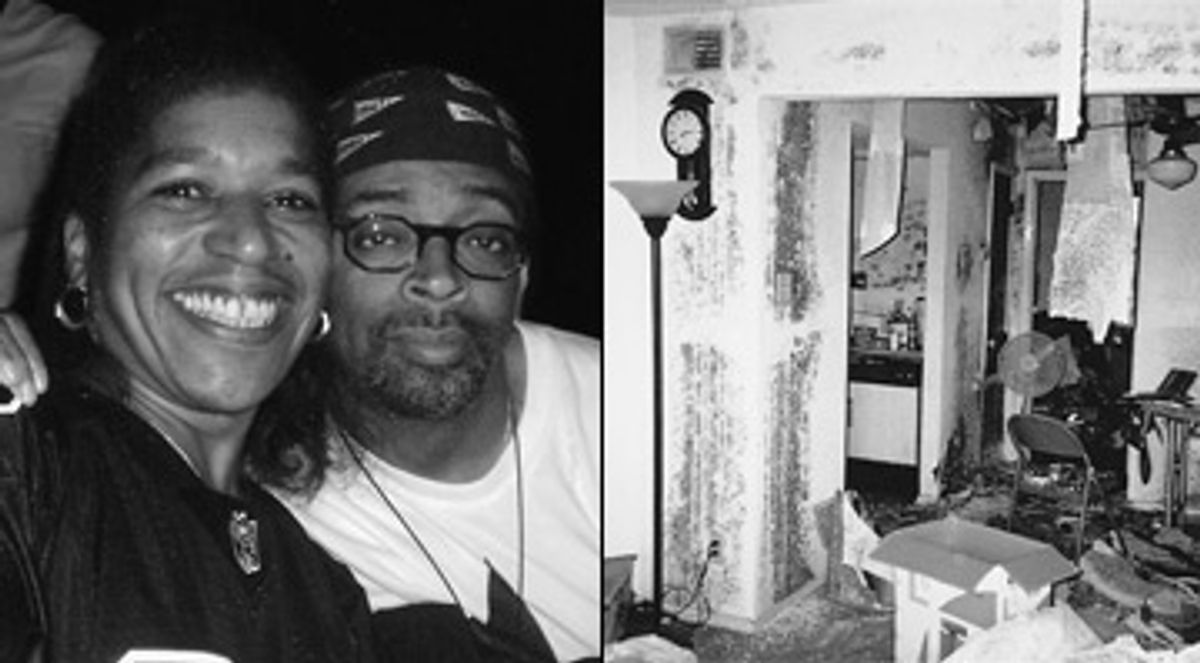
Perhaps the most captivating part of Spike Lee's 2006 Hurricane Katrina documentary, "When the Levees Broke," was Phyllis Montana-LeBlanc. Some critics went so far as to call Montana-LeBlanc the star of the film, no small feat considering that it costarred one of the worst natural disasters in our nation's history. The then 42-year-old's account of fleeing the floodwaters with her husband, Ron, and their eventual return to New Orleans ranged from unbridled anger ("I will take you outside and beat your muthafuckin' ass!" she threatened a particularly unhelpful U.S. servicewoman) to devastating pleas for "some kind of compassion, empathy, understanding."
With its searing eyewitness accounts from survivors like Montana-LeBlanc, "When the Levees Broke" was the first large-scale attempt to humanize a tragedy otherwise conveyed in the media by vague statistics and sensational news footage. Encouragingly, a spate of first-person accounts, both in film ("Trouble the Water") and in print ("Voices From the Storm"), have tried to maintain focus on those who suffered through Katrina and, now, still struggle to put their lives back together.
Add to this burgeoning canon Phyllis Montana-LeBlanc's memoir, "Not Just the Levees Broke: My Story During and After Katrina." Written from the cramped confines of a FEMA trailer over the past two years, the book further details and updates the LeBlanc family's travails, concluding with an epilogue of "Katrina Poems." Full of struggle, survival and hope, Montana-Leblanc's story is a testament to the importance of New Orleanians' continuing to speak about what happened three years ago, and what is happening now -- both positive and negative -- as the city rebuilds.
Salon spoke with Phyllis Montana-LeBlanc from her new home in eastern New Orleans.
For people who haven't seen Spike Lee's documentary, can you explain your experience of the storm?
In the beginning, they were saying something was out there, Katrina was out there, and they didn't know which way it was going to go. We basically did what New Orleanians always do: We made preparations, we cooked some food to last three, four days, we knew we'd need water and stuff. A lot of times, in the past, it's always been that we prepare for the storm, get things ready, and [the hurricane] goes another way or it dissipates. If the government didn't think we should evacuate, then we thought we had a chance. So we all just stayed. We hunkered down. We got ready for it.
But what about when they did call for an evacuation?
That wasn't until Sunday [Aug. 28, the day before Katrina made landfall in New Orleans], and it was too late to leave. There was too much traffic out there -- if we'd left then, we would have been stuck in our car in the middle of the storm. We would have died. So I just walked outside and looked up at the sky to see what we were up against. It was ... it was beyond ominous. That's when the real fear set into my heart.
And then she came through. The apartment took a beating, the rooftops came off the apartment above and came down on top of ours, and the walls started bubbling -- there were bubbles all over the walls, water bubbles -- and my husband said he could actually feel the walls breathing against his leg, in and out. That's when I totally and completely freaked out. I was like, "We got to get out of here, it's going to come crashing down on us, we've got to get out of here."
And that was when you had your first glimpse of the rescue effort?
Yeah, just as we were getting up to leave, a helicopter came by and we were like, "We can go now, we're saved." They came right in front of our faces, and the [pilot] looked at me, but they left. I couldn't believe they were leaving us and they were that close. But my thinking afterward, after reason hit, was that there was only 5 feet of water [where we were] and they had to go and get other people who were in more dire need. I understand that now. And I have great respect for those people, the Coast Guard, because they helped us a lot. They're heroes. But when you're in a situation where water's rising, and you don't know whether people are drowning, it's a different story.
So we were stuck there, looking at two blocks of water, before we could get to higher ground. It was me, my husband, Ron, my sister Catherine and my mom, and she can't swim, and we've got my nephew Nicholas, and he's autistic and he can't swim either. We had to get to higher ground, so we got them on refrigerators, and facing us was the longest two blocks I've ever seen in my life. And then there were the alligators and snakes that we'd heard about being in the water, eating bodies and stuff. It was beyond horrific. There was just two blocks, but you're thinking you may not be able to make it even two blocks. And the water smelled horrible. I can still smell it to this day.
But you got out. After being split up from the rest of your family, you and your husband spent three months shuttling between hotels and the homes of friends and family before coming back to New Orleans. What was returning home finally like?
We came back because my husband, Ron, had to go back to work. [Ron LeBlanc operates a 200-ton crane for a company contracted to help reinforce the city's flood walls.] The city was in just total desolation. There was nobody. So it was hard seeing it like that, but this is where we're from. We had to stay and get our lives back.
So where are you now?
We spent nearly three years in a FEMA trailer set up on my sister Catherine's property, but five months ago we finally got our own place. The old apartment we were living in had been fixed up -- it looks like nothing ever happened to it -- but [instead of going back there] my husband and I bought a new home. It's wonderful. I still haven't gotten used to the space yet, after so long in that trailer. But we're back in eastern New Orleans, where we always were. Personally, I feel like I'm finally moving forward.
Can you talk about getting to tell your story, first in the film, and now in the book, and how that's helped the healing process for you?
It was hard at first. It was really hard. Just sitting down and remembering things, getting them out. But Spike and everyone who worked on the film were so supportive. It became like therapy, just talking everything out. So it was bittersweet but still really good to get a chance to share my story. I think everyone who's been through something like this needs to get the words down onto paper. Keep a journal. Write poetry. Anything. Just get it out.
Where else does your strength come from?
When the storm first came, I was praying and praying. I was on my knees in the apartment praying to God, to Jesus. My husband took one look at me and said, "We're going to be fine." I asked him how he could say a thing like that with God knows what coming down on top of us, but he told me, "Because I've got a praying wife." I really believe I'm here today because of God, and my faith is what continues to get me through the day.
The idea of forgiveness without forgetting seems to be one of the key ideas in the book. Has your new public profile spread that message?
Yeah, but even before ["When the Levees Broke"] I was a motivating personality. Now, I just have a larger audience and more contact with people. I get people coming up to me on the street and at the grocery store. I always know what they're going to say because they come at me pointing -- and then they're like, "Don't I know you from somewhere?" Sometimes it takes a while, but they figure out it's from the documentary. And then they're usually thankful. They're glad I told my story so honestly, and a lot of people who heard I'm going to counseling are now doing the same.
What do you say to fellow New Orleanians still overcome with rage over what happened during and after Katrina?
Well you can continue to hate and blame, but that's not constructive. You have to get past it at some point. At the time, all the dead bodies [I saw in the media reports] were African-Americans. And when it's just black body after black body you start to wonder if all those people who died were white -- if their lives were considered "more valid" by the people in charge -- maybe you would have seen a quicker response. Honestly, I still wonder if more people would have been saved.
But as I said, you have to get past that. You can't rebuild your life if you're full of hate. It just holds you back. So now I want to just think about what I can do, how I can be positive and help myself and this city get back on track. There's still a lot of anger down here, a lot of resentment, but when things are getting done it's because people are coming together to make it happen.
Both George W. Bush and John McCain have recently visited New Orleans. What would you say to either of them?
I don't know why George Bush keeps coming down here. He should have paid us a real visit three years ago. I guess I'd just ask him if he's seen the documentary. Everything I wanted to say to him is in there. And as for John McCain? My mom always told me if you can't say something nice, don't say anything at all.
What do you think the city needs most from the government?
I want to see a commitment to real recovery. Things are moving along down here, but they're slow. We can produce all this money to go into Iraq, but I want to see a government that really believes it when it says, "Let's put this city back on its feet," and is willing to work with the people here to make it happen. The eagerness we feel here, the energy is so warm -- people want to make things not just how they were, but better. We need someone who's going to come in here and immediately take advantage of that energy to help people to rebuild. We're taxpayers. Not everybody in [New Orleans] is poor. A lot of people work and pay taxes. If the government supports us and works with us, we'll come back.
Brad Pitt has a program called Make It Right, which is building new, environmentally sustainable homes in the Lower Ninth Ward. What's your take on his -- or any other celebrity's -- role in rebuilding New Orleans?
The Brad Pitt thing, I think it's a great idea. The energy's there, they're actually getting things to happen, but a lot of people still feel like they want their homes built back how they were. They may not want the type of home Brad Pitt wants to build. Generally, I think [rebuilding projects] need more input from the people -- what they want, what will make them happy and satisfied, because it's their lives. A lot of people in the Lower Ninth are elderly, in their 80s or even 90s. They just want their houses how they were -- stronger, definitely. But what they don't want is someone to come in and say, "This is how your house should be built." A lot of people here feel that they're being told how they're supposed to live. And again, it's a good thought, it's good energy, but they've got to get input from the people of New Orleans.
Is New Orleans ready for another storm like Katrina?
No. The Corps of Engineers is still not doing their job. The government needs to allow the citizens to sue their asses for negligence. Maybe then they will do it right.
But you're hopeful about the future of New Orleans?
Absolutely, I'm hopeful. I feel really good. We're comeback people. It might look a little bleak right now -- we're making mistakes, the government's still making mistakes -- but we're resilient. Volunteerism is still very strong in the city. Kids are coming up from college, sacrificing their vacations, and I really appreciate those people. Personally, I'm trying to put more time into it and motivate other people in every way I can. We all know the sad stories from Katrina, but we've got to keep hoping and praying and working hard to rebuild. You've seen that movie, "We Are Marshall" -- well, we are New Orleans! It ain't over for us yet.
Shares