Recommended books

Dave Eggers’ heartbreaking work of staggering reality

The literary star discusses the future of journalism, the aftermath of Hurricane Katrina and his new book

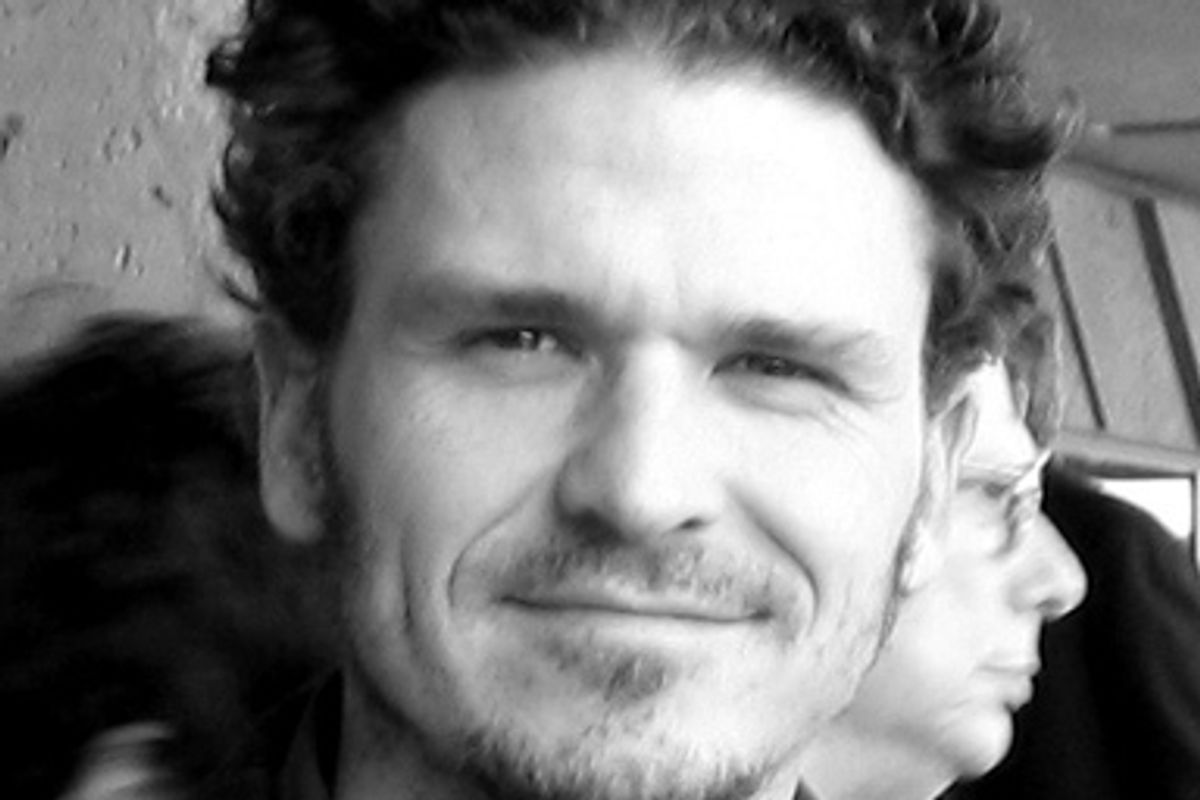
Dave Eggers

For better or worse, Dave Eggers will always be known as the author of the quasi-fictional memoir “A Heartbreaking Work of Staggering Genius,” a 2000 bestseller that recounted his experiences raising his little brother after the sudden deaths of their parents. (He began writing it, I should note, while employed as an editor at Salon.) That sudden rise to literary celebrity threatened to turn Eggers into a Generation-X cult figure or avatar of sincerity, but viewed in retrospect he handled the lightning strike of success about as well as anyone could. He has refused to be trapped by the highly self-conscious literary voice of that book and, more impressive still, has tried to turn his success toward real-world ends.

Eggers has founded a magazine and a publishing house, funded a wide range of youth-literacy programs through his 826 Valencia center, and co-directed an oral history program called Voice of Witness, focused on permitting survivors and witnesses of human-rights abuse to tell their stories. Among various other things, Voice of Witness sparked “Zeitoun,” Eggers’ latest nonfiction volume. You couldn’t write a book more different from “Heartbreaking Work” if you tried. Like his 2006 novel “What Is the What,” which was based on the life of a Sudanese refugee, this is a work of testimony, and almost of ventriloquism.

Its protagonist is Abdulrahman Zeitoun, a Syrian immigrant turned New Orleans contractor and landlord who stays in the city when the rising waters of Lake Pontchartrain rupture the levees in late August of 2005. Zeitoun finds himself nearly alone in an eerily quiet drowned city, which he patrols for several days in a second-hand canoe. Along with a loose network of other New Orleanians who remained through Katrina, Zeitoun rescues stranded elderly people, feeds abandoned dogs, and grills lamb with friends on the roof of his flooded Victorian in the historic Uptown district.

Although Zeitoun has stayed behind primarily to protect his own property — while his American-born wife, Kathy, and their four children drive north to stay with relatives in Baton Rouge — he comes to see his mission in New Orleans as something much larger. While the outside world receives grossly exaggerated reports of anarchy and violence, Zeitoun finds a sense of purpose in a city that is underwater but largely at peace. A devout Muslim, he begins to wonder whether God has chosen him as a servant and witness in this dire emergency.

After a group of heavily armed men and women, wearing uniforms with no identifying badges, burst into a rental property that Zeitoun and his friends are using as a staging area, he has ample time to repent of his sinful pride. He disappears into a quasi-legal bureaucratic nightmare that resembles a Kafka story but is all too real. Kathy does not hear from him for weeks, and given the hysterical news coverage, assumes the worst. Is Zeitoun’s life insurance paid up? Can she begin again without him?

“Zeitoun” is a story about the Bush administration’s two most egregious policy disasters — the War on Terror and the response to Hurricane Katrina — as they collide with each other and come crashing down on one family. Eggers tells the story entirely from the perspective of Abdulrahman and Kathy Zeitoun, although he says he has vigorously double-checked the facts and removed any inaccuracies from their accounts. At first, as a reader, I felt some resistance to this tactic — could the Zeitouns possibly be as wholesome and all-American as Eggers depicts them? — but the sheer momentum, emotional force and imagistic power of the narrative finally sweep such objections away.

In many ways, “Zeitoun” is an old-fashioned journalistic yarn, an oral history rendered in literary form that seeks both to inspire and outrage its readers. Entirely free of authorial asides, its innovative quality lies in its thoroughgoing rejection of the “me journalism” that has dominated reporting for three decades or more. Eggers presents it as a collaboration between him and the Zeitouns, similar in method to his collaboration with Valentino Achak Deng on “What Is the What.” (That book was presented as a novel, Eggers says, because it contained numerous reconstructed scenes from many years earlier, whereas “Zeitoun” is strictly nonfiction.)

I knew Dave Eggers many years ago (although not especially well) when we both worked at SF Weekly in San Francisco. I remember him as a quiet and serious young man who was evidently smart and ambitious, and who had some strange domestic situation involving his little brother. (I didn’t know the details.) It’s safe to say that a lot has changed in his life since then. Among his upcoming projects is a prototype daily newspaper (discussed briefly below) and an all-ages “novelization,” to use his word, of Maurice Sendak’s “Where the Wild Things Are,” to be published this fall alongside the release of Spike Jonze’s movie version, which Eggers scripted. He called me the other day from the San Francisco office of McSweeney’s, his publishing imprint.

I notice that you’ve been inviting people to appeal to you for a pep talk on the future of the printed word, which we’re all very worried about. So if I were to write to you and say, “Dave, cheer me up about the future of writing,” what would you say?

Salon still exists, thank God. I think there’s a future where the Web and print coexist and they each do things uniquely and complement each other, and we have what could be the ultimate and best-yet array of journalistic venues. I think right now everyone’s assuming it’s a zero-sum situation, and I just don’t see it that way.

Our students at 826 Valencia still have a newspaper class, where we print an actual newspaper, and we do magazine classes and anthologies where they’re all printed on paper. That’s the main way we get them motivated, that they know it’s going to be in print. It’s much harder for us to motivate the students when they think it’s only going to be on the Web.

The vast majority of students we work with read newspapers and books, more so than I did at their age. And I don’t see that dropping off. If anything the lack of faith comes from people our age, where we just assume that it’s dead or dying. I think we’ve given up a little too soon. We [i.e., McSweeney's] have been working every day on a prototype for a new newspaper, and a lot of what we’re doing is resurrecting old things, like things from the last century that newspapers used to do, in terms of really using the full luxury of the broadsheet newspaper, with full color and all that space.

I think newspapers shouldn’t try to compete directly with the Web, and should do what they can do better, which may be long-form journalism and using photos and art, and making connections with large-form graphics and really enhancing the tactile experience of paper. You know, including a full-color comic section, for example, which of course was standard in newspapers years ago, when you’d have a full broadsheet Winsor McCay comic. So we’ll have a big, full-color comic section, and we’re also trying to emphasize what younger readers are looking for, what directly appeals to them. It’s hard to find papers these days that really do anything to appeal to anyone under 18, and the paper used to do that all the time. I think there will always be — if not the same audience and not as wide an audience — a dedicated audience that can keep print journalism alive.

Turning to your new book, talk about what drew you to the story of Abdulrahman Zeitoun and his family? Didn’t they come to you through the Voice of Witness program?

That’s right. The idea of Voice of Witness is to let survivors and witnesses of human-rights abuses tell their story at length. It started with a course that I co-taught at U.C. Berkeley journalism school back in 2003. The first book that came out of it was “Surviving Justice,” which was about exonerated prisoners in the United States. Right when we were publishing “Surviving Justice,” Katrina hit.

So we contacted a network of people living near New Orleans, in Houston and Baton Rouge and other cities where New Orleanians had gone, and put “Voices From the Storm” together. That book was 13 or so narrators telling their stories and woven into a day-by-day narrative. One of the narrators was Zeitoun. I was immediately struck by his story, and the next time I was in New Orleans I met up with him and Kathy. I started talking to him to find out what he might not have been able to tell in that five- or six-page section, and it was clear there was a lot more there. Slowly, over the next six months, we began exploring whether there was a way to tell his story in book form, going back to Syria and exploring his life as an immigrant and a New Orleanian.

It’s interesting, and in some ways challenging, that you tell the story entirely from the Zeitoun family’s point of view. There’s none of the pretense of authorial objectivity or neutrality that conventionally goes with journalism. You’re not issuing opinions or analysis from on high.

That’s true. But that’s not to say that it’s not factual. If they misremembered something, we corrected it. If they said something that was provably and demonstrably incorrect, we didn’t print it. But it’s third-person quotes, very much through their eyes as opposed to my take on things, where I come down and give my perspective on their story and the storm and its aftermath. I didn’t feel like I had a place in this narrative, other than to help structure the story and make it compelling and readable. It’s an effort to disappear into the narrative, which I was also trying to do with my earlier book, “What Is the What.” In both cases, I felt like I was most useful being out of the picture.

Which is certainly interesting considering that your first book, the one for which you are still best known, is an autobiographical, self- aware and even self-referential work. Was it important to you as a writer not to repeat that?

Yeah, I think so. After that first book, I wrote some stories that had protagonists that were close to my sensibility or my background. And then I just, to some extent, got that out of my system and wanted to do something new. Not that I would rule out writing in the first person in the future, but I started out as a journalist and that’s what my training and degree was in. I missed it for those years. Fiction was actually new to me. This is just a return to the basic training that I had, where one tries to use whatever skills one has to facilitate the telling of a story that you find important and that you might be able to bring to a wider audience.

This is even closer to journalism than “What Is the What,” right? That was about a real person but was classified as fiction, whereas “Zeitoun” is nonfiction.

They were very similar processes, actually. “What Is the What” is incredibly close to Valentino’s life story and all of the major milestones in his life take place the way that they’re described, but it was necessary to reconstruct dialogue and paint scenes that took place 15 years ago. If we were restricted to nonfiction we couldn’t, you know, prove what the weather was like on a given day. In this case, because it was so recent we really could prove everything and the memory was so fresh that we were able to call it nonfiction. Otherwise, the processes — in terms of working in close collaboration, working with their memories and their subjective point of view — all those things were very similar.

It’s worth mentioning that in both cases you’re deflecting your author’s royalties to some combination of third-party nonprofits and charities, right?

Yeah. I just felt funny, in both cases, benefiting materially from it. I have friends who work in nonprofits down in New Orleans and there’s a lot of need there still. More than ever, really, because we’re at the stage where some of the work that they’re doing and the city in general is getting kind of forgotten. So we thought that if something good can come out of what the Zeitouns went through, then maybe it had some purpose. That was really the main motivating factor, I think, for the family to go into it and to cooperate, as painful as some of these things were to delve back into. Certainly we did go deeper than one’s daily memory could go and the kind of version you tell yourself.

I can see why your writer’s radar got lit up by this story — the combination of Hurricane Katrina, the post-9/11 era and a Muslim family. It’s kind of an amazing microcosm of the 21st century in America, isn’t it?

Yeah, no kidding. You know, there’s a new graphic novel called “A.D.: New Orleans After the Deluge” by Josh Neufeld, and one of his protagonists is also Muslim-American. Their story, like that of the Vietnamese-American community in New Orleans, was a lot less told. And it’s a legacy of the war on terror, this mentality that an overwhelming military response was the solution to a humanitarian crisis. It just felt like a real manifestation of the Bush years. FEMA was folded into Homeland Security and that became a disaster. And then, because of the military response and the perception that law and order was the first order of business, you had the suspension of pretty much all rights. Martial law was more or less enacted in New Orleans, and then you have one man who is just caught between all these lines, all these lumbering forces.

Zeitoun was among thousands of people who were doing “Katrina time” after the storm. There was a complete suspension of all legal processes and there were no hearings, no courts for months and months and not enough folks in the judicial system really seemed all that concerned about it. Some human-rights activists and some attorneys, but otherwise it seemed to be the cost of doing business. It really could have only happened at that time; 2005 was just the exact meeting place of the Bush-era philosophy towards law enforcement and incarceration, their philosophy toward habeas corpus and their neglect and indifference to the plight of New Orleanians.

It’s a completely horrifying story, and I felt like my jaw was on the floor the whole time once I realized where it was going. But Zeitoun actually got out relatively quickly compared to some people, right?

There were hundreds of people that did months in jail, and I’m sure there are dozens of cases of prisoners who did over a year in various jails and prisons around Louisiana, where no one even knew where they were. It’s unprecedented in American history, I think, this wide a suspension of habeas corpus. I don’t think we’ve seen that since the Civil War.

I wonder whether the most damaging long-term consequence of the Bush administration is that by and large Americans are ready to accept things like this, which would have seemed like science fiction 10 or 15 years ago.

I think there was a dark age, right in the middle there, from 2003 to 2006 especially, when anything seemed possible and nothing was surprising. Kathy felt so relieved when she found out that Zeitoun was in prison, like, “Well, I know where he’s at and he’s safe and he’s alive.” But for his family in Jableh, Syria, and his brother in Spain, that was even more worrying. That their brother, a Muslim from Syria, was in an American prison. It was really brought home when I met his family there and learned that they were gathered around the TV and phone for weeks, worried about what might happen to him in an American prison. I don’t think anyone in the Middle East would have normally thought, before 9/11 and before Bush, that that was the worst situation somebody could be in.

One of the ingenious things about the way you tell the story, from Zeitoun and Kathy’s perspective, is that it outflanks the reader’s preconceptions, or maybe even your preconceptions, about what a Syrian immigrant and his Muslim wife would be like. You don’t have to come in as an author and say, “Hey, listen! They’re normal people, they watch TV.” You’re just presenting their lives and we ride with them.

Yeah, that was one of the goals. The first time I met them I was just in their living room and Kathy had just bought a big-screen TV on sale from Sam’s Club, and the kids were all over the place and their pets were running around. They had chickens at the time. They might even have been watching “Pride and Prejudice.” They were just so incredibly all-American in so many ways. And just such a warm and a funny family, where there’s all the family chaos that you want. From the beginning, the idea was to de-exoticize the Muslim-American experience and cover the commonalities.

Kathy and Abdulrahman have a really fantastic marriage and a fantastic family, and I wanted to get that across in a seamless way, so that their plight becomes the plight that anyone might have gone through. Certainly it wasn’t all Muslims who were caught up in the aftermath of Katrina, so in a way it is everyone’s story.

If there is any silver lining to their story it seems like Zeitoun’s ancestry and ethnicity played only a minor role in the way he was treated. There’s a really crazy period where the guards are telling him “You’re al-Qaida, you’re Taliban.” But it doesn’t last that long.

I interviewed two of the police officers that arrested him, and I put it to them: Did his accent or his name have anything to do with it? And they very convincingly denied it. They might not have even heard him speak. Gross indifference and incompetence played as much a part as ad hominem suspicion and incarceration with intent. So much of this is just systemic dysfunction.

The contrast between the first part of the book, when all kinds of random people in New Orleans are trying to help each other through this painful and destructive experience, and the second part, when the world of authority comes down on them like a ton of bricks, is just amazing. It seems like, if the cops and military had simply stayed out of New Orleans altogether, everything would have been much better than it was.

You know, I’ve heard that thesis before, and it’s fascinating. Zeitoun’s friend Todd Gambino counts his rescues at about 200 — the number of people he plucked off of rooftops and porches and second-story windows and then brought to safety. There were all these incredibly heroic citizens and good Samaritans going around helping. But there were so many police and Coast Guard and National Guard who did phenomenal work too. It’s just that overall, as a result of all the misinformation spread by the media, those going in really expected a war zone. All these National Guardsmen, some of whom came from Afghanistan and Iraq and had been trained in house-to-house searches, came in and they were all hyped up, expecting the worst. There was this sense that martial law is in place. We’re going to clear out this city at all costs and we’re going to cast the net pretty widely. So they came down with unnecessary force. Coupled with a non-functioning judicial system, that produced some mind-boggling human rights violations. 

You know, on the failure of the media and public officials to paint an accurate portrait, that still has not been addressed. Having written a couple of times about the film “Trouble the Water,” I can attest to the fact that there are a lot of people out there, among Salon’s readers, who still believe that there really was rape and pillage in New Orleans, that armed men were shooting at helicopters and all that stuff.

Yeah, there are those that think that it’s some sort of liberal or left-wing apologist baloney to say otherwise. But all the statistics bear out that crime was grossly exaggerated. They predicted hundreds of bodies in the Convention Center and the Superdome, and they found only one murder among both. More than any other event in recent history, this exposed the quiet racism that’s right there under the surface, these assumptions.

Everyone’s willingness to accept the idea that a city would turn into this chaotic war zone in the aftermath of a storm, it really necessitates a long soul-searching for everybody that bought into that. Zeitoun’s relatives believed it too, and thought that the major danger he faced was being preyed upon by these lawless gangs of young men. And that’s the twist in the book, that I’m hoping people don’t see coming. But maybe I’m already giving it all away. [Laughs.]

The best books of the decade

A tribute to the fact and fiction we wouldn't stop talking about in the 2000s

We’ll spare you the overly ambitious sweeping statements. This has been a rocky decade, to say the least, and as many writers showed us just after the Sept. 11 attacks, we often can’t formulate our best thoughts about traumatic events until much, much later. If anything, looking back over the past 10 years of Salon’s books coverage, what’s most striking is the durability of fiction and memoir; the novels and autobiographies we were talking about in 2000 still feel important today, while the bloom tends to fade faster from the nonfiction of the moment.

For that reason, the nonfiction on this list steers away from the most avidly trend-setting treatises (Malcolm Gladwell, we’re looking at you!) in favor of definitive accounts of current events, penetrating histories and explorations of perennial human concerns. As for fiction, the most exciting thing to emerge in the 2000s has been the integration of genre elements into literary fiction: You no longer have to choose between good writing and good storytelling. But if the preceding two decades have seen the dismantling of the tyranny of rigorous realism, there are still masters (like Mary Gaitskill) working in that vein, and following it into rich new territory. The following lists are presented in chronological order.

FICTION

“The Amazing Adventures of Kavalier & Clay” by Michael Chabon
Two nice, mid-20th-century Jewish boys go to work in the nascent comic book industry, where the dreams and nightmares of the real world manifest themselves in the extravagant guise of entertainment for children. This buoyant tragicomic adventure story remains one of the most persuasive and gorgeously written depictions (and vindications) of the way popular culture transfigures our lived experience to become the modern-day equivalent of myth and folklore.

“The Corrections” by Jonathan Franzen
The Lambert clan tries to figure out a way to live honorably in a world of leveraged buyouts, pharmaceutically engineered moods, dot-com scams, mix-and-match lifestyles and the cult of Christmas. In this saga of a befuddled Midwestern family, Franzen manages to achieve something remarkable and possibly unprecedented: a merciless satirical look at contemporary life that’s also fundamentally generous and human.

“John Henry Days” by Colson Whitehead
A hack journalist gets hired by a travel Web site to write up a festival celebrating the folk hero John Henry. This brilliant, restless novel is about what happens when a cynical, opportunistic, media-steeped product of the Information Age collides with the mythic dignity of America’s past. The fact that both the hero and the freelancer are black only complicates and enriches this novel’s wit.

“The Fortress of Solitude” by Jonathan Lethem
A boy named Dylan comes of age in a bohemian household as one of the few white kids in 1970s Brooklyn. To the smooth and sinewy beat of the era’s soul soundtrack, this is a bruised paean to the author’s hometown, a meditation on American boyhood and a cautionary tale about the folly of trying to escape your past.

“Jonathan Strange & Mr Norrell” by Susanna Clarke
Capacious, digressive, amply footnoted and very original, this is a classic historical novel — only the history it’s based on is (almost) entirely fantastic. Set in the early 19th century, it describes a Britain where magic was once a fairly common practice and is still the subject of serious scholarly study. With Austenian elegance and glorious imagery, Clarke describes the professional rivalry between the two eponymous master magicians; the result is nothing less than pure sorcery.

“Magic for Beginners” by Kelly Link
It’s almost impossible to choose between this collection and Link’s galvanizing 2001 debut, “Stranger Things Happen.” Her exquisite stories mix the aggravations and epiphanies of everyday life with the stuff that legends, dreams and nightmares are made of, from pop culture to fairy tales. Some of these pieces are very scary, others are immensely sad, many are funny and all of them are written in prose so flawless you almost forget how much elemental human chaos they contain.

“Never Let Me Go” by Kazuo Ishiguro
Kath, a seemingly ordinary British girl, goes to a special boarding school where she and her friends are groomed for a special fate while enjoying and suffering the loves and betrayals that come to young people everywhere. This odd, heartbreaking novel unfurls age-old conundrums about what it means to be a person; about the grievous sin of treating anyone, however unexceptional, as the means to an end; and about the unfathomable future that awaits each and every one of us.

“Veronica” by Mary Gaitskill
A model with a fluorescent, dirty past winds up as a nobody with hepatitis who cleans offices for cash and dwells on her memories of an unlikely friendship with an older woman who died of AIDS. There’s nothing feel-good about “Veronica,” but this novel is so alive, so streaked with colors and spiked with sharp edges, that reading it is almost a tactile experience. It’s a perfect, slicing portrait of a sad, once-beautiful woman who doesn’t want — or deserve — our pity, but who ultimately earns our compassion.

“On Beauty” by Zadie Smith
Conservative black Brits of Caribbean descent move in down the street from a leftish, mixed-race family in an East Coast college town. In Smith’s hands the classic fodder of academic satire becomes miraculously endearing and sympathetic, a tale of two families that explodes with vitality, curiosity, enthusiasm and love for human beings and the perplexing situations they get into.

“A Person of Interest” by Susan Choi
In this Hitchcockian tale, an undistinguished Midwestern math professor finds himself the object of rumors and suspicion when a more celebrated colleague is killed by a mail bomber. A nuanced consideration of what it means to fit in, and of what we owe to the people around us, “A Person of Interest” eschews obvious answers. At once a tragedy of character and a tale of suspense, this novel is a seamless integration of the political and the personal, beautifully written and impeccably unsentimental.

NONFICTION

“A Heartbreaking Work of Staggering Genius” by Dave Eggers
Even if you haven’t read Eggers’ memoir about raising his younger brother after the deaths of their parents, you’ve felt its effect. An entire literary generation fell under the spell of Eggers’ playful, ingenious, self-reflective style (and that was only the beginning of a brilliant career as an author, editor, teacher, collaborator and all-around impresario). Often mischaracterized as merely “ironic,” that voice found a fresh, exhilarating way to approach life’s devastating truths without succumbing to knee-jerk pathos or solemnity.

“The Battle for God” by Karen Armstrong
A year before Muslim extremists brutally invaded the awareness of every Westerner, Armstrong, a former nun, published this essential, lucid consideration of the fundamentalist mind-set and its roots. During a decade when the conversation about religion has degenerated into pointless duels between screeching polemicists, she has brought a measured, open-minded wisdom to questions of faith and its place in the modern world.

“Nickel and Dimed: On (Not) Getting By in America” by Barbara Ehrenreich
At the suggestion of an editor, journalist Barbara Ehrenreich attempted to live for two years on the wages of the average unskilled American worker. She worked as a waitress, maid and Wal-Mart clerk, shacking up in dives and dining on fast food, in an effort to find out how America’s working poor make it. Her answer: A lot of them don’t. If her efforts to suggest remedies are often rebuffed by her own subjects, her visceral dispatches from the ragged fringe of the American dream remain indispensable.

“The Assassins’ Gate: America in Iraq” by George Packer
A political liberal covering the Iraq war for the New Yorker, Packer initially supported the invasion as a way to rid the world of a bloody dictator but later came to view it as a wasted opportunity. The result of his reporting is among the most measured, thoughtful and self-examining of the many books on the conflict, taking in not only the theorists who justified it, but also inexperienced soldiers, frustrated reformers, the worried and grieving home front and ordinary Iraqis. Anyone looking for a better, deeper, broader understanding of the war will find it here.

“The Looming Tower: Al Qaeda and the Road to 9/11″ by Lawrence Wright
Six years after Sept. 11, Wright produced the definitive account of the terrorist attacks and how they happened, from the fanatics who conceived and orchestrated the plot to the intelligence agencies that failed to anticipate and thwart it. He developed an expertise on the subject so deep that in time those same agencies tried to utilize him as a source and even tapped his phones. Yet for all the knowledge that went into “The Looming Tower,” it reads as sleekly and compellingly as a top-notch thriller.

“The Omnivore’s Dilemma: A Natural History of Four Meals” by Michael Pollan
Inexhaustibly inventive and imaginative, Pollan jazzes up what could have been a dreary jeremiad about the “industrial food chain” by inviting us to view the modern American diet as the triumph of a South American grass that can currently be found in every processed food: King Corn. From the scientist who transformed the world by synthesizing nitrogen fertilizer to a calculation of just how much oil goes into “making” one conventionally raised steer (about a barrel), there’s an observation to blow your mind on nearly every page of this hugely influential exploration of what we eat.

“Fun Home: A Family Tragicomic” by Alison Bechdel
This graphic memoir is an investigation of Bechdel’s childhood, spent in the ornate Victorian house that her father obsessively restored and maintained. After she came out of the closet to her parents at 19, her mom delivered a return whammy: Bechdel’s father had a lifelong history of affairs with men, including teenage boys. Not long after, he died under ambiguous circumstances. Bechdel’s years of drawing a serial comic strip have honed her ability to convey oceans of feeling in a single image, and the feelings are never simple; “Fun Home” shimmers with regret, compassion, annoyance, frustration, pity and love.

“The World Without Us” by Alan Weisman
How would the earth be changed if the human race simply and suddenly vanished? Weisman uses this startlingly elementary question and its fascinating answer to suggest just how artificial our grip on the planet has become. Within days, subway tunnels would flood and collapse, subdivisions would be shattered by frozen pipes and devoured by mold and termites. For some reason, this doomsday scenario is more thrilling than depressing; it beguiles us into doing what often seems beyond our power — picturing a much healthier planet and considering a less drastic way to get there.

“Pictures at a Revolution: Five Movies and the Birth of the New Hollywood” by Mark Harris
Film critic Harris takes the five nominees for the best picture Oscar of 1967, and uses them, and the stories behind them, as lenses to examine the tectonic changes that were taking place in the movie industry and American society as a whole. “Bonnie and Clyde,” for example, embodied the birth of a hip new internationalism, and “The Graduate” spoke for youth culture and its romantic discontents. This is criticism at its best, well- and widely informed, with an enlightening fact, anecdote and insight on virtually every page.

“The Suspicions of Mr. Whicher: A Shocking Murder and the Undoing of a Great Victorian Detective” by Kate Summerscale
Part true-crime narrative, part cultural history, Summerscale’s exploration of a notorious case of child-murder in 1860 is above all an inquiry into our culture’s lasting and seemingly all-pervasive fascination with detectives and detective stories. Her hero is one of the very first investigators at the newly formed Scotland Yard, who inspired such writers as Charles Dickens and Wilkie Collins. Summerscale uses the mystery to crack open not only the allure of the detective as a fictional diviner of guilt and innocence, but also the curious details and ugly truths about everyday family life concealed behind the most respectable facades.

Continue Reading Close
Laura Miller

Laura Miller is a senior writer for Salon. She is the author of "The Magician's Book: A Skeptic's Adventures in Narnia" and has a Web site, magiciansbook.com.

Radio discussion of 2009′s best books

Laura Miller and others talk about the year's best books on NPR

Salon readers who’d like to hear me talking about my favorite books of 2009 should check out this episode of the NPR call-in show, “On Point.” Even better, you’ll get recommendations from David Ulin, the editor of the Los Angeles Times’ books section, and Carol Besse, co-owner of Carmichael’s Bookstore in Louisville, Kentucky, as well as the show’s impressively well-read readers. A particularly nice touch was having Carol and I read short excerpts from some of our choices.

Laura Miller

Laura Miller is a senior writer for Salon. She is the author of "The Magician's Book: A Skeptic's Adventures in Narnia" and has a Web site, magiciansbook.com.

The best fiction of 2009

Sex, ghosts and infant monkeys featured in the finest storytelling of the year

One woman seating on a bench and looking at two black frames in an art gallery. Concepts: art, museum; culture, space; room; exhibition.(Credit: Claude Dagenais/two Humans)

All best-books lists are pretty subjective, none more so than a list of the year’s best fiction. For example, I probably experienced the most unadulterated readerly bliss this year while buried in the pages of Lev Grossman’s “The Magicians,” but then the quirky theme of Grossman’s novel — how a child steeped in literary fantasy like the Chronicles of Narnia comes to terms with the ambiguous nature of adulthood — is virtually the same as that of my own nonfiction book. They even have almost the same title! And the author is a good friend. If that’s not too many caveats for you, dear reader, then you can consider this a strong recommendation.

The truth is, there’s enough great fiction out there that it makes sense to reach for a certain breadth, balance and variety. This year’s Booker Prize short list was so good, it’s tempting to simply reproduce it, but an all-Brit list would be as cockeyed as, say, an all-male one. In the end, we’ve kept the Booker crowd down to just two. Hillary Mantel’s “Wolf Hall” was neck and neck with A.S. Byatt’s “The Children’s Book,” but a shade more celebrated, which tipped the balance in favor of Dame Antonia.

Behind all the more ephemeral trends — vampires, Swedish mysteries, etc. — most readers still seek the same thing in great fiction: a sojourn, however brief, into another world and into the hearts and minds of the people who inhabit it. Here’s our list of five books that made that happen in 2009.

“The Children’s Book” by A.S. Byatt
This ravishing epic of the Edwardian era traces the lives of several interlocking families, at the center of which is Olive Wellwood, who is based on the great children’s novelist E. Nesbit. The novel begins with an idyllic amateur production of “A Midsummer Night’s Dream” in the English countryside and winds through a series of often disturbing revelations about the participants. Their shared obsessions include fairy tales, the Arts and Crafts movement, social utopias and sex, but perhaps the most striking of all Byatt’s themes is the drive to create and how it shapes (some would say distorts) the personalities of those possessed by it; nobody writes better about this than she does. This a classic Byatt fusion of fact and uncannily luscious imagery, mixed in the ideal proportions: not too hot, not too cold — just right.

“Await Your Reply: A Novel” by Dan Chaon
This elegant page-turner begins with three seemingly disconnected characters — a man in search of his long-lost twin, a high school girl getting the hell out of Pompey, Ohio, and a college student succumbing to the criminality he believes is in his blood — all fleeing across forgotten stretches of the American heartland. Its theme is identity and the theft thereof, but also our national dream of jettisoning our old selves and becoming someone new. Chaon is that rare novelist who can combine intricate, suspenseful plotting with fully realized characters and unfussily lovely prose, but his great achievement here is the tenderness with which he explores the enigma at the center of the novel: What does it really mean to have a self, and what do you have left if you’re foolish enough to throw it away?

“Chronic City” by Jonathan Lethem
A great New York novel should aim for the universal by way of the parochial. The Manhattanites in Lethem’s near-future/alternative-now metropolis experience all the crises and travails of 21st-century life in a slightly more concentrated form. (It takes a novelist of exceptional talent and nerve to make you believe that matters of moment can hang on the outcome of an eBay auction.) A former child star coasting on his fading fame, a brilliant but terminally eccentric rock critic, a sarcastic ghostwriter and an activist turned municipal bureaucrat stumble through a city riddled with unreliable rumors, insufficiently explained disasters, dilettante millionaires, imperious celebrities and other signs and wonders. What they — what all of us — yearn for in a world full of engineered appearances and emotions is the truly beautiful and the truly moving. Can they find it, and will they even recognize it when they do? On this you can count: “Chronic City” is the real thing.
READ SALON’S INTERVIEW

“Love in Infant Monkeys: Stories” by Lydia Millet
This collection begins with a short story about Madonna going on a grouse hunt, which might sound like an inauspicious start for a book whose theme is loss on an epochal scale. Guess again: With immense confidence, Millet takes a motley assortment of famous or pseudo-famous figures — Thomas Edison, David Hasselhoff, the zoologist from “Born Free,” a Sharon Stone impersonator — and gives each a transformative encounter with an (often imperiled) animal. The result, a cumulative effect formed by all the stories in the collection, draws illuminating connections and comparisons between the trivial and the eternal. Millet’s vision is startling, as often tragic as it is hilarious (and she can be very, very funny), but always shot through with the mystery of existence, a gift we can barely manage to appreciate even as we carelessly steal it from the rest of the earth’s denizens. “Love in Infant Monkeys” is a slyly and unsentimentally profound exploration of what human beings can (but very seldom do) learn from our fellow creatures.

“The Little Stranger” by Sarah Waters
Waters takes one of narrative literature’s most venerable genres — the ghost story — into fresh territory. Haunted houses usually stand as metaphors for misbegotten psychosexual situations. In “The Little Stranger,” Waters masterfully redeploys the gothic tale to address the great theme of the British novel: class. During the lean years after World War II, a rural physician ingratiates himself into the remnants of a local “old family” as they rattle around their decrepit but still beautiful mansion. In time, eerie manifestations of some indistinct yet malevolent force begin to torment the house’s aristocratic residents. What — or, rather, who — is causing the strange noises and mysterious stains? At once innovative and genuinely creepy, “The Little Stranger” is an astonishing performance, right down to its devastating final sentence.
READ SALON’S REVIEW

Continue Reading Close
Laura Miller

Laura Miller is a senior writer for Salon. She is the author of "The Magician's Book: A Skeptic's Adventures in Narnia" and has a Web site, magiciansbook.com.

Introducing: What to Read

We pick the best book of the week, every week

Books have been important to Salon from the very beginning — that would be 1995, when I joined a team of disaffected newspaper staffers cooking up a new kind of publication for the fledgling medium of the World Wide Web. We’ve reinvented ourselves a few times since then, but telling our readers about enlightening, thought-provoking, amusing and moving new books has always remained central to Salon’s editorial mission.

That hasn’t changed, although how we do it is about to. If you’re a longtime reader of Salon’s books coverage, rest assured that you’ll still be seeing the interviews, commentary and excerpts you’ve come to expect — even more of them, in fact. Over the next week, for example, we’ll be rolling out our lists of the best books of the year and of the decade.

Beginning on Dec. 14, look for the resurrection of one of our readers’ favorite features, What to Read, in a new format. Every Monday, I’ll present a book selected from an assortment of related new titles, tell you why I found this book exceptional and, when warranted, explain why others didn’t make the cut. What to Read will regularly recommend a book we think you’ll really love.

How will this be different from a traditional book review? Let me list the ways.

It’s no secret that the book review is an endangered species in American journalism. Industry-wide changes are behind a lot of this, but reviews themselves had become the dowdy wallflowers of newspapers and magazines long before the current crisis set in. Several factors have contributed to making book reviews a lot less stimulating than they ought to be.

First, there’s the traditional assignment process, something most readers know little about. Typically, a book review editor decides which forthcoming titles sound promising and tries to match each one with a reviewer who might have something interesting to say about it. Editors rarely have time to read the books themselves, so this involves a lot of guesswork. Yet even when the editor finds a title noteworthy, there’s no guarantee the reviewer will. The No.1 reason why so many book reviews come across as colorless is that they were written by people who aren’t especially inspired by their subjects.

Were the reviewer to pick the book in advance, there’s still no guarantee he’d produce an honest assessment. Perhaps he loved most of the author’s previous work and now that he’s finally got the chance to publicly sing her praises, he’s unwilling to admit that the new book isn’t among her best. Reviewers who are authors themselves can be hesitant to criticize because they know all too well how much work has gone into the thing and how badly negative reviews can sting. Often enough, a merely mediocre title gets covered (instead of passed over) simply because the editor and reviewer have already invested so much of their time in the review and have a slot to fill.

What to Read, by contrast, recognizes that most readers want to hear about the books that excite reviewers’ genuine enthusiasm, even if the reviewers have to wade through a lot of unexciting and downright disappointing titles to get to them. If I can’t find a book that’s worth your time (and mine) in a given week, I’ll say so.

Passionate reviews, while more fun to read, can still be unhelpful to readers when they know nothing about the person raving. Is she a sucker for coming-of-age stories or uncomfortable with pointed satire? Does he want every novelist to write like Hemingway or detest any touch of the surreal? As with movie critics, it helps to have a sense of the reviewer’s tastes, but that’s hard to come by when a publication’s reviews are written by an ever-changing cast of freelancers. I can’t promise you’ll always agree with me, but over time, you’ll have a better sense of how my preferences stack up against your own.

Lastly, book review sections rarely take into account the wide variety of our reading diets. We may be up for a challenging literary novel like Roberto Bolaño’s “2666″ every so often, yet blanch at an unending stream of the same. After tackling a serious doorstop we’re more likely in the mood for hard-boiled crime fiction or a breezy memoir. On any given day, we may want science fiction to expand our horizons or a quietly devastating short story collection to break our hearts. A novel that transports you to another world isn’t much good when at the moment what you really crave is meaty nonfiction that will teach you more about this one. Most readers’ shelves are a mix of the serious and the fun, Doris Lessing and J.K. Rowling, Saul Bellow and Elmore Leonard, Tracy Kidder and David Sedaris. I’ll be considering all sorts of good books, without respect to arbitrary genre distinctions.

What to Read will always aspire to do what the best criticism should: steer readers toward books they might enjoy and help them enlarge their understanding of whatever they read. I also hope that it will come to serve as a version of that fabled font of reliable tips, word of mouth — that is, the advice and opinions of a knowledgeable friend, in this case a friend who spends way too much of her time reading new books. By sharing more of the process of deciding which titles to spotlight, I aim to give you a better, fuller picture of my own criteria and tastes. And while the old Latin saying assures us that there’s no disputing of the latter, I hope to learn more about yours, too.

Continue Reading Close
Laura Miller

Laura Miller is a senior writer for Salon. She is the author of "The Magician's Book: A Skeptic's Adventures in Narnia" and has a Web site, magiciansbook.com.

Christmas insanity unwrapped

"Tinsel" investigates the allure -- and demented poignancy -- of America's holiday obsession

Every year, Christmas is directly responsible for some of the worst books to cross a reviewer’s desk: stale, overfrosted sugar cookies loaded with the literary equivalent of artificial coloring and high-fructose corn syrup. But now all is forgiven because the season has inspired Hank Stuever to write “Tinsel: A Search for America’s Christmas Present,” a portrait of the holiday as it’s celebrated in the booming Dallas exurb of Frisco, Texas. A delicately calibrated combination of rigorous reporting, observational humor and old-fashioned empathy, “Tinsel” is the book that saved Christmas for this curmudgeon. The first two sentences alone, with their vivid evocation of big-box America and the promise of more crackerjack prose to come, did the trick:

Before the Black Friday dawn, the sky is still a mix of dark blue and the sick sodium-vapor saffron of the suburban night. I park by the Beijing Chinese Super Buffet and walk across the lot to Best Buy, where hundreds of people — some in their twelfth or thirteenth hour of standing in line — await the day-after-Thanksgiving doorbuster sale.

“Tinsel” explores the considerable gap between the Christmases most Americans have and the ecstatic holiday nirvana they long for. One of the three Frisco families that Stuever follows is the Parnells, specifically Tammie Parnell, a 44-year-old mother of two whose titanic drive has been insufficiently tapped by the (supposed) dream job of affluent stay-at-home mom. The overflow of her energy goes into a business she calls Two Elves With a Twist (the second elf quit a couple of years ago, but who needs her?), which puts up interior Christmas decorations for McMansion dwellers who are too exhausted or aesthetically challenged to do it themselves. Rocketing around Frisco in an “enormous, Coke-can-red GMC Yukon XL” she calls “Big Red,” Tammie’s conversation reels from rhapsodies about how “blessed” she and her clients are to sassy capitalist mottoes: “Moving the merch! That’s what I’m all about.”

Stuever also got to hang out with the Trykoskis (Jeff and Bridgette), who erect one of those huge synchronized flashing light displays that attract visitors (and traffic) to the neighborhood from miles around. Possibly the most consistently gratified of all Stuever’s subjects, Jeff lives to construct this elaborate system, employing 50,000 lights and “$10,000 worth of sixteen-channel control boards” as well as a short-range FM transmitter so that spectators can tune their car radios to the soundtrack. (The song is “Wizards in Winter,” by the Trans-Siberian Orchestra, a number Stuever describes as “‘Stairway to Heaven’ for the men of America who put tens of thousands of Christmas lights on their suburban homes and program them to blink to music.”) Hired to design the lights for the faux Main Street of a local New Urbanist development called Frisco Square, Jeff becomes so obsessed that by the end of the book he’s buying a shipping container filled with 27,000 sets of LED lights from a factory in China.

Lastly, Stuever spent time with Caroll Cavaso, a single mother of two who has to finance her family’s Christmases on a considerably tighter budget; he meets Caroll and her 10-year-old daughter, Marissa, in the line for that Black Friday doorbuster. Tagging along with her, he attends a megachurch, where the pastor “casts himself as a fast-quipping, badass warrior for Christ. He is not above driving a bulldozer on stage to make his point.” Frisco is crawling with this breed of preacher; Stuever dubs the typical specimen “Reverend True Religion Jeans” purveying “Venus-and-Mars-style jokes about women and men and relationships, with props. (Don’t you hate it when your wife puts the toilet paper on the roll backwards? Don’t you just sit there and say, ‘Help me Lord’?)”

Despite his own aversion to personality cults and self-help pieties, Stuever clearly likes and respects Caroll, who finds much comfort in her church. The “true openness” with which she welcomes the pastor’s nostrums and prefab pep talks moves him. He could be describing his position on Christmas as a whole when he writes, “I believe in little, except, strangely, I do believe in believers.”

Though largely immune to the Christmas spirit, Stuever really does like people, and his generosity and curiosity save “Tinsel” from becoming a bitter and all too familiar diatribe against suburban vacuity. He gets consulted by Tammie on whether a mantelpiece display looks better with two or three angels. (“You’re really starting to understand your garlands,” she tells him. “I need you … You’ve got the eye, mister.”) He sits in on a tense gift-opening session at the Trykoskis’ place. (Jeff’s mother objects to his insistence that “we have to be at our house for Christmas, because of the lights.”) He marvels as Caroll badly sprains both ankles while working as a stagehand on the megachurch’s Christmas pageant and her fellow congregation members respond with self-absorbed indifference.

Stuever may have grown up in a similar Middle American milieu (Oklahoma City), but he’s now a pop culture writer for the Washington Post’s Style section and, furthermore, gay — though if he ever told any of his sources this, he doesn’t convey their response. Instead, he endeavors to insert himself gamely but unobtrusively into the action, helping Jeff with the extension cords, sniffling over a local radio station’s mawkish “Christmas Wish” segments with Tammie and tagging along to the Junior League’s ‘Neath the Wreath holiday bazaar. (Cutesy names are as common as boob jobs in this town.) He’s there when Eitan, a young Israeli working a kiosk at the mall, witnesses the mob assembled for the opening of Santa’s Village: “It’s insane. I have never seen a Santa Claus. He is like Paris Hilton here.”

Stuever spends a lot of time wandering through the Stonebriar Centre mall, and confesses that he enjoys it. Where misanthropes see only a palace of conspicuous and wasteful consumption, Stuever also recognizes that the mall is a place where people gather and wander, sometimes without buying anything. They are “falling in love, or kissing a child … In this carbed-out consumerismo are places and moments of true bonding, places to be seen and to see others, to simply exist.”

This is not to say that Stuever doesn’t recognize the demented poignancy of our Christmas complex. One of the book’s most fetching moments comes when he ruminates on the avid collecting subculture that’s formed around a manufacturer of miniature villages called Department 56, whose products are all Dickensian Victoriana and Bavarian cottages with dollops of painted snow. Department 56 even has a “Christmas in the City” line (featuring the new Yankee Stadium!), but Stuever notes that they have “never issued a Christmas world that actually resembles our own” — by which he means suburbs like Frisco. “There is no ‘box-store village’ series in which to place that Starbucks next to the Chili’s and the FedEx Kinko’s, which could sit on zone ‘pads’ in front of a porcelain Super Target or 24-hour Wal-Mart … There is no tiny Tammie flying down a tiny Dallas North Tollway in her tiny Big Red filled with tiny tubs of tiny garlands.”

For Stuever, the “village making and controlled reality” coveted by Department 56 buffs is “a constant theme everywhere I go.” Frisco — most of which was built in the past decade — is a similarly manufactured environment, purportedly everything its residents want in life, yet not the community they choose when it’s time to construct the perfect Christmas town out of little china knickknacks. Without belaboring any of his points, Stuever gently unveils a place where, in celebrating their most iconic holiday, people long for a past that never existed, beguile each other with bogus sentimental yarns, scare themselves with the imaginary menaces lurking “outside” their sanctuary and try to retreat further into a safety that actually bores them stiff. That’s Christmas, American style: a gingerbread house too small and sweet to move into, but we keep trying all the same.

Continue Reading Close
Laura Miller

Laura Miller is a senior writer for Salon. She is the author of "The Magician's Book: A Skeptic's Adventures in Narnia" and has a Web site, magiciansbook.com.

Page 1 of 6 in Recommended books