Plagiarism

Plagiarism: The next generation

A 17-year-old novelist defends herself in the latest copycat scandal. Are we just too old to understand?

  • more
    • All Share Services

Plagiarism: The next generation

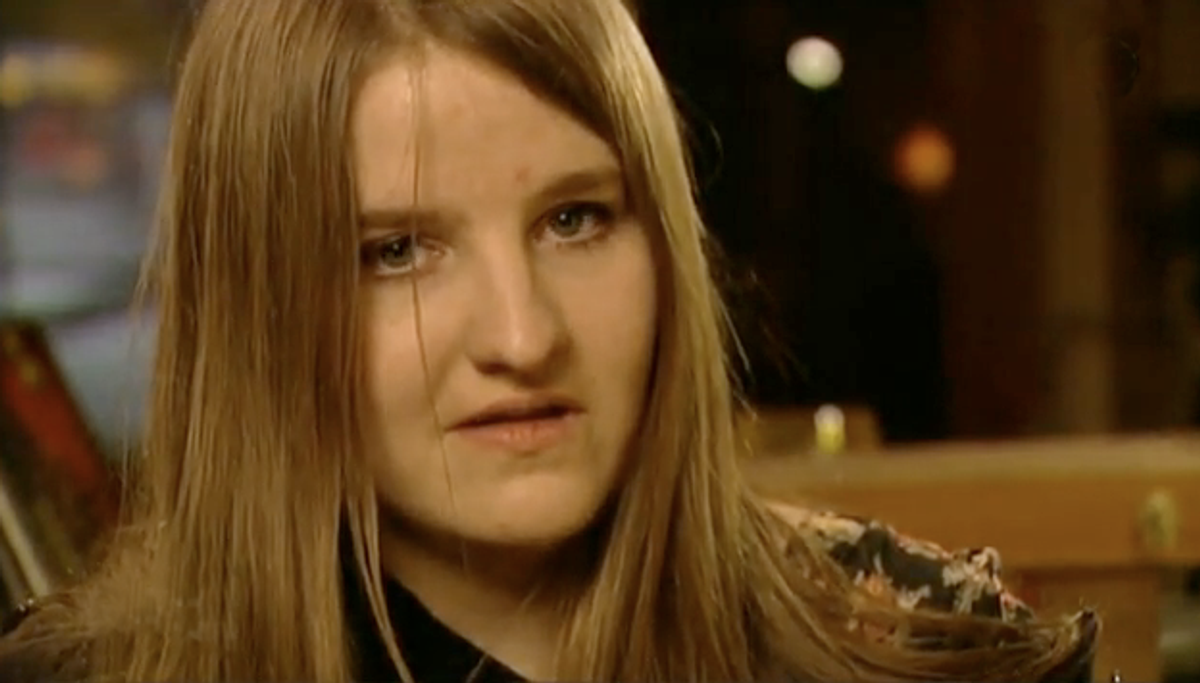
Recent plagiarism accusations against the 17-year-old author of a German novel feel like déjà vu all over again, with one key distinction: Helene Hegemann, who wrote the best-selling tale of drugging and clubbing, “Axolotl Roadkill,” is defending the practice, telling one German newspaper, “I myself don’t feel it is stealing, because I put all the material into a completely different and unique context and from the outset consistently promoted the fact that none of that is actually by me.”

Hegemann lifted as much as a full page of text from an obscure, independently published novel, “Strobo,” by a blogger known as Airen. Another German blogger, Deef Pirmasens, was the first to point out the passages from “Axolotl Roadkill” that are said to be largely duplicated from “Strobo,” with small changes. Despite the uproar caused by this revelation, “Axolotl Roadkill” has been selling better than ever and has been nominated for the $20,000 fiction prize at the Leipzig Book Fair. “Obviously, it isn’t completely clean but, for me, it doesn’t change my appraisal of the text,” a jury member and newspaper book critic told the New York Times, explaining that the jury knew about the plagiarism accusations when it selected the novel for its short list. “I believe it’s part of the concept of the book.”

Plagiarizing journalists like the recently fired Gerald Posner (currently providing the occasion for ecstasies of self-righteousness over at Slate) could never pull off such a justification. Novelists and other artists, however, are always boasting about how much they “steal,” as Robert McCrum pointed out in the Guardian a few weeks ago. How, then, can they wax indignant when other writers lift their work? “There’s no such thing as originality anyway, just authenticity,” Hegemann pronounced in a statement to the press. (Jim Jarmusch, incidentally, said virtually the same thing, and he probably got it from somebody else.) When the admirably game McCrum posted a quick follow-up take on the Hegemann affair, he prompted a heated conversation about copyright and its validity in the Information Age.

To this conundrum, Hegemann has added a heaping dollop of generational special pleading, and the story has prompted teachers to offer multiple examples of students who don’t seem to understand what plagiarism is or that it’s wrong. Kids these days, this Cassandra-ish line of reasoning goes, have unfathomably different values, and their elders had better come to terms with this because children are, after all, the future. You can’t tell them anything! It’s as if people under 25 have become the equivalent of an isolated Amazonian tribe who can’t justly be expected to grasp our first-world prohibitions against polygamy or cannibalism — despite the fact that they’ve grown up in our very midst.

Count me among those who think that most plagiarism scandals are overblown — a classic example being the novelist Ian McEwan, who replicated in “Atonement” a few phrases from a memoir he used as historical research for that novel. What smells off in this instance is precisely Hegemann’s claim to be using her borrowings to advance a cutting-edge concept of artistry. The daughter of an avant-garde dramatist, she says she practices “intertextuality” and explains, “Very many artists use this technique … by organically including parts in my text, I am entering into a dialogue with the author.”

This would be more plausible if Hegemann had acknowledged from the beginning that she’d included work from other writers in “Axolotl Roadkill,” but by all indications, she did not. (Granted, it’s hard for me to substantiate this for myself since I don’t read German and can’t compare Hegemann’s novel to Airen’s.) Some copyright critics have pointed out that, thanks to “Axolotl Roadkill,” “Strobo” is now enjoying a sales boost, proving that “remixes” can be a rising tide that lifts all boats. However, it took Pirmasens’ plagiarism accusation to bring Airen’s involuntary “contribution” to “Axolotl Roadkill” to the public’s attention. If Hegemann intended to enter into a dialogue with Airen, she took pains to make it look like a monologue. If she viewed the writing itself as collaborative, she suppressed any urge to share those handsome royalty checks.

McEwan, who did credit the out-of-print nurse’s memoir he used as a source for “Atonement,” could at least argue that what he incorporated from that source was only a tiny portion of a very different and substantively original work. Hegemann has already, and rather stupidly, cut herself off from that option by declaring that she intended to write a collaboration from the very beginning, only she just forgot to mention it before this. How innovative is “Axolotl Roadkill”? Again, it’s difficult for the Anglophone observer to say for sure, but since both “Axolotl Roadkill” and “Strobo” recount life among the youngest participants in Berlin’s wild club scene, Hegemann’s claim to be presenting the material in a “completely different and unique context” seems a stretch.

And — please! — how much longer can very young writers publish novels depicting anomie, drug use and casual sex among their peers and still provoke wonder among their elders? It happens every few years, from the apotheosis of “Less Than Zero” to the sensation of Nick McDonell’s “Twelve,” yet every new iteration is treated like some shocking, never-before-imagined exposé, when, really, only the playlist changes. With suspicious frequency, the enthusiasm for “Axolotl Roadkill” seems to boil down to just this strain of titillated astonishment. You can’t blame other 17-year-olds for finding it incredibly daring and fresh, but as for us adults — shouldn’t we know better?

Laura Miller

Laura Miller is a senior writer for Salon. She is the author of "The Magician's Book: A Skeptic's Adventures in Narnia" and has a Web site, magiciansbook.com.

The National Review’s fake plagiarism scoop

Updated: After falsely accusing Elizabeth Warren of plagiarism, the conservative magazine apologizes

  • more
    • All Share Services

The National Review's fake plagiarism scoop

The National Review says Elizabeth Warren is guilty of the gravest crime a writer can commit: Plagiarism. Katrina Trinko compares passages from “All Your Worth: The Ultimate Money Lifetime Plan,” Warren’s book with her daughter, Amelia Warren Tyagi, with passages from “Getting on the Money Track,” a book by Rob Black. The passages line up perfectly. The wording and even the punctuation are identical. It’s plagiarism all right. Except it looks very much like Warren is actually the victim.

The National Review headline says “Plagiarism in Elizabeth Warren’s 2006 book.” The body refers to Warren publishing the book “in 2006″ and Black’s book coming out in 2005. That’s true! Except that in 2006 the paperback of Warren’s book was published. The hardcover came out in March of 2005. Black’s book seems to have come out, if Amazon is correct, October 14 2005. (Or, according to Barnes and Noble, July 2005?) Months after Warren’s book. Unless there was an earlier published hardcover version that I can’t find on Amazon, it seems like Black most likely plagiarized Warren.

UPDATE: Damn, that didn’t take long. Rich Lowry has acknowledged the mistake and says the post will be updated. It was so fun, while it lasted, this fake story.
UPDATE 2: And here’s the correction. They say they took down the initial story.

Continue Reading Close
Alex Pareene

Alex Pareene writes about politics for Salon and is the author of "The Rude Guide to Mitt." Email him at apareene@salon.com and follow him on Twitter @pareene

Coverup at Washington Times

Editors knew there was an apparent plagiarist on staff but let him keep writing. An exclusive look inside the paper

  • more
    • All Share Services

Coverup at Washington TimesArnaud de Borchgrave (Credit: Italian Embassy / CC BY 3.0/AP/Jacquelyn Martin)

During his long career, Arnaud de Borchgrave, a one-time Newsweek correspondent and editor, has earned his share of laurels. Fellow journalist Theodore H. White has called him one of “America’s great foreign correspondents.” “In a job that requires bluff and bravado, he has outrun the best of them,” Esquire gushed in a lengthy profile, which is quoted in de Borchgrave’s official bio. Along the way, he has also racked up some fancy titles, including director of the transnational threats project at the Center for Strategic and International Studies.

These days, though, de Borchgrave is involved in some less praiseworthy pursuits. Alongside his other activities, the veteran newsman is a columnist for the Washington Times, the influential conservative broadsheet, where he once served as editor in chief. And in a handful of columns over the last year he has lifted passages verbatim, or nearly verbatim, from the Internet and other sources, without attribution — a fact the Washington Times’ leadership tried to sweep under the rug, according to insiders at the paper.

The Washington Post’s Erik Wemple first noticed de Borchgrave’s apparent plagiarism on Wednesday, but there are plenty more examples. Take, for instance, this bit, which ran in de Borchgrave’s May 9 column:

Under the 10-year agreement, U.S. forces would have access to Afghan bases beyond 2014 for training Afghans and hunting al Qaeda….The administration commits to request Congress each year to help pay for Afghanistan’s security forces, whose costs far outstrip Kabul’s budget….

The language closely mirrors a Christian Science Monitor blog post that ran the previous day:

Under the 10-year agreement, U.S. forces would have access to Afghan bases beyond 2014 for training Afghans and hunting Al Qaeda. The US commits to ask Congress annually to help pay for Afghanistan’s security forces, whose cost outstrips the country’s budget.

Another example can be found in de Borchgrave’s April 25 column, “The Global House of Cards”:

It would take a military jet flying at the speed of sound, reeling out a roll of dollar bills behind it, 14 years before it reeled out one trillion dollar bills. Or, if that’s too hard to grasp, one trillion dollars, laid end to end, could make a chain that stretches from Earth to the moon and back — 200 times.

It appears to be drawn almost word for word from a post that appeared on the conservative blog 100777.com in 2003. (Variations have also appeared elsewhere in the blogosphere.):

If you laid one dollar bills end to end, you could make a chain that stretches from earth to the moon and back again 200 times before you ran out of dollar bills!…It would take a military jet flying at the speed of sound, reeling out a roll of dollar bills behind it, 14 years before it reeled out one trillion dollar bills.

According to four Times officials, who spoke on condition of anonymity, the paper’s management has known about de Borchgrave’s pilfering for months. Editors in the paper’s Commentary section, where the octogenarian columnist’s work ran until earlier this year, first stumbled on the problem last July, when de Borchgrave wrote a column about Council on Foreign Relations president Richard N. Haass. It included unattributed passages that were drawn almost word for word from Haass’ writing. At this point, the section’s editors decided to give de Borchgrave the benefit of the doubt, in part because of his stature at the paper, and in part because Haass’ words were attributed to him elsewhere in the column. “It was feasible in this situation that he could have accidentally dropped some quote marks,” explains one person familiar with the matter.

Still, they began combing through de Borchgrave’s work for signs of plagiarism. By September, they had turned up another suspect column. Here’s one passage, followed by an excerpt from the online publication Electronic Intifada:

Residents of Khallet Zakariya, located in Area C south of Bethlehem, complained last month to the U.N. Office for the Coordination of Humanitarian Affairs that Israeli authorities are demolishing their homes and settlers destroying their livelihoods in an effort to force the community to relocate.

***

Residents of Khallet Zakariya, located in Area C south of Bethlehem say Israeli authorities are demolishing their homes and settlers have destroyed their livelihoods in an effort to force the community to relocate.

After this incident, according to two Times officials, the Commentary section editors personally alerted the paper’s president, Tom McDevitt, to the problem. They also confronted de Borchgrave. (De Borchgrave denies his editors ever broached the subject; McDevitt did not respond to calls seeking comment.) Nevertheless, de Borchgrave only grew more brazen. On Jan. 3 of this year, he penned a column on the social media craze. The last two-thirds were made up largely of dubiously attributed quotes and text that had been lifted without attribution. One paragraph was nearly identical to text that had appeared on the website Clickz.com the previous month. Below are the two passages:

Facebook is the global 900-pound gorilla of social media networks. It reaches 55 percent of the world’s global audience, accounting for roughly 75 percent of time spent on social networking sites. That’s one in every seven minutes spent online all over the world (comScore’s 10/11 data indicate).

***

Facebook remains the global 900-pound gorilla of social media networks. Facebook reached 55 percent of the world’s global audience accounting for roughly 75 percent of time spent on social networking sites and one in every seven minutes spent online globally according to comScore’s October 2011 data.

There was also a list of “Top 5 social media tools of 2011,” which was taken almost wholesale from a P.R. company’s website.  Here’s the company’s list:

5. MyNewsDesk.com This ‘news exchange’ startup out of Stockholm has become one of the most talked about social media tools of 2011 thanks to its robust analytics system and easy-to-use interface. Try it now if you haven’t already.

4. Wanderfly.com - This is a personalised recommendations engine that helps you discover new and exciting experiences based on your budget and interests. And, it integrates with Facebook to bring all of your social preferences together. This is a great example of niche recommendations portal and what Google+ is aiming to achieve on a wider scale.

3. YouTube.com/create YouTube has been ramping up is creation tools in 2011 and the animation tools located at YouTube.com/create are a great example. GoAnimate is a great example allowing you to make animated videos in less than 10 minutes!

2. AppMakr.com - Talk about doing what it says on the tin! AppMakr helps you make free apps for the iPhone. Seriously cool.

1. BufferApp.com - It is now time to crown our most useful tool of 2011. BufferApp works by scheduling content you find online and adding into your Twitter or Facebook stream. It then publishes the tweets at regular intervals without flooding your followers. Pure genius.

Here’s de Borchgrave’s:

5. MyNewsDesk.com – a “news exchange” startup from Stockholm, Sweden, that advertises, “already one of the most talked about social media tools thanks to its robust analytics system and easy-to-use interface.”

4, Wanderfly.com – “a personalized recommendations engine that helps you discover new and exciting experiences based on your budget and interests. Integrates with Facebook to bring all your social preferences together. Niche recommendations portal is what Google+ is aiming to achieve on a wider scale.”

3. YouTube.com/create – “YouTube has been ramping up its creative tools and the animation tools located at YouTube.com/create are but one example. GoAnimate allows you to make animated videos in less than 10 minutes.”

2. App.Makr.com – “helps you make free apps for the iPhone. Seriously cool.”

1. BufferApp.com – self-described as “the most useful tool of 2011, schedules content found on line and adding into your Twitter or Facebook stream. It then publishes the Tweets at regular intervals without flooding your followers. Pure genius!”

While some of the text is in quotes, the only attribution is a vague “as described online.” Another passage, about tech writer Jason Hiner, lifted verbiage from Hiner’s blog, without attribution. Compare this:

In 2011 I went to a strictly vegan diet, dropped 25 pounds, and was surprised to learn how good normal could feel.

To this:

In 2011, he went on a strictly vegan diet, dropped 25 pounds and was surprised to learn how good normal could feel.

The Commentary section editors killed the piece, though it ran on United Press International, or UPI, an affiliated wire service. Shortly thereafter, de Borchgrave’s column disappeared from the section all together. Times officials with knowledge of the situation say it was banished by the section’s editors. “One mistake, and you might be able to say, ‘OK, this person had a bad day,’” says a Times staffer with knowledge of the matter. “But the plagiarism in this column was so egregious — frankly, it was breathtaking. It just couldn’t continue.” De Borchgrave maintains, on the other hand, that the gap emerged because he was on book leave, though his weekly columns continued to crop up on UPI — a fact that casts doubt on these claims. He also argues that any overlap between his work and other people’s is modest, and that likening it to plagiarism is “preposterous.” “I’ve been writing for 62 years,” he told Salon. “I’ve won a number of international journalism awards. I don’t think it makes much sense to be challenging me after all these years of reporting and writing.”

As it turns out, de Borchgrave’s hiatus from the Times was short-lived. In late March, his column resurfaced in the paper’s A section, which is normally reserved for news. “The decision-makers basically said, ‘We have a plagiarist here. Are we going to do anything about it? Fuck no!’” recalls one official. “We’ll just move him to another section where the editors won’t make such a fuss.’”

Less than a month later, de Borchgrave was yet again found to be cribbing without attribution. According to four Times officials, Brett Decker, the Commentary editor, wrote a sharply worded email to the executive team, including McDevitt and Ed Kelley, the paper’s top editor. It stressed the gravity of the problem and warned that, by keeping de Borchgrave on, management was jeopardizing the reputation of the paper and its journalists. (Kelley did not return calls seeking comment.) Still, nothing changed. De Borchgrave has held onto his job and continued cribbing copy — just last week he penned the piece with language lifted from the Christian Science Monitor. It was that column and another that caught the Post’s attention, but even the embarrassing media coverage hasn’t had much impact. A few hours after the Post piece ran, the Times published yet another de Borchgrave column.

Continue Reading Close

Mariah Blake is a writer based in Washington, DC. Her work has appeared in Mother Jones, the Nation, the New Republic, Foreign Policy, the Washington Monthly and the Columbia Journalism Review, among other publications.

Salon debate: What is plagiarism?

Allegations of plagiarism and copyright abuse have rocked the art world. Our panel debates where fair use ends

  • more
    • All Share Services

Salon debate: What is plagiarism? (Credit: iStockphoto/pressureUA)

The last weeks of 2011 were littered with debates over the originality of high-profile published work from spy novels to political cartoons — and the supposed failure of prominent artists and creators to cite their source material. In the coming year, we’re likely to see more pitched battles related to plagiarism and copyright infringements — not least the much-buzzed-about appeal of artist Richard Prince.

Cases of alleged plagiarism or copyright infringement are rarely black-and-white. We asked a diverse group of commentators — including journalists, lawyers, psychologists and writers — to answer our questions about what exactly plagiarism is, how accusations of plagiarism should be addressed, and whether it’s possible for artists to copy others’ work unconsciously. Their thoughts are below.

Jonathan Zittrain, professor of law, Harvard Law School

The law touches on plagiarism primarily by restricting copyright infringement and fraud. Copyright infringement, like plagiarism, entails copying (often word for word) someone else’s expression. But they’re not the same. The essence of plagiarism is to lie about having copied something: passing off someone else’s work as your own. In the U.S., copyright infringement centers on the copying, not the attribution (or lack of same), which is why declaring where a copied work comes from could forestall a claim of plagiarism while making copyright infringement seem that much more willful. Unconscious copying may still run afoul of the law, as shown in the case of George Harrison being sued after 1969′s “My Sweet Lord” sounded an awful lot like the hit 1963 single “He’s So Fine.” The court found that Harrison had indeed copied the work — but credited that he didn’t realize he’d done it. (He still had to pay up.)

All this is making copyright trickier for jointly authored (or crowd-sourced) works. But plagiarism remains elemental: You should say where your ideas or text comes from, both so you aren’t representing others’ ideas as your own, and so that readers can follow the bread crumbs back to original sources so they can learn more about the ideas you’re drawing from in your own work.

Alan Brown, professor of psychology, Southern Methodist University

We all gather an enormous amount of information each day, and our brain usually “tags” each piece with its source. However, we sometimes remember things that fail to be linked to where we learned them, and we mistake the information for our own.

I suspect that we all suffer from occasional source amnesia, which leads to unconscious plagiarism. This is unintentional, and outside of our conscious awareness. A common experience to which most people can relate is sitting with a group of friends and tossing around ideas — solutions to a political problem, where to go to eat dinner, the best movie line ever. Someone brings up a point that you just said, and looks puzzled when you say “Hey, that was my idea!” They blatantly steal your idea in front of you, but don’t seem to have a clue.

While others are talking, we often just half-listen as we try to think of what we would like to say. During this “half here/half not” period, your brain is still absorbing and storing what was said, but you might not be aware of it.

When most of us copy others unintentionally, there are minimal consequences beyond irritation on the part of the plagiarized individual. However, when a scholar or celebrity does so, this catches people’s attention. George Harrison inadvertently plagiarized a song, Sigmund Freud copied a theory, and Helen Keller stole an entire story that she later published. (This article summarizes some of these cases, briefly, at the beginning and end.)

Tim Perfect, professor of experimental psychology, University of Plymouth

Imagine that two people have a conversation in which they exchange a number of ideas. Subsequently, one of the pair could unconsciously plagiarize their partner’s ideas in two ways. In trying to recall their own ideas, they may accidentally misremember their partner’s ideas as their own. That is, they may succeed in generating a memory, but be wrong about where it originated. Alternately, they may try to come up with some new ideas, but accidentally reproduce an old one. In this case, they are confusing a memory with a creative thought (and they can even plagiarize themselves: famous psychologist B.F. Skinner bemoaned this occurrence as marring his later academic years).

Psychological research demonstrates that such errors are ubiquitous. Numerous experimental studies have demonstrated both forms of plagiarism, with typical rates of plagiarism at around 10 percent of the ideas recalled or generated as new, and participants in such studies rarely avoid such errors entirely. Both forms of error require a weak memory: If memory for the original conversation is too good, then plagiarism can easily be avoided.

Research also shows that the two kinds of error can be influenced by different factors. Rates of unconscious plagiarism during recall are dramatically increased if a person subsequently tries to improve an idea that they have heard. In studies where people improve their partner’s ideas, plagiarism rates can climb to over 35 percent of what is recalled. But plagiarism isn’t more likely for highly rated ideas, or for ideas improved by other people; it is the act of improvement itself that creates the sense of ownership.

In contrast, plagiarism during a creative task is actually reduced following improvement, because improving an idea makes it more obvious that the idea is old. Instead, plagiarism during creative tasks is influenced by the status of the source of the idea. In studies when people hear ideas from two different people, one expert, one not, they are twice as likely to plagiarize from the expert than from the novice. This happens even though there is no objective difference in the quality of the ideas from the two sources.  Thus, the evidence suggests that people don’t plagiarize good ideas so much as ideas from good places. Imitation truly is the sincerest form of flattery!

Psychological studies such as these demonstrate that people often plagiarize the past unknowingly: it is an inevitable consequence of the faulty nature of human memory, and as such does not reflect a moral fault. This is not to argue that all plagiarism is accidental, but it is the case that not all plagiarism is deliberate.

How then are we to distinguish between accidental plagiarism and deliberate fraud? We can never be completely certain in an individual case, but we should recall that human memory is very good at remembering the gist of past events, while details are easily lost. This applies to both genuine recall and plagiarism. Given that unconscious plagiarism occurs when memory is fairly weak, it follows that it is more likely that the gist will be plagiarized than the exact details. Whenever the claim of plagiarism rests upon the exact form of the idea (the adjectives used, or the order of a sequence of ideas), then this should start to ring alarm bells.

John Cole, president of the American Association of Editorial Cartoonists

Plagiarism in cartooning is really no different from plagiarism in other creative and academic pursuits: it’s the act of directly appropriating someone else’s work — be it art, writing, music, photography, design or what have you — and passing it off as one’s own. Short and sweet, it’s intellectual theft.

There are clear-cut cases of this, such as the recent episode involving Tulsa cartoonist David Simpson, who basically traced some old cartoons by the late, great Jeff MacNelly, applied new labels and then signed his name to the finished product. The recent case involving Columbus Dispatch cartoonist Jeff Stahler wasn’t so cut-and-dried; indeed, some still aren’t convinced that what he did (allegedly swipe a years-old New Yorker cartoon idea) amounted to straight-up plagiarism. But Jeff, whose work I’ve admired for many years, reportedly had a track record of producing cartoons and dialogue that looked suspiciously similar to the work of others. Given his resignation, the case seems to be closed.

Divining plagiarism in editorial cartooning is dicey simply because the craft traditionally relies on stock symbols (the GOP elephant, Democratic donkey, Wall Street fat cat, etc.) and common visual metaphors (the Titanic, the Hindenburg, Grant Wood’s “American Gothic,” the grim reaper, the flag raising at Iwo Jima, etc.) that are quickly and easily understood by readers. The challenge for any cartoonist who uses these devices (or not — many great cartoonists don’t use them at all) is to do so in a way that’s unique to one’s own ideas, style and voice.

This is a tall order, given that on any news day there are something like 70 to 80 cartoonists drawing about, for example, Newt Gingrich leading the polls or Mitt Romney’s $10,000 bet or Barack Obama’s latest Hawaiian vacation. There will be and are rare overlaps of ideas and images. Isolated cases of this are correctly dismissed as “great minds thinking alike,” which is something that every daily political cartoonist who’s been at it long enough has experienced.

When isolated cases begin adding up to a pattern, however, flags start flying and bells start ringing. This doesn’t happen often — indeed, Simpson’s dismissals from the Tulsa World and later Urban Tulsa Weekly were the first anyone had heard of in many, many years. That it was followed so closely by Stahler’s resignation is all the more unusual, to say nothing of unfortunate.

I’m not sure there’s a better way to police plagiarism aside from the current system. For its part, the Association of American Editorial Cartoonists added a new bylaw in 2009 holding members to a pledge not to engage in plagiarism and providing for the removal of any member who’s found to be doing otherwise. (It should be noted that neither of the recent cases mentioned above involved a current association member.)

Kelly McBride, senior faculty, Ethics, Reporting & Writing, Poynter

Plagiarism is a narrowly defined act that is often misunderstood. When a writer misappropriates the words of another writer, be it a sentence, a paragraph or a page, he has plagiarized. This is true in all writing, including journalism, creative writing and term papers. It is a serious and specific act of theft.

Yet the greater problem often confused with plagiarism is the notion of intellectual honesty. I often hear teachers complain that in this digital era of sampling, open sourcing and cutting-and-pasting, people don’t understand how to reference intellectual property. Sometimes they do and sometimes they don’t. Certainly there are many people who simply copy the work of others and call it their own. But there are also many creative communities that have collective standards for crediting others, while passing along, advancing or transforming an original idea.

Take Twitter’s RT (retweet) or MT (modified retweet). There you have a widely accepted method for acknowledging the work of another. Like the formal footnote or the informal tip of the hat, communities have and still are forging pathways to foster intellectual intelligence.

When we focus too narrowly on the issue of plagiarism, we ignore the bigger issue of intellectual honesty. Whenever you are part of a creative process, as a writer, a visual artist or composer, the most significant signal you can send your audience is a thought trail that lets them transparently see the forces that influenced you as you made your piece.

Emily Bell, director of the Tow Center for Digital Journalism at Columbia University

The core of what plagiarism is remains undented by the digital publishing environment. Copying out the words of others and passing them off as your own is still what it always was; wholesale plagiarism is a sacking offense in most newsrooms. It is of course much easier to detect now, thanks to Google text search, but beyond the clear example of screeds of lifted text or images passed off as your own, the issue of who is a plagiarist is also a little more porous at the edges than it was.

In digital journalism, one of the most valuable functions you can perform is to aggregate and link to the content produced by others. We do however also see the problems of “over aggregation,” where credit and sourcing is not clear enough, links are missing, attribution is fuzzy and where the idea of “fair use” is enormously stretched. Is this plagiarism or enthusiastic aggregation?

The increased ease of detection of plagiarism is offset against the temptation to “over aggregate.” As for the broader context of taking ideas and presenting them as new, well, that happens all the time, sometimes knowingly and sometimes accidentally. It is an area where journalism is still thrashing out standards and best practice; there is a sort of arms race of transparency going on in digital news filtering at the moment – who did what first and when. I can’t help feeling that the idea of a plagiarism algorithm is not too far away.

Jeremy Duns, spy novelist and outspoken blogger

Plagiarism is the theft of someone else’s ideas.

There are degrees, of course. The historian Stephen Ambrose got in trouble because it was found that while he had footnoted his sources, he had sometimes simply repeated the exact wording of them in his text without using quote marks, giving the impression that he had written those precise words. That’s perhaps borderline plagiarism, and depends on how often it has been done and how egregious the particular examples are. There are also examples of influence that are borderline, for example, if a film or book uses the same premise as an earlier work without acknowledging it. It then becomes a matter of how precise the similarities are. For example, the copyright holders of the Cornell Woolrich short story that formed the basis for Hitchcock’s “Rear Window” sued the makers of “Disturbia” in 2007, but the claim was rejected as the judge felt they were not similar enough.

On the other end of the spectrum, I think there are cases that are black-and-white. One is Quentin Rowan’s “Assassin of Secrets,” the spy novel published by Little, Brown last year, which I read, loved and praised to the skies — only to discover from reading a comment by a James Bond fan online that it plagiarized some of the post-Fleming Bond novels. When I started looking at it in greater detail, I found that the whole book had been stitched together from passages taken from a range of spy novels published in the last 30 years. He’d done it so that it read like a fun postmodern take on the spy thriller, and it fooled me, but that’s a black-and-white case: I found one scene that went on for six pages, and apart from changing the proper nouns and the occasional word, was identical to a scene in John Gardner’s Bond novel “License Renewed.” Another case that I believe to be black-and-white is that of Lenore Hart’s “The Raven’s Bride,” which I have written about at length on my blog. [Editor's note: Lenore Hart and her publisher, St. Martin's Press, deny that any part of "The Raven's Bride" was plagiarized.]

What’s the difference between borrowing — or unconsciously repeating — a phrase or idea, and copying wholesale? Well, just a matter of scale. I think if you were to make a film about a man trying to find another man, that’s not an idea that belongs to anyone. If you set it in the jungle, you might be unconsciously inspired by Conrad’s “Heart of Darkness.” That’s fine, too, of course. It could also be conscious:

“Apocalypse Now,” for instance, is an adaptation of “Heart of Darkness.” But say someone wrote a film script now, and it was about a British army captain in Kenya in the ’50s during the Mau Mau uprising. Well, fine. His mission is to go into the jungle and find a colonel who has gone native. Uh-oh. The colonel is called Curtis, and he is fond of quoting Ezra Pound. Well, they’ve changed Kurtz to Curtis and T.S. Eliot to Pound, but they’ve still plagiarized “Apocalypse Now.” In fact, you can stop at the going into the jungle to find the missing colonel, I think. There are matters of degree, but I think most people can recognize the difference between being influenced by someone else’s idea, and stealing it.

Whose responsibility is it to follow up accusations of plagiarism? Good question! When I realized that Quentin Rowan had plagiarized his novel, I informed his publisher in the U.K. at once. They informed their colleagues in the U.S., who had just published the book (it hadn’t yet come out in Britain). Little, Brown acted very responsibly, in my view: they issued a press release and withdrew “Assassin of Secrets” from sale within three hours. That’s what should have happened, and I’m glad it did.

Since I got fooled by Rowan last month, several other possible cases of plagiarism have come to my attention. I wrote about Rowan on my blog, explaining why I had removed a recent question-and-answer session between me and Rowan from it, and how and why I was fooled by the book. I also included some responses he had given me by email about why he had done this. A lot of people read my blog about it, and it was linked to in a lot of articles around the net. As a result, some people started going through “Assassin of Secrets” trying to find all the books Rowan plagiarized. In putting a sentence from “Assassin of Secrets” into Google Books, one of the people reading my blog found that it came up with two other results. One was “The Janson Directive,” a Robert Ludlum novel published in 2002. The other was “True Deception,” a romance thriller by Patricia Waddell, published in 2007 by Tor. So Rowan had stolen the sentence from the Ludlum novel — and so had this other writer, Patricia Waddell. What are the chances of that!

The emergence of this, and several other potential cases — e.g., those of Nigel Cawthorne, Jon and Diane Sutherland and Ross Leckie — has left me with a problem: What to do? In the case of “Assassin of Secrets,” I had a personal stake, as I had endorsed the book and my blurb would have appeared prominently on the front cover of the British edition. I didn’t want that to happen, obviously, but it wasn’t just about that: The guy was a rip-off merchant. He had deceived me, his editors, all the people who worked on that book. And he had stolen from other writers. So I wanted to get the book pulled, but I also felt it was responsible for me to try to do that. I had a way in, because his British editor had sent me the proof in the hope I would give an endorsement. With these other cases, I had no in at all.

Pursuing publishers on matters of possible plagiarism is quite exhausting. It would take a lot of time to go through Waddell, Cawthorne, the Sutherlands, Leckie and whatever examples I’ve forgotten. It is very time-consuming — much more than me doing this interview — so I’m hoping others will join in and help investigate and report these. I think as these cases have been pointed out to me, it would be irresponsible for me to ignore them and shrug my shoulders because my blurb isn’t on their covers. But I’m running out of ideas for how to take on so many cases effectively. So I’d urge your readers to investigate some of these examples. If you can report your findings to the publishers, so much the better — but you may not be thanked by them for it.

Dennis Johnson, publisher at Melville House and blogger at MobyLives

At root, plagiarism is always the use of someone else’s creative work – his or her ideas – without acknowledging the original source. That lack of acknowledgment is key – plagiarism is an act of deception. We’re not talking about things such as fair use.

In practice, plagiarism is two things: one simple and obvious, one not so simple and obvious.

The simple and obvious: Using someone else’s language without quote marks and attribution, or paraphrasing someone else’s language without attribution.

The not-so-simple–and-obvious: Using someone else’s ideas. For instance, Jeremy Duns has accused Lenore Hart of using barely revised scenes between Edgar Allan Poe and his wife that were originally concocted by Cothburn O’Neal for his 1956 novel “The Very Young Mrs. Poe” – i.e., scenes that never happened in reality.

With plagiarism, as with any crime, it’s a question of degree, with the greater degree being more upsetting and consequential than the minor degree. And our culture has always considered intentionality as part of our valuation of a crime (think murder vs. manslaughter), so the question of intent bears on this as well (although it doesn’t change whether the thing is a crime or not).

Thus: The most egregious plagiarism of all would be if you wrote a book that had a key element, and/or multiple instances, of material that you knowingly stole. This is both an ethical lapse (it’s just plain wrong to steal) and a kind of physical crime, akin to stealing money from someone — as (the idea is) you make money on a book, you are collecting money on something that rightly belongs to someone else. For both these reasons, such a work does not deserve to be in the marketplace of ideas or commerce, either one. And certainly other work by the writer in question should be held equally suspect.

Where responses are concerned, it’s first and foremost the responsibility of the plagiarist to [address an accusation of plagiarism], but it’s also incumbent upon the publisher to act responsibly. As a publisher myself, I would always want to speak with the author first, and make no public comment until I had. After speaking with the author and anyone else who can help determine if the charges are valid, the publisher needs to address the situation as promptly as possible. If you’re confident it isn’t plagiarism, you must defend the author with all your might. If it is indeed plagiarism, and it’s significant, you have to say so publicly and weigh withdrawing the book – potentially a devastating, existence-threatening situation for a little publisher such as Melville House. (But not doing so might be equally damaging, and following the moral imperative is the aim.) At the very least, of course, the book must be corrected – sources cited, stolen text removed, whatever. In short, plagiarism can’t be allowed to stand.

Johanna Blakley, managing director of the Norman Lear Center, USC Annenberg

In the fashion industry, plagiarism is rampant. And, while most people will assume that that’s a terrible thing – after all, how can a creative industry remain creative if people are copying one another? – I’m convinced that this is one reason that the fashion industry has managed to elevate utilitarian objects (clothing to hide our naked bodies) to the status of high art.

All creative people are influenced consciously and subconsciously by their environment. But fashion designers are legally allowed to plunder ideas from their peers and from the vast vaults of fashion history because fashion designs do not receive copyright protection. Unlike musical compositions, sculpture, paintings, novels, photographs and films, fashion designs can be copied point by point without legal ramifications. Surprisingly, there are some amazing benefits to this wild free-for-all: Designers are allowed to respond very quickly to the zeitgeist, as it were, incorporating into their work the elements that seem contemporary and of-the-moment, without having to consult lawyers about whether they might be borrowing too much from the work other designers. And for the business of fashion, one happy result is that trends develop, which allow retailers to market new goods to consumers eager to remain current.

Some might assume that if plagiarism were allowed in an industry like fashion, then everyone would end up making the same thing or simply recycling looks from the past. But that’s not how you win the game in fashion. Designers whose work seems “too derivative” do not succeed, while those who manage to maintain a signature style while staying on trend and cleverly riffing on past eras are considered geniuses.

If you think about it, it does take a certain kind of genius to plagiarize well. Knowing when to steal what is an art in and of itself.

Charles Cronin, Music Copyright Infringement Resource, UCLA School of Law

It is easy to identify similarities between musical works, particularly in popular music, which is very formulaic. But these similarities rarely constitute plagiarism or copyright infringement. In general – and to an increasing extent it appears – claims of music copyright infringement are grounded on flimsy assertions of musical — or even minor verbal — similarities typically asserted against works that have been economically profitable.

Is the repetition of ideas and themes over the centuries simply to be expected? Certainly – and copyright law accommodates this by disallowing, through the doctrine of scènes à faire, the monopolization of ideas, themes, genres. Accordingly, it is not possible to obtain copyright protection in musical works for a standard blues progression, “call and response” technique, use of double-entendres (in country-western songs), etc. Copyright protects only original, non-minimal expression that may employ such generic ideas available to anyone.

In terms of the difference between plagiarism and copyright infringement, the former involves an element of deceit not necessarily found in the latter. A plagiarist takes information from another and deliberately attempts to pass it off as his own, whereas one who infringes copyright does not necessarily attempt to pass off the infringed material as his own (e.g. music sampling cases) and in some cases may not even be aware he is infringing someone else’s protected expression (e.g. the George Harrison case).

Despite the deceit involved, plagiarism is not illegal per se. If I copy the answers of a fellow student’s math exam, for example, I have plagiarized and violated academic standards, but have not violated copyright law because the solutions to the math questions are facts and not copyrightable in the first place. Likewise, if I were to copy literary criticism from the 19th century (now in the public domain) and pass it off as my own I would be flirting with academic disgrace but not with violation of law.

How are accusations of copyright infringement followed up? Many claims are brought against well-known performers with deep pockets. While these defendants typically have counsel with a sophisticated understanding of copyright law, plaintiffs in these cases often engage lawyers with little experience or knowledge of copyright who take on such cases hoping for a share of a settlement award from a wealthy defendant.

The U.S. court system tends to be quite indulgent towards even the most specious copyright infringement claims and defending lawyers realize that a persistent plaintiff can be an expensive problem for their client and potentially damaging to their client’s reputation as well. Unfortunately, many music copyright infringement cases are, therefore, settled by defendants “throwing a bone” to opportunist plaintiffs to make them go away. This solution, unfortunately, only fosters more spurious infringement claims.

Continue Reading Close

Emma Mustich is a Salon contributor. Follow her on Twitter: @emustich.

A plagiarist’s lame excuse: Addiction made me do it

Disgraced thriller writer Quentin Rowan borrows from 12-step rhetoric in an unconvincing and insincere explanation

  • more
    • All Share Services

A plagiarist's lame excuse: Addiction made me do itQuentin Rowan

Quentin Rowan had the briefest run ever as an acclaimed thriller writer. “Assassin of Secrets” was published this fall by Little, Brown under the pen name Q.R. Markham. But it was quickly discovered that the author’s name wasn’t the only unreal thing about him. “Assassin of Secrets” — a “quirky, entertaining spy thriller” — cut and pasted whole chunks of books by spy masters Charles McCarry, Robert Ludlum, John Gardner and Adam Hall.

Little, Brown recalled and pulped the book, issuing the mortified admission that they had “published a book that we can no longer stand behind.” Rowan’s nerviest steals, laid out in exhausting detail on Reluctant Habits, suggest he was unaware of the existence of Google. Of course he was going to be found out. So why did he do it?

In a new piece (ostensibly by Rowan himself) on the sobriety-centric site The Fix, Rowan blames it all on a manifestation of “addiction.” After admitting the high cost of his transgressions — “I lost my job in the Brooklyn bookstore where I was a part-owner, my beautiful girlfriend left me (and the apartment we were going to share), and my future in the only field I know anything about, books, came to ignominious end” — Rowan traces the roots of his behavior back to the 1990s, when, he says, he was newly sober and “came upon a paragraph I liked from a short story by B.S. Johnson.” Before he fully realized the implications of his actions, he’d “transferred my obsession from drinking and drugs to plagiarism.”

Rowan, who proudly states he has been sober for nearly 15 years, certainly knows his way around AA rhetoric. He says that his problem was “putting anything ahead of sobriety.” He answers to the charge of “egomaniac with an inferiority complex” who knows you’re “only as sick as your secrets.” Now, he says, he is coming clean, hanging on to his sobriety and “ready to dodge bullets.”

Rowan, the son of novelist Lou Rowan, may well be on to something here. It’s safe to say that a guy who says he was “a violent, fall down drunk,” who admits he thought about killing himself if his plagiarism was discovered, is someone with demons he’s struggling desperately to control. He may even be right that “Perhaps one day plagiarism will be seen, if not as a disease, at least as something pathological.” He certainly understands that in the face of a baffling act of self-sabotage, people want to know why he did it. He seems to be still working out the answer himself.

Nevertheless, there’s a deeply unpleasant ring to Rowan’s public walk of shame — and it might be his ease with the rhetoric of 12-step programs. His essay leaves the sense that Rowan believes his moral accountability is somehow mitigated by the excuse that his actions were beyond his control. It’s as if Rowan didn’t steal all those passages, Rowan’s pathology did.

“They call a person like me a Plagiarist,” he writes. “It’s one of the harsher words we have in our language.” See, it’s not quite Rowan here. It’s just a person like him, a person who refers to his cutting and pasting of other people’s hard work “a kind of collage.” Certainly Rowan grasps that he has done wrong, and that people have been calling him names he “probably deserved to be called.” Probably.

Of course he doesn’t merit the worst punishments that some of his critics have imagined for him. Yet the rush to label his selfish behavior a disease tends to undercut the sincerity of the atonement. Rowan’s mea culpa brings to mind psychologist David Ley’s recent conversation about sex addiction with Salon’s Tracy Clark-Flory. Ley called it “a belief system, not a diagnosis,” and certainly “not a medically supported concept.” Nor, for that matter, is Rowan’s eager equation of alcoholism with plagiarism. Just because things end with the same last three letters, it doesn’t make them alike. If they were, Jagermeister and Ann Coulter would have a lot more in common.

Was Rowan simply behaving in a way that was “sick,” or was there something else at work? Perhaps another hint of his mind-set can be gleaned from a recent Huffington Post piece he wrote on “Nine Ways That Spy Novels Made Me a Better Bookseller.” He said that: “From the great fictional spymasters like George Smiley, I learned how to be cold in my mind: free from values and concerned with nothing but the results of an action.” (The piece was later pulled when HuffPo discovered “large segments had been lifted without attribution from Geoffrey O’Brien’s 1988 book, ‘Dream Time.’”)

In choosing to launch his “Confession” in the relatively safe, AA-oriented waters of The Fix, Rowan assured himself of a more supportive forum than he’d get out there in the wild. Everyone loves a choir to preach to, and the 12-step world is one of the few venues you can get praised for listing the ways in which you’ve behaved like a total jackass. It’s worth noting that when he wrote earlier this month to the publishing blog Galleycat, Rowan’s tone was different – saying he “had to make major changes in quite a hurry, basically re-write the whole thing from scratch, and that’s when things really got out of hand for me,” and he was not yet coming clean on his other acts of literary thievery.

Rowan says he is relieved the truth is out and that he’s now starting fresh. Everyone deserves a second chance, but pardon my skepticism. It just doesn’t seem like an auspicious new beginning when someone whom people call a plagiarist pens an apology that rings so very false.

Continue Reading Close
Mary Elizabeth Williams

Mary Elizabeth Williams is a staff writer for Salon and the author of "Gimme Shelter: My Three Years Searching for the American Dream." Follow her on Twitter: @embeedub.

Johann Hari suddenly in much more trouble

The liberal UK journalist, accused of plagiarism, is now said to have invented a key part of an award-winning story

  • more
    • All Share Services

Johann Hari suddenly in much more troubleJohann Hari

Back when Johann Hari was just accused of plagiarism, the scandal seemed survivable for the British celebrity lefty journalist. Hari was accused, basically, of regularly inserting quotations from outside sources into his “interviews” without citation. Which you’re not supposed to do, though the “rules,” in the U.K. newspaper world, are a bit lax. Now it looks suddenly a lot worse.

The Telegraph accuses Hari of inventing an atrocity in the story that won him the Orwell Prize. Hari took a trip to the Central African Republic in 2007, where he documented a covert French war being waged in support of a brutal dictator.

One of the most shocking claims: French soldiers told Hari that while serving in Rwanda, they were ordered not to help children who came to them holding their parents’ severed heads. But Hari’s translator said no one ever told Hari this. Here’s a section from an email she wrote to Hari in 2007:

Having translated your encounter with the french soldiers in Birao, I would like to make a correction to the quote attributed to one of the soldiers who had taken part in Amaryllis operation in Rwanda. He did mention how frustrated the soldiers felt that their orders didn’t allow them to intervene, but he did not say that the children would bring the severed heads of their parents and scream for help.

Hari is currently on a two-month suspension from the Independent. I imagine he and his editors thought he’d be considered sufficiently punished by September, especially with News Corp. news continuing to satisfy the public’s appetite for media scandal.

That seems less likely, now.

British newspapers are having a banner year! And this you can’t even blame on Murdoch.

Continue Reading Close
Alex Pareene

Alex Pareene writes about politics for Salon and is the author of "The Rude Guide to Mitt." Email him at apareene@salon.com and follow him on Twitter @pareene

Page 1 of 3 in Plagiarism