Earlier this week, Salon’s Sara Breselor interviewed Bryan Wansink about Domino’s sweetened new pizza recipe, a recipe that the company has been touting in a bizarre television ad that lists customer grievances (“Domino’s tastes like cardboard”) and soberly acknowledges that their problems are now a thing of the past. The “I sucked but now I don’t” strategy is a strange approach to pizza advertising, but, then again, Domino’s has an illustrious history of baffling (and even fecal-themed) ad campaigns. Don’t believe us? We’ve assembled some of the company’s most head-scratching ads below:
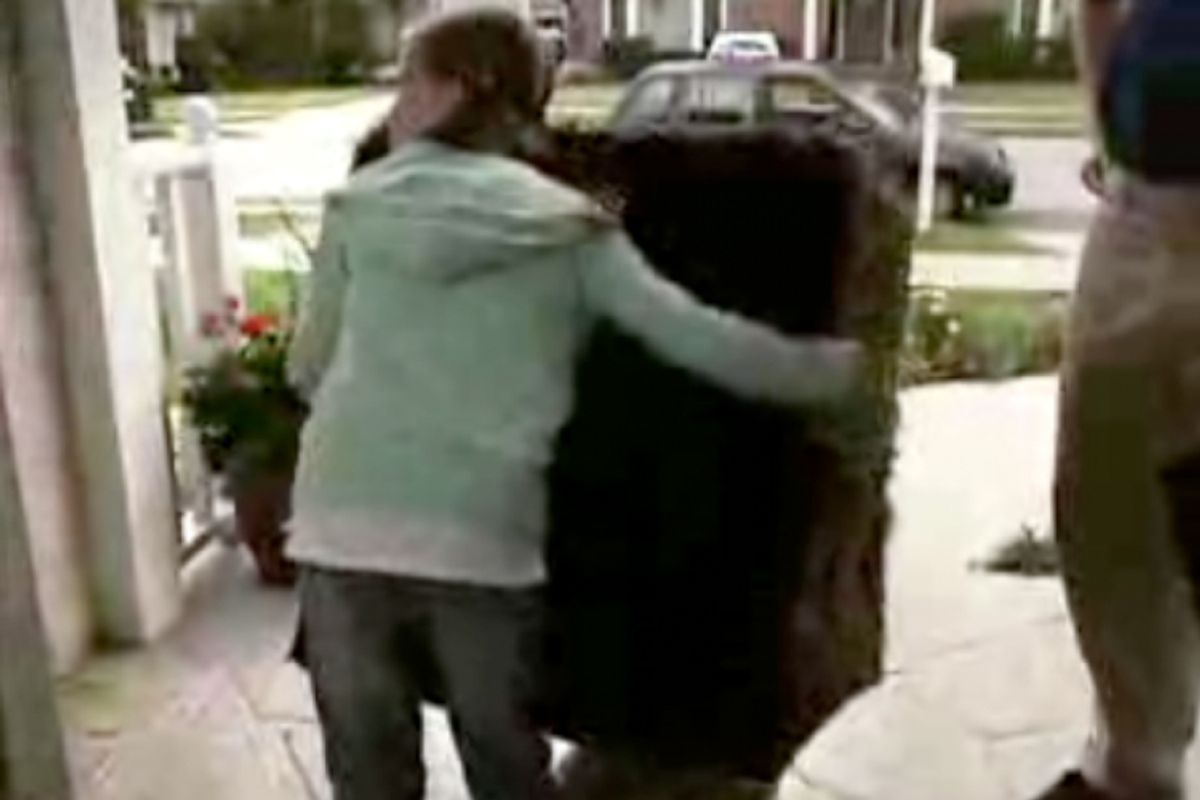
In 2006, Domino’s decided to sell its new line of “brownie squares” with dipping sauces by doing the following: 1. Dressing up a small person in a costume that looks like a giant turd. 2. Naming the turd “Fudgems.” 3. Having child hug Fudgems so that it comes away covered in what appears to be feces. Who wants a brownie?
The same year, it advertised its new line of Oreo pizzas (yes, really) with this ad showing a man and a teenager bantering about their respective chocolate mustaches. If the image of a man’s face covered in crap doing his best Bruce McCulloch impression won’t sell you on Domino’s, the awkward pedophilia vibe should do the trick.
The company’s ad for its Pasta Perfecta was pulled, supposedly because it includes an obscene gesture, but more likely because (surprise!) having a giant rapping noodle dressed like Flavor Flav terrify a white upper-middle-class family in their home has some rather unsavory racial implications (and, why did nobody notice that the noodle looks like a giant penis?). Dominos Pasta DUDE!
Domino’s concise Dutch slogan — “Man hungry, ding dong, pizza” — has a kind of caveman flair, but this bizarre Dutch regurgitation-themed ad, in which a man disgorges the delivery man who’s just dropped off his pizza, reads less like a pizza commercial and more like an early episode of the “X-Files.”
In a similar vein, this ad for the company’s chocolate chip cookies touts their “homebaked” taste — in the most terrifying manner possible. If you’ve ever wondered what would happen if your adorable grandmother died and came back as a villain in a cookie-themed Japanese horror movie, here’s your answer.
Competitive eater Joey Chestnut has held on to his title at the annual July Fourth hot dog eating contest at New York’s Coney Island, but one of his biggest rivals tried to crash the celebration and has been taken into custody.
Chestnut chomped down on 54 hot dogs in 10 minutes on Sunday to win the annual Nathan’s International Hot Dog Eating Contest for the fourth year in a row.
Watching from the crowd was six-time champion Takeru Kobayashi (tah-KEH’-roo koh-bah-YAH’-shee), who has not signed a contract with Major League Eating to be free to compete in contests sanctioned by other groups.
But Kobayashi went on stage after the competition. Police officers grabbed him, and he tried to hold onto police barricades as they took him into custody.
Who would have thought that sticking a bunch of computer-generated babies into rollerskates and having them dance around Central Park to “Rapper’s Delight” is a genius way to sell bottled water? When Evian’s French “Live Young” ad — starring tykes in diapers doing pirouettes, jumps and hanging precariously off chain-link fencing — hit the web in the summer of last year, it rapidly became a viral sensation, racking up a whopping 102 million page views. Now, Ad Age reports, the campaign has been deemed so successful that the babies are making their way on to American TV (running in L.A. starting this week, and New York starting this summer).
It’s hard not to love the concept: A perfect blend of special effects, adorable babies, and general weirdness, topped with a healthy dollop of camp — a great example of the way the internet is spurring creativity in marketing. Get ready to have a conversation with your internet-illiterate grandma about those darn babies and their darn rollerskates — because this might just blow her mind.
Have you ever, like me, opened up your liquor cabinet, pulled out some vodka and thought to yourself, “My life would be so much more complete if this bottle of booze had an electronic screen which I could use to awkwardly convey messages to my loved ones and/or random people at parties”? If the answer is yes (and why wouldn’t it be?), we’ve got some exciting news for you: Medea vodka is selling $40 dollar bottles of vodka with a built-in programmable screen that, as the company’s website claims, is “the world’s first interactive bottle” and “unleashes your inner poet, your inner philosopher, your inner flirt.”
If this delightfully-accented instructional video (which has been making the tech blog rounds) is any indication, “your inner poet” actually means “your ability to sit around with your bored friends and drunkenly fiddle with complicated gadgetry to program spelling-mistake-riddled Shakespeare quotes onto your liquor bottle.” The future is now!
The big novelty food story of the week has been New York Chef Daniel Angerer’s breast milk cheese — a dish that he makes from his wife’s leftover breast milk. Salon’s own Kate Harding argued that the uproar over the foodstuff is much ado about bodily fluids, but that hasn’t stopped everybody from Kelly Ripa to food critic Raymond Sokolov from sampling the cheese to great fandare. This week, CNN’s Jeanne Moos spoke with the couple behind the cheese, rounded up some of the media reactions, and then tried it for herself.
In the wake of the NY Times’ controversial rabbit-eating trend piece, we wrote about the ecological and nutritional merits of rabbit meat. Today on the fantastic Food Curated video site, Executive Chef Sean Rembold (from Brooklyn hipster staple Marlow & Sons) demonstrates the simple process for cutting up a rabbit, in preparation for his restaurant’s rabbit cacciatore.
This long but lovely video from Michael Gebert visits the now-closed 71-year-old Healthy Food Lithuanian restaurant in Chicago, one of the city’s last Lithuanian establishments. Owner Gina Santoski shows Gebert how she makes Kugelis — a baked potato pudding — even though she worries her traditional method may attract the attention of the health department. (via Eater)
If, like me, you’ve been baffled by the meteoric rise to fame of Guy Fieri — shorts and sunglasses-on-the-back-of-the-head enthusiast, Food Network star, and game show impresario — Forbes has a helpful primer on the undescriptively self-described “Food Dude”.
This slow-motion video, of Food Network host Sandra Lee drinking her own vile-sounding concoction of lemonade, heavy cream and vodka, has been going viral this week. The first 55 seconds are a slow buildup, but there’s a thrilling payoff at the 1:00 mark.
This infomercial, for a device called the Food Lift, which “works on the same principle as a waiter climbing a spiral staircase,” has been making the rounds over the last few days. The Food Lift purees food and conveys it up a penis-like tube into a person’s mouth, a simple and classy way to avoid exhausting yourself with cutlery or light lifting. While it’s hard to tell, the video is actually part of a viral ad campaign for milk — hence all the references to milk’s weakness-fighting properties — but that doesn’t take away from its bizarro brilliance, especially the part with the blueberry pie money shot.
In the seemingly endless buildup to the premiere of Jamie Oliver’s “Food Revolution” television show, another clip has found its way onto YouTube, and it’s a doozy. Apparently, in an effort to raise awareness of healthy eating, Oliver and company staged the world’s most awkward flash mob on the campus of a Southern university — a stunt involving hip-hop, portable burners, dancing, stir-frying, and Oliver clapping self-consciously from the side of a fountain.
Ever wondered how to make sushi in zero gravity? Of course you have! In this NASA video, Japanese astronaut and sushi enthusiast Soichi Noguchi demonstrates how to make hand-rolled salmon sushi while floating around the International Space Station.
Food Network chef Paula Deen isn’t exactly known for creating healthy recipes, but this segment from her show (which has been passed around before, but was recently featured on Food Network Humor) in which she sandwiches meat, eggs and bacon between two doughnuts to create a “lady’s brunch burger,” is such a stomach-churning nadir that I almost want to try it myself.
Yet more proof of the extent to which drug culture managed to insinuate itself into the American mainstream in the late ’60s: This disturbing 1969 iHop commercial has been going viral over the past week. Yes, that music is really supposed to be that creepy — and no, you shouldn’t fight the urge to drop some acid and take your family out for pancakes.