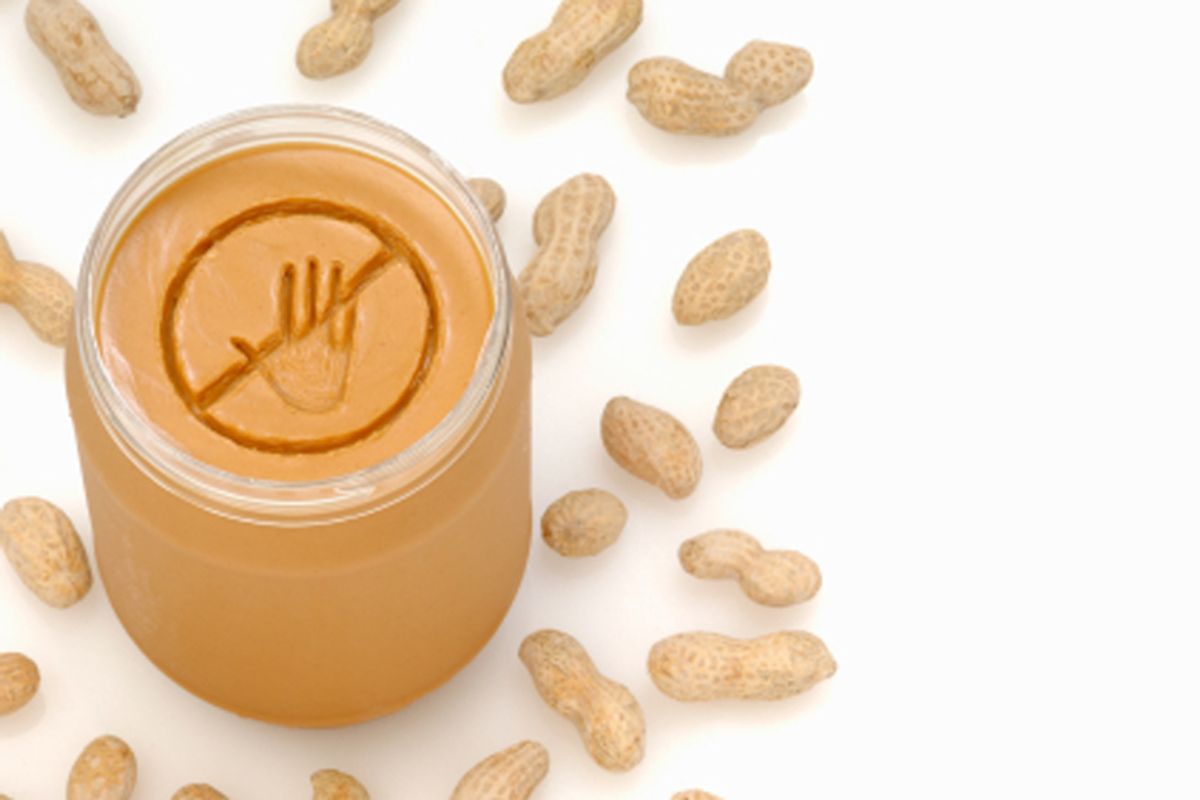
Food Allergy
Goodbye to killer peanut allergies?
As scientists launch the largest-ever study on the deadly sensitivity, a treatment may be just three years away
One of the most baffling moments of my undergraduate experience occurred late one night, when a student with a severe peanut allergy returned home from class to discover that her bedroom door had been smeared with peanut butter. When exposed to even small amounts of peanut, the girl’s windpipe could clamp up — and she could go into shock. She immediately left the dorm, never to return. (The culprit was later discovered to be another student who had taken issue with something the girl had said.)
Even if you haven’t experienced as dramatic a peanut-related incident as that, if you’ve eaten at a camp or at a college cafeteria in the last few years you’re aware that food allergies are no laughing matter. Peanut allergies affect 2 percent of Americans, and, according to the Asthma and Allergy Foundation of America, are the most common cause of death by foods. Soon, if one group of British doctors are successful, that may be a thing of the past.
As the Telegraph reported over the weekend, British researchers are about to launch the largest-ever investigation on peanut allergies, using 100 children between the ages of 7 and 17. This work is follow-up to a successful smaller study, conducted by researchers at Addenbrooke’s hospital in Cambridge, England, in which 20 of 23 participants were able to overcome their allergies by gradually being exposed to larger and larger amounts of peanut. Dr. Andrew Clark, who works for the hospital, told the Telegraph that he wants to establish a “clinical treatment that … could spread to the rest of the country” and he’s anticipating that such a result could happen within the next three years (something the Telegraph is touting as a “cure”).
For thousands of children even a small exposure to peanuts can cause a sudden release of histamine and other chemicals into the bloodstream, which can lead to swelling and anaphylactic shock (which can, in turn, constrict airways, cause heart failure and death). The cause of the allergy isn’t clear — it isn’t tied to consumption during pregnancy and it may or may not be linked to levels of early childhood exposure — but the number of children affected by food allergies has been on the increase over the past decade.
The so-called desensitization treatment used by the British doctors isn’t entirely new either. Last year, doctors at Duke University used a similar treatment on 33 children with peanut allergies. They slowly increased the amounts of peanut that the children would consume, from 1/1000 of a peanut to 15 peanuts per day. By the end of the study, four of the children were able to stop treatment and continue eating peanuts — a result confirmed by immunological indicators.
Unlike many other trials, the Brits didn’t use injections, but mixed peanut parts into yogurt. They gradually increased the children’s tolerance over two years until some could consume five nuts at a time. As Dr. Clark said, at the beginning “they would worry it would cause a reaction or even kill them,” but now “they can go out and eat curries and Chinese food and they can eat everyday snacks and treats.”
In the long run, Clark claims, the strategy may also be applicable to other food allergies — a bit of news that is sure to get many parents very excited, and could make the lives of a lot of dining hall chefs considerably easier.
Thomas Rogers is Salon's Arts Editor. More Thomas Rogers.
Dilemmas of a gluten-free convert
I used to roll my eyes at that diet. Now, I'm a true believer. Can I stay healthy without becoming intolerable?
(Credit: jayfish via Shutterstock) “It’s hard,” my doctor warned. As she palpated my throat and peered into my ears, we talked through why doing it would be good for me, despite the challenges. I had no dire disease. I ate colorful balanced meals. I exercised 45 minutes every day. But life had always presented low-grade symptoms: fatigue, medium vitality, puffy face, lethargy after eating and a suspicion that gluten wasn’t doing this particular body good. Staring down the tunnel at my mid-30s encouraged me to figure it out. Without cash for a fancy food intolerance blood test, I had one option: the anti-inflammation diet.
Continue Reading CloseMolly May has written for Orion Magazine, The Portland Press Herald, feministing.com and on her blog placestory.org, where she explores her zeal for place, a term she defines broadly. At work on a memoir about placelessness, she runs writing workshops and freelance edits from her yurt in Montana. More Molly May.
How has gluten-free become so popular?
A quarter of U.S. adults are reducing their intake of the protein, even though only 1 percent cannot tolerate it
Gwyneth Paltrow gushes over gluten-free. Chelsea Clinton’s wedding cake was baked without it. The new Old Spice guy avoids the ubiquitous protein to help stay buff. In fact, odds are good you too have tried — or at least encountered — a product with the gluten removed.
Because gluten-free is what low-carb was a decade ago: The “it” diet discussed on daytime talk shows, promoted by hyper-slim actresses and adopted by masses. Grocery aisles are stocked with the likes of gluten-free pasta, crackers, cereal and beer.
Continue Reading CloseAs allergies surge, an ancient cure?
More Americans (20 to 30 percent) claim some form of allergy -- and a Chinese herbal treatment may offer hope
We were in Hawaii five years ago, eating at the kind of fish restaurant where, maybe, you’d want to wear a shirt with sleeves and shorts that didn’t double as a bathing suit. Once we were seated, our waiter got all poetic about the nut-crusted opa and Mom warned him that she had food allergies, just a few. From his back pocket, the server immediately withdrew a deck of pink cards that looked like a prescription pad, thumbed one off the top of the stack and placed it down on the table. Bookended by triple asterisks, it read “GUEST ALLERGY CARD,” all bold, all caps; its instructions: “List All Problem Foods.” The word “All” was double-underlined for emphasis because double-underlining, it seemed, was the top defense against anaphylactic shock.
Continue Reading CloseFAAN responds to “The fear about peanut allergies is nuts”
To The Editors of Salon.com:
In a recent posting, “The fear about peanut allergies is nuts,” Rahul K. Parikh, M.D, voiced his opinion that food allergy statistics are not valid, in particular those provided by FAAN. We would like to correct some of Dr. Parikh’s errors, misconceptions and mis-statements.
Dr. Parikh would have his readers believe that the data is not based on science, but hearsay. FAAN is a science-based organization. The statistics reported by FAAN are from peer-reviewed studies published in leading medical journals. The studies used survey instruments set up to weed out non-allergy reports. The limitations to the studies have been noted in the published articles.
Continue Reading CloseThe fear about peanut allergies is nuts
Parents and medical groups are doing more harm than good stirring up worries about food allergies.
In 2005, a 15-year old Canadian teenager named Christina Desforges kissed her boyfriend and died. Her death, reported around the world, was initially blamed on peanuts. Desforges was allergic to peanuts and her boyfriend had eaten peanut-butter toast hours before their deadly smooch.
Sudden death due to an allergic reaction to food is known as anaphylaxis. When you eat peanuts (or some offending food), you break out in hives, your face swells and your larynx constricts until you can no longer breathe, all in a matter of minutes. Shocking. Tragic. Scary.
Continue Reading Close
Rahul K. Parikh is a physician and writer in the San Francisco Bay Area. He wrote the Vital Signs column on Salon in 2008-2009. His pop culture-medical column, PopRx, runs on alternate Mondays.
More Rahul K. Parikh.Page 1 of 2 in Food Allergy