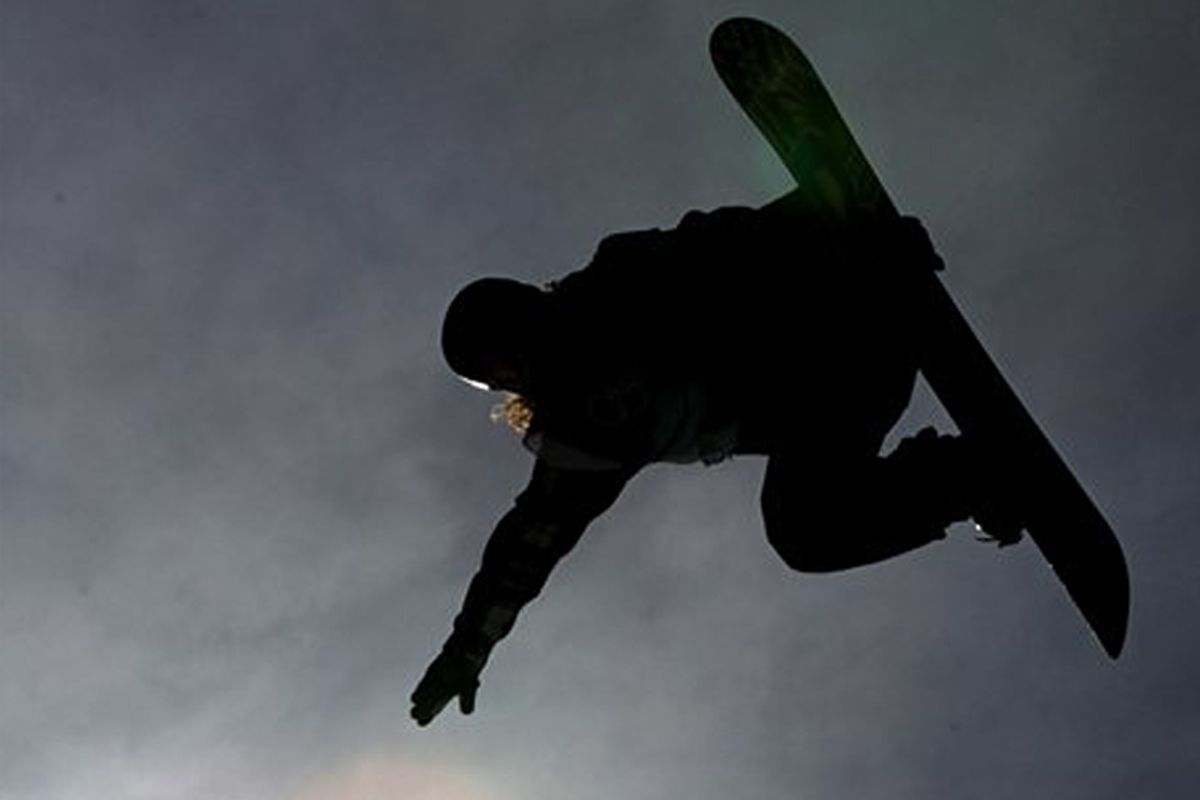
The most memorable moments of the Winter Olympics in Vancouver
The head of the Russian Olympic Committee resigned on Wednesday in the wake of the nation’s worst performance at the Winter Games, news agencies said, citing the committee’s spokesman.
When contacted by The Associated Press, however, the spokesman said only “that information is not confirmed,” before hanging up. He did not deny making the statements to the Russian media or say the information was incorrect.
Leonid Tyagachev, a former sports minister, took over as head of the Russian Olympic Committee in 2001. In the wake of the Vancouver Games, President Dmitry Medvedev has warned that sports officials would be fired if they failed to resign voluntarily.
The news agencies Interfax and ITAR-Tass cited Gennady Shvets as saying that Tyagachev had tendered his resignation. “This obviously concerns the Russian athletes’ performance at the Vancouver Olympic Games,” Interfax quoted the spokesman as saying.
Russia won just 15 medals in Vancouver — and only three golds — two fewer than its previous low in Salt Lake City in 2002. Officials said before the Olympics that 30 medals and a top-three finish in the medal standings were the targets.
Russia placed 11th for golds and sixth in the overall medal count, results which proved particularly embarrassing as the country takes the torch for the next Winter Olympics at its Black Sea resort of Sochi in 2014.
Tyagachev, 63, helped Russia win hosting rights to the Sochi Games. He is a personal friend and, according to some Russian news reports, a former ski instructor of Prime Minister Vladimir Putin.
There was no word on any replacement.
Sports Minister Vitaly Mutko said on Tuesday in televised comments that he would “calmly leave” his post if Medvedev’s warnings were directed at him. Mutko — who has so far resisted calls to resign from a wide array of Russian politicians — on Monday blamed several factors for the Vancouver flop. He said the team was unlucky, that no one in Russia takes new winter sports such as freestyle skiing seriously, and that doping bans had deprived Russia of several leading medal contenders.
Another Winter Olympics has come and gone. The torch has been extinguished, the ice skates packed up, the giant beaver costumes presumably stolen by wily Canadian teenagers. And Vancouverites have been left with a heap of medals, an enormous Molson’s-fueled hangover, and, over at Olympic Village, over 125,000 condom wrappers. Maybe it’s all that ice, or just the thrill of victory, but it seemed like the real action this year happened off the rink.
Canada’s National Post reported last week that the supply of 100,000 free condoms distributed to about 7,000 athletes and officials had been dangerously depleted. That’s right: 14 free condoms per person? Not enough! Either there were some serious water balloon fights, or the athletes in Vancouver were champions in the sack as well as on the ice. An emergency shipment of another 25,000 johnnies sped its way to Vancouver, courtesy of the Canadian Foundation for AIDS research. Rocketing down icy slopes must be pretty good for the libido.
And let’s not forget the other champions of risque behavior this year: The Daily Mail awarded its gold medal for smuttiness to Norwegian cross-country skier Odd-Bjoern Hjelmeset, who blamed a lackluster showing on the slopes on his porn-watching habit. Scotty Lago, the U.S. snowboarder who was sent home after racy pictures surfaced of him online, won bronze in his event but took home the silver for scandal. And, of course, German curler Melanie Robillard, who posed topless for a calendar before the games. It just goes to show that Olympic athletes also have Olympic-sized libidos. And, as Canadian skier Emily Brydon commented to The Telegraph, “What happens in Olympic Village, stays in Olympic Village.”
Human gridlock downtown. Dancing on tables in bars. Fireworks erupting, cowbells clanging and flags waving on hockey sticks.
Any way people can celebrate both wildly and peacefully, Canadians did it around Vancouver on Sunday immediately after beating the Americans 3-2 in overtime to win the gold medal in the men’s hockey tournament.
“This is the most patriotic moment of my life,” said 31-year-old Vito Rizzuto of Vancouver. “We deserved it. We got it. Gold!”
When Sidney Crosby scored the winning goal, a group of guys on the popular Robson Street threw one of their friends into the air. Groups of people climbed atop the plexiglass roof of bus stops, causing the metal-framed structures to sway. More folks climbed atop the second story of a Salvatore Ferragamo shoe store waving flags, hugging and posing for pictures.
At the gridlocked intersection of Robson and Granville, people were crowd surfing and clinging to lampposts, singing the soccer victory song, “Ole! Ole!”
“The crowds are good-natured so far,” police spokeswoman Jana McGuinness said about an hour after the game. “We’re very busy with searches of crowds in certain areas. But no problems. We’ve got a few kids trying to climb a couple lampposts. Overall so far, it’s going great.”
The hockey victory — the final event of the Vancouver Olympics — made it 14 gold medals for Canada, the most any country has won at a Winter Games.
That gave the hometown fans only more to celebrate, and they gladly did.
“Pandemonium!” screamed bartender Derrick Smith, who was so overwhelmed by the madness inside his bar, the Lamplighter Pub in the Gastown section, that he ran outside for a breath of fresh air.
“This is nuts!” he said, calling it his busiest day ever.
A duo of waitresses emerged from a nearby Old Spaghetti Factory, screamed “We won!” and headed back to work.
In the Mount Pleasant neighborhood, fans leaned out of windows clanging cowbells. People screamed and danced, and drivers honked their car horns. A passing police car flashed his lights and briefly flicked on his siren — in celebration, not to break anything up.
In the village of Whistler, below the mountain where the Alpine skiing races were held, a group of six men ran across cobblestone paths, each waving a Canadian flag, one attached to a hockey stick, another to a fishing rod.
The main plaza at the center of the village was packed full of people yelling as Crosby’s goal was replayed on a large screen. Everyone, it seemed, was wearing red — hats, shirts, face paint — and toting flags of various sizes. One group unfurled overhead a flag large enough that it fit two dozen revelers underneath.
How about the U.S. fans?
A few Americans walking dejectedly across downtown got hugs from Canadians. Three guys draped in American flags and U.S. hockey jerseys sat dejectedly at a public square.
“It was heartbreaking for sure to score with 30 seconds left in the game and then to lose it,” said 26-year-old John Bullard of Bellingham, Wash. “But Canada’s been very nice. So it’s fun. … We gave them a run for their money.”
Only about 19,000 people were fortunate enough to be inside the arena. One man said he and his three buddies each paid about $1,500 for their seats.
“You gotta do it,” said the man, who wouldn’t give his name. “Any true Canadian would do it.”
Another was turned away at the gate because he bought counterfeit tickets. He went through the streets yelling as loud as he could, “Make sure you don’t buy fake tickets,” an expletive underlining his disgust.
There were all sorts of game-watching parties, of course, but also some game-listening groups. Several dozen people gathered at the popular Robson Square to hear it played over loudspeakers. Another dozen clustered around a woman with a transistor radio at a hot dog stand near the Waterfront train station.
Canadians had been looking forward to this game from the day they won the bid to host the Olympics. Getting a rematch against the Americans after losing to them a week before only heightened the excitement.
About four hours before the game, Brendan Fisher and Ronan Mackey couldn’t stand to wait any longer. So they grabbed their sticks, two nets and went to play some pickup hockey — right outside the arena.
“This was the only way we thought we could calm our nerves,” Mackey said.
Then the cops approached, one of them saying, “We’re going to have to shut this down — unless we can play.”
——
AP Sports Writers Larry Lage, Anne M. Peterson, Janie McCauley and Howard Fendrich contributed to this report.
Italy's Giuliano Razzoli speeds down the course during the first run of the Men's slalom, at the Vancouver 2010 Olympics in Whistler, British Columbia, Saturday, Feb. 27, 2010. (AP Photo/Luca Bruno) (Credit: AP)
Ski events unfold like the history of the universe–a steady accretion of incident and accident. I’m watching the men’s giant slalom, which falls near the end of the games, after many of the competitors have already won, lost, or skied away. (As Ricky Bobby said, “If you ain’t first, you’re last.”) The NBC broadcast is shaped around the Americans, and the quest for gold, so, about 30 minutes in, when Bode Miller, chasing his fourth or fifth medal–I lost count back there on the road–hooked a ski around one of the gates, and limped (or the on-skis equivalent of the limp) off the course–presumably toward après ski, where a John Denver like guy sings as waitresses carry orders of smothered nachos–the show was mostly over. Bob Costas interviewed Lindsey Vonn, then the Olympic caravan, and it really is a circus train–this car holding the gorgeous women of curling, that car holding the Fins who play hockey–rolled on.
The condition of the mountain was not great. It had been warm, and a mist rose from the ground like the souls of dead skiers, and the snow was soft, and fog crowded in the dips, so the skiers seemed to appear and disappear as they made their way down. It was ghostly, that’s what I’m trying to say. Before the first run, guys who specialize in the science of snow went around throwing pellets of nitrate or something, which was supposed to bind the snow. If it’s soft, you fall–simple as that. And, in fact, skier after skier hooked or slipped and was gone. It’s a truth about the sport. Above it, around it, hang menace, the threat of wipeout, high speed maiming or death. It’s something that has always attracted me to downhill events: the stakes are high. To my mind, it’s the purest sport in the Winter Olympics. You have to be crazy, but smart, too. It’s like Gene Hackman (coach) says to Robert Redford (athlete) in that silly but great movie (screenplay by James Salter) “Downhill Racer”: “Yeah, you ski fast, but you’re reckless. You never really had an education, did you? All you ever had were your skis. And that’s not enough.”
With each run, the chance of disaster increases. The course gets icy and treacherous as the day goes on, with competitors slicking up the grooves. What’s more, by the time you get to the end of the pack, the good times have been established so the skiers know just how fast they have to go to have a shot–how all-out daredevil. It’s a great metaphor for life: how a skier, who just clocked the fastest time, waits to see if he will be bested, fearing he will be bested, that his triumph is about to be put in a new and diminished light. I often wonder if these skiers, sitting, for a moment, atop the board, enjoy their lead knowing the situation will change, because the situation will change. This was the case with a 32-year-old Slovakian named Mitja Valencic – he set a breakneck pace, and was beautiful, but you could tell, watching him, in his ski suit, and really, these things are too damn tight, he knew it would not hold up.
There were many crack-ups, especially in the first heat: Bode Miller, who stumbled then ditched, like a pilot with a punk engine (“Shut up and die like an aviator!”); Ted Ligety, the other American, who caught a gate, came to a stop, then floated sadly down to his parents, who looked even more bummed than the kid; and, most spectacularly, Austrian Manfred Pranger, who seemed goofy in his head shot, like he had just been arrested, but was not unhappy with that fact, cause think of the story–he caught air coming around a gate, was launched; you could see his face, and it had that terrible expression of “Oh no, it’s over!” He landed on his spine, slid, then lay still, as if thinking, “Back to the applications.”
In the end, the gold was taken by an Italian named Giuliano Razzoli. He was the perfect skier, and you could not watch him without imagining all those youthful days in the Italian alps, buried in snow, out in the bars and restaurants of the little ski towns. Well, he will be a prince now, the king of all that. I cannot imagine a better life. I honestly can’t.
But the real star was Whistler itself, beautiful in hi-def, all those pixels showing the world as the world would look if you were an elite skier, the valleys opening as you clear the first rise, distant peaks wispy in the fog, making these look like the sort of mountains you expect to see the rebel armies emerge from, one warm summer day, when the real games begin.
Page 1 of 8 in Winter Olympics 2010
The Jeremy Lin show
Santorum tests positive and negative
When sexy ads cross the line
House Republicans lose their will to fight
When Iran and Israel were friendly
The anti-Santorum onslaught begins
Occupy defends the Volcker Rule
Nancy Grace is more terrible than ever
How to write about poor people
Obama to unions: See you later