Yoga

The yogification of America

How one 19th-century Midwesterner got us all doing the downward dog -- and paved the way for puppy yoga

  • more
    • All Share Services

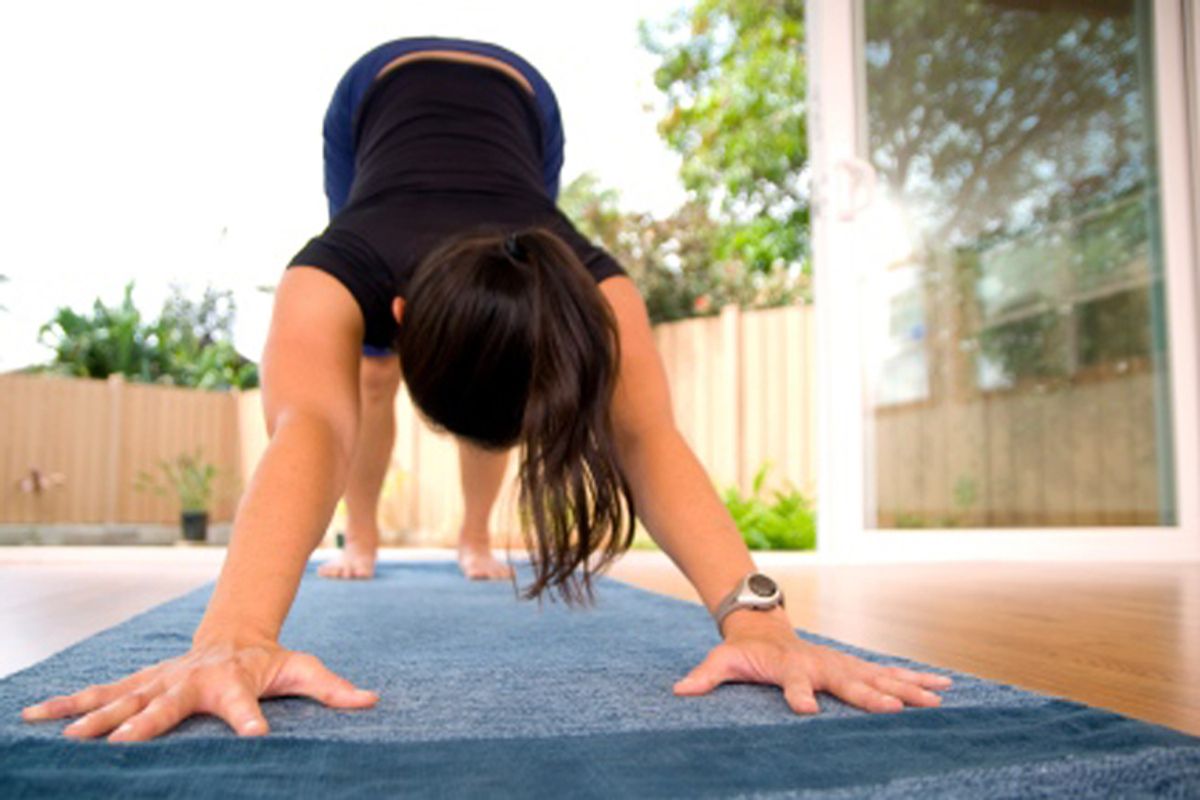
The yogification of America(Credit: © Nicole S. Young)

By now it’s safe to say that the Great Yoga Takeover of America is complete. According to a 2008 Yoga Journal study, 15.8 million Americans engage in some form of the ancient Indian physical and meditative practice, spending almost $6 billion a year on yoga classes, mats, DVDs and exotic retreats. There’s yoga for couples, yoga for babies, yoga for dogs. (As the New York Times reported recently, there’s already a scrappy, populist yoga-for-the-people movement afoot, a backlash against the steep price tag of upward of $20 for a 70- or 90-minute class.)

But how, exactly, did yoga become so firmly entrenched in American culture? While its explosion is certainly a product of the last few decades, it still comes as a surprise — given its massive popularity — to find that not so long ago, yoga was considered dangerous, possibly evil, and certainly a threat to the chastity and delicate nature of American women. Yoga as home-wrecker? That’s a new one.

It’s all thanks to a man named Pierre Bernard, writes Robert Love, a magazine editor (Rolling Stone, Best Life) and professor at the Columbia University Graduate School of Journalism, in his fascinating new book “The Great Oom: The Improbable Birth of Yoga in America.” Born Perry Baker in Leon, Iowa, in 1876, Bernard started to study yoga — both the physical poses, and a number of mystical spiritual teachings — in his teens, working with a Syrian Indian teacher named Sylvais Hamati. After bringing yoga to the hypnotism-, occult- and magic-obsessed 1890s San Francisco, the charismatic and controversial Bernard eventually settled in Nyack, a town up the Hudson from New York City, where he opened an ashram that drew Broadway performers, prizefighters, British spies and a number of wealthy heiresses. He was derided as a fake and a charlatan by his critics, and deemed a guru by his followers, but without Bernard, nicknamed “the Great Oom” by the New York press, we might not be heading to our Saturday morning classes today, mats under our arms, ready to practice.

Salon spoke to Love over the phone about his new book, Bernard’s colorful life story and his influence on yoga today — and what he might think about those yoga-for-dogs classes.

The story of how you came to write “The Great Oom” is a colorful and fascinating tale on its own. How did you come to learn about Bernard?

When my wife and I moved into this stone cottage overlooking the Hudson, we found mystic symbols carved into the walls: on the back of the bathroom door there was a lion-headed snake, and an ankh carved into the granite above the front door. That tipped us off that there was something unusual about the house. And then our neighbor told us about this so-called father of yoga who had operated just down the hill from where we live.

He seems like such a product of his time: 1890s to 1920s America. What was happening then that allowed Bernard to prosper and gain a following?

Bernard devoted his entire life to teaching hatha yoga in America, from the time that he was a young man in San Francisco in the 1890s to 1955, when he died. When he grew up there was a fascination with the occult: secret powers and the ability to change the material world in front of people. The perception of yoga at the time was limited to photographs and stories of Indian yogis who could do fantastic feats of asceticism, lying on the proverbial bed of nails, hanging on a hook over a fire, in some ways mortifying the body. While Bernard seemed to have a great respect for the other powers of yoga, he did deal with the esoteric and occult trappings associated with it; he gave demonstrations of trances in which needles were passed through his cheek and tongue and ears without any evidence of feeling pain. That was one of the first ways he came to the public’s attention in 1898, when he gave one of these demonstrations and made the New York Times.

And the idea of these unseen powers was in the air at the time. Hypnotism was an obsession. We’d just come from inventions like the telegraph, in which invisible energy was conducted over wires; nobody knew the extent to which other marvelous invisible powers could be had.

How did he manage to change the public’s perception of yoga?

At the same time that he was pitching the occult powers associated with yoga, he was also ministering to the rich and wealthy in terms of being a health guru, helping them with physical and psychological problems. He always played both sides of yoga’s appeal to the public.

He was not only teaching yoga’s health benefits but he was teaching it in classes, in the Tantrik Order, a secret society he started in San Francisco. It was kind of ordered on the model of the Freemasons and the theosophists, but it was a way of teaching yoga without saying the word “yoga.”

The Tantrik Order was a secret society, and yet his mission was to popularize yoga. How does that make sense?

I don’t think you do square it. In Bernard’s life, you can kind of trace the path of yoga as it was perceived in America, from the hidden and occult view of it to the acceptance of it as a form of therapy for health. By the 1920s he’d put the Tantrik Order aside; it wasn’t the main focus of his operation. When he moved up to Nyack, it was all about fresh air, cleanliness, hygiene and yoga as part of a full, well-lived life. He turned from the occult toward the idea of yoga as therapy, as sanctuary from a stressful world — in the same way that yoga itself, or the way that we perceived it, has morphed.

Back then, yoga was actually perceived as a slippery slope to moral downfall, especially for women. Why?

It’s fair to say that there was an American war against yoga in 1910 and the years afterward. Yoga had morphed from being the pastime of harmless eccentrics to something that was dangerous and subversive and possibly hurting the virtue of American women. It was based on some cases in which women gave away some amount of their fortunes to Indian swamis. In 1911, the Washington Post reported that the government was looking into this, conducting investigations. And certainly the fear that it was unleashing the sexuality of women. In the 1910s, the exoticness of it, the Orientalness of it, always came associated with loose sexuality. This wasn’t American Christianity.

Bernard was arrested in 1910, at exactly the time of the passage of the Mann Act (the White-Slave Traffic Act), and charged with inveigling women into his den of sin for the purpose of sexual intercourse. He was thrown into jail in 1910 and spent the entire summer. He was released later in the year, and the charges were ultimately dropped. The entire nation was seized by this fear that there was a conspiracy of foreigners to steal American women. There were purity and vice commissions set up around the country.

What were these turn-of-the-century yogis looking for?

We think people who lived 100 years ago were not stressed out, but they were. People came to him for all kinds of medical and stress issues. He turned around people who were in trouble physically or mentally, and promised peace of mind and the ennobling of the spirit.

Today, part of what makes yoga so popular is its vague spirituality, a kind of free-floating message about acceptance and oneness. How does that connect to what he was teaching then?

What he believed was a kind of amalgamation of Hindu tantric beliefs. It was centered on worship of Shakti, the feminine power and regeneration principle. A kind of a worship of the body was at the heart of Bernard’s beliefs. Also, that all truth is sacred, that nobody really has a direct line on truth, that it’s there in Hinduism and Buddhism and Christianity. There was never any dogma attached to what Bernard taught; it was a practical spirituality that gave results — making it very modern, related to the mind-cure movement at the time and to the New Age movement of today.

That’s the thing that’s wonderful about yoga. It’s a step-by-step practical spiritual philosophy. He saw it that way, and that kind of hooks it up to the way we think about it. He was the guy that made yoga safe for America, and vice versa, in many ways.

Today, yoga is a spiritual and physical cure-all, a panacea for everything that ails us. And it’s a huge commercial industry. There’s even yoga for dogs, and babies. What do you think he’d make of what yoga has become?

Part of his influence was that he did set the stage for the commercialization of yoga. But he himself catered to the carriage trade. His life was based on an American model of the guru-student relationship; most of the people who came to the club had personal relationships with him. They weren’t just students; he was their guru. I think he would’ve turned up his nose at the variations of yoga — dog yoga, things like that.

Did the yoga he taught actually look like what we know of yoga today?

There are no films of it, but there are photographs of people doing the asanas that we would recognize today.

It was fascinating to see him develop in the same kind of guru vs. huckster dynamic we’ve seen in other controversial religious and spiritual figures who’ve brought Eastern spirituality to the West. In your last chapter, you ask whether he was a genius or a fraud, but you don’t come down specifically on one side or another. What is your baseline feeling on Bernard?

I don’t think you can call him an out-and-out fraud, or a charlatan, and I certainly think you can call him one of yoga’s pioneers in America, and also someone who cared deeply about yoga and made it his entire life’s mission. Did he do things that were immoral or illegal at certain times in his life? He did. He was a rogue with a scandalous past. He wasn’t a devil, and he wasn’t a saint.

Besides the same physical practice, do you think the same spiritual strains are here now?

That’s a hard question to answer, because what is the spirituality of yoga? There’s a gauzy spirituality that yoga classes come wrapped in, but it’s not a hard-edge spirituality with very much discipline besides getting to class, as far as I can tell. Yoga absolutely came from a spiritual discipline in India, so it’s not surprising that it has spiritual components; we have tended to concentrate on the physical aspects of yoga in America and seem to, only lately, be more interested in the spiritual side.

Whitney Joiner is an editor at Seventeen magazine and a frequent contributor to Salon.

Yoga need not wreck your body

An incendiary New York Times magazine excerpt doesn't tell the whole story

  • more
    • All Share Services

Yoga need not wreck your body (Credit: iStockphoto/hundreddays)

If your social media streams look anything like mine, they’ve been dominated for days by “How Yoga Can Wreck Your Body,” a New York Times Magazine excerpt of a book by William J. Broad that is, as of this writing, still sitting atop the paper’s most-emailed list. Alongside the link is usually a half-facetious comment, something like, “I always knew that couch potato-dom was the superior strategy.”

I haven’t yet read Broad’s book, “The Science of Yoga” (subtitle: “The Risks and the Rewards”), but word in the yoga press is that it’s actually far more nuanced than the alarmist framing of the magazine article. But that story, with its terrifying stories of strokes and spinal surgeries, will have the biggest audience, so it’s worth spending a moment on what, to my mind, it left out.

Generally speaking, Broad never makes clear if his reporting suggests that yoga is inherently damaging to the body — any body — or whether repeated stress and poor teaching raise the risk of injury, one present in any physical activity. After all, yoga wrecks your body — compared to what? Not doing anything active, which it’s fairly clear is bad for you? It’s true that yoga gets a special break as a panacea, and Broad cites his “belief, naïve in retrospect, that yoga was a source only of healing and never harm.” But we take for granted that runners will strain their knees or dancers warp their feet. I suppose “anything done often or in extreme fashion can seriously strain the body,” is less sexy than what ended up on the page.

And extreme is what seems to be really at play here — many of the examples of injury are of teachers with rigorous practice, and one is of a man who would “sit upright on his heels in a kneeling position known as vajrasana for hours a day, chanting for world peace.” I’d be willing to bet that hours of kneeling chanting does not fit the experience of the typical Times most-emailer, or the average sedentary American looking for excuses not to get up and move.

The biggest elisions were implied but never emphasized: the importance of good teaching and the wild divergence of practices under the umbrella of American yoga. Based on having practiced with (at least) dozens of different yoga teachers over the years around New York and occasionally globally, I’d argue those are the most important factors of all.

The worst teachers preen in the front of the room and pretend they’re alone. Slightly below them in my estimation are the ones who expect all bodies to be created the same. The ones who shouted at me to simply shove down my heels during downward dog in defiance of tight calves and hamstrings never got the chance to do so again. It took me longer to realize that the teachers who enthusiastically encouraged me to move deeper into existing flexibility – say, a deep lower-back arch theoretically ideal for upward facing dog, a hip turnout that made baddha kanasa effortless – were hurtling me toward injury. The ones who urged modifications to not exacerbate imbalances, or to change emphasis to strength over flexibility, were offering a more sensible path.

In other words, all bodies aren’t shaped the same way, nor do we use them uniformly, so why would we expect the same remedies and actions to work on all of them?

That’s one reason I’m deeply skeptical of practices like Bikram, which are the same sequence over and over again. It doesn’t seem to be a coincidence that many of the reformers and thoughtful people quoted in Broad’s piece are trained in Iyengar, a more deliberate and almost physical therapy-like practice which often uses props to support the body. It also happens to be one in which you’d be lucky to break a sweat, which isn’t particularly appealing to Type A practitioners that fill urban studios. Meanwhile, the most substantive mention of Bikram, which does appeal to that demographic, is noting a report “that health professionals found that the penetrating heat of Bikram yoga, for example, could raise the risk of overstretching, muscle damage and torn cartilage.” I tend to agree with the critics in Broad’s article who seem to find ego and obsession to be at least as damaging as overzealous neck pivots.

My preferred studio has more vinyasa flow in the mix, but is heavily influenced by Iyengar and outside studies of anatomy. The first thing studio co-director Stephanie Creaturo says when you walk in the door of her class is “Don’t do anything that hurts.” (You can read her thoughtful response to the piece here.) Practicing in an environment of careful attention to each student’s boundaries, structure and function is a luxury, but my experience is that, where available, it makes a crucial difference in whether your body gets “wrecked” or not. Broad does say that the yoga boom has meant that “there is now an abundance of studios where many teachers lack the deeper training necessary to recognize when students are headed toward injury.” That would seem to be the most profound starting point for change, even if it’s less exciting than dropping dead in downward dog.

Continue Reading Close
Irin Carmon

Irin Carmon is a staff writer for Salon. Follow her on Twitter at @irincarmon or email her at icarmon@salon.com.

My naked yoga class

I want to challenge my own anxiety about nudity. But can I really handle downward dog without any clothes on?

  • more
    • All Share Services

My naked yoga class (Credit: djem via Shutterstock)

My instructor looked at me from the head of the dim room and smiled. Not in a creepy way, more in a “you can do this!” way. But I wasn’t so sure. I had struck a Warrior One pose a thousand times before, yet I still stumbled into the person next to me more often than I cared to admit. Normally I’d just offer a little self-deprecating shoulder shrug and move on, but what would I say in this situation? “Oops! I just ran into your bare penis”?

I had enrolled in a naked yoga class on impulse. My husband was gone for two months that summer, and in my solitude, I began a spiritual exploration of sorts, signing up for Buddhist book groups, taking long, contemplative walks, and reading a good deal of Eckhart Tolle. I was in a normal, fully clothed yoga class when I struck up a conversation with the woman I’d been paired with for partner poses. She was incredibly flexible.

“Wow, what do you do for a living?” I said.

“I’m actually a yoga teacher myself.”

“Oh, like hatha? Vinyasa?” I asked, eager to show off how yoga smart I was.

“Not exactly …” she said. “Naked yoga.”

I blinked. She repeated it for me.

Not only did naked yoga exist but apparently it was a very active community. Here in Austin it was typically organized through MeetUp.com, she explained, since most mainstream gyms and yoga studios were hesitant to host classes, much less announce them on their Google calendars.

“You should totally come sometime,” she told me, sensing my genuine curiosity. “A lot of my students are there because they want to go deeper in the practice, and the naked part makes you a lot more vulnerable, more open. It also helps people conquer body fear stuff, and who doesn’t have some kind of anxiety about their own body?”

I think we all have a secret “what if?” file in our minds, some sort of pathological fear mixed with the seeds of courage. What if I ran a marathon? What if I tattooed stars to my face? Marathons and face tattoos don’t hold any appeal for me, but right then, I felt the secret thrill of a challenge I had not known I was seeking.

“When’s your next class?” I asked.

“Tomorrow,” she said.

Here’s why I said yes.

About eight years before, in college, I had taken a Drawing II class where our first big assignment was to draw a live model. He was older, much older, and I was so embarrassed about looking at his penis. I scanned around the room so I could share a giggly, uncomfortable grin with another student, but everyone was already looking down at their sketch pads, engrossed in their drawings.

I turned back to the man and felt my eyes adjust like a camera lens. Instead of seeing the most private part of this man’s body, the thing that he made love with and the thing that he went to the bathroom with, I forced myself to see a series of shapes and light gradations between his legs. And then I drew those shapes and that light, and over the course of several days, the additional planes that made up his whole, fascinating body.

This episode shifted my thinking about nakedness. As Americans, we tend to amp up the taboo factor of the naked body. In France, bare breasts in a magazine could mean: “I keep my body clean with this all-natural soap!” But in America, bare breasts in a magazine mean PORN. My own body during college was a matter of constant frustration. At the time I took that class, every calorie I consumed was done with scientific calibration. I didn’t look at my naked self in the mirror much, but I weighed myself every day. My boyfriend complained about my sharp pelvis, which poked him at night as we slept. When he hugged me, his fingers fit neatly into the valleys of my backbone.

My friends finally forced me to see an on-campus counselor, who encouraged me to keep taking art classes. Specifically, the ones with live models.

“I think it’s helpful for you to see that there are all kinds of ways of being naked,” she said. “Different ways of being naked.”

And it stuck with me. I still have body hangups, but I know a good “different way of being naked” when I see one. This particular opportunity, naked yoga, would be healthy for me, I thought. Freeing. Liberating!

“Oh, and one more thing,” my yoga partner said cheerfully. “It’s coed.”

The next day I strolled into the studio, acting nonchalant. My heart was beating like a drum.

“Are you here for pilates?” the pretty desk girl asked.

“Nope!” I answered, looking at her meaningfully.

“Oh,” she said. “Right this way.”

She led me to a door that opened up to another door, and beyond that, a dark blackout curtain. I parted it nervously.

Before me were eight nude men, mostly middle-aged and seniors, all doing the usual pre-yoga class routine: Smoothing out their mats, stretching, meditating. The gentleman directly to my left was getting a head start by doing some downward facing dog, and I had to step carefully through the doorway so as not to hit his curiously sun-spotted butt with my purse.

“I’m so glad you made it,” said my (naked) instructor. “Here, let’s find you a place on the floor” – motioning to a spot between a 30-year-old man and an 80-year-old man – “and you can get changed.”

I looked around the room to see if I had missed any women.  Maybe a sweet old hippie lady curled up on one of these mats?

“You know, you can wear underwear if you like,” said my instructor, sensing my timidity. “Whatever you’re comfortable with.”

A popular euphemism for “naked yoga” is “clothing optional yoga,” but for me, opting for clothing would defeat the whole purpose. Naked yogis flock to the path to achieve radical body acceptance, after all. Also: If I learned anything in my college art classes, it’s not that raw nudity was sexual so much as the suggestion of nudity. Leaving some parts teasingly covered. Botticelli knew it, Victoria’s Secret knew it, and I knew it. I was going all. The. Way.

We started out the class by standing in a circle and introducing ourselves.

“I’ve been coming to class for about a year now,” said George, a rotund man who looked to be in his mid-to-late 60s. “I used to drag my wife along with me, then she stopped.” He paused to sigh. “But I still come.”

Variations of George’s story echoed all around the circle. In fact, most of the guys had originally attended with their girlfriends or wives, but when they quit, the men kept going. Had it started out as a bonding activity for these couples, I wondered? A daring adventure to try together, after the thrill of swing dance lessons wore off? And what was it that kept the men coming back, I wondered?

We started our first sequence, a basic sun salutation.

“Just swing your arms up, over, and bend at the waist down to the floor,” said my teacher.  ”Then we’re just going to hang out in down dog.”

It takes a while in naked yoga to forget that you are naked. During our sequences, I kept giving myself all these paranoid little reminders: “Don’t fall over. Don’t look at that guy’s penis. Are you on your period? Don’t look at that guy’s penis.” And like that dog in the dog food commercials, the one who always exclaims to himself, “BACON!” the word “NAKED!” constantly flashed in my mind.

They say that the novelty factor of naked yoga takes some time to wear off, but that if you go often enough, you learn to feel more at home in your body. Less like it’s this freaky stranger, your nude self. People have nightmares about being naked in public. If you can conquer this fear, the benefits are powerful.

Still. In class, I was having a hard time breaking through to that higher state, the one where society and cultural norms don’t exist. The room was dark, but I could still see everybody – eight naked dudes – and surprisingly, this was a lot more distracting than thinking about them looking at me. I closed my eyes and focused on my breath, trying to lull myself into something like a meditative state.

In between breaths, I started to make out this very faint memory, like a grainy homemade video. But I forcefully turned it off.  Nuh-uh-uh! I scolded myself. No thinking. But the image was insistent, growing brighter and clearer with each breath. Finally, I allowed myself to watch.

I saw myself when I was tiny, probably 4 years old, playing in the backyard. We had just gotten a sprinkler, one of those rotating ones marching along a high arc, then zipping back to its starting point. It was summer in Texas, scorching hot. I remembered shrieking as I ran in and out of the sprinkler’s path, daring it to touch me. Of course I was naked. The sprinkler’s streams made an itty bitty rainbow in the sun’s rays, and when the water started spraying me again, I screamed and laughed at the same time. I thought life couldn’t possibly get much better than this.

When I opened my eyes seconds later, I was back in the dim studio, and the guys were all there. We were now in tree pose.

After another pose sequence, we would pack up our things. We’d all put our clothes back on, and drive home to our families and our dinners, and if we had partners then maybe our nakedness would reveal itself later that night, or maybe it wouldn’t. Regardless, our bodies would settle back into their old, familiar ways of doing things, and stay politely covered in the process. At least mine would.

When I tell this story to people now, I try to tell them about that memory. Of being that kid again for just two seconds, gloriously naked and free. I tell them this is why people take naked yoga.

“Right,” they say, with a hard eye roll. “It’s not at all because a young, pretty girl teaches it. Or because other young gals come to join.”

And maybe they’re right. Maybe it’s just a roomful of pervs. But I think it may also be a roomful of people who have lost something, and they want it back. To feel that pure joy again, to inhabit a body that feels simpler and shameless. Even if it’s for only two seconds.

I don’t think it’s going to be my particular path to liberation. I’m not sure I’ll ever go again. I tell myself it’s too charged of an environment to be relaxing, that if I crave peace, all I need to do is strap on my shoes and take a walk. But I know the real reason. I’m just too Puritan for it, worried about what people would say, worried about how they would look at me.  And maybe that’s why I secretly miss naked yoga: It’s the one place where looking really isn’t the point.

Continue Reading Close

Tolly Moseley is a writer in Austin, Texas. She has performed with the national comedy showcase "Mortified," where people read their old adolescent diary entries to a room full of strangers. She is also an annual speaker at SXSW Interactive on multimedia storytelling. Follow her @TollyM.

The “Eat, Pray, Love” guru’s troubling past

Accusations of financial misconduct, sex abuse scandals: The dark history of Elizabeth Gilbert's yoga mentor

  • more
    • All Share Services

The Right: Gurumayi Chidvilasananda

When audiences go to “Eat, Pray, Love” this weekend, they will watch as Julia Roberts, blond and brokenhearted, folds her long, long legs into a perfect letter X, chants a mysterious mantra, and magically finds the equanimity that has been eluding her. Viewers will see her undergo life-changing experiences thanks to her guru’s grace and the spirit of her guru’s master, a man she calls a “South Indian old lion.” They will perhaps be awed and enchanted by the exotic spiritual treasure chest that is India. And then they will cheer for her as she finally mends the cracks in her heart and makes her way to Bali to find love.

What they probably won’t know is that the unnamed guru is a hugely controversial figure who has disappeared from public view amid allegations of manipulation, financial misconduct and intimidation. And as that guru’s organization, the Siddha Yoga Dham of America (SYDA), has come under fire, her own guru (yes, gurus also have gurus), the “old lion,” has been accused of sexual abuse, molestation and sexual intercourse with minor girls.

The film, like the Elizabeth Gilbert memoir on which it is based, doesn’t name the real-life ashram or guru, and Gilbert has never revealed the guru’s identity. Readers of the book are instead treated to breathless but abstract passages like this: “Then I listened to the Guru speak in person for the first time, and her words gave me chill bumps all over my whole body, even across the skin of my face. And when I heard she had an Ashram in India, I knew I must take myself there as quickly as possible.”

But if you’re somewhat familiar with India’s spiritual landscape, it’s easy to figure out that this “feminine, multilingual, university-educated” guru is Gurumayi Chidvilasananda — the head of the SYDA. For starters, India doesn’t have very many female gurus, and fewer still that speak impeccable English and reside in the United States. Gilbert also dedicates a sizable chunk of the India portion of her book to the troubles she has with the “Gurugita,” an obscure 90-minute-long hymn that Gurumayi’s devotees are required to chant every morning. Having been to a Siddha Yoga meditation workshop myself, I’m well acquainted with the tedium that is the Gurugita, and as far as I know, Siddha Yoga is the only Hindu spiritual order to have made the Gurugita such an essential part of a devotee’s daily practice. The ashram in the book is located in a small village just outside Mumbai, while SYDA’s India ashram is tucked away in a rural idyll called Ganeshpuri, some 50 miles from Mumbai. The book is littered with other telling biographical details about Gilbert’s guru that match up with Gurumayi — that she joined the entourage of an Indian swami (a Hindu religious teacher) as a teenager, that she served him as a translator for years before being given guru-hood, and that she was only in her 20s when she became his successor. Earlier this week, the New York Post drew the same SYDA connection to “EPL,” as others have. When Salon contacted Gilbert’s publicist at Viking to confirm that Gurumayi was in fact her guru, we were told, “No comment. Liz has always made a concerted effort to respect the privacy of the ashram.” But the evidence is overwhelming.

Known to her followers as just Gurumayi, Malti Shetty is undeniably beautiful — slender and brown-eyed, with dimples that dig deep commas below her high cheekbones. Shetty says she is the sole successor to SYDA, a new Hindu religious movement that is based on the tradition of Vedanta. Her predecessor and guru, the man who appointed her to his throne, is Swami Muktananda.

SYDA is headquartered in a large complex in South Fallsburg, N.Y., a town set in the Catskill Mountains. In the 1980s and ’90s — the decades during which the SYDA reached its height of popularity — the foundation was said to have some 70,000 followers across the world. Its devotees, mostly the wealthy and well-educated, included celebrities like Melanie Griffith, Isabella Rossellini, Diana Ross and Don Johnson.

In 1983, an exposé by journalist William Rodarmor in CoEvolution Quarterly (a Stewart Brand magazine that eventually became Whole Earth Review) suggested that before his death, Muktananda had been having sex with several young girls in his ashrams. The septuagenarian guru, said the piece, used to stand behind a curtain and spy on girls in the female dormitory. He even had a special area equipped with a gynecologist’s table that was used for his sexual dalliances. In public, he announced that he was celibate, insisting that sexual acts took away from spiritual energy. But in private, a parade of girls would be trooping in and out of his bedroom all night. The story even describes the violence and intimidation used by Muktananda to control his devotees. There are accounts of him beating hapless Indian peasants outside the ashram grounds, of stabbing his valet with a fork, and of sending burly enforcers to take care of devotees who refused to toe the party line.

In an account posted on the website Leaving Siddha Yoga — which encourages former devotees to come forward with stories of their abuse and mistreatment — a former devotee, Joan “Radha” Bridges, describes her sexual encounters with Muktananda. Bridges, then 26, says she was slowly wooed by Muktananda’s translator, Malti Shetty. As the account reads: “I was given an invitation by Malti to come to the Boston Ashram with a small entourage. This was a privilege — I was thrilled to be included.” Soon, Muktananda started kissing her and grabbing her breasts, eventually pulling her into his room to inspect her vagina. The next night, she says, Muktananda brought her back into his quarters. “All the while he told me, ‘Don’t tell anyone,’ and, ‘Don’t tell your husband.’ Muktananda put me on a high table, pulled my legs back to expose my vagina and pulled out his flaccid penis. He placed his penis as far up inside me as he could and remained in that position a very long time.” It took years for her to accept that she had, in fact, been a victim of sexual abuse.

In 1994, the New Yorker revisited these accusations in the article “O Guru, Guru, Guru,” written by Lis Harris. Harris found several other women who said that Muktananda had forced them to have sex with him. But she also chronicled Shetty’s behavior as the new guru. Shetty displayed many of the same traits as her mentor. She ran a hate campaign against her brother, who had been named as a co-successor by Muktananda, beating him and isolating him until he finally gave up his claim on the SYDA’s spiritual mantle. She denied all allegations of Muktananda’s sexual abuse and shielded other sexual predators inside the ashram, including a man called George Afif, who was convicted of statutory rape. Harris’ piece even hinted that Shetty herself had had sexual relations with Afif. “While I was working on the story,” Harris told Salon, “I was constantly followed [inside the ashram]. Men with walkie-talkies wouldn’t let me go anywhere on my own. They were always asking my driver questions. A woman who I worked with in the ashram’s kitchen was even noting down every word I said. It was very Big Brother-like.”

The organization tried hard to keep the New Yorker from publishing the story, even threatening it with litigation. According to Marta Szabo, a one-time devotee of SYDA who wrote the book “The Guru Looked Good,” Shetty once called a secret meeting to chant and perform “weird Reiki” against Lis Harris and the New Yorker’s then-editor, Tina Brown. “When the article finally came out, they took every copy of the magazine that they could find and burnt them in a great pile,” Harris says.

Rumors also abound of untold millions stashed away in Swiss bank accounts. (Rodarmor’s exposé features Muktananda talking about just such a thing.) The foundation’s workshop fees run into hundreds of dollars, and devotees who work at the ashram are mostly unpaid. “Just the money I collected from a single intensive [meditation workshop] amounted to $14,000,” says Szabo. Daniel Shaw, a former devotee who now runs Leaving Siddha Yoga, says that using human conduits to ferry cash from the U.S. to India was a common practice within Siddha Yoga. “I’ve been asked to carry large amounts of cash under my clothes during several trips to India. Others used to carry jewelry,” he says.

Charges have never been pressed against the organization. Shetty stopped speaking to the press soon after she became Gurumayi and has not publicly addressed any of the accusations in a long time. But when Rodarmor spoke to her for his piece in 1983 — just after she had taken on the mantle of guru-hood — she denied all allegations of sexual abuse against Muktananda and of the existence of Swiss bank accounts. In Harris’ piece, the group’s swamis (high-ranking members) steadfastly maintained that Muktananda never broke his vows of celibacy. The SYDA did not respond to Salon’s request for a comment.

SYDA is now a shell of its former mid-’90s self, despite the bestseller and newfangled Hollywood associations. The South Fallsburg ashram, which once hummed with as many as 4,000 devotees, looks forlorn. Many defectors say that they left because of Shetty’s increasingly authoritarian behavior and her subtle attempts at control and manipulation. “She was just mean. She humiliated me in public. She certainly wasn’t enlightened,” says Szabo, who was once part of a team that edited and rewrote parts of the public talks for which Shetty was revered.

In 2004, presumably about a year after her encounter with Gilbert (whose book came out in 2006), Shetty disappeared from public life. Now followers only get an occasional video message from their master. Shaw believes that the appearance of websites like Leaving Siddha Yoga caused Shetty to retreat into a world where she has full control. Others say that she’s just tired of playing guru.

It’s anyone’s guess if “EPL’s” film release will cause a renewed surge in SYDA’s membership. Or if a new wave of popularity will force Shetty to come back into public view. But Gilbert’s account of her time in India, her naive view of her guru as a “compassionate, loving” and “enlightened” master, and her faith that Muktananda was a “world-changing” and “self-realized” leader are all a sad chronicle of the human need to find spiritual anchors, and then to believe that these ordinary, and often deeply flawed, men and women are the path to our salvation.

. . .

Read Siddha Yoga Dham of America’s response to this story.


Continue Reading Close

Riddhi Shah is an editorial fellow at Salon.

Die, smug yoga teacher, die

I wanted exercise and a little peace, not lectures on ethical veganism

  • more
    • All Share Services

Die, smug yoga teacher, die

The following is excerpted from the book “Stretch: The Unlikely Making of a Yoga Dude” by Neal Pollack. Reprinted by arrangement with Harper Perennial, an imprint of HarperCollins Publishers.

One afternoon in New York, I found myself on a street corner in midtown, licking salt off a slightly burned soft pretzel. I gazed about in a wondering daze, transfixed by the LCD nightmare. Time seemed to stop for me just then, as though I were Dr. Manhattan from “Watchmen,” only without the continually erect blue penis. Suddenly, I knew that everything in Times Square — the breeze-blown fliers for some outlier porn shop, the vaguely contraband luggage stores, the endlessly replicated advertisements for TV shows that never had a prayer, even the tourists from Nebraska — was part of a larger cosmic reality whose boundaries we can’t begin to perceive. The power of the universe, I realized, is transcendent, infinite, all-knowing, beautiful beyond measure. I quaked at the awesome kindness of its eternal might.

This, in yoga terms, is called Samadhi, the divine perception of universal consciousness, though the realization may have come to me because I was in the middle of a five-day drug bender. I’d bought some full-melt sativa hash capsules at my neighborhood medical-marijuana dispensary before coming to town, had taken two caps before getting on the plane, and had refried my brain first thing three consecutive mornings. Visions like these were happening regularly now; my synapses had begun to fray around the edges.

All I needed was to lie down for a couple of hours with a wet washcloth over my face, but I’d made plans to meet a friend for an early evening yoga class at her favorite studio. Once again, yoga had imposed itself upon my life. After a harsh period defined by career disappointment and excessive doughnut consumption, I’d taken up the practice and had been at it for four years, pretty steadily. While yoga’s magical transformational properties hadn’t entirely taken hold, I did feel a little better, overall. So I kept going. Sometimes, instead of meeting friends at bars, I’d meet them at yoga studios. My friend was excited to share this experience with me. Doing yoga at Jivamukti, she said, had made her life so much better.

“Fuck yeah!” I said, when she asked me. “I love yoga!”

Jivamukti (a Sanskrit word that means “liberation while living”) is a yoga method that combines physical postures with scriptural study, music, chanting, meditation, animal rights, veganism, environmentalism and political activism. The practice is adored by many and considered the height of pretension on Earth by others. Later, when I mentioned it to a friend, she referred to it as “Jive-Ass Monkey.” Of course, I knew none of this when I got off the elevator and entered the Jivamukti den, high as an Underdog balloon. I was planning to simply take another class on another chilly spring afternoon. My friend and I would do some yoga, towel off in separate locker rooms, and then go get some tasty noodle soup.

I entered a room the size of a soccer pitch. Students set up their mats so they were nearly touching, in rows of ten. My preference would have been to hide in the middle-back. That way, the teacher might forget about me. But my friend plopped down in the front row, close to the door, so I had to splay next to her. Across the aisle from us, an equally deep number of full rows took shape, like an opposing phalanx in some sort of yoga war. I was used to studying in small rooms with no more than 20 people, and often fewer than 10. This felt about as intimate as getting on the subway.

Several short women wearing white, v-neck blouses walked around the room, hands behind their backs, examining the scene. They looked kind of like massage therapists to me. I grew hopeful — a massage sounded pretty good. Maybe I shouldn’t do yoga today, I thought. Maybe I should get a massage instead.

The instructor entered. She was tall and lithe, and she moved with a healthy, almost ethereal confidence. A few freckles, perfectly placed, dotted her angular face. You’ve had many yoga instructors who’ve looked like her, except that she was hotter by a degree of ten. She walked into the center of the room.

“OK, the thing you have to understand about the world,” she said, “is that most people are totally selfish, right?”

Well, that was always a good conversation starter.

“If you’re being selfish,” she continued, “if you’re only thinking about yourself, then you’re hurting the world. And what you have to understand, you guys, is that the choices you make, right, totally affect the environment. And that you have a responsibility to the world to make the right choices.”

Usually, my yoga teachers never gave a rap longer than, “I’ve had kind of a rough day, and I’ve been thinking I need some yoga to center myself, so let’s get started.” But this went on and on. I wasn’t then aware that Jivamukti instructors are required to give a 15-minute dharma lecture before class. They’re told to stress the yamas, or codes of conduct, for yogic living. These include: Non-harming, non-stealing, non-lying, non-attachment, and the always unpopular sexual continence.

“I like to think of myself as an ethical vegan,” the teacher continued. “And that informs my yoga practice, and it helps me to heal the world. Did you know, you guys, that research has shown if you eat meat, you’re doing more harm to the environment than if you drive an SUV? Think about that while you’re doing your yoga. If 98 percent of the people who drove SUVs stopped driving them tomorrow, it still wouldn’t help the environment because of all the damage that meat-eaters do. So when you’re eating meat, think about all the harm you’re doing to the world because you’re selfish and greedy and don’t think about others.”

This particular dharma lecture confused me. Weren’t yoga teachers supposed to present themselves as humble servants of a higher power rather than moral paragons above reproach or laughter? Also, while I’ve had some raw food episodes in my life, and understand and appreciate the philosophy behind veganism, her science was almost as faulty as her manner was condescending. Someone needed to take her down a notch. The right time to do it, I figured, was during a yoga class attended by a hundred of her followers, while I was toasted to the nines.

“Bullshit!” I said.

My friend looked at me, pained and nervous, pleading with her eyes for me to stop. The teacher heard because she was right in front of me.

“If someone disagrees with what I’m saying,” she said, “they’re obviously not well-informed and are speaking from a position of insecurity.”

“I’m not the only one,” I mumbled under my breath.

This wasn’t going to go well. She huffed haughtily and resumed her dharma talk. Finally, our physical practice began. It pushed way beyond any level I could handle. The flow moved too fast, and many of the positions were new to me. I stumbled around, flinging sweat off my head onto other people’s mats, huffing and sighing. The instructor, by now, had me in her crosshairs. She kept giving me adjustments, though the most effective adjustment might have been to put me in a chair and leave me there.

“Maybe you should practice a little bit before you start criticizing,” she said.

“Maybe I should.”

“Maybe you should.”

“That’s what I just said.”

She walked away. I don’t think I was her type of student. Then again, I’d yet to find a yoga teacher who was naturally drawn to sarcastic, incompetent fat asses. I closed my eyes and tried to focus on the practice. Then the teacher’s voice lowered about two octaves, and she started talking much more slowly. In fact, it sounded like another voice altogether.

“Now,” said the voice, “keep your heart open — wide open — and move your shoulder blades apart as you slide your hands into warrior two.”

I opened my eyes as I moved into the pose. One of the women in white was now guiding the practice. This teacher had assistants, for god’s sake.

“Is this some sort of cult?” I said.

My friend, realizing she’d made a horrible mistake by inviting me, drew her lips together with a loud SHHHH.

Yoga teachers don’t need assistants, I thought. Sure, if you’re Patthabi Jois or B. K. S. Iyengar or some other nonagenarian whose near-divine presence has made practice possible for millions of people, you’ve earned the right to sit quietly while your senior disciples do the heavy lifting. But for the love of Krishna, if you’re a sexy Manhattan broad at the height of your powers, don’t pawn your extra vinyasas off on underlings!

At some point, after she’d retaken control of the tiller, the instructor made a joke. By now, we were doing the seated poses, so I could at least breathe. I don’t remember the joke, but, for some reason, I laughed.

“Oh, so the comedian thinks I’m funny,” she said. “I must be doing something right.”

Lady, I’m no comedian, I thought. I’m a comic writer. There’s a difference.

Finally, we got to savasana. Boy, did I need it. I lay down on my rental mat and prepared for ten minutes or so of sweet relief from the nightmarish yoga journey I’d just endured. Then I heard a voice. Some sort of recording was being played. The voice was British, with the hint of a Middle Eastern accent, and as preachy as Noam Chomsky being interviewed by a college-newspaper editor.

“The United Nations estimates,” said the voice, “that more than four hundred thousand people have died in Iraq since the start of the Gulf War. The estimated profits made by U.S. corporations since that time have equaled …”

“Are you kidding me?” I said.

“Please don’t do this,” said my friend, rapidly becoming my former friend.

“In 1980,” said the tape, “Saddam Hussein met with Donald Rumsfeld …”

I stormed out, mat in hand. Sure, I was against the war in Iraq and all, really against it, big time. I’d organized a group to march against George W. Bush’s first inauguration, for god’s sake. My lefty bonafides didn’t need proving. But the last thing I needed to hear during savasana was a recitation of recent U.S. war crimes in the Middle East.

I went into the lobby and gave the desk clerk the crazy druggie eye.

“WHO DOES THAT TEACHER THINK SHE IS?” I said.

The desk people ignored me. “I WANT TO FILE A COMPLAINT!” Still, they ignored me. “THAT WAS AWFUL, WHAT WENT ON IN THERE! ALL THE POLITICAL RANTING! THIS IS YOGA, DAMMIT! I CAN’T BELIEVE IT! THIS PLACE IS A NIGHTMARE!”

It didn’t occur to me that the people working behind the desk at Jivamukti might side with the teacher in any disagreement.

Five minutes later, my now former friend came out of class. We went downstairs to the street. “I can’t believe you did that,” she said.

“That bitch,” I said.

“I don’t care if you disagreed with her. This place is important to me, and you embarrassed me in class.”

“But …”

“That was totally humiliating for me.”

My friend wanted an apology. So, about six months later, I emailed her one. The incident continued to trouble me, though. The teacher had preached, didactically and unpleasantly. But what I’d done in response, I finally realized, had been totally wrong and disrespectful. It took months for me to look Jivamukti up online, to understand that I’d gone blindly into one of the founding studios of modern yoga, thrown a fit worthy of a toddler so far gone that no shiny object could distract him from his rage, and left with nothing in return.

Before the yoga, I’d behaved that way fairly often. It was about as far from my best self as I could get. In fact, I’d even go so far as to call it my bad self. But even serious yogis, I was learning, are often tempted to get down with their bad selves. Trying to contain it was the true yoga practice, the real discipline and dedication, and getting there, I began to understand, would take a lot more practice, and maybe a little less drugs.

Continue Reading Close

Neal Pollack is the author of the literary satire "The Neal Pollack Anthology of American Literature," among other works of fiction and nonfiction. His latest book, a historical novel called "Jewball," was published in October.

Hot Nude Yoga: Shedding clothes to shed pounds

The naked yoga movement is catching on, and fans say it helps create an intimate -- but nonsexual -- community

  • more
    • All Share Services

Hot Nude Yoga: Shedding clothes to shed poundsCertified yoga instructor Jeffrey Duval, left, and student Todd Erickson roll up their mats following a nude yoga class in New York, Wednesday, March 24, 2010. Fans of nude yoga say the nudity aids in deepening their yoga practice. (AP Photo/David Goldman) (Credit: AP)

Some people work out to look good naked. Others skip a step.

Inside a heavily curtained fourth-floor dance studio is a male-only class specializing in “Hot Nude Yoga,” a form of sensualized tantric yoga practiced nude.

A few classes are coed, but male-only gatherings tend to be more popular and have become a mini-phenomenon in the gay community, with studios in Boston, San Francisco, Los Angeles and Salt Lake City. A studioless group in Chicago practices in the apartment of a nude yoga enthusiast.

Fans say the nudity aids in deepening their yoga practice while building a close — and emphatically nonsexual — community. “A lot of people, especially living in New York, don’t get the opportunity to connect with people in an intimate way,” said Aaron Star, who started the naked yoga movement.

And while participants do occasionally report a frisson of excitement, Star and the practice’s aficionados make one thing clear: This is about physical fitness.

“This is about yoga and appreciating your body,” said John Cottrell, 40, who teaches naked yoga classes in Salt Lake City twice a month. He calls them a safe, nonthreatening space “to help men especially look at themselves in a different way.

“It’s just fun. It’s a great workout,” he says.

Star began the practice to appeal to a primarily gay male audience and achieved fame in the yoga world with his DVD series “Hot Nude Yoga,” which allows aspiring yogis to practice in the privacy of their homes.

Hot, yes — in temperature, for starters.

Awkward? That, too.

At the small class I attended, an undeniable sexual charge hung in the room, making the exercise at times painfully weird and embarrassing. Many nude yoga classes revolve around partnering positions, a series of postures that put two men within striking distance of the other’s privates.

Not all serious yogis think the practice makes sense.

“I don’t see the point,” said Mary Dillion, who teaches clothed yoga in Manhattan. “I have a yoga practice that I like and I can be naked in my home. I don’t need to do naked yoga.”

And Joshua Stein, editor-at-large for OUT Magazine, who attended a class in 2008, says the quality of the yoga was diminished by the heightened sensuality.

“It’s almost if the yoga is something between an afterthought and an excuse,” said Stein, who is heterosexual. “It gives you this gray area where you can be intimate physically, but not so aggressively intimate as in a bath house or in a bar.”

He describes being asked to do a child’s pose — a kneeling pose with arms stretched forward on the ground — while a partner draped himself on his back. “It’s not something you really need a partner to do,” he said.

Star acknowledges that partner work is a popular feature of Hot Nude Yoga that “generates a certain amount of heat” and keeps his client list high. Still, practitioners say they constantly combat the notion that their classes are orgies veiled as exercise.

At Nude Yoga NYC in Manhattan, nude yoga isn’t such a boys club. Instructor Isis Phoenix, 29, said her coed nude yoga studio attracts “a well-rounded population of ages, genders and sexual orientations.” The men usually outnumber women two-to-one, however.

Phoenix sees nudity as an extra pull for men, who often need an incentive to practice yoga. Still, she nixed the idea that nudity created a sexual element, but one of comfort.

“Men more often fall into a general greater ease with their bodies than women do,” she said.

But the trend seems to appeal mostly to gay men. David Flewelling teaches Mudraforce Yoga at a home studio in Montreal, Canada. As at Star and Cottrell’s studios, the majority of attendees at Mudraforce are gay.

Flewelling said sex is never part of the experience. Nude yoga, while extremely sensual, is not sexual, he said.

“There’s something fantastic about exercising without clothes,” he said. “You’re free of the restrictions that clothes put on and it puts everyone on even keel.”

Even teachers of naked yoga, while railing against the suggestion that the class is tantamount for foreplay, can send mixed signals. When my class ended, I took aside the instructor, Jeffrey Duval, and asked how he got into naked yoga. Duval acknowledged he attended his first class because he thought it was about sex.

But his experience surpassed all his expectations.

“You’re shedding away your clothes, but you’re also shedding away insecurities and fear,” he said. “I can’t think of a more perfect way to practice.”

Continue Reading Close

Page 1 of 3 in Yoga