Salon Home
Topic

Medicine

Friday, Jul 30, 2010 12:24 AM UTC2010-07-30T00:24:00Zl, M j, Y g:i A T

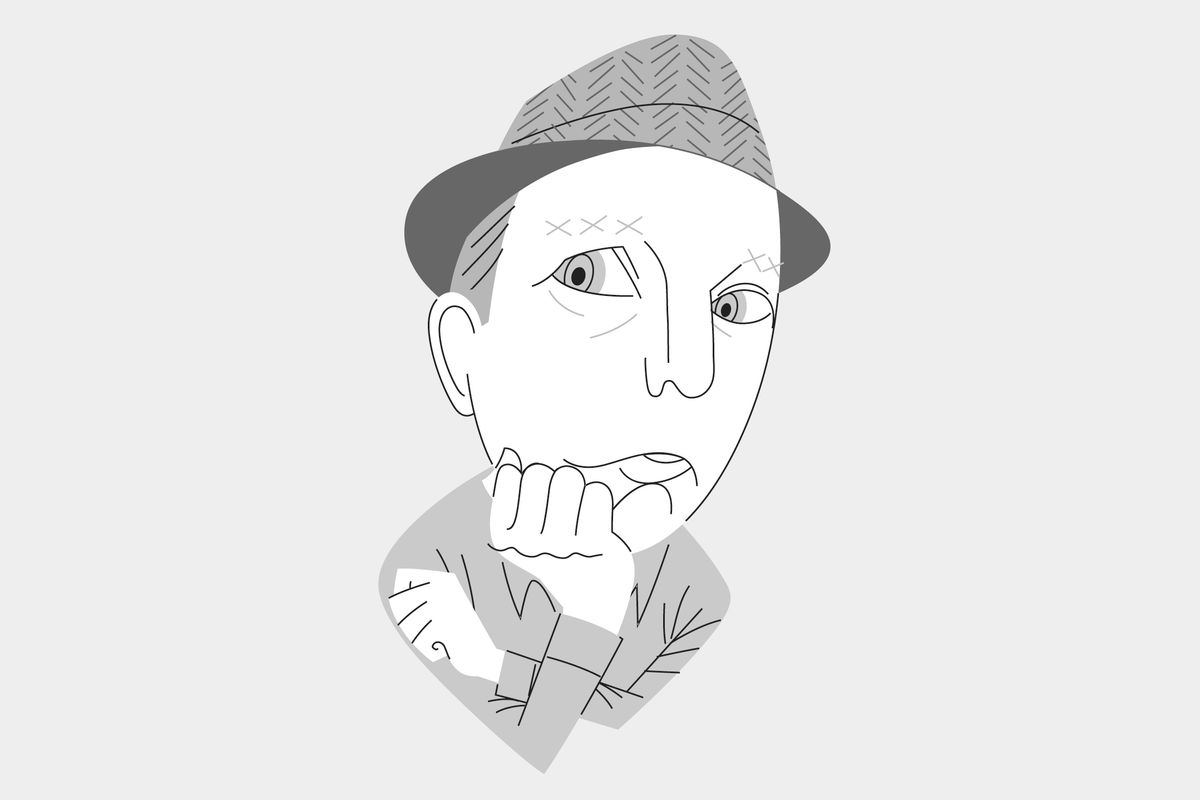
Should my 90-year-old mom refuse medical tests?

My brother thinks we should force her to undergo procedures, but she's tired of being poked and prodded

Should my 90-year-old mom refuse medical test?

Dear Cary,

My mother is almost 90 years old and lives alone in her apartment a few minutes’ drive from my home. She has some serious health problems but is managing to care for herself and her home with some help from my husband and me. Her mind is sound and she is a reasonable person. I take her to her frequent medical appointments. She doesn’t hear well and often misses or misunderstands what the medical professionals tell her so it is important for me to be a good listener as well as her advocate. We always spend time after her appointments reviewing my notes and going over what was said.

She was recently diagnosed with a “new” condition by her internist and was referred to a specialist. The specialist wants to do additional procedures that will be invasive and painful, but might reveal a more serious condition. She is resisting this advice. The new condition is not causing her any pain or distress (at least at this time) and she says she is tired of being poked, prodded and tested and she just wants to live her life. She is concerned about the cost of her medical care, although she has good health insurance and financial resources.

Continue Reading
Cary Tennis


Cary Tennis is Salon's advice columnist. His latest book is "Citizens of the Dream: Advice on Writing, Painting, Playing, Acting and Being." He leads writing workshops and creative getaways, and occasionally tweets and bellows as @carytennis on Twitter.

What? You want more?

  More Cary Tennis

Tuesday, Feb 14, 2012 1:00 AM UTC2012-02-14T01:00:00Zl, M j, Y g:i A T

Should I donate a kidney to my friend?

I told her I would, but now I'm having second thoughts

Cary Tennis

 (Credit: Zach Trenholm/Salon)

Dear Cary,

A dear friend of many years has a kidney disease and will likely need a new kidney within a year or face dialysis or worse. She hasn’t had any luck being on the organ list.

I said that I would donate a kidney to her if we are a match. But now I’m realizing that I am actually very uncomfortable with the idea. I hate doctors and hospitals, and the idea of surgery except in the most dire circumstances freaks me out. Also, I think there’s a reason everyone has two kidneys; it’s not just a spare part.

Continue Reading
Cary Tennis


Cary Tennis is Salon's advice columnist. His latest book is "Citizens of the Dream: Advice on Writing, Painting, Playing, Acting and Being." He leads writing workshops and creative getaways, and occasionally tweets and bellows as @carytennis on Twitter.

What? You want more?

  More Cary Tennis

Thursday, Feb 2, 2012 3:30 PM UTC2012-02-02T15:30:00Zl, M j, Y g:i A T

Illuminating the history of medicine

A lush new chronicle of health-related art tracks centuries of scientific gains

SLIDE SHOW
Spike Walker, "Quinidine Crystals," 2006. Polarised light micrograph.

Spike Walker, "Quinidine Crystals," 2006. Polarised light micrograph.  (Credit: Spike Walker, Wellcome Images, London)

View the slide show

Topics:, , ,

Sir Henry Solomon Wellcome died in 1936, but his curiosity about human understandings of “the preservation of health and life” — carried forward in the 21st century by the Wellcome Trust — is supremely infectious.

Open “The Art of Medicine: Over 2,000 Years of Images and Imagination” (University of Chicago Press, out now), which spotlights works from London’s Wellcome Collection, and you’ll find illuminations from late medieval medical manuals; 18th-century anatomical waxworks with removable organs; leaves from hand-colored plant and herb guides; early-20th-century lithographs advertising gout remedies; astonishing close-ups of implanting human embryos; and much, much more. The collection is so wide-ranging and diverse as to defy a pithy explanation — but taken as a whole, it’s transfixing.

Continue Reading

Emma Mustich is an assistant editor at Salon. Follow her on Twitter: @emustichMore Emma Mustich

Friday, Jan 20, 2012 1:00 AM UTC2012-01-20T01:00:00Zl, M j, Y g:i A T

In helping me, my friend ignores my boundaries

I'm ill and need her care but she goes too far

Cary Tennis

 (Credit: Zach Trenholm/Salon)

Dear Cary,

I am a chronically ill woman who lives alone. My disease is progressing quickly and ordinary tasks are becoming more difficult to accomplish every day. I have no family living nearby to help me. A handful of friends reside in the area, but they are often very busy and it would be unrealistic to ask them to help out very often. I am very independent and mostly do everything on my own, but sometimes my pain and low energy make it necessary to ask for assistance.

Continue Reading
Cary Tennis


Cary Tennis is Salon's advice columnist. His latest book is "Citizens of the Dream: Advice on Writing, Painting, Playing, Acting and Being." He leads writing workshops and creative getaways, and occasionally tweets and bellows as @carytennis on Twitter.

What? You want more?

  More Cary Tennis

Wednesday, Sep 28, 2011 11:45 AM UTC2011-09-28T11:45:00Zl, M j, Y g:i A T

Flashback! Psychedelic research returns

Four decades after Timothy Leary, LSD shows success in medical trials. Will the right completely trip?

Human hand with medicine pill. Horizontal.

Close up view of hand's palm holding a medicine capsule. Made with professional studio equipment. Foscus on pill. Horizontal format. (Credit: Diane Garcia via Shutterstock/iStockphoto: tempurasLightbulb)

Kristof Kossut arrived at an unlikely address for his first psychedelic experience. The 60-year-old New Yorker and professional yachtsman opened the door not to an after-hours techno party, but to the bright reception room at the Bluestone Center for Clinical Research, a large spa-like space occupying the second floor of New York University’s College of Dentistry. Kossut was among the first subjects of an NYU investigation into the question: Can the mystical states of mind occasioned by psychedelic drugs help alleviate anxiety and depression in people with terminal and recurrent cancer?

Continue Reading

Alexander Zaitchik is a journalist living in Brooklyn.  More Alexander Zaitchik

Thursday, Sep 22, 2011 9:30 PM UTC2011-09-22T21:30:00Zl, M j, Y g:i A T

The secrets of medical decision-making

Doctors are giving patients more freedom to choose their own treatment. Two MDs explain what that really means

The secrets of medical decision-making

On a cool October evening, Julie Brody noticed a tiny bump on her left arm. When she visited a radiologist a few days later, he gave her the news all of us dread: He had found two cancerous lumps, one in her breast, and one in her lymph node. Immediately, she faced a number of crucial, life-of-death decisions: What oncologist should she choose? Should she undergo radiation? Should she have a mastectomy? These are the kinds of medical decisions nobody wants to make, but American patients are now considering more carefully than ever.

Continue Reading

Thomas Rogers is Salon's deputy arts editor.   More Thomas Rogers

Page 1 of 25 in Medicine

Other News