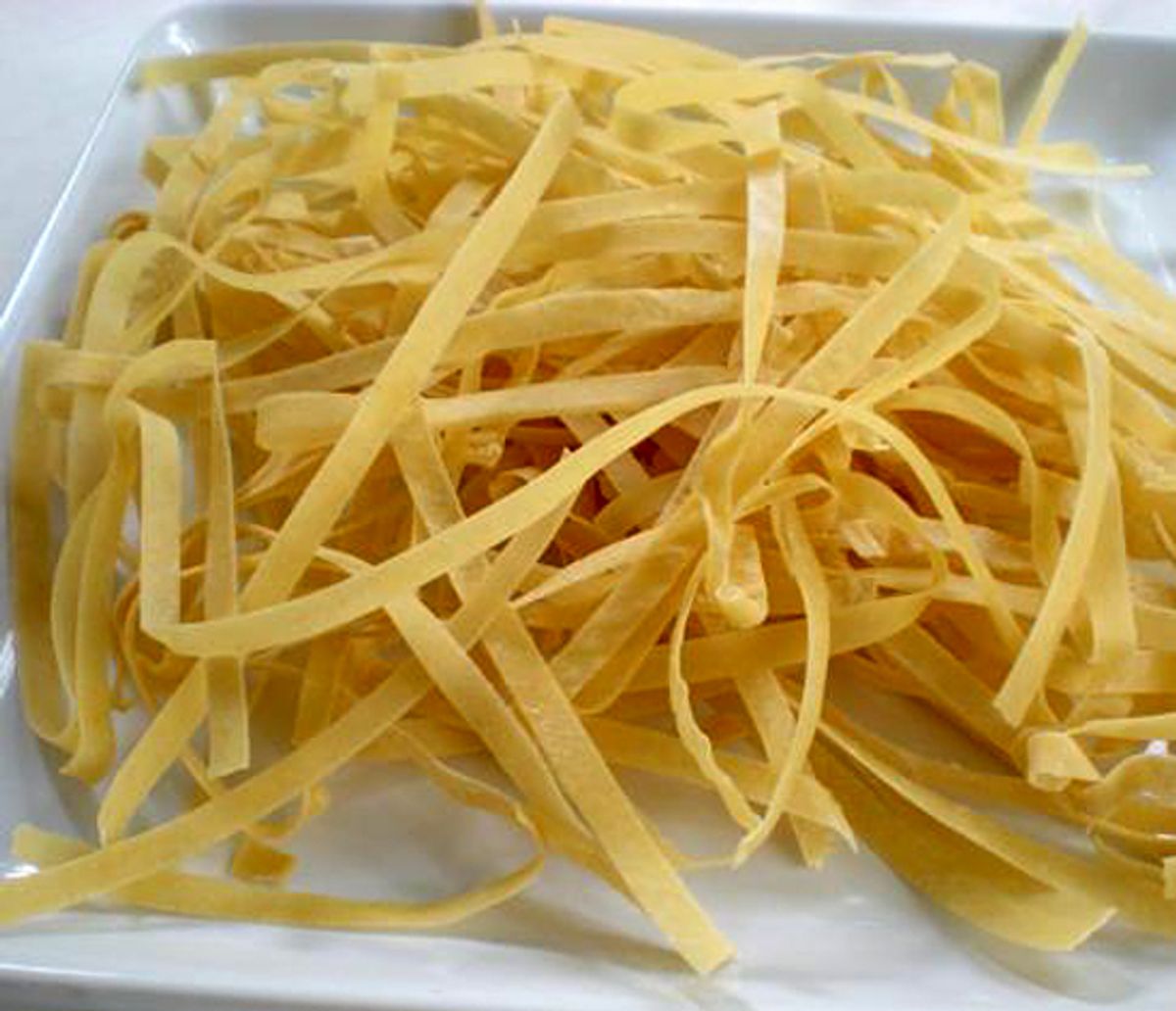
Homemade pasta is one of those "many hands make for light work" kitchen projects. Sure, it can be made alone, and it's a pleasant task, and with the sunlight streaming through the window and NPR on the radio, a pasta project can make for a soothing and satisfying afternoon. In my house, though, I pull out the Atlas pasta machine and the girls come running, and crafting linguine becomes "mini hands make for light work."
Part of my motivation for writing about food is to leave a record for my children, so they will have recipes and recorded memories of our family life. I want my daughters to be competent in the kitchen, to know good food and feel comfortable preparing it; that's why I make homemade pasta and let my girls join in.
I wish I could say that I learned to make pasta from a nonna, one of the Italian grandmothers that Carol Field writes about in "In Nonna's Kitchen." My Alabama grandmother was a society lady who wore Italian leather pumps and could make a mean tomato aspic from Campbell's soup. For my own kitchen education, I turn to books, like those of Carol Field and Marcella Hazan. When I first started making pasta, I used the detailed instructions in Marcella’s "Essentials of Classic Italian Cooking." I recommend it as the premier primer on homemade egg pasta.
Here is how I make pasta and a tasty clam sauce to accompany. To quell the anti-authentic hue and cry in the comment section, I will state first off that this is how a Scotch-Irish-German girl from Georgia makes pasta. I use a food processor to mix and knead it and I use salt and olive oil in the pasta dough. Marcella doesn’t do this, but my pasta turns out fine, so that’s all I can say. I’ve watched many times while TV chefs make a crater out of flour, crack eggs into it and mix all together with a fork. My experience with this method is a gunky countertop. The processor is super-fast and the cleanup is easy.
Homemade egg pasta for linguine
This is a double recipe of pasta, yielding about 1 ¼ pounds. It’s too much for the accompanying clam sauce, unless you’re a serious carbo-phile. Toss remaining noodles lightly in flour and arrange in nests on baking sheet. Let dry for an hour or so, place in plastic container and freeze. When it's time to cook, frozen pasta can go directly into the boiling pot of pasta water.
Ingredients
- 2 cups unbleached all-purpose flour
- ½ teaspoon salt
- 4 large eggs, organic if possible
- 1 tablespoon extra-virgin olive oil
Directions
- In the bowl of a food processor, place flour and salt and pulse a few times to combine. Add eggs and olive oil and pulse until dough forms into a solid ball. Let knead by running processor for 2 minutes. The dough should be firm and smooth like a baby's bum.
- Turn dough ball into an oiled bowl, cover with plastic wrap and let rest for a half-hour. You can also place dough in an oiled plastic bag, squish out the air, seal it and refrigerate for up to a day.
- When you’re ready to roll, make sure to have plenty of counter space and kitchen helpers. Divide dough into 12 equal-ish pieces and flatten each into a round. Dust your work area with flour and set a willing worker to roll the dough. Have a drying rack ready, or half-sheet pans dusted with flour, ready to receive noodles. Also handy to have around: a damp tea cloth or paper towel to spread over the pasta lumps as each waits its turn at the press.
- With the pasta roller adjusted to the widest setting, feed the first flattened piece of dough through the pasta roller. Fold the remainder letter style, that is, top third and bottom third over middle. Feed this piece through. Repeat once more, for a total of three passes through the widest setting of the machine. Repeat with remaining 11 dough pieces.
- Thinning: reduce the setting one notch and feed each piece through, setting each thinned piece on a floured countertop or across the drying rack. When each piece has been thinned, reduce the setting size to the next smallest number and run each piece through again. Repeat: reducing the setting and running a piece through until you reach the thinnest setting. After the final pass, the pasta sheets will be as long as a child’s winter scarf and as thin as a sheet of paper.
- Attach the cutter to the pasta machine. Feed each sheet through the cutter, watching your child’s face as she sees the noodles take shape. If you do not have a pasta drying rack, you may set nests of the noodles on a lightly floured baking sheet.
- Let noodles dry while the water in the pasta pot comes to a boil. If you’ve never worked with fresh pasta, you will be amazed at how quickly it cooks, just a minute or two to toothsome noodles. Uncooked noodles may be stored in an airtight container in the freezer. They will cook easily in boiling water, no need to defrost.
Clam Sauce
In my house this dish is simply called "clams." If I use dried pasta, it’s a pantry meal that can be put together in about 30 minutes, while the water is boiling for the pasta. With homemade fresh pasta, it’s worthy of company.
Ingredients
- ½ medium onion, minced
- 3 tablespoons extra-virgin olive oil
- 2 cloves garlic, minced
- 3 (6 ½ ounce) cans chopped clams, drain and reserve liquid
- ½ cup dry white wine, or vermouth
- A handful of fresh herbs such as oregano, basil and thyme, minced (in winter, start with ½ teaspoon Italian seasoning or a mixture of appropriate dried herbs in your cabinet, to taste)
- Freshly ground black pepper
- 1 pound linguine, dried or fresh, cooked
Directions
- In a skillet over medium heat, sauté onion in olive oil until softened. Add garlic and stir for about 30 seconds.
- Add wine and let cook until reduced by half. Add reserved clam liquid and allow to cook down.
- Add clams, herbs and freshly ground pepper to taste. It’s tempting to add salt, but be very careful -- it’s easy to over-salt this dish.
- Serve over pasta.
Shares