Salon Home
Topic

Economics

Tuesday, Sep 7, 2010 4:42 PM UTC2010-09-07T16:42:00Zl, M j, Y g:i A T

Why Obama’s corporate tax cut plan is wrong

Cutting corporate taxes would be as good for the economy as Botox is for someone with a heart condition

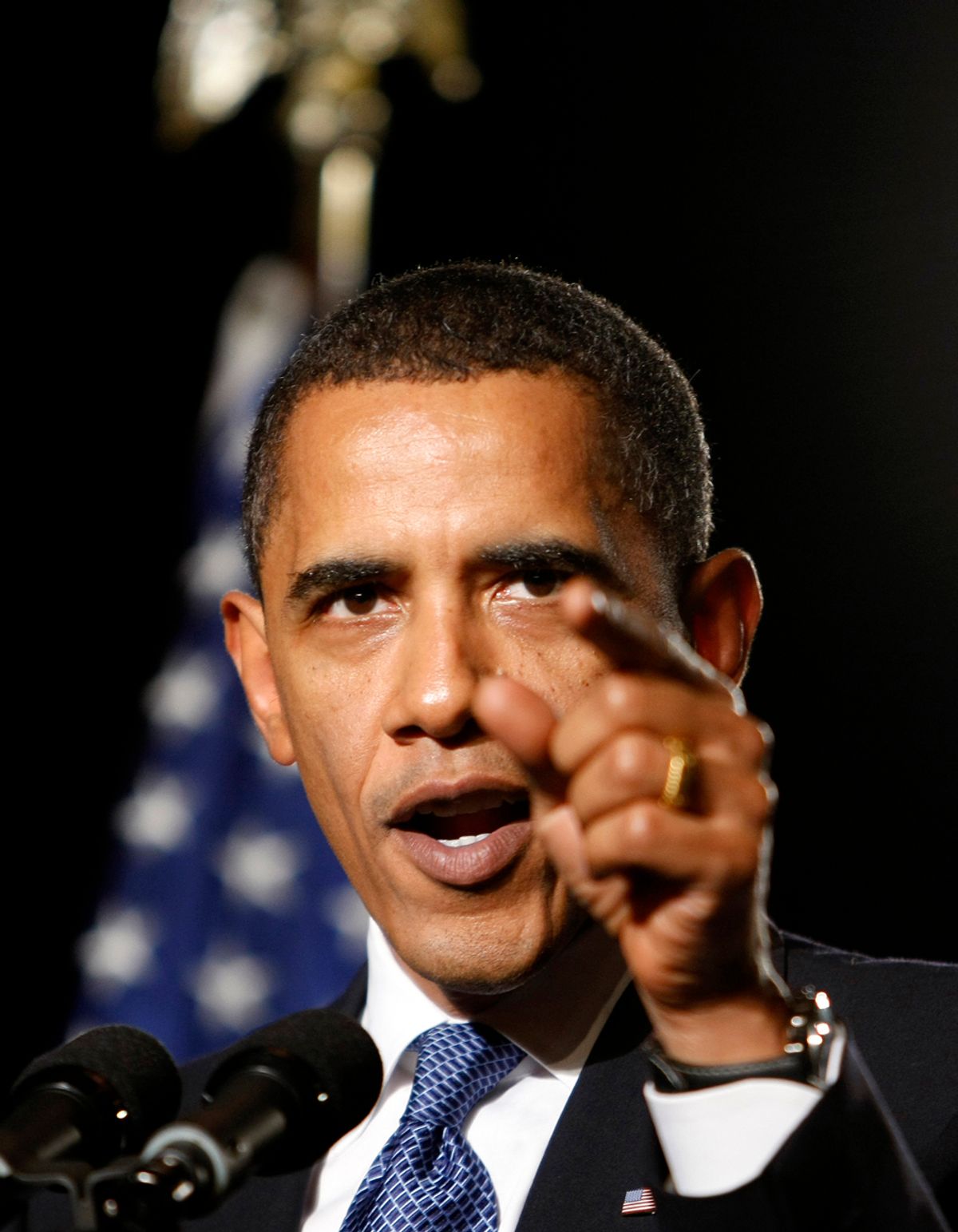
US President Obama speaks at a Democratic National Committee fundraiser in San Francisco

U.S. President Barack Obama speaks at a Democratic National Committee fundraiser in San Francisco, California, October 15, 2009. REUTERS/Kevin Lamarque (UNITED STATES POLITICS) (Credit: © Kevin Lamarque / Reuters)

Topics:,

This originally appeared on Robert Reich’s blog

President Obama reportedly will propose two big corporate tax cuts this week.

One would expand and make permanent the research and experimentation tax credit, at a cost of about $100 billion over the next ten years. The other would allow companies to write off 100 percent of their new investments in plant and equipment between now and the end of 2011 at a cost next year of substantially more than $100 billion (but a ten-year cost of about $30 billion since those write-offs wouldn’t be taken over the longer-term).

The economy needs two whopping corporate tax cuts right now as much as someone with a serious heart condition needs Botox.

The reason businesses aren’t investing in new plant and equipment has nothing to do with the cost of capital. It’s because they don’t need the additional capacity. There isn’t enough demand for their goods and services to justify it. Consumers aren’t buying because they’re trying to come out from under a huge debt load, including mortgage debt; they have to start saving because their nest eggs are worth substantially less; and they’ve lost or are worried about losing jobs and pay.

Continue Reading

Robert Reich, a professor of public policy at the University of California at Berkeley, was secretary of labor during the Clinton administration. He is also a blogger and the author of "Aftershock: The Next Economy and America's Future."  More Robert Reich

Saturday, Feb 11, 2012 8:00 PM UTC2012-02-11T20:00:00Zl, M j, Y g:i A T

The case for a global currency

Would it make more sense to have one currency for the entire world?

currency

 (Credit: Voloh via Shutterstock/Salon)

This article was adapted from the upcoming book, "The End of Money," in bookstores Feb. 14 from Da Capo Press.

In the age of globalization, what does it mean, really, to be from one country and not another? We have some easy answers, along the lines of language, shared history, cultural references, and geography. I grew up cheering for the Red Sox, not the Hiroshima Carp, so that adds to my American-ness. I had to learn about the Federalist Papers in high school. I pay taxes and vote here. All of these things, some minor, some major, contribute to my sense of being part of this country.

Greenbacks do too, whether I like it or not. The coins and banknotes of a place are one of the few remaining touch-points of national identity left in our increasingly digital world. The monuments, symbols, and famous people splashed on them help reinforce this sense of nationhood. But as representations of the currency, they do more than that, because the currency is both the fabric of the economy and the stitching of the state. Even Marco Polo saw this in China, as the currency pulled a vast kingdom together under one umbrella of economic organization.

Continue Reading

David Wolman is a frequent contributor to Wired and the author of the forthcoming book, "Righting the Mother Tongue: From Olde English to Email, the Tangled Story of English Spelling" (HarperCollins).  More David Wolman

Monday, Jan 16, 2012 5:00 PM UTC2012-01-16T17:00:00Zl, M j, Y g:i A T

Get used to living with Mom and Dad

The era of empty nests may be over unless we change our work culture and our economy. An expert explains

It’s a growing trend: More and more adults are living with their parents. According to the Census Bureau, the number of 25- to 34-year-old adults in the U.S. living at home rose from 14 percent in 2005 to 19 percent in 2011. The trend is present in other developed countries across the globe too: In Italy, 37 percent of men 30 years of age and older have never left home; in Japan, men living under their parents’ care are pushing their 40s. Such individuals are easily disparaged as lazy, overgrown babies, content to mooch off their aging parents rather than strike it out on their own. (Remember all those biting jokes Archie Bunker would throw to his “meathead” of a son-in-law.) But are they really?

Continue Reading

  More Alice Karekezi

Saturday, Jan 14, 2012 2:00 PM UTC2012-01-14T14:00:00Zl, M j, Y g:i A T

The evolution of American debt

Over the last century, over-borrowing has gone from shameful to commonly accepted. An expert explains what changed

personal_debt

 (Credit: Lightspring via Shutterstock)

In the US today, debt is ubiquitous. Whether it’s paying back thousands of dollars in student loans, using your Visa card for a pack of gum when you’re out of cash, or taking out a mortgage on a first home, it’s been woven into our financial system so tightly, that even when we suffer the sometimes cruel and unusual detriments of borrowing, we have little to no realistic impetus to stop. But it wasn’t always this way. In fact before the 20th century, debt was a taboo, feared, shameful, and kept in the shadows. So what events and institutions brought debt from its meager beginnings to its central role in American life?

Continue Reading

  More Hannah Tepper

Friday, Nov 25, 2011 10:00 PM UTC2011-11-25T22:00:00Zl, M j, Y g:i A T

Kill the zombie banks!

Politicians around the world are still propping up dying financial institutions -- and it's hurting us all

zombie banks

The following article is an adapted excerpt from the new book "Zombie Banks," from John Wiley and Sons.

The reason most people today are so scared of zombies could be a fluke of translation. The idea of the flesh-eating zombie depicted in modern-day books and movies originates from a 5,000-year-old epic, in which the goddess of love asks the father of gods to create a drought to punish the man who rejected her love. She then threatens to stir up the dead if her wish isn’t granted. Written in Sumerian, Babylonian, and other ancient languages, naturally there are multiple versions of the epic poem and different translations of those variations. While many translations depict zombies eating food “with” or “like” the living, some drop the preposition all together and have the creatures of the underworld eating humans directly. Zombie banks may not eat people or other banks, but their harm to society, the financial system, and the economy is just as scary.

Continue Reading

Yalman Onaran is a senior finance writer at Bloomberg News.   More Yalman Onaran

Tuesday, Nov 1, 2011 6:00 AM UTC2011-11-01T06:00:00Zl, M j, Y g:i A T

Welcoming the 7 billionth neighbor

Why we should celebrate, not worry about, the planet's growing population

Babies born on October 31st, 2010 in (to left, clockwise) Japan, the Philippines, Nigeria and Russia.

Babies born on October 31st, 2010 in (top left, clockwise) Japan, the Philippines, Nigeria and Russia.  (Credit: AP/Reuters)

Topics:

On Monday, the world population crossed 7 billion, with more than one baby in the world’s various time zones getting credit for the milestone. Some mourned this new arrival as bringing us just another step closer to what Paul Ehrlich famously called the “population bomb,” the point at which the number of people on earth explodes beyond the capacity of the plant to support them.  But reaction to this statistical event seems somewhat less hysterical than for the 5 billionth (1987) and 6 billionth (1999) milestones. That’s probably because population growth rates have slowed with increased empowerment of women, better family planning, and the rising cost of children relative to their short-term productive value as unskilled laborers.  Still, the pessimists’ essential myth lives on in many quarters: population growth makes us all worse off.

Continue Reading

Berin Szoka is president of TechFreedom, a non-partisan think tank dedicated to promoting the progress of technology that improves the human condition and expands individual capacity to choose.   More Berin Szoka

Page 1 of 47 in Economics

Other News