Salon Reading Club
The “Freedom” video review you shouldn’t miss
A new post by Ron Charles turns Jonathan Franzen's new book into comedy brilliance
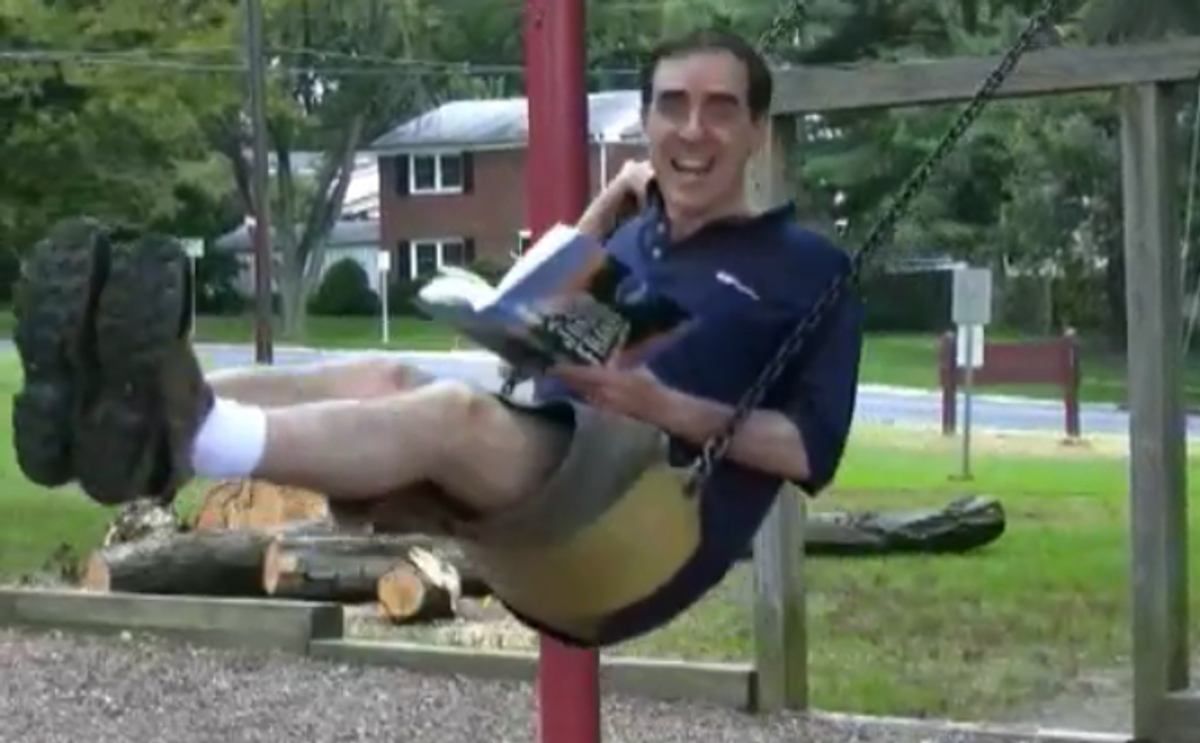
As you know, we’re big fans of Jonathan Franzen’s “Freedom” here at Salon. (Check out our “Freedom” Reading Club here.) But we’re not the only ones to have loved the book: “Freedom” has gotten raves from almost every major new outlet. But the most entertaining review we’ve seen is definitely this hilarious Ron Charles video for the Washington Post. In his video review, Charles expertly pokes fun at Franzen’s less-effective stylistic tendencies, the hype surrounding the book, and his own video book reviewing (“You need book criticism that’s fast, fun, and incredibly hip”). If you’re going to spend 4 minutes watching anything about Jonathan Franzen’s “Freedom,” you’ll want to spend them watching this.
Thomas Rogers is Salon's Arts Editor. More Thomas Rogers.
Reading Club interview: Jonathan Franzen answers your questions
The "Freedom" author discusses "Franzenfreude," Obama's reading choice and the criticism that really hits home
Jonathan Franzen As you know, we really liked Jonathan Franzen’s “Freedom.” Over the past month, as part of the second edition of the Salon Reading Club, Laura Miller and Salon readers have been discussing everything about the book, from the characters we loved — or loved to hate — to our favorite sentences or the most memorable moments. Over the past month, we’ve also collected your questions for Jonathan Franzen (in the letters section and via e-mail) about everything from the “Franzenfreude” backlash to his own personal writing process.
Continue Reading CloseWhy Jonathan Franzen is the wrong face for “Franzenfreude”
Yes, white male writers are too dominant in highbrow literature, but the "Freedom" author is one of the good guys
Having finally released three books back into the wild of the Brooklyn Public Library system — “Freedom,” “Catching Fire” and “The Passage” — I feel the time is right to weigh in on the literary meme of the moment, “Franzenfreude,” a term that, loosely defined, indicates that author Jonathan Franzen represents all that is wrong with the contemporary highbrow book world.
Is that stupid? Quite! Except there’s a caveat. The phenomenon referred to by “Franzenfreude” — the idea that the highbrow book world reserves its highest praise and most fawning attention for the works of men — is absolutely true. It just happens that Jonathan Franzen is a terrible poster boy for that problem.
Continue Reading CloseEster Bloom's writing has appeared in the Apple Valley Review, Conte: A Journal of Narrative Poetry, The Morning News, PANK, Bundle, Nerve.com, and Salon.com, and is collected on her website, esterbloom.com. She is currently at work on a book of comic essays entitled "Never Marry a Short Woman." More Ester Bloom.
“Freedom”: Which character is Jonathan Franzen?
Richard isn't a stand-in for the author, but the character's irresistible negativity is what makes the novel work
“There had always been something not quite right about the Berglunds.” This is the general consensus among the Berglunds’ former neighbors when, long after they’ve moved, Walter Berglunds’ name suddenly resurfaces in an unfavorable New York Times feature. “Freedom” is Jonathan Franzen’s 500-page exploration of just what that “not quite right” something is; and how it is that Walter went from left-wing ideologue “greener than Greenpeace” to lackey for a West Virginia coal mining company and figure of national media contempt.
Continue Reading CloseRoad trips, political rage and catnapping
The Salon Reading Club concludes its discussion of Jonathan Franzen's "Freedom"
Welcome to the third and final session of the Salon Reading Club for Jonathan Franzen’s novel “Freedom.” Last week, we took the discussion up through Page 382, and now it’s time to consider the book’s conclusion. If you haven’t finished yet and are spoiler phobic, read no further. (See the sidebar to the right for more information on the Salon Reading Club)
As always, I’ll toss a few topics out in this introduction, but please feel free to take the conversation wherever you like in the comments. Now’s your last chance to get in any questions you may have for Jonathan Franzen. He’ll being answering them next week.
Continue Reading Close
Laura Miller is a senior writer for Salon. She is the author of "The Magician's Book: A Skeptic's Adventures in Narnia" and has a Web site, magiciansbook.com. More Laura Miller.
Reading Club: America’s prudish literary morality
Why are so many writers, including Jonathan Franzen, so obsessed with creating "likable" characters?
Likability is indeed just another word for “morality.” A huge section of the American reading public does not want art for art’s sake, or even realistic characters; it wants the books we read and the movies we see to be clever public service announcements, meant to uphold public morality.
Naturally, these unrealistic modern Achilles types must have some “likable” flaw, which is almost worse. It leads to the aesthetic of “quirkiness,” which has brought such success to Jonathan Safran Foer and Wes Anderson (probably the two masters of the modern safe-quirk genre).
Continue Reading ClosePage 1 of 4 in Salon Reading Club