Food Advice
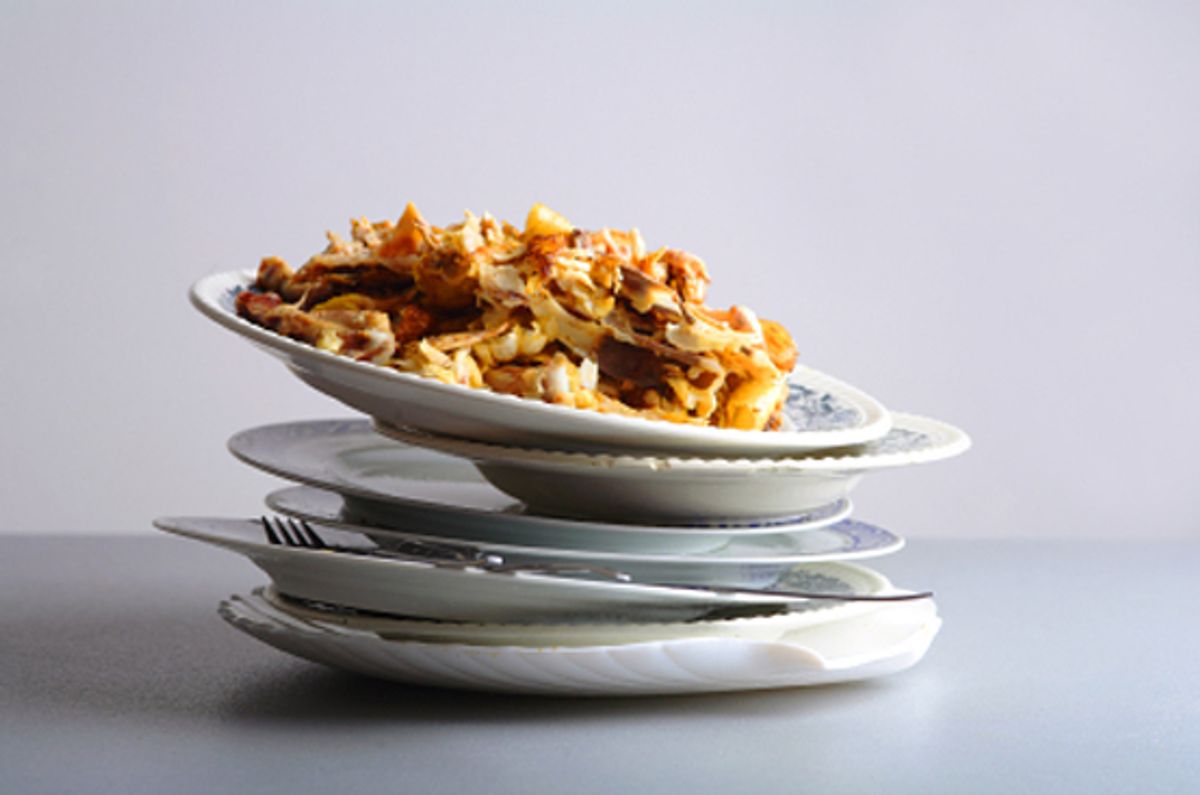
Seven tasty ways to stop wasting food
A new study shows we throw out a quarter of our food. Here are tips and super-easy dishes to help you eat it all
Topics: Ethics of eating, Food, Food Advice, Sustainable food
Somewhere, in the back of your mind, you’re a little terrified of the peak-oil apocalypse, where man turns on man and we start waging tribal warfare for what little dribs and drabs of fossil fuels we have left (wait, that hasn’t happened already?). You traded in your car for a bike, you’re praying for the solar power revolution. You know what’s really going to give you a heart attack? A new study in the American Chemical Society’s journal that found that Americans waste — just straight-up throw away — the equivalent of 350 million barrels of oil a year in the form of food. That’s about 70 times the amount of oil in the BP Gulf oil spill.
Continue Reading CloseFrancis Lam is Features Editor at Gilt Taste, provides color commentary for the Cooking Channel show Food(ography), and tweets at @francis_lam. More Francis Lam.
“Freaky Eaters’” JJ Virgin on shock therapy and french fries
We spoke to the TLC show's nutritionist about the science of food addiction -- and her "shock therapy" approach
Topics: Food Advice, Food Psychology, Food television, Interviews, Reality TV, Television
JJ Virgin and Dr. Mike Dow on "Freaky Eaters." JJ Virgin has one of the stranger jobs out there: After spending 25 years studying health and fitness, she now spends her time on TLC, turning around the lives of food addicts on “Freaky Eaters.” (No, that’s not the show about people who eat laundry soap, a similar program on the same network called “My Super Strange Addiction.”) “Freaky Eaters” documents the life of a person addicted to a certain type of edible food — french fries, meat, and corn syrup have all been on the menu — as well as their recovery with the help of two specialists, Virgin and Dr. Mike Dow.
Continue Reading CloseDrew Grant is a staff writer for Salon. Follow her on Twitter at @videodrew. More Drew Grant.
The five most egregious quotes from Gwyneth Paltrow’s dinner party article
The actress invites her famous friends to dinner to tell the New Yorker how special she is
Topics: Celebrity, Food Advice, Food Art, Movies, Seinfeld
"Let them eat soy cakes!" Gwyneth Paltrow, stop it. I am begging you. You are making me look bad in front of all of my friends. Here I go, trying to defend your bourgeois reputation with a (fairly) nice review of your cookbook, calling many of the dishes unpretentious and easy to make.
You must have hated that. I almost can see you, queen-like, reading Salon (as you do every day) in the print form we give to celebrities, reading that article with your lovely eyes widening before crumpling it into a ball and throwing it across the steam room where you are currently enjoying a reflexology massage.
Continue Reading CloseDrew Grant is a staff writer for Salon. Follow her on Twitter at @videodrew. More Drew Grant.
Don’t hate Gwyneth Paltrow’s cookbook
Warning: "My Father's Daughter" might actually contain delicious, simple recipes
Topics: Books, Celebrity, Cooking techniques, Food Advice, Home Cooks, White Knighting
Gwyneth's cookbook: surprisingly non-GOOPy.
White Knighting: (verb) Coming to the defense of an unpopular Internet celebrity, trend, or entity. As in “Dude, stop talking about how much you like ‘Friday.’ We all know you’re just white knighting Rebecca Black.
Gwyneth Paltrow is like the James Franco of bourgeois aestheticism. While James is busy being an artist/author/teacher/actor/etc., Mrs. Coldplay has branched out her career from actress to include singer, lifestyle mommy blogger and, most recently, health food authority. Despite having her cooking magazine concept turned down by Hearst, Gwyneth is undeterred: Her recent recipe book, “My Father’s Daughter: Delicious, Easy Recipes Celebrating Family & Togetherness,” has just hit the shelves after a truckload of buzz. And like Franco, Gwyneth is one of those people who is just easy to snark on: Her GOOP newsletter is designed for people just like herself — that is to say, moms who appreciate the tip that $60 olive oil is worth it and that a macrobiotic diet is totally key for your child’s health — making her an easy target for her clueless haute sensibilities. As Gabe Delahaye on Videogum wrote after Gwyneth came out with her “How to stuff a chicken” video:
Continue Reading CloseDrew Grant is a staff writer for Salon. Follow her on Twitter at @videodrew. More Drew Grant.
How do “natural” non-sugar sweeteners stack up?
With Nutrasweet and Splenda taking a hit, we look into -- and taste -- trendy alternatives like agave syrup
Topics: Faddy foods, Food, Food Advice, Nutrition
Now that the artificial sweetener aspartame (Nutrasweet) has attracted suspicion, you might be thinking twice about that daily Diet Coke or Splenda (sucralose) in your coffee. Not that this is surprising; even without the stroke and cancer warnings, the word “artificial” alone conjures up images of shadowy figures in lab coats concocting solutions destined for your stomach. Much more reassuring are images of freshly plowed farms tucked in the mountains, like the one on the jar of Lundberg Family Farms’ organic brown rice syrup.
Continue Reading CloseAviva Shen is an editorial fellow at Salon. More Aviva Shen.
Your 10 most creative ways to rock out with vegetables
When I asked readers to share their best tips, great ones came flooding in ... along with a soundtrack
Topics: Cooking techniques, Food, Food Advice
A few days ago, I put up a little post on the pleasures of vegetables, the opportunities for creativity they allow, and asked for your favorite unusual ways to use them. (Your favorite ways that involve eating, I meant.) And in between discussions of whether the French have ruined the world for vegetarianism and a comment that suggested that all the bright promise of my culinary school education is being wasted (thanks! I guess?), you came through with scads of interesting ideas. Here are some of our favorites.
Continue Reading CloseFrancis Lam is Features Editor at Gilt Taste, provides color commentary for the Cooking Channel show Food(ography), and tweets at @francis_lam. More Francis Lam.
Page 1 of 4 in Food Advice
The facts: Beloved by raw food enthusiasts, agave syrup has become one of the easiest alternative sweeteners to find in grocery stores. It’s derived from the Mexican succulent plant agave, of which there are several varieties. It has to be processed to become sweet, and depending on that process, it can be comparable in composition to the dreaded high fructose corn syrup. True, agave has a low glycemic index — meaning it releases glucose into the blood stream at a slower rate than refined sugar — so it can help keep blood sugar levels stable. Eating agave as a “healthy” alternative to sugar, however, is pointless; the two have the same number of calories, no nutritional value whatsoever, and, even though it doesn’t spike blood sugar, the primary sugar in agave, fructose, has been linked to cancer and cholesterol problems when consumed in large quantities.
The facts: Brown rice syrup is what happens when cooked brown rice meets barley malt enzymes. The sweetness comes from starchy complex carbohydrates, which take a couple of hours to digest. As a result, the glucose is released gradually into the bloodstream, providing a steady supply of energy rather than the rush — and crash — of cane sugar. Plus, the syrup maintains some of the nutrients in brown rice, like protein, so it’s not a total nutritional bust like most sweeteners are.
The facts: Stevia’s not technically a sugar; it’s extracted from a sweet herb of the same name. Therefore it has no calories and doesn’t raise blood sugar. Though the FDA labeled it a “dangerous food additive” in 1991 after an “anonymous industry complaint” (read: shadowy figures in lab coats), stevia is now back on the market as a “dietary supplement.” In the rest of the world, particularly Japan, widespread use of stevia has been going on for decades.
The facts: Date sugar is so low-tech it’s kind of funny — it’s just dehydrated dates that have been ground into a powder. That means it’s completely unprocessed and retains all the nutrients in dates. It’s high in fiber and protein, and has lots of vitamins and minerals like iron and potassium. Plus, it qualifies as a raw food. It still contains sucrose, fructose and glucose, so it’s not a good alternative for diabetics or people looking to control their blood sugar.