Fiction
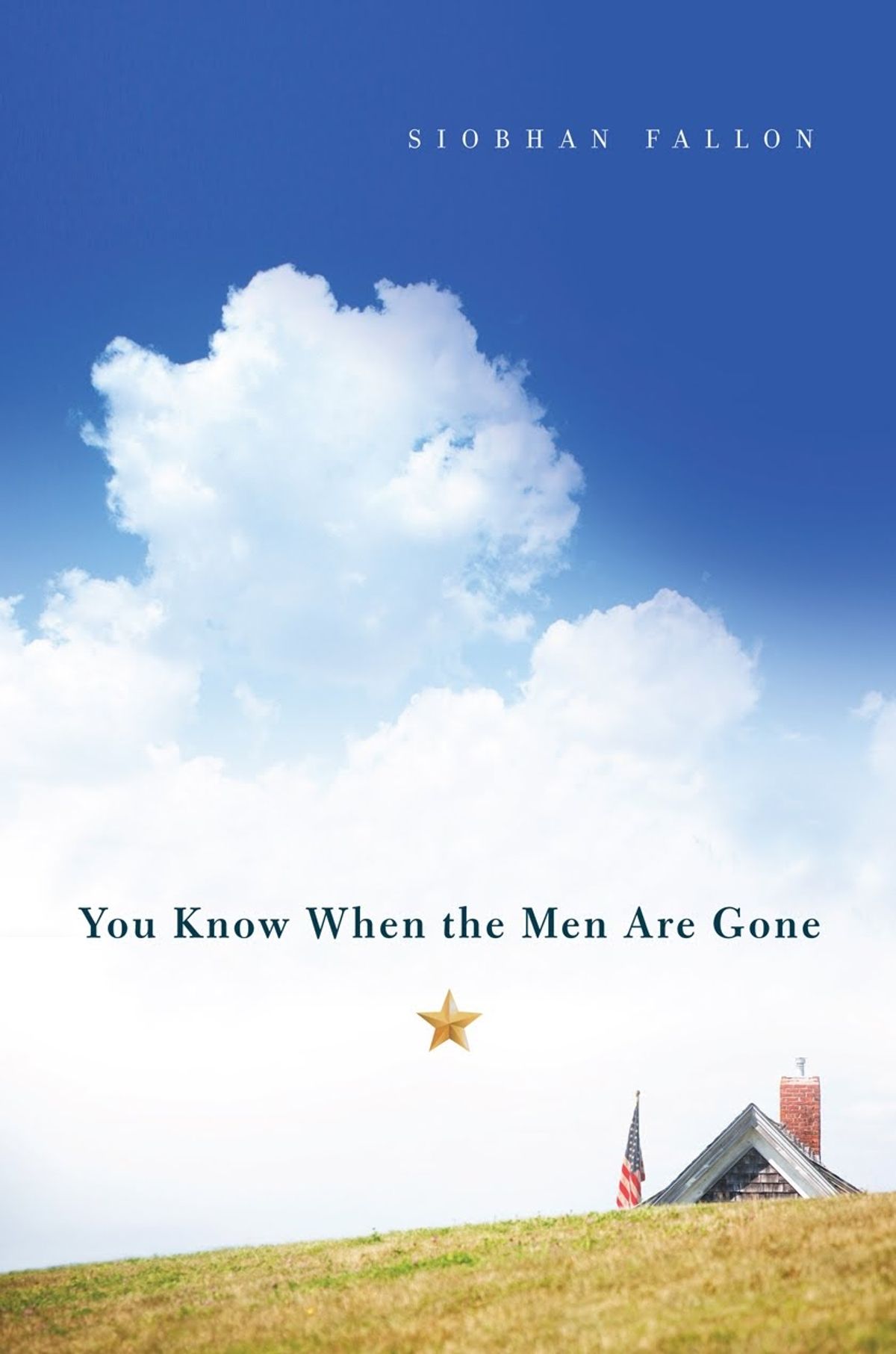
“You Know When the Men Are Gone”: The secret anguish of military wives
Siobhan Fallon's collection is an eloquent, unflinching and beautifully nuanced portrait of army spouses
"You Know When the Men Are Gone" by Siobhan Fallon In the eight wrenching, compassionate tales that make up Siobhan Fallon’s “You Know When the Men Are Gone,” we get the stories that it seems we’ve been waiting for through America’s decade at war. The military wives of Fort Hood, Texas — seen here in all of their raw anxiety and gritty resourcefulness — represent a handful of the million-plus civilian families who have borne the brunt of the strain on the home front since 2001.

Fallon, who lived at Fort Hood while her Army major husband served two tours of duty in Iraq, nails the details of life on base after the 18,000 soldiers in the First Cavalry Division are deployed, and the world dominated by camouflage uniforms shifts to one of “brightly colored baby carriages and diaper bags, Mommy & Me meetings … women on pastel blankets lounging on the parade field and sharing cinnamon rolls.”
“You learn too much,” she writes in the title story, hearing neighbors gargling, showering and crying themselves to sleep through the thin walls. This unwelcome knowledge blooms in the pervasive quiet that the absent soldiers leave behind them: “No more boots stomping above, no more football games turned up too high … without the men, there is a sense of muted silence, a sense of muted life.”
Meg, this story’s central character, scans the Internet for news of her husband’s infantry battalion each morning, meets weekly with her Family Readiness Group — women suddenly thrown together in times of duress, “all of them bereft and left behind in this dry expanse of central Texas” — and copes with loneliness. She watches with dismay as her new neighbor, Natalya Torres, a Serbian woman who met her husband when she was cutting hair at a base in Kosovo, leaves her twin toddlers sleeping, dresses up and goes out on the town once a week, a routine that becomes a miniature scandal in this close-knit world.
Infidelity is also the hinge of “Leave.” Chief Warrant Officer Nick Cash tells his wife he’s not coming home on a scheduled leave, maps out a surveillance mission, breaks into his own house, and camps in the basement, waiting to find out if a friend’s tip that his wife is seeing another man is true. In one of the many artful moments that link these stories, Nick recalls Staff Sgt. Torres (Natalya’s husband) going ballistic when a private has a radio blasting “Love the One You’re With.” The usually laid-back Torres stomps the radio to smithereens.
While worrying about a sexy e-mail a woman soldier has sent her husband in “Inside the Break,” Lailani notes an ominous silence on base — three days with not one wife in the battalion receiving a call or e-mail from her husband. This “comms blackout,” is followed by a telephone tree phone call: “Alpha Company got hit. Sergeant Schaeffer died.”
Several stories reverberate with the repercussions of this attack. Spc. Kit Murphy, a survivor with a ruined foot, flies home with a group of fellow battered soldiers, all wondering if their wives would be waiting, and, if they were, “how long would they stick around when they saw the burn scars, the casts, the missing bits and pieces that no amount of Star Wars metal limbs could make up for.” And the widow of the sergeant killed in the attack shudders as she pulls into the empty “Gold Star Family” parking space in front of the commissary. “Family members received a few special privileges like this lousy parking space, but that meant the pity rising from the asphalt singed hotter than any Texas sun.”
“You Know When the Men Are Gone” is an eloquent, unflinching and beautifully nuanced portrait of these spouses, transformed by combat as profoundly as if they’d boarded the transports themselves.
50 shades of Shutterstock
Slide show: Everyone's favorite light-bondage bestseller illustrated by inexplicable stock photography SLIDE SHOW
This week, for roughly the millionth time, E.L. James’ romance-bondage trilogy “50 Shades” nabs the No. 1, 2 and 3 spots on the New York Times bestseller lists. We don’t get it either. Every page of that book, which famously began as “Twilight” fan fiction, elicits a sigh of confusion and weird secondary embarrassment. The question is: Who would read this? (The answer is: Apparently everyone.) It’s the same baffled, helpless feeling we get when we sort through stock photos on a daily basis. Stock photos – which have been the subject of recent outstanding Internet satire – are used by this site, and many others, to illustrate our flood of content. Many are plain and simple, but a good portion are flat-out mind-blowing. Why did anyone think that photo was a good idea? It only made sense to join these forces. And so, we present to you passages from the most head-scratching bestseller of our time, illustrated with the assistance of inexplicable stock photography.
Megaphone by Natalie Bakopoulos
Miracles happen, even in an Athens crippled by a garbage strike, to a young mother unsure of her ability to love
(Credit: iStockphoto/caracterdesign) It’s the third week of the garbage strike and Athens has begun to smell. Bright-colored trash bags fill the curbs and alleyways, and we have learned to step over the rubbish and avoid the blocks that had become unnavigable. We know which stretches are particularly foul — a stretch along Mavili Square, or the entire top end of Monastiraki. Odos Athinas is a sea of trash, and Omonia is ghastly but we don’t go there anyway. May has gone from unseasonably cool to raging hot, and the garbage seems to be melting. In front of the museum it’s like yet another installation project. When I arrive each morning I want to wretch.
Continue Reading CloseNatalie Bakopoulos's first novel, "The Green Shore," will be published by Simon & Schuster in June 2012. Her work has appeared in Tin House, Ninth Letter, Granta Online, and The O. Henry Prize Stories 2010, and she is a contributing editor for the online journal Fiction Writers Review. More Natalie Bakopoulos.
Almost by Chris Pavone
She never thought of herself as ambitious, until motherhood and career collided in one horrifying hospital ride
(Credit: iStockphoto/caracterdesign) It’s just before dawn when Isabel puts the final page down on the fat stack of paper that sits on the rumpled bedspread, next to an overflowing crystal ashtray and a crumpled soft-pack of cigarettes. She’d tried Wellbutrin and Xanax; she’d used patches and gum. In the end, the only thing that made her quit smoking was being pregnant.
But then, after everything, she couldn’t help but start up again. At first it was just a single cigarette per day, or two. Then it became a few, and within months she was back to full-throttle. Over the past couple of years, she’s tried to quit a few times, but not seriously. She anticipates — she accepts — failure. Because she doesn’t want to quit, not really. She wants instead to try, and fail.
Continue Reading CloseMemorial Day fiction: Are we there yet?
Salon exclusive: At the start of the summer fiction season, new stories from Chris Pavone and Natalie Bakopoulos
(Credit: iStockphoto/caracterdesign) “Are we there yet?”
It’s a dreaded sentence. When it’s spoken by an anxious child from the back seat, it’s enough to make stressed-out parents wish they’d never taken a family vacation in the first place. And even if it’s delivered as a sing-songy punch line, from an impatient partner or spouse on a long road trip, it’s an irritating eye-roller of a joke.
So this Memorial Day weekend — the unofficial start of the summer vacation season, and therefore the summer fiction season — we asked two novelists to reclaim the sentence in a new and adult context. For our latest fiction project, there was only one simple rule: Each story had to include the line “Are we there yet?” in a fresh and surprising way.
Continue Reading CloseDavid Daley is the senior culture editor of Salon. More David Daley.
“Frankenstein” remixed
This masterful new adaptation of Mary Shelley's classic novel may be the best interactive fiction yet
Whatever interactive fiction is (and we’re still figuring that out) it suffers from all the problems of traditional fiction and then some. The vast majority of novels and short stories aren’t much good, but when a branching fiction — along the lines of the old “Choose Your Own Adventure” children’s books — fails to engage, the first impulse is to blame the form rather than the content. Let “Frankenstein,” just released by Inkle Studios and Profile Books, serve as a reproach to that reflex. The app is a creative, subtle and sensitive adaptation of Mary Shelley’s classic novella, and it has singlehandedly renewed this critic’s hopes for interactive fiction.
Laura Miller is a senior writer for Salon. She is the author of "The Magician's Book: A Skeptic's Adventures in Narnia" and has a Web site, magiciansbook.com. More Laura Miller.
Page 1 of 130 in Fiction


