Seinfeld
Shades of “Seinfeld”: Maine bottle scam alleged
A la "The Bottle Deposit," three are accused of illegally cashing in on out-of-state recyclables
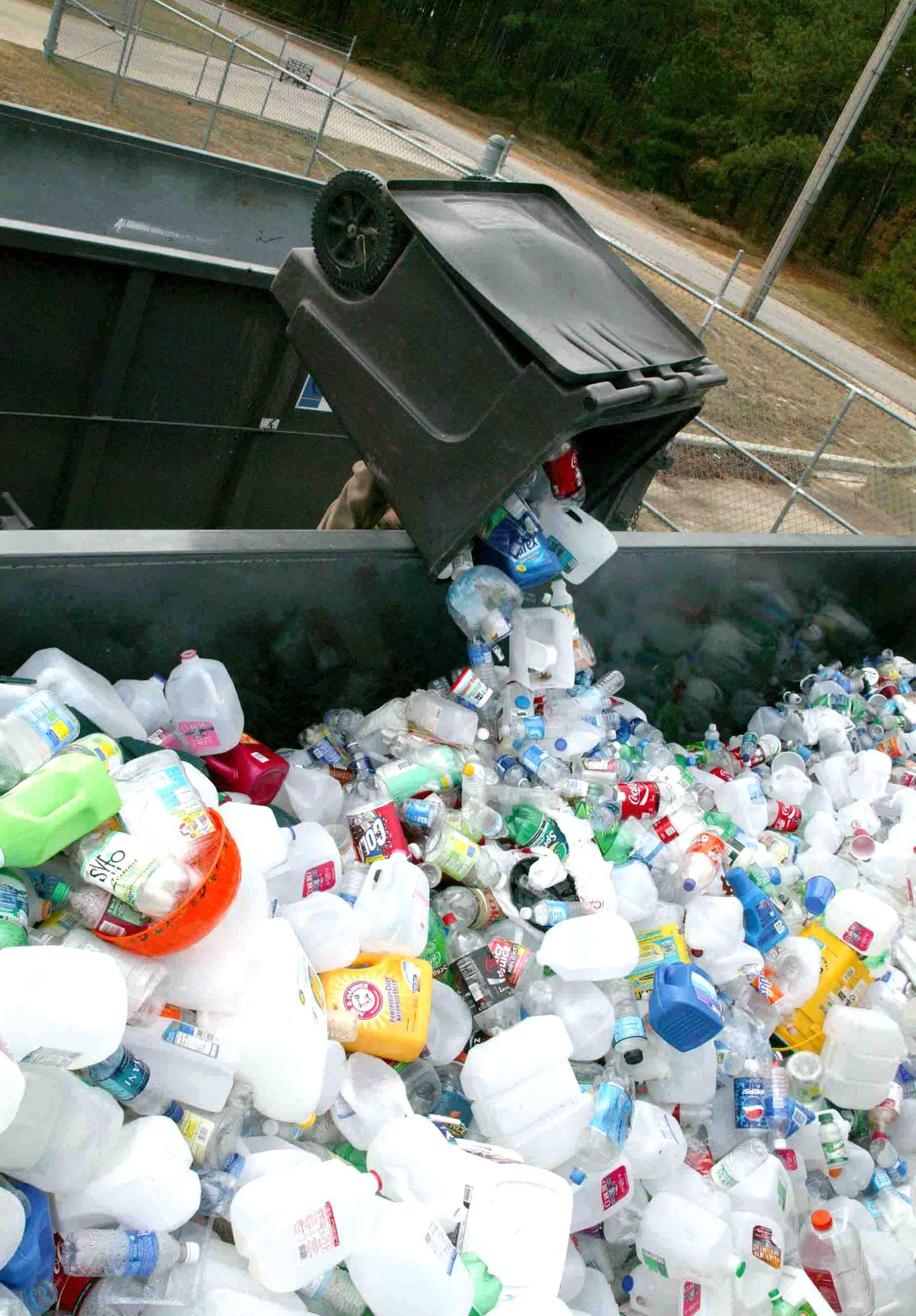
SHAW AIR FORCE BASE, S.C. -- Dana Green, Shaw's recycle center attendant, dumps a load of plastic bottles into a recycle bin Nov. 27. Shaw recycles aluminum cans, plastic and glass bottles, office paper, newspaper, magazines, cardboard, printer cartridges, shoes and metals. (U.S. Air Force photo/Staff Sgt. John Gordinier)(Credit: Staff Sgt. John Gordinier) A memorable “Seinfeld” episode features Kramer and Newman taking thousands of cans and bottles to Michigan so they can get a nickel more per container than they would in New York, but beverage distributors say there’s nothing funny when it happens for real.
In Maine, which has a more expansive bottle-redemption law than neighboring states, three people have been accused of illegally cashing in more than 100,000 out-of-state bottles and cans for deposits, the first time criminal charges have been filed in the state over bottle-refund fraud, a prosecutor said.
A couple that runs a Maine redemption center and a Massachusetts man were indicted this week for allegedly redeeming beverage containers in Maine that were bought in other states.
Thomas and Megan Woodard, who run Green Bee Redemption in Kittery, face the more serious charge of allegedly passing off more than 100,000 out-of-state containers — with a value of more than $10,000 — as if they had been purchased in Maine.
That’s just the tip of the iceberg.
An estimated 90 million cans and bottles are fraudulently cashed in each year in Maine, costing beverage distributors $8 million to $10 million, said Newell Augur, executive director of the Maine Beverage Association.
People from other states — especially New Hampshire, which has no “bottle law” — routinely redeem loads of cans and bottles in Maine, Augur said. Redemption centers pay customers 5-cent refunds on most beverage containers and 15 cents for wine and liquor bottles. The centers, in turn, get that money back from distributors, plus a 3 1/2- or 4-cent handling fee per container.
In the 1996 “Seinfeld” episode, Kramer and Newman hatch a plan to drive a truckload of cans and bottles to Michigan, because the redemption fee there was 10 cents, double New York’s nickel deposit.
Kramer laments it can’t be done. “You overload your inventory and you blow your margins on gasoline,” he says at one point. But Newman offers up free space in a mail truck he has to drive to Michigan before Mother’s Day — “the mother of all mail days,” he calls it — and the pair head off. (They end up aborting the trip while chasing down Jerry’s stolen Saab.)
“That was a very funny episode,” Augur recalls. “But this is not a laughing matter.”
Officials estimate that up to 1 billion beverage containers are sold in Maine each year. Containers sold in other states, however, carry the Maine deposit stamp because it’s not cost-effective to change labeling for each state.
The redemption rate — and the instances of fraud — have gone up with the poor economy, Augur said.
In all, 10 states have redemption laws, but Maine is susceptible to fraud because it has expanded its 1978 bottle-deposit law through the years beyond soda, beer and other carbonated beverages. It now accepts juice, water, sports drinks, liquor and other containers.
Neighboring New Hampshire doesn’t have any redemption law. In Massachusetts, redemptions are limited to beer, carbonated soft drinks and mineral waters.
Distributors say redemption fraud is most prevalent along Maine’s border with New Hampshire.
In 2003, the owner of redemption centers in the border towns of South Berwick and Kittery paid a $10,000 fine following a state crackdown on redemption fraud, but Assistant Attorney General Leanne Robbin said this week’s indictments were the first criminal charges she’s aware of in a redemption case in Maine.
The Woodards did not return a call to their home seeking comment.
They are accused of knowingly accepting containers at their redemption center that were purchased in another state, and therefore not eligible for a refund in Maine, and then selling them to distributors for the combined handling and redemption fees.
Peter Prybot, a 62-year-old lobsterman and writer from Gloucester, Mass., denied the allegations in the indictment, which charges him with redeeming more than $1,000 of empty containers in Maine that weren’t eligible to be redeemed.
Prybot said he accumulated cans and bottles during road trips to Maine and later cashed them, but said they all came from Maine.
Augur said legislation has been introduced that could help alleviate the problem by allowing distributors to sue individuals they believe are illegally redeeming large numbers of containers in Maine.
For Newman and Kramer, their beautiful scheme was doomed from the start:
The five most egregious quotes from Gwyneth Paltrow’s dinner party article
The actress invites her famous friends to dinner to tell the New Yorker how special she is
"Let them eat soy cakes!" Gwyneth Paltrow, stop it. I am begging you. You are making me look bad in front of all of my friends. Here I go, trying to defend your bourgeois reputation with a (fairly) nice review of your cookbook, calling many of the dishes unpretentious and easy to make.
You must have hated that. I almost can see you, queen-like, reading Salon (as you do every day) in the print form we give to celebrities, reading that article with your lovely eyes widening before crumpling it into a ball and throwing it across the steam room where you are currently enjoying a reflexology massage.
Continue Reading CloseDrew Grant is a staff writer for Salon. Follow her on Twitter at @videodrew. More Drew Grant.
“Harry’s Law”: Has David E. Kelley finally run out of steam?
The disastrous "Harry's Law" combines bad farce with serious social issues -- and wastes the talents of Kathy Bates
Kathy Bates in "Harry's Law" It’s funny that writer-producer David E. Kelley keeps making shows about cynical careerists who rediscover their ideals, because on his shows you often see the same trajectory happening in reverse. Any given episode of any given Kelley series is a 12-car pileup on the Anything Goes freeway, mixing politically correct posturing, harangues disguised as legal summations, wacky ethnic characters, kinky sex and tabloid luridness. The creator of “The Practice,” “Ally McBeal,” “Boston Public” and “Boston Legal” is smart and prolific and capable of surprise, and he’s unafraid to court controversy, but does he stand for anything except industry success? I’m sure he’d insist otherwise, and would point to all the legal concepts his law series have introduced to American television, and all the hot-button issues they’ve dealt with. But to me, Kelley’s shows embody the sneering stereotype of network TV in the ’60s and 70s, when most of it was stupefyingly bad and boring and safe: There’s a flurry of activity each week, but nothing really happens, and the characters are inconsistent, often nonsensical, doing and saying whatever they have to do or say in order to hold our attention and fill up the space between commercials.
Continue Reading Close“Seinfeld” saves “Curb Your Enthusiasm”
The season finale of Larry David's uneven HBO comedy proves how funny it can be with a little help from friends
Larry David and Jerry Seinfeld Why can’t the cast of “Seinfeld” appear on “Curb Your Enthusiasm” every season?
Last night’s seventh season finale offered a particularly tantalizing taste of just how funny the “Seinfeld” cast and its creators still are after all these years. The finale and its fictional reunion show not only found several fun and clever ways to bring these familiar characters into a current landscape — George invents the iToilet but his fortune is ripped off by Bernie Madoff, Elaine ignores Jerry to read her BlackBerry — but it also featured some truly memorable scenes between Larry David and Jerry Seinfeld.
Continue Reading CloseHeather Havrilesky is Salon's TV critic and author of the rabbit blog. Her memoir, "Disaster Preparedness," published in 2010. More Heather Havrilesky.
“Bee Movie”
Heard the buzz? Jerry Seinfeld's back ... as an animated bee. But this low-flying movie has no sting.
Over the past month or so it’s been impossible to pick up a major, or even a minor, entertainment publication and not see a story describing the animated feature “Bee Movie” as the return of Jerry Seinfeld — even though he’s returning to us only as a cartoon bee named Barry. Although Seinfeld has been doing stand-up comedy regularly since the end of his hugely popular eponymous TV show, the fact that he hasn’t been coming into living rooms regularly has made him seem somewhat invisible. That may be why his involvement with “Bee Movie” — which he co-wrote with Spike Feresten, Barry Marder and Andy Robin, and also co-produced — has been treated by the press, if not necessarily by fans, as a sort of second coming.
Continue Reading CloseStephanie Zacharek is a senior writer for Salon Arts & Entertainment. More Stephanie Zacharek.
I Like to Watch
Despots rule! Vic Mackey of "The Shield" seeks revenge, while Showtime invents a slimmer, sexier King Henry VIII.
I’ve always had a soft spot for the Misguided Idealist. In a world filled with Lukewarm Layabouts, Pessimistic Hem ‘n’ Hawers, Wishy-Washy Whatever-heads, Equivocating Eye-Rollers and “I Told You” So-and-So’s, the Misguided Idealist leaps without looking, then chases his big dreams up the wrong tree. While the rest of us dilly-dally and second-guess, the Misguided Idealist throws himself behind his cause, proselytizing shamelessly and endorsing a utopian vision that’s impossible, costs too much, lacks common sense and won’t work on any level.
Continue Reading CloseHeather Havrilesky is Salon's TV critic and author of the rabbit blog. Her memoir, "Disaster Preparedness," published in 2010. More Heather Havrilesky.
Page 1 of 9 in Seinfeld