WikiLeaks
A disturbing threat against one of our own
UPDATED: An alleged plot to destroy WikiLeaks targets Glenn Greenwald. We want to know who is responsible
(Updated below)
We take threats against our own very seriously.
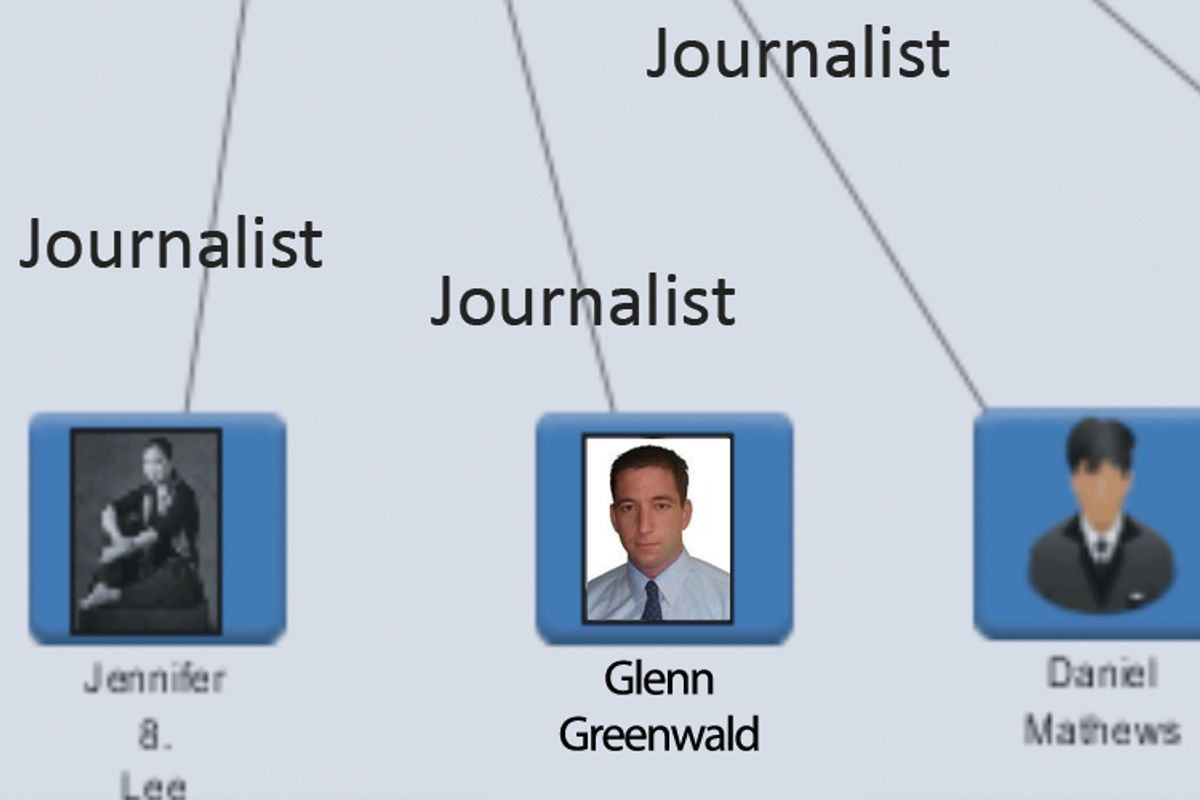
A bizarre plan for an attack on the whistle-blowing site WikiLeaks and journalists construed as sympathetic to it — first reported by the Tech Herald — clearly targets Salon’s Glenn Greenwald, saying that his “level of support” for WikiLeaks “needs to be disrupted.” The report (you can download the purported final draft here) is listed as an “overview by Palantir Technologies, HBGary Federal and Berico Technologies,” and according to a string of e-mails also leaked, was developed following a request from Hunton and Williams, a law firm that represents, among others, Bank of America.
Bank of America is the presumed next target of WikiLeaks, and has reportedly been bracing for what’s to come.
The leaked report singles out other journalists, as well, and suggests that “these are established professionals that have a liberal bent, but ultimately most of them if pushed will choose professional preservation over cause …” And goes on: “Without the support of people like Glenn wikileaks would fold.”
For a complete breakdown of what it all means, Glenn has a thorough, illuminating report. But what the authors of the report meant when they plotted how Glenn and the others could be “disrupted” or “pushed” is as unclear as it is ominous — and has us deeply concerned. The report was exposed by Anonymous, the pro-WikiLeaks hackers who went after the companies that dropped services to the whistle-blowing organization last year. Anonymous was apparently acting in retaliation to HBGary, whose head of security services, Aaron Barr, had earlier claimed to have infiltrated the Anonymous network. HBGary has since responded, claiming that “information currently in the public domain” from the leak “is not reliable because the perpetrators of this offense, or people working closely with them, have intentionally falsified certain data.”
But the security firm Palantir wasted little time severing all relations with HBGary, with Palantir CEO Alex Karp issuing a statement saying that “I want to publicly apologize to progressive organizations in general, and Mr. Greenwald in particular, for any involvement that we may have had in these matters.” Karp also reached out and apologized directly to Glenn.
We have no reason not to take the report seriously. As a result, I’ve asked both Hunton and Williams and Bank of America to explain any role they played and address whether HB Gary (or any of the firms) were being paid, or promised payment, for its development. I’ll update this post when we hear their responses.
As bumbling as this whole saga sounds — Internet security firm can’t keep its shadowy dirty tricks campaign from being hacked — what’s outlined in these sets of proposals, as Glenn points out, “quite possibly constitutes serious crimes.” And as it relates to Glenn and the others, it constitutes an unconscionable attempt to silence journalists doing their jobs. We’ll continue to stay on this story until we get some real answers.
Update I (4:05 p.m. ET): Berico CEO Guy Filippelli and COO Nick Hallam have now formally severed ties with HBGary, saying in a statement:
Our leadership does not condone or support any effort that proactively targets American firms, organizations or individuals. We find such actions reprehensible and are deeply committed to partnering with the best companies in our industry that share our core values. Therefore, we have discontinued all ties with HBGary Federal. We are conducting a thorough internal investigation to better understand the details of how this situation unfolded and we will take the appropriate actions within our company.
Late last year, we were asked to develop a proposal to support a law firm. Our corporate understanding was that Berico would support the firm’s efforts on behalf of American companies to help them analyze potential internal information security and public relations challenges. Consistent with industry standards for this type of work, we proposed analyzing publicly available information and identifying patterns and data flows relevant to our client’s information needs. Any subsequent discussions or proposals that attempted to extend the initial scope of work run counter to our organization’s values.
Update 2 (5:11 p.m. ET): A reader sent me this post on USA Today’s technology blog, which went up as I was first preparing this post. In it, BofA spokesman Scott Silvestri says, “We’ve never seen the presentation, never evaluated it, and have no interest in it.” When asked specifically about the PowerPoint display, Silvestri is quoted: “Neither Bank of America, nor any of its vendors, have engaged HBGary Federal in this matter. We have not engaged in, nor do we have any plans to, the practices discussed in recent press reports involving HBGary Federal.”
I have a call and an email in to Silvestri and still hope to hear back from him. We have, naturally, more questions. Did BofA or Hunton and Williams solicit the report from HBGary? Were they, or any of the security firms, paid for their efforts?
We hope to have more answers soon.
Update 3 (6:45 p.m. ET): Silvestri emailed back, providing the same quotes as he had given USA Today, above. We replied with the same followups as outlined above. We hope to hear back soon.
Kerry Lauerman is Salon's Editor in Chief. Follow him on Twitter: @kerrylauerman. More Kerry Lauerman.
From Watergate to WikiLeaks
A new book demolishes the myth of Deep Throat -- and the romance of heroic journalism
(Credit: AP/Kirsty Wigglesworth/Salon) In the movie “All the President’s Men,” the shadowy high-level source known only as Deep Throat tells Washington Post reporter Bob Woodward, “Follow the money.” The fact that this never happened — the words were invented by screenwriter William Goldman — detracted little from the scene’s power or the movie’s influence. It encapsulated a romantic myth of journalism: An intrepid reporter finds a wise whistle-blower who schools him in the abuse of power. In the movie and political memory, the top-level source enabled the crusading reporters to bring down a corrupt president.
Continue Reading Close
Jefferson Morley is a staff writer for Salon in Washington and author of the forthcoming book, Snow-Storm in August: Washington City, Francis Scott Key, and the Forgotten Race Riot of 1835 (Nan Talese/Doubleday). More Jefferson Morley.
WikiLeaks’ new phase begins
How Julian Assange's partnership with Anonymous could change the landscape of hacktivism
(Credit: Reuters/Tobias Schwarz/Stefan Wermuth) Today has been a very big day for WikiLeaks. It just released 5 million internal documents stolen from the private intelligence firm Stratfor, allegedly obtained by hacktivist collective Anonymous in December. This is huge; it’s the first time Anonymous has ever cooperated with an aboveground entity, lending an unprecedented amount of political legitimacy to the often inscrutable group. But why? What do these strange bedfellows have to gain from collaboration? With this new collaboration, Anonymous has obtained new credibility, and WikiLeaks has obtained a hugely valuable new source. This potentially powerful alliance could point to the future of the leak economy, and this awkward symbiosis provides each party with exactly what they need to move forward. A new age of transparency activism may have just begun.
Continue Reading CloseCole Stryker is the author of "Epic Win for Anonymous" and is currently working on a book about anonymous activism and online privacy, due for a fall release from Overlook Press More Cole Stryker.
Julian Assange prepares his next move
The WikiLeaks founder is doing TV, building a news organization and preparing his ultimate legal defense
WikiLeaks founder Julian Assange (Credit: AP) In a week or two, the U.K. Supreme Court will rule on the final appeal for Julian Assange, the editor in chief of WikiLeaks. If he loses, he will be extradited to Sweden to answer questions about alleged sexual misconduct. His legal team fears extradition to Sweden ultimately would mean extradition to the U.S., where Assange is the subject of a grand jury investigation in northern Virginia.
Continue Reading CloseDouglas Lucas is a writer in Texas. His website, www.douglaslucas.com, offers free fiction. Follow him @douglaslucas. More Douglas Lucas.
Obama’s unprecedented war on whistleblowers
From Manning to Kiriakou, critics are aggressively targeted as the White House turns a blind eye to abuses
Former CIA officer John Kiriakou and Bradley Manning (Credit: AP) On January 23rd, the Obama administration charged former CIA officer John Kiriakou under the Espionage Act for disclosing classified information to journalists about the waterboarding of al-Qaida suspects. His is just the latest prosecution in an unprecedented assault on government whistleblowers and leakers of every sort.
Kiriakou’s plight will clearly be but one more battle in a broader war to ensure that government actions and sunshine policies don’t go together. By now, there can be little doubt that government retaliation against whistleblowers is not an isolated event, nor even an agency-by-agency practice. The number of cases in play suggests an organized strategy to deprive Americans of knowledge of the more disreputable things that their government does. How it plays out in court and elsewhere will significantly affect our democracy.
Continue Reading ClosePeter Van Buren spent a year in Iraq as a State Department Foreign Service Officer serving as Team Leader for two Provincial Reconstruction Teams (PRTs). Now in Washington, he writes about Iraq and the Middle East at his blog, We Meant Well. His book, We Meant Well: How I Helped Lose the Battle for the Hearts and Minds of the Iraqi People (The American Empire Project, Metropolitan Books), will be published this September. More Peter Van Buren.
When a WikiLeaks lawyer runs into Eric Holder
During a chance encounter at Sundance, I pressed the attorney general about his plans for Assange -- and his legacy
Eric Holder (Credit: AP) “Slavery by Another Name,” a documentary based on the 2009 Pulitzer Prize-winning book by Douglas Blackmon, premiered this year at the Sundance Film Festival. The story was new to me: Between the Emancipation Proclamation and the beginning of World War II, tens of thousands of African-Americans were arrested on phony charges, slapped with massive fines they could not pay, and then sold into labor to some of the biggest industries in the country to work off their debt. I didn’t expect to learn that slavery essentially continued for decades after the Civil War. And I also didn’t expect – on vacation from my legal work advising WikiLeaks and Julian Assange — to bump into Attorney General Eric Holder. Having spent the week before Christmas at Fort Meade, Md., attending the Pvt. Bradley Manning hearing – Manning is charged with passing classified material to WikiLeaks — I knew what I had to ask him.
Continue Reading CloseJennifer Robinson is a London-based media and human rights lawyer who advises Julian Assange and WikiLeaks. Follow her on twitter @suigenerisjen More Jennifer Robinson.
Page 1 of 41 in WikiLeaks