
Salon Home
  • RSSfeed
  • Follow Writers and Writing
Topic

Writers and Writing

Tuesday, Mar 29, 2011 7:54 PM UTC2011-03-29T19:54:00Zl, M j, Y g:i A T

The e-book that launched a thousand flame wars

A self-published author takes on a critic -- and becomes a cautionary tale

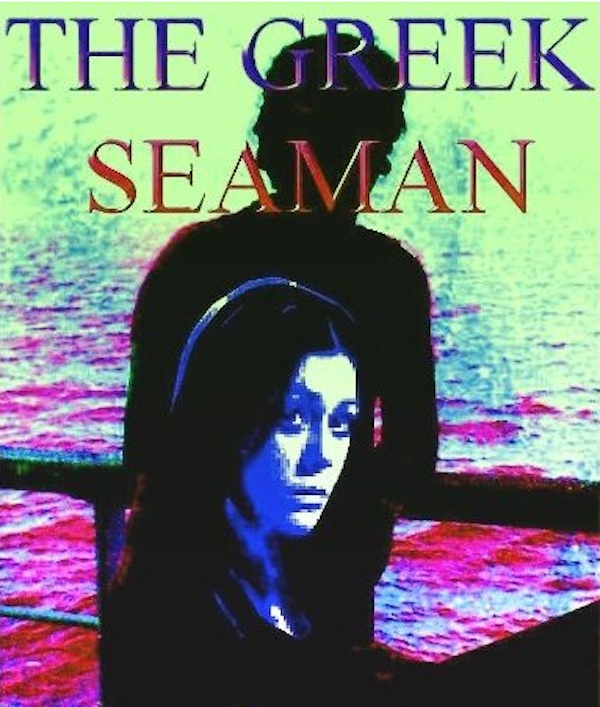
The cover of the "The Greek Seaman"

The cover of the "The Greek Seaman"

Every year, hundreds of thousands of books are put out by independent presses that let you pay to publish your own story. And with the popularity of the iPad and Kindle, these would-be authors can bypass the cost of printing entirely, making your writing-to-publishing process a one-step deal. That may have been one step too few for British author Jacqueline Howett, whose book went out into the world before it was copyedited — and full of typos.

The Greek Seaman” is the third of Howett’s self-published, straight-to-Kindle affairs, and it probably would not have drawn much attention had it not been for a blog called Big Al’s Books and Pals. On March 16, Big Al reviewed “Seaman” and gave it the most positive review the writer could muster:

“If you read ‘The Greek Seaman’ from the start until you click next page for the last time I think you’ll find the story compelling and interesting. The culture shock felt by the newlywed bride, Katy, who finds herself far from her native England, living on a cargo ship with her seaman husband Don is a good story in itself …

Continue Reading

Drew Grant is a staff writer for Salon. Follow her on Twitter at @videodrewMore Drew Grant

Saturday, Feb 18, 2012 5:29 PM UTC2012-02-18T17:29:00Zl, M j, Y g:i A T

He was our eyes

The tragic death of Anthony Shadid has made the world a little darker

The late Anthony Shadid

The late Anthony Shadid

I was stunned and saddened to learn of the death of Anthony Shadid, the great New York Times reporter who covered the Middle East. Shadid was quite simply the best mainstream reporter working the most important foreign beat in the world. From his superb coverage of Iraq to his groundbreaking reporting on the Arab Spring, he set the journalistic standard. Shadid’s profound knowledge of the Arab world, his even-handedness, his historical sophistication, and above all his empathy for the ordinary people he wrote about, made him indispensable.

Continue Reading

Gary Kamiya is a Salon contributing writer.  More Gary Kamiya

Friday, Feb 17, 2012 11:42 PM UTC2012-02-17T23:42:00Zl, M j, Y g:i A T

Anthony Shadid yearned for home

In a soon-to-be published memoir the fallen war reporter told the story of rebuilding his grandmother's house.

Anthony Shadid

Anthony Shadid  (Credit: AP)

Anthony’s Shadid’s now unbearably poignant book, “House of Stone,” opens with a scene of carnage that will be familiar to anyone who read his coverage of the wars of  the Middle East. As a reporter for the Washington Post in the summer of 2006, he arrived in the devastated Lebanese town of Qana to find that “Israeli bombs caught their victims in the midst of a morning’s work … the dead standing, sitting looking around, the village, its voices and stories, plate and bowls, letters and words, its history, obliterated in a few extended moments” of indiscriminate violence perpetrated by America’s favorite ally. As he wandered amid the devastation, he found a man mourning the death of his wife and five children. “‘I wish God would have left me with just one child,’ said the bereft former father.”

Continue Reading

Jefferson Morley is the Washington editor of Salon and author of the forthcoming book, Snow-Storm in August: Washington City, Francis Scott Key, and the Forgotten Race Riot of 1835 (Nan Talese/Doubleday).  More Jefferson Morley

Sunday, Feb 12, 2012 2:00 PM UTC2012-02-12T14:00:00Zl, M j, Y g:i A T

Is gay literature over?

In an era of same-sex marriage and "Modern Family," the role of gay writers is changing. An expert explains how

Gore Vidal, Tony Kushner and James Baldwin

Gore Vidal, Tony Kushner and James Baldwin  (Credit: Library of Congress/Carl Van Vechten/Reuters/Phil McCarten/Miami Dade College)

Gay life in America has utterly transformed itself since World War II. In the 1950s, homosexuality was a crime. Now, openly gay people are everywhere in popular culture, gay kids are coming out as early as elementary school and we can get even get married in a half-dozen states (including, soon, Washington). One of the most crucial, but least-talked about, reasons for this change is gay literature. Starting in the 1940s, a coterie of bold writers — Gore Vidal, James Baldwin, Armistead Maupin and Tony Kushner, among many others — played a central role in creating what we now think of as gay life. Their words gave voice to a segment of the American population that, for much of its history, was hidden away.

Continue Reading

Thomas Rogers is Salon's deputy arts editor.   More Thomas Rogers

Thursday, Dec 29, 2011 9:00 PM UTC2011-12-29T21:00:00Zl, M j, Y g:i A T

Spoiler alert! What makes a great ending?

Books with terrific conclusions are hard to find, but they're even harder to talk about

the end final

The endings of novels are, in their own way, as crucial as the endings of years, but they are much less discussed. Any bibliophile can rattle off at least a handful of famous first lines (“It was the best of times, it was the worst of times…;” “It is a truth universally acknowledged…; ” “It was a bright cold day in April, and the clocks were striking thirteen,” and so on), but ask someone to quote a memorable closer and chances are all they can come up with is F. Scott Fitzgerald’s “So we beat on, boats against the current, borne back ceaselessly into the past” (from “The Great Gatsby”) or James Joyce’s rhapsodic “…and yes I said yes I will Yes.”

Continue Reading
Laura Miller

Laura Miller is a senior writer for Salon. She is the author of "The Magician's Book: A Skeptic's Adventures in Narnia" and has a Web site, magiciansbook.comMore Laura Miller

Thursday, Dec 15, 2011 1:00 AM UTC2011-12-15T01:00:00Zl, M j, Y g:i A T

Writing class from hell

As "Seminar" hits Broadway, novelist Ben Marcus judges the tyrannical writing teachers of stage and screen

Alan Rickman

Alan Rickman appears at the curtain call for the opening night performance of the Broadway play "Seminar," on Nov. 20, 2011.  (Credit: AP/Charles Sykes)

“Seminar,” a play starring Alan Rickman as a preening, acid-tongued teacher running roughshod over a group of tender aspiring writers, opened a few weeks ago on Broadway. Reviews have prompted all the usual observations about the difficulty of dramatizing both writing and reading, activities so internally momentous yet so physically inert. Why, then, do people keep doing it? And do the depictions of writing classes in stage, film and television — from “Wonder Boys” to “Bored to Death” — bear any relationship to real life?

Continue Reading
Laura Miller

Laura Miller is a senior writer for Salon. She is the author of "The Magician's Book: A Skeptic's Adventures in Narnia" and has a Web site, magiciansbook.comMore Laura Miller

Page 1 of 56 in Writers and Writing

Other News