

(updated below)
Protesters yesterday interrupted President Obama’s speech at a $5,000/ticket San Francisco fundraiser to demand improved treatment for Bradley Manning. After the speech, one of the protesters, Logan Price, approached Obama and questioned him. Obama’s responses are revealing on multiple levels. First, Obama said this when justifying Manning’s treatment (video and transcript are here):
We’re a nation of laws. We don’t let individuals make their own decisions about how the laws operate. He broke the law.
The impropriety of Obama’s public pre-trial declaration of Manning’s guilt (“He broke the law”) is both gross and manifest. How can Manning possibly expect to receive a fair hearing from military officers when their Commander-in-Chief has already decreed his guilt? Numerous commentators have noted how egregiously wrong was Obama’s condemnation. Michael Whitney wrote: “the President of the United States of America and a self-described Constitutional scholar does not care that Manning has yet to be tried or convicted for any crime.” BoingBoing’s Rob Beschizza interpreted Obama’s declaration of guilt this way: “Just so you know, jurors subordinate judging officers!” And Politico quoted legal experts explaining why Obama’s remarks are so obviously inappropriate.
It may be that Obama spoke extemporaneously and without sufficient forethought, but it is — at best — reckless in the extreme for him to go around decreeing people guilty who have not been tried: especially members of the military who are under his command and who will be adjudged by other members of the military under his command. Moreover, as a self-proclaimed Constitutional Law professor, he ought to have an instinctive aversion when speaking as a public official to assuming someone’s guilt who has been convicted of nothing. It’s little wonder that he’s so comfortable with Manning’s punitive detention since he already perceives Manning as a convicted criminal. “Sentence first – verdict afterward,” said the Queen of Hearts to Alice in Wonderland.
But even more fascinating is Obama’s invocation of America’s status as a “nation of laws” to justify why Manning must be punished. That would be a very moving homage to the sanctity of the rule of law — if not for the fact that the person invoking it is the same one who has repeatedly engaged in the most extraordinary efforts to shield Bush officials from judicial scrutiny, investigation, and prosecution of every kind for their war crimes and surveillance felonies. Indeed, the Orwellian platitude used by Obama to justify that immunity — Look Forward, Not Backward — is one of the greatest expressions of presidential lawlessness since Richard Nixon told David Frost that “it’s not illegal if the President does it.”
But it’s long been clear that this is Obama’s understanding of “a nation of laws”: the most powerful political and financial elites who commit the most egregious crimes are to be shielded from the consequences of their lawbreaking — see his vote in favor of retroactive telecom immunity, his protection of Bush war criminals, and the way in which Wall Street executives were permitted to plunder with impunity — while the most powerless figures (such as a 23-year-old Army Private and a slew of other low-level whistleblowers) who expose the corruption and criminality of those elites are to be mercilessly punished. And, of course, our nation’s lowest persona non grata group — accused Muslim Terrorists — are simply to be encaged for life without any charges. Merciless, due-process-free punishment is for the powerless; full-scale immunity is for the powerful. “Nation of laws” indeed.
One final irony to Obama’s embrace of this lofty justifying term: Manning’s punitive detention conditions are themselves illegal, as the Uniform Code of Military Justice expressly bars the use of pre-trial detention as a means of imposing punishment. Given how inhumane Manning’s detention conditions have been — and the fact that much of it was ordered in contradiction to the assessments of the brig’s psychiatric staff — there is little question that this is exactly what has happened. The President lecturing us yesterday about how Manning must be punished because we’re a “nation of laws” is the same one presiding over and justifying Manning’s unlawful detention conditions.
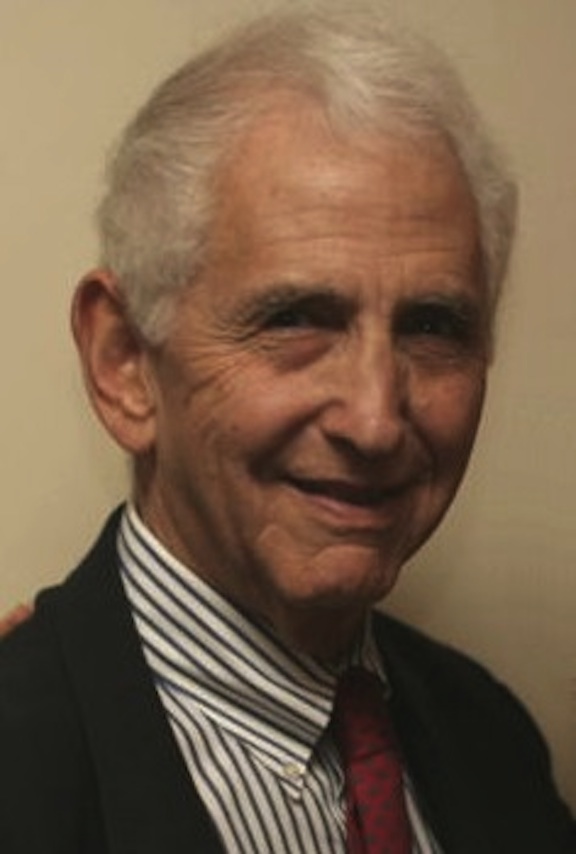
Then, in response to Price’s raising the case of Daniel Ellsberg, we have this from Obama:
No it wasn’t the same thing. Ellsberg’s material wasn’t classified in the same way.
What Obama said there is technically true, but not the way he intended. Indeed, the truth of the matter makes exactly the opposite point as the one the President attempted to make. The 42 volumes of the Pentagon Papers leaked by Ellsberg to The New York Times were designated “TOP SECRET“: the highest secrecy designation under the law. By stark contrast, not a single page of the materials allegedly leaked by Manning to Wikileaks was marked “top secret”; to the contrary, it was all marked “secret” or “classified”: among the lowest level secrecy classifications. Using the Government’s own standards, then, the leak by Ellsberg was vastly more dangerous than the alleged leak by Manning.
(And the notion that Ellsberg’s leak was limited and highly selective is absurd; he passed on thousands of pages to the New York Times in the form of 42 full volumes worth. Among the documents leaked by Ellsberg were some of the nation’s most sensitive cryptography and eavesdropping methods: documents The New York Times withheld from publication upon the NSA’s insistence that their publication would gravely harm American national security [see p. 388 and fn 170]. By contrast, none of the documents allegedly leaked by Manning comes close to anything as potentially damaging or sensitive as that.)
But it has long been vital for Obama officials and the President’s loyalists to distinguish Ellsberg from Manning. Why? Because it is more or less an article of faith among progressives that what Ellsberg did was noble and heroic. How, then, can Nixon’s persecution of Ellsberg continue to be loathed while Obama’s persecution of Manning be cheered? After all, even the hardest-core partisan loyalists can’t maintain contradictions that glaring in their heads; they need to be given a way to distinguish them.
Hence the importance of differentiating Ellsberg’s actions from those in which Manning is accused of engaging. That Ellsberg himself has repeatedly said that Manning’s alleged acts are identical to his own both in content and motive — and that he considers Manning a hero — is obviously problematic for that cause, but the justifying show must go on. Thus do we have Obama’s backward claim that “Ellsberg’s material wasn’t classified in the same way,” when the reality is that The Pentagon Papers were deemed far, far more sensitive by the U.S. Government than the documents published by WikiLeaks. Indeed, from every objective metric, Ellberg’s leak was a far graver compromise of national security secrets than Manning’s alleged leak; if they’re to be distinguished, it would be in favor of defending Manning, not defending Ellsberg (and while it’s true that Obama didn’t order the break-in of Manning’s psychiatrist’s office, it’s also true Nixon never ordered Ellsberg confined to 23-hour-a-day pre-trial solitary confinement and forced nudity).
That Obama has to resort to the most brazen hypocrisy and factually confused claims to defend Manning’s treatment should hardly be surprising (and as Politico‘s quoted experts noted, Obama was also deeply confused when he claimed yesterday that he, too, would be breaking the law if he released unauthorized classified information, since the President has the unfettered right to declassify what he wants). Those engaged in purely unjustifiable conduct can, by definition, find only incoherent and nonsensical rationale to justify what they’re doing. The President’s remarks yesterday provide a classic case of how true that is.
UPDATE: In response to the controversy created by Obama’s declaration of Manning’s guilt, the White House now says that the President merely was “making a general statement that did not go specifically to the charges against Manning: ‘The president was emphasizing that, in general, the unauthorized release of classified information is not a lawful act,’ [a White House spokesman said] Friday night. ‘He was not expressing a view as to the guilt or innocence of Pfc. Manning specifically’.” What Obama actually said was: “He broke the law.” I’ll leave it to readers to determine whether the White House’s denial is reasonable, or whether it’s the actions of a President constitutionally incapable of admitting error (h/t auerfeld).
Amazingly, this incident — as this truly excellent post documents — is highly redolent of the time Richard Nixon publicly declared Charles Manson’s guilt before the accused mass murderer had been convicted. Nixon’s Attorney General, John Mitchell, was at Nixon’s side when he did it and immediately recognized the impropriety of Nixon’s remarks, and the White House quickly issued a statement claiming that Nixon misspoke and meant merely to suggest Manson had been ”charged” with these crimes, not that he was guilty of them. Obama’s decree was worse, of course, since (a) Obama has direct command authority over those who will judge Manning (unlike Nixon vis-a-vis Manson’s jurors); (b) Manson’s jurors were sequestered at the time and thus not exposed to Nixon’s proclamation; and (c) Obama is directly responsible for the severe punishment to which Manning has already been subjected (h/t lysias).
It is notable indeed that an act immediately recognized as grossly improper by John Mitchell — “easily American history’s crookedest Attorney General ever” — is engaged in by our nation’s top political-leader/Constitutional-scholar, and no attempt is made to rectify it until it becomes clear that the controversy could harm both Manning’s prosecution and the President’s political standing.
