Cancer

A blogger chronicles his own death

In a gut-wrenching posthumous post, Derek Miller shows the value of detailing life's last act

  • more
    • All Share Services

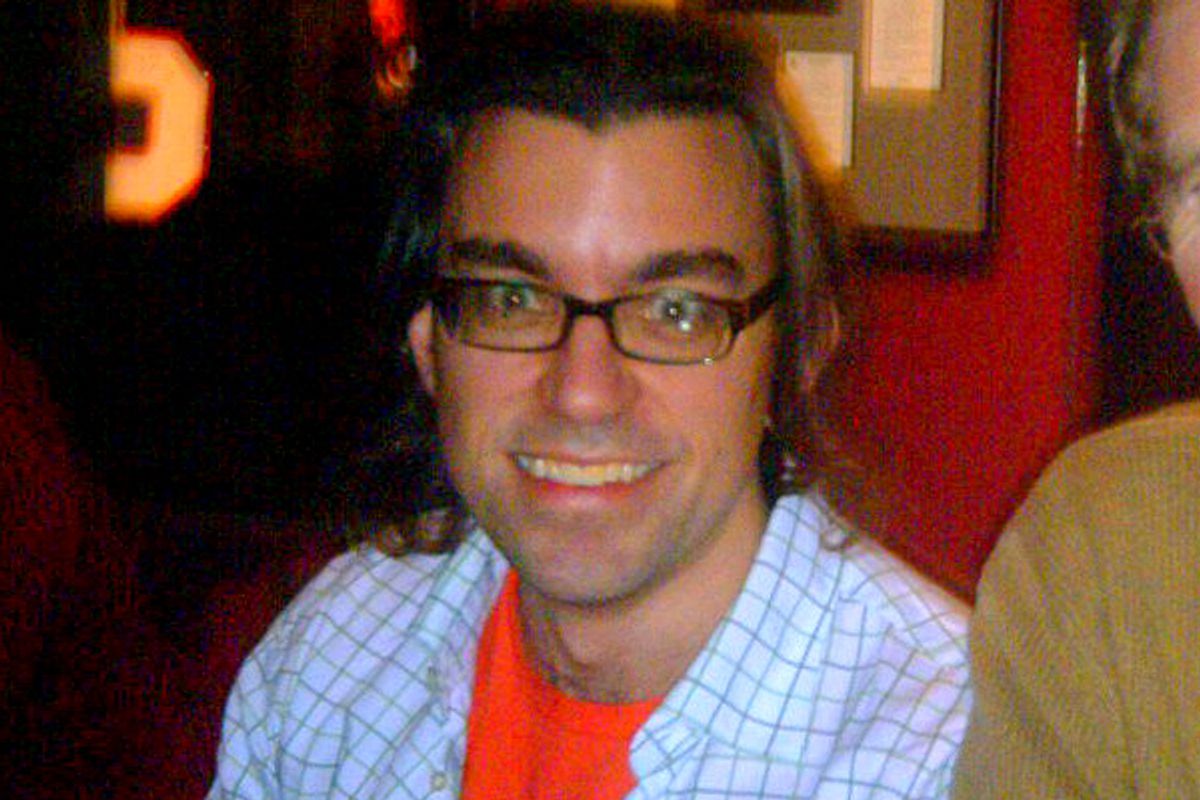
A blogger chronicles his own deathDerek Miller

On May 3, Canadian writer and musician Derek Miller died at age 41. On May 4, he blogged for the last time. “Here it is,” he wrote. “I’m dead, and this is my last post to my blog.”

Miller began his blog, penmachine, over a decade ago, but the narrative took a dramatic turn after his diagnosis of colorectal cancer in 2007. The frank and remarkably zesty chronicle of his experience is another example of the power of online community, and the ways in which the Internet is helping demystify illness and dying. Writing and blogging about them has become a genre unto itself, one in which the person with the grim diagnosis has the opportunity to express last-ditch hopes and dark fears, and anyone who chooses to click can get a ringside seat for one of the most intimate experiences life offers — its final one.

It’s always a brutal loss for the online community when someone like Miller, who’s been sharing something as personal as disease, dies. A year ago, San Francisco Chronicle writer and blogger Alicia Parlette died of a rare form of soft tissue sarcoma after chronicling her “Cancer. Despair. Hope. Faith.” journey on and off for half a decade. And in September, “Today” correspondent Mike Celizic died of T-cell lymphoma after sharing his “Adventures in Cancerland” for MSNBC.com. Celizic’s fearlessly funny prose — writing that his terminal diagnosis left him “crying like Glenn Beck, only for real” — gave a profoundly humane and refreshingly honest account of the terror and absurdity of facing one’s final days.

Everyone who must deal with death — and that’s everyone, by the way — grapples with it differently. Alicia Parlette wrote resolutely of her “quick chats with God,” while Derek Miller and cancer-diagnosed Christopher Hitchens have written passionately about their atheism. But we all know the strange and terrible truth is that no matter how you slice it, one day we’ll be gone. Gone, if we’re lucky, from a world that has been very good to us. Miller’s birthday wish to his daughter, one in which he asked, “Will this be as momentous a year? No one knows yet. Sadly, though, it is unlikely I’ll live to see Lolo’s next birthday in 2012,” is wrenching not just because it was proved true so soon, but because Miller boldly, bravely wrote about that truth. He acknowledged the great taboo: mortality, in all its complexity of feeling.

That’s what makes Miller and Parlette and Celizic and others truly remarkable. Aside from the fact they were all terrific writers, their prose illuminates one of the greatest secrets of all about sickness and dying: that it’s not all bad. Disease isn’t some great, ennobling experience, as anyone who’s ever rocked a paper gown knows. But it really can give a person a buttload of clarity. Those of us who have signed Do Not Resuscitate forms can tell you: Being scared crapless about dying is only part of the story. Being made acutely aware of the awesomeness of living is the other. “I can lament what I will never know, yet still not regret what got me where I am,” Miller wrote in his final message, adding that “The world, indeed the whole universe, is a beautiful, astonishing, wondrous place.” That’s what makes it such a bitch to leave.

Last week, I was on vacation with my family for a much-needed and eminently healing getaway. I’m still rebounding — and will be never be the same — after my diagnosis of malignant cancer and lifesaving surgery last year. One of my best friends is in intense treatment for ovarian cancer. And my beloved father-in-law died from stomach cancer in March. After the roller coaster of the last few months, we needed real roller coasters and swimming pools.

So we marveled at spring flowers that Grandpa didn’t get to see this year. We reminisced about trips past that he’d been part of. Sometimes, we were even happy enough to forget we were sad. And as is inevitably the case, when we got down to the last day, our dwindling time became increasingly bittersweet. We ate ice cream cones, savoring them until they dripped down our arms. We took a million pictures of our last sunset. We said goodbye. That’s how it is at the end — whether it’s a trip greatly enjoyed or a life well lived. The pleasure of being there is infused with the sadness of leaving. We look back over a shoulder one last time, hoping to hang on to the moment forever. And we want to keep saying, again and again and again, enough to last to the end of the lifetimes we won’t be there to share, what Miller wrote in his last message to his family and the world. “I loved you deeply, I loved you, I loved you, I loved you.”

Mary Elizabeth Williams

Mary Elizabeth Williams is a staff writer for Salon and the author of "Gimme Shelter: My Three Years Searching for the American Dream." Follow her on Twitter: @embeedub.

Kate Hudson’s cancer horror show

The bubbly actress's horrific movie, "A Little Bit of Heaven," turns terminal illness into a twee joke

  • more
    • All Share Services

Kate Hudson's cancer horror showKate Hudson in "A Little Bit of Heaven"

Ladies and gentlemen, we are gathered here today to mourn a sad loss. A luminous, unique presence who ably graced our lives and then was snuffed out far too early. A moment of silence, please, for Kate Hudson’s career.

It seems like only yesterday we were beguiled by the lively, bohemian Penny Lane in “Almost Famous.” But it’s been a painful decade since, as I know many of you gathered here can bear witness. Those of you who steadfastly supported Hudson over the years, who paid good money for “Bride Wars,” for “How to Lose a Guy in 10 Days,” for “Raising Helen,” “You Me & Dupree,” “Fool’s Gold,” “My Best Friend’s Girl,” “Alex and Emma,” “Le Divorce,” and “Something Borrowed” — you know what I’m talking about. You’re heroes for sticking around this long. That’s why it’s both tragic and necessary to come to the end of our journey now, to let her go off to a better place. The D-list. It’s called “A Little Bit of Heaven.”

The movie, which opens in theaters Friday and is available on demand on iTunes, tells the story of Marley, a free-spirited young New Orleans advertising executive. Marley has good friends — including a pregnant lady and a gay black man, because she’s awesome. She has an adorable dog and a penchant for casual sex and whimsical bike riding. But no sooner can her pals offer a champagne toast celebrating the “youngest and hottest vice president” in her company’s history than things start to go terribly wrong. Like millions of helpless white people every day, Marley begins having visions of a cool African-American as God. There is no known cure. Once Marley starts chatting with Whoopi Goldberg in that ethereal, cloud-heavy set, you know she’s in trouble. She’s got terminal Movie Cancer. Naturally, this is the perfect opportunity for her to get in touch with her feelings, have many scenes of hugging her crying costars, and start banging Gael García Bernal. It’s a little weird because he’s supposed to be her oncologist.

It’s not easy making entertainment out of cancer. Yet Showtime’s “The Big C” has mined the terrain to Golden Globe-winning effect. Llast year’s “50/50,” based on writer Will Reiser’s real experiences as a young person suddenly diagnosed with a potentially fatal diagnosis, became a critically acclaimed sleeper hit.  And when you’ve got a condition that will directly affect roughly 41 percent of us, there’s surely some dramatic and comedic resonance to be found in the subject matter. Speaking as someone who has had Stage 4 cancer and endured a clinical trial, and who believes firmly that anyone who’s been through all that ought to at the very least get to bang Gael García Bernal in the Big Easy, I am the ideal audience for this movie. Why, then, somewhere around the inevitable shopping spree montage, did I scrawl the words “WORSE THAN CANCER” in my notebook, and then underline them fiercely in the darkness?

Maybe it’s the way Bernal, as a doctor with seemingly zero ethical problem about sleeping with his terminally ill patient, says “schmuck” – because he’s supposed to be Jewish. Maybe it’s because Kathy Bates, as Marley’s mom, looks like she’s trying so hard with such unforgivable material. Maybe it’s because the biggest audience laugh of the whole movie came when Hudson said, with a straight face, “Come on, Doc. Level with me.” Maybe it’s because when Peter Dinklage, as a male escort, says the title of the movie, it turns out it’s his character’s nickname. Little Bit of Heaven. Oh, human suffering. Truly, this is what it looks like.

Mostly, brothers and sisters, I think we know why this movie causes a pain all the medical marijuana in the world can’t make a person forget. It’s Hudson. Hudson, whose character ostensibly goes through chemo, yet never loses a bouncy curl off her blond head. Who enters a trial but quits with a shrug about “quality of life.” Hudson, who, thanks in large part to director Nicole Kassell and first-time screenwriter Gren Wells, willingly put herself in a movie about cancer that seems to have been created by people who’ve only had cancer described to them. Hudson, who chose to place herself in the pantheon of life-affirming doomed sick girls like “Sweet November’s” Charlize Theron and “Autumn in New York’s” Winona Ryder and the mother of them all, “Love Story’s” Ali McGraw, and comes across as a shrill, affected parody of her hair-tossing Almay ad persona.

It’s an occupational hazard that any actress with marquee value will sometimes find herself in romantic schlock. Yet women like Renee Zellweger and Sandra Bullock have managed to balance their turkeys with riskier performances and a broader range of films. Hudson, in contrast, has remained frozen in time, forever doing variations on her young rebel with a heart of gold, Penny Lane. So let us remember Hudson today not as the husk of an actress she became, endlessly subjecting moviegoers to lazy dreck. Let us remember her as bright, fearless Penny. She’d want it that way. Let us move on, and spare ourselves the ordeal of further films in which a daffy blonde flashes a megawatt smile and recites terrible dialogue and dances adorably even though she’s, like, dying, you guys. For truly, life is much too short for such trials.

Continue Reading Close
Mary Elizabeth Williams

Mary Elizabeth Williams is a staff writer for Salon and the author of "Gimme Shelter: My Three Years Searching for the American Dream." Follow her on Twitter: @embeedub.

Lessons of a baby bucket list

Avery Lynn Canahuati accomplished a lot in her six months of life. Imagine what the rest of us can do in a lifetime

  • more
    • All Share Services

Lessons of a baby bucket listAvery Lynn Canahuati (Credit: http://averycan.blogspot.com/)

What have you accomplished since November? What dreams have you fulfilled? In that time, Avery Lynn Canahuati threw out the first pitch at a baseball game, got a letter from the president and dressed up like a troll doll. She experienced deep love, and changed the lives of her family and friends. And that’s just what Canahuati got done in the first six months of her life. They were also the last.

Canahuati was born in Texas on Nov. 11. This past Good Friday, she was diagnosed with spinal muscular atrophy (SMA), a group of rare neuromuscular diseases that, in her case, were terminal. “We asked our doctors specifically if there is anything. Is there trial drugs, anything out of the country?” her mother, Linda, told CNN this week. So after “sitting around for two days crying and being devastated, since there is no cure and there is nothing we can do,” her father, Mike, decided to make the most of what was left of his daughter’s cruelly brief expected lifespan. Writing in Avery’s voice, he created a blog — and set a few goals.

“Imagine you’ve been diagnosed with an incurable genetic disease and you are told you will not only lose your ability to walk and move your arms, but you will die between now and the next 18 months. What would you do?” Avery’s blog reads. “This has become my reality. But before I die, there’s a few things I’d like to accomplish … this is my bucket list and my story.”

During an adventure riddled with so much good humor, so many images of smiling, laughing people that it’s damn near impossible to read about it without dissolving into a sobbing, balled-up wreck, Avery and her family went about achieving the feat of simply “celebrating life.” Avery’s objectives were as seemingly mundane as to “stay up past midnight” and “keep smiling even after surgery” — and as grand as raising a million dollars to fight SMA. Along with good-natured jokes about man-purses, hospital cribs that look like “Lockup: Texas Children’s” and insanely cute pictures of a smiling baby with a chick fuzz hairdo, are the harrowing realities of life with a fatal disease. There were tubes and operations and weight loss and reflux issues that affected her breathing and swallowing.

For all the items Avery got to cross off her list in just a few brief weeks — “eat ice cream,” “meet someone else with SMA” — there are many she didn’t. She didn’t, as she’d written she’d hoped to do, graduate college. Or get married. She didn’t play in a softball game or ride a Ferris wheel or attend a birthday party. She died suddenly on Monday afternoon, when, as her father wrote later, “one of her lungs collapsed and she went into cardiac arrest.” And one last time in Avery’s voice, he wrote that her final dream was “spreading awareness and helping to fund a cure for my friends.”

We live in a mortality-denying culture. Just this month, an Aflac WorkForces Report announced that “sixty-two percent of U.S. employees say it’s not likely they or a family member will be diagnosed with a serious illness.” Yet disease comes for many of us, and death comes for everybody. That’s not an abstract concept. It’s the truth. I didn’t always get it, either. But I certainly understand that much better now than I used to, after watching a few of my loved ones die over the past year while my best friend and I faced our own life-threatening cancers. And I’ve got to say, death really clarifies the hell out of one’s to-do list.

Avery’s goals were not her own, of course. They were the ones her parents set to maximize her remaining time. But it’s easy to see in her photos what a cheery, friendly baby she was, and the ways in which her sunny nature inspired others. It’s easy to see a mother and father who could have become embittered by a devastating twist of fate, who instead chose to fight fear with love, pain with compassion, who are trying to use their loss as a means of raising awareness and doing service for others. They did it in a matter of weeks. Think of what the rest of us could do with a few decades.

You shouldn’t have to wait for a diagnosis to consider the possibility that you are going to die. You are. Maybe even in the next six months. The question is: What will you do with the time you have left? Will you eat a cupcake, get a kiss? Avery did. Will you reach out and connect? Will you love and be loved? Will the ones you leave behind be able to call your life a “celebration” too? As Avery and her parents tell us, “You can live life dying or you can die living life.” Imagine you’re on the clock. Start acting like it. Go.

Continue Reading Close
Mary Elizabeth Williams

Mary Elizabeth Williams is a staff writer for Salon and the author of "Gimme Shelter: My Three Years Searching for the American Dream." Follow her on Twitter: @embeedub.

Words we had after he died

When we lost my husband to cancer, my family's world went upside down. We made sense of it the best we could

  • more
    • All Share Services

Words we had after he died (Credit: Tinga via Shutterstock)

On the day my husband died, our daughter Allison started screaming my name from her bedroom, where she’d taken refuge. I burst open the door, imagining she had hurt herself, but she was just standing there in the center of the room. “Mom. Mom,” she said. “You are a widow now. A widow. I don’t want you to be a widow. You can’t be a widow.”  I had to agree: It just didn’t seem possible.

I tried to hold her, but she was hyperventilating a bit. “I’m ‘the girl whose dad died when she was 13′?” she choked out. “Oh my God. That’s who I am now.  When people ask me what my dad does, or how we get along, or anything, that’s how I will have to answer: ‘My dad died when I was 13.’”

Words. Labels for things, for people. We spend our whole lives making sense of them, I guess. Figuring out which one is the best, most accurate choice.

So many words become insider jargon in families: We are the only ones who know that “black toast intolerant” means “lactose intolerant”; that “minimisize it” means “minimize it,” which big pot is the “pasta pot.” These special languages that families create are another way they are individualized, that a family becomes a unique organism of its own.

Of course “widow” cannot apply to me. That word applies to little old ladies in fairy tales or someone who lives far, far down the street. My daughter cannot be identified forever by this one event.

But she is, and I am a widow, and in the months immediately afterward, we preferred life in the anonymity of Philadelphia over our small South Jersey town where even going to the convenience store means acquaintances’ pseudo-counseling, or others who steal quick looks at us, then look away, as if we are contagious.

We spent weekends in Philadelphia, and even though we live 15 minutes away, we slept on the floor of my brother’s one-bedroom, three-story walk-up, rather than in our own beds in our own four-bedroom, three-story home.

The kids learned that word, “walk-up,” and the phrase “wiz wit,” to get cheese sauce and onion on their cheesesteaks, and though they already knew what a contortionist is, and what break dancing is, and what a bong is, they get to see all of these things in Rittenhouse Square Park,  mere blocks from my brother’s place.

They learn these words because I could not sit my children down and say, here are words that changed your life: PICC line, ascites, carcinoid.

When Don was in and out of the hospital, and I learned more and more about his disease, its treatments, their side effects, I thought about language a lot, how I now knew all these words I had never even heard before. The gastroenterology team had to be updated about what the oncology team had said, and the interventional radiology people needed to know his newest albumen levels. There was a note in Don’s chart, “Ask the wife.”

“The wife”: my old label.

I would sit in the hospital and think about when we were first looking to buy a house, and how I was so proud when I could “speak real estate.” We would go out each evening with our real estate agent and look at six, seven houses a night.  I sat on the window seat of one home, nursed our baby Allison, and Don did a slow walk around the perimeter of the yard.  He came in and saw us there, and said, “Oh, so this is the one.”  And everything felt right and rich and I wanted to go to sleep right there, on the bare wood of the empty house that just that moment had become our home.

Once the house was ours I would wander around Home Depot and marvel at the language spoken there, how I felt like some mole who had just come up from underground to discover a whole other world going on above. The “wife” label, the “mother label,” the “homeowner label” all new; none felt generic, at least to me, they were points of pride and exactly where I wanted to be.

About two months after Don died, the kids and I were at a friend’s beach house and we watched the new version of “Freaky Friday.”  In it, a widow remarries, much to the teen daughter’s (initial) dismay.  When the movie was over, Hayley, 11 years old at the time, said, “Mom. You can get married again. In three years. Don’t get married again for three years.”

Allison stood up and just started yelling at Hayley. “She can’t get married again in three years. She can’t get married again ever. I’m not going to have a stepdad.”  Christopher, only 5 years old, said, “I would like a dad, Allison.”  Allison yelled at him, too, and soon I was saying, over and over, “We don’t have to talk about this right now.”  And none of us could understand what the other was saying.

When Allison was 5 or 6, the boy from across the street, a year older and therefore much wiser, took it upon himself to teach her how to properly pronounce “yellow.” She said “lell-o” and I hadn’t had the heart to correct her. The charm of her mispronunciation mattered more to me. I listened from the kitchen as he broke it into two syllables and made her repeat, again and again, “Yell-oh, yell-oh.” I wanted to rush in and stop him but knew that I couldn’t, that it was time, that it was natural and organic and even lovely that another child would teach her.

In other words, I couldn’t stop her learning, like I can’t stop this, can’t take away this label, this horrifying application of the word “widow,” of the phrase “my dad died when I was 13.”

Life went on and when I’d be out with the kids one or the other would say, when it seemed like all the other families had a mom and dad, “I hope people don’t think we’re divorced.”  Divorce implies decisions, and no choice had been made in the shape of our family.  The use of “we” was endearing to me, and only made my heart break more.  We would go places with my brother Steven and waitresses or ride attendants or whomever would assume that Steven was my husband/their father, make some kind of reference like, “You’ll have to ask your father” when a child asked for more Coke; none of us corrected these ignorant strangers.  The kids were simply more comfortable when we had that male figure with us, when we looked “normal” to the outside world.  They needed my brother as a placeholder for what was missing.

I have my label and the kids have their phrase, “my dad died when I was 13,” or 11, or 5. I fill out forms and I get irritated when the choices are “married” “single” or “divorced.”  But when “widow” is an option — even now, seven years later — I think of that first day and Allison’s horror at the term. The kids are now old enough that they have to sometimes fill out their own forms.  They tell me they sometimes write “deceased” and sometimes just cross the father’s info section out. I didn’t know when to take off the wedding ring or what to do with it when I did.  I don’t know when the transition happens between being a widow and being widow-ed.  The label is the label no matter the verb tense.

I have been dating someone for five years and I still choke on the word “boyfriend.” I could not even bring my tongue to the roof of my mouth for the word “love.” I asked my therapist why, when friends all around me profess love within the first two weeks of a new relationship. “What is wrong with me; why can’t I say it?” And she said, “Because you know what it means.”

Continue Reading Close

Kathleen Volk Miller is co-editor of Painted Bride Quarterly, co-director of the Drexel Publishing Group and an Associate Teaching Professor at Drexel University. She is a weekly blogger (Thursdays) for Philadelphia Magazine's Philly Post and is currently working on a collection of essays. Follow her @kvm1303.

Look at my scars

The remnants of my own illness have taught me that when it comes to difference, don't stare -- but don't turn away

  • more
    • All Share Services

Look at my scars (Credit: Natalia Klenova via Shutterstock)

“Do I freak you out?” she had asked.

It was the kind of question adults rarely pose. But Abigail (a pseudonym, like some other names in this piece) is 8, and she doesn’t have any qualms about being direct. The person she was asking, my daughter Beatrice, likewise didn’t hesitate in her reply.

Abigail is new to our school this year. She is in every way a typical second-grader, except that she was born without a left hand. It’s a trait that makes her undeniably noticeable, and so, sometimes, people ask questions. Sometimes Abigail has questions of her own. Sometimes, when you’re different, you want to know.

When Bea told me what Abigail had inquired about a few weeks ago, I’d winced a little, wondering how my child had answered. Had she passed whatever test Abigail was giving? I know how frank Bea can be, how she walks behind me when we’re out in public, checking whether the shiny, taut expanse of bare skin on my scalp is visible. “Mom, your bald spot,” she’ll say when we’re in a restaurant, fussing with locks to try to hide the five-centimeter circle where, a year and a half ago, I had surgery to remove cancer.

I know that Abigail’s question haunts many of us who are physically different, in ways both small and large, either by birth or circumstance. It plagues my friend with accident scars on his legs, who’s already nervous about summertime and exposing his flesh at the beach this year. Maybe it’s a small yet indelible birthmark on the chin. Or it’s a big burn. Or a missing limb. Does this make you want to look, or want to look away? Do we make you uncomfortable? Do we freak you out?

“It’s a thing that has to get explained,” says Natalie, a New York executive who’s had three serious melanoma surgeries and lives with ongoing psoriasis lesions. “For me, the anticipation of that is hard. I think people want to distance themselves from someone who’s had a traumatic event. Somehow you wind up having to reassure them that you’re not contagious, that they’ll be OK.”

Though she tries to be “very open about my illness, because I want people to get it,” Natalie admits she has nevertheless “some really upset moments” of unasked for attention. “I once had someone literally cross the road to ask what was wrong with my legs,” she says. “I was feeling really proud of myself for being brave enough to wear the skirt. And this woman came along and destroyed it.” She adds, however, “I don’t feel sorry for myself, and I don’t wear this as a badge. I just want to be looked at as the successful, independent woman I am — but I understand that some people can’t do it.”

It’s true that some people can’t, and there’s loss in there. I used to have a friend who liked taking pictures of his buddies, including me – right up until my diagnosis and my relatively minor disfigurement. Then he never took another photograph of me again. I wonder if I freaked him out.

My friend Frank, a West Coast entrepreneur, understands. A few years ago, Frank had radical surgery for bladder cancer that left him with what he calls a “Guinness Book of World Records scar” that starts at his sternum, loops around, and ends at his pubic bone. He also has a partial hernia that leaves him, in his word, “lumpy” under a shirt.

“I get a lot of people staring. I’m used to it,” he says. “It usually doesn’t bother me. I’m just a little self-conscious when people are peeking out the corner of their eyes in the locker room.” And, he recalls, “one time my wife and I were at Caesar’s Palace lying out in the super-bright, crystal-clear Vegas sun, and this woman next to us asked, ‘What happened to your stomach?’ She was pretty horrified when I told her.”

He’s still sometimes horrified himself. “I look at myself every morning, and I think of all the horrible shit that I’ve been through because of this disease,” he tells me. But when he looks in the mirror, he also sees a mark of survival. “I’m working out and riding my bike to train, and if that doesn’t tell you how I’m doing, go ahead and ask me. I don’t think I look that bizarre. I think I look like a guy who’s had major abdominal surgery.”

As Frank knows, when you’ve been through something life-altering, the first person you have to get to accept your look is yourself. “The first time I saw myself afterward, I thought, That looks very interesting,” says Johan Otter. Johan is a master of understatement. Seven years ago, Johan was hiking with his daughter in Glacier National Park when he was mauled by a grizzly bear. His scalp was torn off; his eye was clawed. He had to wear a halo brace for 12 weeks and go through multiple grafts and surgeries to recover. And then, he says, he had to learn to “push through” his first time out in public again.

“You get used to it,” he says. Besides, he jokes, “I never have a bad hair day.” Otter admits he can still be somewhat surprising to strangers. “Once at Costco this woman said, ‘Oh my God, what happened to your head?’” he recalls. But though he admits, “I’m a vain person just like anybody else,” Otter says that “I’m always extremely proud of my scars. When you go through something like this, people see you with your true self. You learn that what matters is what’s inside.”

It’s not always easy in our perfection-driven culture — where a weight gain of five pounds can be treated as a life crisis and toothpaste brands wage war on dingy teeth and a “puffy face” means you’re no longer considered “pretty” – to believe that within battle scars and what others would call abnormalities, there is a raging, painful exquisiteness. It’s often hard to feel the sideways glances and puzzled stares. But it’s harder still to be overlooked entirely, to feel like the remnants of the trials we’ve endured are the things that make others unable to look at us. We want to be looked at not with pity, not with fear, not with morbid curiosity. Simply with clear and open eyes.

So when Bea told me her friend Abigail wanted to know if she was freaking her out, I hoped Bea had answered honestly. More than that, I hoped she answered kindly. I hoped she didn’t pretend she’d never noticed Abigail’s missing hand, or changed the subject altogether. “What did you say?” I asked her nervously. “I told her no,” she shrugged. “I said, ‘Why would I be freaked? I love you.’” And then I exhaled.

I know life for Abigail – and Natalie and Johan and Frank and everybody else wounded or scarred or born different — is more complicated than that. The things that make us stand out in the crowd define us in a million little ways. They can remind us of the most dramatic, heroic moments of our lives, and of every small indignity and cruelty that has happened since. But what Bea and Abigail got to in the span of one recess period was that life isn’t about seeing past each other’s imperfections. It’s about being unafraid to look at them directly. Because that’s where the love is — in the cracks and the sufferings and the challenges. Life isn’t flawless. But it can be very, very beautiful. That day at recess, Bea told me, she had kissed Abigail, right on the place where her arm stops at the wrist. And they played together until the bell rang, and it was time to go back to class.

Continue Reading Close
Mary Elizabeth Williams

Mary Elizabeth Williams is a staff writer for Salon and the author of "Gimme Shelter: My Three Years Searching for the American Dream." Follow her on Twitter: @embeedub.

Confronting cancer webcast

Full videos posted for Salon Core conversation on "coming out of the sickness closet" VIDEO

  • more
    • All Share Services

Confronting cancer webcast

My oncologist says that whoever came up with the phrase “the gift of cancer” has the worst taste in gifts she’s ever heard of. But though it’s not exactly a set of car keys under the seat, cancer has, for the past year and a half, been the gift I’ve been given. And from an initial malignant diagnosis of melanoma through surgery through a Stage 4 rediagnosis through a last-ditch, Phase 1 clinical trial to a recovery that has stunned the research community, I’ve shared this adventure with the readers of Salon. And along the way, you’ve given so much in return. You’ve told me your own experiences with illness, with the healthcare system, with grief and frustration, and with the ways a shattering experience — either your own or that of someone you love — can turn life around. Sometimes even for the better. So it was a unique privilege to get to talk to a few of you recently for a Salon webcast, and answer your questions on life here in Cancer Town. For those of you who couldn’t make it live, videos of the full webcast are posted below.

The connections we find in unlikely circumstances are what get us through them. They’re a gift. Thank you for it.


Mary Elizabeth Williams

Mary Elizabeth Williams is a staff writer for Salon and the author of "Gimme Shelter: My Three Years Searching for the American Dream." Follow her on Twitter: @embeedub.

Page 1 of 37 in Cancer