Eatymology

What you didn’t know about tequila

We plumb the colorful history of Cinco de Mayo's favorite drink, from Aztec tradition to spring break shot

  • more
    • All Share Services

Topics: , , ,

What you didn't know about tequila

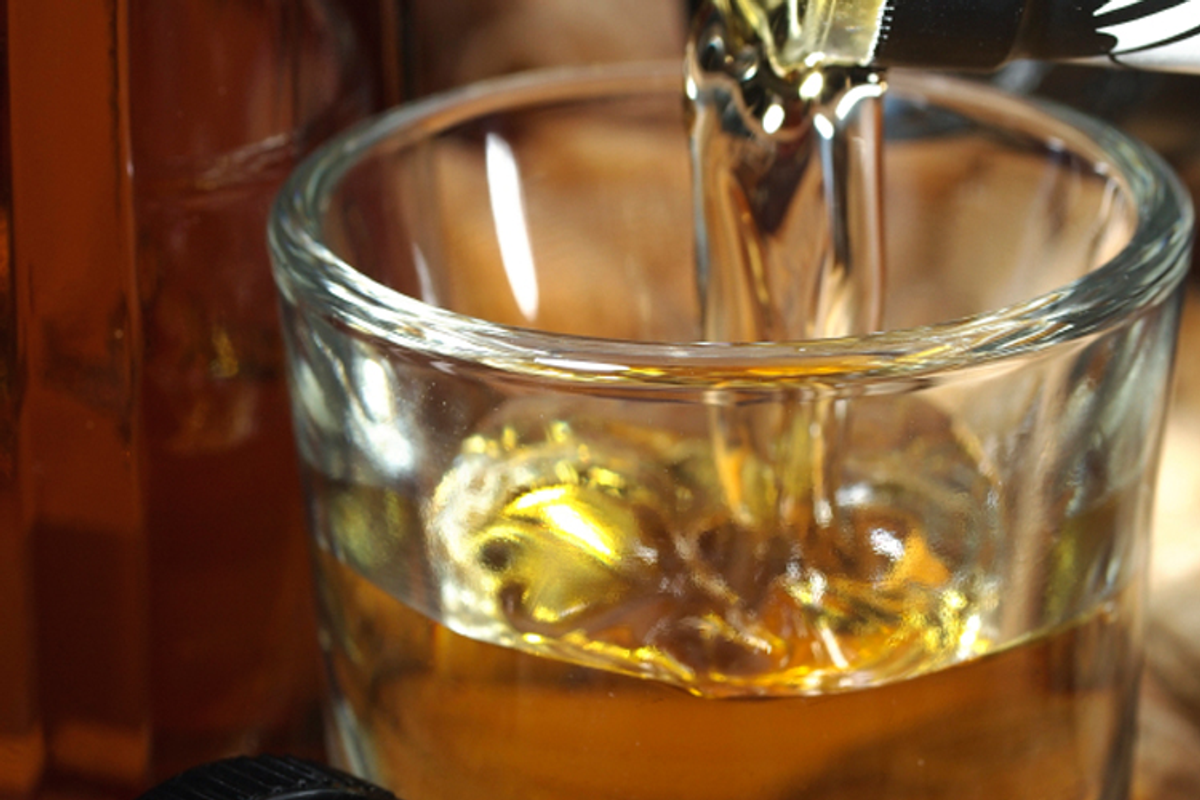
The best tequila I ever drank came to me in a plastic jug. I was young, 20 maybe, with a decidedly unrefined palate. I certainly didn’t think twice about drinking from the unmarked plastic jug that our friend Danny proffered to me. Hey, it was alcohol, right? But even with my unrefined tastes, the second that tequila touched my lips I understood it was something special. It was so smooth, limes would have been an insult.

Danny was just down from the mountains of Jalisco. The jug came straight from a little distillery in the town of Tequila, Jalisco, which sits on a hill above rolling fields of agave — the domain of the ancient Cuervo and Sauza families, and home to hundreds of better distilleries. As Cinco de Mayo draws near, our thoughts drift to this tequila Valhalla and it seems an appropriate time to spill some ink on the drink beloved to sophisticates and sorority girls alike. 

Tequila and her living ancestor mezcal are made from the hearts of the agave plant. If you drive through the Tequila region, row upon row of agaves flash by, like giant half-buried pineapples or colonies of sea anemones. Despite its sharp thorns and blue-green hue, the agave is closer in kin to the lily than the cactus. One hundred and six varieties of agave, or maguey, grow in Mexico, and the Mexican devotion to the plant is rooted in ancient history. The Olmecs referred to fermented agave as “a delight for the gods and priests,” and the Aztecs worshiped Mayahuel, goddess of maguey, who was followed everywhere by a cohort of 400 drunken rabbits. Her husband Patecatl was the god of pulque, a slimy yet highly nutritious drink with the alcohol content of a domestic American beer.

Essentially, the story of how tequila came to be is the story of how Mexico came to be. An Indio idea married to Spanish ambition, influenced by the East, popular in the West. It’s a story of highs and lows that shift depending on your perspective: Aztecs fermenting ague miel scooped from the hearts of agave, Don Cenobio Sauza defending his agave plantation against bandit attack, Frida Kahlo with her perfume bottle flask, Cuervo and Sauza bought out by international corporations, Señor Frog’s on a spring break Saturday night.

The Spanish initially built primitive mud stills to make agave wine, but if you nose around into the history of Tequila, you discover that distilled agave nectar didn’t really catch on until after 1565, when the Spanish government opened a trade route between Manila and Mexico. Spain’s real goal was to transport goods from its nascent colony in the Philippines back to the crown, and to that end Spanish officials devised a laborious route: ship from Manila to Acapulco, unload, cross Mexico by pack mule and ship out again at Veracruz to sail for Spain. Easier said than done. The route meant carving a mule trail through the jagged sierra (this became the famous Camino Real), as well as building immense galleons. (Incidentally, the galleons were built in Barra de Navidad, not far from where I drank the exemplary plastic jug of tequila.) When the flagship finally set sail from Barra de Navidad, this “China galleon” was the largest seafaring vessel of its time in the world. Their mission was perilous: carry a load of Mexican silver to the Philippines, trade the silver for luxury items from China, and then embark on the horrendous (three-month) return route to Mexico. Naturally, pirates took notice; over the years, the fleet drew fire from English and Dutch privateers, including Sir Frances Drake.

When China galleons docked at Acapulco, crews of Filipino sailors unloaded porcelain, silk, ivory, spices and lacquerware. The potters of the Mexican city of Puebla would take inspiration from the blue-and-white beauty of Chinese porcelain, Mexican jewelers would work the patterns in Chinese silk into their fine gold and silver filigree, and the Filipino sailors would change the culture of Mexico forever by bringing mangos, coconuts and portable stills.

The Filipino sailors who jumped ship to settle on the coast of Mexico hobnobbed with the common folk, sharing their delicious coconut brandy and its source — nifty portable stills. News traveled fast — all the way to the mountains of Nayarit, where it seems the Huichol Indians copied Filipino technology. They weren’t the only ones. Short on coconuts, inland Mexicans got creative with ingredients at hand. Agave, that mainstay of Mexican culture, was an obvious choice. With its smoky potency and lyrical burn, distilled agave wine was a hit. Within years, mezcal production boomed in the prime agave growing region in the mountains of Jalisco, and tavernas (taverns) sprang up to sell cuernitos (horns) of mezcal to the masses. In 1600, the Marquis of Altamira built the first big distillery near the town of Tequila in New Galicia (later Jalisco).

The 18th century saw the rise of Tequila’s Cuervo clan. The family started with a small taverna, but by 1880 residents of nearby Guadalajara were downing 10,000 barrels of Cuervo tequila a year. In 1891, the portly Francophile dictator Porfirio Diaz displayed his questionable taste by awarding Cuervo a gold medal for the excellence of its tequila. (Though to Diaz’s credit, this was a long time ago. It’s possible that Jose Cuervo was actually good back then.)

During the first 200 years of our story, the line between mezcal and tequila was blurry. In the beginning, the name tequila mezcal was applied to mezcal grown in the Tequila region, but as time passed tequila became a beverage unto itself, distinguished by location (Jalisco and a few surrounding regions), production (notably, the steaming of the agave hearts) and choice of plant (blue).

Which brings me to Don Cenobio Sauza, who is notable for two accomplishments: He personally defended his agave plantation against a hoard of bandits, and he singled out the blue agave as the variety of agave most suited for tequila production. Though the Mexican government wouldn’t officially define acceptable tequila ingredients until much later on, distillers in the Tequila region followed Sauza’s lead. And as the drink became more refined, its popularity grew. By 1906 8 million gallons of tequila were produced a year in Jalisco, at least according to official figures.

In Mexico, every war has spurred tequila production. Tequila sales rose during the War of Independence from Spain (1810-1821) and undoubtedly cuernitos of tequila were tossed back on May 5, 1862, when Mexicans celebrated the country’s first major victory against Napoleon’s occupying troops. Mexicans really began identifying with tequila during and after the 1910 revolution, which saw the overthrow of Porfirio Diaz and a subsequent surge in national pride. Not only did Mexicans drink more tequila during and after the revolution, but the romantic tales of hard-partying revolutionaries that drifted across the border enhanced the drink’s romantic mystique in the United States. (Ironically, Pancho Villa, a man closely associated with tequila in the popular imagination, disapproved of drinking.)

Although Americans had got their first good dose of tequila during the Mexican-American war (in response, we thoughtfully stole half of Mexico), the beverage really achieved notoriety during Prohibition. The stream of smugglers carrying the precious cargo from Mexico to Texas was so formidable that U.S. troops patrolled the border, seizing wagons of tequila and her cousin sotol. But for every big-time operation, there were a hundred small-time equivalents. For example, in 1920, the El Paso Herald (leeringly) reported :

Maria Munoz, a young and rather pretty Mexican girl was arrested by federal officers Saturday, charged with smuggling liquor which had been concealed in her stocking. The liquor, a quart bottle of tequila, it is alleged was placed in the stocking, which was pinned to her waist and allowed to swing down into spacious bloomers.

Meanwhile, Mexicans drank their way through America’s dry years. Not everyone was happy about the state of affairs. As revolutionary governor of the state of Sonora, Elias Calles made drinking a capital offense. Gov. Calles actually went so far as to order the execution of at least one village drunk, but he was widely ignored by the citizenry. In 1919, the Evening Herald, a newspaper in dry Klamath Falls, Ore., wistfully reported that liquor in Sonora had never been cheaper or more plentiful. Even during the state-mandated destruction of 600 bottles of tequila, which took place in front of the governor’s mansion, locals brought mugs to the ceremony and scooped enough tequila out of the gutters to get “riotously drunk.”

Sometime in the mid-20th century, the margarita was invented, and the Cuervo and Sauza families laughed all the way to the bank. A number of legends exist surrounding the drink, all of them reasonably plausible. One of the more widely spread stories is that Dallas socialite Margarita Sames invented the drink for jet-setting friends at her Acapulco vacation home on Christmas of 1948. But in “The Complete Book of Spirits,” Anthony Dias Blue points out that a 1945 Jose Cuervo ad ran under the tag line: “Margarita: It’s more than just a girl’s name.” I like this tag line. It eliminates a number of contenders from the margarita melee while making an important point. Over the years, the Mexican government has become increasingly protective of the tequila name. In 1974, the Mexican government declared the word “tequila” the intellectual property of Mexico, a move that makes it illegal for other countries to produce or sell anything labeled tequila. In addition to being made in Mexico, tequila must be aged in Mexico. Regulations for categorizing tequila (as silver, reposed, or añejo) are equally stringent. These days the country even has a private sector nonprofit organization called the Consejo Regulador de Tequila, which oversees all aspects of the industry, including monitoring agave growth, protecting peasant laborers, and fostering ancient tequila traditions.

Speaking of tequila traditions, if I can’t have mine from a plastic jug, I fall back on a recipe my friend Annie and I contrived while camped on a Jalisco beach years ago. Under the eaves of our palapa hut, we hit upon the perfect pastime to validate our absolute state of degenerate sloth: We’d write a book of drink recipes. After all, we had plenty of liquor and limes on hand. There was only one glitch. The only measuring device in camp was a half-cup. All the drinks we mixed that winter contained at least 4 ounces of liquor and our margaritas were no exception. Salud!

Note: I like to mix margaritas with a reposado (slightly aged) tequila because a tinge of smoke makes the drink more interesting. I realize the traditional margarita calls for triple sec, but I prefer this stripped-down version.

Margarita Tenacatita (Serves 2)

Ingredients

  • 8 ounces tequila (for a margarita, I recommend Cazadores reposado or Herradura)
  • 3 ounces fresh lime juice (key limes are best)
  • 3 teaspoons of cane sugar
  • Rock salt on a plate
  • Ice

Directions

  1. Before you start squeezing limes, put tequila and sugar in a glass and stir vigorously.
  2. Rub a lime over the rim of your glasses. Salt rims.
  3. Add ice to glasses.
  4. Pour margarita over ice and serve.


Continue Reading Close

Felisa Rogers studied history and nonfiction writing at the Evergreen State College and went on to teach writing to kids for five years. She lives in Oregon’s coast range, where she works as a freelance writer and editor.

Our stubborn faith in aphrodisiacs

Scientists scoff at the idea, so why do we cling to age-old superstitions about sex and food?

  • more
    • All Share Services

Topics: , ,

Our stubborn faith in aphrodisiacs (Credit: Salon)

From the Garden of Eden to the oyster cellar bordellos of old New York, food and sex are entwined. Although every food under the sun has been touted as an aphrodisiac at some point in time, humans tend to get turned on by three categories of food: extremely expensive food, food that is risky to acquire, and food that resembles genitalia.

Rare and exotic foods have favored positions in the canon of culinary aphrodisiacs. Consider the truffle, the piranha and the labor of harvesting a plate full of sparrow tongues. Foods from far-off lands have the spicy whisper of perilous adventure, and there’s nothing quite like a hint of mystery to stimulate the imagination. For example, Aztec concubines taught the conquistadors to drink hot chocolate; when the Spaniards carried the exotic substance across the sea to Europe, they brought with it the rumor that the drink was an aphrodisiac. And during the reign of Charles I, when rice was still a luxury in Europe, noble Casanovas swore by the improbable aphrodisiac of rice boiled in milk and flavored with cinnamon.

As an ingredient becomes common, and thus cheaper, it loses its magic. Case in point: the potato. Your modern Brit is unlikely to find a plate of mashed potatoes sexually stimulating, but potatoes and sweet potatoes were hailed as aphrodisiacs when they were first introduced to the European palate; in Shakespeare’s “The Merry Wives of Windsor,” Falstaff reels off a list of the era’s aphrodisiacs: kissing comfits, snow eryngoes (the candied roots of sea holly), and potatoes. Once rare ingredients such as cinnamon, cloves, marmalade, rice and pepper have likewise lost their sexy status.

The second largest umbrella group of chewable aphrodisiacs is based on the crude logic that if something looks like your nasty bits, it’ll undoubtedly put your prospective partner in the mood. Thus, scheming Lotharios and temptresses have long relied on the amorous offering of edible flowers and roots. In the British Isles, wake robin (Arum maculatum) was once valued as a thickener for puddings, a starch for Elizabethan neck ruffs, and for its phallic bloom, which earned the plant a reputation as an aphrodisiac and spawned over 20 suggestive folk names, including Adam and Eve, lords and ladies, devils and angels, stallions and mares, and dog’s dick. On a similar note, the word “orchid” is derived from the ancient Greek word for testicle. Pliny the Elder recommended bulbous orchid tubers as an aphrodisiac, and the Romans called orchids “satyrion” because legend had it that the phallic roots grew from the spilled semen of a satyr.

The tribes of Mexico preferred not the root but the flower. The Totonoc Indians believed that the orchid Vanilla planifolia sprang from the blood of a goddess, and the Aztecs named it tlilxochitl, or black flower. Vanilla planifolia is an inherently romantic plant: its small blossoms open in the morning and are exclusively pollinated by hummingbirds and melipone bees. The dirty-minded Conquistadors noted the pod’s resemblance to female genitalia, and gave the plant the name vanilla, which derived from the Latin for sheath. Europeans soon prized vanilla as an aphrodisiac; wild stories circulated that vanilla could transform the ordinary man into an astonishing lover. Elizabeth I is said to have been especially fond of vanilla pudding.

Oysters and clams have had a lewd reputation since history’s dawn. The Roman author Juvenal (a nasty misogynist) uses oysters to complete his portrait of a slut partying away the night: “When she knows not one member from another, eats giant oysters at midnight, pours foaming unguents into her unmixed Falernian, and drinks out of perfume-bowls, while the roof spins dizzily round, the table dances, and every light shows double!” In keeping with the Roman talent for using food to call attention to those ultimate aphrodisiacs — wealth and power — emperors and aristocrats turned their noses up at local oysters and sent away to the British Isles for a superior variety. The association between oysters and strumpets would have staying power: As Rebecca Stott points out in her book “Oyster,” “Throughout the seventeenth and eighteenth century, the woman oyster seller was used in poetry as a figure of erotic play, something like the oyster, to be consumed, part of the sensuous fruit of the street for the male urban voyeur.” In 19th century America, underground oyster saloons catered to base instincts — guests could slurp back dozens of oysters while cavorting with good-time girls and prostitutes; some of the seedier joints offered private rooms. A few decades later and a few hundred miles south, scantily clad ladies would shimmy in a popular striptease act called the oyster dance. In the 1940s, Kitty West (a cousin of Elvis Presley) danced on Bourbon street as “Evangeline the Oyster Girl”; to open her act, she stepped with aplomb from a giant half shell.

But food and sex also play an entwined role in more “respectable” culture. If we look at the big picture, we see food at the heart of every human ritual. As Lionel Tiger points out in “The Pursuit of Pleasure”: “The exchange of mates between families was the only process more significant for human evolution than food sharing. But it was also wholly associated with it; the wedding dinner established a circle of implication and meaning.” The Tzteltal Indians of Chiapas, Mexico, take it to the next level: in traditional families, a young married couple lives with the girl’s parents. For the first 15 days of marriage the bride and groom don’t speak to each other or sleep together. Their sole means of communication is through food. Every evening, the wife cooks a meal for her husband. If all is well on the 15th day, the couple will sleep together that night. These people clearly know their foreplay.

Our literary masters have made much of the sensual significance of food. Eve parting her lips for the fruit of knowledge may mark the most infamous sexy food metaphor, but it is by no means the only time food and sex intersect in the Bible. Half the lyric beauty of “Solomon’s Song” stems from food metaphors: “I sat down under his shadow with great delight, and his fruit was sweet to my taste”; “thy plants are an orchard of pomegranates, with pleasant fruits.” Some phrases draw a direct correlation between eating and love: Food is a gift for the beloved, and the space where the lovers meet is made more beautiful by spices and fruit: “He brought me to the banqueting house, and his banner over me was love.” Certain passages hint that food is part of the path to the boudoir: “The mandrakes gives a smell, and at our gates are all manner of pleasant fruits, new and old, which I have laid up for thee, O my beloved.” Mandrake, a poisonous root from the nightshade family, was a popular aphrodisiac during ancient times. “Solomon’s Song” also references other more tasty aphrodisiacs of the day: cinnamon, saffron, figs and pomegranates.

Food scholars and scientists tend to ignore and/or ridicule the idea of a food that functions like Viagra. The Western world’s most popular edible aphrodisiacs, chocolate and oysters, do actually create a sexy hormone rush, but generally only when they are eaten in gross quantities. As food writer Amy Reiley notes, “You’re more likely to go into a diabetic coma than get that rush because you’d have to eat so much chocolate to get the effect.” Revered food historian Alan Davidson sums it up best in “The Oxford Companion to Food”: “In short, the concept of a truly aphrodisiac food is on par with that of finding a crock of gold at the end of a rainbow.”

So why the proffered carrots and the bowl of sparrow’s tongues? Perhaps because our entwined pair, food and sex, is really a threesome: food, sex and superstition. The human libido is both excitable and fragile, easy to titillate yet just as easy to destroy. So much of sexuality is subject to the vagaries of nature and the whim of another, it’s no wonder humans have sought to control the situation by relying on witch doctors, poisonous roots, dubious elixirs and our old fallback, food, a substance that we viscerally know to be the staff of life.

Or maybe we persist in the belief that specific foods can lead to sex because there’s something to it. According to anthropologist Robin Fox, food leads to sex because a male’s ability to provide food plays into the female’s need to reproduce with a mate who will help nurture their young: “a male’s willingness to provide food becomes an important index of his suitability as a mate. Above all, it suggests his willingness to ‘invest’ in the female’s offspring.” No doubt there’s something to it, but we prefer a less clinical explanation: The act of procuring or preparing a special food can be sexy in itself. We associate food with comfort, and cooking is an act of love. By creating or acquiring a special food or beverage for a potential lover, we are creating at least the illusion of love and security, which is generally conducive to sex. In his excellent book “Heat,” Bill Buford convincingly describes the concept of cooking with love: cooking as a singularly intimate act of love one performs for friends, family and lovers. He also writes of cooking to be loved: “The premise of a romantic meal is that by stimulating and satisfying one appetite another will be analogously stimulated as well.” If you’ve ever factored a date’s restaurant choice or cooking skills into your decision to put out, you’ve experienced the aphrodisiacal qualities of food.

Continue Reading Close

Felisa Rogers studied history and nonfiction writing at the Evergreen State College and went on to teach writing to kids for five years. She lives in Oregon’s coast range, where she works as a freelance writer and editor.

Why Americans sing about food

Elvis helped cement a lyrical tradition where food stands in for everything from sex to rural nostalgia

  • more
    • All Share Services

Topics: , ,

Why Americans sing about food

Elvis Presley once said, “Ambition is a dream with a V-8 engine.” At once a gentleman and a rebel, a down-home boy and a global conquistador, the King, who would have celebrated his 77th birthday on Sunday, was a powerful amalgamation of American obsessions. The King loved fast cars. The King loved rock ‘n’ roll. The King loved fried food. And the King knew how to interpret America. Take food, for instance. Elvis was notoriously obsessed with food, and he sang quite a few songs about this favorite topic. But “Crawfish” and “Milk Cow Blues Boogie” say more about our culture than they say about the icon himself. After all, Elvis wasn’t a songwriter: He was drawing from a deep well. American music sizzles with barbecue grease and bubbles like red-eye gravy. Food is a metaphor for all things, from your baby’s biscuits to the King’s caviar.

What does our music say about us? When it comes to food, it says we have dirty minds. For example, Elvis cut “Milk Cow Blues Boogie” in 1955. It was his third record. Several country artists had already recorded the song, which is credited to a bootlegger and bluesman named Kokomo Arnold. “Milk Cow Blues” works perfectly as a blues, country and rock number, which illustrates how much the three types of music have in common when it comes to sentiment:

If you see my milk cow, lord, lord, send her home …
Since my milk cow left me I’ve been treated wrong …
I ain’t had no milk and butter since my cow’s been gone …

The portrayal of women as livestock and sex as butter is pretty typical of the blues tradition, so perhaps it’s not surprising that the lyrics reverberated up through American music over the course of the 20th century: The song has been recorded by everyone from Bob Dylan and the Kinks to Aerosmith, George Strait and Dead Moon.

Elvis funneled the longing, pain, hokey sentimentality and raunchiness of American roots music into the blender of rock ‘n’ roll. He was always frank about his influences; in a 1970 interview, he describes his sound: “It’s a combination of country music and gospel and rhythm and blues all combined. That’s really what it was. As a child I was influenced by all of that.”

Although gospel music soars above the earthly pleasures, food has long been the go-to topic for country and blues lyricists who wanted to spice up their tunes. Bluesmen have a particularly bizarre talent for turning legitimate and seemingly innocent cooking references into raunchy odes to doin’ the nasty. In contrast to later pop songs in which candy, sugar and fruit are the primary metaphors for sex, these old blues tunes are rich in culinary detail, which leads to some incongruous imagery. In “Fried Pie Blues,” Curley Weaver sings: “My baby baked my first biscuits, she baked them nice and brown. Well, it pleased me so well … she bake ‘em with the damper down.” The song encompasses what sounds like a real longing for an actual fried pie, old school cooking strategies that double as sexual metaphors, and steamier sentiments: “My baby she got a mojo; tryin’ to keep it in …”

Over the past hundred years, blues and jazz singers have appropriated every cut of meat for their bawdy purposes. Fats Waller gets frisky with “The Rump Steak Serenade”: “Big, juicy, nice and tender … the rump steak serenade!” Josh White takes it to the next level with “Pigmeat and Whisky Blues”: “I used to like her love, oh that hard pigmeat can’t be beat.”  Not to be outdone, Memphis Minnie addresses her butcher:

I’m going to tell everybody I’ve got the best butcher man in town
He can slice your ham, he can cut it from the fat on down
He slice my porkchops and he grinds my sausage too …

A verse later she saucily demands: “I’ve got enough butcherin’ for you to do if you promise me you just only hush your mouth.” As Savannah Churchill sang with panache, “If you’re a hep cat, you like your meat fat.”

But while food in country music sometimes doubles for sex, it more often represents another American fixation: a longing for lost places. From the first days of the recording industry, record executives and promoters capitalized on town dwellers’ nostalgia for lost rustic roots. Most early country musicians were from the rural South, but it was industry professionals who convinced them to play up their “authenticity” by switching from their Sunday best to hokey down-home outfits: overalls and straw hats for men, gingham dresses for women.

Rootsy names were encouraged, bringing us the Fruit Jar Drinkers, the Possum Hunters and the Skillet Lickers. Naturally, down-home cooking worked its way into the recordings: The Possum Hunters stomped their way through “Ham Beats all Meat,” the Coon Creek Girls wanted to know how many biscuits you could eat, and Uncle Dave Macon growled about keeping his skillet good and greasy. If you can think of a fried food, there’s probably a country song about it.

In old country, blues and jazz tunes, down-home food also evokes hard times. Kokomo Arnold’s “Red Beans and Rice” is about being broke in Chicago and wanting to return to Georgia, a place with an abundance of red beans and rice and mercifully few “mean Chicago women.” These songs have a certain defiance: The lyrics imply that the hard life may be hard, but there’s a badass glory to it. If you want to summarize the rock ‘n’ roll attitude, look no further than Bessie Smith belting Coot Grant’s “Gimme a Pigfoot and a Bottle of Beer”:

I wanna pigfoot and a bottle of beer
Send me ’cause I don’t care
Slay me ’cause I don’t care
Gimme a reefer and a gang o’ gin
Slay me, ’cause I’m in my sin
Slay me ’cause I’m full of gin

Elvis himself was no stranger to hard times. He grew up wearing flour sack shirts, and the family often stretched a pot of beans and corn pone for nights on end. “Poke Salad Annie,” a staple of Elvis’s ’70s shows, describes a family reduced to eating pokeweed:

Some of you all never been down South too much …
I’m gonna tell you a little story, so you’ll understand where I’m talking about
Down there we have a plant that grows out in the woods and the fields,
and it looks something like a turnip green.
Everybody calls it Polk salad. Now that’s Polk salad.
Used to know a girl that lived down there and
she’d go out in the evenings to pick a mess of it …
Carry it home and cook it for supper, ’cause that’s about all they had to eat,
But they did all right.

It’s ironic that Elvis sang this song during the period when he was most removed from his hardscrabble youth: Elvis crooned about poke salad while his belly glittered in jewels and white satin. Yet, the excess of Elvis’ twilight years may well have been a direct result of the poverty of his childhood: Deprivation breeds fascination. You can see it in the King’s infamous fixation on food: Elvis ordered pork chops and gravy at all hours of the night to remind himself both of the comfort of his past (homey Southern favorites) and of his triumph over poverty (his ability to make riches materialize at the snap of his fingers). Oh, and probably also because pork chops are delicious.

As a child of the 1980s, I had an easy time understanding why Michael Jackson was the King of Pop, but I had harder time grasping why Elvis was the King of Rock. Why not Mick or Jimi or Chuck? But as an adult, I get it: In his rise and slow fall, the King mirrored both rock ‘n’ roll and America: from sweaty obscurity to rhinestone-studded excess. You don’t have to be a fan of the 12-bar blues to understand: This story speaks to all Americans. Elvis is King in America because he represents our country to a T: a hip young rebel who ended up overindulged, overprescribed, right wing and paranoid. If Elvis had gone broke, it’d be the perfect analogy. But take heart, America. Old Elvis was still kind of awesome. We’re only obsessed with his decline because he was once so damn beautiful. Maybe we see ourselves in that.

Besides, the King may be dead, but rock ‘n’ roll lives on. Musicians in the post-Elvis era have continued to make the most of food as a metaphor. In 1977, the Dead Boys stripped culinary sexual innuendo down to a brutal scream:

Look at me that way, bitch
Your face is gonna getta punch
I said I don’t need no cook girl
I need lunch!

Southern Culture on the Skids snacked all night on her “eight piece box” of fried chicken, and the Presidents of the United States of America reprised the country music tradition of using food to comment on the superiority of rural life. Other artists have used food to tackle U.S. history head-on: See John Mellencamp’s bizarre decision to write a song about Native American genocide that somehow boils down to deciding between “Hotdogs and Hamburgers.” It doesn’t get much more American than that.

Continue Reading Close

Felisa Rogers studied history and nonfiction writing at the Evergreen State College and went on to teach writing to kids for five years. She lives in Oregon’s coast range, where she works as a freelance writer and editor.

Why we get wasted on New Year’s

Our Dec. 31st hedonism is the last remaining relic of an ancient Roman carnival of debauchery

  • more
    • All Share Services

Topics: , ,

Why we get wasted on New Year'sGuido Reni's "Bacchus"

Soccer balls bulge beneath the men’s polyester skirts and blouses to create exaggerated breasts and derrieres. Their masked faces are resplendent with rouge and eye shadow, wild like plumage. Trumpet, trombone and tuba players garbed in maroon polyester suits play rousing banda, and the men shake their tousled pink and blond wigs. Their dance is a lewd, thrusting affair, accompanied by the glad-handed twirling of tuxedoed dance partners dressed as evil businessmen, who leer at the crowd with sinister rubber masks.

Incongruous on the stately town square of Dolores Hidalgo, Guanajuato, the baile is but one of many unexpected mini-fiestas we’ve encountered as we travel through Mexico during the winter holidays. The grotesque dance is a far cry from the yuletide tableaus we’ve come to expect in the U.S., but perhaps no less bizarre: adult men dressed as women with huge asses versus adult men dressed as “Christmas elves”? Who’s to say? Although I never found out exactly what the dance in Dolores Hidalgo signified, it is likely a holdover from the wild holiday traditions of ancient Europe and Mexico.

Across ancient Europe, the yuletide holidays were a free-for-all, made dicey by role reversals: The poor invaded the homes of the rich, men dressed as women, and the lord bowed to the peasant. The 12 days of Christmas, from Dec. 25 to Jan. 7, were set in the mold of the Roman holiday Saturnalia: The holidays were a period of truce, when old grudges should be forgotten (at least temporarily), and anger swallowed. But despite all this brotherly love, the Christmas season had a sinister playfulness, similar to the original concept of trick-or-treating. Echoing Saturnalia’s public ridicule of society’s laws and customs, rowdy bands of peasants invaded the manor, demanding food and drink. In exchange, the lord received his subjects’ blessings and goodwill for the coming year.

Sometimes revelers brought the booze with them: In the British Isles, wassailing was a popular and alarming part of Christmas and New Year’s Eve. The word “wassail” comes from the Old English “was hal”: “be thou hale” or “be healthy.” The phrase was originally a greeting, but naturally the boozy Brits soon turned it into a toast : “was hale!” followed by the proper reply: “drink hale!” A poem written in 1066 describes a Saxon toast before the Battle of Hastings:

Rejoice and wassail
Pass the bottle and drink healthy
Drink backwards and drink to me
Drink half and drink empty.

By the 17th century wassailing was a holiday tradition. Girls gussied up in holiday finery would carry a dubious alcoholic punch (usually spiced beer with apples) from door to door. The wealthy were expected to drink a toast and offer the wassailers payment in return. Far from the beatific carolers of today, the mobs were known to get unruly: Wassailers would prank or menace householders who refused them booze or money.

British colonists brought wassailing and drunken “trick-or-treating” to the shores of America, where all walks of life adopted the New Year’s Eve traditions. A French visitor to the New York colony was alarmed when the house was accosted at 4 a.m. by a mob of children, servants and slaves who fired a musket and threw stones at the windows. The Frenchman was tired and attempted to ignore the racket, but finally the nature of the situation was explained to him: “Mr. Lynch got up and came into my chamber to tell me that these people certainly meant to do me honor, and get some money from me. I desired him to step down and give them two Louis; he found them already masters of the house and drinking my landlord’s rum. In a quarter of an hour, they went off to visit other streets, and continued their noise till daylight.”

No doubt the Frenchman’s next day was also eclipsed by rum. The Dutch had introduced a more civilized but equally drunken New Year’s Day tradition of open houses, in which city dwellers opened their doors to strangers and friends alike. New Year’s Day tables were laden with cherry bounce, coconut jumbles, rum-soaked doughnuts, honey cakes and fruit in white-wine jellies, and visitors could expect hot toddies, rum punches, eggnogs, peach cordials or sangria. Guests were expected to eat and drink at each stop, which led to great booziness.

At the time, these New Year’s traditions were just a small part of the rowdy American Christmas season, which retained its vaguely sinister European flavor. The two-week season had its abstemious detractors: Puritans railed against Christmastime as a pagan abomination and banned the holidays in their townships. Cotton Mather himself wrote disapprovingly: “”Feast of Christ’s Nativity is spent in Reveling, Dicing, Carding, Masking, and in all Licentious Liberty … by Mad Mirth, by long eating, by hard Drinking, by lewd Gaming, by rude Reveling… ”

Mather no doubt was equally horrified by New Year’s Eve, which always marked an apex of drunken revelry. This is true around the world and throughout time: Although the New Year is celebrated from June to January and from Tallahassee to Timbuktu, almost all cultures have used the passing of one year to the next as an excuse to really party. Take for instance the fine old Sumerian tradition wherein the king had public sex with the high priestess of Ishtar, symbolizing the conception of Ninkasi, the goddess of beer.

In ancient Mexico, the New Year was an exception to draconian Aztec laws. During the rest of the year, only specific sects were allowed to drink: You could hit the pulque (fermented agave pulp) if you were a nobleman, an extremely old person or a pregnant woman; for the young able-bodied commoner, drunkenness was punishable by death. An exception to this code was allowed every fourth New Year for Pilahuana, or “The Drunkenness of Children,” a festival in which godparents adorned young children with parrot down, pierced their ears, and accompanied them to watch their first human sacrifices. Afterward, everyone got wickedly drunk.

In Mexico today, people no longer go in for drunken kids and human sacrifice; a typical New Year’s Eve celebration consists of a late dinner with the family, followed by a midnight Champagne toast, amazing castillo fireworks and partying. Many families still practice the Spanish custom of eating a grape and making a wish for each chime of the countdown to the New Year. Other Mexican New Year’s superstitions include physically sweeping out the old year with a broom and wearing different-colored underwear to bring on various types of luck in the new year: white for good spiritual vibrations, red for luck in love.

The modern Mexican take on celebrating the passing of the old year and the coming of the new is representative of most countries’: a mix of superstitious ritual and heavy drinking. The Japanese say goodbye to the old year in December with “forget the year” drinking parties. The New Year’s holidays, or Oshōgatsu, are more sedate family affairs that reflect the universal belief that actions during the first days of the New Year will influence the coming year: Debts are paid, disputes are settled, and houses are cleaned. Families gather to eat soba noodles for longevity and wealth and  drink taruzake (sake aged in a cedar barrel) and toso, a medicinal sake that is supposed to ward of sickness in the new year. In accordance with an ancient imperial edict that the use of alcohol is prescribed by heaven, Chinese New Year traditions involve a similar mix of ceremonial drinking and eating. Food and alcohol are served to the spiritual guardians of the household, and parties toast with cognac.

In the United States, New Year’s Eve is the only night of the once bacchanalian winter season that still retains its hedonism, with the expected outcome of serious inebriation. When it comes to New Year’s Eve, Americans are short on superstitious traditions and long on drink. In modern America, New Year’s Eve is the drinking holiday (which is saying something when one considers the vast estuaries of beer consumed on the Fourth of July, St. Patrick’s Day and Cinco de Mayo).  But New Year’s Eve is special because it offers a certain carte blanche for stupid behavior. New Year’s Eve is the Las Vegas of American holidays.

Americans were not immune to the worldwide rise of Champagne in the 18th century. During the belle époque, holiday advertisements touted Champagne as the drink for celebrations. By the 20th century, a New Year’s toast was hardly complete without Champagne. Washington socialite Mrs. Evalyn Walsh McLean took things to the next level with her 1937 New Year’s Eve party, where guests consumed 480 quarts of Champagne.

Champagne was queen, but in true American fashion, ethnic enclaves added their own flavor to the party. A guest celebrating New Year’s Eve 1939 with Cuban friends recorded: “We spend several hours in a small café, eating Cuban sandwiches and mixing Cuba Libres with Ronrico and Coca-Cola. There is a jook-organ which offers a selection of eight records of Cuban music, and two records of American music. There are couples present who dance the rhumba again and again. Estrella and Pedro dance the rhumba also. Apparently they are both enjoying themselves.” If the guest had wandered a few buildings down, he might have found Austrians eating marzipan pigs and toasting with Feuerzangenbowle (aka “flaming fire tongs punch”). Scottish immigrants brought Dundee cake, black buns and Hogmanay punch (apple cider and whisky) to the table. African-Americans prepared lucky New Year’s Day dishes such as black-eyed peas and collard greens, but eventually fell prey to the Champagne dream. A 1983 issue of Black Enterprise magazine recommends pairing Champagne with soul food, stating:  “Only Champagne can reign like royalty over gala affairs and celebrations. Only Champagne can take ritual holidays and refashion them into moments of pure joy.”

Although it’s debatable that Champagne is a necessary ingredient for moments of pure joy, one thing is certain: New Year’s Eve offers a rare excuse to engage in the sort of carousing that we once viewed as a significant and inalienable yuletide right. Drink hale!

Continue Reading Close

Felisa Rogers studied history and nonfiction writing at the Evergreen State College and went on to teach writing to kids for five years. She lives in Oregon’s coast range, where she works as a freelance writer and editor.

The birth of America’s bastardized cuisine

Since that mythic first Thanksgiving, we've relied on native plants to augment dishes from the old country

  • more
    • All Share Services

Topics: , ,

The birth of America's bastardized cuisine Jean Leon Gerome Ferris' "The First Thanksgiving 1621" (Credit: Library of Congress)

America is a country originally settled by scoundrels and religious zealots — thieves, embezzlers, prostitutes, arsonists; English Puritans, French Huguenots, German Amish, Czech Moravians and Russian Mennonites. The screwed-over Scotch-Irish, the shanghaied London street punk, the peace-loving, slave-owning Quaker, the enslaved Gullah. It is also the native land of the Ojibwa, the Zuni, the Makah, the Miwok and the Seneca. This alchemy of sinner and saint, “savage” and sophisticate is the source of our original cuisine: a stolen, borrowed, distorted culinaria that can pique the tongue, clog the arteries, fire the belly, or mellow the soul.

In keeping with American tendencies, Thanksgiving is a bastard holiday, cobbled together from homegrown traditions and the hokey imaginings of 19th century writers, along with actual historical facts. The facts are thus: The “first American Thanksgiving” was probably observed in the South, not at Plymouth, and it would have been a day devoted to prayer, not pie. As for the famous Plymouth pilgrims? The settlers that staggered off the Mayflower to strike up a miserable township on the rocky shore did not call themselves pilgrims. At the time, they were known by cagier names: separatists (religious idealists) and strangers (various dreamy and desperate characters the separatists had recruited in order to swell their meager ranks and coffers). The settlers wore colorful clothing and did not favor buckles, though they did sport the tall broad-brimmed hats, which you may remember from your elementary school days.

The old schoolbook story is true: Tisquantum (or Squanto) taught the Plymouth settlers how to grow corn. The tale is iconic because it illustrates how native plants and Native American traditions were instrumental in the forging of American identity. From Cape Cod to Cape Perpetua, native plants were instrumental not only in the survival and health of the settlers, but in the creation of a uniquely American cuisine that is one of the least revolting results of European conquest.

Tisquantum was a handsome man and a talker; the turn of events in his life had given him many opportunities to hone his silver tongue. Six years before he had been kidnapped by Thomas Hunt, a lieutenant of Captain John Smith (more famous for his dalliance with Pocahontas). Hunt sailed for Spain to sell his captives into slavery. Catholic priests of an anti-slavery bent intervened, and Tisquantum escaped to England, where he learned to speak English. He talked his way onto a fishing boat bound for Newfoundland. The trip was more roundabout than he intended and required a good deal of fast-talking. When Tisquantum finally arrived home, his struggles must have seemed all in vain: He stepped ashore to discover the aftermath of European-borne plague. The bones of his friends lay scattered in the sun, and his home village, Patuxet, overtaken by the creeping detritus of the forest.

Tisquantum was later captured by Massasoit, a leader of the Wampanoags, the confederation of tattered tribes that lived in the forests surrounding Plymouth. Massasoit was in need of an interpreter, and once again Tisquantum’s talking skills came in handy. Over shots of separatist moonshine, he negotiated a testy alliance between Massasoit’s people and the separatist settlers. Massasoit, whose village had been decimated by the plague, saw the alliance as a measure against his ancestral enemies, who might otherwise take advantage of the confederation’s weakened state. The settlers, who had lost half their population to scurvy and starvation during that first brutal winter, also saw the alliance as a means of survival. They, at least, were correct.

With Tisquantum’s help, the settlers were able to put in stores for the next winter. That following autumn Edward Wilson would write, “We set last spring some twenty acres of Indian corn, and sowed some six acres of barley and peas; and according to the manner of the Indians, we manured our ground with herrings, or rather shads … Our corn did prove well; and, God be praised, we had a good increase of Indian corn …” In the same letter he describes the celebratory feast that would become the basis for our modern concept of Thanksgiving: the settlers provided fowl and Massasoit’s people brought five deer.

Despite that feast’s later relevance to American culture, at the time the settlers did not seem to ascribe it much importance. As far as we know, they did not call it Thanksgiving or commemorate the feast in years to come. To the Native Americans, separatists and strangers involved in the feast, it was probably just that: a good meal. Regardless, the three-day festival in 1621 is emblematic of the birth of American cuisine. From cornmeal mush to maple syrup, this cuisine reflects not only the bounty of American plains, prairies and forests, but also the ingenuity of Native cooks, whose culinaria incorporated roasted and stewed meats, steamed or boiled vegetables, baked or fried cakes and breads, and dressings of fat, nuts, oils and seasonings.

Native farming was equally refined. America’s people had been cultivating maize for thousands of years. Kernels were passed from culture to culture, and the plant was revered as the staff of life. The Maya worshiped a maize god, a beautiful young man who grew from the corn foliage; in his honor, Maya nobles performed ritual bloodletting in stone temples decorated with corn. The Seneca goddess of maize delivered ears of corn from her breasts. In Zuni mythology, corn appears as a cadre of seven sexy maidens who each represent a type of corn: blue, red, white, speckled, black, and the youngest sister, sweet corn.

With the pantheon came an equally enticing assortment of food. The Maya steamed tamales and grilled tortillas over blazing comals; the Navajo mixed a pinch of cedar ash with corn meal and pit-baked corn cakes; the Hopi seared blue corn flat bread on griddles slick with sunflower seed oil. Settlers would adopt and adapt these culinary techniques as they forged across America’s grasslands, woods and deserts to settle in her hamlets and hollows. Their corn-based innovations include buttery cornbread, spoon bread, fried cornmeal mush with maple syrup, and bourbon.

In modern Mexico, every facet of culture reflects Native influence. In one version of the story, the Aztecs and the Zapotec and the Hauxtec were thoroughly subjugated, but you still see their folkways and bloodlines reflected in mainstream Mexico: from the color of skin to the tortilla on the table. In the United States, your typical citizen doesn’t look down at his or her own skin and get a reminder of the legacy of European/Native American interaction. We don’t dwell among the tangible ruins of lost civilizations. To most of us, the story of interaction between settlers and natives is a bloody story with a sad ending: the once proud bands vanished like ghosts; survivors stripped of their land and language and funneled into reservation schools where they were taught to forget everything they knew. The blood shed obscures another story: in the beginning, settlers observed and absorbed the survival tactics of the American Indians. Our original culture is more Native than we remember, and our cuisine mirrors this other story.

Native residents of New England taught settlers which beans were well adapted to the land’s climate; colonists copied native recipes for life-sustaining bean and corn stews. As settlers moved west, they learned to gather wild rice like the Ojibwa. They picked up the Ojibwa and Iroquois habit of tapping the maple tree in springtime. They copied the Menomoni practice of sweetening the bitter fruit of another native shrub that grew in bogs and hollows. Settlers called the shrub “craneberry” because its white blossoms looked like tiny cranes. The first American cookbook, “American Cookery,” recommends that cranberry sauce be served with Turkey.

Pumpkin pie didn’t grace the table at the “first Thanksgiving,” but pumpkins were certainly a staple food in the Americas. Native Americans ate pumpkin dried, stewed, baked and roasted. In the Great Lakes area, tribal cooks roasted pumpkins stuffed with wild rice, rendered fat, venison and buffalo. In New England, colonists took a cue from the locals and figured out ways to sneak the hardy squash into every meal of the day: settlers consumed pumpkin pancakes, pumpkin flower blossom sandwiches, pumpkin cornbread, pumpkin soups, and, inevitably, pumpkin beer. A pumpkin pie recipe appears in the 1796 edition of “American Cookery,” though in the early days settlers were more likely to bake a whole pumpkin, hollowed and filled with sweetened milk and spices.

In the South, colonists would rely on the big three of Native cooking: corn, beans and squash, as well as more obscure ingredients: possum grapes, poke and the paw paw. On the big plantations, African cooks fused Native American ingredients and African techniques and ingredients to invent a rich culinaria that, in its greasy and imaginative glory, is a direct result of both the cruelty and the eternal promise of America.

In Lousiana’s bayou country the Choctaw powdered native sassafras leaves to create a flavorful thickening agent, which became the filé powder in the sacred canon of gumbo ingredients. (Hence the Hank Williams song “Jambalaya (On the Bayou)”: “Jambalaya and a crawfish pie and a filé gumbo.”) In addition to appreciating the culinary properties of the plant, natives and settlers used sassafras root as a medicine. As the excellent and largely forgotten J.C. Furnas notes in “The Americans”: “The first homeward-bound cargo out of Jamestown consisted of clapboard riven from American logs … and of the pungent wood or roots of the sassafras tree, then highly valued in medicine on the principle that whatever smells queer (if seldom as pleasantly as sassafras) is probably good for what ails you.” Sassafras would still be a popular home remedy 200 years later; in a 1866 guide to home health, sassafras appears as an ingredient in tonics invented to cure “inward hurts and ulcers,” “dropsy,” “rheumatism in the loins,” “white swelling,” as well as consumption, ague and scrofula.

Sassafras was a common remedy among Appalachians. As an old-timer put it: “That mountain is like a drugstore. You don’t have to have money, you just need a little bit of knowledge.” Peppermint tea was sipped for upset stomachs; goldenseal for sore throats or ulcers; and clover tea “just for enjoyment.” Settlers learned plant lore from the Appalachian natives, who made poultices of poke, and dined on pigweed, spring beauty and fiddleheads. In the spring, families took to the woods to gather ramps; the pungent wild onions offered a welcome change of pace from the winter’s starchy diet. In the sonorous and wild hills, native ingredients and culinary techniques of varied immigrant traditions fused, giving forth regional delicacies such as eggs scrambled with poke weed, cornbread gravy and, of course, moonshine.

When settlers finally reached the immense, rain-drenched forests of the Pacific Northwest, they discovered a culinaria built upon salmon, and supplemented with wild plants such as fiddleheads, salal and camas. Like their Appalachian counterparts, settlers learned the Native sources of springtime vitamin C: salmonberry shoots and the delicate stalks of the thimbleberry bush.

Two hundred years later, many of our essential American food and beverage traditions still stem from American plants, though the manifestation may be twisted beyond recognition. Take, for example, cream of tomato soup, the corn dog, the corn flake, the French fry and the Manhattan. Despite the potential presence of Sara Lee pies and boxed stuffing, our Thanksgiving table still represents the bounty of our once wild land: pumpkin pie by way of Central America, mashed potatoes by way of South America, and of course, those satisfying slices of gelatinous cranberry sauce. Tradition never tasted so sweet.

Continue Reading Close

Felisa Rogers studied history and nonfiction writing at the Evergreen State College and went on to teach writing to kids for five years. She lives in Oregon’s coast range, where she works as a freelance writer and editor.

The twisted history of candy

From the tragedies of the slave trade to the glitz of the Jazz Age, the story of these sugary treats echoes our own

  • more
    • All Share Services

Topics: , ,

The twisted history of candy (Credit: carbonated / CC BY 3.0/iStockphoto/lisafx)

As frost bites the air and plastic Halloween bunting unfurls in suburban yards, our thoughts turn to the simple delights of candy: the pastel snap of Necco wafers, the dubious rattle of a box of Good & Plenty. Half the candies we ate as kids weren’t actually good. Even at the time we suspected as much. But candy offered an undeniable pleasure: It was fantastic, it was unreasonable, it came in colors and shapes unrelated to actual food. And on Halloween, it was free.

Although tricks and treats have been part of Halloween tradition for ages, October 31st didn’t become a candy-centric holiday until the 1950s, when aggressive marketing campaigns began to tell Americans a different story about All Hallows’ Eve. And naturally, the story was about candy. Perhaps this is appropriate. Our larger story as a people is, in a sense, a story of candy.

Leafing through the wrappers of forgotten candy bars, you see a gaudy reflection of our past. Ghostly faces stare back: The silent film star Clara Bow graced the “It” bar, the Gypsy bar honored burlesque dancer Gypsy Rose Lee. Eager to capitalize on the glitz of the Jazz Age, candy manufacturers churned out the Charleston Chew, the Black Bottom, Red Hot Liza, Big Dick, Jazz Hound and the Sloppy Sally. We asked candy expert Dr. Samira Kawash for her take on these names. “In the years between the world wars, there were real tensions and conflicts about the changes in sexual norms and the changes in propriety and manners … There were so many candy bars coming out [in the 1920s] that the candy makers really were striving in the most innovative and creative ways to catch attention — like naming candy bars after lewd dances and strippers. Just like today, sex sells.”

But it wasn’t all strippers and jazz hounds. Candy advertising has always played on the double gamut of human desire: Marketers have sold candy as a sinful indulgence while simultaneously touting it as a bona fide food, a healthy snack and even a diet aid. Candy bars like the Chicken Dinner and the Denver Sandwich were the 1920s precursors to our modern “breakfast bars”: by evoking an association with food, advertisers grant us guiltless pleasures.

In World War II, American soldiers carried D ration, one of the few packaged snacks in history that tasted vile by design not accident. Captain Paul Logan of the U.S. Quartermaster’s office explained his requirements to Hershey representatives: “a bar weighing about four ounces, able to withstand high temperatures, high in food energy value, and tasting just a little better than a boiled potato.” It sounds sadistic, but Logan had the G.I.’s survival in mind: He assumed that if the chocolate tasted too good, it wouldn’t still be around when the actual emergency hit.

Ad agencies were quick to capitalize on military-mandated candy rations. A 1941 advertisement for Dextrose corn syrup claims: “Today people realize that candy is more than a confection. It is a veritable bulwark against between-meal fatigue. Even doctors consider candy a desirable requirement of the daily diet. It is a specified item of military rations.”

Although the Draper-esque characters who penned these ads may have been stretching the American imagination, human evolution was working in their favor. As evolutionary biologist Jason Cryan points out, “The evolutionary explanation for the sweet tooth revolved around that idea that we have physiologically associated a sweet taste with high-energy foods which would have helped our earliest ancestors survive better in their environment … if an individual has to spend time and effort foraging for food, it’s better to obtain energy-dense food items than energy-poor food items.”

And by 1941, candy had been selling as medicine and dietary supplement for over a thousand years. Ancient Indians developed special confections to feed to new mothers and invalids. In the seventh century, Persian monks learned to refine raw sugar by boiling it with lime water and bullock’s blood; they used the resulting sugar loaves as a base for developing new medicines. When the Arabs invaded Persia, they developed a taste for candy and sweet Persian remedies; to that end, they turned Sicily and Spain into sugar production centers. Enthusiasm for candy-based medicine spread across the continent — in the Middle Ages, wealthy Europeans ate confections of spices and sugar to aid digestion. In Britain, candy was touted as a cure for the common cold: Sugar was sold in twisted sticks, flavored with oil of wintergreen.

Then, as now, the sales pitch went both ways: Candy was hawked as either a health supplement or an indulgence. But whether lozenge or lollipop, up until the 19th century candy conveyed status: Sugar was expensive. Arab texts from the 13th and 14th centuries describe sugary treats as a focal point at the most elegant banquets. European kings and queens employed court confectioners to spin fantastic sugar sculptures.

Queen Isabella of Castile, as it happens, was particularly fond of sweets. The queen’s apothecary mixed her sweet cordials and kept her tables stocked with sweetmeats. When Isabella sought the perfect Christmas present for her daughters, she settled on a truly sumptuous item: a little box brimming with sugar. Perhaps it’s fitting that Isabella’s minion Christopher Columbus would lay the groundwork for the American sugar dynasties: On his second voyage of discovery, Columbus transported sugarcane cuttings from the Canary Islands to the Caribbean Island of Hispaniola. And so began one of the darkest chapters of our history.

In “Rum: A Social and Sociable History,” Ian Williams notes that sugarcane needs plenty of sunshine and water to grow. He adds that “the intensive labor needed to cut, cart, and process the cane under a broiling tropical sun has never appealed to people with other career options.” African slavery was a direct result of the world’s lust for sweets and rum. This desire created brutal places, redolent with burning sugar and blood. These small plantation fiefdoms were isolated, and enslaved Africans dramatically outnumbered planters, who relied heavily on fear as a method of control. The typical workday stretched from sweltering dawn till sweaty dusk; the typical workplace was a scorching sugar mill or a snake-infested cane field. After surviving the deadly voyage to a Caribbean sugar kingdom, an enslaved African could expect to live about seven years.

Abolitionists began calling for a sugar boycott. In 1788, the British abolitionist William Cowper condemned the sugar trade in his poem, “The Negro’s Complaint”:

Why did all-creating Nature
Make the plant for which we toil?
Sighs must fan it, Tears must water,
Sweat of ours must dress the soil.
Think ye Masters, iron-hearted,
Lolling at your jovial Boards,
Think how many Backs have smarted
For the Sweets your Cane affords!

Fifty years later, such doggerel would help spark the American Civil War, which, ironically, led to a decrease in sugar prices and a subsequent increase in candy consumption. The demand for candy triggered an explosion of new varieties: Hershey’s kisses, Goo Goo Clusters, Mary Janes, King Tut, Subway Sadie, Snow Cup, the Snirkle, the Squirrel Nut Zipper, and the unfortunately named Daddy Sucker (later changed to the Sugar Daddy). According to the late candy historian Ray Broekel, around 30,000 varieties of candy bar were introduced to American in the first three decades of the 20th century.

Although it’s difficult to imagine a workplace more terrifying than the sugar plantations of the slave era, early American candy factories were no cakewalk. The candy giants (Nestle, Lindt and Hershey) pioneered innovations in candy processing that spawned an industry characterized by low wages and questionable sanitation.

In the first decades of industrial production, candy workers were generally young women, immigrants or the children of immigrants. In 1913, a teenage candy worker confided to a Chicago journalist: “Do you know … I laugh whenever I see a sign in a street car telling a man to show his girl how much he loves her by buying a box of somebody’s candy. It is like killing beautiful birds so women can wear aigrettes in their hats. If they only knew about candy making in factories, they would make their own candy at home or do without it.”

Even candy manufacturers conceded that the industry had its unsavory side. “The less the public knows about candy making, the better,” the manager of a large candy factory told a representative of the Consumers’ League of New York. The results of the league’s 1928 survey of candy factories backed this assertion: Temperature in factories hovered around 45 degrees, and 14-hour days were common. The investigator was appalled by the sanitary conditions in some factories: “Floors and stairs were coated with sugar and fallen candy; machinery and worktables were apparently never scrubbed; the odor of rancid chocolate permeated the atmosphere.” Of the industries that employed women, candy offered the lowest wages. And things were going downhill for the worker: Even in 1928, larger corporations were squeezing or buying out smaller competitors. The report concluded: “Working conditions have deteriorated with corporation control and quantity production. In one factory, a decrease in the beginning wage, from $14 to $12 (a week) took place.”

When we asked Steve Almond, author of the excellent “Candy-freak: A Journey through the Chocolate Underbelly of America,” about conditions today, he put it this way: “In the popular imagination, it’s all Willy Wonka, pure imagination and childish enchantment. But up close, it’s pure Darwinian capitalism.” That said, “Candy-freak” emphasizes both the dark and the light side of candy: a product that spawns both tooth decay and pure delight, an industry ruled by corporate behemoths, yet home to the rare small factory that offers workers a sense of pride and family. During his research, Almond toured the few old school American candy factories that haven’t been swallowed by the big three (Hershey, Mars and Nestle). He describes Russ Sifers of Valomilk and Dave Wagers of Idaho Candy Company (makers of the Idaho Spud as regional producers who struggle valiantly to keep afloat in a world where supermarket chains demand $25,000 slotting fees to even stock a product. These last scions of the old school are notable for their dedication to original recipes and packaging, for their genuine love of candy, and for their sense of responsibility to the nostalgic candy-freaks of the world. As Sifers himself notes: “We make Valomilks, not money.” Which reminds us: despite sugar’s sordid history, there’s a certain beauty to candy for candy’s sake alone.

Continue Reading Close

Felisa Rogers studied history and nonfiction writing at the Evergreen State College and went on to teach writing to kids for five years. She lives in Oregon’s coast range, where she works as a freelance writer and editor.

Page 1 of 4 in Eatymology