Documentaries
Robert F. Kennedy Jr. fights to save “The Last Mountain”
In an inspiring (and depressing) documentary, the crusading eco-lawyer takes on Big Coal in its backyard
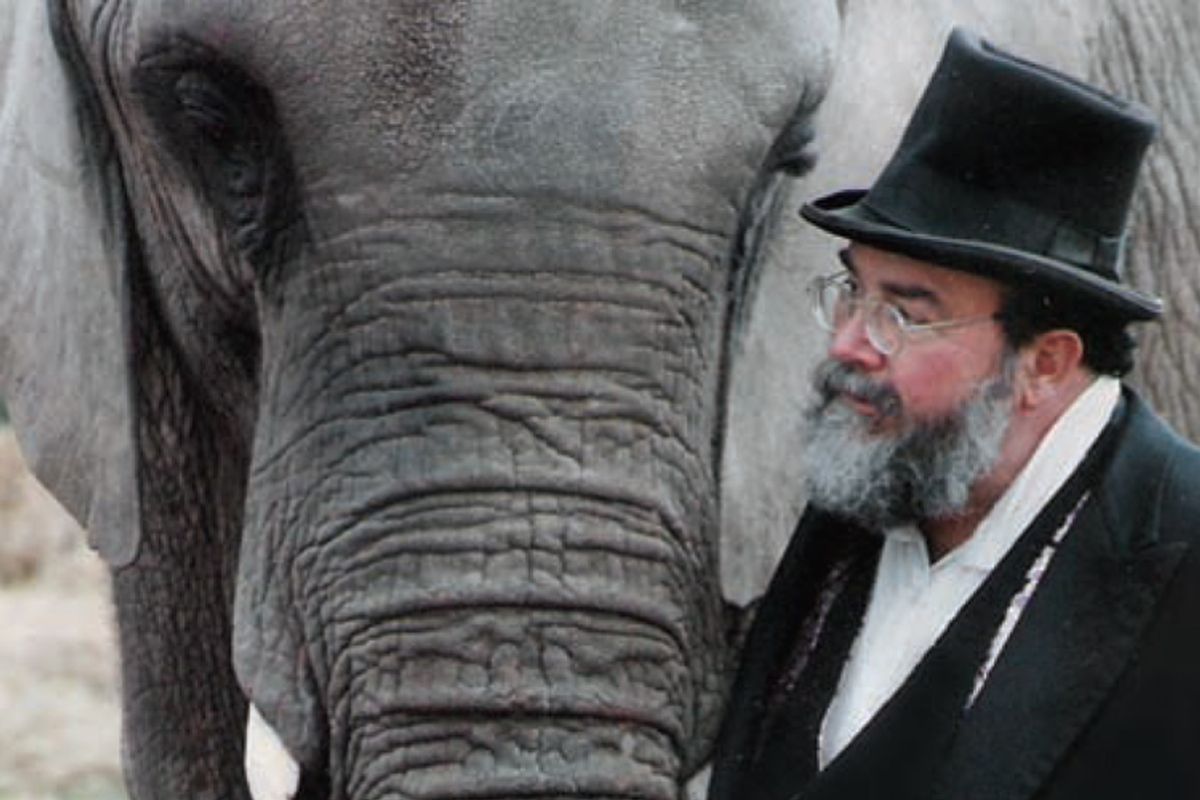
Brother Joseph Byron and Robert F Kennedy, Jr. in "The Last Mountain"
Before we get to Robert F. Kennedy Jr. and coal mining in West Virginia and the documentary “The Last Mountain,” let me take a minute to congratulate my generation for having been sanctimonious about the environment for 20 years or so while allowing the whole situation to get a lot worse all across the board. Great work, everybody! Let’s give ourselves a hand.
OK, that’s an obnoxious way to frame it, it’s a lot more complicated than that, etc. Some people, including Bobby Kennedy Jr., the crusading environmental lawyer with the famous name, have been plugging away at these issues without stopping. We’ve got one major political party whose official position is that science does not exist and that humans were teleported from the moon by the great Sky Demon in the year 4004 B.C. — and while we were dazzled by their apparent idiocy they rewrote the Constitution such that corporations are not just people but gods, and the rest of us are their slaves. I’m pretty much not kidding about that part. One of the effects of director Bill Haney’s “The Last Mountain,” a skillful and highly compelling enviro-documentary of the kind that’s meant first to outrage and then to energize you around a particular crisis, is that it makes clear how devastating the medium-term results of the Bush-Cheney regime have been — and that, far from being zealots or nincompoops, those people understood exactly what they were doing.
“The Last Mountain” is mostly about the carnage and destruction inflicted on rural Appalachia — West Virginia, but also neighboring states like Ohio and Kentucky — by the relatively recent coal-mining method known as “mountaintop removal,” which for once is not a euphemism. Within that, it’s about the Coal River Valley, a formerly bucolic, mineral-rich region in south central West Virginia where Massey Energy and other companies have already blasted several mountains to rubble, in order to fuel coal-fired electrical plants across the country. Water quality, air quality and overall quality of life in the Coal River Valley have already been destroyed (by some estimates, the explosive power of the Hiroshima bomb is deployed in the region every week) but one last mountain still stands in near-pristine condition, and Kennedy and other activists have seized on it as a tangible symbol.
Of course it’s more than a symbol to people like Maria Gunnoe, a Boone County, W. Va., native who won the 2009 Goldman Prize for leading the fight against mountaintop-removal in the Appalachians, and who lives in a homestead just below the endangered Coal River Mountain. But even with an environmental superstar like Kennedy on their side — is it OK for me to say that he’s a gravel-voiced and altogether peculiar screen presence, both inspiring and a little off-putting? — Gunnoe and her friends are facing a political system dominated by “legalized bribery” (Kennedy’s description of campaign finance) and regulatory agencies that over the past 30 years have alternately been stripped to the bone or turned into shameless toadies of the industries they’re supposed to police.
I assume that “The Last Mountain” is not meant to depress the crap out of us by demonstrating that such abstractions as ordinary citizens and the law and our responsibility to future generations mean absolutely nothing when there’s a buck to be made in destroying the wilderness for some cheap coal. Certainly the film’s portrait of embattled rural residents banding together to fight against the thoroughly poisonous coal empire is inspiring, and it’s high time the rest of us joined them. Coal is pretty much the fast food of energy solutions — by far the cheapest in the short run, and the most toxic and destructive over time. I left the movie convinced that we have to break our addiction to coal-generated electricity before it’s too late, but not at all convinced that our soul-gnawed, endlessly distracted nation possesses the strength of character or political will to do so.
“The Last Mountain” is now playing at the Sunshine Cinema in New York and the E Street Cinema in Washington. It opens June 9 in Nashville; June 15 in Los Angeles; June 17 in Philadelphia and San Francisco; June 24 in Boston and Chicago; July 8 in Atlanta, Denver, Minneapolis, Portland, Ore., Seattle and Austin, Texas; and July 22 in Charlotte, N.C., Knoxville, Tenn., Pittsburgh and Toronto, with more cities to be announced.
Male grooming: The movie
From beard contests to ball cream, Morgan Spurlock's "Mansome" goofs through modern-day male narcissism
Jack Passion in "Mansome" American men are bewildered about their place in the cosmos, or so we have been told repeatedly over the last 20 years. They don’t know whether to thread their eyebrows or wield a welding torch, and end up trying to do both at once (which is inadvisable). As comedian Adam Carolla laments in a scene from Morgan Spurlock’s documentary “Mansome,” the old-time certainties of gender identity have melted away: Women are flying fighter jets and men work at the hair salon; there are no longer “chick jobs and guy jobs.”
Continue Reading CloseGorgeous saga, global crisis
"Last Call at the Oasis" paints a haunting, even poetic, portrait of the global water crisis. Will anyone listen?
Here’s the short version of humanity’s relationship with water, as delivered by hydrologist Jay Famiglietti in Jessica Yu’s compelling and often gorgeous documentary “Last Call at the Oasis”: “We’re screwed.” Yes, we should all install low-flush toilets and plant gardens that require less watering, but conservation is simply insufficient to cope with a global fresh-water crisis that involves many interlocking factors: overpopulation and overdevelopment, depletion of groundwater, climate change, and widespread contamination.
Continue Reading ClosePick of the week: An early-’60s hipster time capsule
Pick of the week: Shirley Clarke's once-banned "The Connection" is a lean, mean saga of jazz, junk and rebellion
A time capsule loaded with smack from the bohemian underbelly of JFK-era America, Shirley Clarke’s 1961 film “The Connection” is an illustration of how much things change, and how much they stay the same. I’d be stretching to call “The Connection” a great film — it’s mannered and edgy, in a way that’s partly deliberate but also distinctive to its period — but it’s an important one in cultural and historic terms, despite being largely unknown. Watching this ensemble drama about a multiracial group of New York jazz musicians and beat philosophers in a run-down apartment, waiting for their drug dealer to show up, is like traveling back 50 years in time, only to encounter the same people you might meet on the street today (at least, in certain neighborhoods of Brooklyn, San Francisco, Austin and so on). At one point, the characters even debate the illusory distinctions between “hipsters” and “squares.”
Continue Reading Close“Whores’ Glory”: A riveting, humane prostitution documentary
Pick of the week: The astonishing documentary "Whores' Glory" explores the lives of sex workers around the world
A still from "Whores' Glory" Prostitution isn’t just the world’s oldest profession. It’s also a longtime focus of cultural obsession, across many historical periods and on every continent, from the poetry of Catullus to the woodblock prints of 19th-century Japan. There’s such a long history of male artists, writers and filmmakers who depict prostitution in erotic, romantic and sentimental terms that it’s only natural to approach Austrian documentarian Michael Glawogger’s “Whores’ Glory” with suspicion. Indeed, in the film’s opening scene, Glawogger’s camera directly engages the lurid allure of sex work, showing a group of scantily clad young women in a Bangkok brothel called the Fish Tank as they try to attract clients: Pretending to make out with each other, pressing their breasts and buttocks against the window, using a laser pointer to pick out likely-looking men on the street. But those are just the opening moments of a long journey, a daring, novelistic and unforgettable account of the real lives of female prostitutes in three very different countries and social contexts.
Continue Reading Close“California, 90420″: The great marijuana hypocrisy
As a new documentary makes clear, social attitudes on pot are half-baked and even dangerous
A still from "California 90420" During a road trip to a quasi-legal medical marijuana growing facility in the legendary cheeba-producing region around Mendocino, Calif., a couple of students from Oaksterdam University encounter a cheerful little guy in a cowboy hat known as Human (no other name given). Human assures his visitors, with an ostentatious manner of saying exactly the right thing, that he’s growing potent, high-quality “medicine,” and he knows that the “patients” are out there waiting for it because they need help. Yeah, they need help — help getting wicked high, you mean.
Continue Reading ClosePage 1 of 41 in Documentaries