

Somewhere on this planet an American commando is carrying out a mission. Now, say that 70 times and you’re done… for the day. Without the knowledge of the American public, a secret force within the U.S. military is undertaking operations in a majority of the world’s countries. This new Pentagon power elite is waging a global war whose size and scope has never been revealed, until now.
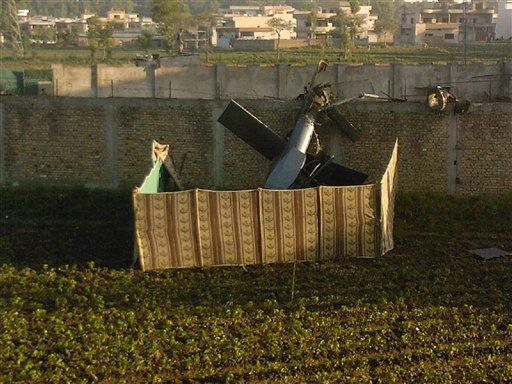
After a U.S. Navy SEAL put a bullet in Osama bin Laden’s chest and another in his head, one of the most secretive black-ops units in the American military suddenly found its mission in the public spotlight. It was atypical. While it’s well known that U.S. Special Operations forces are deployed in the war zones of Afghanistan and Iraq, and it’s increasingly apparent that such units operate in murkier conflict zones like Yemen and Somalia, the full extent of their worldwide war has remained deeply in the shadows.
Last year, Karen DeYoung and Greg Jaffe of the Washington Post reported that U.S. Special Operations forces were deployed in 75 countries, up from 60 at the end of the Bush presidency. By the end of this year, U.S. Special Operations Command spokesman Colonel Tim Nye told me, that number will likely reach 120. “We do a lot of traveling — a lot more than Afghanistan or Iraq,” he said recently. This global presence — in about 60 percent of the world’s nations and far larger than previously acknowledged — provides striking new evidence of a rising clandestine Pentagon power elite waging a secret war in all corners of the world.
The Rise of the Military’s Secret Military
Born of a failed 1980 raid to rescue American hostages in Iran, in which eight U.S. service members died, U.S. Special Operations Command (SOCOM) was established in 1987. Having spent the post-Vietnam years distrusted and starved for money by the regular military, special operations forces suddenly had a single home, a stable budget, and a four-star commander as their advocate. Since then, SOCOM has grown into a combined force of startling proportions. Made up of units from all the service branches, including the Army’s “Green Berets” and Rangers, Navy SEALs, Air Force Air Commandos, and Marine Corps Special Operations teams, in addition to specialized helicopter crews, boat teams, civil affairs personnel, para-rescuemen, and even battlefield air-traffic controllers and special operations weathermen, SOCOM carries out the United States’ most specialized and secret missions. These include assassinations, counterterrorist raids, long-range reconnaissance, intelligence analysis, foreign troop training, and weapons of mass destruction counter-proliferation operations.
One of its key components is the Joint Special Operations Command, or JSOC, a clandestine sub-command whose primary mission is tracking and killing suspected terrorists. Reporting to the president and acting under his authority, JSOC maintains a global hit list that includes American citizens. It has been operating an extra-legal “kill/capture” campaign that John Nagl, a past counterinsurgency adviser to four-star general and soon-to-be CIA Director David Petraeus, calls “an almost industrial-scale counterterrorism killing machine.”
This assassination program has been carried out by commando units like the Navy SEALs and the Army’s Delta Force as well as via drone strikes as part of covert wars in which the CIA is also involved in countries like Somalia, Pakistan, and Yemen. In addition, the command operates a network of secret prisons, perhaps as many as 20 black sites in Afghanistan alone, used for interrogating high-value targets.
Growth Industry
From a force of about 37,000 in the early 1990s, Special Operations Command personnel have grown to almost 60,000, about a third of whom are career members of SOCOM; the rest have other military occupational specialties, but periodically cycle through the command. Growth has been exponential since September 11, 2001, as SOCOM’s baseline budget almost tripled from $2.3 billion to $6.3 billion. If you add in funding for the wars in Iraq and Afghanistan, it has actually more than quadrupled to $9.8 billion in these years. Not surprisingly, the number of its personnel deployed abroad has also jumped four-fold. Further increases, and expanded operations, are on the horizon.
Lieutenant General Dennis Hejlik, the former head of the Marine Corps Forces Special Operations Command — the last of the service branches to be incorporated into SOCOM in 2006 — indicated, for instance, that he foresees a doubling of his former unit of 2,600. “I see them as a force someday of about 5,000, like equivalent to the number of SEALs that we have on the battlefield. Between [5,000] and 6,000,” he said at a June breakfast with defense reporters in Washington. Long-term plans already call for the force to increase by 1,000.
During his recent Senate confirmation hearings, Navy Vice Admiral William McRaven, the incoming SOCOM chief and outgoing head of JSOC (which he commanded during the bin Laden raid) endorsed a steady manpower growth rate of 3 percent to 5 percent a year, while also making a pitch for even more resources, including additional drones and the construction of new special operations facilities.
A former SEAL who still sometimes accompanies troops into the field, McRaven expressed a belief that, as conventional forces are drawn down in Afghanistan, special ops troops will take on an ever greater role. Iraq, he added, would benefit if elite U.S forces continued to conduct missions there past the December 2011 deadline for a total American troop withdrawal. He also assured the Senate Armed Services Committee that “as a former JSOC commander, I can tell you we were looking very hard at Yemen and at Somalia.”
During a speech at the National Defense Industrial Association’s annual Special Operations and Low-intensity Conflict Symposium earlier this year, Navy Admiral Eric Olson, the outgoing chief of Special Operations Command, pointed to a composite satellite image of the world at night. Before September 11, 2001, the lit portions of the planet — mostly the industrialized nations of the global north — were considered the key areas. “But the world changed over the last decade,” he said. “Our strategic focus has shifted largely to the south… certainly within the special operations community, as we deal with the emerging threats from the places where the lights aren’t.”
To that end, Olson launched “Project Lawrence,” an effort to increase cultural proficiencies — like advanced language training and better knowledge of local history and customs — for overseas operations. The program is, of course, named after the British officer, Thomas Edward Lawrence (better known as “Lawrence of Arabia”), who teamed up with Arab fighters to wage a guerrilla war in the Middle East during World War I. Mentioning Afghanistan, Pakistan, Mali, and Indonesia, Olson added that SOCOM now needed “Lawrences of Wherever.”
While Olson made reference to only 51 countries of top concern to SOCOM, Col. Nye told me that on any given day, Special Operations forces are deployed in approximately 70 nations around the world. All of them, he hastened to add, at the request of the host government. According to testimony by Olson before the House Armed Services Committee earlier this year, approximately 85 percent of special operations troops deployed overseas are in 20 countries in the CENTCOM area of operations in the Greater Middle East: Afghanistan, Bahrain, Egypt, Iran, Iraq, Jordan, Kazakhstan, Kuwait, Kyrgyzstan, Lebanon, Oman, Pakistan, Qatar, Saudi Arabia, Syria, Tajikistan, Turkmenistan, United Arab Emirates, Uzbekistan, and Yemen. The others are scattered across the globe from South America to Southeast Asia, some in small numbers, others as larger contingents.
Special Operations Command won’t disclose exactly which countries its forces operate in. “We’re obviously going to have some places where it’s not advantageous for us to list where we’re at,” says Nye. “Not all host nations want it known, for whatever reasons they have — it may be internal, it may be regional.”
But it’s no secret (or at least a poorly kept one) that so-called black special operations troops, like the SEALs and Delta Force, are conducting kill/capture missions in Afghanistan, Iraq, Pakistan, and Yemen, while “white” forces like the Green Berets and Rangers are training indigenous partners as part of a worldwide secret war against al-Qaeda and other militant groups. In the Philippines, for instance, the U.S. spends $50 million a year on a 600-person contingent of Army Special Operations forces, Navy Seals, Air Force special operators, and others that carries out counterterrorist operations with Filipino allies against insurgent groups like Jemaah Islamiyah and Abu Sayyaf.
Last year, as an analysis of SOCOM documents, open-source Pentagon information, and a database of Special Operations missions compiled by investigative journalist Tara McKelvey (for the Medill School of Journalism’s National Security Journalism Initiative) reveals, America’s most elite troops carried out joint-training exercises in Belize, Brazil, Bulgaria, Burkina Faso, Germany, Indonesia, Mali, Norway, Panama, and Poland. So far in 2011, similar training missions have been conducted in the Dominican Republic, Jordan, Romania, Senegal, South Korea, and Thailand, among other nations. In reality, Nye told me, training actually went on in almost every nation where Special Operations forces are deployed. “Of the 120 countries we visit by the end of the year, I would say the vast majority are training exercises in one fashion or another. They would be classified as training exercises.”
The Pentagon’s Power Elite
Once the neglected stepchildren of the military establishment, Special Operations forces have been growing exponentially not just in size and budget, but also in power and influence. Since 2002, SOCOM has been authorized to create its own Joint Task Forces — like Joint Special Operations Task Force-Philippines — a prerogative normally limited to larger combatant commands like CENTCOM. This year, without much fanfare, SOCOM also established its own Joint Acquisition Task Force, a cadre of equipment designers and acquisition specialists.
With control over budgeting, training, and equipping its force, powers usually reserved for departments (like the Department of the Army or the Department of the Navy), dedicated dollars in every Defense Department budget, and influential advocates in Congress, SOCOM is by now an exceptionally powerful player at the Pentagon. With real clout, it can win bureaucratic battles, purchase cutting-edge technology, and pursue fringe research like electronically beaming messages into people’s heads or developing stealth-like cloaking technologies for ground troops. Since 2001, SOCOM’s prime contracts awarded to small businesses — those that generally produce specialty equipment and weapons — have jumped six-fold.
Headquartered at MacDill Air Force Base in Florida, but operating out of theater commands spread out around the globe, including Hawaii, Germany, and South Korea, and active in the majority of countries on the planet, Special Operations Command is now a force unto itself. As outgoing SOCOM chief Olson put it earlier this year, SOCOM “is a microcosm of the Department of Defense, with ground, air, and maritime components, a global presence, and authorities and responsibilities that mirror the Military Departments, Military Services, and Defense Agencies.”
Tasked to coordinate all Pentagon planning against global terrorism networks and, as a result, closely connected to other government agencies, foreign militaries, and intelligence services, and armed with a vast inventory of stealthy helicopters, manned fixed-wing aircraft, heavily-armed drones, high-tech guns-a-go-go speedboats, specialized Humvees and Mine Resistant Ambush Protected vehicles, or MRAPs, as well as other state-of-the-art gear (with more on the way), SOCOM represents something new in the military. Whereas the late scholar of militarism Chalmers Johnson used to refer to the CIA as “the president’s private army,” today JSOC performs that role, acting as the chief executive’s private assassination squad, and its parent, SOCOM, functions as a new Pentagon power-elite, a secret military within the military possessing domestic power and global reach.
In 120 countries across the globe, troops from Special Operations Command carry out their secret war of high-profile assassinations, low-level targeted killings, capture/kidnap operations, kick-down-the-door night raids, joint operations with foreign forces, and training missions with indigenous partners as part of a shadowy conflict unknown to most Americans. Once “special” for being small, lean, outsider outfits, today they are special for their power, access, influence, and aura.
That aura now benefits from a well-honed public relations campaign which helps them project a superhuman image at home and abroad, even while many of their actual activities remain in the ever-widening shadows. Typical of the vision they are pushing was this statement from Admiral Olson: “I am convinced that the forces… are the most culturally attuned partners, the most lethal hunter-killers, and most responsive, agile, innovative, and efficiently effective advisors, trainers, problem-solvers, and warriors that any nation has to offer.”
Recently at the Aspen Institute’s Security Forum, Olson offered up similarly gilded comments and some misleading information, too, claiming that U.S. Special Operations forces were operating in just 65 countries and engaged in combat in only two of them. When asked about drone strikes in Pakistan, he reportedly replied, “Are you talking about unattributed explosions?”
What he did let slip, however, was telling. He noted, for instance, that black operations like the bin Laden mission, with commandos conducting heliborne night raids, were now exceptionally common. A dozen or so are conducted every night, he said. Perhaps most illuminating, however, was an offhand remark about the size of SOCOM. Right now, he emphasized, U.S. Special Operations forces were approximately as large as Canada’s entire active duty military. In fact, the force is larger than the active duty militaries of many of the nations where America’s elite troops now operate each year, and it’s only set to grow larger.
Americans have yet to grapple with what it means to have a “special” force this large, this active, and this secret — and they are unlikely to begin to do so until more information is available. It just won’t be coming from Olson or his troops. “Our access [to foreign countries] depends on our ability to not talk about it,” he said in response to questions about SOCOM’s secrecy. When missions are subject to scrutiny like the bin Laden raid, he said, the elite troops object. The military’s secret military, said Olson, wants “to get back into the shadows and do what they came in to do.”
To stay on top of important articles like these, sign up to receive the latest updates from TomDispatch.com here.
