
"Famous Funnies" 1933
 Having been a big fan of comic books since I was a little kid, any books written about them and the industry itself has always grabbed my attention. The first book of ANY kind I ever specifically asked for was "The Great Comic Book Heroes" by Jules Feiffer (1965) and I still covet my original copy! Through the years I've added whatever I could find about comics to my library, but it seems that other than a few published works like "Comics and Their Creators" by Martin Sheridan (1942), "The Comics" by Coulton Waugh (1949), and the infamous "critique" of comic books, "Seduction of the Innocent" by Fredric Wertham (1954), there were very few mainstream works published that were exclusively dedicated to the comics industry. We'd have to wait until the early-mid 1960s (probably starting with White & Abel's "The Funnies: An American Idiom" in 1963) to see any influx of titles.

Left: "The Funnies: An American Idiom" 1963. Right: "The Great Comic Book Heroes" 1965

Left: "Comics and Their Creators" 1942. Right: "The Comics" 1949

"Seduction of the Innocent" 1954
But I've got three tasty magazine articles to add to this list of profiles that are not often mentioned when discussing comic strip and comic book history. I think they're important because of the financial and graphic arts realms they're geared to, and indicate that perhaps comics were not as overlooked a craft back then as I had always thought ...

Fortune Magazine April 1933
"The Funny Papers" by the Editors of Fortune Magazine

A very early profile of the marketing value of comic strips and their characters. It's a testament to the industry's status to have been focused on by a periodical like Fortune magazine.

Print Magazine Volume III/Number 2 Summer 1942
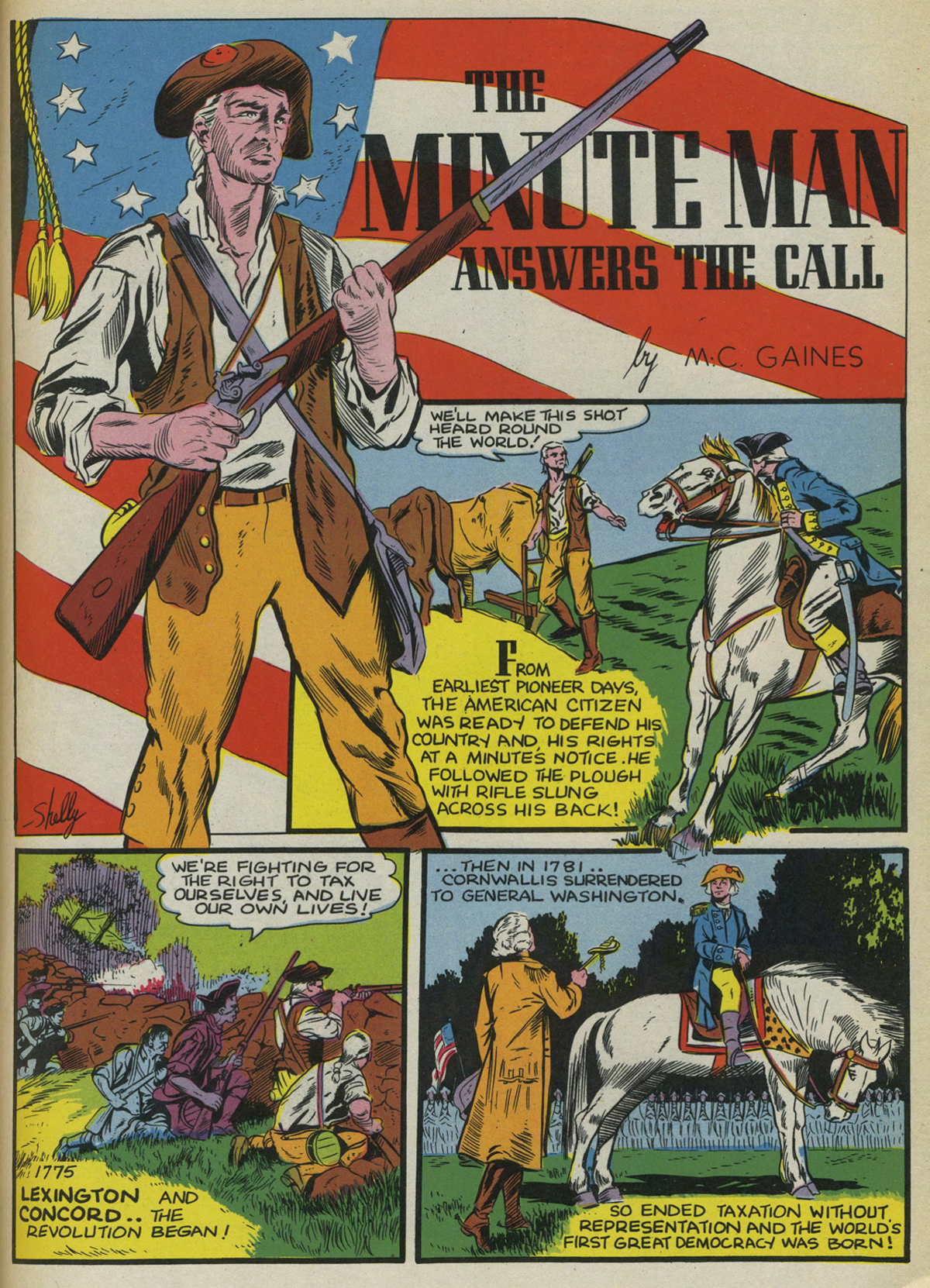
"Narrative Illustration: The Comics" by M.C. Gaines. Part 1 of a history and profile of comics and the comics industry, including two full-color insert examples on newsprint of comic book stories published by Gaines.

Color/newsprint splash page from article insert.

Color/newsprint examples from "Jonah and the Whale" insert.

M.C. "Max" Gaines (father of William M. "Bill" Gaines, Mad Magazine and Educational Comics/E.C. publisher) can be considered the father of the modern comic book, having created the first saddle-stitched, four-color pamphlet printed on newsprint in 1933.
His "Funnies on Parade" and "Famous Funnies" reprinted newspaper strips and were distributed through/at newsstands for 10 cents an issue. He co-published All-American Publications with Jack Liebowitz starting in 1938, the future home of Green Lantern, Hawkman and Wonder Woman. Gaines and Liebowitz with their All-American Publications, in tandem with Harry Donenfeld and his National Allied Publications and Detective Comics, would eventually form National Comics, the precursor to National Periodical Publications and DC Comics. Gaines sold his stake in All-American in 1944 and used the proceeds to create Educational Comics. (Whew! ... see below)

The kings of the comic book: Max Gaines, Harry Donenfeld and Jack Liebowitz, 1940. (Photo credit: The Mad World of William M. Gaines by Frank Jacobs, 1972)

All-American Comics, Inc. letterhead 1943

Top: Funnies on Parade and Wonder Woman comics as reproduced in the article. Bottom: Color examples of the actual comics.

Print Magazine Volume III/Number 3 1943
"Good Triumphs Over Evil == More About the Comics" This is Part 2 of the Gaines comic history story.
In this installment, Gaines treats us to a behind the scenes look at how comic books are actually produced. A "Wonder Woman" script and splash-page are presented in rough and cleaned up forms. There are also photographs showing the art department and printing presses.

Illustration from first page of "Good Triumphs Over Evil" Part II of Max Gaines' story of the comics industry.

Gaines' first article proved to be so popular that Print asked for a "Part II".


(Editor: Sheldon Mayer - Penciller/Inker: Harry G. Peter)
(Rare behind-the-scenes examples of the various phases of production.)


Gaines arranged to have a pamphlet produced containing the 2 Print Magazine articles. Good luck trying to find one of these!
I recently discovered that Gaines (always the "Marketeer") evidently had these two articles reprinted and bound in a single pamphlet form and titled "Narrative Illustration/The Story Of The Comics." There are very few of these known to exist but the Print Magazines have his articles in their original form and contain everything that's in his reprinted pamphlet.
Unfortunately, Max Gaines was killed in a boating accident in 1947, but his then 25-year-old son, Bill, took over E.C. and transformed it into a company gearing its publication themes (war, horror and satire) more toward adults. (BTW, I heartily recommend researching Max Gaines and his contributions to the comic book back story -- it's a story in itself!
(Thanks again for your help, Corrie Lebens!)
Copyright F+W Media Inc. 2011.
Salon is proud to feature content from Imprint, the fastest-growing design community on the web. Brought to you by Print magazine, America's oldest and most trusted design voice, Imprint features some of the biggest names in the industry covering visual culture from every angle. Imprint advances and expands the design conversation, providing fresh daily content to the community (and now to salon.com!), sparking conversation, competition, criticism, and passion among its members.
Shares